





Why Understanding Your Home’s Electrical Panel Matters
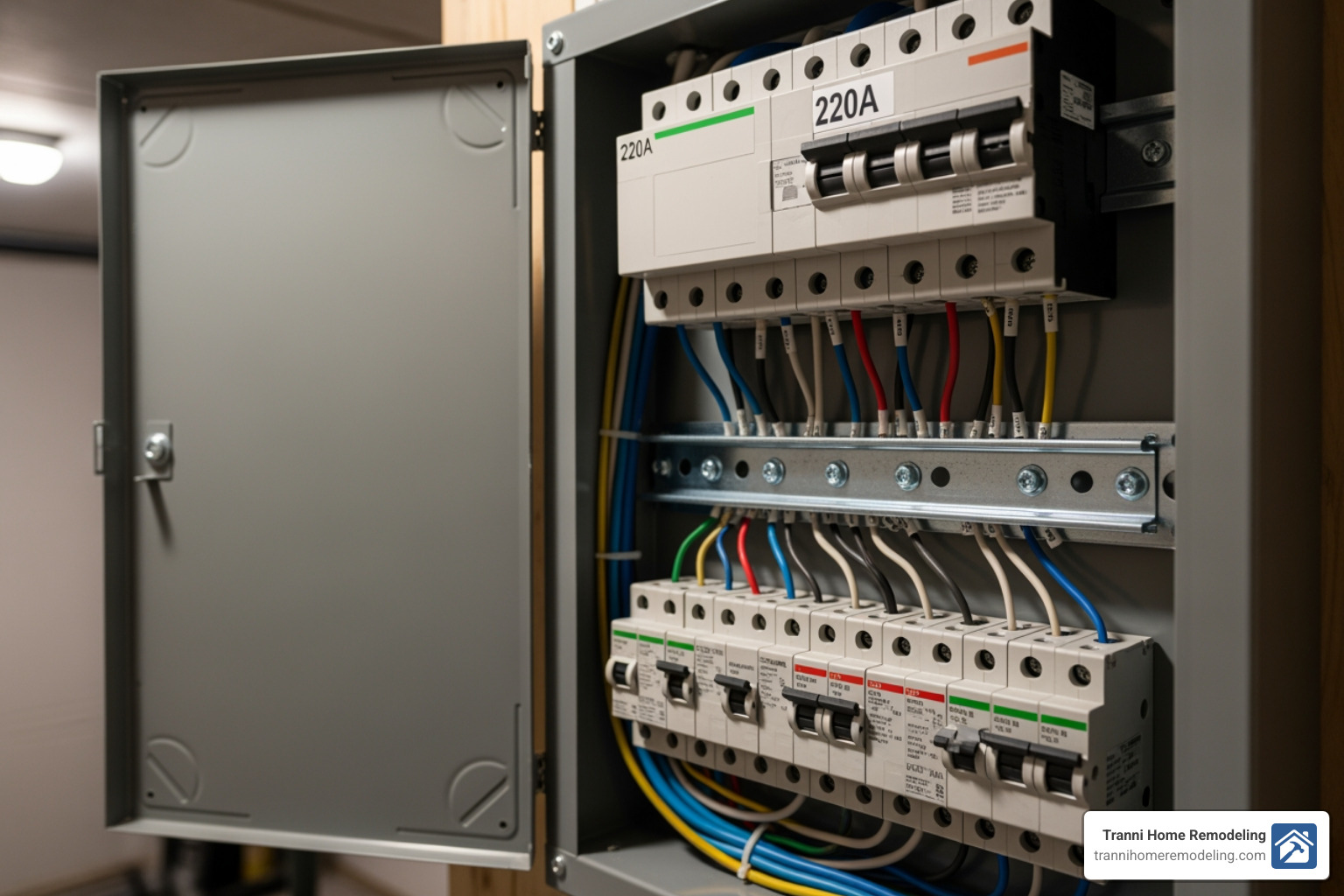
A 220 amp panel is actually a common misnomer in the electrical industry. What most homeowners are referring to is a 225-amp electrical panel, which is the standard size manufactured for residential use. This panel can handle up to 52,800 watts of power and provides the capacity for modern homes with high-power appliances, EV chargers, and multiple HVAC systems.
Quick Facts:
- Common Panel Sizes: 60A, 100A, 125A, 150A, 200A, 225A, 300A, 400A
- What “220/225 Amp” Means: The maximum electrical current your panel can safely distribute throughout your home
- Typical Applications: Homes over 3,500 sq ft, properties with workshops, multiple HVAC units, or electric vehicle charging
- Key Difference from 200A: More circuit spaces and slightly higher capacity (52,800W vs 48,000W)
If you’ve noticed flickering lights, frequently tripped breakers, or you’re planning a major renovation like a kitchen remodel or home addition, your current electrical panel might not have the capacity to support your needs. Older homes in the Billerica area often have 60-amp or 100-amp panels that were sufficient decades ago but struggle with today’s electrical demands.
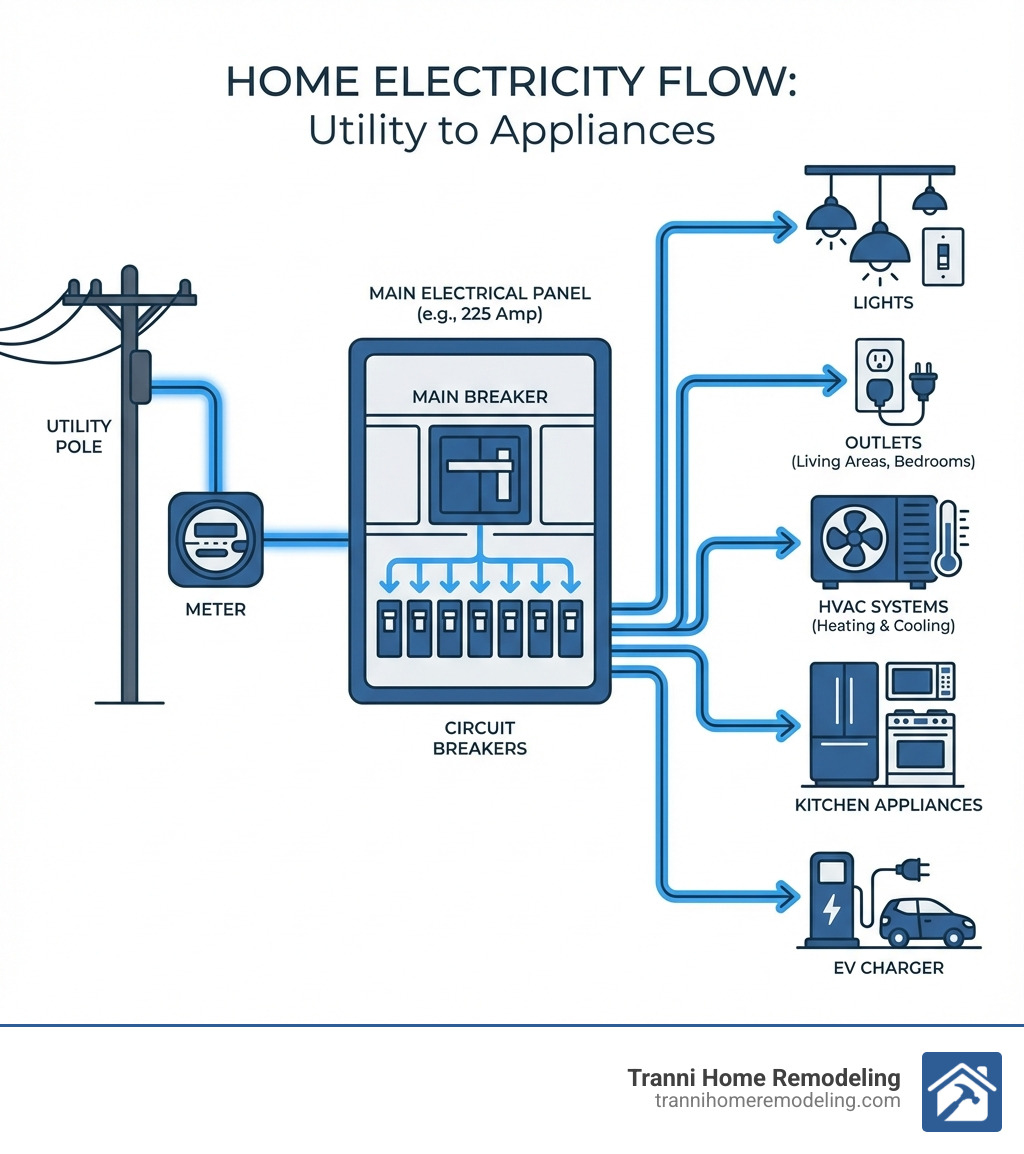
Your electrical panel (also called a breaker box or load center) is the central hub that distributes electricity from the utility company to individual circuits throughout your home. It protects your home from electrical overloads and short circuits that could cause fires or equipment damage. Understanding your panel’s capacity is essential for safety, especially if you’re adding new appliances or planning renovations.
As Tyler Tranni, owner and operator of Tranni Home Remodeling, I’ve guided countless homeowners through electrical upgrades during kitchen, bathroom, and basement renovations where a 225 amp panel became necessary to support modern electrical loads. My team works closely with licensed electricians to ensure your home’s electrical system can safely handle both current and future needs.
220 amp panel helpful reading:
Understanding Electrical Panels: From 100 Amps to 225 Amps
Your home’s electrical panel is the unsung hero of your modern life. It’s the central nervous system that ensures everything from your morning coffee maker to your evening Netflix binge runs smoothly and safely. But like any system, it has its limits. These limits are measured in amperage (amps), which tells you how much electricity your home can draw at any given time without overloading the system.
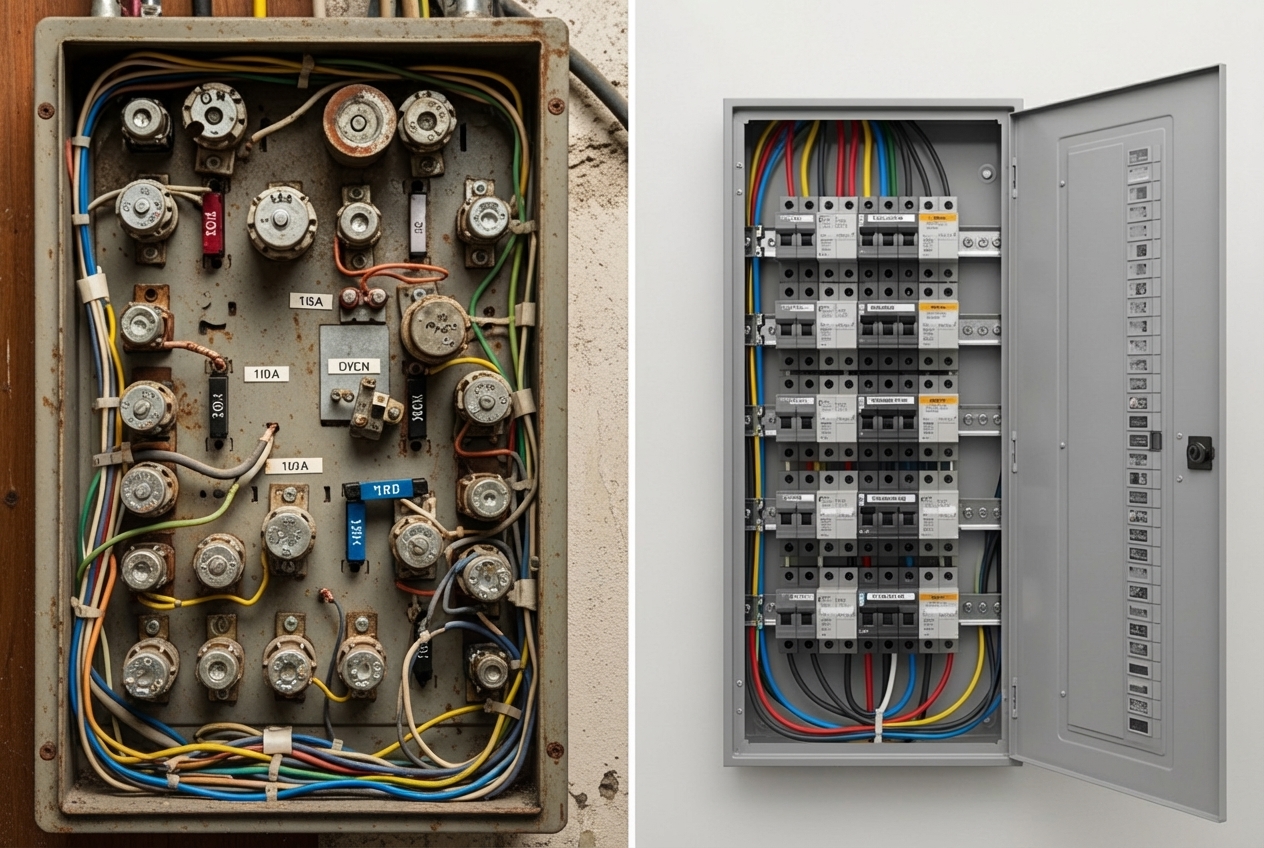
Historically, homes had much lower electrical demands. Many older homes throughout Middlesex County, MA, especially those built before the 1960s, might still be operating on a 60-amp or 100-amp electrical panel. While these were perfectly adequate for the appliances of their time, they can quickly become overwhelmed by today’s power-hungry devices.
Common residential panel sizes you’ll encounter include 60-amp, 100-amp, 125-amp, 150-amp, 200-amp, and the increasingly popular 225-amp. While a 60-amp panel might suffice for a small cabin or an off-grid setup with minimal power needs, a 100-amp panel is typically found in smaller homes or apartments under 2,000 square feet. As homes grew larger and electrical demands increased, 200-amp panels became the standard for modern construction, handling up to 48,000 watts.
The benefits of moving to a larger panel, such as a 225 amp panel, are numerous. It’s not just about capacity; it’s also about safety and future-proofing your home. A larger panel ensures that your electrical system can handle all your current devices without strain, reducing the risk of tripped breakers, overheating, or even electrical fires. It also provides the necessary infrastructure for any future upgrades or additions you might be considering, whether it’s a new workshop, an electric vehicle charger, or a more energy-efficient heating system. Upgrading your electrical system is often a crucial step when undertaking projects like upgrading electrical in old homes.
What is a 220 Amp Electrical Panel?
Let’s clear up the confusion around the 220 amp panel. While the term “220 amp” is often used colloquially by homeowners, the standard residential panel size available from manufacturers is actually 225 amps. This 225-amp electrical panel is designed to provide a robust electrical foundation for modern homes.
A 225-amp panel can comfortably handle up to 52,800 watts (or 52.8 kilowatts) of power at 240 volts. To put that in perspective, a typical 200-amp panel handles 48,000 watts. This extra capacity, along with often more available circuit spaces, makes the 225-amp panel an excellent choice for larger homes, typically those over 3,500 square feet, or any home with significant electrical demands.
Modern homes are increasingly relying on electricity for everything from cooking to heating and transportation. High-power appliances like electric ranges, tankless water heaters, central air conditioning units, and even hot tubs demand substantial power. Furthermore, the growing trend of home electrification, including the installation of electric vehicle (EV) chargers and heat pump systems for heating and cooling, pushes electrical requirements even higher. A 225-amp panel ensures your home is ready for these demands, preventing overloads and providing ample room for expansion. You can learn more about the specifics of wiring for high-capacity panels with our guide on 200 Amp Breaker Box Wiring.
Benefits of Upgrading from a Smaller Panel
Upgrading your electrical panel, especially from an older 60-amp or 100-amp system to a 225 amp panel, offers a wealth of benefits that extend beyond simply preventing tripped breakers.
- Improved Safety: This is paramount. Older, undersized panels can lead to frequently overloaded circuits, which create excessive heat. This heat can degrade wiring insulation, increasing the risk of electrical fires. Modern panels come with advanced safety features, including arc-fault circuit interrupters (AFCIs) and ground-fault circuit interrupters (GFCIs), which detect dangerous electrical conditions and quickly cut power, preventing shocks and fires. If you have an outdated panel, such as a Federal Pacific Panel, upgrading is not just a convenience, it’s a critical safety measure. We can help you replace Federal Pacific Panel systems to ensure your home is safe.
- Capacity for Renovations: Planning a major home renovation, such as a home addition or finishing your basement? These projects almost always involve adding new circuits for lighting, outlets, and appliances. A small panel simply won’t have the space or capacity. A new 225 amp panel provides the necessary headroom to power your expanded living spaces without compromising existing circuits.
- Powering Modern Lifestyles: Today’s homes are packed with more electronics and appliances than ever before. From dedicated home offices with multiple computers to elaborate entertainment systems, and especially new technologies like EV chargers and residential heat pumps, our electrical demands are constantly growing. A larger panel ensures you can run all these devices simultaneously without issues. This is particularly relevant for kitchen remodeling projects, where new high-power appliances are common. Explore our kitchen remodeling services for ideas on how a panel upgrade can support your dream kitchen.
- Increased Home Value: An updated electrical system is a significant selling point. Prospective buyers appreciate a home that is safe, efficient, and ready for modern demands. A new 225 amp panel signals that your home’s infrastructure is sound, potentially increasing its market value and appeal.
How to Know if You Need a 220 Amp Panel
Sometimes, your home’s electrical system will send you clear signals that it’s struggling. Ignoring these can lead to inconvenience, damage, or even danger.
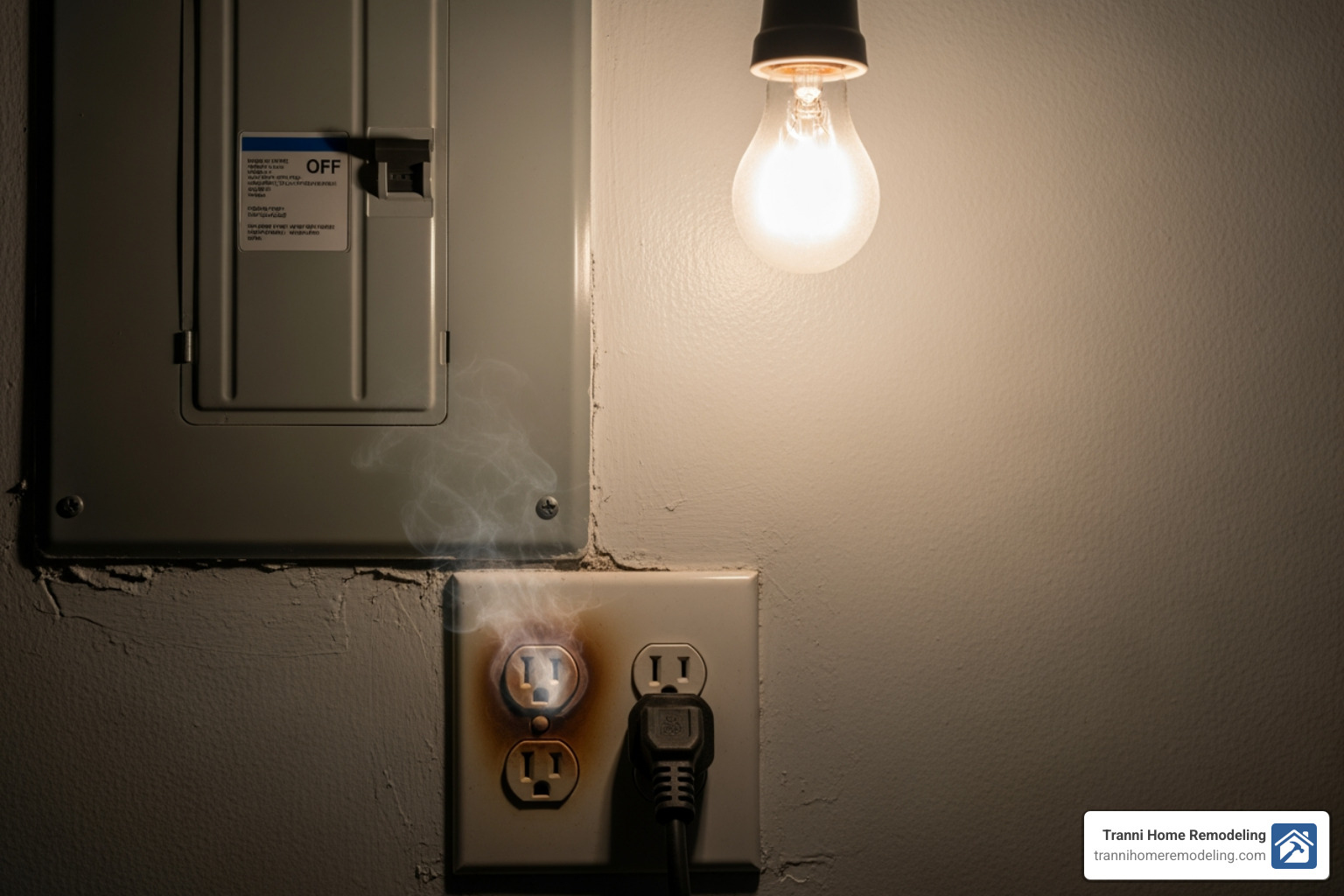
Here are the tell-tale signs that you might need a panel upgrade to a 225 amp panel:
- Frequently Tripped Breakers: If you’re constantly resetting breakers, especially when running common appliances, your panel is likely undersized or overloaded. This is more than just annoying; it indicates your system is struggling.
- Flickering or Dimming Lights: Lights that flicker or dim when other appliances turn on suggest that your electrical system can’t consistently deliver enough power.
- Outlets that are Hot to the Touch: Any warmth coming from an outlet is a serious warning sign of an overloaded circuit and a potential fire hazard.
- Strange Smells: A burning odor emanating from your electrical panel or outlets is an immediate cause for concern and requires professional attention.
- Reliance on Extension Cords: If you’re constantly using extension cords or power strips because you don’t have enough outlets, it’s a sign your home lacks sufficient circuits, which ties back to panel capacity.
- Older Home with Original Panel: If your home in Andover, Concord, or Lexington was built before the 1980s and still has its original 60-amp or 100-amp panel, it’s almost certainly inadequate for today’s electrical needs.
- Planning Major Appliance Additions: Installing a new central AC unit, an electric range, a hot tub, or an EV charger will almost certainly require a panel upgrade. These are high-draw appliances that need dedicated circuits and significant overall capacity.
- Large Home: Homes over 3,500 square feet, especially with multiple zones of heating/cooling, typically benefit greatly from a 225 amp panel to ensure all systems run efficiently and safely.
If any of these sound familiar, it’s time to investigate your home’s electrical capacity further.
Calculating Your Home’s Electrical Needs
Determining if you need a 225 amp panel involves more than just guessing. It requires a proper assessment of your home’s total electrical load.
You can start with some DIY assessment steps to get a general idea:
- Check Your Main Breaker: The easiest way to find your current panel’s amperage is to look at the main breaker, which is usually the largest switch in your electrical panel. It will have a number printed on it, like “100” or “200,” indicating its amperage.
- Read the Panel Label: Many electrical panels have a label inside the door or on the panel itself that lists the maximum amperage.
- Inspect Your Electric Meter: Sometimes, your electric meter might have an amperage rating (e.g., CL200 for 200 Amps) printed on its face or body.
However, these steps only tell you your current panel’s capacity. To determine your actual electrical needs, especially if you’re planning changes, you’ll need to consider load calculations. The National Electrical Code (NEC) provides detailed guidelines for these calculations, particularly in NEC Article 220.
Load calculations differentiate between “connected load” (the sum of all loads if everything operated simultaneously at full capacity) and “demand load” (which applies diversity factors, recognizing that not all appliances run at the same time). For residential homes, the NEC 220.82 “Alternative Calculation for Dwelling Units” method is often used, which applies demand factors to reduce the calculated load. For example, EV charging equipment should be included at 100% of its rating, while for HVAC, you only count the largest heating or cooling load, not both.
The nuances of these calculations underscore the importance of a professional assessment. We always recommend that you consult a licensed electrician to accurately assess your home’s electrical load and recommend the correct panel size. They will consider all your existing appliances, future plans (like a basement finishing project or adding solar panels), and local codes to ensure your new 225 amp panel is perfectly sized for your needs.
The Step-by-Step Guide to a Panel Upgrade
Upgrading to a 225 amp panel is a significant home improvement that should always be handled by a licensed professional. It’s a complex process involving high voltage, strict safety protocols, and adherence to local codes.
Here’s what the process typically looks like when you work with a trusted team like ours:
Step 1: Professional Assessment
Our first step is always to have a licensed electrician conduct a thorough assessment of your current electrical system and your projected electrical needs. They will perform a comprehensive load calculation, taking into account all your existing and planned appliances, square footage, and lifestyle. This ensures we recommend the perfectly sized panel for your home in areas like Billerica, Wilmington, or Tewksbury.
Step 2: Choosing the Right Panel
Once the load calculation is complete, we’ll help you select the appropriate 225 amp panel. While the amperage is set, there are still choices to be made regarding the brand (e.g., Eaton, Siemens, Schneider Electric), the number of circuit spaces, and features like surge protection or smart panel capabilities. Our electricians will guide you through the options, explaining the benefits of each.
Step 3: The Permitting Process
Electrical upgrades, especially main panel replacements, require permits from your local municipal building department. This is a crucial step to ensure the work meets local MA codes and is inspected for safety. Whether you’re in Billerica, Concord, Lexington, or any of our service areas, we handle all the necessary paperwork and coordination with local authorities. This ensures your project is compliant and hassle-free.
Step 4: The Installation Process
On installation day, the power to your home will need to be temporarily shut off. The electrician will carefully disconnect the old panel, remove it, and then install the new 225 amp panel. This involves meticulous wiring, proper grounding, and connecting the main service entrance cables. This is absolutely not a DIY project due to the extreme danger of working with live electrical currents, which can cause severe injury or death. We prioritize safety above all else, ensuring all work is performed to the highest standards. You can get more details on what’s involved in installing a new service panel.
Step 5: Final Inspection
After installation, a municipal electrical inspector will review the work to ensure it complies with all local and national electrical codes. Once approved, power will be fully restored, and you can enjoy your upgraded, safer, and more robust electrical system.
Costs, Safety, and Long-Term Considerations
Upgrading to a 225 amp panel is an investment in your home’s safety, functionality, and future. Understanding the associated costs, critical safety considerations, and long-term benefits can help you make an informed decision.
| Panel Size | Typical Capacity (Watts) | Estimated Upgrade Cost (Average) | Key Benefits |
|---|---|---|---|
| 100-Amp | 24,000 | $1,500 – $4,000 | Basic needs for small homes, minimal appliances |
| 200-Amp | 48,000 | $2,000 – $6,000 | Standard for modern homes, most appliances |
| 225-Amp | 52,800 | $2,500 – $7,500+ | Large homes, multiple high-draw appliances, EV charging, future-proofing |
The lifespan of a modern electrical panel is typically 30-40 years, though components like breakers may need replacement sooner. Maintenance for your panel is minimal but important. We recommend having a licensed electrician inspect your panel every 5-10 years, or immediately if you notice any unusual signs like buzzing, burning smells, or frequent trips.
A 225 amp panel can also positively impact your home’s energy efficiency and future electrical needs. While it doesn’t directly reduce energy consumption, it allows for the safe integration of energy-efficient appliances and systems like heat pumps, which can significantly lower your utility bills. It also prepares your home for future technologies like solar panels and battery storage systems, making your home more resilient and environmentally friendly. For homes with specific areas needing additional circuits without upgrading the main panel, sub-panels can be a viable option, but this depends on the main panel’s overall capacity.
What are the Costs of a 220 amp panel installation?
The cost to install a 225 amp panel can vary significantly based on several factors. Based on industry averages and internet data, you can expect the cost for a full panel upgrade to range anywhere from $2,500 to $7,500+, with complex installations potentially exceeding this range. Please note, these are average costs and not actual quotes from Tranni Home Remodeling.
Factors affecting the cost include:
- Job Complexity: Upgrading from a very old, undersized panel (e.g., 60-amp fuse box) to a 225 amp panel often requires more extensive work, including upgrading the service entrance cable from the utility meter, which can increase costs.
- Wiring Needs: If your existing home wiring is outdated or not up to code, additional wiring upgrades may be necessary to safely support the new panel’s capacity. This is especially true for older homes in areas like Reading or Stoneham.
- Permit Fees: Local permit fees vary by municipality in Middlesex County, MA, and are a necessary part of the process.
- Additional Work: Sometimes, the upgrade might uncover other electrical issues that need addressing, or you might opt for additional improvements like whole-home surge protection.
- Location: Costs can fluctuate based on regional labor rates.
For a more detailed breakdown, you can refer to our guide on the cost to change electrical panel.
Critical Safety Considerations
When dealing with electricity, safety is paramount. An electrical panel upgrade is not a task for the inexperienced or the DIY enthusiast.
- Hire a Licensed Electrician: This cannot be stressed enough. A licensed electrician has the training, experience, and knowledge of the National Electrical Code (NEC) and local regulations to perform the work safely and correctly. They are also insured, protecting you from liability in case of an accident.
- Dangers of DIY Work: Attempting to install or upgrade an electrical panel yourself can lead to severe consequences, including electrocution, electrical fires, and damage to your home’s electrical system. It can also void your homeowner’s insurance and lead to fines for unpermitted work.
- Understanding Panel Components: Modern panels incorporate advanced safety devices like Arc-Fault Circuit Interrupters (AFCIs) and Ground-Fault Circuit Interrupters (GFCIs). AFCIs protect against arcing faults that can cause fires, while GFCIs protect against dangerous electrical shocks. A professional electrician ensures these are installed correctly and function as intended.
- National Electrical Code (NEC) Compliance: The NEC sets the standards for safe electrical installation. A licensed electrician ensures your new 225 amp panel installation is fully compliant, providing peace of mind and passing all necessary inspections.
Frequently Asked Questions about Electrical Panels
We often hear similar questions from homeowners considering an electrical panel upgrade. Let’s address some of the most common ones.
What’s the difference between a 200 amp and a 225 amp panel?
While both 200-amp and 225 amp panels are common in residential settings, the primary differences lie in their maximum capacity and the number of circuit spaces they offer. A 200-amp panel handles up to 48,000 watts, while a 225-amp panel can manage a slightly higher 52,800 watts.
More importantly for many homeowners, 225 amp panels often come with more available circuit spaces. This means you have more room to add dedicated circuits for new appliances, EV chargers, or home additions without needing to add a sub-panel. While the cost difference between a 200-amp and a 225-amp panel itself might not be substantial, the slightly higher capacity and increased circuit flexibility make the 225-amp option a cost-effective choice for future-proofing your home, especially if you anticipate growing electrical demands.
Can I install a new electrical panel with old wiring?
This is a critical question, especially for homeowners in older communities like Winchester or Lincoln, MA. While it’s technically possible to install a new 225 amp panel with existing wiring, a professional assessment is absolutely required.
Our licensed electricians will carefully inspect your current wiring to determine its condition, gauge, and insulation. If your wiring is old, degraded, or not up to current code standards, it poses a significant safety risk. An upgraded panel can deliver more power, but if the wiring isn’t capable of safely carrying that power, it can lead to overheating, fires, or circuit damage. In many cases, upgrading the panel necessitates upgrading some or all of your home’s wiring for safety and compliance. You can learn more about this in our article on new electrical panel old wiring.
How long does it take to upgrade an electrical panel?
The actual installation of a new electrical panel typically takes a licensed electrician between 6 to 10 hours. However, the entire process, from initial assessment and load calculation to permitting and final inspection, can take longer.
During the installation, your home’s power will be out for several hours, usually for the majority of the workday. We always communicate this clearly with our clients in places like Dracut or Burlington so you can plan accordingly. Complex jobs, such as those requiring extensive service entrance cable upgrades or significant rewiring, may take longer. Rest assured, our team works efficiently and safely to minimize any inconvenience.
Conclusion
Understanding your home’s electrical panel is crucial for both safety and convenience in our modern, electrified world. While the term “220 amp panel” is often used, the standard residential capacity you’re likely considering is a 225-amp electrical panel. This robust upgrade is a vital step for any homeowner looking to ensure their electrical system is safe, reliable, and ready for today’s high-demand appliances and tomorrow’s technological advancements.
From preventing tripped breakers and flickering lights to powering EV chargers and residential HVAC systems, a 225 amp panel provides the necessary capacity and peace of mind. This is not a DIY project. The complexities and inherent dangers of electrical work demand the expertise of a licensed professional.
At Tranni Home Remodeling, we’re committed to delivering high-quality craftsmanship and outstanding service. Our team, working with trusted electricians, ensures your electrical panel upgrade is handled safely, efficiently, and in full compliance with local codes. If you’re planning home renovations in the Billerica, MA area, including our communities in Andover, Bedford, Burlington, Carlisle, Chelmsford, Concord, Dracut, Lexington, Lincoln, Lynnfield, Methuen, North Andover, North Reading, Reading, Stoneham, Tewksbury, Wilmington, Winchester, Woburn, or anywhere in Middlesex County, we’re here to help.
Don’t let an outdated electrical panel limit your home’s potential or compromise your family’s safety. Contact us for your electrical service needs today, and let’s ensure your home’s electrical heart is strong and healthy.
Like us on Facebook!
