





Handicap Bathroom Remodel Contractors: Top 5 Guide 2024
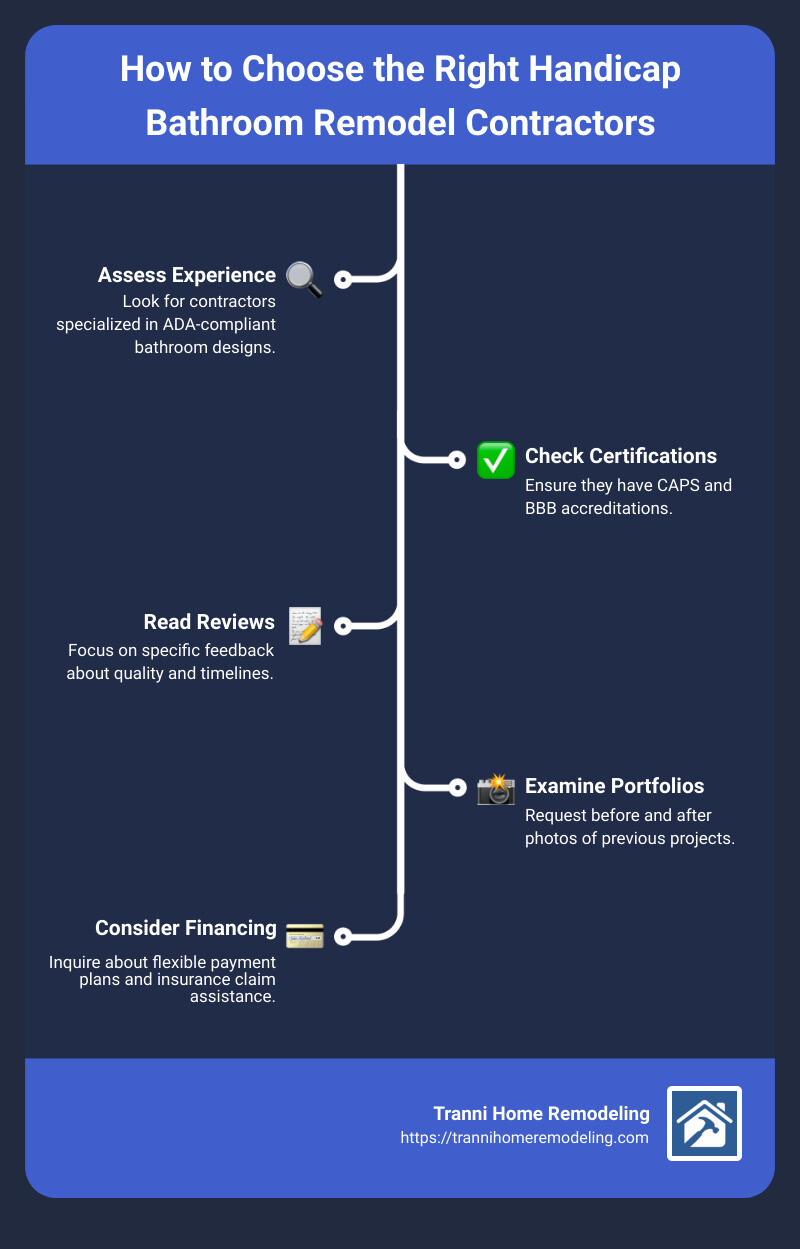
Choosing the right handicap bathroom remodel contractors is crucial to changing your bathroom into a safe and accessible space. Here’s a quick guide to help you get started:
- Assess Experience: Look for contractors specialized in ADA-compliant bathroom designs.
- Check Certifications: Ensure they have CAPS and BBB accreditations.
- Read Reviews: Focus on specific feedback about quality and timelines.
- Examine Portfolios: Request before and after photos of previous projects.
- Consider Financing: Inquire about flexible payment plans and insurance claim assistance.
Creating a handicap-accessible bathroom is not just about space but making it usable and safe for everyone. Whether it’s for an elderly family member or someone with mobility issues, an ADA-compliant bathroom ensures independence and comfort.
I’m Tyler Tranni, owner and operator at Tranni Home Remodeling. With years of experience in home renovations, including specialized handicap bathroom remodel contractors, I understand the importance of quality and trust in this sensitive area. Let’s walk you through the basics of making your bathroom more accessible and safe.
Easy handicap bathroom remodel contractors glossary:
– bath and kitchen remodeling contractor
– kitchen and bath remodeling contractors
Understanding Federal Requirements for Handicap Accessible Bathrooms
When designing a handicap-accessible bathroom, adhering to the Americans with Disabilities Act (ADA) standards is essential. These guidelines ensure that the bathroom is safe and functional for individuals with mobility challenges. Let’s break down the key requirements:
ADA Standards
The ADA provides specific guidelines to make bathrooms accessible. These standards cover everything from door widths to fixture placements. Following these guidelines ensures that your bathroom is both safe and easy to use.
Bathroom Dimensions
Clearance space is critical for maneuverability, especially for wheelchair users. According to the ADA:
- Turning Space: A clear space of at least 60 inches in diameter is required to allow for a full 360-degree turn.
- Sink Access: There should be a space of 30 inches by 48 inches in front of the sink.
- Toilet Placement: The centerline of the toilet should be at least 16 inches from the wall, providing enough space on each side.
- Entrance Width: The doorway should be at least 36 inches wide to accommodate a wheelchair.
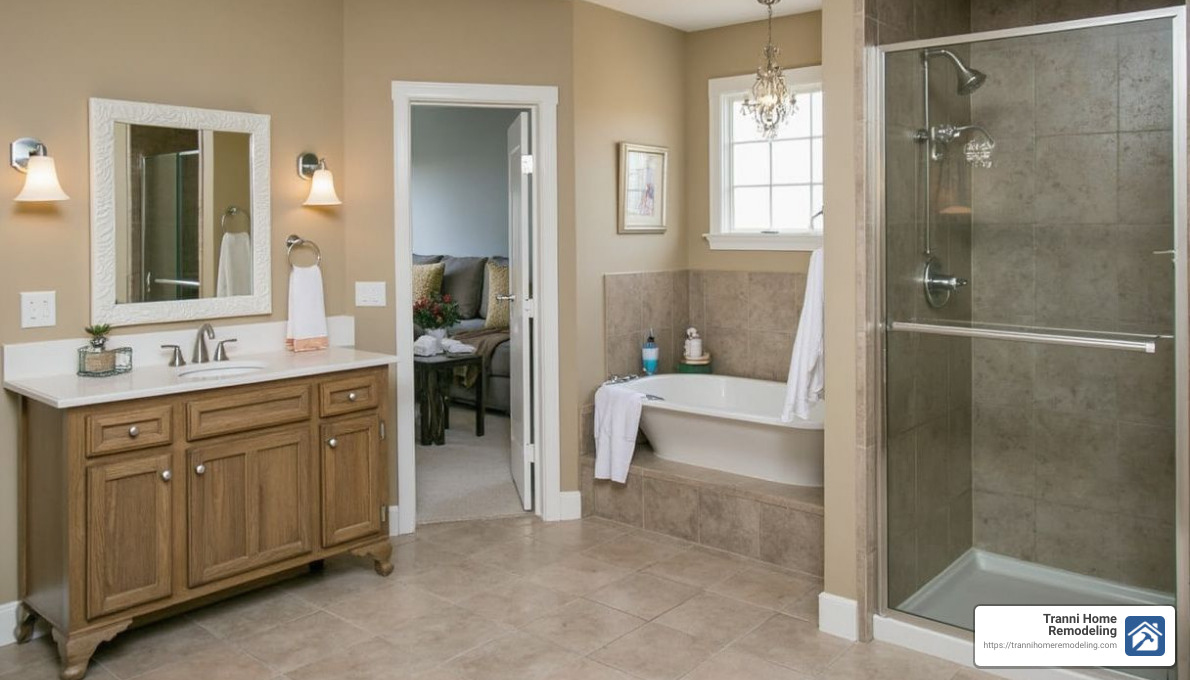
Clearance Space
Clearance space around fixtures is crucial. For instance:
- Toilets: There should be at least 60 inches of width around the toilet, with the center of the toilet 16 to 18 inches away from each side wall.
- Sinks: Ensure there’s enough space underneath the sink for wheelchair access. The space should be 30 inches wide and 48 inches deep.
- Showers: Roll-in showers should have a curb height of no more than half an inch and a 60-inch hose for the showerhead.
Pro-tip: Follow these ADA guidelines to maximize accessibility and comfort in your bathroom.
Creating a handicap-accessible bathroom involves more than just meeting dimensions. It’s about ensuring that every aspect of the space is usable and safe. By adhering to these federal requirements, you can create a bathroom that provides independence and dignity for individuals with mobility challenges.
Next, let’s dive into the key features that make a handicap-accessible bathroom truly functional and safe.
Key Features of Handicap Accessible Bathrooms
Creating a handicap-accessible bathroom requires careful attention to detail to ensure safety, comfort, and independence. Here are the essential features to consider:
Roll-In Showers
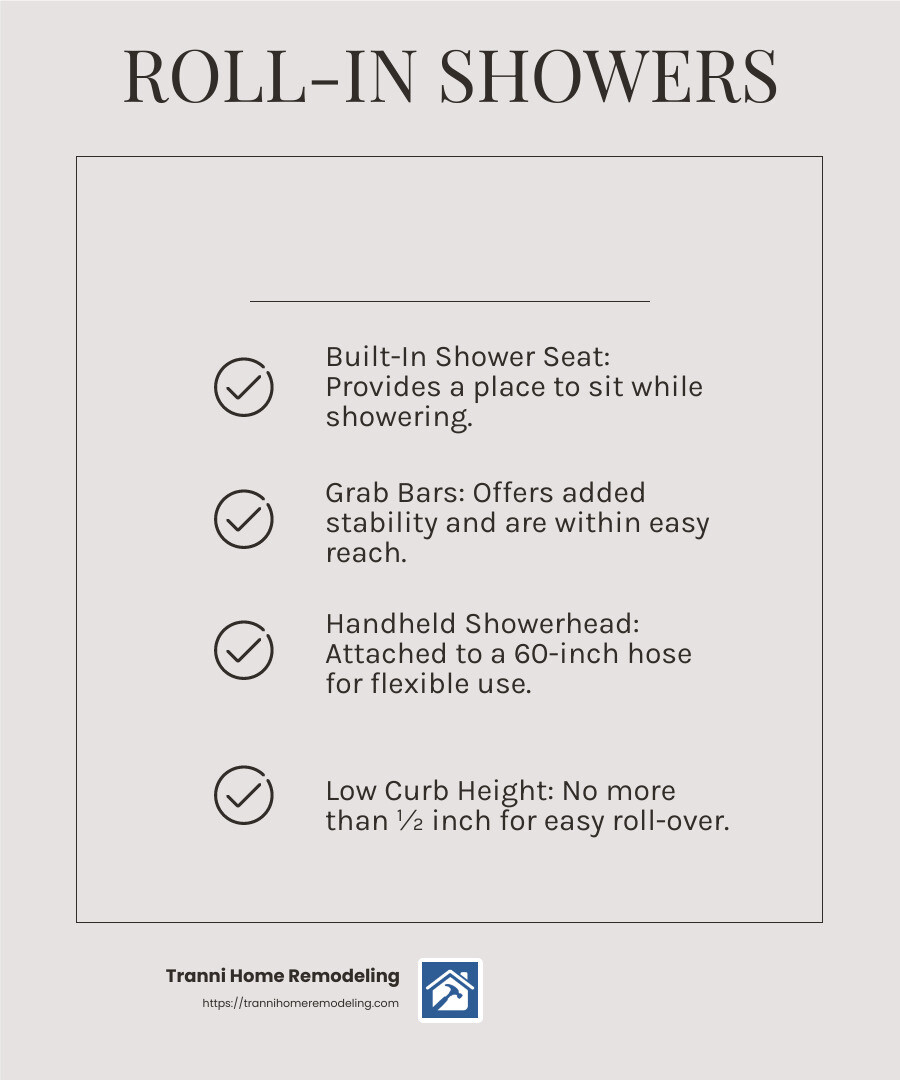
Roll-in showers are a must-have for any handicap-accessible bathroom. These showers are curbless, which means there are no barriers to step over, making them ideal for wheelchair users or those with limited mobility.
- Built-In Shower Seat: A wall-mounted shower seat provides a place to sit while showering, which is crucial for those who cannot stand for long periods.
- Grab Bars: Install grab bars on the back wall of the shower for added stability. Make sure they are within easy reach.
- Handheld Showerhead: A showerhead attached to a 60-inch hose allows for flexible use and easier bathing.
- Low Curb Height: The shower curb should be no more than ½ inch high to allow for easy roll-over.
Grab Bars
Grab bars are essential for preventing falls and providing support. These should be strategically placed throughout the bathroom, including near the toilet, in the shower, and next to the bathtub.
- Sturdy Installation: Ensure that grab bars are securely installed to support significant weight.
- Easy Reach: Position grab bars within easy reach to provide maximum support.
ADA Compliant Toilets
ADA compliant toilets are designed to be higher than standard toilets, making it easier for individuals with mobility challenges to sit and stand.
- Height: The toilet seat should be 17 to 19 inches from the floor.
- Space: Ensure there is at least 60 inches of width around the toilet, with the centerline of the toilet 16 to 18 inches away from each side wall.
Wheelchair Accessible Sinks
Wheelchair accessible sinks provide enough clearance underneath for wheelchair users to roll up and use the sink comfortably.
- Height and Clearance: The sink should be mounted at a height that allows for 30 inches of width and 48 inches of depth underneath.
- Accessible Faucets: Choose faucets that are easy to operate, such as lever handles or touchless options.
Non-Slip Flooring
Non-slip flooring is crucial for preventing accidents. Bathrooms are prone to wet and slippery surfaces, so choosing the right flooring material can make a significant difference.
- Material: Consider materials like ceramic, porcelain, or cement tiles that offer good traction even when wet.
- Maintenance: Ensure the flooring is easy to clean and maintain to keep it safe over time.
By incorporating these key features, you can create a bathroom that is not only functional but also safe and comfortable for everyone. Each element plays a crucial role in enhancing accessibility and promoting independence for individuals with mobility challenges.
Next, we’ll explore how to choose the right handicap bathroom remodel contractors to bring your vision to life.
How to Choose the Right Handicap Bathroom Remodel Contractors
Choosing the right handicap bathroom remodel contractors is crucial for a successful project. Here’s how to ensure you pick the best:
Experience
Experience matters. Look for contractors who have a proven track record in handicap bathroom remodels. They should be familiar with ADA guidelines and understand the unique needs of individuals with disabilities.
- Years in Business: A contractor with several years of experience is often more reliable.
- Specialization: Ensure they specialize in handicap-accessible bathrooms.
Certifications
Certifications can be a good indicator of a contractor’s expertise and commitment to quality.
- CAPS Certification: Contractors with a Certified Aging-in-Place Specialist (CAPS) certification have specialized training in modifying homes for aging and disabled individuals.
- BBB Accreditation: Check if the contractor is accredited by the Better Business Bureau (BBB) for trust and ethical business practices.
Portfolio
Reviewing a contractor’s portfolio can give you a sense of their capabilities and style.
- Diverse Projects: Look for a variety of projects, especially those similar to your own.
- Before and After Photos: These can show the quality of their work and help you visualize potential outcomes for your remodel.
Customer Reviews
Customer feedback can provide valuable insights into a contractor’s reliability and quality of work.
- Multiple Platforms: Check reviews on Google, Yelp, and Angie’s List for a comprehensive view.
- Specific Feedback: Look for detailed reviews that mention timelines, communication, and material quality.
Consultation Process
A good contractor will offer a thorough consultation process to understand your needs and provide a clear plan.
- Initial Meeting: They should listen to your requirements and offer solutions that align with ADA guidelines.
- Detailed Proposal: Expect a detailed proposal outlining the scope of work, materials, costs, and timelines.
By focusing on these key areas, you can find the right handicap bathroom remodel contractors to ensure your project is completed to your satisfaction.
Next, we’ll discuss the steps to convert your bathroom to handicap accessible.
Steps to Convert Your Bathroom to Handicap Accessible
Converting your bathroom to be handicap accessible involves several key modifications. These changes ensure safety, comfort, and independence for individuals with mobility challenges.
Roll-In Shower
A roll-in shower is a must-have for a handicap-accessible bathroom. These showers are curbless, allowing for easy access with a wheelchair or walker. According to ADA guidelines, they should feature:
- Built-In Wall-Mounted Shower Seat: Provides stability and comfort.
- Grab Bar on the Back Wall: Positioned for easy reach and support.
- Showerhead Attached to a 60-Inch Hose: Flexible and easy to use.
- Curb Height of No More Than ½ Inch: Ensures smooth transition into the shower.
Accessible Bath
For those who prefer baths, a walk-in tub is an excellent investment. Walk-in tubs have doors that open, allowing users to step in without having to climb over the edge. This feature significantly reduces the risk of falls and makes bathing safer and more comfortable.
Stability Hardware
Stability hardware, such as grab bars, is crucial for safety. Install grab bars near the toilet, in the shower, and next to the bathtub. According to ADA guidelines, these bars should be positioned within easy reach and be capable of supporting significant weight to ensure maximum safety.
Door Widening
Widening doorways is essential to accommodate wheelchairs. The ADA recommends a minimum door width of 36 inches. Avoid steps at the entrance and consider installing a low-profile ramp for smooth access.
Sink and Toilet Height Adjustments
Adjusting the height of sinks and toilets ensures they are accessible to all users. For sinks, ensure there is enough clearance underneath for a wheelchair and that the faucet is easy to reach and operate. The ADA recommends a space of 30” x 48” for wheelchair access to the sink. For toilets, the centerline should be at least 16 inches from the wall, and the height should be comfortable for users to transfer from a wheelchair.
By making these essential modifications, you can transform your bathroom into a safe, comfortable, and accessible space for everyone.
Next, we’ll explore the top handicap bathroom remodel contractors in Middlesex County, MA.
Top Handicap Bathroom Remodel Contractors in Middlesex County, MA
When it comes to creating a handicap-accessible bathroom, selecting the right contractor is crucial. In Middlesex County, MA, Tranni Home Remodeling stands out for several reasons.
Local Expertise
Tranni Home Remodeling has deep roots in Middlesex County. They understand the local building codes and community needs. This knowledge ensures that your project will meet all legal requirements and suit the local aesthetic.
High-Quality Craftsmanship
Tranni Home Remodeling prides itself on delivering top-notch craftsmanship. They use high-quality materials and pay attention to every detail. This dedication ensures your handicap-accessible bathroom is both functional and beautiful.
Outstanding Service
From the initial consultation to the final walk-through, Tranni Home Remodeling provides exceptional service. They listen to your needs and work closely with you throughout the entire process. Their team is committed to making sure every aspect of your bathroom meets ADA guidelines and your personal preferences.
Why Choose Tranni Home Remodeling?
Experience: With years of experience in handicap bathroom remodels, Tranni Home Remodeling knows how to create spaces that are safe, accessible, and stylish.
Certifications: Their team is well-versed in ADA requirements and universal design principles, ensuring your bathroom is compliant and user-friendly.
Portfolio: Tranni Home Remodeling has an impressive portfolio of successful projects. Their work showcases a variety of accessible features, from roll-in showers to ADA-compliant toilets.
Customer Reviews: Their clients consistently praise their professionalism, quality of work, and attention to detail. Positive reviews highlight their ability to transform bathrooms into accessible, comfortable spaces.
Ready to Transform Your Bathroom?
If you’re looking for handicap bathroom remodel contractors in Middlesex County, MA, Tranni Home Remodeling should be your first choice. Their expertise, craftsmanship, and outstanding service make them the ideal partner for your project.
Next, let’s dive into frequently asked questions about handicap bathroom remodel contractors.
Frequently Asked Questions about Handicap Bathroom Remodel Contractors
What are the federal requirements for a handicapped bathroom?
Federal requirements for a handicapped bathroom are governed by the ADA (Americans with Disabilities Act). These standards ensure that bathrooms are accessible and safe for individuals with disabilities.
Key ADA Requirements:
- Door Width: The entrance should be at least 36 inches wide to accommodate a wheelchair.
- Turning Space: A clear space of 60 inches in diameter for wheelchair turning.
- Sink Access: A space of 30” x 48” in front of the sink.
- Toilet Placement: The toilet’s centerline should be at least 16 inches from the wall.
- Grab Bars: Should be installed around the toilet and in the shower for stability.
Following these guidelines helps ensure that your bathroom is both functional and compliant with federal standards.
How do I convert my bathroom to handicap accessible?
Converting a bathroom to be handicap accessible involves several key modifications:
- Roll-In Shower: Install a curbless shower stall to allow wheelchair access. Ensure it’s spacious enough for a shower seat or wheelchair.
- Accessible Bath: Consider a walk-in tub that allows easy entry and exit.
- Stability Hardware: Add grab bars around the toilet, shower, and bath areas for extra support.
- Door Widening: Ensure the bathroom door is at least 36 inches wide.
- Sink and Toilet Height Adjustments: Lower sinks to a comfortable height for wheelchair users and ensure toilets are ADA-compliant.
These changes can significantly improve mobility and safety in your bathroom.
What is a handicap accessible bathroom?
A handicap accessible bathroom is designed to be easily used by individuals with mobility challenges. It adheres to ADA guidelines to ensure safety and accessibility.
Key Features:
- Wide Doorways: At least 36 inches wide for wheelchair access.
- Grab Bars: Installed near toilets, showers, and tubs for support.
- Roll-In Showers: Curbless showers that allow for wheelchair access.
- Non-Slip Flooring: Flooring that reduces the risk of slips and falls.
- Wheelchair Accessible Sinks: Sinks with enough clearance space underneath for wheelchair users.
- ADA Compliant Toilets: Toilets positioned to allow easy transfer from a wheelchair.
These features help create a space that is not only compliant with ADA standards but also promotes independence and safety for users.
If you’re ready to transform your bathroom into a handicap accessible space, consider reaching out to Tranni Home Remodeling for expert guidance and exceptional service.
Conclusion
Choosing the right contractor for your handicap bathroom remodel is crucial for ensuring safety and accessibility. At Tranni Home Remodeling, we specialize in creating ADA-compliant bathrooms that are both functional and beautiful.
Why Choose Tranni Home Remodeling?
- Expertise and Experience: Our team has experience in handicap bathroom remodels. We understand the specific needs and regulations involved in making a bathroom accessible.
- High-Quality Craftsmanship: We use top-notch materials and meticulous attention to detail to create spaces that meet the highest standards.
- Outstanding Service: From the initial consultation to the final walk-through, we are committed to providing excellent customer service. We listen to your needs and work closely with you throughout the entire process.
Importance of Choosing the Right Contractor
Selecting the right handicap bathroom remodel contractors ensures that your bathroom is not only ADA-compliant but also safe and accessible for everyone. Here are some key points to consider:
- Experience: Look for contractors with a proven track record in handicap bathroom remodels.
- Certifications: Ensure they have the necessary certifications and are familiar with ADA guidelines.
- Portfolio: Review their past projects to gauge their expertise and style.
- Customer Reviews: Read reviews and testimonials to understand their reputation and customer satisfaction.
- Consultation Process: A good contractor will offer a thorough consultation to understand your needs and provide a detailed plan.
Ensuring Safety and Accessibility
A well-designed handicap-accessible bathroom can significantly improve the quality of life for individuals with mobility challenges. Key features include:
- Roll-In Showers: Curbless showers that allow easy wheelchair access.
- Grab Bars: Installed around the toilet and shower for added stability.
- ADA Compliant Toilets: Positioned to allow easy transfer from a wheelchair.
- Wheelchair Accessible Sinks: Sinks with ample clearance space underneath.
- Non-Slip Flooring: Reduces the risk of slips and falls.
By choosing Tranni Home Remodeling, you are ensuring that your bathroom will be a safe, accessible, and comfortable space for everyone.
Ready to transform your bathroom into a handicap-accessible space? Contact Tranni Home Remodeling today for expert guidance and exceptional service.
