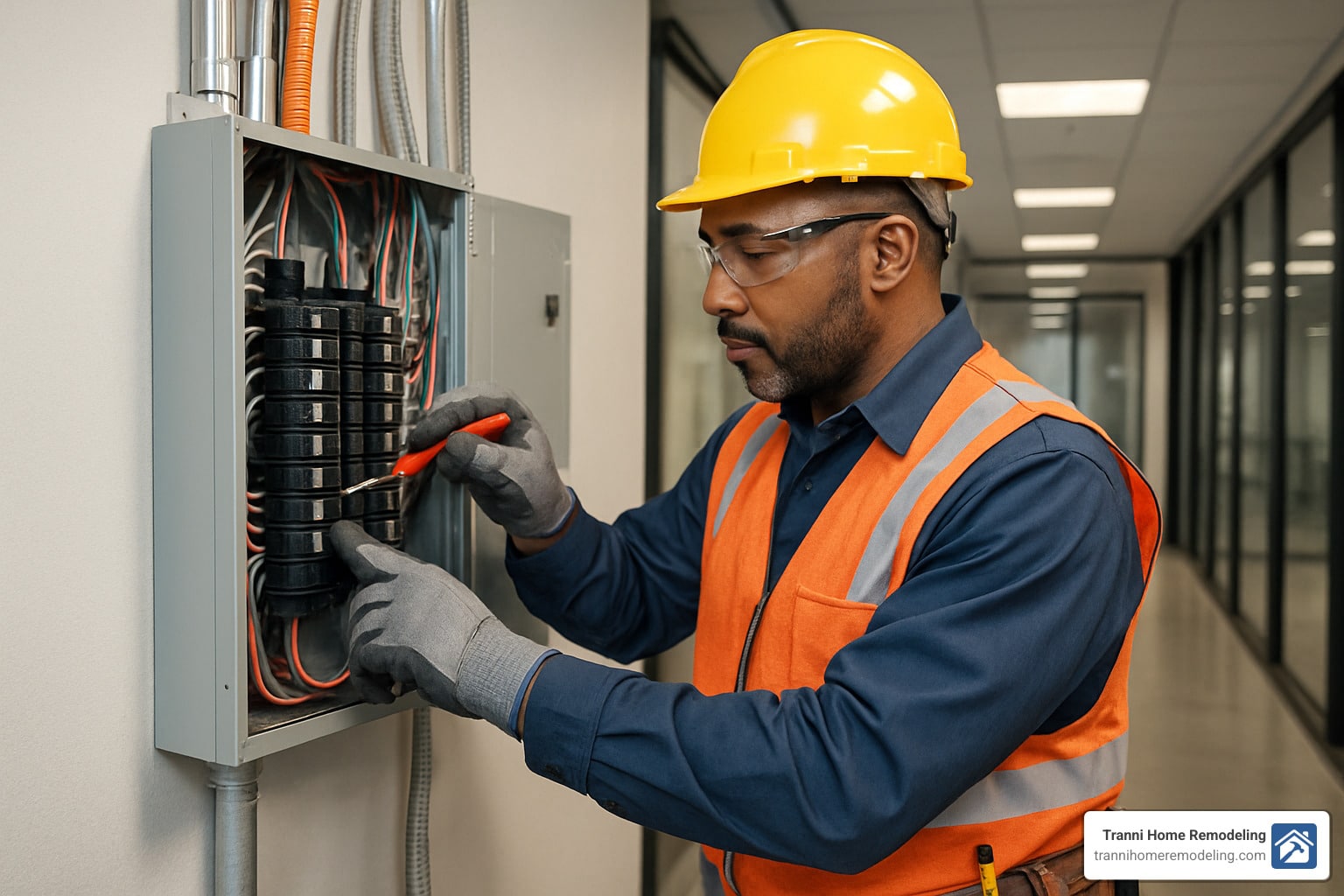





Commercial Electrical Repair: 7 Powerful Tips for 2025 Success
The Critical Importance of Commercial Electrical Repair
Commercial electrical repair services are essential for businesses facing electrical issues that can disrupt operations, compromise safety, and lead to costly downtime. If you’re looking for commercial electrical repair services, here’s what you need to know:
- Licensed professionals – Always hire certified commercial electricians with experience in three-phase systems
- 24/7 emergency services – Look for providers offering round-the-clock support
- Flat-fee pricing – Seek transparent pricing rather than open-ended hourly rates
- Commercial specialization – Ensure the contractor regularly works with commercial properties
- Code compliance – Verify they maintain up-to-date knowledge of commercial electrical codes
Commercial properties rely heavily on electricity, and a faulty electrical system can spell disaster for any business. Unlike residential repairs, commercial electrical repair involves more complex systems, higher voltages (typically 120-480V three-phase power), and stricter code requirements. Regular electrical maintenance can reduce the risk of electrical fires by up to 30% and prevent unexpected power failures that interrupt your business operations.
Warning signs that your commercial property needs electrical repair include flickering lights, buzzing sounds from fixtures or panels, frequently tripped circuits, warm outlets, or outdated fuse boxes instead of circuit breakers. Ignoring these symptoms can lead to equipment damage, fire hazards, and potential liability issues.
I’m Tyler Tranni, owner of Tranni Home Remodeling, and while we specialize in residential renovations, I’ve worked closely with licensed commercial electrical contractors throughout my career in construction to ensure all commercial electrical repair work meets stringent safety and performance standards. My experience has taught me that proactive maintenance and quick response to electrical issues are crucial for business continuity and safety.
Quick look at commercial electrical repair:
– best commercial electrician near me
– electrician cost per hour near me
– low voltage electricians near me
Understanding Commercial Electrical Repair vs. Residential Work
When you step from a home into a commercial building, the electrical systems are as different as night and day. Commercial electrical repair isn’t simply residential work on a larger scale – it’s an entirely different beast with its own rules, requirements, and challenges.
Commercial buildings typically run on three-phase power, which delivers a smoother, more reliable electrical supply for heavy-duty equipment. Unlike your home’s electrical system, which might hum along just fine at 100-200 amps, commercial properties often need a whopping 400-1000+ amps to keep everything running. That’s enough power to run a small neighborhood!
The voltage ranges in commercial settings are substantially higher too – anywhere from 120V to 480V, compared to the standard 120/240V in homes. This higher power demand isn’t just about quantity; it requires completely different components, heavier wiring, and more sophisticated safety systems.
Safety standards and code compliance take on new meaning in commercial spaces. When you’re dealing with buildings where hundreds of people work or shop daily, there’s zero room for error. Commercial buildings must strictly follow the National Electrical Code (NEC), local building regulations, and often industry-specific requirements that residential properties simply don’t face.
What Is Commercial Electrical Repair Near Me?
Commercial electrical repair covers all electrical maintenance and troubleshooting specifically designed for business properties. This isn’t just about fixing a flickering light or replacing an outlet – it’s about keeping entire operations running safely and efficiently.
These services apply to a wide range of properties: warehouses with massive distribution systems, office buildings with complex networking infrastructure, retail spaces with specialized lighting needs, and restaurants with heavy-duty kitchen equipment. Each of these environments presents unique challenges that require specialized knowledge.
The regulatory landscape is dramatically different too. Commercial spaces must comply with additional requirements for emergency lighting systems, exit signs, backup power solutions, and fire alarm integration. A qualified commercial electrician understands these regulations inside and out, ensuring your business remains compliant and, more importantly, safe.
Key Differences Between Commercial & Residential Electrical Repair Near Me
Understanding what sets commercial electrical work apart can help you choose the right service provider for your business needs:
Commercial electrical panels dwarf their residential counterparts in both size and complexity. While your home might get by with a single panel, commercial buildings often require multiple interconnected panels, switchgear, and sophisticated distribution systems to manage their power needs.
You won’t find the familiar plastic-sheathed cables from residential settings in commercial buildings. Instead, commercial wiring typically runs through metal conduit, providing superior protection, durability, and fire resistance – essential qualities when you’re powering critical business operations.
The insulation ratings for commercial wiring must withstand higher temperatures and provide greater protection, as these systems often run continuously under heavy loads. Commercial fire codes are also far more stringent, requiring specialized knowledge of fire-rated materials and emergency systems to ensure compliance.
Three-phase power configurations in commercial settings require completely different wiring approaches than the single-phase power used in homes. Additionally, commercial spaces must meet ADA requirements for switch heights, outlet placements, and other electrical components – considerations that rarely come up in residential work.
At Tranni Home Remodeling, we’ve worked alongside specialized commercial electrical contractors, and we’ve seen how these differences demand expertise far beyond what’s needed for residential projects. When your business depends on reliable power, these distinctions aren’t just technical details – they’re essential considerations for keeping your operations running smoothly and safely.
Top Electrical Problems & Warning Signs in Commercial Properties
When it comes to keeping your business running smoothly, few things are more important than a reliable electrical system. Recognizing the early warning signs of electrical problems can save you from costly downtime and potentially dangerous situations. Let’s look at what you should be watching for in your commercial property.
Flickering Lights
Have you noticed the lights in your store or office flickering? This is more than just an annoyance – it’s your electrical system trying to tell you something. In commercial settings, flickering lights often point to voltage fluctuations, overloaded circuits, or loose connections in your electrical panel. Sometimes it even indicates problems with the utility supply itself.
Beyond the technical concerns, flickering lights create a poor impression for customers. In retail spaces especially, unstable lighting can make shoppers uncomfortable and drive them away – affecting your bottom line before you’ve even addressed the electrical issue.
Tripped Breakers
When circuit breakers trip once in a while, it’s doing its job. But if you’re regularly heading to the electrical panel to reset breakers, that’s a red flag that demands attention. Repeated tripping typically means your circuits are overloaded, there might be short circuits lurking in your wiring, or ground faults are present. In some cases, it signals that your electrical panel is simply outdated or damaged.
Here’s a compelling reason to act: businesses that schedule regular electrical inspections experience about 25% fewer emergency repairs related to tripped breakers and similar issues. Preventative maintenance really does pay off.
Overheating Panels
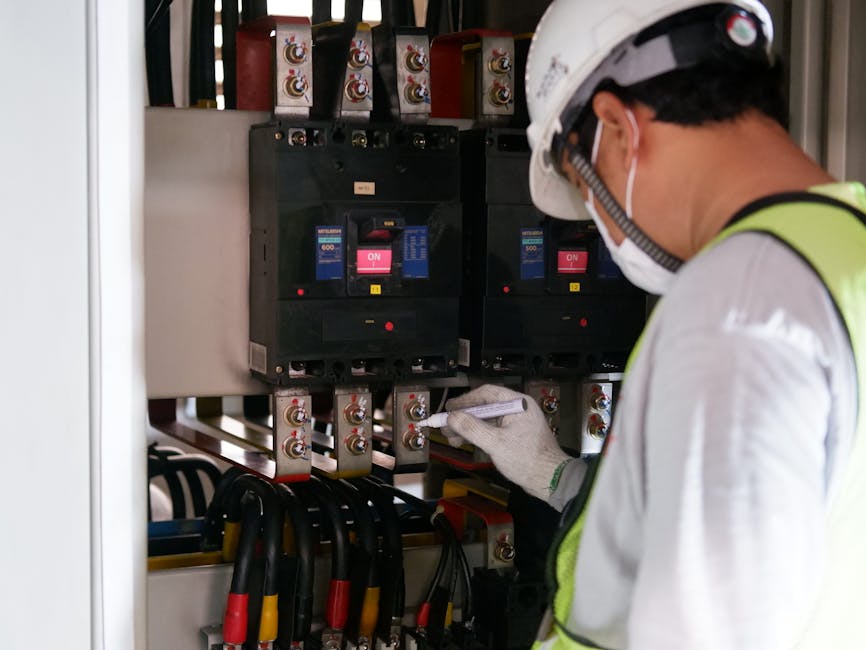
An electrical panel should never feel warm to the touch. If yours does – or worse, if you detect a burning odor – you need commercial electrical repair immediately. Overheating panels can lead to melted wire insulation, component failure, electrical fires, and complete system shutdowns that bring your business operations to a screeching halt.
Outdated Wiring
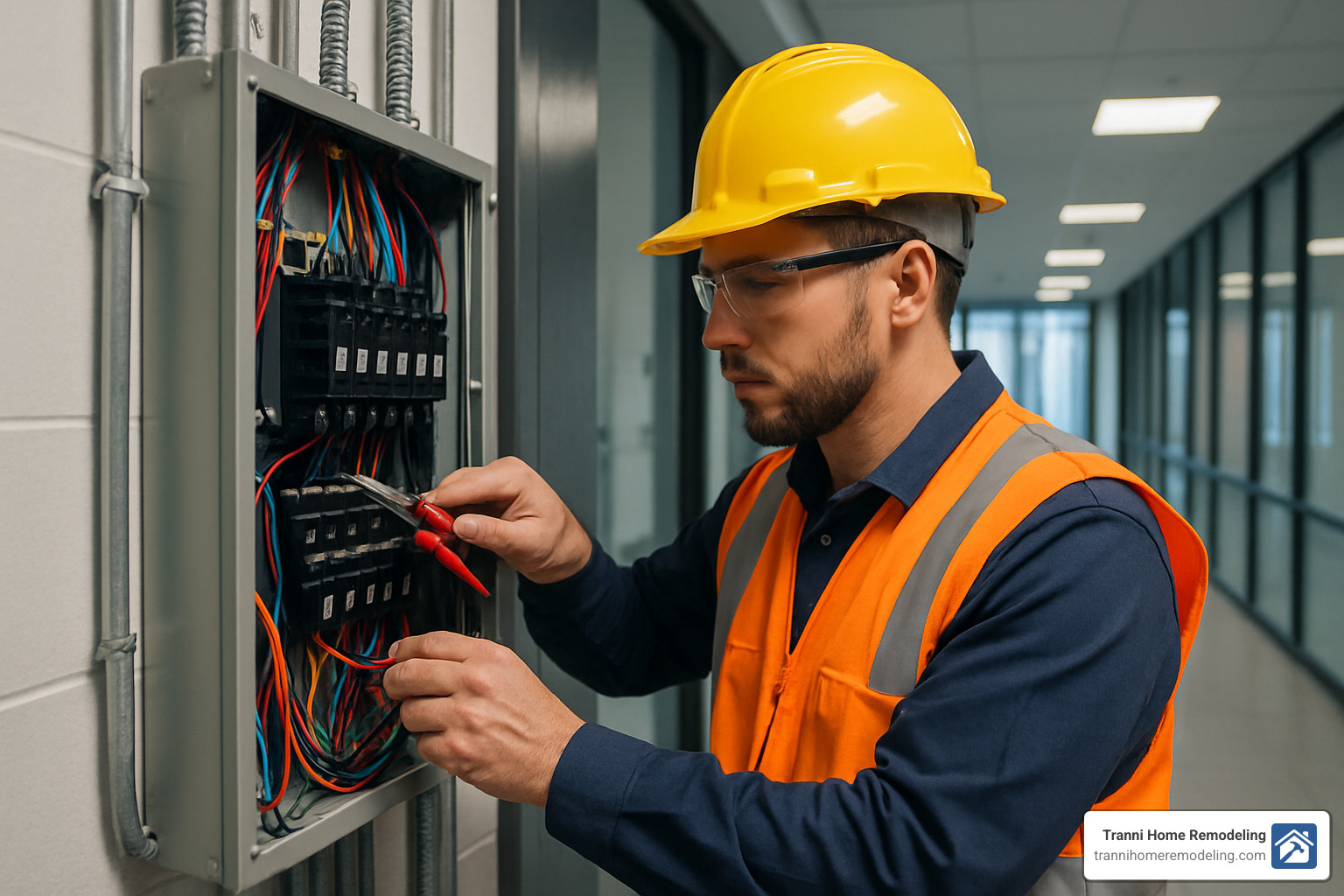
Many commercial buildings, particularly in historic Massachusetts communities like Concord, Lexington, or Winchester, contain wiring systems that simply weren’t designed for today’s electrical demands. You might be dealing with outdated wiring if your building still has fuse boxes instead of circuit breakers, fabric-insulated wiring, aluminum wiring (common in 1960s-70s construction), or two-prong outlets without proper grounding.
These older systems weren’t built to handle modern computers, kitchen equipment, HVAC systems, and other power-hungry devices that today’s businesses rely on.
Buzzing Sounds
Your electrical system should work quietly in the background. If you hear buzzing or humming coming from outlets, switches, or panels, something’s not right. These sounds often indicate loose connections, electricity arcing across gaps, overloaded circuits, or components that are beginning to fail. Don’t ignore these audio warnings – they’re often the precursor to more serious problems.
Emergency Lighting Failure
When was the last time you tested your emergency lighting systems? Failed or malfunctioning emergency lights and exit signs aren’t just dangerous – they violate building codes and could lead to significant liability. These critical safety systems need regular testing to ensure they’ll function properly during power outages when your staff and customers need them most.
Risks of Ignoring Commercial Electrical Repair Needs
Putting off commercial electrical repair can have serious consequences for your business. Beyond the immediate inconvenience, you’re looking at potential downtime that can cost thousands in lost revenue – even a few hours offline can be devastating for restaurants, retail shops, and service providers.
The fire risk is substantial too. Electrical failures cause approximately 8% of all commercial property fires annually in the United States, according to the National Fire Protection Association. These aren’t just statistics – they represent businesses that may never recover from the devastation.
Your insurance company is paying attention as well. If they determine that electrical problems were known but ignored, they may deny claims related to resulting damages. Many policies explicitly require adherence to electrical codes and regular maintenance.
Then there are the regulatory concerns. Businesses with known electrical hazards can face significant OSHA fines and violations, with penalties ranging from thousands to tens of thousands of dollars. Add potential data loss for computer systems and liability issues if someone gets injured, and the case for prompt repairs becomes overwhelmingly clear.
Most Common Repairs & Services
When it comes to commercial electrical repair, certain services are requested more frequently than others. Panel upgrades top the list, especially in older buildings where increased power demands from modern technology have outpaced the original electrical system’s capacity.
Lighting retrofits are another common service, converting older, energy-hungry lighting systems to efficient LED technology. These upgrades can reduce energy consumption by up to 75% while decreasing maintenance costs thanks to the longer lifespan of LED fixtures.
As businesses grow and reconfigure spaces, outlet additions and dedicated circuits become necessary to prevent overloading existing systems. Meanwhile, generator repair and maintenance ensures your backup power will kick in when you need it most – critical for medical facilities, data centers, and food service establishments that can’t afford downtime.
Other essential services include whole-building surge protection to safeguard sensitive equipment, code compliance updates during renovations, and emergency lighting installation and repair to maintain safety standards and legal requirements.
For more detailed information about the full range of electrical services available, check out our Electrical Services page.
Choosing the Right Commercial Electrical Repair Service Near Me
Finding the perfect commercial electrical repair partner isn’t just about getting your lights working again—it’s about securing your business’s operational future. When electrical issues strike your commercial property, you need someone reliable, skilled, and responsive. Let me walk you through what really matters in this decision.
Credentials and Licensing
The foundation of any quality electrical service starts with proper credentials. In Massachusetts, commercial electrical work requires specific licensing that’s different from residential work—and for good reason. Commercial systems are simply more complex.
Before you hire anyone, verify they have a current state electrical license and all necessary local business permits. The presence of a Master Electrician on staff, supported by experienced Journeyman electricians, ensures your commercial project receives the expertise it deserves. I’ve seen businesses rush this verification step only to face headaches later—don’t make that mistake.
Insurance Coverage
This might sound boring, but proper insurance coverage protects both you and the contractor. Any reputable commercial electrical repair service should carry at least $1 million in general liability insurance, plus workers’ compensation and professional liability coverage.
Always request certificates of insurance and take a moment to verify they’re current. This simple step could save you from significant financial exposure if something goes wrong during your project.
Reviews and References
A contractor’s reputation is more transparent than ever. Take advantage of this by checking Google Business reviews, industry directories, and the Better Business Bureau.
What’s even more valuable, though, is speaking directly with past commercial clients. Their experiences will likely mirror what you can expect, especially if they operate similar businesses. Don’t be shy about asking for references—quality contractors are proud to connect you with satisfied clients.
Response Time
When your business is facing electrical issues, every minute counts. The best commercial electrical repair services understand this reality and offer:
- 24/7 emergency response
- Guaranteed arrival windows
- Same-day service for urgent situations
In a commercial setting, downtime directly impacts your bottom line. A contractor who understands the urgency of your situation is worth their weight in gold.
Pricing Structure
Nobody likes financial surprises, especially when it comes to business expenses. Look for contractors who offer transparent, flat-fee pricing for clearly defined projects rather than open-ended hourly rates. This approach helps you budget more effectively and reduces the risk of unexpected costs.
Always insist on detailed written estimates before work begins, and make sure the contractor clearly explains any potential additional costs that might arise. The most professional electricians take time to walk you through their pricing structure.
Warranties and Guarantees
Quality work stands the test of time, and reputable contractors know this. The best commercial electrical repair services offer at least a one-year warranty on both parts and labor, with some extending coverage to 5-10 years for certain installations.
Just as important is a written guarantee of code compliance. This protects you from future headaches during inspections or property transfers.
For more detailed guidance on finding excellent commercial electrical help, check out our Best Commercial Electrician Near Me resource page.

How to Vet a Commercial Electrical Repair Contractor
Finding the right contractor requires a bit of detective work. Here’s how to dig deeper:
Start by verifying their permit history. Legitimate contractors pull permits for their work—it’s not just a legal requirement but a sign of professionalism. You can ask for examples of past permits or check with your local building department.
Next, inquire about their safety record. Have they had any OSHA violations? What safety protocols do they follow? Safety-conscious contractors protect both their workers and your property.
Don’t skip checking references. Speaking with at least three previous commercial clients can reveal patterns in the contractor’s performance. Ask specific questions about timeline adherence, communication quality, and problem-solving abilities.
Make sure they have experience with your specific type of building. A contractor who primarily works with retail spaces might not be the best fit for your manufacturing facility or restaurant. Different commercial properties have unique electrical requirements.
Also, clarify who’ll actually be doing the work. Will they use their own employees or subcontractors? How are their electricians trained and supervised? The answers to these questions can significantly impact the quality of your project.
Before signing anything, carefully review all contract terms, including payment schedules and dispute resolution procedures. A transparent, detailed contract protects everyone involved.
Questions to Ask Before Hiring
The interview process is your opportunity to really understand what working with a particular commercial electrical repair contractor will be like. Here are some essential questions that reveal a lot:
“How will you document the scope of work?” This question helps you understand their planning process and how they’ll handle any unexpected issues finded during repairs.
“Is your quote all-inclusive?” Clear pricing expectations prevent disputes later. Good contractors will explain what might cause the final price to change and how they’ll communicate those changes.
“Do you offer preventive maintenance plans?” Forward-thinking contractors help you avoid future emergencies through regular maintenance. Ask what these plans include and how often inspections occur.
“What’s your emergency response time?” Knowing how quickly they’ll respond to an urgent situation—and whether there’s an additional charge for after-hours service—helps you plan for worst-case scenarios.
“Will this repair disrupt our operations?” Understanding the project timeline and potential business disruptions allows you to prepare your team and customers. Many quality contractors can schedule work during off-hours to minimize impact.
“How do you ensure code compliance?” Professional contractors handle all necessary inspections and paperwork, ensuring your property remains up to code.
“Can you recommend energy-efficient upgrades?” The best contractors don’t just fix problems—they help you improve your systems to save money long-term.
“Who will be performing the work?” Knowing the qualifications and experience levels of the technicians assigned to your project gives you confidence in the quality of work you’ll receive.
At Tranni Home Remodeling, we understand the importance of choosing the right partners for your property needs, which is why we only collaborate with the most reliable professionals in our network when commercial electrical needs arise.
Pricing, Scheduling & Emergency Response
Let’s talk money – something every business owner needs to understand when it comes to commercial electrical repair. Knowing what to expect financially helps you plan better and avoid those dreaded surprise costs.
When it comes to pricing, commercial electrical repair services typically fall within certain ranges. For smaller fixes like replacing outlets or repairing fixtures, you’re looking at about $150-$500. Panel inspections and minor updates usually run $500-$1,500, while adding new circuits might cost $800-$2,500. For more substantial work, panel replacements typically range from $2,000-$10,000, and complete rewiring projects can run anywhere from $10,000 to $50,000 or more, depending on your building’s size and complexity.
These are average costs based on internet data and not actual costs for Tranni Home Remodeling or any specific provider. Your actual costs will depend on your building’s size, the complexity of your electrical system, and local market conditions.
Hourly vs. Flat-Rate Pricing
Most contractors use one of two pricing approaches for commercial electrical repair. With hourly pricing, rates typically range from $85-$250 per hour based on the technician’s experience level. This might include travel fees and minimum service charges, and it’s often better for troubleshooting work where the scope isn’t clear upfront.
Many business owners prefer flat-rate pricing, which provides a pre-determined fee for specific repairs or installations. This includes labor, standard materials, and overhead costs in one predictable package. The peace of mind that comes with budget certainty is why many commercial clients lean toward this option for planned repairs and upgrades.
Material markups are standard in the industry, typically 15-50% over the contractor’s cost. This covers their time sourcing materials, providing warranty support, storage, and handling returns for defective items. The best contractors are completely transparent about their markup policies – if they’re not, that’s a red flag.
Scheduling Workflow
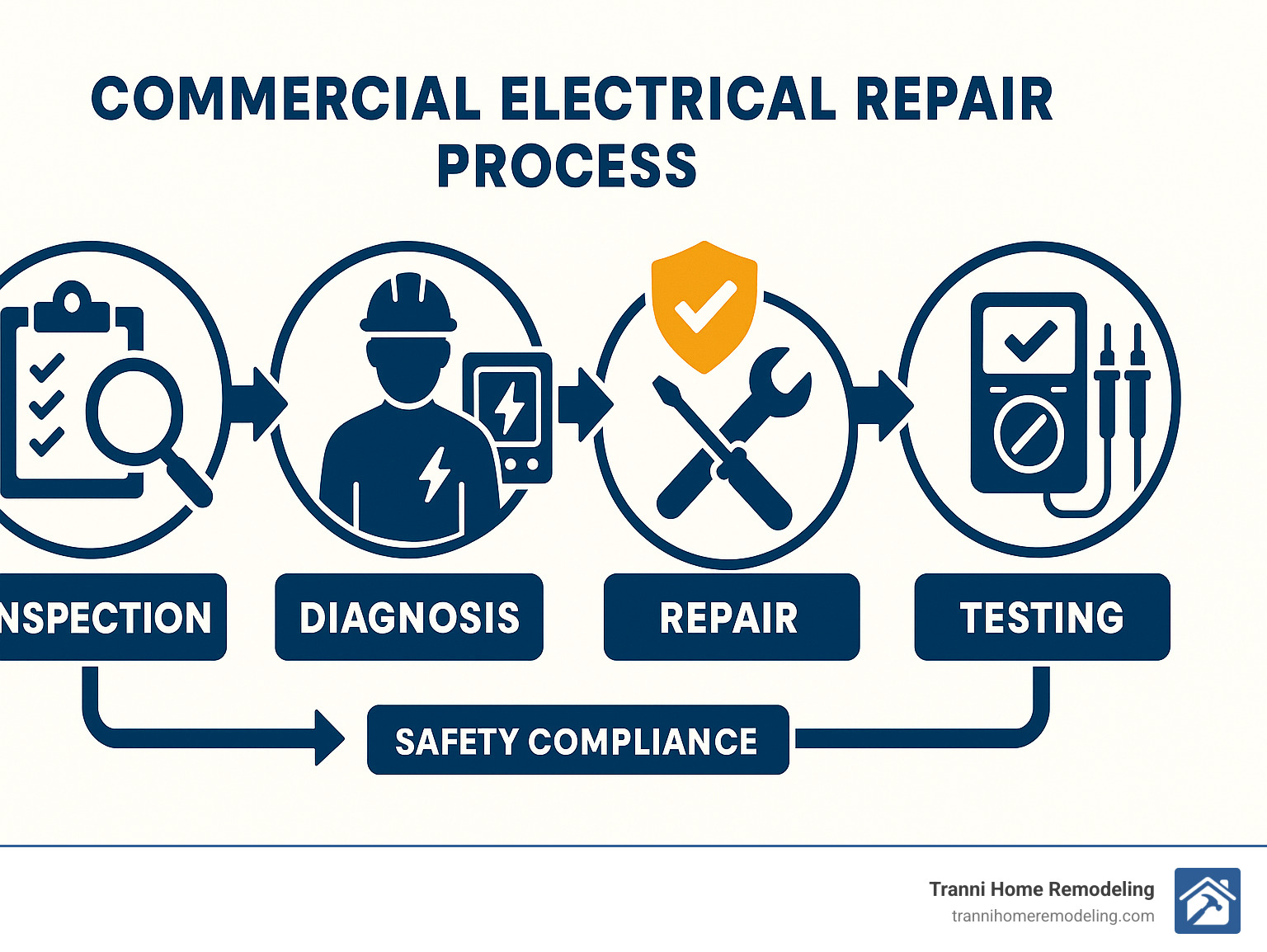
When you call for commercial electrical repair, the process typically follows a logical flow. First comes the initial contact where you describe your issues, followed by an on-site assessment to diagnose the problem. You’ll then receive a detailed proposal outlining the scope and pricing.
The contractor should work with you to create a schedule that minimizes disruption to your business operations. After securing any necessary permits, they’ll perform the repair or installation work, followed by thorough testing and quality checks. The process wraps up with a final inspection, client walkthrough, and providing documentation and warranty information.
For non-emergency repairs or planned maintenance, expect the process to take about 1-2 weeks from your first call to completion, depending on the project’s scope and parts availability.
After-Hours Rates and 24/7 Service
Electrical emergencies don’t care about your business hours – they can happen anytime. For after-hours commercial electrical repair, expect to pay premium rates: typically 1.5-2 times standard rates for evenings and weekends, and 2-3 times standard rates for holidays. Most services also have minimum service charges of $250-$500 for after-hours calls.
While these rates might make you wince, they’re often justified when electrical failures threaten your business operations or safety. Many savvy commercial property owners maintain service agreements that include priority emergency response at reduced rates – something worth considering if downtime would significantly impact your business.
Typical Cost Breakdown for Commercial Electrical Repair Near Me
Understanding how costs are allocated helps you evaluate quotes more effectively. In most commercial electrical repair projects, labor typically accounts for 60-70% of the total cost, with materials making up 20-30%. Permit fees usually run 2-5% of the project cost, depending on your locality, and inspection fees are fixed costs set by local authorities, typically $100-$300.
Other factors that influence your final price include your building’s age and the condition of existing electrical systems, how accessible the wiring and panels are, local code requirements, whether specialized equipment or expertise is needed, and the current demand for electrical services in your area.
How Emergency Commercial Electrical Repair Near Me Works
When electrical emergencies strike your business, a quality service provider springs into action with rapid dispatch – most aim to have a technician on-site within 1-2 hours of your call. The technician will perform a triage assessment to quickly identify the problem source and determine any immediate safety risks.
If a complete repair requires parts or extensive work, they may implement temporary solutions to restore partial functionality while arranging permanent repairs. Good emergency electricians will thoroughly document the issue, its cause, and all work performed – documentation that’s often crucial for insurance claims.
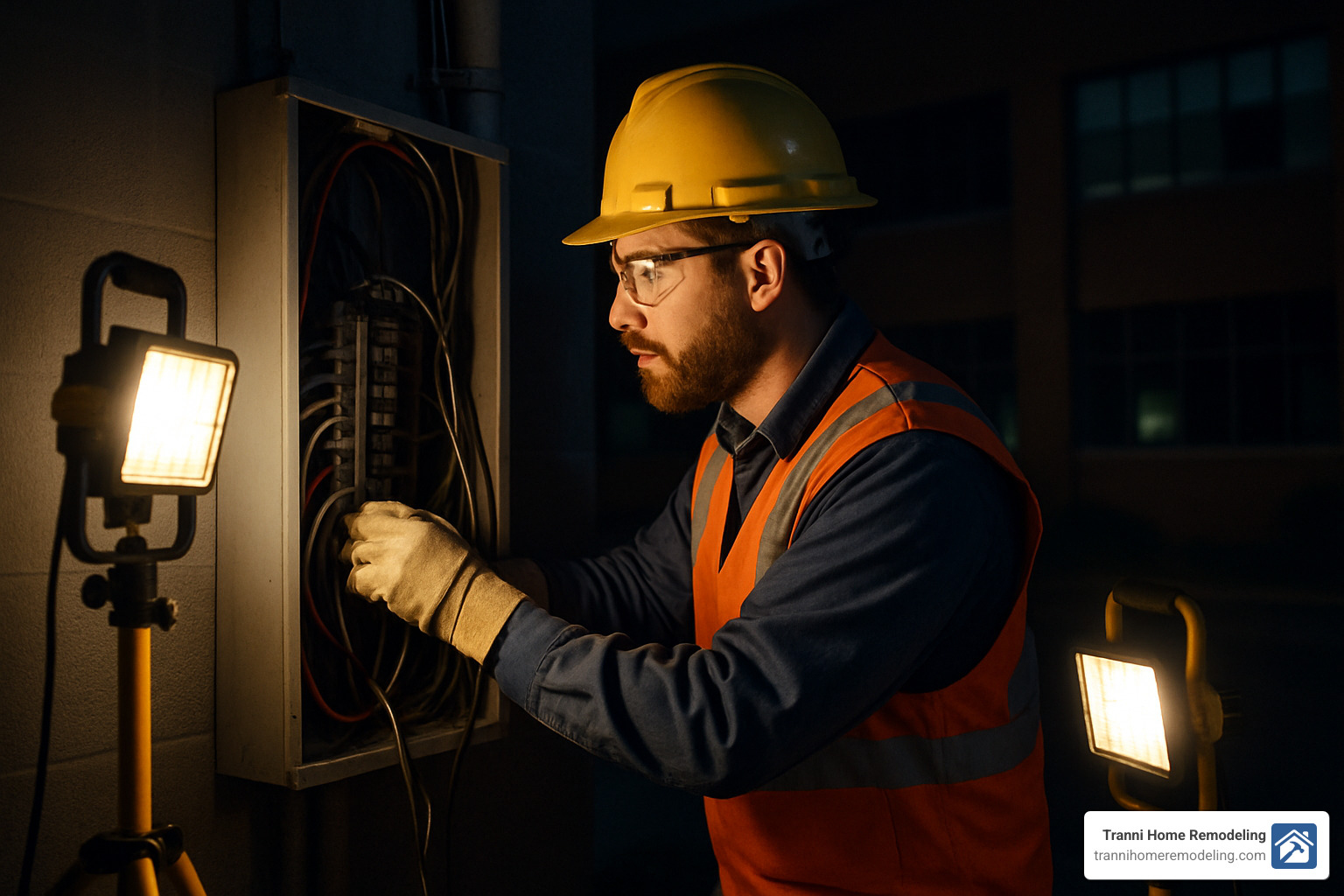
After addressing the immediate emergency, they should provide recommendations for preventing similar issues in the future. The best commercial electrical repair companies maintain dedicated emergency response teams that are available 24/7, 365 days a year, separate from their scheduled service technicians, ensuring you’re never left in the dark.
Preventive Maintenance, Energy Audits & Upgrades
When it comes to commercial electrical repair, the old saying “an ounce of prevention is worth a pound of cure” couldn’t be more accurate. Taking a proactive approach to electrical maintenance isn’t just smart—it’s a genuine money-saver for your business.
Regular preventive maintenance creates a shield against those middle-of-the-night emergencies that can halt your operations and drain your budget. A well-designed maintenance program gives you peace of mind and keeps your systems running smoothly.
Routine Inspections
Think of electrical inspections as health check-ups for your building’s circulatory system. During these visits, experienced electricians will visually examine all your panels, switches, and outlets for signs of wear or damage. They’ll use thermal scanning equipment to identify concerning hotspots before they turn into failures.
These inspections also include testing of all safety systems and ground fault protection—critical components that protect both your property and the people inside it. The electrician will verify that everything is properly labeled (which saves precious time during emergencies) and tighten all connections, since loose connections are actually one of the leading causes of electrical fires.
Most commercial properties find that quarterly or semi-annual inspections strike the right balance between protection and cost-effectiveness. The small investment in regular check-ups pays dividends in prevented downtime.
Infrared Scans
Infrared thermography is like having X-ray vision for your electrical system. This non-invasive technology can spot problems invisible to the naked eye by detecting heat variations that signal trouble.
These scans are remarkably effective at finding overheating components before they fail completely, identifying loose connections that could cause arcing, and spotting overloaded circuits that might otherwise go unnoticed until they cause problems. Over time, regular scans create a documented history of your system’s condition, making it easier to spot concerning trends.
Many insurance companies recognize the value of this preventive measure and offer premium discounts to businesses that conduct regular infrared electrical inspections. It’s a win-win: lower risk for them, lower premiums for you.
Load Balancing
As your business evolves—adding new equipment, reconfiguring spaces, or changing operations—your electrical loads can become unbalanced. This imbalance isn’t just inefficient; it can lead to serious problems.
Unbalanced electrical systems waste power, cause components to fail prematurely, increase fire risk, and create power quality issues that can damage sensitive equipment like computers and servers. Professional load balancing ensures power is distributed evenly across phases and circuits, optimizing your system’s performance and extending its lifespan.
LED Retrofits
Converting your lighting to LED technology is one of the smartest upgrades you can make. The benefits are substantial and immediate:
Your energy consumption for lighting can drop by up to 75%, creating noticeable savings on your monthly utility bills. You’ll also spend less on maintenance since LED bulbs last significantly longer than traditional lighting. Many businesses also report improved light quality and distribution, which creates a better environment for employees and customers alike.
As a bonus, many utilities offer rebates and incentives for LED conversions, making the initial investment even more attractive. A professional commercial electrical repair service can perform a lighting audit to calculate your potential savings and determine how quickly your investment will pay for itself.
Energy Audit Savings
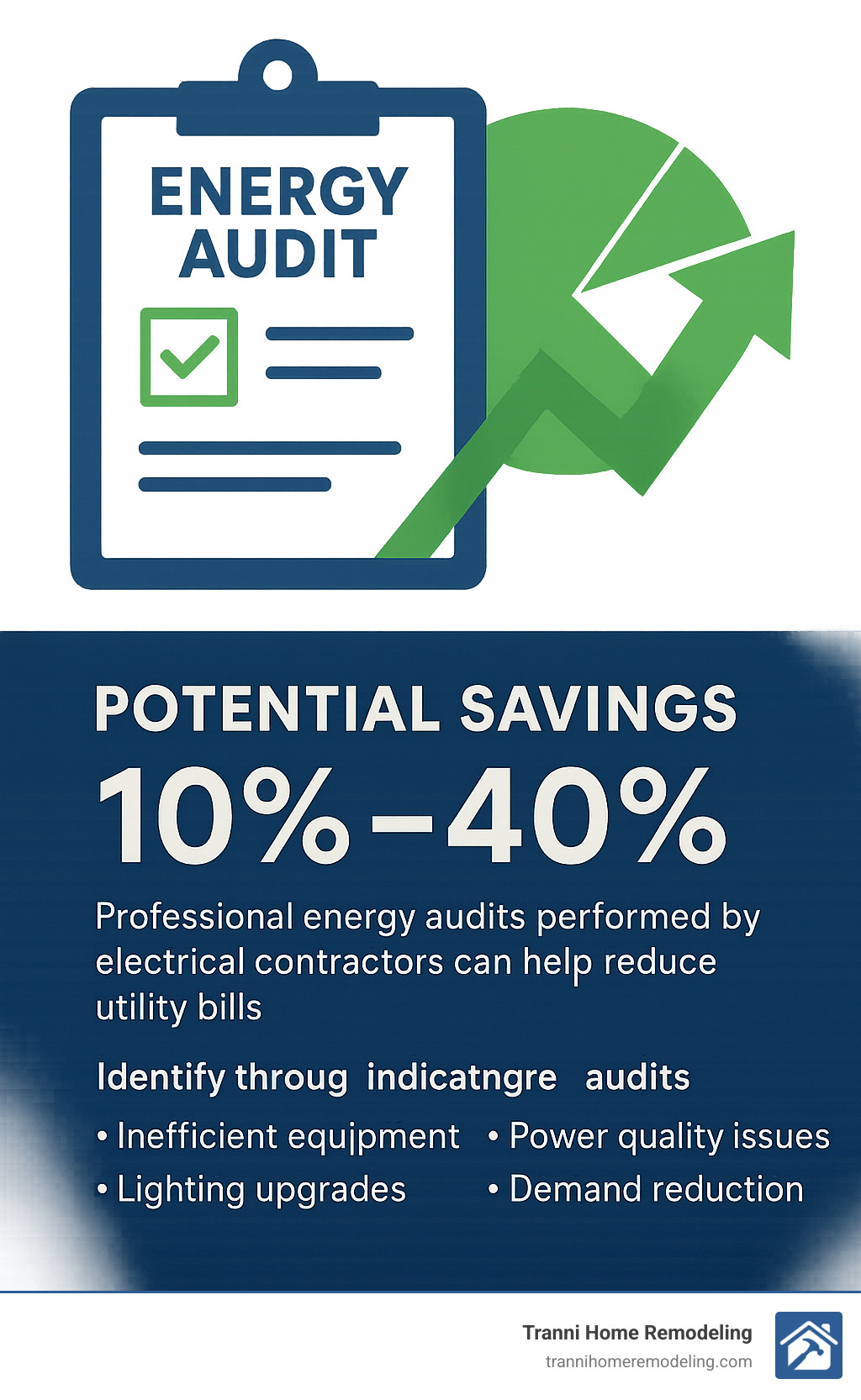
A professional energy audit is like having a financial advisor for your building’s electrical system. These comprehensive assessments can help businesses reduce monthly utility bills by 10% to 40%—significant savings that go straight to your bottom line.
During an energy audit, specialists identify inefficient equipment and systems, spotlight opportunities for lighting upgrades, diagnose power quality issues, suggest peak demand reduction strategies, and help you steer available rebate and incentive opportunities. The recommendations from these audits often pay for themselves within months.
Compliance Records
In today’s business environment, documentation isn’t just paperwork—it’s protection. Maintaining detailed records of all electrical maintenance and repairs serves multiple essential purposes.
These records satisfy insurance requirements, demonstrate regulatory compliance, validate warranties when needed, maintain your property’s value, and provide protection in case of litigation. Professional commercial electrical repair services understand this and provide comprehensive documentation of all work performed, giving you a complete historical record of your system’s maintenance.
For more information about upgrading your electrical panel, visit our Electrical Panel Upgrades page.
Benefits of Regular Commercial Electrical Maintenance
The numbers tell a compelling story about the value of preventive maintenance:
Regular electrical maintenance can slash your risk of electrical fires by up to 30%—a statistic that should get every business owner’s attention. Properties that schedule regular electrical inspections experience 25% fewer emergency repairs, saving both money and stress.
Properly maintained electrical systems can last decades longer than neglected ones, maximizing your return on investment. By addressing inefficiencies identified during maintenance, you can reduce energy costs by 5-15%, savings that compound year after year.
There are financial benefits beyond direct savings, too. Many insurance providers offer reduced premiums for businesses with documented maintenance programs. And unlike emergency repairs that can bring operations to a halt, planned maintenance can be scheduled during off-hours to minimize disruption. Regular updates also ensure your systems remain compliant with evolving electrical codes, helping you avoid potential fines and compliance issues.
Lighting & Energy Efficiency Upgrades
Beyond basic repairs, commercial electrical repair services can transform your building’s efficiency with strategic upgrades.
LED Conversion
The switch from older lighting technologies to LED is one of the most impactful changes you can make. LEDs typically reduce lighting energy use by 50-75%, while simultaneously cutting HVAC costs since they produce less heat than traditional bulbs.
The improved color rendering and light quality creates a more pleasant environment, while the dramatically reduced maintenance needs (some LEDs last 10+ years) save both time and money. Many businesses qualify for utility rebates and tax incentives that make the conversion even more affordable.
Occupancy Sensors
Why pay to light empty rooms? Occupancy sensors ensure lights are only on when spaces are in use, creating immediate savings. Offices typically see energy savings of 15-30%, while warehouses and storage areas often save 30-65%. Conference rooms and break areas can see even more dramatic results, with savings of 45-80%.
These sensors are particularly effective in spaces that are used intermittently throughout the day, eliminating the human element of remembering to turn lights off when leaving.
Daylight Harvesting
This intelligent technology makes the most of natural light, automatically adjusting artificial lighting based on available sunlight. Sensors continuously monitor ambient light levels, and lighting systems automatically dim when natural light is sufficient, maintaining consistent illumination while maximizing energy savings.
The result is typical energy savings of 20-60% in perimeter spaces with windows—a smart way to leverage natural resources while maintaining perfect lighting conditions.
For more information about upgrading electrical systems in older buildings, visit our Upgrading Electrical in Old Home page.
Frequently Asked Questions about Commercial Electrical Repair Near Me
How often should a commercial property schedule electrical inspections?
When it comes to keeping your commercial property safe and operational, regular electrical inspections are non-negotiable. At minimum, schedule comprehensive inspections annually—but that’s just the baseline.
If your business falls into certain categories, you’ll want more frequent check-ups. Manufacturing facilities and data centers, for example, put tremendous demands on electrical systems and benefit from quarterly inspections. Similarly, if your building is showing its age with an older electrical system, or you’ve recently added new equipment or renovated, more frequent inspections make good business sense.
Many business owners don’t realize that their insurance policies may actually require annual inspections by licensed electricians. Missing these could potentially void coverage if an electrical fire occurs. Beyond the annual comprehensive inspection, certain components need more regular attention—test emergency lighting monthly and GFCI outlets quarterly.
The National Fire Protection Association doesn’t just suggest infrared scanning of electrical systems—they recommend it annually. These thermal scans can spot potential failures before they turn into expensive emergencies or dangerous fire hazards, giving you peace of mind and potentially saving thousands in emergency repair costs.
What warranties are typical for commercial electrical repair work?
When investing in commercial electrical repair, understanding the warranty coverage is just as important as the work itself. Most reputable contractors offer tiered warranty protection:
For basic repairs, expect labor warranties ranging from 90 days to 1 year. Parts typically carry the manufacturer’s warranty (usually 1-5 years) plus any additional guarantee from your contractor. For major work like complete system installations or upgrades, you should receive system warranties spanning 2-10 years.
The best commercial electrical repair providers go beyond the basics, offering extended warranties of 5-10 years on significant work like panel upgrades or complete rewiring projects. Just be aware that these premium warranties often require you to schedule annual maintenance inspections to keep them valid—a small price to pay for long-term protection.
Before signing any contract, carefully review what’s specifically covered (parts, labor, or both), any exclusions or limitations, whether the warranty transfers if you sell the property, and what maintenance is required to keep everything valid. A reputable contractor will happily explain these details rather than hiding them in fine print.
Are flat-fee or hourly rates better for large-scale commercial projects?
When planning large-scale commercial electrical repair projects, the pricing structure can significantly impact both your budget and peace of mind. In most cases, flat-fee pricing offers compelling advantages for business owners.
With flat-fee pricing, you’ll enjoy complete budget certainty with no unwelcome surprises when the final bill arrives. The contractor assumes the risk of any unexpected complications, which eliminates concerns about inefficient work practices or dragged-out timelines. This approach also simplifies your accounting and project management, with one clear number from the start.
That said, hourly rates make more sense in certain situations. If your project has an undefined scope with many unknowns, or requires extensive troubleshooting of complex issues, hourly billing provides flexibility. Very old buildings where wall and ceiling conditions are unpredictable, or projects requiring significant demolition before electrical work can begin, may also benefit from hourly arrangements.
For most planned commercial electrical repair projects, we recommend negotiating a flat fee with clearly defined scope and straightforward change order procedures for any additional work that might become necessary. This balanced approach protects both you and your contractor while keeping the project on budget and on schedule.
Transparency is key—whichever pricing model you choose, make sure all terms are clearly documented before work begins. A trustworthy contractor will help you understand exactly what you’re paying for and why.
Conclusion & Next Steps
When it comes to your commercial property, a reliable electrical system isn’t just a convenience—it’s essential for your business success. Commercial electrical repair services provide the specialized expertise that keeps your operations running smoothly while protecting your investment.
As we’ve explored throughout this guide, professional electrical services offer three key benefits that every business owner should consider:
Safety First
Nothing matters more than the safety of your employees, customers, and property. Professional commercial electrical repair dramatically reduces risks that amateur work or neglected maintenance might create. Electrical failures in commercial settings can lead to devastating consequences—fires that destroy property and threaten lives, shock hazards that could injure someone on your premises, or equipment damage that brings operations to a standstill.
When you hire licensed professionals, you gain peace of mind knowing that all work meets or exceeds safety codes. This isn’t just about following rules—it’s about creating a genuinely safe environment where your business can thrive.
Cost Savings
While some business owners hesitate at the upfront cost of proper electrical work, the long-term financial benefits are substantial. Think of commercial electrical repair as an investment rather than an expense. Professional maintenance and timely repairs prevent those middle-of-the-night emergency calls that come with premium pricing. You’ll also see reduced energy waste on your utility bills, extended lifespan for your electrical systems, and fewer business interruptions that eat into your revenue.
Many insurance companies even offer premium reductions for businesses that maintain proper electrical systems and documentation—another way professional service pays for itself over time.
Compliance
The regulatory landscape for commercial properties grows more complex every year. Professional commercial electrical repair ensures your property meets all National Electrical Code requirements, satisfies local building regulations, and addresses any industry-specific standards that apply to your business. Proper permits are obtained, inspections are passed, and—crucially—documentation is maintained for insurance and regulatory purposes.
This documentation becomes invaluable during property sales, insurance claims, or regulatory inspections. Rather than scrambling to prove compliance, you’ll have organized records of all electrical work and maintenance.
Next Steps
If you’re noticing any warning signs we’ve discussed—or if it’s simply been a while since your last electrical inspection—here’s what I recommend:
First, schedule a comprehensive electrical inspection with a licensed commercial electrician who specializes in your type of property. This baseline assessment will identify any immediate concerns and help you understand your system’s overall health.
Next, address any code violations or safety concerns immediately—these aren’t areas where cutting corners makes sense. Then, work with your electrician to develop a preventive maintenance plan custom to your specific needs and budget.
Consider energy efficiency upgrades that could reduce your operating costs while improving performance. And finally, establish a relationship with a reliable 24/7 emergency service before you need one.
At Tranni Home Remodeling, while our primary focus is residential renovations in Billerica, MA and surrounding communities, our decade of construction experience has taught us the tremendous value of working with skilled, licensed professionals for all electrical needs. We’ve seen how quality electrical work provides lasting benefits for property owners.
For more information about our carpentry and other services, visit our Carpentry Repair page.
Investing in quality commercial electrical repair services isn’t just about fixing today’s problems—it’s about ensuring the long-term safety, efficiency, and reliability of the electrical infrastructure that powers your business success every day.