




Average Cost to Refinish Basement: 2024’s Surprising Guide
The average cost to refinish basement spaces ranges from $7 to $23 per square foot, making it an appealing option for homeowners in Billerica, MA, who want to expand their living areas without the expense of adding onto their home. These costs can fluctuate significantly based on factors like the size of your basement and the specific design choices you make.
Refinishing your basement offers several benefits beyond the immediate increase in usable space. Not only can it potentially boost your home’s value by 50% to 80%, but it also improves energy efficiency and provides you with the flexibility to use the space in a variety of ways—from a cozy family theater to an extra bedroom, or even a functional home gym.
My name is Tyler Tranni, and I bring years of expertise in changing basements into dream spaces at Tranni Home Remodeling. Whether you’re after a simple, unfinished look or a fully furnished oasis, understanding the average cost to refinish basement areas is key. Now, let’s dig deeper into how these elements come together to shape the total cost and benefits of a basement refinish.
Average Cost to Refinish Basement
Refinishing a basement can transform it into a valuable part of your home. But how much will it cost? Let’s break it down.
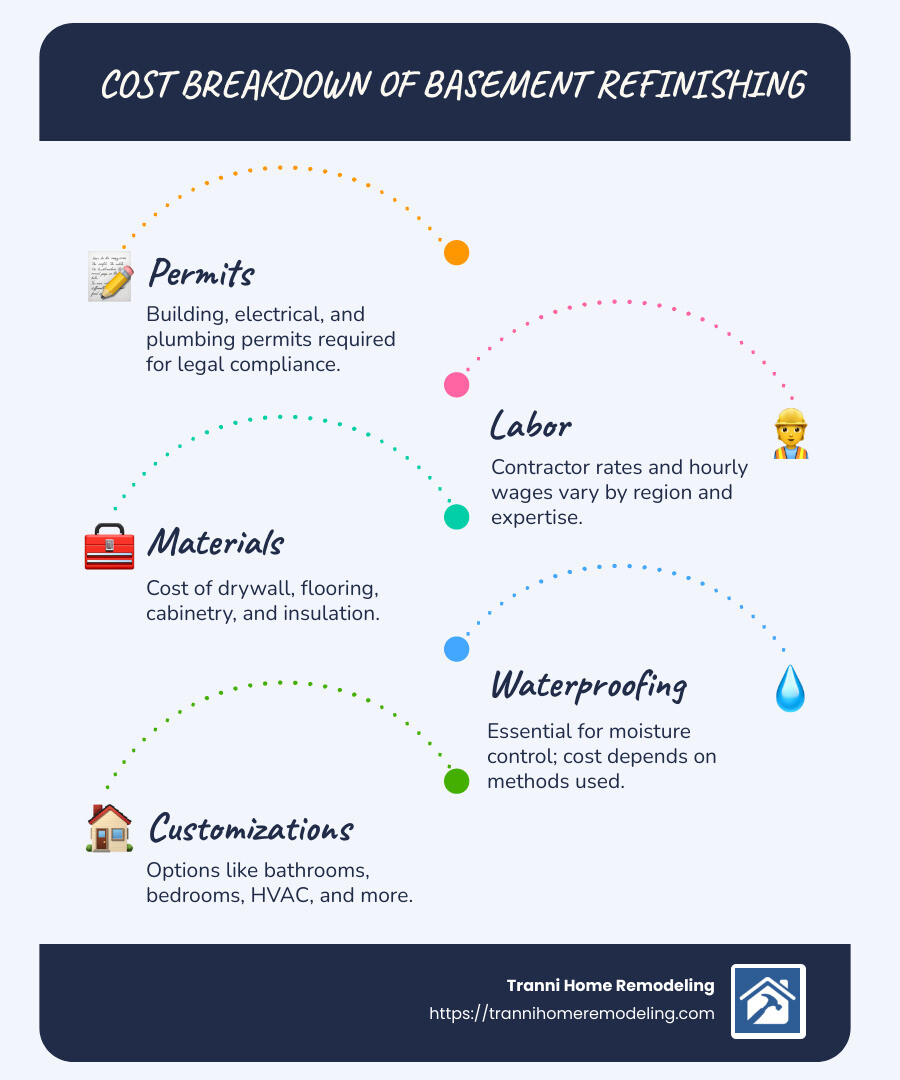
Cost Breakdown
Permits: Before you start, you’ll likely need permits for construction, electrical, and plumbing work. These can range from $100 to $2,000 depending on your location and the extent of the work.
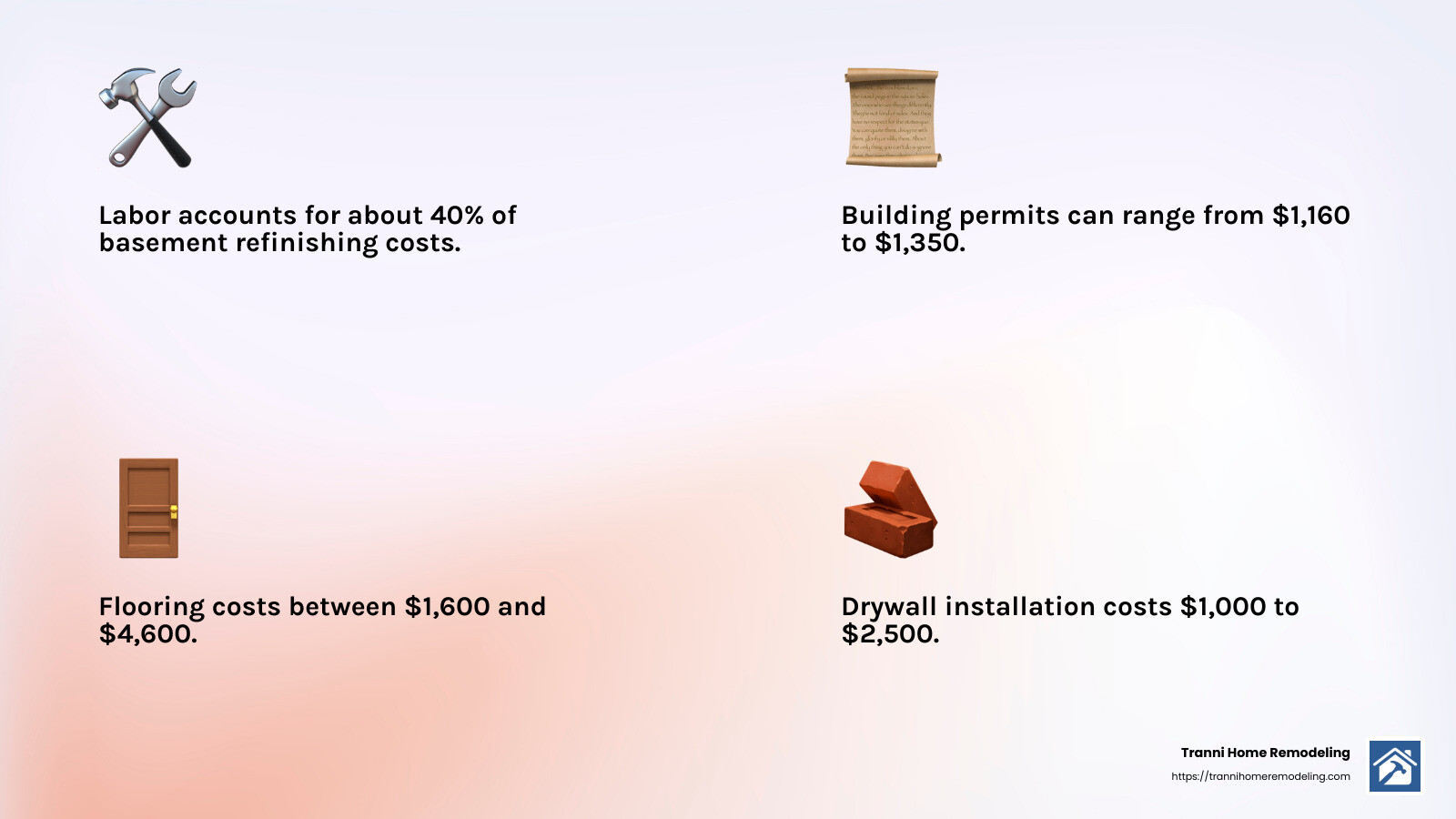
Labor: Labor is a significant part of the cost, often making up around 40% of the total expense. Hiring professionals can add 10% to 25% to your project cost, but ensures quality and adherence to codes.
Materials: The choice of materials impacts the budget. Drywall, flooring, and cabinetry vary widely in price. For example, drywall installation can cost $1,000 to $2,500, while flooring ranges from $1,600 to $4,600.
Waterproofing: Essential to prevent future problems, waterproofing costs $2,000 to $7,000. This includes sealing walls and floors against moisture.
Ceiling and Drywall: Depending on your choice, ceiling installation can range from $1 to $3 per square foot for basic drywall to $2,000 to $11,300 for drop ceilings.
Flooring: Options vary, but the average cost to install new flooring is $1,600 to $4,600.
Bathroom and Plumbing: Adding a bathroom can cost between $6,000 to $15,100. Plumbing work alone is typically $2,500 to $5,000.
Electrical: Rewiring and adding outlets costs $500 to $2,500, with electricians charging $50 to $100 per hour.
Customizations: Extras like wet bars or home theaters add luxury but come at a price. A wet bar might cost $6,000 to $22,600, while a home theater could be $17,500.
Cost by Basement Size
The size of your basement is a primary cost driver. Here’s a quick look at average costs by square footage:
- 400 sq ft: $2,800–$9,200
- 500 sq ft: $3,500–$11,500
- 700 sq ft: $4,900–$16,100
- 800 sq ft: $5,600–$18,400
- 1,000 sq ft: $7,000–$23,000
- 1,200 sq ft: $8,400–$27,600
- 1,500 sq ft: $10,500–$34,500
Cost by Basement Type
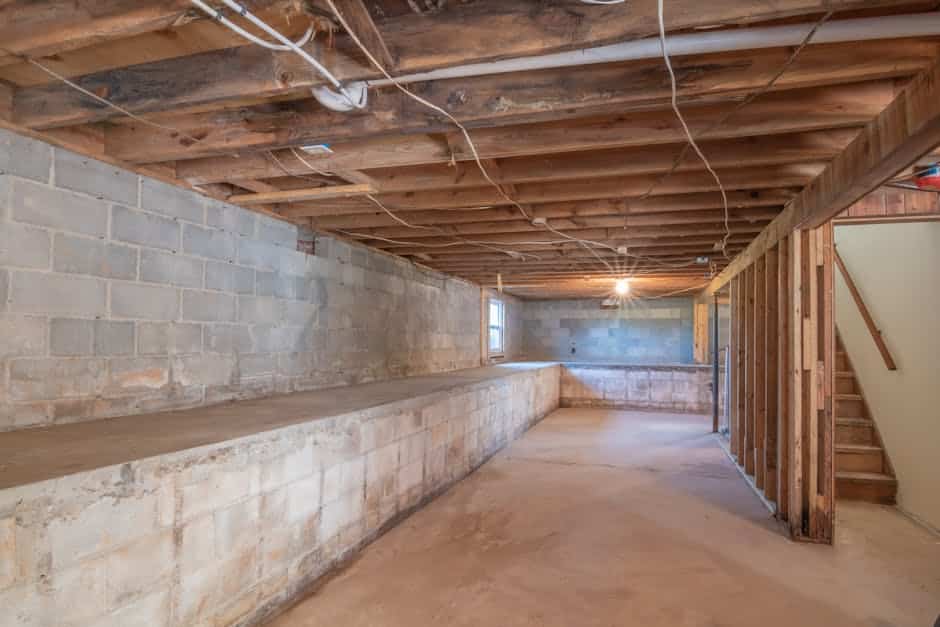
Unfinished Basements: Starting from scratch costs more due to exposed pipes and ductwork. Expect to pay on the higher end of the scale, especially for framing and insulation.
Partially Finished Basements: These may already have some drywall and flooring, reducing costs. You’ll likely spend less on structural changes and more on cosmetic updates.
Fully Finished Basements: If you’re updating an already finished space, costs focus on aesthetics and minor adjustments, like upgrading fixtures or adding customizations.
Understanding these factors helps you plan effectively. Whether your basement is a blank slate or a work in progress, knowing the average cost to refinish basement spaces is crucial for budgeting and making informed decisions.
Major Cost Factors
When planning your basement refinishing project, understanding the major cost factors can help you budget wisely. Let’s explore the key elements that will shape your expenses.
Permits
Before any work begins, you’ll likely need building permits. These are essential for ensuring your project complies with local codes and regulations. Building permits can range from $1,160 to $1,350, covering structural changes, plumbing, and electrical work. While this may seem like an extra hassle, skipping permits could lead to costly fines or having to redo work.
Labor Costs
Labor is a significant portion of your basement refinishing budget. It often accounts for about 40% of total costs. Contractor rates vary widely based on experience and location. For example, electricians typically charge $50 to $100 per hour, while plumbers might ask for similar rates. In areas with higher living costs, expect these rates to be on the higher end. Hiring professionals ensures quality work and compliance with building codes, but it can add 10% to 25% to your project cost.
Materials
The materials you choose will significantly impact your budget. Here’s a breakdown of common materials and their costs:
- Drywall: Installing drywall can cost between $1,000 and $2,500. It’s a staple for creating finished walls and ceilings.
- Flooring: Options range from affordable vinyl to high-end hardwood. Expect to pay $1,600 to $4,600 depending on your choice.
- Cabinetry: Custom cabinets can be pricey, but they add functionality and style. Prices vary based on material and design complexity.
- Insulation: Proper insulation is crucial for energy efficiency and comfort. Costs depend on the type and amount needed for your space.
By planning for these major cost factors, you can create a realistic budget and avoid surprises. Understanding the average cost to refinish basement spaces will help you make informed decisions and prioritize your spending.
Additional Costs
When refinishing your basement, it’s important to consider additional costs that can arise. These costs are crucial for ensuring a functional and safe space. Let’s explore some key areas: waterproofing, sump pump installation, and egress windows.
Waterproofing
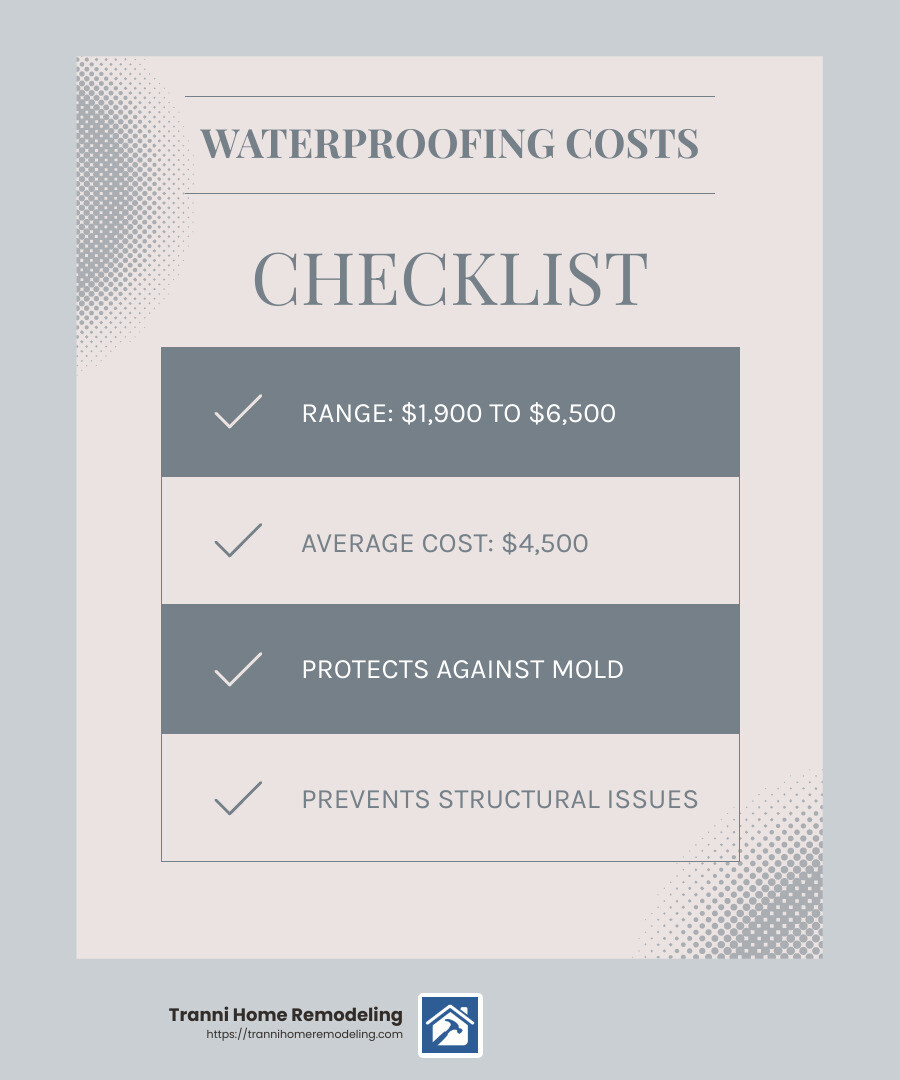
Waterproofing is essential to protect your basement from moisture and potential damage. Water intrusion can lead to mold, structural issues, and a host of other problems. The cost for waterproofing ranges from $1,900 to $6,500, with the average being around $4,500. This process often involves sealing cracks in the foundation and applying a waterproof sealant to the walls.
Methods include exterior excavation, interior sealants, and installing drainage systems. While it may seem costly, investing in waterproofing can save you from expensive repairs down the line.
Sump Pump Installation
If your area is prone to heavy rainfall or flooding, a sump pump is a wise investment. It helps keep your basement dry by directing water away from your foundation. There are two main types of sump pumps: pedestal pumps and submersible pumps.
- Pedestal pumps are more affordable, easier to maintain, and cost between $600 and $1,600.
- Submersible pumps are quieter and more efficient, but they are also more expensive.
Installation costs depend on the complexity of the job and the type of pump. It’s crucial to choose the right pump for your needs to ensure long-term protection.
Egress Windows
Installing egress windows is not just a safety measure; it’s often a legal requirement if you’re converting your basement into a living space. These windows serve as an emergency exit and must meet specific size requirements.
The cost of installing an egress window ranges from $2,500 to $5,300. This price may include excavation for a window well if needed. Egress windows not only improve safety but also bring natural light into your basement, making it a more pleasant space.
Incorporating these additional costs into your budget is vital for a successful basement refinishing project. Understanding the average cost to refinish a basement will help you plan effectively and avoid unexpected expenses.
Benefits of Refinishing a Basement
Refinishing your basement can transform an underused space into a valuable and functional part of your home. Let’s explore some of the key benefits:
Increased Living Space
A finished basement adds valuable square footage to your home. This extra space can be customized to suit your needs, whether it’s a cozy family room, a home office, or a guest bedroom. Imagine having a dedicated area for a home gym or a playroom for the kids. The possibilities are endless!
Higher Home Value
Investing in your basement can significantly boost your home’s market value. According to the National Association of Realtors, a finished basement can offer a return on investment (ROI) of between 50% and 70%. Potential buyers often see a finished basement as a desirable feature, making your home more attractive on the market.
Energy Efficiency
Refinishing your basement can also improve your home’s energy efficiency. Proper insulation and sealing can help regulate the temperature, reducing the strain on your HVAC system. This can lead to lower utility bills and a more comfortable living environment throughout the year.
Storage Solutions
A finished basement offers organized storage options, reducing clutter in other areas of your home. Consider adding shelving systems or storage cabinets to keep your belongings neat and accessible. This can be especially beneficial for families needing extra space for seasonal items or hobbies.
Additional Income Potential
If local regulations permit, you could convert your finished basement into a rental unit, generating extra income. A basement apartment can be an attractive option for renters seeking a private and affordable living space. This not only helps offset the cost of the refinishing project but also boosts your property’s economic value.
Refinishing your basement is a smart investment that improves your home’s functionality, value, and efficiency. With careful planning and consideration of the average cost to refinish a basement, you can create a space that meets your needs and adds lasting value to your home.
Professional vs. DIY Basement Finishing
Deciding between hiring professionals or taking the DIY route for your basement finishing project is a big choice. Both options have their own sets of benefits and drawbacks. Let’s break it down.
Professional Basement Finishing
Pros:
- Expertise: Professionals bring years of experience and know-how. They can handle complex tasks like electrical work and plumbing that require specific skills and licenses.
- Time-Saving: With a team of pros, your basement can be finished much faster. They are efficient and can usually complete the job in a few weeks, unlike a DIY project, which might stretch on for months.
- Permits and Codes: Professionals know the local building codes and can secure necessary permits. This ensures your basement meets all legal standards, which is crucial for safety and resale value.
- Warranty and Insurance: Hiring a contractor often comes with warranties and insurance. This means if something goes wrong, you’re covered, and the contractor will fix it without extra costs.
Cons:
- Cost: Professional services can be expensive, with labor often making up 40% of the total project cost. However, this cost reflects the expertise and speed professionals offer.
DIY Basement Finishing
Pros:
- Cost Savings: Doing it yourself can save you a lot on labor costs. You only pay for materials and any tools you might need.
- Personal Satisfaction: Completing a project on your own can be incredibly rewarding. You get the satisfaction of seeing your hard work transform your home.
- Flexibility: With DIY, you have complete control over the schedule and design. You can work at your own pace and make changes as you go.
- Learning Opportunity: Taking on a DIY project is a great way to learn new skills and gain experience in home improvement.
Cons:
- Time Investment: DIY projects can take a long time, especially if you’re learning as you go. Be prepared for your basement to be a work-in-progress for several months.
- Skill Requirements: Certain tasks, like electrical work, require specific skills and can be dangerous if done incorrectly. You need to be honest about your abilities and know when to call in a pro.
In the end, the choice between professional and DIY basement finishing depends on your budget, time, and skill level. If you’re looking for speed and peace of mind, hiring a professional is the way to go. But if you want to save money and enjoy the process, DIY might be the right choice for you.
Frequently Asked Questions about Refinishing Basements
Does a finished basement have to have an egress window?
Yes, in most cases, a finished basement must have an egress window. The International Residential Code (IRC) requires that basements larger than 200 square feet with habitable space have at least two means of egress. This means you need a door and a window that meets specific size requirements—at least 5.7 square feet of clear opening, with a minimum height of 24 inches and width of 20 inches.
If your basement includes bedrooms, each room must have its own egress window. This is crucial for safety, allowing occupants to easily exit in case of an emergency. Always check local building codes to ensure compliance.
Will finishing my basement increase my home’s resale value?
Finishing your basement can significantly increase your home’s resale value. A finished basement adds more usable living space, which can be a big selling point. Whether it’s a family room, home office, or extra bedroom, this added space makes your home more appealing to potential buyers.
According to a 2019 report from the National Association of Realtors, converting a basement into a living space can offer about a 70% return on investment (ROI). However, the exact ROI can vary based on local market conditions and the quality of the work done. That a well-designed basement improves your home’s overall appeal, potentially leading to a quicker sale.
Can you finish a seven-foot-high basement?
Yes, you can finish a basement with a ceiling height of seven feet, but it requires some careful planning. You’ll need to make smart design choices to maximize the space. Consider using recessed lighting or wall sconces to avoid lowering the ceiling further.
Opt for sleek, modern furniture to prevent the space from feeling cramped. Choose flooring systems with minimal height to maximize the ceiling space. While it might be a bit challenging, a seven-foot-high basement can be transformed into a cozy and functional area with the right design strategies.
Conclusion
Refinishing your basement is a smart investment that can transform unused space into a valuable asset. Whether you’re adding a new living area, office, or rental unit, the benefits are substantial. From increasing your home’s resale value to enhancing energy efficiency, a finished basement offers a versatile solution to expand your living space.
At Tranni Home Remodeling, we understand the intricacies of basement refinishing. With over a decade of experience in the home renovation industry, our focus on high-quality craftsmanship ensures that your project is completed to the highest standards. Our team is committed to making your vision a reality, providing outstanding service every step of the way.
For those considering this home improvement, costs can vary widely based on factors like basement size, materials, and labor. It’s crucial to plan carefully and set a realistic budget. Whether you choose to tackle the project yourself or hire professionals, understanding these elements will help you make informed decisions.
Ready to explore the possibilities for your basement? Visit our Basement Finishing page to learn more about our services and how we can help you create the basement of your dreams. Let Tranni Home Remodeling guide you in turning your basement into a functional and beautiful space that adds value to your home.