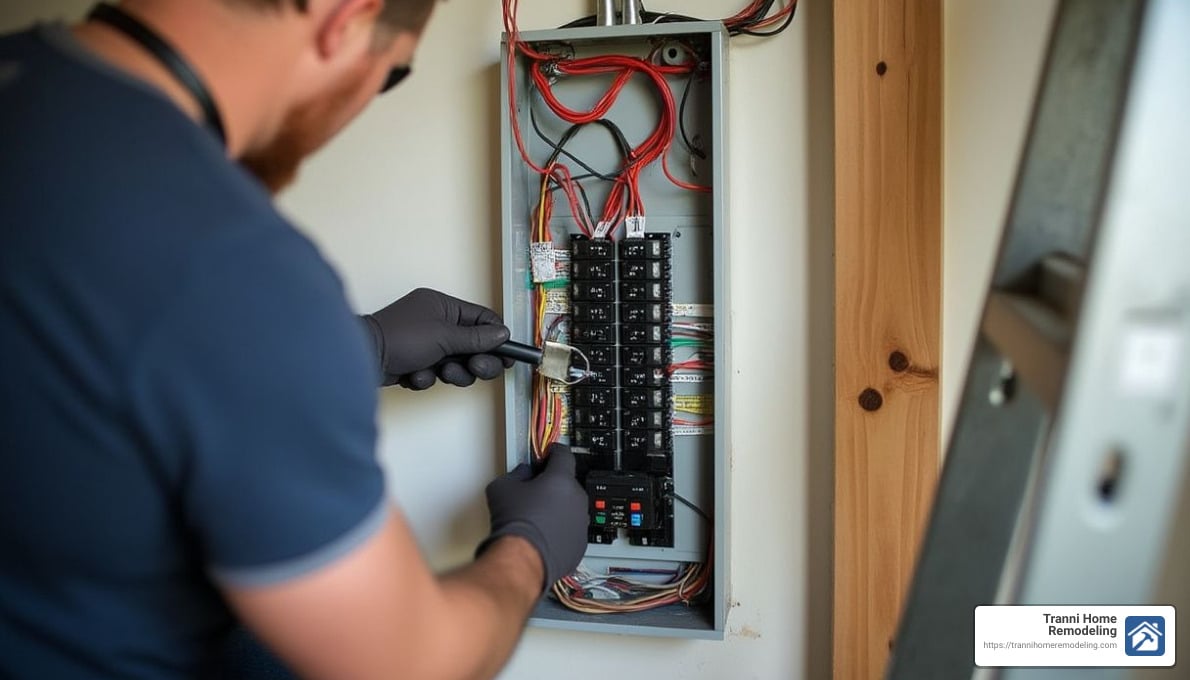





Change Electrical Panel: Top 5 Vital Safety Tips 2024
When it comes to change electrical panel, many homeowners in Billerica, MA might wonder how complicated the process is and why it’s necessary. Here’s a quick overview to start:
- Why Change?: Old electrical panels can be overloaded as modern homes demand more electricity.
- Safety First: Upgrading ensures your home is safe from electrical fires or failures.
- Professional Help Recommended: Although some homeowners may feel tempted to tackle the job themselves, hiring a licensed electrician minimizes risks and ensures compliance with local codes.
Switching out an old electrical panel doesn’t just mean keeping up with codes. It ensures your home has the power capacity to safely support all your devices and reduces risks like electrical fires.
My name is Tyler Tranni, and as the owner of Tranni Home Remodeling, I’ve dedicated years to changing homes with expertly managed renovations, including the crucial task of changing electrical panels. My experience ensures any panel change-up will be safe, efficient, and compliant with local standards.
Why Change an Electrical Panel?
Changing an electrical panel might seem like a daunting task, but it’s often necessary to ensure the safety and efficiency of your home. Let’s explore why you might need to make this change.
Signs You Need a Replacement
Your electrical panel is the heart of your home’s electrical system. Over time, it can show signs of wear or become outdated. Here are some signs that you might need a replacement:
- Tripping Breakers: If your circuit breakers trip often, it’s a sign that your panel can’t handle the electrical load. This can be due to an undersized panel or damaged components.
- Flickering Lights: Lights that flicker or dim can indicate a problem with your electrical panel, often due to loose or corroded connections.
- Warm Switches or Outlets: If switches or outlets feel warm to the touch, this could indicate an overloaded circuit or faulty wiring, both of which are serious hazards.
- Electrical Shocks: Experiencing shocks when plugging in devices is a clear sign of an electrical issue that needs immediate attention.
- Outdated Fuses: Older panels with fuses instead of circuit breakers are not equipped to handle modern electrical demands and can pose safety risks.
Benefits of Upgrading
Upgrading your electrical panel offers several benefits that go beyond simply fixing problems:
- Increased Capacity: Modern homes use more electricity than ever. Upgrading your panel ensures it can handle current and future electrical demands, from appliances to smart home devices.
- Safety: A new panel reduces the risk of electrical fires and shocks. It ensures that your home’s wiring is up to code and can handle the load safely.
- Energy Efficiency: Modern panels are more efficient, reducing energy waste and potentially lowering your utility bills. They can also be more compatible with energy-efficient appliances and systems.
Changing your electrical panel isn’t just about meeting modern needs; it’s about ensuring your home is safe and efficient for years to come. Up next, we’ll explore whether you can tackle this project yourself or if professional help is the way to go.
Can You Change an Electrical Panel Yourself?
Changing an electrical panel is a complex task that involves high voltage and complex wiring. While some homeowners might consider tackling this project themselves, it’s important to understand the risks and regulations involved.
Safety Risks
Working with electricity is inherently dangerous. Here are some risks to consider:
- High Voltage: The electrical panel is where the main power line enters your home. Handling it exposes you to potentially lethal voltage levels.
- Complex Wiring: Incorrect wiring can lead to fire hazards, electrical shocks, or damage to your appliances.
- Fire Hazards: Improper installation can cause overheating, leading to electrical fires. This is a significant risk, especially with older wiring systems.
Given these risks, many experts, including those with advanced electrical engineering degrees, recommend hiring a qualified electrician. As one professional noted, “Their practical knowledge beats theory and book learning every time.”
Local Codes and Regulations
Before you even think about changing your electrical panel, you need to be aware of local codes and regulations. Here are key points:
- Permits: Many areas require a permit to change an electrical panel. This ensures that the work meets safety standards.
- Inspections: After installation, an inspection is often required to verify that the work complies with local codes.
- Licensed Electrician: Some jurisdictions mandate that only a licensed electrician can perform electrical panel work. This is to ensure the safety and reliability of the installation.
In Ontario, for example, homeowners can pull a permit from the Electrical Safety Authority (ESA) for certain electrical work. However, changes involving live contacts are typically restricted to professionals. source
While it’s technically possible for a homeowner to change an electrical panel, the risks and regulatory requirements make it advisable to hire a professional. This ensures the job is done safely and meets all necessary codes and standards.
Next, let’s look at the steps involved in changing an electrical panel, from preparation to installation.
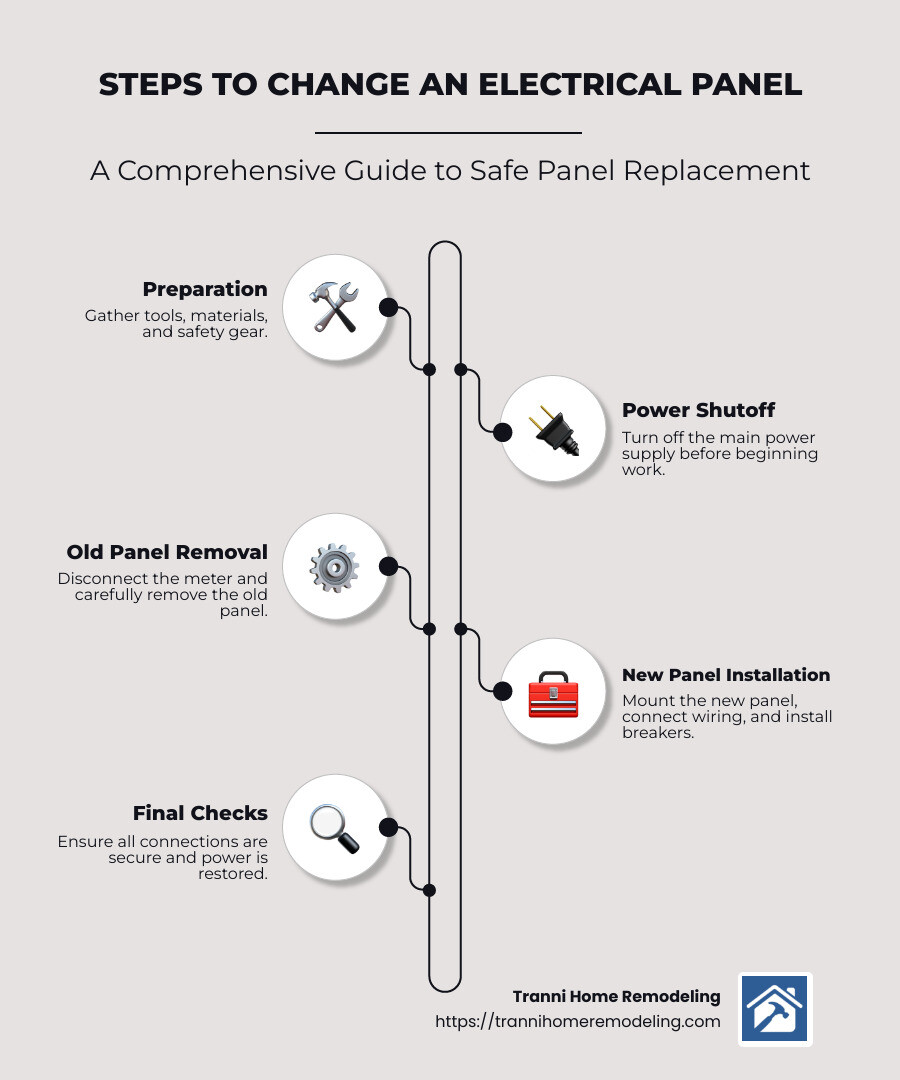
Steps to Change an Electrical Panel
Changing an electrical panel is a detailed process that requires careful planning and execution. Here’s a straightforward guide to help you understand the steps involved.
Preparation
Before you start, gather all necessary tools and materials. This includes:
- Tools: Screwdrivers, pliers, wire cutters, and a voltage tester.
- Materials: New electrical panel, circuit breakers, and wiring.
- Safety Gear: Insulated gloves, safety goggles, and rubber-soled shoes.
Safety is paramount. Make sure you have all the required safety gear and understand the risks involved.
Disconnecting the Old Panel
This is where you start dealing with electricity, so caution is crucial.
- Power Shutoff: Begin by turning off the main power supply to your home. This is usually done at the meter or main breaker.
- Meter Disconnect: If your local utility allows, you may be able to schedule a meter disconnect. In Ontario, for instance, Hydro One offers one free 24-hour meter disconnect per year.
- Removing the Old Panel: Carefully disconnect all wiring from the old panel. Labeling wires can help you keep track of where each one goes. Remove the panel from its mounting.
Installing the New Panel
Now, it’s time to set up your new panel.
- Mounting: Secure the new panel to the wall. Ensure it’s level and firmly attached.
- Wiring: Connect the wires to the new panel. Follow the labels you made earlier to ensure each wire is in the correct spot. This step requires precision to avoid any electrical mishaps.
- Breaker Installation: Install the new circuit breakers. Make sure each breaker is properly seated and secure.
Once everything is in place, double-check all connections and ensure everything is tight and secure.
After completing these steps, you’ll need to have the installation inspected to ensure it meets local codes. If you’re unsure about any part of this process, consult with a licensed electrician. Their expertise can ensure the job is done safely and correctly.
Next, we’ll explore the costs associated with changing an electrical panel and what factors can affect these costs.
Cost of Changing an Electrical Panel
Changing an electrical panel can be a significant investment, but understanding the costs involved can help you budget effectively. Let’s break down the average costs, factors that influence these costs, and any additional expenses you might encounter.
Average Costs
On average, changing an electrical panel can cost anywhere from $550 to $3,000, with most homeowners spending around $1,300. This wide range depends on various factors, including the complexity of the job and the specifics of your home’s electrical needs.
Factors Affecting Cost
- Location: The cost of labor can vary significantly depending on where you live. Areas with a higher cost of living generally see higher labor rates.
- Amperage Upgrade: Upgrading to a panel with higher amperage (e.g., from 100 amps to 200 amps) will increase costs. Higher amperage panels can handle more electrical load, which is beneficial for larger homes or those with modern appliances.
- Breaker Type: The type of circuit breakers you choose can also affect the total cost. Standard breakers are less expensive, while specialty breakers, like Arc Fault Circuit Interrupters (AFCI) or Ground Fault Circuit Interrupters (GFCI), can add to the expense.
- Installation Company: Different companies may offer varying prices for the same job. It’s wise to get multiple quotes to find the best deal without compromising on quality.
Additional Expenses
Beyond the basic panel replacement, there are other costs you might need to consider:
- Rewiring: If your existing wiring is outdated or damaged, you may need to replace it, which can add to the overall cost.
- Subpanel Installation: If your home requires additional circuits, you might need to install a subpanel. This can cost between $400 and $2,000.
- Meter Replacement: Replacing a faulty or outdated meter box can cost between $100 and $650.
- Drywall Repair: After the electrical work is complete, you may need to repair or replace drywall around the panel. This is an additional cost to consider when budgeting for the project.
Understanding these costs and factors can help you plan your budget more effectively and avoid surprises. Be sure to discuss all potential expenses with your electrician to get a clear picture of what your specific project will entail.
Next, we’ll address some frequently asked questions about changing electrical panels to further clarify the process.
Frequently Asked Questions about Changing Electrical Panels
Do You Need an Electrician to Upgrade an Electrical Panel?
In most cases, yes, you need a licensed electrician to upgrade an electrical panel. This is because working with electrical panels involves high voltage, complex wiring, and potential fire hazards. Hiring a professional ensures that the work is done safely and complies with local codes and regulations. According to Forbes, labor is typically the most expensive part of the replacement, highlighting the complexity and expertise required.
Attempting to change an electrical panel yourself, without the necessary expertise, can lead to costly mistakes or even serious injury. While minor tasks like replacing a switch might be manageable if you have some experience, a panel upgrade is a different ballgame. As one Reddit user, MikeBear, noted, while it’s legal for homeowners to do this work in some areas, it’s crucial to understand the risks and limitations involved.
How Long Does the Replacement Process Take?
The time it takes to replace an electrical panel can vary depending on the complexity of the job and the condition of your existing setup. On average, a professional electrician might complete the job in 4 to 8 hours. This includes time for preparation, disconnecting the old panel, and installing the new one.
However, if additional work is needed, such as rewiring or installing a subpanel, this could extend the timeline. It’s important to discuss the expected duration with your electrician beforehand to plan accordingly.
How Often Should Electrical Panels Be Replaced?
Electrical panels generally have a lifespan of 20 to 30 years. However, this can vary based on several factors, including the panel’s quality, the electrical load it handles, and environmental conditions. If you notice signs like tripping breakers, flickering lights, or warm switches, it might be time for a replacement, regardless of age.
Upgrading your panel can improve safety and accommodate modern electrical needs, especially if your current panel is outdated or unable to meet your home’s energy demands. It’s worth consulting with a professional to assess whether a replacement is necessary for your specific situation.
These FAQs should help clarify some common concerns about changing electrical panels. Next, we’ll conclude with how Tranni Home Remodeling can assist you with professional services to ensure safety and compliance.
Conclusion: Change Electrical Panel
Changing an electrical panel is no small task. It involves understanding complex wiring, ensuring safety, and complying with local codes. At Tranni Home Remodeling, we specialize in making this process as smooth and stress-free as possible for homeowners in Billerica, MA, and surrounding areas.
Our team brings over a decade of experience in home renovation, with a focus on high-quality craftsmanship and outstanding service. We understand the critical role a reliable electrical system plays in your home, and our skilled electricians are committed to delivering safe and compliant panel upgrades.
Safety and Compliance
Safety is our top priority. Working with electrical panels involves high voltage and potential fire hazards. That’s why our licensed electricians handle every aspect of the replacement process, from initial inspection to final installation. We adhere to all local codes and regulations, ensuring your new panel meets the highest safety standards.
Our comprehensive approach means we take care of everything, including obtaining necessary permits and scheduling inspections. This ensures that your panel upgrade is not only safe but also compliant with local requirements.
Professional Services by Tranni Home Remodeling
Choosing Tranni Home Remodeling means choosing peace of mind. Our team is dedicated to providing exceptional service and delivering results that exceed your expectations. Whether you’re upgrading for increased capacity, safety, or energy efficiency, we have the expertise to get the job done right.
If you’re considering an electrical panel change, don’t hesitate to reach out to us. We’ll guide you through every step of the process, ensuring a seamless transition to a safer, more efficient electrical system.
For more information on our services, visit our Home Remodeling page. Let us help you transform your home into a safe and functional haven.