





Design and the Modern Kitchen: 7 Stunning Trends 2024
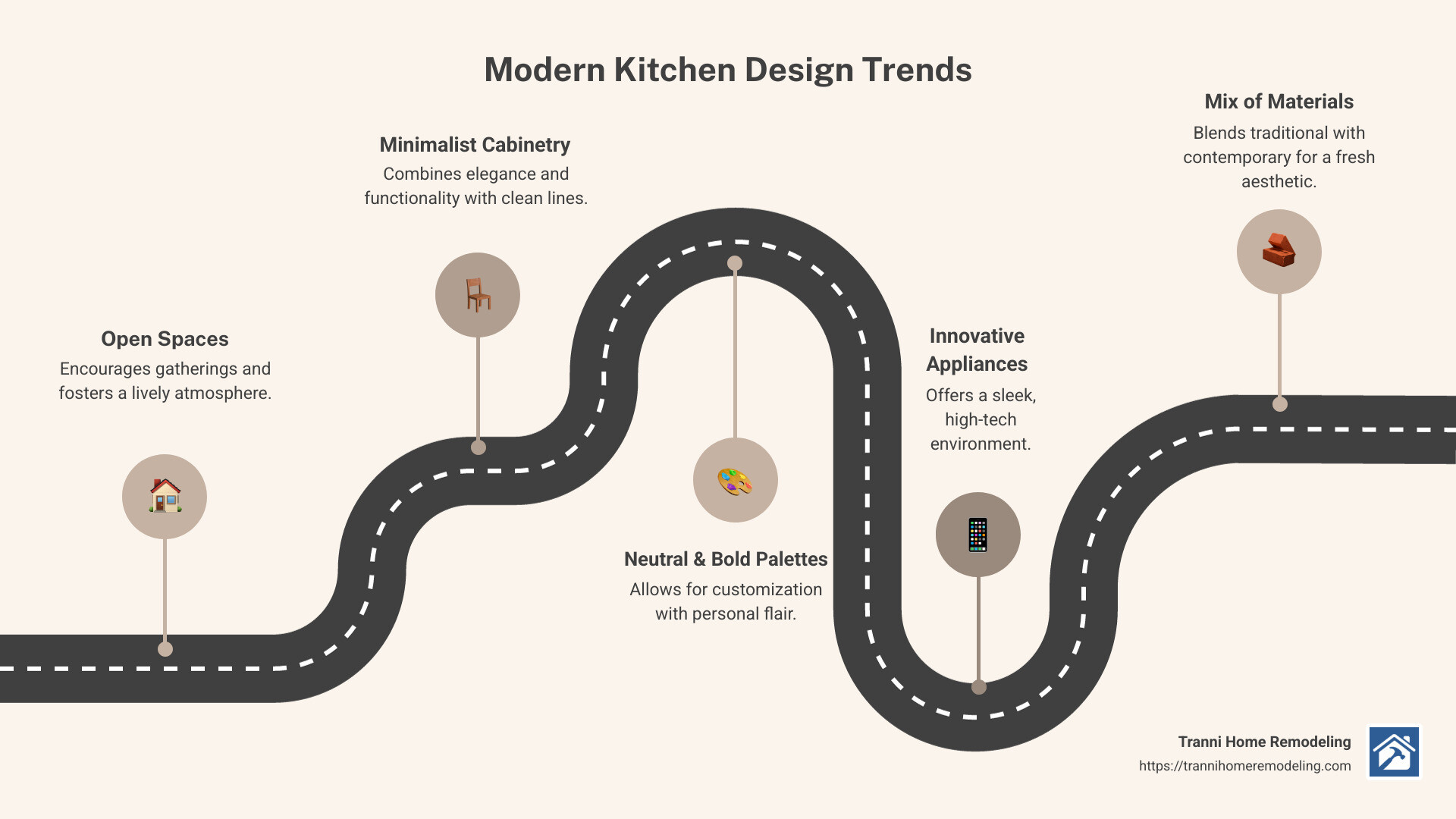
Design and the modern kitchen has undergone a remarkable change over the years, evolving from merely a functional space into the heart of the home. This shift is marked by several key trends:
- Open spaces: Encourages gatherings and fosters a lively atmosphere.
- Minimalist cabinetry: Combines elegance and functionality with clean lines.
- Neutral and bold color palettes: Allows for customization with personal flair.
- Innovative appliances: Offers a sleek, high-tech environment.
- Mix of materials: Blends traditional with contemporary for a fresh aesthetic.
These elements have redefined how kitchens are perceived, making them both stylish and inviting, while still retaining their core functionality.
As Tyler Tranni, with a long history in crafting exceptional kitchens in Billerica, MA, my expertise in design and the modern kitchen has been built on creating spaces that reflect both tradition and trend. Let’s explore how we can invigorate your kitchen landscape and enrich your home.
What is Modern Kitchen Design?
Modern kitchen design is all about simplicity and functionality. It’s characterized by clean lines and open spaces that create a sense of calm and order. This style focuses on minimalistic design, where less is more, and every element serves a purpose.
Clean Lines
In a modern kitchen, clean lines are paramount. This means countertops, cabinets, and appliances are designed to be sleek and unobtrusive. The goal is to create a seamless look where everything fits together perfectly, without unnecessary embellishments.
Open Spaces
Open spaces are a hallmark of modern kitchen design. By integrating the kitchen with living areas, you create a welcoming environment that encourages interaction. This layout not only makes the space feel larger but also more functional for gatherings and daily life.
Minimalistic Design
Minimalism is at the heart of modern kitchen design. This approach eliminates clutter and focuses on essential elements. It’s about choosing quality over quantity and ensuring that each piece in the kitchen adds value and purpose.
Post-Industrial Materials
Modern kitchens often incorporate post-industrial materials such as stainless steel and concrete. These materials are not only durable but also add a contemporary edge to the space. They are perfect for creating a modern aesthetic that is both stylish and practical.

Incorporating these elements into your kitchen can transform it into a space that is both functional and beautiful. Whether you’re starting from scratch or looking to update your current kitchen, focusing on clean lines, open spaces, minimalistic design, and post-industrial materials can help you achieve a modern look that will stand the test of time.
Key Elements of Modern Kitchen Design
Modern kitchen design is all about blending functionality with style. Here are some key elements that define this approach:
Minimalist Cabinetry
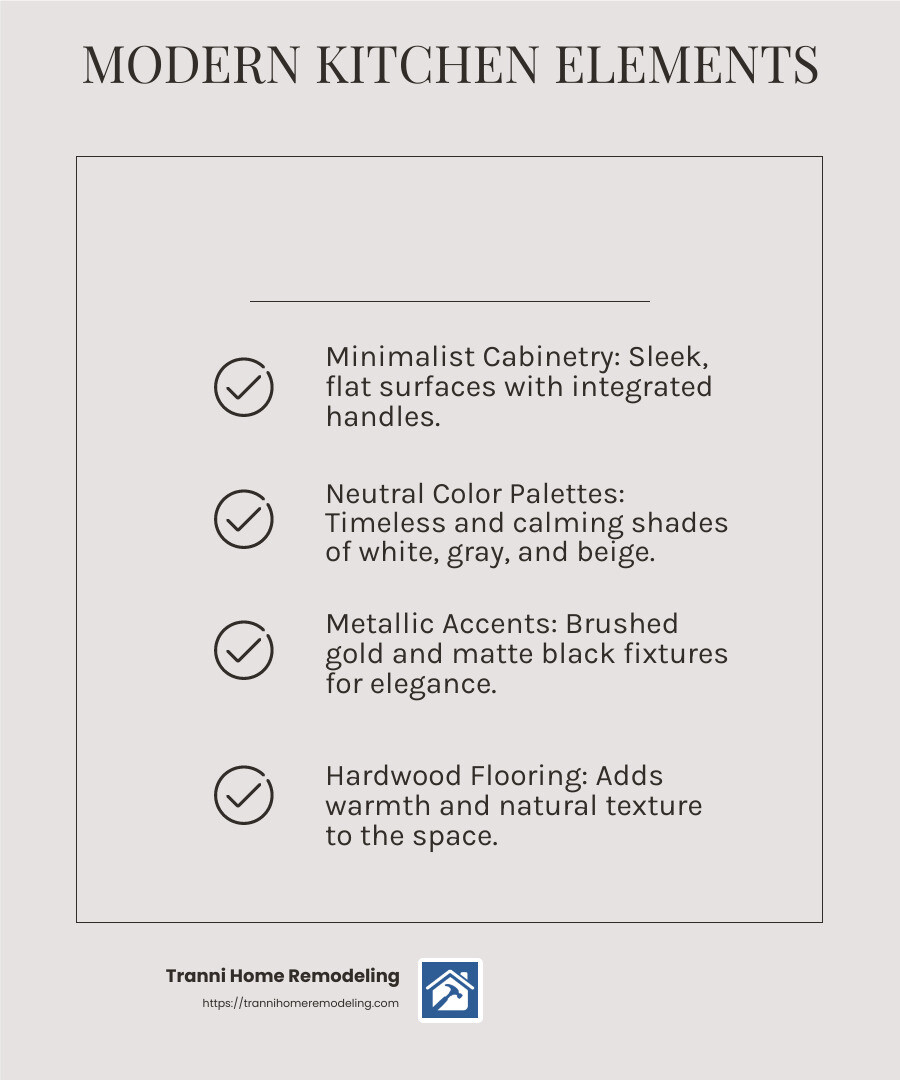
Less is more when it comes to cabinetry in modern kitchens. Minimalist cabinetry means sleek, flat surfaces with little to no ornamentation. This style emphasizes function and simplicity, often featuring push-to-open doors or integrated handles to maintain a clean look. The result is a streamlined appearance that maximizes space and reduces visual clutter.
Neutral Color Palettes
Neutral colors are a staple in modern kitchen design. They provide a timeless backdrop that allows other elements, like textures and materials, to shine. Think shades of white, gray, and beige. These colors create a calming atmosphere and can make a kitchen feel more open and airy. However, don’t shy away from adding a pop of color for personality and warmth.
Metallic Accents
Metallic accents add a touch of elegance and modernity. Brushed gold and matte black fixtures are particularly popular, offering a sophisticated contrast to neutral palettes. These accents can be incorporated through hardware, lighting, and even appliances, providing a subtle yet impactful way to improve the kitchen’s aesthetic.
Hardwood Flooring
Hardwood flooring is a classic choice that complements modern kitchen design beautifully. It adds warmth and natural texture, balancing the sleekness of minimalist cabinetry and metallic accents. Opting for lighter wood tones can help maintain a bright and open feel, which is often desired in modern spaces.
Large Center Islands
A large center island is not just a functional work surface; it’s a focal point in modern kitchens. Islands provide additional storage, seating, and prep space, making them a versatile addition. They encourage social interaction, serving as a hub for cooking and conversation. Consider integrating appliances or a sink into the island for added convenience.
Two-Toned Cabinets
Two-toned cabinets are an emerging trend that adds depth and visual interest. By combining different colors or finishes, you can create a dynamic look that breaks the monotony of a single color scheme. For instance, pairing dark lower cabinets with lighter uppers can ground the space while maintaining an open and airy feel.
Incorporating these key elements can help you create a kitchen that is both modern and functional. Whether you’re renovating or starting from scratch, focusing on minimalist cabinetry, neutral colors, and other modern design features will ensure your kitchen remains stylish and efficient.
Next, we will explore how to combine modern and traditional styles to create a unique and personalized kitchen space.
The Evolution of Modern Kitchen Design
The journey of modern kitchen design is a fascinating story of innovation and practicality. It all began with Margarete Schütte-Lihotzky, an Austrian architect who designed the first fitted kitchen, known as the “Frankfurt Kitchen,” in the 1920s. Her design focused on efficiency and functionality, laying the groundwork for the modern kitchens we know today. Schütte-Lihotzky’s kitchen was compact and equipped with built-in storage and workspaces, maximizing efficiency in small spaces.
Traditional vs. Modern
Over the years, kitchen design has evolved from traditional, ornate styles to the sleek and functional aesthetics of modern kitchens. Traditional kitchens often feature decorative elements, intricate moldings, and rich wood finishes. In contrast, modern kitchens emphasize clean lines, minimalistic design, and the use of post-industrial materials like stainless steel and glass.
The shift from traditional to modern kitchens reflects a change in lifestyle and needs. Modern homeowners prioritize space efficiency and seamless integration with living areas. This evolution has led to the popularity of open floor plans, where kitchens flow into dining and living spaces, encouraging social interaction.
Open Shelving
One of the standout features of modern kitchen design is open shelving. This trend moves away from the closed upper cabinets of traditional kitchens, offering a more open and airy feel. Open shelving allows for easy access to everyday items and provides an opportunity to display stylish kitchenware and personal touches. However, it requires careful organization to maintain a clutter-free look.
Space Efficiency
Space efficiency is at the heart of modern kitchen design. Every element is thoughtfully designed to maximize functionality. For instance, kitchen islands have become a staple, offering additional workspace, storage, and seating. The “work triangle” concept, which optimizes the placement of the sink, stove, and refrigerator, ensures a smooth workflow and improves the kitchen’s practicality.
In summary, the evolution of modern kitchen design is a testament to the changing needs and preferences of homeowners. By focusing on efficiency, simplicity, and integration, modern kitchens have become the hub of the home, blending style and functionality seamlessly.
Next, we will explore how to combine modern and traditional styles to create a unique and personalized kitchen space.
Combining Modern and Traditional Styles
Incorporating both modern and traditional styles in your kitchen can create a unique and personalized space. This blend allows you to enjoy the best of both worlds—classic furnishings and ornate details alongside clean lines and a minimalist influence.
Classic Furnishings and Ornate Details
Traditional kitchens are known for their classic furnishings, like wooden cabinets with intricate carvings. These elements add warmth and character to the space. You can keep these charming features while introducing modern touches to create a balanced look. For instance, pairing a vintage dining table with sleek, modern chairs can create a harmonious blend of styles.
Clean Lines and Minimalist Influence
Modern kitchens focus on clean lines and simplicity. This doesn’t mean you have to abandon traditional elements. Instead, use them sparingly to maintain a minimalist feel. Opt for simple cabinet designs with flat doors and minimal hardware. The key is to find a balance between the two styles, ensuring that the space feels both inviting and uncluttered.
Personal Style
Your kitchen should reflect your personal style. Mixing modern and traditional elements gives you the freedom to express yourself. Consider adding a personal touch with a bold color palette or unique artwork. You might choose a modern light fixture to contrast with traditional cabinetry or incorporate a pop of color with a modern backsplash.
Tips for Blending Styles
- Start Small: If you’re unsure about combining styles, start with small changes. Swap out hardware or add a modern light fixture.
- Neutral Base: Use a neutral color palette as a base. It provides a versatile backdrop for both modern and traditional elements.
- Mix and Match Materials: Combine materials like wood and stainless steel to create contrast and interest.
- Focus on Functionality: Ensure that every element serves a purpose. This aligns with modern design principles and keeps the space practical.
By thoughtfully combining modern and traditional styles, you can create a kitchen that is uniquely yours. It will be a space that not only looks beautiful but also functions seamlessly, catering to your lifestyle and preferences.
Next, we’ll explore Modern Kitchen Design Trends for 2024 and how they can inspire your next kitchen renovation.
Modern Kitchen Design Trends for 2024
In 2024, modern kitchen design continues to evolve, embracing both functionality and style. Key trends focus on creating open and inviting spaces that blend seamlessly with the rest of the home.
Open Spaces and Integrated Living Areas
Open spaces remain a staple in modern kitchen design. Kitchens are no longer isolated rooms but part of a larger living area. This integration encourages family gatherings and social interactions. As Simon Hamui, an interior designer at the Ritz-Carlton, notes, open-space plans “encourage gatherings and multiple dynamics happening simultaneously.”
Kitchen Islands with Seating
Kitchen islands are more than just a workspace. They are becoming central hubs for socializing and dining. Islands with seating options are perfect for casual meals or entertaining guests. Simon Hamui suggests a two-level island to accommodate various activities, from cooking to enjoying a quick snack.
Natural Finishes
Natural finishes bring warmth and texture to modern kitchens. Materials like wood and stone are popular choices, offering a cozy and inviting atmosphere. Warm tones, such as rich woods and earthy colors, are making a comeback, creating a sense of comfort and elegance.
Pops of Color
While neutral palettes dominate, pops of color add personality and vibrancy. Bold hues like deep blues and greens can be incorporated through accent walls or cabinetry. Alex Yacavone from Kohler design studio emphasizes that modern kitchens don’t always mean neutrals, and a monochromatic color scheme can transform a space.
Big Windows and Architectural Light Fixtures
Large windows are essential for letting in natural light, making the kitchen feel airy and open. They also connect the indoor space with the outdoors, enhancing the sense of openness. In addition, architectural light fixtures serve as both functional and decorative elements, providing a focal point in the kitchen.
These trends highlight the importance of creating spaces that are both stylish and functional. By incorporating these elements, you can design a modern kitchen that is not only beautiful but also a joy to use.
Next, we’ll discuss How to Modernize Your Kitchen Cheaply and explore cost-effective ways to update your space.
How to Modernize Your Kitchen Cheaply
Modernizing your kitchen doesn’t have to break the bank. With a few strategic changes, you can give your kitchen a fresh, contemporary look. Let’s explore some affordable updates.
Painting Cabinets
One of the easiest ways to transform your kitchen is by painting the cabinets. A solid, matte color can breathe new life into old cabinetry. This simple change can dramatically alter the room’s feel. Simon Hamui suggests that painting cabinets is a cost-effective way to modernize without a full remodel.
Changing Hardware
Updating cabinet hardware is another quick and affordable fix. Swapping out old handles and knobs for sleek, modern designs can make a big difference. This small change can improve the overall look of your kitchen without a hefty price tag.
Stone Countertops
While marble countertops can be expensive, alternatives like quartz or granite remnants offer a luxurious look at a fraction of the cost. These materials provide durability and elegance, instantly elevating your kitchen’s style. Check local supply yards for discounted remnants perfect for smaller spaces.
Color Palette Refresh
Refreshing your kitchen’s color palette can have a significant impact. Consider a monochromatic color scheme for a modern look. Alex Yacavone notes that a cohesive color scheme can transform a space, making it feel new and inviting. Don’t shy away from bold colors; they can add personality and warmth.
Monochromatic Color Scheme
Embracing a monochromatic color scheme adds sophistication and unity to your kitchen. By using varying shades of a single color, you can create depth and interest without overwhelming the space. This approach is both modern and timeless, ensuring your kitchen remains in style for years to come.
These cost-effective updates can help you achieve a modern kitchen look without overspending. By focusing on these simple changes, you can create a space that feels fresh and inviting.
Next, we’ll explore Popular Modern Kitchen Layouts and how they can improve functionality and flow.
Popular Modern Kitchen Layouts
When it comes to design and the modern kitchen, the layout is crucial. A well-planned layout improves functionality and flow, making your kitchen a joy to use. Let’s explore some popular modern kitchen layouts and their features.
The Kitchen Work Triangle
The kitchen work triangle is a classic concept that remains relevant today. It optimizes the placement of the sink, stove, and refrigerator—the three main work areas. Ideally, each side of the triangle should be between four and nine feet, with a total perimeter of 13 to 26 feet. This setup ensures efficiency, reducing unnecessary movement while cooking.
Harmonious Arrangement
A harmonious kitchen layout considers how countertops, appliances, and storage spaces are arranged. This balance is key to creating a functional space. For example, placing cabinets and drawers near the dishwasher speeds up unloading, while positioning the trash bin close to the sink simplifies cleanup.
Countertops and Workspaces
Countertops are more than just surfaces for meal prep; they define the kitchen’s workflow. It’s essential to have ample counter space between the sink and stove for efficient meal preparation. Consider incorporating an island for additional workspace and storage. An island can also serve as a social hub for family and friends.
Appliances and Storage Spaces
Modern kitchens often feature state-of-the-art appliances seamlessly integrated into the design. Built-in ovens, hidden refrigerators, and under-counter microwaves contribute to a sleek look. Storage solutions, like pull-out pantries and deep drawers, maximize space and keep the kitchen organized.
Layout Variations
Different layouts suit different needs:
- U-Shape Layout: Ideal for larger kitchens, offering plenty of counter space and storage.
- L-Shape Layout: Flexible and efficient, perfect for open floor plans.
- Galley Layout: Best for small kitchens, utilizing two parallel walls.
- Island Layout: Great for socializing, adds extra storage and workspace.
By understanding these layouts, you can create a modern kitchen that is both functional and stylish. Next, we’ll answer some Frequently Asked Questions about Design and the Modern Kitchen to help you make informed decisions.
Frequently Asked Questions about Design and the Modern Kitchen
What is a modern kitchen design?
Modern kitchen design is all about clean lines and open spaces. It accepts a minimalistic design approach, which means keeping things simple and clutter-free. Imagine sleek surfaces and streamlined furniture that make the space feel open and airy.
Post-industrial materials like stainless steel, concrete, and glass are often used. These materials not only look stylish but are also durable and easy to clean. The focus is on functionality with a touch of elegance.
Who is the creator of the modern kitchen?
The concept of the modern kitchen can be traced back to Margarete Schütte-Lihotzky, an Austrian architect. She is credited as the inventor of the “Frankfurt Kitchen,” which was designed in the 1920s. Her design was because it focused on efficiency and practicality, setting the foundation for the modern kitchen we know today.
Schütte-Lihotzky’s work emphasized the importance of a well-organized space, where everything is within reach. This idea of maximizing space and minimizing effort continues to influence modern kitchen designs.
Can you mix modern and traditional in the kitchen?
Absolutely! Mixing modern and traditional styles in the kitchen can create a unique and personalized space. You can have classic furnishings and ornate details alongside clean lines and a minimalist influence.
For example, you might choose traditional wooden cabinets but pair them with modern stainless steel appliances. Or, incorporate a vintage chandelier to add character to an otherwise sleek and modern space. The key is to maintain balance so that the two styles complement each other rather than clash.
This blending of styles allows you to keep the warmth and charm of traditional design while enjoying the efficiency and simplicity of modern elements. It’s a great way to make your kitchen truly your own.
With these insights, you can confidently steer design and the modern kitchen, making choices that reflect both functionality and personal style.
Conclusion
At Tranni Home Remodeling, we understand that the kitchen is more than just a place to cook—it’s the heart of your home. Our commitment to high-quality craftsmanship and outstanding service sets us apart in the home renovation industry, especially in Billerica, MA, and surrounding areas.
Our team is dedicated to bringing your vision to life, whether you’re looking for a sleek, modern kitchen or a blend of traditional and contemporary styles. We take pride in our ability to transform spaces with innovative design solutions and meticulous attention to detail.
By focusing on design and the modern kitchen, we ensure that each project not only meets but exceeds your expectations. We use durable materials and cutting-edge techniques to create kitchens that are both beautiful and functional. Our expertise in kitchen remodeling allows us to tailor each project to your specific needs, ensuring a personalized touch that reflects your unique style.
If you’re ready to start on your kitchen renovation journey, we’re here to help. Visit our Kitchen Remodeling page to learn more about our services and how we can assist you in creating the kitchen of your dreams. Let’s make your kitchen the standout feature of your home.
