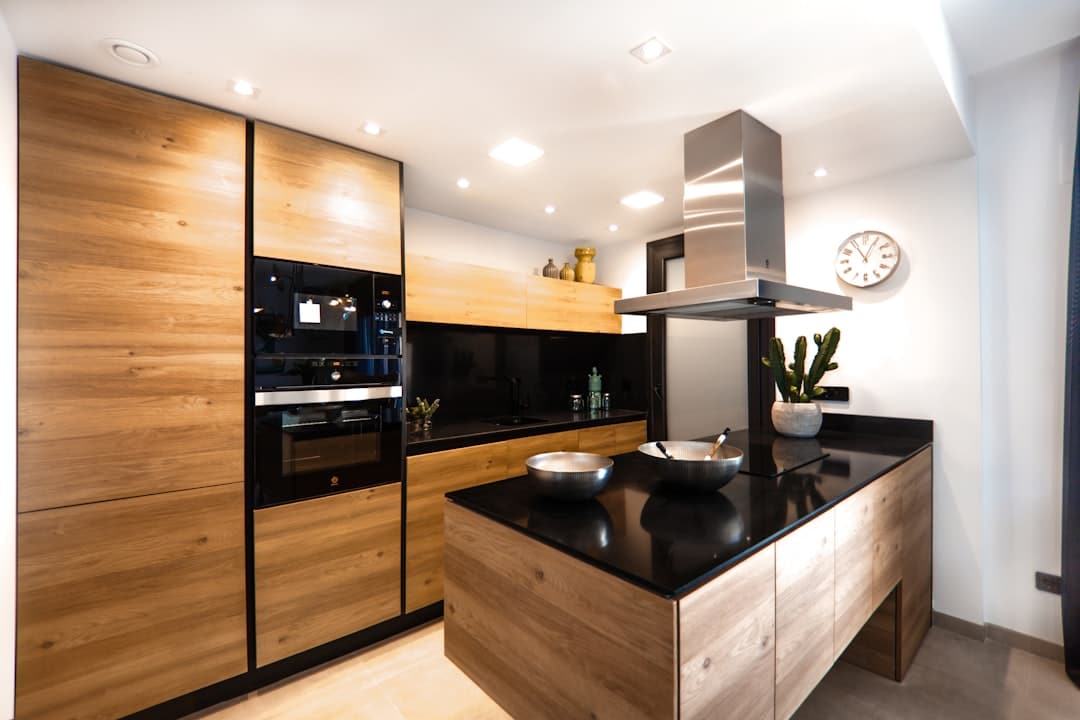





How to Design Kitchen Cabinets: Top 5 Expert Tips 2024
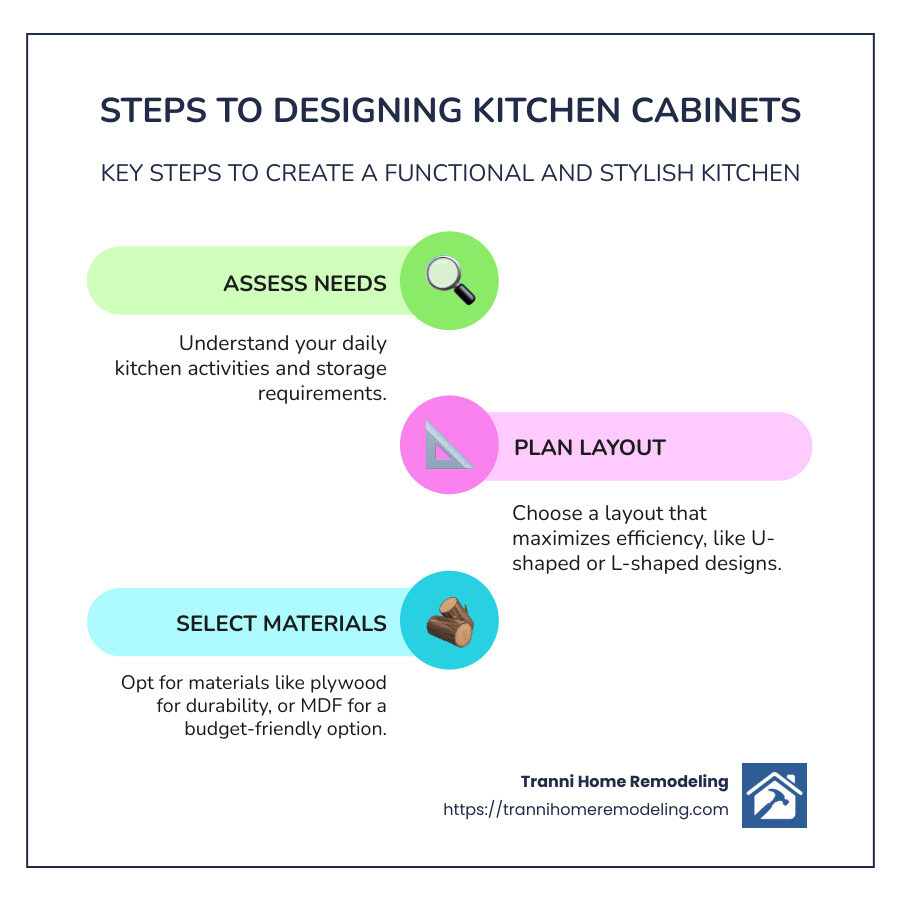
How to design kitchen cabinets is a journey into creating a space that’s both beautiful and functional. If you’re looking for quick steps, here’s what you need to know:
- Assess Needs: Understand your daily kitchen activities and storage requirements.
- Plan Layout: Choose a layout that maximizes efficiency, like U-shaped or L-shaped designs.
- Select Materials: Opt for materials like plywood for durability, or MDF for a budget-friendly option.
- Settle on Style: Decide on colors and finishes that reflect your personality and complement your home.
Starting on a kitchen design project involves considering the essential balance between aesthetics and functionality. Your cabinet choices, from materials to organization style, will shape not only how your kitchen looks but also how it operates day-to-day.
I’m Tyler Tranni, owner and operator of Tranni Home Remodeling based in Billerica, MA. With years of experience in changing spaces into dream homes, I have a deep understanding of how to design kitchen cabinets that blend functionality with style. Our expertise ensures every detail aligns with your lifestyle needs and vision.
How to design kitchen cabinets terms you need:
– kitchen cabinet designs
– kitchen cabinet layout
– kitchen layout ideas
Planning Your Kitchen Cabinet Design
Creating the perfect kitchen cabinets requires careful planning. From understanding your needs to drawing a detailed floor plan and seeking inspiration, every step is crucial.
Creating a Design List
Start with a needs assessment. What do you and your family need from your kitchen? Consider your daily activities and storage requirements. Do you need deep drawers for pots and pans, or perhaps a pull-out trash can? Discuss these needs with your family to ensure everyone is on the same page. This will help in making informed decisions later.
Here’s a simple checklist to guide you:
- Storage Needs: Think about what you need to store. This could include appliances, utensils, or pantry items.
- Appliance Placement: Decide where major appliances like the refrigerator, oven, and dishwasher will go. This will impact your cabinet layout.
- Functional Features: Consider features like an appliance garage or a hidden microwave.
Drawing a Detailed Floor Plan
Once you have your design list, it’s time to draw a detailed floor plan. This will help you visualize how your kitchen will look and function.
Measurements are key. Measure your kitchen space accurately, including walls, windows, and doorways. This ensures your cabinets fit perfectly.
Consider the layout. Common layouts include L-shaped, U-shaped, and galley kitchens. Each has its own benefits, so choose one that suits your space and needs.
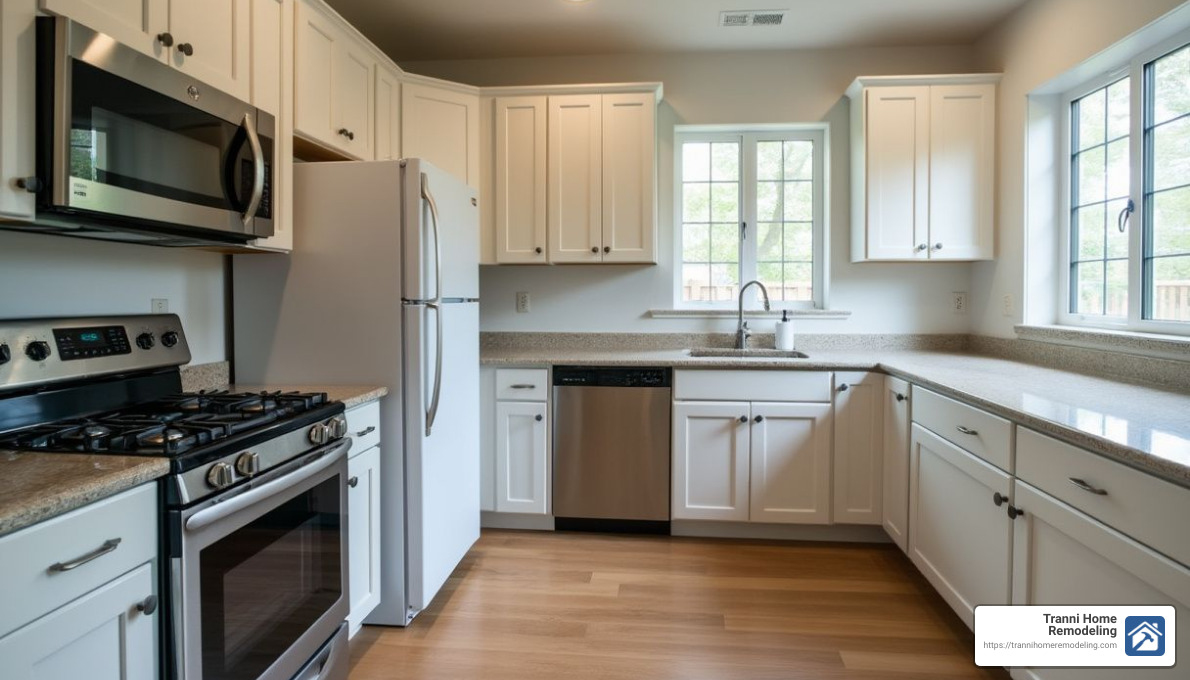
Don’t forget about traffic flow. Ensure there’s enough space for people to move around comfortably. The work triangle—the ideal distance between the sink, stove, and refrigerator—is a crucial element for an efficient kitchen.
Seeking Inspiration
Finding the right inspiration can help you decide on styles and trends.
- Design Trends: Look into current trends to see what appeals to you. Whether it’s sleek modern designs or classic traditional styles, there’s something for everyone.
- Style Preferences: Your kitchen should reflect your personal style. Consider what colors and materials you’re drawn to.
- Online Resources: Use online tools and resources to gather ideas. Websites and apps can provide a wealth of inspiration and help you visualize your dream kitchen.
By focusing on these elements, you’ll be well on your way to designing kitchen cabinets that are both beautiful and functional. Next, we’ll explore the materials and colors that can bring your design to life.
Choosing the Right Materials and Colors
When designing your dream kitchen cabinets, selecting the right materials and colors is essential. These choices impact not only the look but also the durability and functionality of your kitchen.
Selecting Cabinet Materials
Choosing the right cabinet materials is crucial for long-lasting and beautiful cabinets. Here are some popular options:
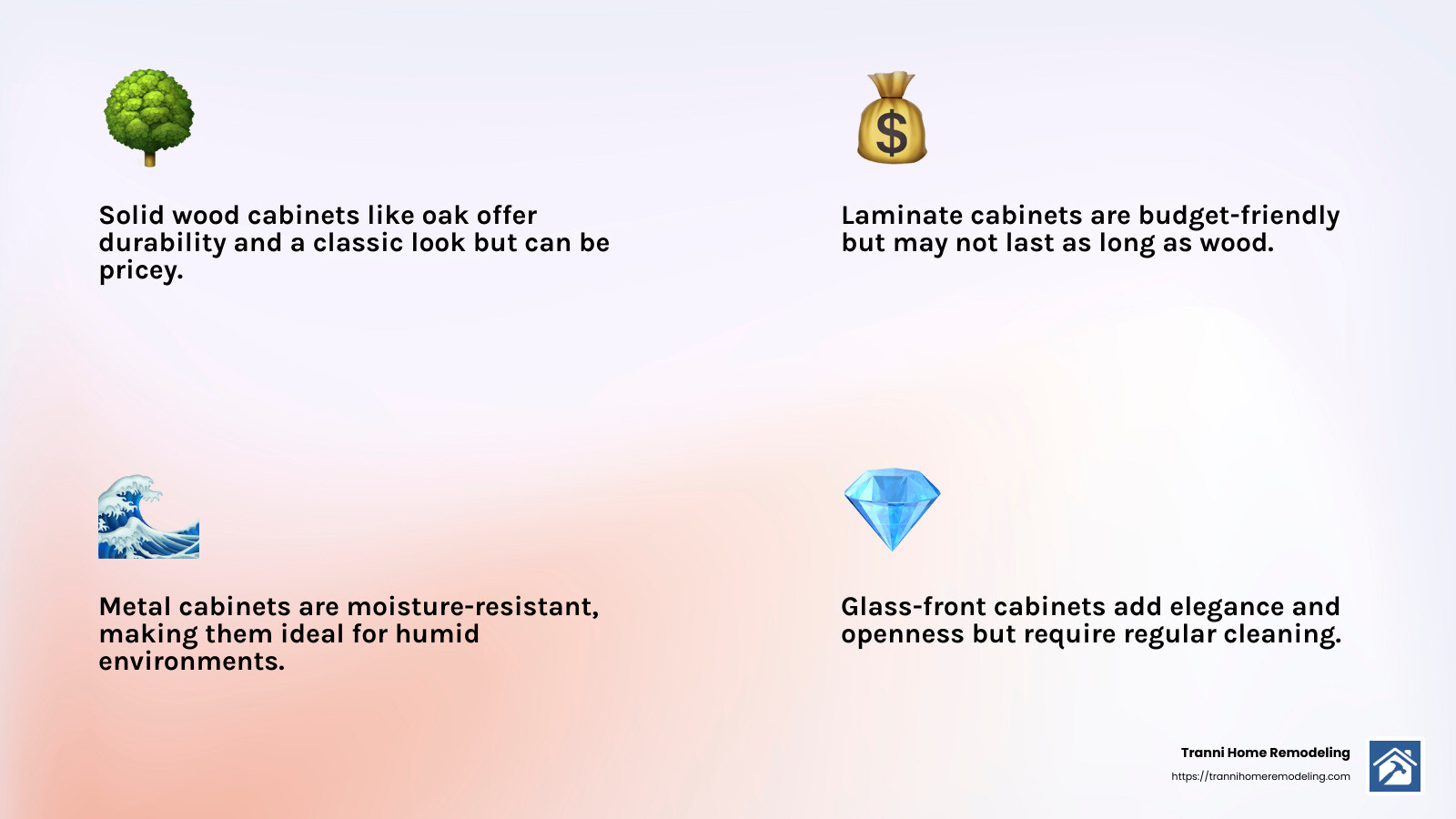
- Wood Types: Solid wood cabinets, like oak or maple, offer durability and a classic look. They can be stained or painted to match your style. However, they can be more expensive than other materials.
- Laminate: A budget-friendly option, laminate cabinets come in a variety of colors and patterns. They are easy to clean but might not offer the same longevity as wood.
- Metal: For a modern and sleek design, metal cabinets are a great choice. They are durable and resistant to moisture, making them ideal for humid environments.
- Glass: Incorporating glass-front cabinets can add elegance and allow you to display beautiful dishware. They require more upkeep to keep clean but can make your kitchen feel more open.
Consider your budget and lifestyle when choosing materials. Investing in high-quality materials can save you money in the long run by reducing the need for replacements or repairs.
Deciding on Color Schemes
The color scheme of your kitchen cabinets sets the tone for the entire space. Here are some popular choices:
- Neutral Tones: Whites, creams, and grays are timeless options that create a clean and spacious feel. They also allow you to easily change decor without clashing with cabinet colors.
- Bold Colors: If you’re looking to make a statement, consider bold colors like navy blue or forest green. These can add personality and depth to your kitchen but might require more careful coordination with other elements.
- Two-Tone Designs: Mixing two colors, such as a dark color for lower cabinets and a lighter one for upper cabinets, can add visual interest. This approach can also help define different areas of your kitchen.
Finishes also play a significant role in the overall look of your cabinets. Matte finishes can create a modern and understated look, while glossy finishes can add a touch of luxury and are easier to clean.
By carefully selecting cabinet materials and color schemes, you’ll create a kitchen that is both beautiful and suited to your lifestyle. Next, we’ll explore how to design kitchen cabinets for optimal functionality.
How to Design Kitchen Cabinets for Functionality
Designing your kitchen cabinets with functionality in mind is crucial. You want a space that’s easy to use and keeps everything you need within reach. Let’s explore some strategies to achieve this.
Cabinet Placement Strategies
Choosing the right layout for your kitchen cabinets can make a big difference in how you use the space. Here are some popular layouts:
- L-Shaped Layout: This layout is great for open floor plans. It uses two walls of cabinets that meet at a corner, leaving one side open to the living or dining area. This setup is cost-effective and creates an efficient work triangle between the sink, stove, and refrigerator.
- U-Shaped Layout: With cabinets on three sides, this layout offers lots of counter space and storage. It’s perfect for larger kitchens and can accommodate multiple cooks. If you have a big kitchen, consider adding an island for extra workspace.
- Galley Kitchen: Ideal for small spaces, a galley kitchen has two parallel walls with cabinets. It’s efficient because everything is within reach, but it can feel cramped if it serves as a passageway. To avoid congestion, keep work zones on one side.
- Single Wall Layout: Best for small homes or studios, this layout lines up all cabinets and appliances along one wall. It saves space but requires careful planning to ensure you have enough storage and work areas.
Drawer and Cabinet Organization
Once you’ve chosen a layout, it’s time to think about organizing your cabinets and drawers. Here are some tips:
- Utensil Drawers: Use dividers to keep forks, knives, and spoons tidy. Place these drawers near the dishwasher for easy unloading.
- Spice Racks: Install these inside cabinet doors or in pull-out shelves. Keep them close to the stove for easy access while cooking.
- Pull-Out Shelves: These are great for deep cabinets. They allow you to reach items at the back without having to dig around.
Accessibility Considerations
A functional kitchen is one that’s easy for everyone to use. Consider these accessibility tips:
- Child-Friendly Storage: Keep kids’ items, like cups and plates, in lower drawers where they can reach them.
- Ergonomic Design: Place frequently used items at waist or eye level to minimize bending or stretching.
- Easy-Reach Cabinets: Use lazy Susans or corner pull-outs to make the most of awkward spaces. This helps you access everything without hassle.
By focusing on cabinet placement, organization, and accessibility, you can design a kitchen that works well for you and your family. Next, we’ll explore how to use kitchen design software to visualize your ideas.
Utilizing Kitchen Design Software
Designing your dream kitchen is easier than ever with the help of modern kitchen design software. These tools offer 3D visualization, user-friendly interfaces, and customization options to bring your ideas to life. Let’s explore some popular options.
RoomSketcher App
The RoomSketcher App is a fantastic tool for anyone looking to create a detailed kitchen layout. It offers 3D visualization, which means you can see your kitchen design from every angle. This feature helps you imagine how your space will look and feel.
With RoomSketcher, you can easily drag and drop different elements like cabinets, appliances, and furniture into your layout. The app is known for its user-friendly interface, making it accessible for beginners and experienced designers alike.
Create-A-Kitchen Tool
The Create-A-Kitchen Tool is another excellent resource for designing your kitchen. This tool guides you through the process step-by-step, allowing you to focus on customization options that suit your taste.
One of the standout features of Create-A-Kitchen is its virtual kitchen planner. You can mix and match door styles, materials, and colors to see how they look together. This helps take the guesswork out of your design choices and gives you confidence in your selections.
HomeByMe and Sweet Home 3D
HomeByMe and Sweet Home 3D are two more options worth considering. Both tools offer comprehensive layout planning features that let you experiment with different configurations. You can move walls, add windows, and try out various cabinet placements to optimize your kitchen’s flow.
These tools also emphasize color and material selection, allowing you to visualize how different finishes will look in your space. Whether you’re considering neutral tones or bold colors, you can see how they work together before making a decision.
Using kitchen design software like RoomSketcher, Create-A-Kitchen, HomeByMe, and Sweet Home 3D can help you create a kitchen that’s both beautiful and functional. With these tools, you can experiment with designs and make informed choices about your space.
Next, we’ll address some common questions about designing kitchen cabinets to ensure you’re fully prepared for your renovation journey.
Frequently Asked Questions about How to Design Kitchen Cabinets
How do I design my kitchen cabinet?
Designing your kitchen cabinets involves several key steps that ensure both functionality and style. Start by considering colors and materials. Choose materials that match your kitchen’s overall theme. For instance, wood offers a warm, classic look, while metal or glass can create a modern feel. Don’t forget about the color scheme—neutral tones like whites and grays are timeless, while bold colors can add a pop of personality.
Next, focus on your floor plan. Measure your kitchen space accurately to understand how much room you have for cabinets. Consider the work triangle—the ideal distance between the sink, stove, and refrigerator. This concept helps create an efficient workflow in your kitchen.
Finally, think about cabinet fitting. Decide on the types of cabinets you need, such as base, wall, or tall cabinets. Specialty cabinets like pull-out shelves or spice racks can improve functionality and organization.
Is there an app to design a kitchen layout?
Yes, there are several apps available to help you design your kitchen layout. The RoomSketcher App is a popular choice for its 3D visualization capabilities. It lets you see your kitchen from every angle, helping you make informed decisions about cabinet placement and design.
Another great tool is the Create-A-Kitchen Tool. This app offers a virtual kitchen planner that guides you through the design process. You can customize cabinets, colors, and materials, allowing you to see your selections in a virtual space.
Using these tools can simplify the design process and give you confidence in your choices.
What is the best layout for kitchen cabinets?
Choosing the best layout for your kitchen cabinets depends on your kitchen’s size and shape. The L-shaped layout is a versatile option that works well in both small and medium-sized kitchens. It uses two perpendicular walls, creating an efficient workspace.
For larger kitchens, consider a U-shaped layout. This setup surrounds you with cabinets and countertops on three sides, offering ample storage and workspace. It’s ideal for kitchens with multiple cooks.
Remember to consider the work triangle when planning your layout. This concept ensures that your sink, stove, and refrigerator are positioned for easy access, improving the kitchen’s overall functionality.
By focusing on these aspects, you can design kitchen cabinets that suit your needs and improve your kitchen’s appeal.
Next, we’ll dive into the conclusion of your kitchen design journey and explore how to bring your dream kitchen to life with Tranni Home Remodeling.
Conclusion
Designing your dream kitchen is an exciting journey, and at Tranni Home Remodeling, we’re here to make that dream a reality. Our team, based in Billerica, MA, is dedicated to providing personalized design solutions that cater to your unique needs and preferences. With over a decade of experience, we pride ourselves on delivering high-quality craftsmanship that stands the test of time.
Whether you’re looking to create a cozy family kitchen or a sleek modern space, we understand that your kitchen is more than just a place to cook—it’s the heart of your home. That’s why we focus on every detail, from selecting the finest materials to ensuring that your kitchen layout promotes efficiency and ease of use.
Our commitment to outstanding service means we work closely with you every step of the way, ensuring that your kitchen not only looks beautiful but functions flawlessly. We believe that a well-designed kitchen should reflect your personality and lifestyle, which is why we offer customized solutions custom to your specific needs.
Ready to start your kitchen renovation journey? Let us help you design the kitchen of your dreams. Visit our Kitchen Remodeling page to learn more about our services and how we can transform your space into a place you’ll love spending time in.
With Tranni Home Remodeling, your dream kitchen is just a step away. Let’s create something amazing together!