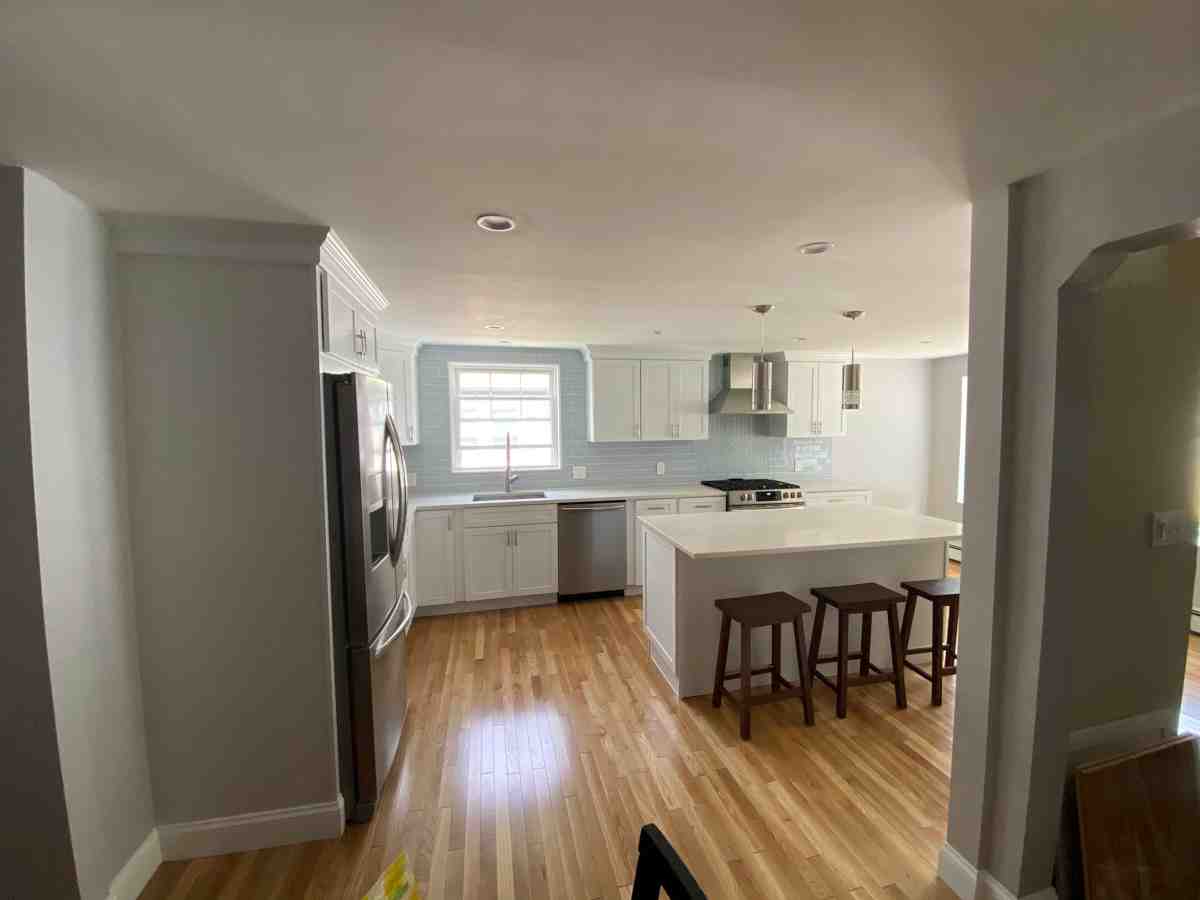





Why Kitchen Cabinet Installation Can Transform Your Kitchen (And Your Skills)
Kitchen cabinet installation is a major home improvement project that can dramatically change the look and functionality of your kitchen. Here’s what you need to know to get started:
Quick Answer: How to Install Kitchen Cabinets
- Prepare the Space: Remove old cabinets, clear the area, and repair walls
- Mark Guidelines: Find the floor’s highest point and mark level lines for base (34 ½”) and wall cabinets (54″)
- Install Upper Cabinets First: Start with corner units, secure to wall studs using a ledger board for support
- Install Base Cabinets: Level from the floor’s high point using shims, secure to studs
- Join Cabinets: Clamp adjacent units together and fasten through face frames
- Add Finishing Touches: Install doors, drawers, hardware, and trim molding
If your kitchen feels outdated or your cabinets are overflowing, installing new ones can feel overwhelming. However, with the right preparation and a clear process, it’s an achievable project.
While considered an “advanced” DIY project, it’s not impossible. Success hinges on understanding the process, having the right tools, and patience. Tackling this yourself can save thousands of dollars on a full kitchen remodel.
The entire process, from purchase to installation, can take four to nine weeks, depending on your cabinet choice. The hands-on installation work typically takes several days for an average kitchen.
This project demands patience, precision, and physical effort with heavy cabinets and power tools. However, the sense of accomplishment and money saved make it a worthwhile endeavor.
I’m Tyler Tranni, owner of Tranni Home Remodeling in Billerica, MA. I’ve overseen countless kitchen cabinet installations, helping homeowners create functional, beautiful spaces. Whether you DIY or hire a pro, understanding the kitchen cabinet installation process is key to achieving the kitchen you’ve always wanted.
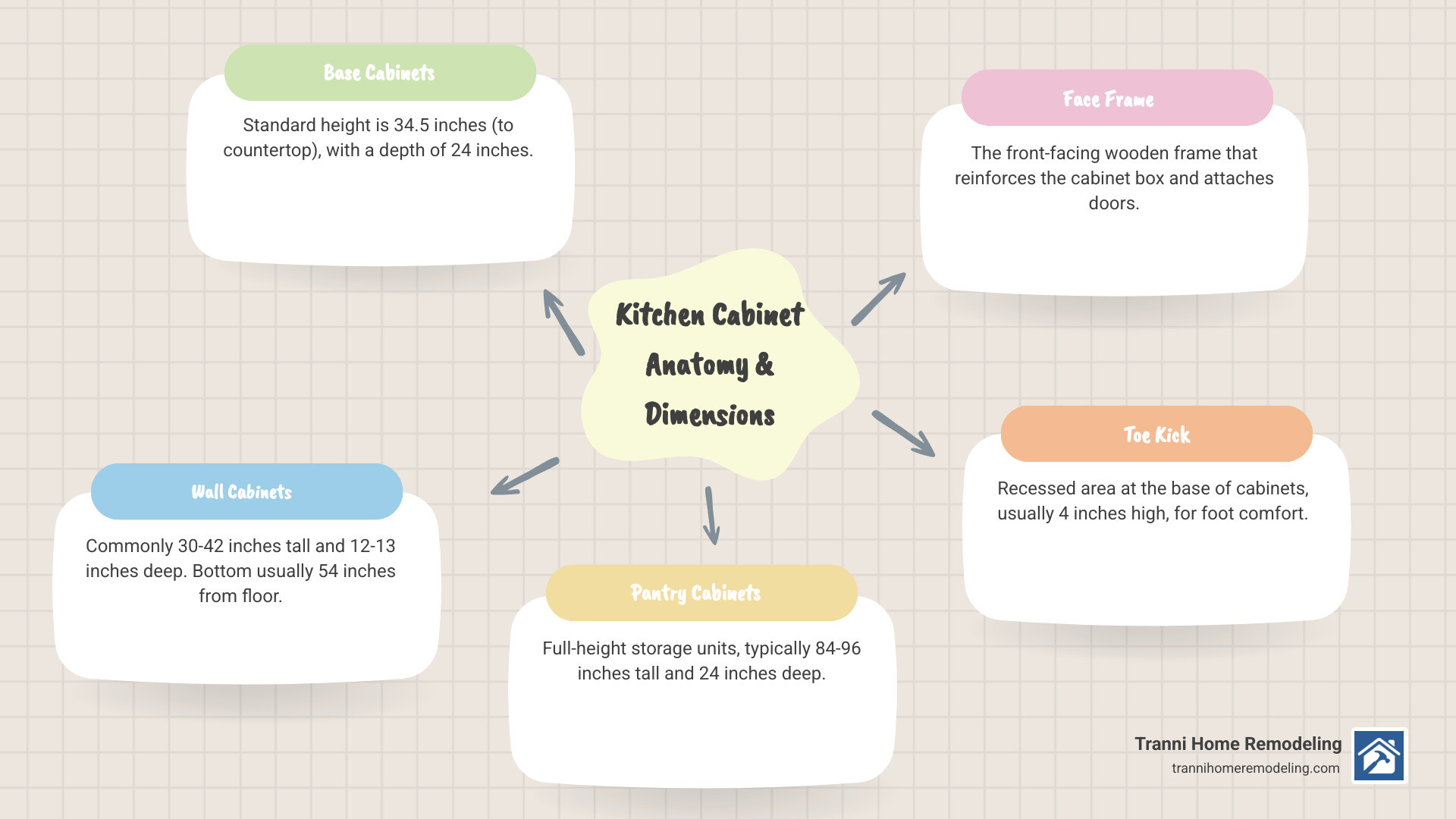
Know your Kitchen cabinet installation terms:
Before You Begin: Planning and Preparation
Thorough planning and preparation are paramount for a successful kitchen cabinet installation. This initial phase sets the stage for a smooth process and a professional-looking finish.

Choosing Your Cabinets
Selecting the right cabinets is the first step. Options vary in cost, customization, and timeline, so understanding the differences is crucial for your remodeling project in areas like Woburn or Lexington.
- Ready-to-Assemble (RTA) Cabinets: The most budget-friendly and DIY-friendly choice. They arrive flat-packed with pre-drilled holes for straightforward assembly. Customization is limited, but they offer a quick, cost-effective update.
- Stock Cabinets: Pre-manufactured in standard sizes and styles, these are a good balance between cost and availability, offering more variety than RTA cabinets.
- Semi-Custom Cabinets: Offering more flexibility in size, finish, and style than stock options. You can modify dimensions and add accessories for a more personalized look without the full cost of custom.
- Custom Cabinets: Built specifically for your kitchen, these offer unlimited design choices for a perfect fit, ideal for unique spaces in homes in Concord or Carlisle. They are the most expensive and time-consuming option but allow for maximum personalization.
| Cabinet Type | Cost (Low to High) | Timeline (Short to Long) | Customization Level |
|---|---|---|---|
| RTA (Ready-to-Assemble) | $ | Short | Limited |
| Stock | $$ | Short-Medium | Standard |
| Semi-Custom | $$$ | Medium | Moderate |
| Custom | $$$$ | Long | Extensive |
Beyond the type, consider the style:
- Shaker Cabinets: Featuring clean lines with a flat panel and simple frame, their versatile design fits both traditional and modern aesthetics.
- Raised Panel Cabinets: These traditional cabinets have a raised center panel that adds depth and detail, complementing classic designs.
- Frameless Cabinets: Also called European-style, these have no face frame, offering a sleek, contemporary look with maximum storage.
For more detailed information on changing your cooking space, explore our kitchen remodeling services.
Essential Tools and Materials
Having the right tools is crucial for a good installation. Here’s what you’ll need:
- Measuring Tape
- Level (4-foot and 2-foot, or a laser level): Crucial for ensuring cabinets are perfectly level and plumb.
- Stud Finder: To locate wall studs for secure mounting.
- Drill and Bits
- Clamps (C-clamps): For holding adjacent cabinets together.
- Cabinet Screws: #10 x 2 1/2″ screws for mounting to studs and #8 x 2 1/2″ trim head screws for joining face frames. Do not use nails or drywall screws.
- Wood Shims: For leveling and plumbing cabinets against uneven walls or floors.
- Ledger Board (1×4 lumber): A temporary support for installing upper cabinets.
- Safety Goggles
- Other useful tools: Hammer, pry bar, miter saw, jigsaw, straight edge, utility knife, and a T-brace.
Crucial Prep for Your Kitchen Cabinet Installation
Proper preparation prevents headaches and ensures your workspace is ready for a precise kitchen cabinet installation.
- Clear the Room: Clear the room of all items, including old cabinets and appliances. Homeowners are typically responsible for removing old cabinets.
- Protect Floors and Surfaces: Protect floors with cardboard or drop cloths.
- Utility Check (Plumbing, Electrical, HVAC): Finalize and check the position of all plumbing, electrical, and HVAC work. Turn off all utilities to the area before starting.
- Wall Repair and Painting: Inspect, repair, and paint the walls before installation. It’s much easier to paint a blank wall than to work around new cabinets.
- Unpack and Inspect Cabinets: Inspect new cabinets upon arrival for damage or errors. Address any issues with the supplier immediately. Remove, label, and safely store all doors, drawers, and shelves.
- Prepare for Dust: Protect the area from dust by covering vents and nearby furniture. Wear protective gear like dust masks and goggles.
Measuring and Marking Your Layout
Precise measurements are the bedrock of a successful kitchen cabinet installation. Always measure twice.
- Find the Floor’s Highest Point: Use a 4-foot level to find the highest point on the floor. This is your reference point for all measurements to ensure level cabinets.
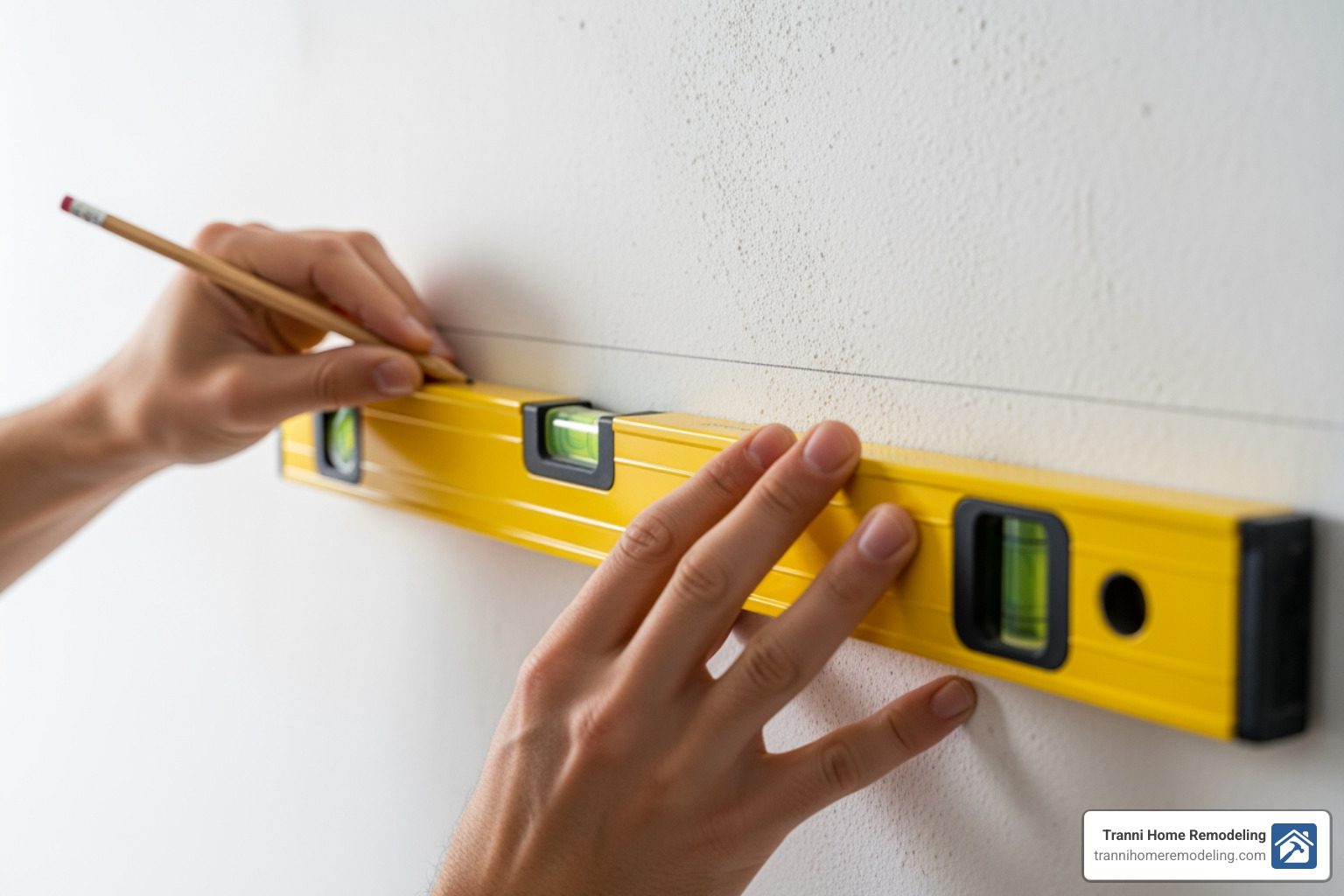
- Mark the Base Cabinet Height Line: From the floor’s high point, measure up 34 ½ inches and draw a level line on the walls. This marks the top of your base cabinets.
- Mark the Wall Cabinet Bottom Line: Measure 19 ½ inches up from the base cabinet line (or 54 inches from the floor’s high point) and draw a second level line. This marks the bottom of your wall cabinets.
- Locating and Marking Wall Studs: Use a stud finder to locate and mark the center of all wall studs where cabinets will be mounted. This is critical for secure attachment.
The Step-by-Step Kitchen Cabinet Installation Process
With planning complete, it’s time to install the cabinets. The process begins with the upper cabinets to allow clear access.
Installing Upper Wall Cabinets
Experts recommend installing upper cabinets first. This prevents reaching over base cabinets, reducing damage risk and making it easier to lift and secure the wall units.
- Set Up Your Ledger Board: Secure a level 1×4 ledger board to the wall along the bottom line for your wall cabinets. This board acts as temporary support.
- Start with the Corner Cabinet (if applicable): If you have a corner, start with the corner upper cabinet to set the alignment for the rest.
- Prepare the Cabinet: Transfer stud locations to the back of the cabinet and drill pilot holes through the hanging rails.
- Lift and Position: With a helper or T-brace, lift the cabinet onto the ledger board.
- Check for Level and Plumb: Use a level to check that the cabinet is level and plumb. Use shims against uneven walls to make adjustments. Screw through the pilot holes and shims into the wall studs, but don’t fully tighten yet.
- Attach Adjacent Cabinets: Position the next cabinet, clamp the face frames together ensuring they are flush, drill pilot holes, and join them with #8 x 2 1/2″ trim head screws.
- Final Tightening and Trimming: After confirming a run of cabinets is level and plumb, fully tighten all mounting screws. Trim any exposed shims.
- Repeat: Continue this process for all remaining upper cabinets.
Base Cabinet Installation: The Foundation
With the uppers installed, move on to the base cabinets.
- Start with the Corner Base Cabinet (if applicable): Start with the corner base cabinet. For blind corners, pull the cabinet from the wall as specified in your plan to allow door clearance.
- Position and Level: Position the first cabinet, aligning its top with the 34 ½-inch guideline. Use shims underneath to level it, compensating for dips in the floor. Screw through the back rails and shims into wall studs without fully tightening.
- Attach Adjacent Base Cabinets: Position and clamp the next cabinet, ensuring face frames are flush. Drill pilot holes and join the frames with screws.
- Check and Secure: Re-check for level and plumb, then fully tighten all mounting screws.
- Utility Cutouts: For cabinets around plumbing or outlets, make precise cutouts in the back before mounting.
- Repeat: Continue this process for all remaining base cabinets.
Finishing Touches: Doors, Hardware, and Trim
With the cabinet boxes installed, it’s time for the finishing touches: doors, drawers, hardware, and trim.
Adjusting Doors and Drawers
Doors and drawer fronts often need fine-tuning for a perfect look and smooth function. Most modern cabinets use 6-way adjustable hinges for this.
- Door Adjustment (6-way Hinges): 6-way hinges allow for horizontal (left/right), vertical (up/down), and depth (in/out) adjustments using specific screws on the hinge. Take your time adjusting each door to create consistent gaps and ensure they close properly.
- Drawer Adjustment: To align drawer fronts, loosen the screws on the drawer glides or the back of the drawer head, shift the front until it’s level and flush, then re-tighten.
- Check for Smooth Operation: Test every door and drawer to ensure they operate smoothly.
For more information on the intricate details that make a finished space truly shine, check out our fine interior carpentry services.
Installing Hardware, Molding, and Toe Kicks
These final details complete your kitchen cabinet installation.
- Install Hardware (Knobs and Pulls): Use a hardware jig for consistent placement of knobs and pulls. Drill pilot holes, then attach the hardware. For drawers, ensure screws go through the drawer box for durability.
- Install Crown Molding: Crown molding adds a finished look to upper cabinets. Measure and cut the required lengths, using a miter saw for corner angles. Attach the molding to the cabinet face frames with finish nails, then fill holes and touch up.
- Scribe Filler Strips: Use filler strips to close gaps between cabinets and uneven walls. Scribe the wall’s contour onto the filler strip, cut it with a jigsaw for a custom fit, and attach it to the cabinet.
- Attach Toe-Kick Boards: Measure, cut, and attach the toe-kick boards to the base of your cabinets for a clean, finished look.
DIY vs. Hiring a Professional: When to Call for Help
While this guide covers DIY kitchen cabinet installation, it’s important to be realistic. This is an “advanced” DIY task, and there’s a fine line between a rewarding project and a regrettable one.
Common DIY Mistakes to Avoid
Even experienced DIYers can make mistakes. Here are common pitfalls to avoid:
- Inaccurate Measurements: Slight measuring errors can throw off an entire run of cabinets.
- Not Finding Studs: Cabinets are heavy; securing them only to drywall risks collapse. Always mount directly into wall studs.
- Forgetting to Level and Plumb: Failing to use shims on uneven walls and floors results in crooked, poorly functioning cabinets.
- Over-tightening Screws Too Early: This can warp cabinet boxes. Secure cabinets loosely at first, then tighten once everything is aligned.
- Damaging Cabinet Finish: Dings and scratches happen easily. Handle pieces with care and use protective padding.
- Skipping the Prep Work: Rushing prep work like wall repair or utility checks leads to later complications.
The Pro Advantage: Is It Worth the Cost?
So, when should you call a professional like our team at Tranni Home Remodeling?
- Advanced Project Skill Level: If you’re uncomfortable with precision measuring, power tools, or leveling, professional help is invaluable. We bring over a decade of experience and high-quality craftsmanship to every project.
- Handling Imperfect Walls and Floors: Older homes in areas like Winchester or Bedford often have uneven walls and floors. Professionals have the experience to compensate for these issues, ensuring a flawless result.
- Proper Tools and Experience: Professionals have specialized tools and techniques for a faster, safer, and more precise job.
- Time Savings: Hiring a pro significantly reduces the project timeline, ensuring the installation phase is efficient.
- Peace of Mind: Hiring a pro eliminates the stress and worry of costly mistakes or injury.
- Labor Cost Estimates: While DIY saves on labor, professional kitchen cabinet installation costs average $80 to over $500 per cabinet (based on internet data, not our actual pricing). The cost varies by cabinet type, kitchen size, and complexity, but it ensures a high-quality result.
- Professional Guarantees and Warranties: Professional installers like Tranni Home Remodeling offer workmanship guarantees, protecting your investment and ensuring your new kitchen is built to last.
For complex projects or to ensure a flawless finish in your home in Winchester, MA, consider contacting us for professional help. We also offer comprehensive home remodeling services in Winchester, MA.
Frequently Asked Questions about Kitchen Cabinet Installation
Here are answers to common questions about kitchen cabinet installation.
What is the recommended order for installing kitchen cabinets?
Most professionals install upper cabinets first. This provides an unobstructed workspace, reduces the risk of damaging base cabinets, and makes it easier to lift and secure the heavy wall units. Once the uppers are installed, you can proceed with the base cabinets.
How do you ensure cabinets are level on an uneven floor?
Uneven floors are common, especially in older homes in Burlington or Dracut. To ensure level cabinets, first find the floor’s highest point with a level. From that point, measure up 34 ½ inches and mark a level line for the top of your base cabinets. As you install the base cabinets, use shims underneath to bring each one up to that line. This guarantees a level surface for your countertops.
How far apart are wall studs for mounting cabinets?
Wall studs are typically spaced 16 inches on center, but this can vary, especially in older homes. Always use a stud finder to locate and mark each stud before starting your kitchen cabinet installation. Never mount cabinets to drywall alone, as they are too heavy. Secure each cabinet to at least two wall studs for safety and stability. Heavy-duty drywall anchors should only be a last resort.
Your Dream Kitchen Awaits
Undertaking a kitchen cabinet installation is no small feat, but as we’ve shown, it’s a project that’s entirely within reach for a determined homeowner. From understanding the different cabinet types and carefully preparing your space to the step-by-step process of mounting and finishing, each stage contributes to the final, transformative result.
The sense of accomplishment you’ll feel looking at your perfectly aligned, functional, and beautiful new kitchen is truly rewarding. You’ll have not just a renovated space, but also new skills and a deeper appreciation for home improvement.
However, we also understand that not every homeowner has the time, tools, or inclination to tackle such an “advanced” DIY project. If the thought of leveling, plumbing, and shimming cabinets against an uneven wall in your Chelmsford or North Andover home feels daunting, or if you simply want the assurance of a flawless, professionally guaranteed finish, that’s where we come in.
At Tranni Home Remodeling, we specialize in delivering high-quality craftsmanship and outstanding service in home renovations. Our experienced team can handle every aspect of your kitchen remodel, ensuring your new cabinets are installed with precision and care. Whether it’s a custom kitchen in Natick or a modern update in Tewksbury, we’re here to turn your kitchen dreams into a reality.
Ready to start on your kitchen change? Contact us for your kitchen remodeling project today, and let’s discuss how we can create the kitchen you’ve always wanted.
Like us on Facebook!