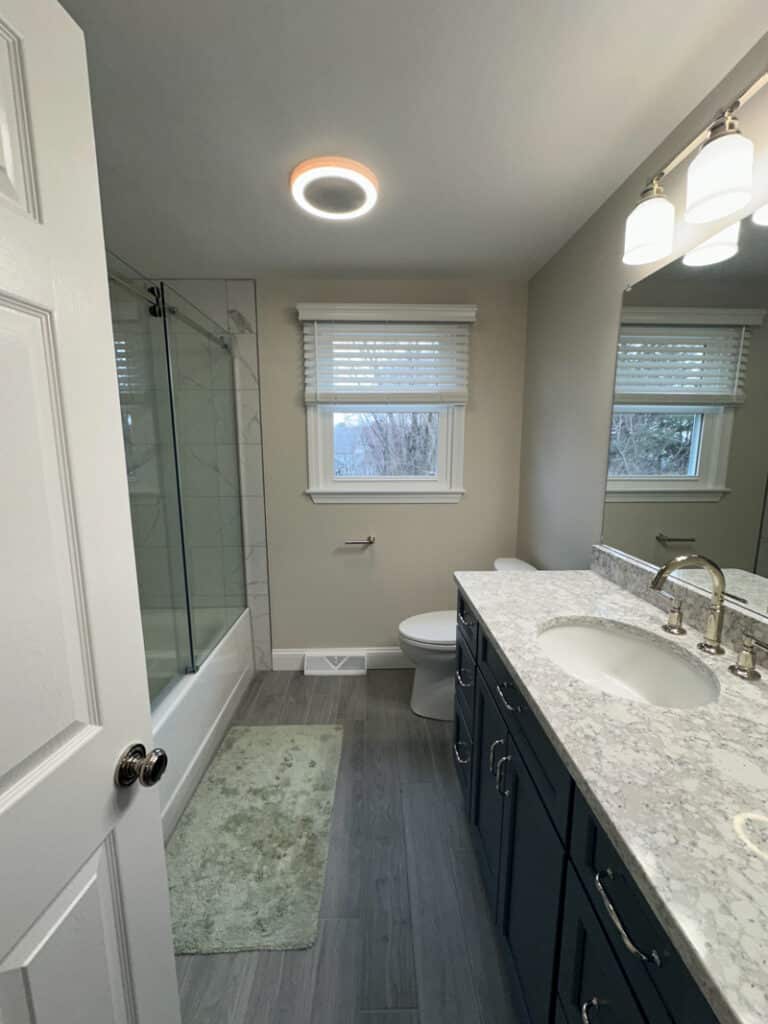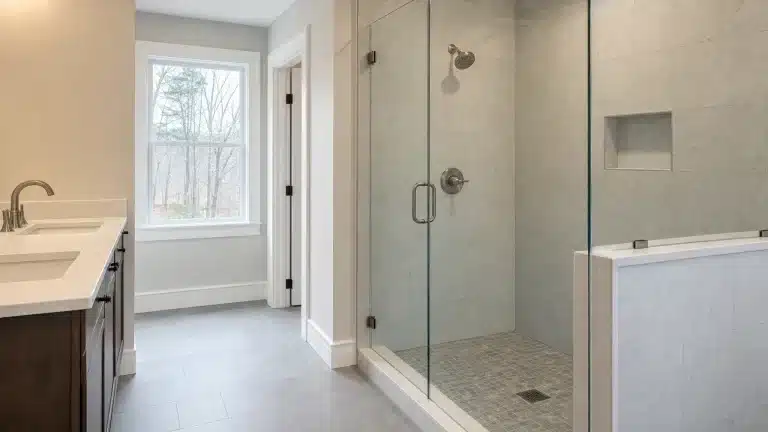





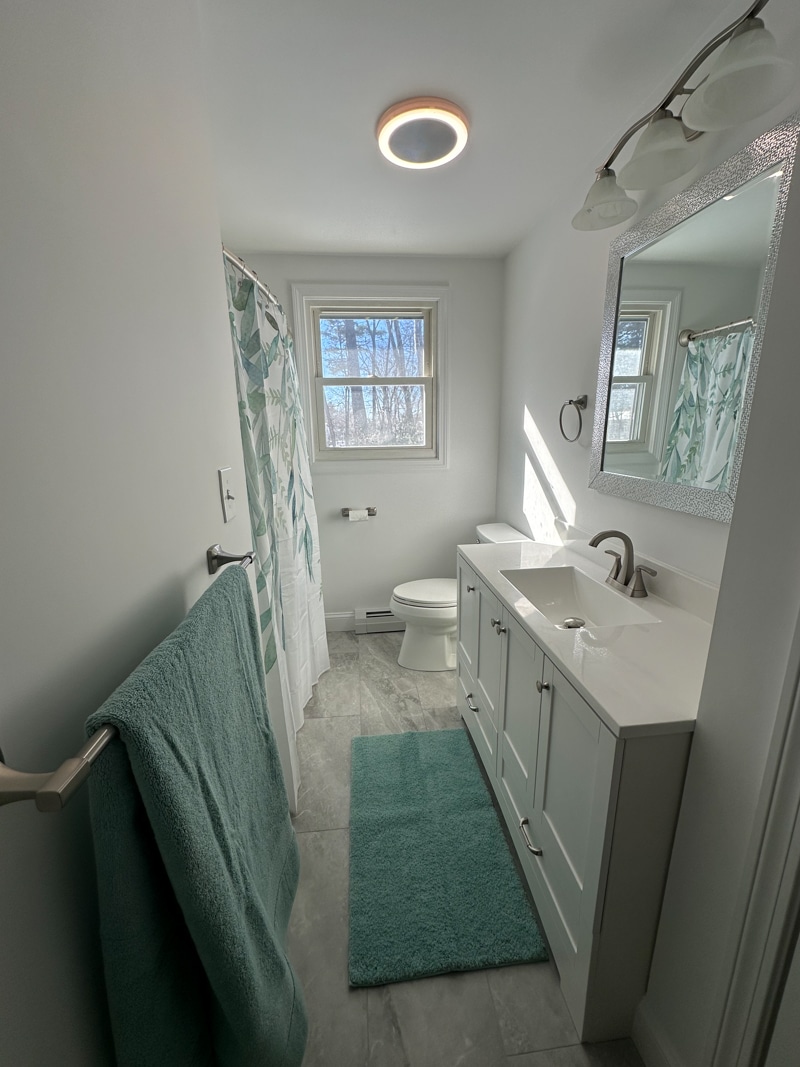
Only One Bathroom? How to Get Through a Winter Bathroom Remodel at Home
How to plan toilet access, bathing and cold-weather protection when your home's only bathroom is out of service during a winter remodel.
The short answer
- Ask your contractor for a schedule showing which days the toilet and the shower will each be out of service. They are usually different stretches.
- Set up a backup toilet before demo day. In winter, an indoor bedside commode or bag-style camping toilet is often more practical than a unit in the driveway.
- Plan showers around a gym, pool, workplace or relative, and set up a simple wash station at the kitchen sink.
- Keep your home's heat on, find your main water shutoff, and ask how exposed pipes and the work room will be kept above freezing.
Find out exactly when you'll lose the toilet and the shower
With only one bathroom in the house, a remodel is a design project and also a household logistics project. At Tranni Home Remodeling, we've spent years remodeling bathrooms throughout Middlesex County and Southern New Hampshire, in towns like Billerica, Chelmsford and Tewksbury. Families with a single bathroom do best when they settle the "where do we go" questions before the first tile comes off the wall.
Ask for outage windows as well as a finish date
A completion date doesn't tell you much about daily life. You need to know which days the toilet will be disconnected, which days the shower or tub will be unusable, and whether the sink goes out at the same time. In a full remodel these are often different stretches. The toilet is usually removed at demolition and reinstalled near the end, after the new floor is down. The shower tends to be the longest outage because the walls, waterproofing, tile and grout all have to be finished and given time to cure.
Bring these questions to your estimate visit:
- Can any phase of the work keep the toilet usable, especially if only the tub or shower is being replaced?
- Is it practical for the crew to temporarily reset the toilet at the end of the day during certain stages? This is a job for the crew. A toilet that isn't properly sealed can leak into the floor or ceiling below.
- Which materials need to be on site before demolition starts?
- What happens to the schedule if a delivery runs late?
Scope makes a big difference. Our bathroom remodeling work ranges from small upgrades to complete makeovers. A vanity swap or fixture refresh may take the room offline only briefly, while a gut renovation needs a real plan. We offer free estimates for bathroom remodeling, and you can reach us here to walk through how your project would be phased.
Have materials ordered and confirmed before demolition so your only bathroom doesn't sit gutted while you wait on a backordered part.
Toilet options while the bathroom is out
You can find workarounds for showers. You can't skip the toilet at 2 a.m., so solve that first.
Indoor options
A bedside commode from a pharmacy or medical supply store is sturdy, has a seat at a familiar height and uses a removable bucket you can line with disposable bags. A portable camping toilet is another choice. Because your only flushing toilet will be out of service, look for a bag-style model that you can empty without a working toilet. Follow the product's directions and your town's trash guidance for disposal.
Put the unit somewhere private and warm, such as a spare room, laundry area or corner of the basement with a folding screen. Add a plug-in nightlight along the route from the bedrooms. Keep hand sanitizer, wipes, toilet paper and a lidded wastebasket right beside it.
Outdoor portable restroom rentals
A rented portable restroom can work, but winter makes it harder. Seats get cold, the path can ice over, and the unit takes up driveway space you may also need for a dumpster or material deliveries. If you go this route, ask the rental company how they service units in snow and freezing weather, and plan to keep the path shoveled and salted.
Also ask your contractor whether the crew brings its own facilities or will need to use yours. That affects how many people are sharing your setup.
Lean on people nearby
A neighbor, relative, workplace or coffee shop can cover daytime needs. None of them help in the middle of the night, so treat them as a supplement to an indoor option at home.
Test your temporary toilet setup before demo day, especially with young kids, older relatives or anyone who gets up at night.
Showers and washing up without your bathroom
Most households combine two or three of these options.
- Outside showers: a gym membership, community pool, rec center, workplace locker room, or a relative who lives nearby and doesn't mind a shower schedule.
- A kitchen wash station: a basin, washcloths, towels, soap and a caddy for toothbrushes and toothpaste. A kitchen faucet with a pull-down sprayer makes hair washing much easier.
- No-rinse products: body wipes, no-rinse shampoo and dry shampoo can stretch the time between real showers.
- Little kids: a plastic baby tub on the kitchen floor or counter works well. Supervise closely, as you would in any bath.
- A basement laundry or utility sink, if you have one, for muddy hands and quick cleanups.
Winter adds a few wrinkles
Walking out of a gym with wet hair on a January morning gets old fast. Pack a hair dryer or a warm hat, and keep a spare towel and flip-flops in the car. If you're showering at a relative's house, set up a rough schedule so you aren't all arriving during their morning rush.
Getting the shower back early
Shower glass is often measured after the tile is installed, so there can be a gap between finished tile and installed glass. Ask your contractor whether you can use the shower with a temporary curtain during that gap.
Don't run water in a newly tiled shower until your contractor confirms the grout and waterproofing have cured, even if it looks finished.
Keeping pipes and the work area warm
A New England winter puts extra demands on a bathroom remodel. When walls are opened up, supply lines that sat inside insulated exterior walls can suddenly be exposed to cold air. One windy night in the single digits can be enough to freeze them.
Questions to ask about cold-weather protection
- Are any water lines in an exterior wall, and how will they be protected while the wall is open?
- Will the room's heat source, whether a radiator, baseboard or register, stay connected? If it has to be removed, how will the room be kept warm?
- If temporary heat is used, who sets it up and who monitors it?
Leave shutting off and draining branch lines to the crew or a licensed plumber. If temporary heaters are used, let the crew place them, and never leave one running unattended or near drop cloths, packaging or solvents.
Materials need warmth too
Tile adhesives, grout, waterproofing membranes, caulk and paint list a minimum application temperature on the label, and many say to protect them from freezing. A cold room can slow curing or weaken the result. Ask where materials will be stored. A heated part of the house is usually better than an unheated garage or porch overnight. For more on checks before tile, see our waterproofing-before-tile checklist.
What you can safely do yourself
Keep your thermostat at its normal setting for the whole project and skip deep nighttime setbacks. Learn where your main water shutoff is. If a pipe bursts or you see water where it shouldn't be, turning off the main is a safe first step. Then call your contractor or a plumber. Never try to thaw a frozen pipe with an open flame.
Keeping the rest of the house livable
In winter the windows stay shut, so dust and odors have fewer ways out. A little planning keeps the rest of the house comfortable.
- Dust: ask how the crew will contain the work area. Common methods include plastic barriers, a zippered door and covered vents near the bathroom. Swapping your furnace filter after demolition is an easy homeowner task.
- Fumes: some adhesives and sealants have a strong smell. Ask how the room will be ventilated while the exhaust fan may be disconnected.
- Snow and access: keep the walkway and steps clear and salted for crews carrying heavy fixtures. Agree on where the dumpster, deliveries and work vehicles will go, since snowbanks shrink driveway space. Expect a big storm to shift the schedule by a day here and there.
- Kids and pets: an open bathroom has exposed pipes, sharp edges and tools. Keep the door to that hallway closed during work hours if you can.
- Morning routines: give each person a small "bathroom bin" with toiletries, and stagger wake-up times so the kitchen sink doesn't get jammed.
It helps to cover all of this in one sitting before work starts. Our preconstruction meeting checklist lists the decisions worth settling up front.
A one-bathroom prep checklist for the week before demo
Finalize your selections well ahead of your start date, then run through this list in the days before work begins.
- Confirm the written schedule, including the toilet outage days and the shower outage days.
- Set up and test your indoor toilet option, along with supplies, a privacy screen and a nightlight path.
- Arrange shower access, such as a gym, pool or a relative's house, and put a schedule on the fridge.
- Stock the kitchen wash station with a basin, towels, wipes, no-rinse shampoo and a toothbrush caddy.
- Empty the bathroom completely, including the medicine cabinet, linen shelves and anything stored under the sink.
- Clear a path from the door to the bathroom and protect floors along the route if the crew hasn't covered that.
- Locate the main water shutoff and the electrical panel, and tag them if they aren't labeled.
- Agree on where the crew parks, where materials are stored, and who clears snow on work days.
- Ask how pipes and the work room will be kept warm, and plan to keep your heat at its normal setting.
- Choose one way to reach the crew lead each day, such as a text thread or a quick end-of-day check-in.
Families who handle a single-bathroom remodel well usually decided where everyone would go before the room went dark. With the toilet sorted, showers scheduled and the pipes protected, you can get through even a long gut renovation without much drama.
Tape a copy of the outage schedule and your backup plan to the fridge so babysitters and visiting relatives know what to do.
Common questions
How long will we be without a shower during a bathroom remodel?
It depends on the scope. A small upgrade may take the shower out only briefly, while a complete makeover keeps it offline longest because walls, waterproofing, tile and grout all have to be finished and cured. Ask your contractor for a schedule that shows the shower outage on its own line.
Can we stay in our home if it only has one bathroom?
Many households do, with a backup toilet indoors and an outside place to shower. If someone at home has mobility or medical needs, consider staying with family during the longest no-shower stretch, or ask whether the work can be phased to shorten it.
Is winter a bad time to remodel a bathroom in Massachusetts?
Not necessarily. Most of the work happens indoors. The main winter concerns are keeping exposed pipes and setting materials warm, snow around deliveries and parking, and dust in a closed-up house. Plan for those and a winter project can go smoothly.
Will the work crew use our temporary toilet?
Ask before work starts. Some crews arrange their own facilities and others may need access to yours. The answer affects whether an indoor commode is enough or whether a rented outdoor unit makes more sense.
Does Tranni Home Remodeling offer free estimates for bathroom remodels?
Yes. Tranni Home Remodeling offers free estimates for bathroom remodeling. The estimate visit is a good time to ask how a one-bathroom project would be phased.