




Residential Electrical Wiring: Top 5 Vital Tips 2025
Residential electrical wiring is the critical backbone that powers every tool, appliance, and light fixture in your home. Whether you’re building a new home or renovating an existing one, understand the fundamentals:
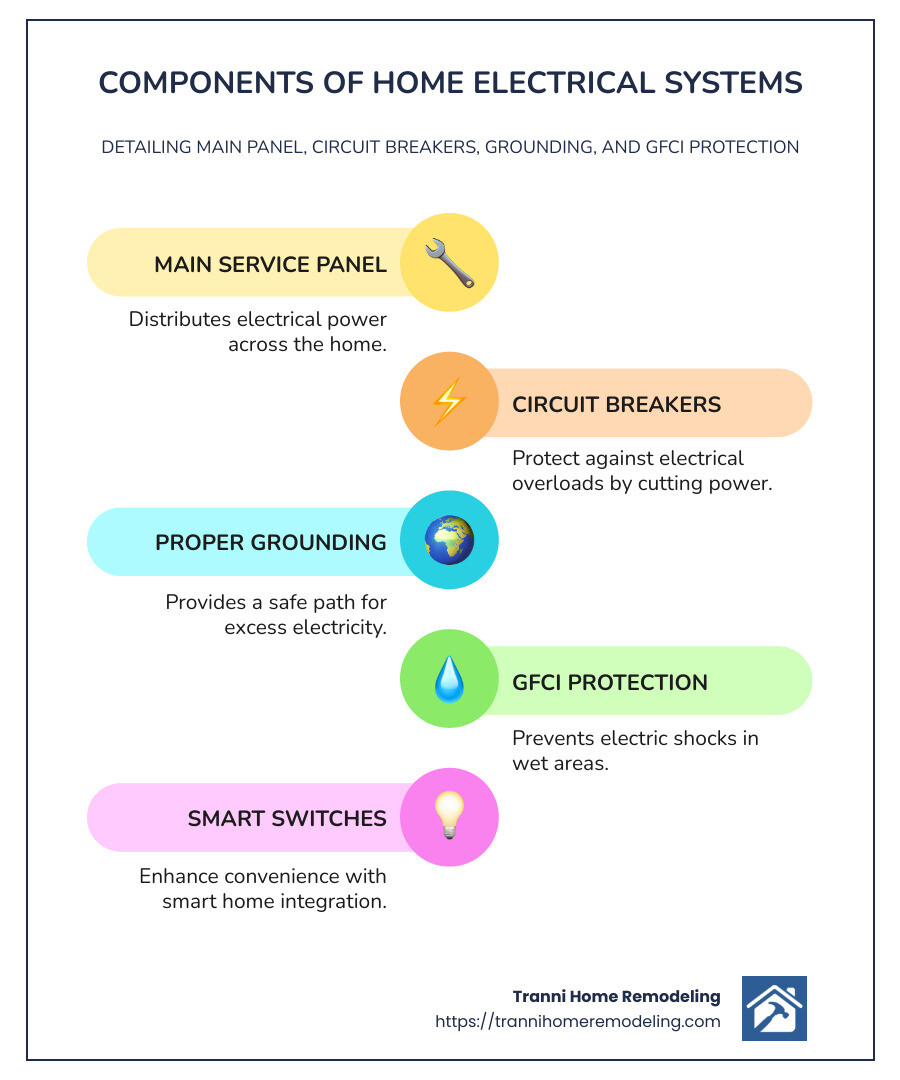
- Main Service Panel: Also known as the breaker box, it distributes electrical power throughout the house.
- Circuit Breakers: These protect your home from electrical overloads, cutting power during a fault.
- Proper Grounding: Ensures safety by providing a path for excess electricity.
A well-planned wiring system not only ensures safety and efficiency but also adds convenience. Properly placed outlets and smart switches contribute significantly to daily comfort, especially in rooms with specific electrical needs, like kitchens and bathrooms.
I’m Tyler Tranni, owner of Tranni Home Remodeling. With years of experience in renovating homes across Middlesex County, I make sure every aspect of residential electrical wiring meets the highest standards of safety and efficiency. In my career, I’ve seen that well-executed wiring is critical not just for functionality but for creating living spaces that truly reflect your lifestyle.
Understanding Residential Electrical Wiring
When it comes to residential electrical wiring, understanding the components and their functions is crucial. Let’s break down the essentials:
Common Wire Types
NM Cable (Non-Metallic Sheathed Cable)
In most modern homes, the NM cable is the go-to choice. It’s a bundle of wires wrapped in a plastic sheath, typically consisting of one or more hot wires, a neutral wire, and a ground wire. This makes it safe and versatile for interior wiring needs.
Wire Gauge
The size of the wire, or gauge, is vital for safety and efficiency. Common gauges for household wiring include 14-gauge and 12-gauge. The smaller the number, the thicker the wire. Thicker wires handle more current, making them suitable for high-demand appliances.
Hot Wires
Hot wires carry the electrical current from the service panel to the devices in your home. They are usually black or red. These wires are live and can be dangerous if not handled properly.
Key Components
Service Head
Electricity enters your home through the service head. It connects to either overhead power lines or an underground system, bringing in two 120-volt wires and a neutral wire. This setup powers everything from your lights to your refrigerator.
Electrical Service Panel
Often called the main service panel or breaker box, this is the heart of your home’s electrical system. It distributes electricity to different circuits throughout the house. Each circuit is protected by a breaker or fuse to prevent overloads.
Circuit Breakers
Circuit breakers are safety devices that automatically cut off power when a circuit is overloaded or a fault occurs. They are crucial for preventing electrical fires and damage to appliances.
Fuses
Though less common in new homes, fuses serve a similar purpose as circuit breakers. They blow out when there’s too much current, protecting the circuit. However, fuses need to be replaced after they blow, unlike breakers which can simply be reset.
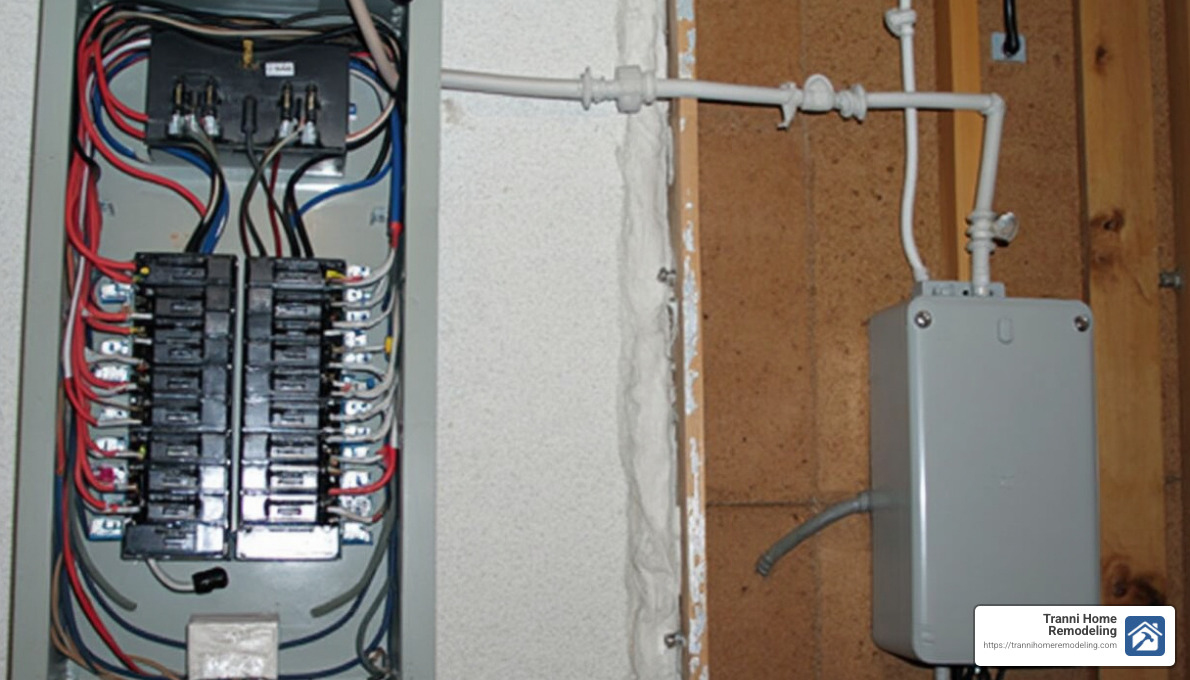
Understanding these components and wire types is essential for anyone dealing with home electrical systems. This knowledge ensures not only safety but also the efficient functioning of your household electronics and appliances.
Next, we’ll explore how to plan your electrical wiring layout, focusing on room-by-room considerations and proper outlet and switch placement.
Planning Your Electrical Wiring Layout
Creating a safe and efficient electrical layout in your home is crucial. It involves strategic planning and adherence to safety standards. Let’s explore the key considerations for designing your residential electrical wiring layout.
Room-by-Room Considerations
Each room in your home has unique electrical needs. Kitchens and bathrooms, for instance, require Ground-Fault Circuit Interrupter (GFCI) protection due to the presence of water. Bedrooms and living rooms might need extra outlets for electronics.
Pro Tip: When planning, think about how each room is used. This ensures that all electrical needs are met efficiently.
Outlet and Switch Placement
Proper placement of outlets and switches can greatly improve the functionality of your home. In Massachusetts, electrical codes require outlets every 12 feet, but some experts recommend placing them every 8 feet for added convenience.
“Not a big deal on the budget, but it’s a lot more convenient,” says master electrician Allen Gallant.
Consider furniture layout and traffic flow when deciding where to install outlets and switches. You want to avoid having cords running across walkways or being hidden behind large furniture pieces.
Safety Considerations
Grounding
Grounding is essential for electrical safety. It provides a safe path for excess electrical current, reducing the risk of electric shock and fire. Every electrical system should have a grounding electrode system, often connected to a metal water pipe or a ground rod.
Code Compliance and Inspections
Adhering to local building codes is not just a legal requirement but a safety measure. Most jurisdictions follow the National Electrical Code (NEC) but may have local amendments. Before starting any electrical work, check your local codes and regulations.
Inspections are also crucial. They ensure that all electrical work is up to standard and safe. This is especially important if you’re doing any DIY wiring work.
Remember: Safety first! If you’re unsure about any aspect of electrical work, consult a professional.
By planning carefully and considering these safety aspects, you can create an electrical wiring layout that is both functional and safe for your home. Next, we’ll look at some DIY wiring tips and common mistakes to avoid.
DIY Wiring Tips and Mistakes to Avoid
Taking on a DIY electrical wiring project in your home can be rewarding and cost-effective. However, it requires careful preparation and attention to detail to ensure safety and compliance. Let’s explore some essential tips and common mistakes to avoid when tackling residential electrical wiring.
Tools and Preparation
Before you start, gather the right tools. This will make your work efficient and safe. Here are the essentials:
- Multimeter: This device is crucial for testing electrical voltage and ensuring circuits are safe to work on.
- Wire Stripper: A combination sheath/wire stripper helps you strip insulation from wires without damaging them.
- Safety Gear: Always wear safety glasses and gloves to protect against electrical shock and debris.
Having these tools on hand will prepare you for most basic wiring tasks.
Common Mistakes
Even seasoned DIYers can make mistakes when working with electrical wiring. Here are some errors to watch out for:
- Short Wires: Always cut wires longer than you think you’ll need. A good rule of thumb is to have wires extend at least three inches outside the electrical box. If you cut them too short, you’ll need to add extensions, which can be tricky and time-consuming.
- Unprotected Cables: Never leave sheathing unprotected, especially in places like ceilings. If the wire runs along a wall, staple it to a 2×2 or use metal conduit to protect it.
- Improper Connections: Ensure all wire connections are secure. Loose connections can lead to arcing and potential fires. Use wire nuts to secure connections, and always double-check your work.
- Skipping Grounding: Proper grounding is a must. Avoid the mistake of improperly connecting the ground wire. Just attaching it to a metal box isn’t enough if the box isn’t grounded.
“Improper grounding can lead to serious safety hazards,” warns electrical safety expert Allen Gallant.
By understanding these common pitfalls and preparing adequately, you can tackle your DIY wiring project with confidence. Always prioritize safety, and don’t hesitate to consult a professional if you’re unsure about any aspect of your project.
Next, we’ll dig into advanced electrical wiring techniques, including integrating smart home systems and ensuring energy efficiency.
Advanced Electrical Wiring Techniques
In today’s homes, advanced electrical wiring techniques not only ensure safety but also improve convenience and energy efficiency. Let’s explore some key innovations and practices that can make your home’s electrical system both smart and efficient.
GFCI and AFCI Protection
Ground Fault Circuit Interrupters (GFCIs) and Arc Fault Circuit Interrupters (AFCIs) are essential components for modern electrical safety. GFCIs protect against ground faults, which can occur when electricity escapes its intended path, posing a risk of electric shock. They are particularly important in wet areas like kitchens and bathrooms.
AFCIs, on the other hand, detect arc faults, which are dangerous sparks that can lead to fires. These devices are now required by electrical codes in many areas of the home. Installing GFCIs and AFCIs not only protects your family but also helps your home meet the National Electrical Code standards.
240-Volt Appliances
Some appliances, like electric ranges and dryers, require 240-volt circuits. These circuits use two hot wires to deliver double the voltage of standard outlets, making them ideal for high-power devices. When planning your electrical layout, ensure these circuits are properly installed to handle the load. Always consult a professional electrician for these installations to ensure safety and compliance.
Smart Home Integration
The rise of smart home technology offers opportunities to integrate automation into your electrical system. Smart switches, outlets, and control panels allow for automated control of lighting, heating, and appliances, reducing energy waste and enhancing convenience. Consider pre-wiring your home for smart devices to future-proof it, as this can save time and money down the line.
LED Lighting
Switching to LED lighting is one of the simplest ways to improve energy efficiency. LEDs consume significantly less power than traditional incandescent bulbs and last much longer. According to lighting expert Allen Gallant, “LEDs would be great for a cathedral ceiling because you almost never have to change the bulbs.” By planning your lighting circuits with LED fixtures, you can maximize energy savings and reduce maintenance costs.
Energy-Efficient Smart Home Systems
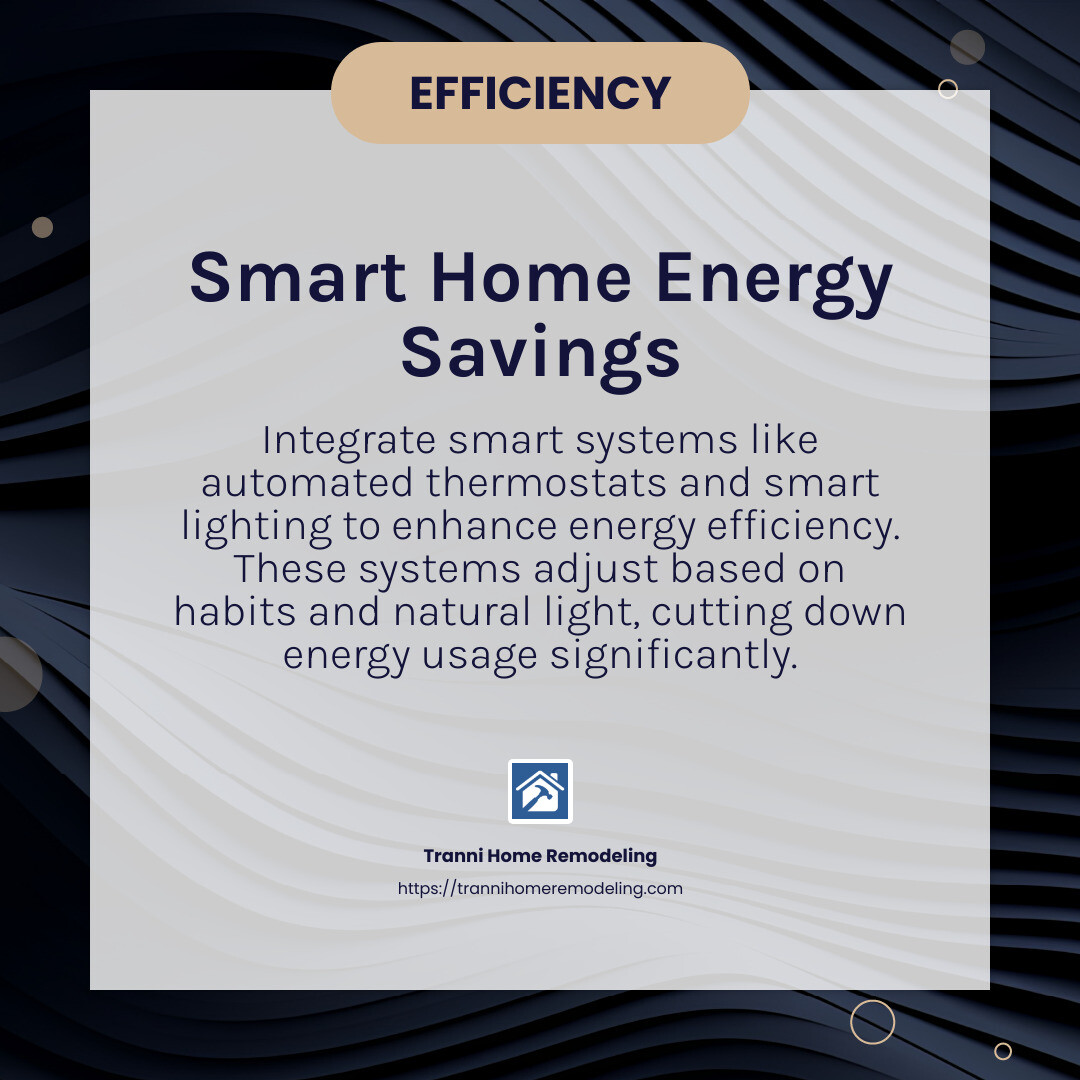
Integrating smart home systems can further boost your home’s energy efficiency. Automated thermostats, for instance, can learn your habits and adjust heating and cooling to save energy without sacrificing comfort. Smart lighting systems can adjust brightness based on natural light levels or occupancy, further cutting energy usage.
By incorporating these advanced techniques and technologies, you can create a home that’s not only safe and efficient but also ready for future innovations. Up next, we’ll tackle some frequently asked questions about residential electrical wiring to clear up any lingering doubts.
Frequently Asked Questions about Residential Electrical Wiring
What type of wiring is used in residential homes?
In most modern homes, the go-to choice for residential electrical wiring is nonmetallic (NM) cable. Often referred to by its brand name, Romex, NM cable is popular because it’s easy to work with and cost-effective. It typically includes two or more insulated wires and a bare ground wire, all encased in a plastic sheath. The wires inside can vary in gauge, which is important for different electrical loads in the home.
Should I use 12 or 14-gauge wire for outlets?
The choice between 12-gauge and 14-gauge wire depends on the circuit’s amperage.
- 14-gauge wire is suitable for 15-amp circuits, often used for general lighting and receptacle circuits. It’s thinner and easier to handle but can’t carry as much current as thicker wires.
- 12-gauge wire is used for 20-amp circuits, which are common for general-purpose outlets and appliances that draw more power. It provides a safer option for higher loads due to its thicker size.
When adding outlets or circuits, match the existing wire gauge to maintain safety and compliance with electrical codes.
Can you do electrical wiring yourself?
Yes, you can tackle DIY electrical projects, but there are important considerations to keep in mind.
- Permits and Inspections: Before starting any electrical work, check with your local building department to see if you need a permit. Most jurisdictions require permits for new wiring and significant modifications. These projects often must be inspected to ensure they meet local building codes and safety standards.
- Knowledge and Preparation: Make sure you understand the basics of electrical wiring, including wire gauge and circuit requirements. Equip yourself with the right tools, like a multimeter and wire stripper, to safely handle the job.
- Safety First: Always prioritize safety. Turn off power at the main service panel before starting work and verify with a voltage tester. If you’re unsure about any aspect of the project, it’s best to consult a licensed electrician.
DIY electrical work can be rewarding and cost-saving if done correctly. However, it’s crucial to follow all safety guidelines and local regulations to prevent hazards.
Conclusion
When it comes to residential electrical wiring, safety and future-proofing should be at the forefront of every homeowner’s mind. At Tranni Home Remodeling, we understand the importance of a well-designed electrical system that not only meets today’s needs but is also ready for tomorrow’s advancements.
Safety is paramount. Electrical work, if not done correctly, can pose serious risks, including shocks, fires, and damage to appliances. Our team of skilled electricians ensures that all installations are code-compliant and safe. We adhere to the highest standards of quality and safety, giving you peace of mind that your home is protected.
Future-proofing your home is another critical aspect. As technology evolves, so do the demands on your electrical system. Whether you’re considering smart home integrations or energy-efficient solutions, planning for future needs can save you time and money down the road. We can help you incorporate features like GFCI and AFCI protection, 240-volt appliance circuits, and LED lighting to improve both safety and efficiency.
Choosing Tranni Home Remodeling means choosing a partner dedicated to enhancing your home’s functionality and value. Our expertise in electrical services is just one part of our comprehensive approach to home remodeling. We invite you to explore our electrical services and find how we can help bring your vision to life.
In conclusion, whether you’re tackling a small DIY project or planning a major renovation, always prioritize safety and consider future needs. With the right planning and professional guidance, your home’s electrical system can be both safe and ready for whatever the future holds.