





Understanding Your Home’s Electrical Capacity
A 250 amp electrical panel is a high-capacity distribution center for your home’s electricity. It receives power from the utility and safely distributes it to various circuits. With 250 amperes of total capacity, it’s ideal for large homes, properties with high-demand appliances, EV charging stations, or homes with significant expansion plans.
Quick Facts About 250 Amp Panels:
- Capacity: Handles up to 250 amperes of electrical current
- Best For: Large homes (3,000+ sq ft), multiple HVAC systems, EV charging, workshops, hot tubs
- Typical Cost: $3,000 – $9,000+ installed (prices vary widely based on location and scope)
- Upgrade Required: Usually includes new service entrance conductors and meter socket
- Alternative Sizes: 200A (standard for most homes), 400A (commercial or very large residential)
Modern homes demand more power than ever. Smart systems, EV chargers, home offices, and energy-intensive appliances like heat pumps are pushing the limits of traditional 200 amp service. Your electrical panel is the heart of your home’s electrical system; when it can’t keep up, it’s time for an upgrade.
The 250 amp panel is a middle ground between the standard 200 amp service and larger 400 amp systems. It provides substantial capacity for today’s needs with room for future additions.
As Tyler Tranni, owner of Tranni Home Remodeling in Billerica, MA, I’ve helped many homeowners with electrical upgrades, assessing if a 250 amp electrical panel is right for their needs. Proper electrical planning prevents costly do-overs and ensures your home can safely handle modern demands.
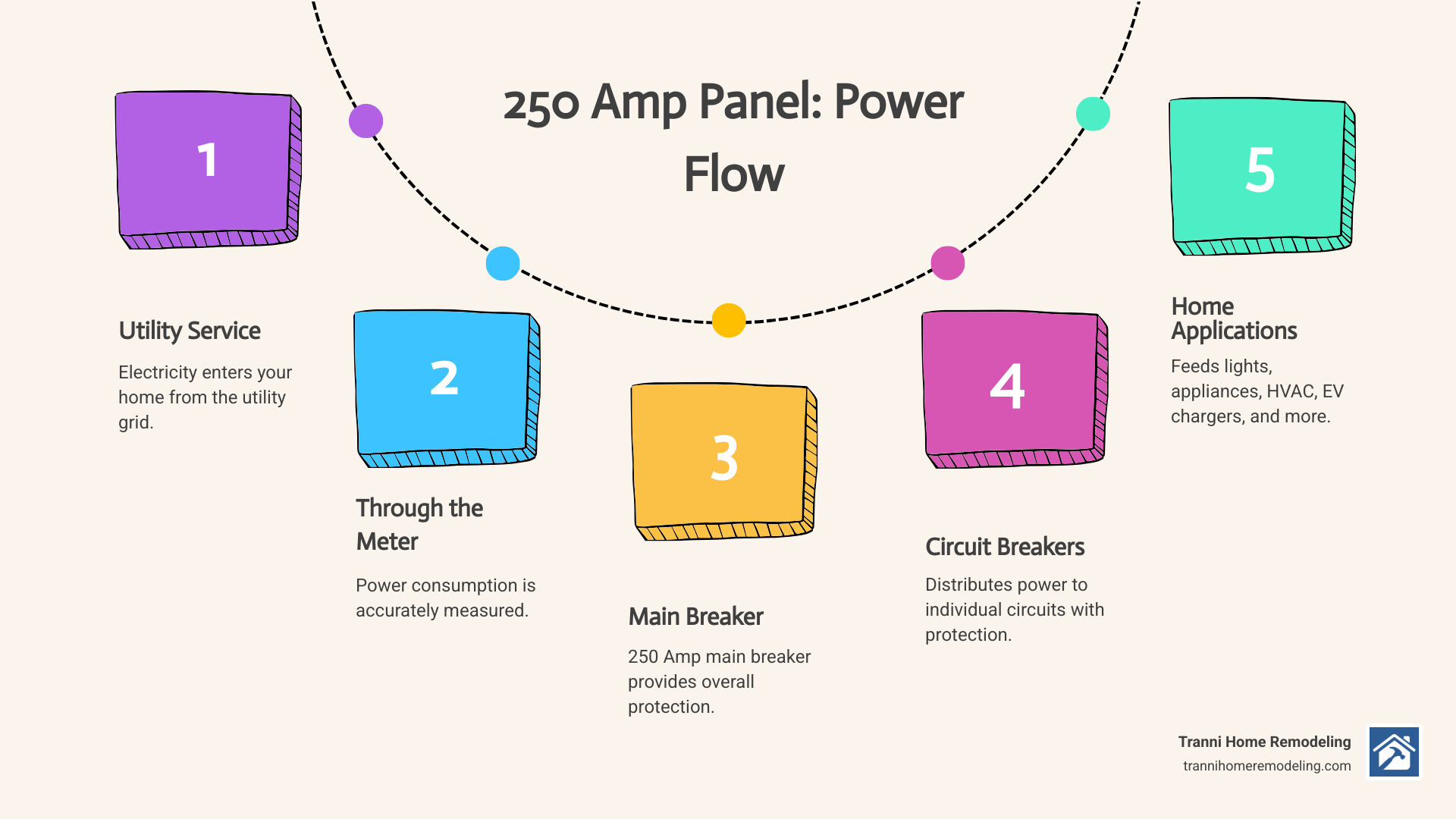
Easy 250 amp electrical panel glossary:
Decoding the 250 Amp Electrical Panel: Function and Components
At its core, a 250 amp electrical panel is the central hub for your home’s electrical system, managing and distributing all incoming power. Understanding its functions and components is key to appreciating its role.
The main functions of any electrical panel, including a 250 amp unit, are:
- Power Distribution: It receives power from the utility and safely routes it to various circuits in your home.
- Overcurrent Protection: Its most critical safety function. Circuit breakers automatically trip to cut off power during an overload or short circuit, preventing overheating and fires.
- Central Disconnect: The main breaker lets you shut off all power to your home for emergencies or maintenance.
- Load Management: It balances the electrical load across circuits to prevent any single one from being overburdened.
- Metering Integration: It works with your electric meter to measure electricity consumption.
A 250 amp electrical panel means the entire system is rated to safely handle up to 250 amperes of electrical current simultaneously. This is the maximum current that can flow into your home’s electrical system at any given time without tripping the main breaker.
Let’s peek inside this vital component. While we always recommend leaving internal work to professional electricians near me, knowing the parts helps us understand its function.
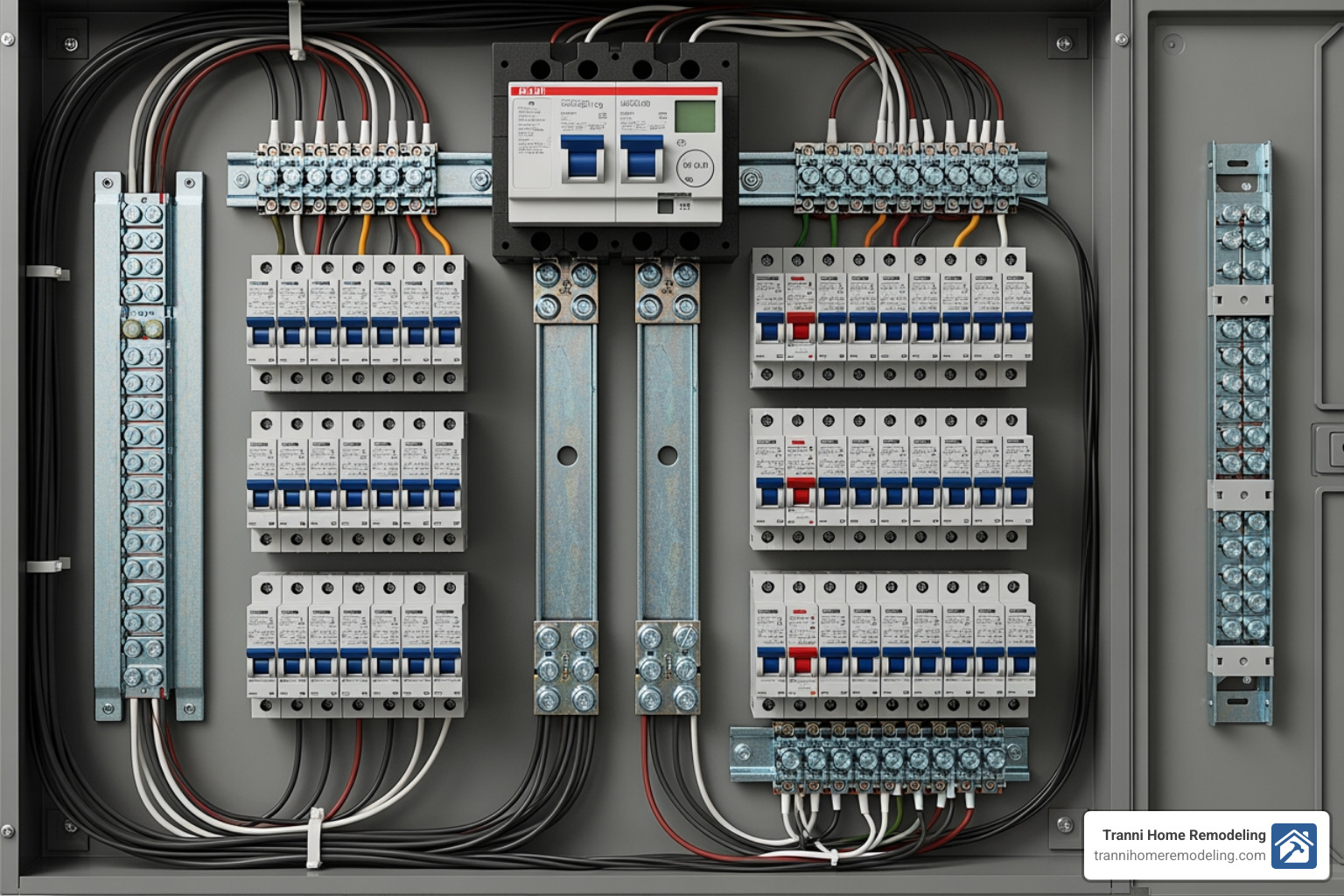
The key components within a 250 amp electrical panel are:
- Main Breaker: The largest breaker (rated for 250 amps), serving as the primary power disconnect for the entire home.
- Bus Bars: Thick metal strips that receive power from the main breaker and distribute it to individual circuit breakers.
- Individual Circuit Breakers: Smaller breakers protecting specific circuits (e.g., kitchen lights, outlets). They have various amperage ratings (15A, 20A, 50A) to match their circuit’s wiring and load.
- Neutral Bus Bar: A metal bar where all neutral (white) circuit wires terminate.
- Grounding Bus Bar: A metal bar where all ground (bare copper or green) wires connect. It’s bonded to the panel enclosure and, in a main panel, to the neutral bus.
- Panel Enclosure: The metal box housing all components for physical protection.
These components work in harmony to deliver electricity safely and efficiently throughout your home.
Do You Need a 250 Amp Service? Load Calculation and Applications
Deciding if a 250 amp electrical panel is right for you involves assessing your current and future electrical needs. While 200 amp panels are standard, 250 amp panels are increasingly common for new construction and major renovations in areas like Billerica, MA, or Chelmsford, MA, especially for homes with large appliances or EV chargers.
The primary goal of upgrading to a 250 amp service is to provide ample capacity for your lifestyle. Let’s look at typical applications:
Residential Applications:
- Large Homes (3,000+ sq ft): Bigger homes naturally have more lights, outlets, and potentially more rooms, each requiring electrical supply.
- Multiple HVAC Systems: Homes with more than one air conditioning unit or a combination of heating systems (e.g., central air and a heat pump) can quickly exceed 200 amp capacity.
- Electric Heat: Electric furnaces or extensive electric baseboard heating are significant power consumers.
- Hot Tubs or Saunas: These luxury items require dedicated, high-amperage circuits.
- Workshops or Garages: If you have a well-equipped workshop with power tools, a welder, or an EV charging station, a 250 amp panel provides the necessary juice.
- Electric Vehicle (EV) Charging Stations: Level 2 EV chargers can draw substantial power, making a higher amperage panel a wise choice.
- Multiple Kitchen Appliances: A modern kitchen with double ovens, induction cooktops, and other high-wattage appliances can push the limits.
Light Commercial Applications (relevant for Tranni Home Remodeling’s scope):
- Small Offices or Retail Stores: Depending on equipment, lighting, and HVAC, a 250 amp panel can be suitable for smaller commercial spaces.
- Multi-Family Units: Duplexes or small apartment buildings can sometimes use a 250 amp panel as a main service.
Here’s a comparison of common panel sizes to help put the 250 amp electrical panel in perspective:
| Panel Size | Typical Use | Capacity (Amps) | Future-Proofing |
|---|---|---|---|
| 100A | Older homes, small homes, minimal appliances | 100 | Limited, prone to overload with modern demands |
| 200A | Standard modern homes, average appliance load | 200 | Good for most, but can be strained by multiple high-demand additions |
| 250A | Large homes, high electrical demand, EV charging | 250 | Excellent, significant room for future expansion and multiple large loads |
| 400A | Very large custom homes, large commercial, industrial | 400 | Extensive, for properties with exceptionally high current needs |
For more insights into managing your home’s power needs, explore our guide on residential electrical wiring.
Calculating Your Load for a 250 Amp Electrical Panel
Determining the correct panel size isn’t guesswork; it’s a precise calculation guided by the National Electrical Code (NEC). While a licensed electrician will perform the official calculation, understanding the basics can help you see why a 250 amp electrical panel might be necessary.
The calculation sums up your home’s electrical loads:
- General Lighting Load: Based on your home’s square footage (e.g., 3 VA per sq ft).
- Small Appliance & Laundry Circuits: Minimum required circuits for kitchen, dining, and laundry areas.
- Large Appliance Loads: Fixed appliances like your electric range, dryer, water heater, dishwasher, central air/heat pump, and any specialty items like a hot tub or EV charger.
After tallying these loads, an electrician applies NEC “demand factors,” which account for the fact that not everything runs at once. This provides an accurate picture of your true demand. Finally, adding a 20-25% buffer for future growth is a best practice. For example, a home’s initial calculation might suggest a 200A panel is adequate. However, adding an EV charger and a heat pump could easily push the demand beyond 200A, making a 250 amp electrical panel the smarter choice.
Benefits of Upgrading Over a Smaller Panel
Choosing a 250 amp electrical panel might seem like overkill if your current calculations suggest a 200 amp panel is sufficient. However, for many homeowners in growing communities like Dracut, MA, or Billerica, MA, it’s a smart investment in the future.
Upgrading to a 250 amp panel offers significant advantages:
- Future-Proofing: A 250 amp panel provides ample headroom for new smart home devices, advanced appliances, and future energy solutions like solar or battery storage.
- Supporting Renovations: Projects like a home addition, finished basement, or kitchen remodel often require new circuits. A larger panel accommodates these changes seamlessly.
- Avoiding a Second Upgrade: Opting for a 250 amp panel now can prevent the expense and hassle of another electrical panel upgrade later, making it more cost-effective long-term.
- Increased Property Value: A robust, modern electrical system is a major selling point, assuring buyers the home can handle their power needs.
- Improved Safety: An adequately sized panel prevents overloads, frequent breaker trips, and premature wear on components, reducing electrical hazards.
A 250 amp electrical panel provides capacity for future expansion, allowing for new circuits and appliances without another upgrade. It’s a proactive step towards a more powerful and secure electrical future for your home.
Installation Essentials: Codes, Costs, and Safety
Installing or upgrading to a 250 amp electrical panel is not a DIY project. It involves working with high voltage electricity and requires a deep understanding of the National Electrical Code (NEC) and local building regulations. The dangers of improper electrical work are severe, ranging from electrical shock and fires to system damage and voided insurance. That’s why we at Tranni Home Remodeling always emphasize the paramount importance of hiring licensed and experienced professionals for this kind of work.
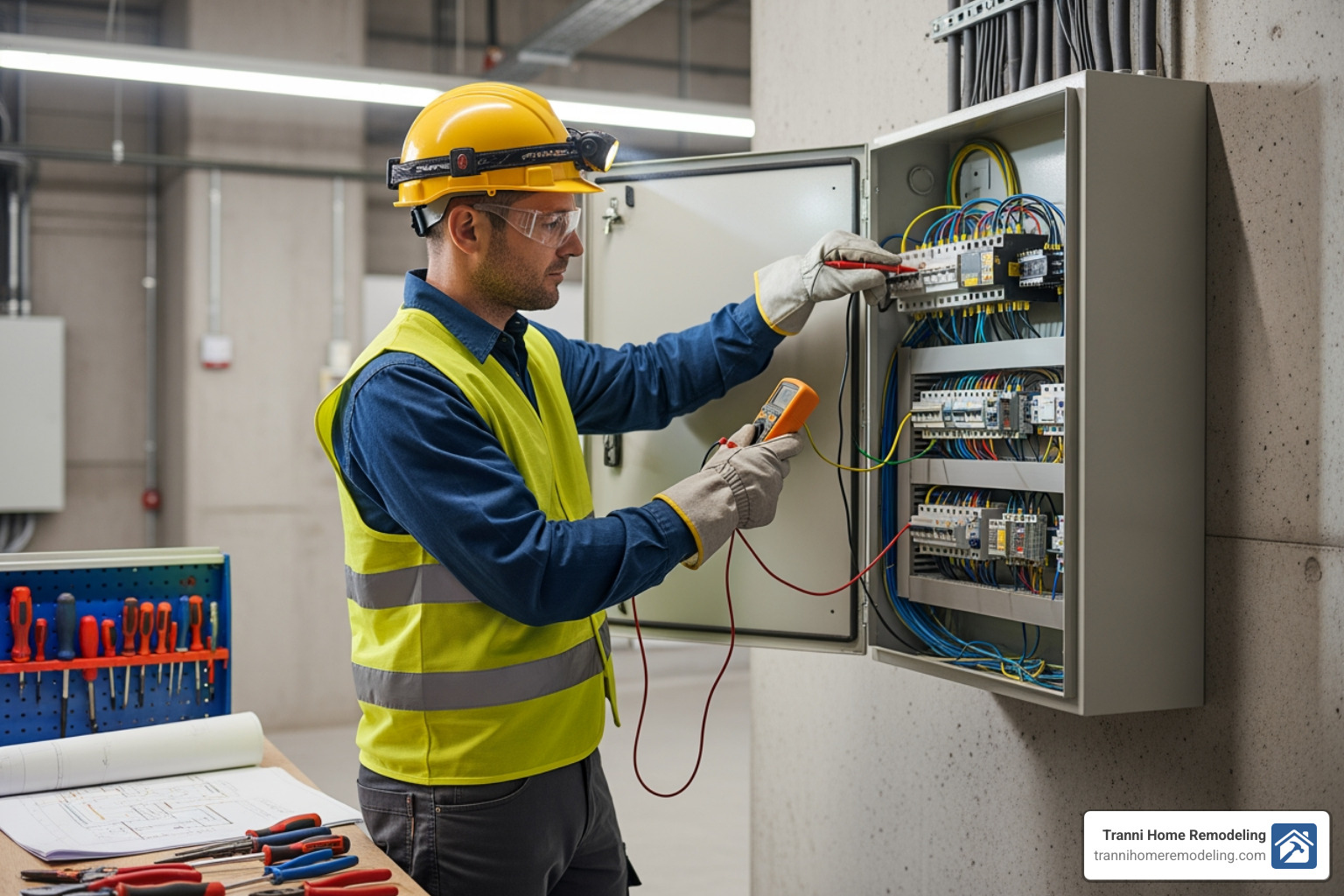
When upgrading to a 250 amp electrical panel, it’s often necessary to upgrade other components of your home’s electrical service entrance to match the increased capacity. This typically includes:
- Main Service Entrance Conductors: The thick wires running from the utility pole or underground connection to your meter and then to your panel. These must be sized appropriately for 250 amps.
- Meter Socket: The enclosure where the utility meter is installed. As discussed in electrical forums, finding a true 250 amp meter socket can be challenging, with 200 amp and 320/400 amp being more common sizes. In many cases, a 320/400 amp meter socket is installed to accommodate a 250 amp panel.
These associated upgrades ensure that the entire electrical service chain can safely handle the increased current. For more details on the financial aspects, you can learn about the cost to change an electrical panel.
NEC Code and Safety Rules for a 250 Amp Electrical Panel
The NEC is the cornerstone of electrical safety in the United States, and it has specific requirements for electrical panel installation. Adhering to these codes is not just about compliance; it’s about safeguarding lives and property.
Here are some key NEC requirements relevant to a 250 amp electrical panel:
- Working Space Requirements (NEC Article 110.26): This is critical for safety during installation, maintenance, and emergency access. The NEC mandates a clear working space in front of the panel:
- Depth: A minimum of 3 feet (36 inches) of clear space extending out from the front of the panel.
- Width: A minimum of 30 inches wide, or the width of the equipment, whichever is greater. This space must be centered on the equipment.
- Height: A minimum of 6.5 feet (78 inches) of clear space from the floor to the top of the panel or to the lowest obstruction. This space must remain clear of storage at all times.
- Panel Height Regulations: The center of the topmost circuit breaker handle in its highest position cannot exceed 6 feet 7 inches (2.0 meters) above the floor or working platform. This ensures easy and safe access for operation.
- Proper Grounding and Bonding (NEC Article 250): This is fundamental to electrical safety.
- Main Service Panel: In the main service panel, the neutral (white) bus bar and the grounding (bare copper or green) bus bar are bonded together by a main bonding jumper. The grounding electrode conductor (connected to ground rods or other grounding electrodes) also terminates here.
- Subpanels: If you install a subpanel (which we’ll discuss more below), the neutral and ground buses must be kept separate, and the subpanel must be fed by a four-wire feeder (two hot, one neutral, one ground) from the main panel.
- AFCI and GFCI Protection Requirements: Modern electrical codes require Arc-Fault Circuit Interrupters (AFCIs) and Ground-Fault Circuit Interrupters (GFCIs) for many circuits throughout the home. AFCIs protect against electrical fires caused by arc faults, while GFCIs protect against severe electrical shock. These specialized breakers are installed within your 250 amp electrical panel and are essential for contemporary safety standards.
Understanding the Cost of a Panel Upgrade
The cost of upgrading to a 250 amp electrical panel can vary significantly depending on several factors, including your location in Massachusetts (e.g., Billerica vs. Dracut), the complexity of the job, and the specific components required. Based on internet data, the typical cost range for a 250 amp electrical panel installation is approximately $3,000 to $9,000+. These are average costs and not actual quotes from Tranni Home Remodeling.
Several factors influence the final price:
- Panel Cost: The 250 amp electrical panel itself is typically higher in cost than a 200 amp panel due to increased materials and capacity, with prices varying based on brand and features. Brands like Square D, Siemens, and Leviton are common choices, as seen in product listings.
- Labor Rates: Electrician labor costs vary by region and the complexity of the installation. A 250 amp upgrade is a substantial project requiring skilled labor.
- Permit Fees: All electrical upgrades of this magnitude require permits from your local municipality (e.g., Billerica, MA or Chelmsford, MA) to ensure the work is done to code and inspected. Permit fees typically range from $100-$500.
- Associated Upgrades: As mentioned, upgrading to 250 amps often necessitates replacing the main service entrance conductors and potentially the meter socket. If your existing wiring is old or inadequate, further home wiring replacement might be needed. These additional components and labor significantly add to the total cost.
- Accessibility: If the panel is in a difficult-to-access location, or if extensive drywall work is needed, labor costs can increase.
While the initial investment for a 250 amp electrical panel is higher than for smaller panels, the long-term benefits in terms of safety, capacity, and property value often outweigh the upfront expense.
Advanced Topics and Long-Term Maintenance
Beyond the initial installation, there are a few advanced considerations and ongoing maintenance practices that are important for any homeowner with a 250 amp electrical panel. Understanding these ensures your electrical system remains efficient and safe for years to come.
Main Panel vs. Subpanel Distinction
It’s common to hear about main panels and subpanels, and understanding their differences is key:
- Main Distribution Panel (MDP): This is the primary 250 amp electrical panel we’ve been discussing. It’s the central point where power enters your home from the utility, contains the main breaker, and serves as the primary disconnect for the entire property. In the main panel, the neutral and ground buses are bonded together.
- Subpanel (Sub-Distribution Panel): A subpanel is a smaller electrical panel that draws its power from a circuit in the main panel. It does not have its own main disconnect from the utility. Subpanels are commonly used to distribute power to specific areas, like a detached garage, a large addition, or a workshop, without running individual circuits all the way back to the main panel. Crucially, in a subpanel, the neutral and ground buses must be kept separate, and it’s fed by a four-wire cable from the main panel. This separation prevents dangerous current flows on the grounding system.
Single-Phase vs. Three-Phase Power
The type of electrical service your home receives is also an important consideration:
- Single-Phase 250 Amp Panel: This is the standard for almost all residential homes in North America. It provides 120/240 volts of electricity, suitable for typical household appliances, lighting, and even high-demand items like EV chargers and residential HVAC systems. Most 250 amp electrical panels you’d consider for a home will be single-phase.
- Three-Phase 250 Amp Panel: Three-phase power is typically found in commercial and industrial settings, or very large multi-family residential buildings. It provides a more constant and efficient power delivery, often at higher voltages (e.g., 208V/120V or 480V/277V), which is ideal for large motors, heavy machinery, and extensive commercial HVAC systems. It’s highly unlikely a typical homeowner in Billerica, MA, or Chelmsford, MA, would need a three-phase 250 amp panel for a single-family residence. Our focus at Tranni Home Remodeling is on single-phase residential applications.
For more information on integrating new and old electrical systems, check out our article on new electrical panel, old wiring.
Signs Your Electrical Panel Needs an Upgrade
Even a robust 250 amp electrical panel won’t last forever, and older, smaller panels are often at risk. Recognizing the signs that your electrical panel may need an upgrade or replacement is crucial for safety and efficiency.
Here are the common indicators:
- Frequent Breaker Trips: If breakers are constantly tripping, especially without an obvious overload, it’s a clear sign your panel is struggling to meet demand or has underlying issues.
- Flickering or Dimming Lights: Lights that flicker or dim, particularly when major appliances turn on, indicate an overloaded circuit or an electrical system struggling with demand.
- Burning Smell or Buzzing Sounds: Any burning odor emanating from the panel, or unusual buzzing/crackling sounds, requires immediate attention from a good electrician near me. These are serious warning signs of overheating or loose connections.
- Outdated Panels: Certain older panel brands, such as Federal Pacific electric panel or Zinsco, are known for safety defects and should be replaced immediately, regardless of their amperage rating.
- Visible Rust or Corrosion: Rust, corrosion, or water stains on or inside the panel indicate moisture intrusion, which can lead to shorts and dangerous conditions.
- Insufficient Circuit Space: If you’re constantly running out of space for new circuits when adding appliances or making renovations, your panel is too small for your needs.
- Warm or Hot Panel: A panel that feels warm or hot to the touch could indicate overloaded circuits or faulty breakers.
Maintenance Requirements for a 250 Amp Electrical Panel
While electrical panels are largely self-sufficient, a little proactive maintenance goes a long way in ensuring their longevity and safe operation.
Here’s what we recommend for maintaining your 250 amp electrical panel:
- Annual Professional Inspection: We advise having a licensed electrician perform an annual inspection. They can check for loose connections, signs of wear, corrosion, and ensure all components are functioning correctly. They can also perform thermal imaging to detect hot spots that aren’t visible to the naked eye.
- Tightening Connections: Over time, electrical connections can loosen due to vibrations and temperature fluctuations. A professional electrician can safely tighten screws on terminals and breakers during an inspection.
- Testing GFCI/AFCI Breakers Monthly: These safety breakers have a “test” button. Pressing it should trip the breaker, confirming it’s working. If it doesn’t trip, the breaker needs replacement.
- Keeping the Panel Accessible and Clearly Labeled: Ensure the required clear working space around your panel is never obstructed. Also, keep the circuit directory inside the panel door accurate and clearly labeled so you know what each breaker controls.
- Visual Checks for Heat or Damage: Periodically, visually inspect your panel. Look for any signs of discoloration, scorching, rust, or damage. Listen for unusual buzzing or humming. If you notice anything concerning, contact an electrician immediately.
Regular maintenance helps prevent small issues from becoming major problems, ensuring your 250 amp electrical panel continues to provide reliable and safe power to your home.
Conclusion: Powering Your Future with the Right Choice
Choosing the right electrical panel for your home is a critical decision that impacts safety, functionality, and future growth. A 250 amp electrical panel offers a robust solution for modern homes with high electrical demands, providing increased capacity, improved safety, and future-readiness for all your electrical needs, from new appliances to EV charging.
At Tranni Home Remodeling, we understand that your home is a dynamic space, constantly evolving with your lifestyle and technological advancements. We believe in providing solutions that not only meet your current needs but also anticipate your future ones.
To determine if a 250 amp electrical panel is the correct size for your specific application, a professional load calculation and assessment of your existing electrical service are essential. Don’t leave this vital decision to chance.
For a comprehensive evaluation of your home’s electrical needs in areas like Billerica, Chelmsford, or Dracut, trust a good electrician near me. Our experienced team ensures your electrical system is up to code, safe, and ready to power your life for years to come. To ensure your home is safely powered for today and tomorrow, contact our experts for professional electrical services at Tranni Home Remodeling.
Like us on Facebook!
