





Replacing Windows in House: Top Benefits in 2024
Replacing windows in house can transform your living space, making your home more energy-efficient and visually appealing. Whether you’re aiming to reduce energy bills, improve curb appeal, or simply upgrade old, inefficient windows, here are a few key points to get you started:
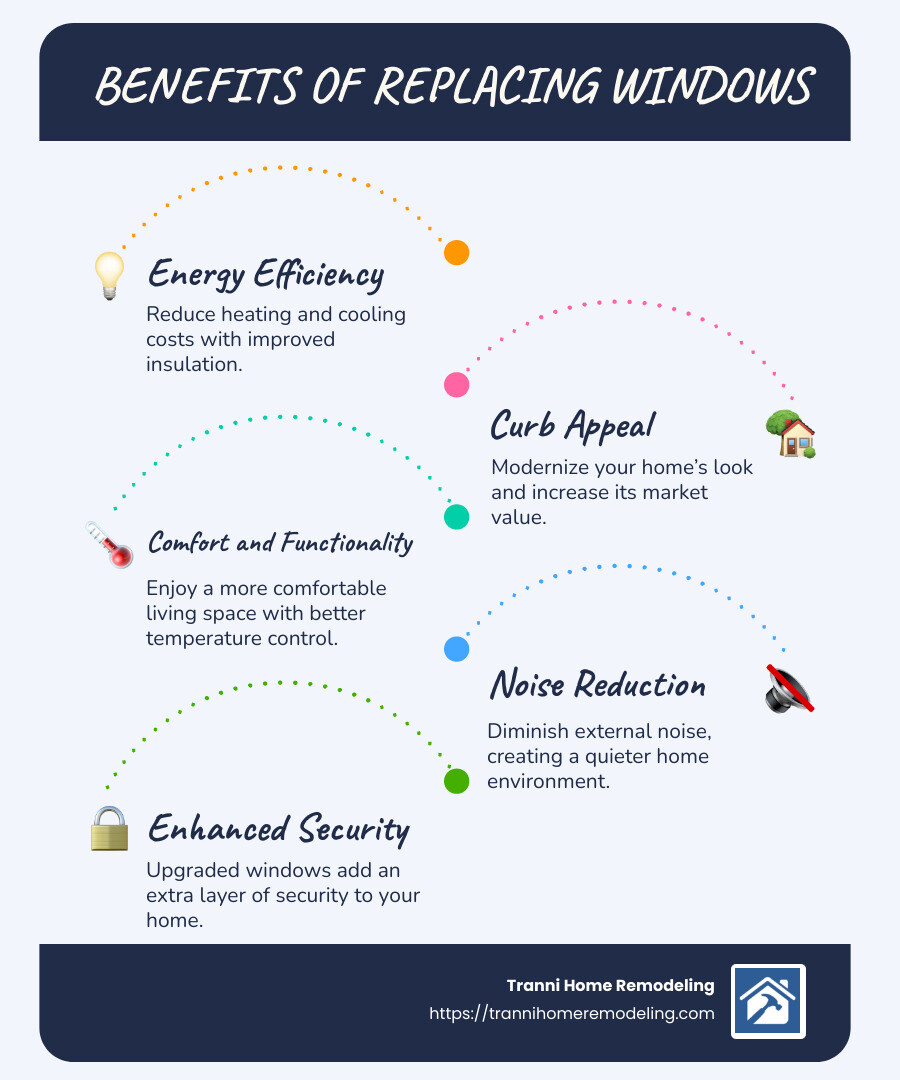
- Energy Efficiency: New windows can significantly lower heating and cooling costs.
- Curb Appeal: Replacement windows offer a fresh, modern look that can boost your home’s value.
- Comfort and Functionality: Improved insulation means a more comfortable living environment.
In today’s world, managing such an intense home improvement project can feel overwhelming. But fear not—I’m Tyler Tranni, and with years of hands-on experience in replacing windows in house, I’ve helped countless homeowners in Billerica, MA, enjoy the benefits of new windows. Let’s explore how this upgrade can seamlessly improve both the functionality and aesthetics of your home.
Replacing windows in house word roundup:
– adding windows to a house
– bay window replacement
– vinyl window replacement
Signs It’s Time to Replace Your Windows
Knowing when to replace your windows can save you money and improve your home’s comfort. Here are some signs that it’s time to consider replacing windows in house:
Difficult to Open
If your windows are tough to open or close, it might be more than just a nuisance. This issue often occurs with older wood windows due to swelling or warping. Over time, this can lead to more serious problems like drafts or even security risks.
Soundproofing Issues
Are you hearing too much noise from outside? Your windows might be to blame. Older windows, especially single-pane ones, don’t block sound well. Upgrading to double-pane or specially insulated windows can make your home much quieter.
Condensation
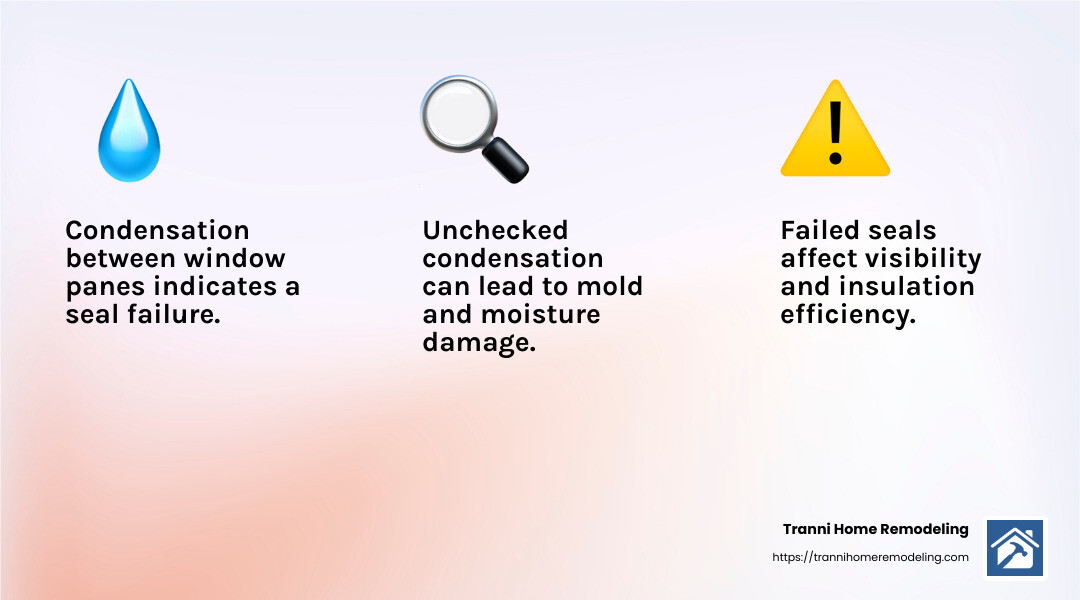
Condensation between window panes is a red flag. It usually means the window’s seal has failed. This not only affects visibility but also indicates that the window is no longer insulating properly. If left unchecked, it can lead to mold and moisture damage.
Energy Audit Revelations
Have you noticed your energy bills creeping up? A home energy audit can reveal if your windows are part of the problem. Poorly insulated windows let heat escape in winter and let it in during summer, causing your HVAC system to work overtime.
Drafts
Feeling a draft even when your windows are closed? This is a clear sign that your windows are not sealing properly. Drafty windows can significantly impact your home’s energy efficiency, leading to higher heating and cooling costs.
Moisture Problems
Moisture on the inside of your windows can lead to more serious issues like mold. If you see water pooling on the sill or mold growing, it’s time to act. Moisture problems can worsen over time, damaging your window frames and even your walls.
If you’re experiencing any of these issues, it might be time to explore window replacement options. Upgrading your windows can improve your home’s energy efficiency, comfort, and overall value. In the next section, we’ll dive into the different types of replacement windows available to help you make an informed choice.
Types of Replacement Windows
When it comes to replacing windows in house, there are several types to consider. Each type offers unique benefits and is suited for different needs. Here’s a breakdown of the most common types:
Full-Frame Windows
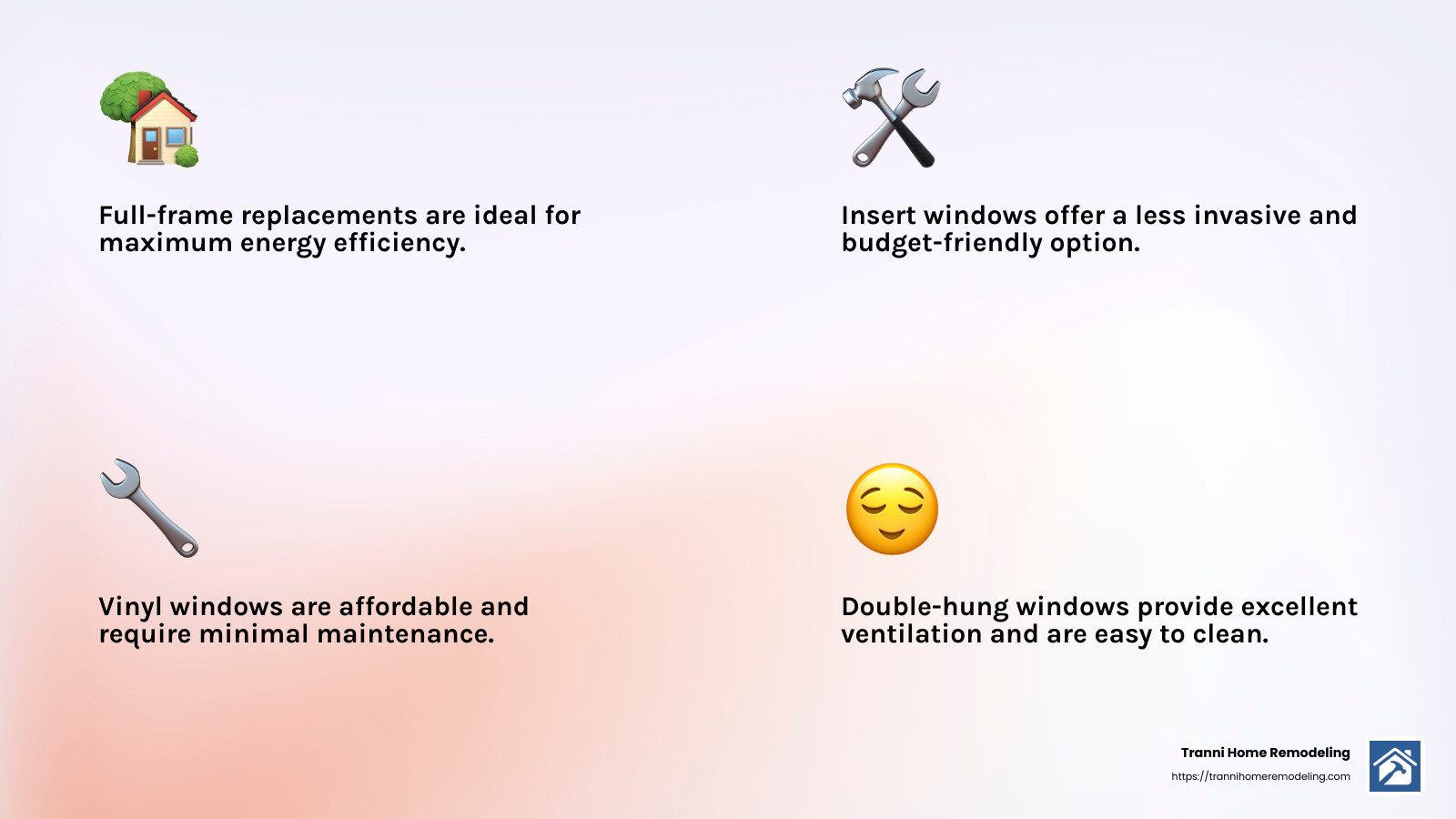
Full-frame replacement windows are a comprehensive option. They involve removing the entire window, including the frame and trim, down to the house’s original framing. This type is ideal when existing frames are old or damaged. Although it’s a more involved project, it allows for maximum energy efficiency and a fresh start with new materials.
Insert (Pocket) Windows
Insert windows, also known as pocket windows, fit inside the existing window frame. This option is less invasive and more DIY-friendly. It’s perfect if your frames are in good condition but you want to upgrade the sashes. This approach saves time and money, while still improving your home’s insulation and appearance.
Materials: Vinyl, Wood, and Fiberglass
Vinyl Windows: Vinyl is a popular choice for its affordability and low maintenance. They are energy-efficient and come in various styles, making them a versatile option for most homes.
Wood Windows: Known for their classic look, wood windows offer excellent insulation and can be customized to fit any style. However, they require regular maintenance to prevent rot and damage.
Fiberglass Windows: Fiberglass combines durability with energy efficiency. These windows are resistant to temperature changes and can mimic the appearance of wood, offering the best of both worlds.
Styles: Double-Hung, Sliding, and Crank-Out
Double-Hung Windows: These are traditional windows with two operable sashes that move up and down. They are easy to clean and provide excellent ventilation.
Sliding Windows: Sliding windows have one or more panels that glide horizontally. They are simple to operate and ideal for areas with limited space.
Crank-Out (Casement) Windows: Crank-out windows are hinged on one side and open outward with a crank. They offer excellent ventilation and a tight seal when closed, making them energy-efficient.
Choosing the right type of window depends on your home’s needs, your budget, and your personal preferences. Each option has its own set of advantages, so it’s important to weigh these factors carefully. In the next section, we’ll guide you through the measuring process to ensure your new windows fit perfectly.
How to Measure for Replacement Windows
Accurate measurements are crucial when replacing windows in house. This ensures a perfect fit, improving energy efficiency and security. Let’s break down the steps for measuring replacement windows.
Gather Your Tools
You’ll need a tape measure, a notepad, and a pen. A computer or spreadsheet can help you organize your measurements, but it’s optional.
Measure the Width
- Inside the Frame: Begin by measuring the width inside the existing window frame. Don’t measure between the stops that hold the sashes.
- Three Points: Measure at three points—top, middle, and bottom.
- Smallest Measurement: Write down each measurement and circle the smallest one. This is your “rough opening” width.
Measure the Height
- Open the Lower Sash: To measure height, open the lower sash of your window.
- Three Points Again: Measure the height at the left, middle, and right sides of the window.
- Record the Smallest: Note down each measurement and circle the smallest one for your “rough opening” height.
Check for Squareness
Before finalizing your measurements, ensure your window frame is square:
- Diagonal Check: Measure diagonally from the lower left corner to the upper right corner, and then from the lower right to the upper left. If these measurements are within 1/4 inch of each other, your frame is square.
Finalize Your Measurements
Subtract 1/4 inch from both the width and height measurements. This accounts for installation space, ensuring your new window fits snugly without being too tight.
Why Accuracy Matters
Using the smallest measurements prevents ordering a window that’s too large. A precise fit is essential for energy efficiency and prevents drafts and moisture issues.
Once you’ve gathered your measurements, you’re ready to order your new windows. Up next, we’ll walk you through the steps of removing the old window and installing the new one.
Step-by-Step Guide to Replacing Windows in House
Replacing windows in your house can be a rewarding DIY project, but follow each step carefully to ensure success. Here’s a simple guide to help you through the process.
Remove the Old Window
- Gather Your Tools: You’ll need a pry bar, utility knife, screwdriver, and safety gear like gloves and goggles.
- Prepare the Area: Clear the area around the window. Remove curtains, blinds, and any nearby furniture.
- Cut Through the Caulk: Use a utility knife to cut through the caulk around the window frame. This helps loosen the window.
- Remove the Sashes: If you have a double-hung window, remove the sashes. For other types, follow the manufacturer’s instructions to remove the operable parts.
- Pry Out the Frame: Carefully use a pry bar to remove the window frame. Be gentle to avoid damaging the surrounding wall.
Install the New Window
- Dry-Fit the Window: Before securing, place the new window in the opening to ensure it fits. Adjust if needed.
- Add Caulk: Apply two parallel beads of caulk along the sill, header, and sides of the window opening.
- Position the Window: Lift the window into place, ensuring it’s centered and level.
- Secure the Window: Loosely fasten screws into each corner. Check for level and adjust with shims if necessary. Tighten the screws once everything is aligned.
- Insulate and Seal: Fill any gaps with insulation, but avoid overstuffing. Finish with exterior caulk to seal the edges.
Interior vs. Exterior Installation
- Interior Installation: Ideal for colder climates, as it minimizes exposure to the elements during installation.
- Exterior Installation: Common in warmer climates and for certain window types. It allows easier access to the frame.
DIY Tips
- Safety First: Always wear gloves and goggles. If you’re working on upper floors, consider using scaffolding for safety.
- Take Your Time: Rushing can lead to mistakes. Measure twice, cut once.
- Ask for Help: Windows can be heavy and awkward. Having a friend assist can make the process smoother.
When to Call a Professional
- If you’re replacing all the windows in your home, a professional can complete the job quickly.
- For second-story windows or those in hard-to-reach places, professional help ensures safety.
- If you encounter structural issues or damage, a contractor can address these before installing new windows.
By following these steps, you can efficiently replace windows in your house, improving comfort and energy efficiency. Next, we’ll explore the costs involved in window replacement to help you budget effectively.
Cost of Replacing Windows in House
Replacing windows in a house can be a significant investment, but understanding the costs involved can help you budget effectively. Let’s break down the various factors that influence the cost of window replacement.
Average Costs
On average, replacing a window can cost between $450 and $1,400, including labor. Most homeowners spend around $750 per window. This price range accounts for different materials, window types, and installation methods.
Vinyl vs. Wood
Vinyl Windows: These are a popular choice due to their affordability and energy efficiency. Vinyl windows typically cost between $300 and $900. They require less maintenance and come in a variety of styles.
Wood Windows: Known for their classic look, wood windows are often found in historic or luxury homes. However, they are more expensive, with costs ranging from $700 to $1,800 per window. Wood windows also require more maintenance to prevent rot and warping.
Full-Frame vs. Insert
Full-Frame Replacement: This involves replacing the entire window, including the frame. It’s necessary when the existing frames are damaged or deteriorating. Full-frame replacements are more expensive due to the extra labor and materials required.
Insert (or Pocket) Replacement: Here, only the window itself is replaced, fitting into the existing frame. This is a less invasive option and more cost-effective if the frames are in good condition.
Additional Costs
- Labor: Labor costs can range from $100 to $400 per window, depending on the complexity of the installation and local rates.
- Custom Sizes and Styles: Custom windows or those with unique shapes and sizes can increase the cost significantly.
- Energy-Efficient Upgrades: Features like Low-E glass, double or triple glazing, and gas fills between panes can add to the upfront cost but save money on energy bills over time.
Budget Considerations
When planning your budget for replacing windows in a house, consider these tips:
- Get Multiple Quotes: Compare prices from different contractors to find the best deal.
- Plan for Contingencies: Set aside extra funds for unexpected issues, like structural repairs.
- Look for Off-Peak Discounts: Some companies offer discounts during less busy seasons, such as winter.
By understanding these cost factors, you can make informed decisions and plan your window replacement project effectively. Next, we’ll explore the benefits of replacing windows to see why it’s a worthwhile investment.
Benefits of Replacing Windows
Replacing windows in a house offers several key benefits that go beyond just aesthetics. Let’s explore how new windows can improve your home.
Energy Efficiency
One of the most significant advantages of new windows is improved energy efficiency. Modern windows with features like Low-E coatings and double or triple glazing can reduce heat loss in the winter and keep your home cooler in the summer. This can lead to lower energy bills and a smaller carbon footprint. According to experts, energy-efficient windows can save homeowners up to 15% on their energy costs annually.
Curb Appeal
New windows can dramatically improve your home’s curb appeal. Whether you opt for sleek vinyl or classic wood frames, the right windows can refresh your home’s exterior and make it more attractive to potential buyers. A well-maintained exterior is often a deciding factor for buyers, making window replacement a wise investment if you’re planning to sell.
Noise Reduction
If you live in a noisy area, replacing your windows can help with noise reduction. Double or triple-pane windows can significantly decrease the amount of outside noise that enters your home, providing a quieter and more peaceful living environment. This is especially beneficial for homes near busy streets or airports.
Increased Home Value
Investing in new windows can also boost your home’s value. Real estate experts note that window replacement projects can offer a high return on investment, with many homeowners recouping over 70% of the cost when selling their home. This makes window replacement not just a functional improvement but also a financial one.
Improved Comfort
Finally, new windows can greatly improve your home’s comfort. Drafty windows can lead to cold spots in your home, making it uncomfortable during the winter months. Replacing these with well-sealed, energy-efficient windows ensures a more consistent indoor temperature, improving overall comfort for you and your family.
These benefits make replacing windows a smart choice for homeowners looking to improve their home’s efficiency, appearance, and value. Next, we’ll address some frequently asked questions about replacing windows in a house.
Frequently Asked Questions about Replacing Windows in House
Is it cheaper to replace all windows at once?
When it comes to financial sense, replacing all windows at once can often be more cost-effective. Many window replacement companies offer bulk pricing on materials and labor, which can reduce the overall upfront cost compared to tackling the project in smaller phases. If your budget allows, a whole-house replacement can be a smart investment, especially if you’re aiming for uniformity in style and performance across your home. However, if a full replacement is not feasible, a partial project focusing on the most urgent needs can still provide significant benefits.
Can I replace a house window myself?
Considering a DIY approach to window replacement? Your DIY experience and the complexity of the project are key factors. Replacing windows can be a time-consuming endeavor, especially if you have multiple windows to tackle. Without the right tools and skills, you risk improper installation, which can lead to drafts and water damage. For those with some DIY expertise, replacing a single window might be manageable. However, for a larger-scale project, professional help is recommended to ensure proper installation and long-lasting results.
Do replacement windows get installed from inside or outside?
The method of installation often depends on the window type and the climate. In colder climates, windows are typically installed from the inside to minimize heat loss during the installation process. In warmer climates, exterior installation might be more common. The specific design of the window also plays a role; some styles, like full-frame replacements, may require exterior access, while insert windows can often be installed from inside. Always consult with a professional to determine the best approach for your situation.
Conclusion
In summary, replacing windows in your house offers numerous benefits, from improved energy efficiency and noise reduction to improved curb appeal and increased home value. Whether you’re considering a full-house replacement or addressing specific problem areas, the investment can significantly improve your home’s comfort and functionality.
At Tranni Home Remodeling, we pride ourselves on delivering high-quality craftsmanship and outstanding service. Based in Billerica, MA, we have over a decade of experience in home renovation, specializing in everything from kitchen and bath design to custom carpentry and additions. Our team is dedicated to ensuring that every project meets the highest standards of quality and customer satisfaction.
For homeowners in Middlesex County, MA, looking to replace their windows, we offer a comprehensive and personalized approach to meet your unique needs. Our skilled professionals are here to guide you through every step of the process, ensuring a seamless experience from start to finish.
Ready to upgrade your home with new windows? Contact us today to learn more about our window replacement services and how we can help transform your living space. We look forward to working with you to improve the beauty and efficiency of your home.
