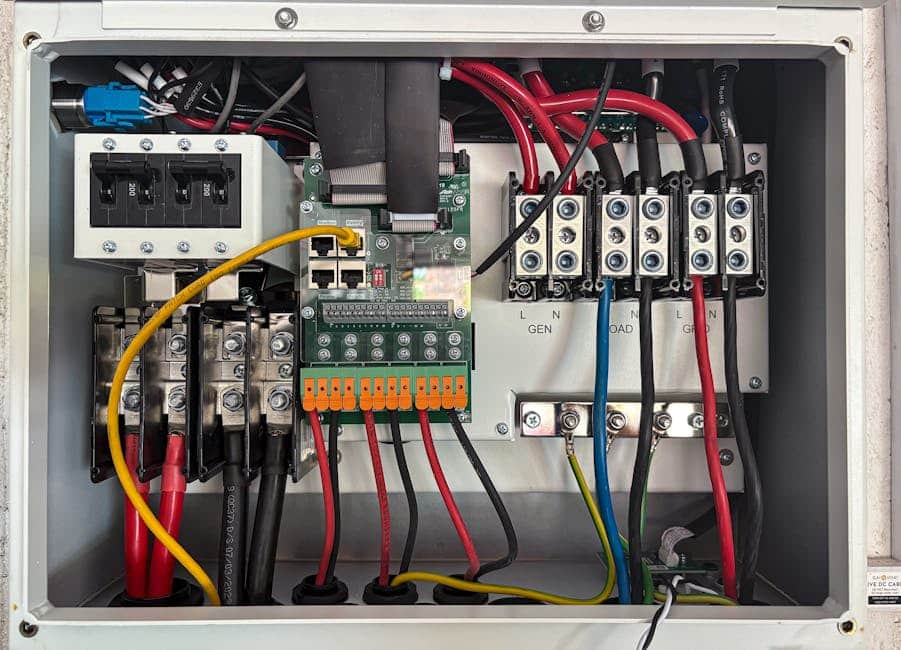





Breaker Panel Increase Power Limit: Top 7 Powerful Tips
When modern appliances demand more electricity than your home’s current electrical system provides, you may need to increase your breaker panel’s power limit. This not only ensures that your electrical load is managed safely but also accommodates growing energy needs. Here’s what you need to know upfront:
- Understand your current panel capacity and electrical load.
- Consider panel upgrades or the installation of sub-panels for increased capacity.
- Consult a professional to ensure safety and compliance with local codes.
Upgrading your electrical panel is crucial as outdated systems may lack the necessary safety features and capacity, potentially leading to hazards. This guide from Tranni Home Remodeling will walk you through everything from assessing your current breaker panel to exploring innovative solutions like smart circuit breaker systems.
I’m Tyler Tranni, with extensive experience changing homes in Billerica, MA. I’ve helped many homeowners safely execute breaker panel upgrades, ensuring their homes meet modern electrical demands efficiently. Let’s dive into the details of maintaining and enhancing the power capacity of your breaker panel.
Breaker panel increase power limit terms explained:
– change 100 amp panel to 200 amp
– Electrical Panel Upgrades
– installing a new 200 amp service panel
Understanding Circuit Breakers
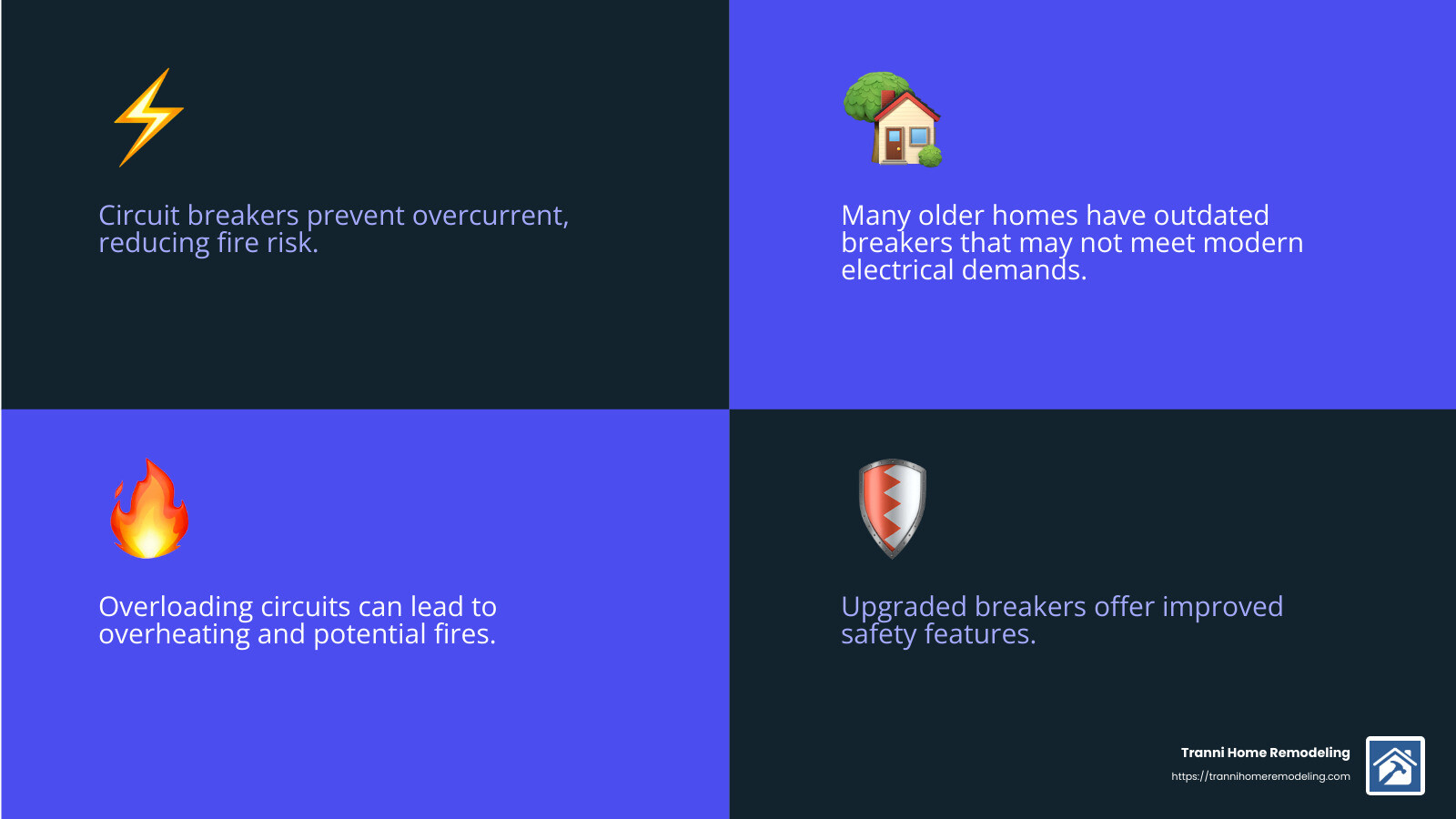
A circuit breaker is a critical component of your home’s electrical system. It acts as an electrical switch designed to protect your circuits from excess current. When the electrical current flowing through a circuit exceeds its safe limit, the breaker automatically trips, cutting off the power. This action is vital in preventing fire hazards and protecting your home and appliances.
Why Circuit Breakers Matter
Circuit breakers are essential for maintaining electrical safety. They prevent circuits from overheating, which could otherwise lead to fires. However, not all circuit breakers are the same. Many older homes in areas like Billerica, MA, have outdated breakers that may not handle the electrical demands of today’s modern appliances and electronics.
Outdated Breakers: A Hidden Risk
Older circuit breakers might not only be inadequate for current electrical needs but could also pose safety risks. These outdated systems may lack the advanced safety features found in modern breakers. This is especially important as electrical demands increase with the addition of new appliances and smart home devices.
Ensuring Your Breakers Are Up-to-Date
To ensure your home is safe and capable of handling your electrical needs, consider having a professional assess your current breaker panel. This assessment can determine if you need to replace old breakers with newer ones that offer better protection and capacity.
Regularly updating and maintaining your circuit breakers is crucial for preventing electrical issues and keeping your home safe. If you suspect your breakers are outdated or insufficient, it’s wise to consult with an experienced electrician. This proactive step can help avoid potential hazards and ensure your electrical system is robust enough to meet your needs.
Up next, we’ll explore how to assess your current breaker panel’s capacity and the steps necessary to upgrade it effectively.
Assessing Your Current Breaker Panel Capacity
Understanding your breaker panel’s capacity is key to ensuring your home’s electrical system can handle your current and future needs. Let’s break down how to assess your panel’s capacity effectively.
Calculating Your Electrical Load
Start by calculating your home’s electrical load. This involves listing all electrical devices, appliances, and lighting fixtures you use. Each of these items has a power rating, usually expressed in watts or amperes.
To calculate the total load:
- List all devices and note their power ratings. You can find these ratings on the device itself or in its manual.
- Add up the wattage of all devices to get your total load in watts.
- If you have ratings in amperes, use the formula:
[
\text{Watts} = \text{Volts} \times \text{Amperes}
]
This total load gives you a clear picture of how much power your household consumes.
Reading Circuit Breaker Labels
Next, examine your breaker panel or distribution board. Each breaker has a label showing its capacity rating. This number indicates the maximum current the breaker can handle without tripping.
To read these labels:
- Open your breaker panel and locate the breakers.
- Look for the ampere rating on each breaker. Common ratings include 15, 20, or 30 amps.
- Note these ratings for comparison with your calculated load.
Comparing Load with Circuit Breaker Ratings
Now, it’s time to compare your total load with the breaker capacity:
- Identify Overloaded Breakers: If your total load exceeds the capacity of any breaker, it’s a sign of potential overloading. This can lead to frequent tripping and safety hazards.
- Assess Safety Risks: Overloading can cause breakers to overheat, posing a fire risk. If you find any breakers that are consistently overloaded, it’s crucial to address this immediately.
- Plan for Upgrades: If your breakers are not capable of handling your current load, consider upgrading to higher-capacity breakers or installing additional panels.
Assessing your breaker panel’s capacity ensures that your home can safely meet its electrical demands. Up next, we’ll explore various methods to increase your breaker panel’s power limit, ensuring a safe and efficient electrical system.
Methods to Increase Your Breaker Panel’s Power Limit
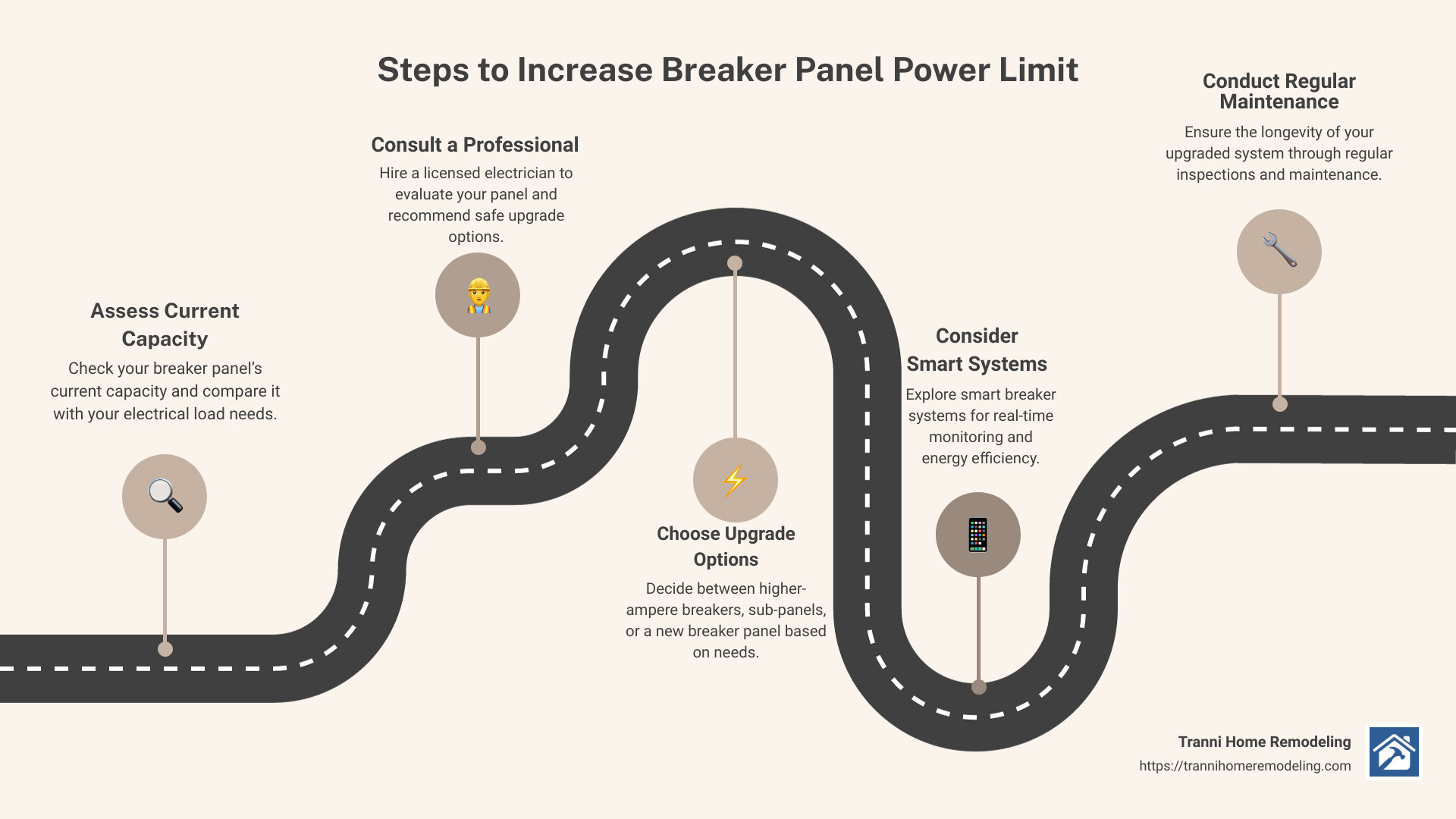
When your home’s electrical demands grow, it’s crucial to ensure your breaker panel can handle the load safely. Here are several effective methods to increase your breaker panel’s power limit:
Replacing with Higher Ampere Breakers
One straightforward method is to replace existing breakers with higher-ampere breakers. This can increase the panel’s capacity to handle more power. However, consult with an electrician before making any changes. They will assess if your current wiring can support higher amperage without overheating or posing a safety risk. Professional consultation ensures that the upgrade is done safely and complies with local electrical codes.
Installing Sub-panels
If your main panel is maxed out, consider installing sub-panels. Sub-panels provide additional slots for circuits, effectively extending your main panel. This is particularly useful for homes with expanded living spaces or new appliances. Professional installation is recommended to ensure proper integration with your existing electrical system. Sub-panels offer a flexible solution to increase capacity without completely overhauling your main panel.
Upgrading to a New Circuit Breaker Panel
For homes with outdated panels, a complete upgrade to a new circuit breaker panel might be necessary. Older panels may lack modern safety features and have lower ampere ratings. Upgrading ensures your system is reliable and safe. This is a complex task that should only be performed by a licensed electrician who can handle the intricacies of electrical systems and ensure compliance with safety standards.
Considering a Smart Circuit Breaker System
For those looking to improve their electrical system further, a smart circuit breaker system is an excellent option. These systems offer real-time monitoring and remote access, allowing you to manage your home’s energy use more efficiently. Smart breakers can improve energy efficiency by tracking usage patterns and offering automation features. This cutting-edge technology not only increases capacity but also adds convenience and control over your electrical system.
Regular Maintenance
Regardless of the method you choose, regular maintenance of your breaker panel is essential. This involves checking for loose connections, cleaning the panel, and testing the breakers to ensure they function correctly. Routine maintenance helps identify potential issues early, ensuring the longevity and reliability of your electrical system. Regular checks can prevent minor problems from escalating into significant safety hazards.
By exploring these methods, you can effectively increase your breaker panel’s power limit, ensuring your home remains safe and capable of meeting your electrical needs. Up next, we’ll discuss alternative solutions for increasing electrical capacity beyond the breaker panel itself.
Alternative Solutions for Increasing Electrical Capacity
If upgrading your breaker panel isn’t feasible, there are other ways to boost your home’s electrical capacity. Let’s explore some alternative solutions that can help you manage your power needs effectively.
Service Upgrade
A service upgrade involves increasing the amount of electricity your home can draw from the grid. This typically means working with your utility company and a licensed electrician to upgrade the physical wires and meters that run to your home. Permitting and inspection are crucial steps in this process to ensure safety and compliance with local codes. While a service upgrade can be costly and time-consuming, it provides the most flexibility for adding new electric appliances in the future.
Smart Panel Installation
Installing a smart panel is a modern solution that helps manage your home’s energy usage more efficiently. Unlike a traditional upgrade, a smart panel doesn’t increase the total amps available but instead optimizes how electricity is distributed across your home. You can prioritize loads, manage energy consumption, and even control devices remotely through an app. For instance, you might pause EV charging to power essential appliances during peak usage times. Smart panels are generally quicker and less expensive to install than a full service upgrade, making them a popular choice for homeowners looking to improve energy management.
Circuit Splitters and Circuit Pausers
Circuit splitters and circuit pausers offer a cost-effective way to manage electrical loads without a full panel upgrade. These devices allow you to share a single circuit between two appliances by designating one as primary and the other as secondary. For example, a clothes dryer and an EV charger can share a circuit, with the EV charger pausing while the dryer is in use. This method of load management and appliance prioritization can be a practical solution for homes with limited panel space or capacity.
By considering these alternative solutions, you can increase your home’s electrical capacity without a complete panel overhaul. Next, we’ll address some frequently asked questions about breaker panel power limits to help you make informed decisions.
Frequently Asked Questions about Breaker Panel Power Limits
Can you increase the capacity of a breaker?
Yes, you can increase the capacity of a breaker, but it involves more than just swapping out the breaker itself. Replacing a 15-amp breaker with a 20-amp breaker might seem like a quick fix, but ensure that your home’s wiring can handle the increased load. If not, you risk overheating and potential fire hazards. It’s crucial to consult a registered electrician to evaluate your existing wiring and make any necessary upgrades. This often involves installing a new cable that can safely carry the higher current.
How to increase electrical panel capacity?
Increasing the capacity of your electrical panel often requires a circuit breaker upgrade. This process may involve installing a new panel that can handle a higher total amperage. For homes with expanded living spaces or additional new appliances, this is a common solution. It ensures that your electrical system can meet increased demands without frequent tripping or safety risks. A licensed electrician can assess your current setup and recommend an appropriate upgrade, which might also include updating your electric meter and transformer to accommodate the higher capacity.
Can you add more power to a circuit breaker?
Adding more power to a circuit breaker involves several steps. Besides upgrading the breaker itself, you may need to upgrade the wiring and, in some cases, the entire electrical panel. This is particularly true if you’re adding high-demand appliances or expanding your home. The key is to ensure that all components of your electrical system can handle the increased load safely. Safety hazards arise when these upgrades are not done correctly, so professional guidance is essential. A registered electrician can provide a comprehensive assessment and carry out the necessary upgrades to keep your home’s electrical system safe and efficient.
By understanding these aspects, you can make informed decisions about managing your home’s electrical capacity. This knowledge will help you avoid potential hazards and ensure your electrical system meets your needs effectively.
Conclusion
Upgrading your breaker panel’s power limit is a crucial step in maintaining electrical safety and efficiency in your home, especially if you live in areas like Billerica, MA, where older homes may not meet modern demands. At Tranni Home Remodeling, we understand the importance of having a reliable electrical system that can handle your family’s needs. Whether you’re adding new appliances, expanding your living space, or simply ensuring your home is safe, increasing your panel’s capacity is essential.
A well-executed upgrade not only improves your home’s functionality but also minimizes risks such as overheating and fire hazards. Electrical safety is paramount, and that’s why we recommend consulting with licensed electricians for all upgrades. They can perform a thorough assessment, ensuring that your wiring, breakers, and panels are all up to code and capable of handling increased loads.
Tranni Home Remodeling is committed to delivering high-quality craftsmanship and outstanding service. Our expertise in kitchen and bath design, along with our comprehensive remodeling services, makes us a trusted partner for all your home renovation needs. If you’re considering a breaker panel upgrade or any other home improvement project, we’re here to help.
For more information on how we can assist you with upgrading your electrical systems, visit our home remodeling page. Let us help you improve your home’s safety, efficiency, and overall value.