





Plastering Repairs Wall: 5 Easy Expert Tips (2025)
Plastering repairs wall is a task many homeowners in the Billerica, MA area take on to restore beauty and integrity to their homes. Whether you’re dealing with cracks, holes, or loose plaster, knowing how to effectively repair your walls can save you time and money. Here’s a quick overview to get you started:
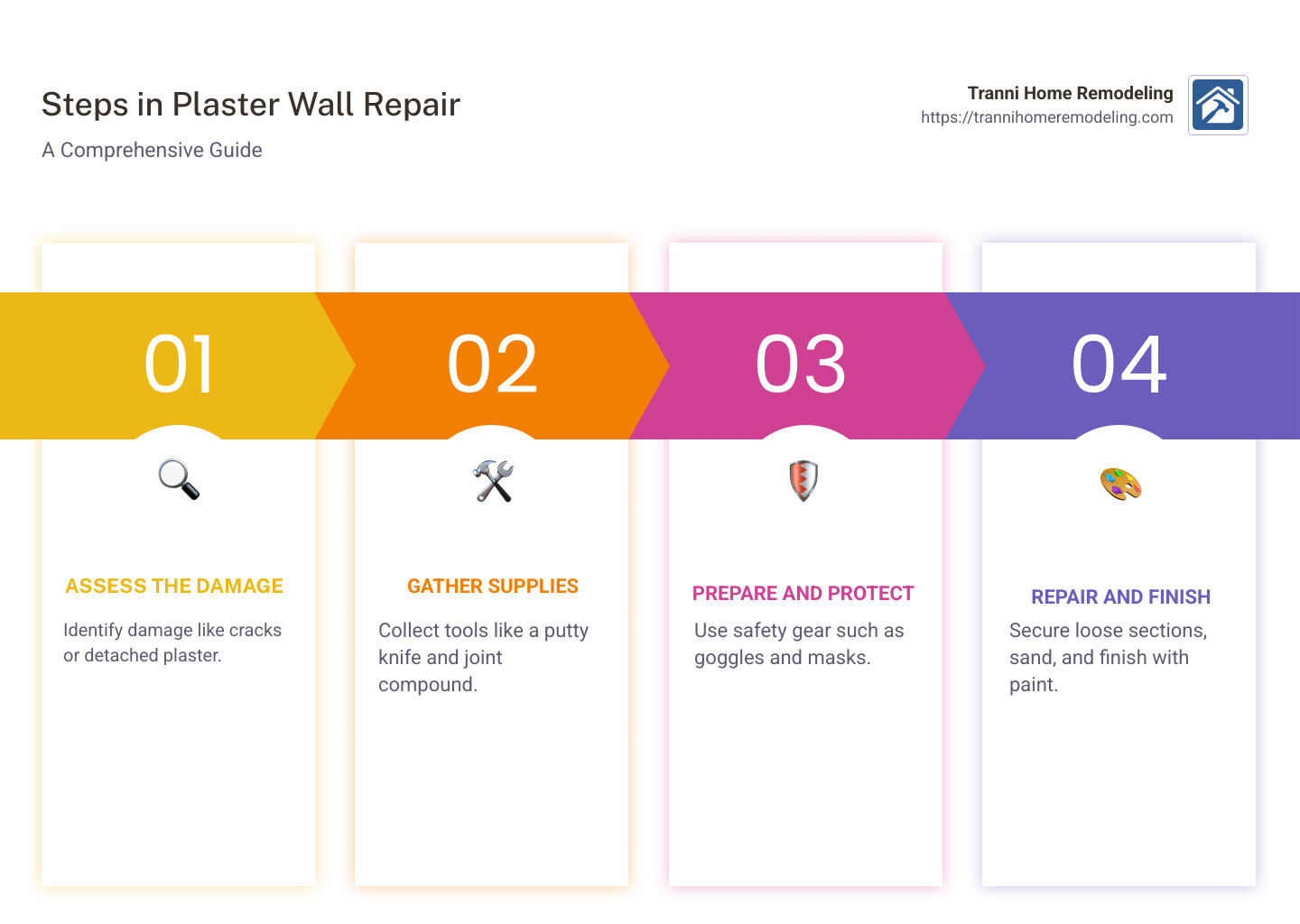
- Assess the Damage: Identify the areas that need repair, whether they’re small cracks or sections where plaster has detached.
- Gather Supplies: Basic tools include a putty knife, joint compound, and plaster washers.
- Preparation and Safety: Use protective gear like goggles and masks to safeguard against dust.
- Repair Process: Secure loose sections, apply adhesive and filling agents, sand the area smooth, and finish with paint if needed.
Taking the time for plastering repairs wall ensures a durable and aesthetically pleasing result, maintaining the charm and value of your home.
I’m Tyler Tranni, owner of Tranni Home Remodeling, and I’ve spent years changing spaces with expertise in plaster wall repair. Our team in Billerica, MA is committed to delivering top-notch craftsmanship that aligns with your needs and expectations.
Plastering repairs wall terms made easy:
– interior plastering services
– plastering and rendering services
– professional plastering services
Preparing for Plaster Wall Repairs
Before diving into plastering repairs wall, it’s crucial to prepare properly. This ensures both safety and efficiency during the repair process. Let’s break this down into simple steps.
Safety Precautions
Safety always comes first. Plastering can create a lot of dust and debris, which can be harmful if inhaled or if it gets into your eyes. Here’s what you need:
- Safety Goggles: Protect your eyes from dust and debris.
- Face Mask: Use a dust mask or respirator to prevent inhaling fine particles.
- Drop Cloth: Cover your floors with drop cloths to catch dust and plaster bits.
- Painter’s Tape: Use this to secure drop cloths and protect areas adjacent to your repair zone.

Tools Needed
Having the right tools makes the job easier and results in a better finish. Here’s a list of essentials:
- Vacuum: Handy for cleaning up dust.
- Microfiber Cloth: Use for wiping surfaces clean.
- Putty Knife and Trowel: Essential for applying and smoothing plaster.
- Hammer and Nails: Necessary for any structural repairs to lath.
- Drill: Useful for reinforcing plaster with screws.
- Plaster Scarifier: Helps in preparing surfaces for new plaster.
- Hand Sander: Ensures smoothness post-repair.
Supplies Needed
Stock up on these supplies before you start:
- All-Purpose Cleaner: For cleaning the area before repairs.
- Lath Boards: Needed if the underlying wooden structure needs fixing.
- Joint Compound and Spackle: Ideal for patching small cracks.
- Plaster Conditioner and Adhesive: Prepares surfaces and binds new plaster.
- Sandpaper: Use fine-grit for smoothing out patches.
Protecting Your Home
Dust and debris can spread quickly, so it’s vital to protect your home. Seal off the room with plastic sheeting and secure it with painter’s tape. Cover vents to prevent dust from circulating through your HVAC system.
By following these precautions and using the right tools and supplies, you ensure a safer and more effective repair process. Up next, we’ll guide you through the step-by-step process for tackling those plaster repairs.
Step-by-Step Guide to Plaster Wall Repairs
Repairing plaster walls might seem daunting, but with a clear plan, it becomes manageable. Let’s explore the steps of plastering repairs wall.
Removing Damaged Plaster
Start by identifying the damaged areas. Use a box cutter to carefully cut around the edges of the damaged plaster. This helps prevent further cracking.
Next, gently tap a hammer and chisel to remove the loose plaster. Be cautious to protect the surrounding areas. The goal is to get a smooth surface for the new plaster to adhere to.
Cleaning the Area
After removing the damaged plaster, it’s crucial to clean the area thoroughly. Use a vacuum to suck up any dust and debris. Follow this with a microfiber cloth and an all-purpose cleaner to wipe down the surface. This ensures that no dust or grime remains, which could affect the adhesion of the new plaster.
Repairing Lath
If the lath behind the plaster is damaged, it needs attention. Use a crowbar to remove any broken lath pieces. Then, secure new lath boards using a hammer and nails. Ensure the wooden frame is sturdy and well-fitted, as it’s the backbone of your plaster wall.
For additional support, you might need to use screws to reinforce the structure. A well-prepared lath is essential for a lasting plaster repair.
Applying Plaster Coats
Plaster application is done in layers. Start with the scratch coat. Mix sand, water, and cement, and use a ridged trowel to apply. This coat should be rough to help the next layer adhere.
Once the scratch coat is set, apply the brown coat. This layer should be thicker, providing a uniform surface. Aim for a rough texture, as this will hold the final coat.
Lastly, apply the finish coat. This is where you use a joint compound. Apply multiple layers, smoothing it with a trowel. Allow each layer to dry before adding the next.
By following these steps, you can effectively repair your plaster walls. Next, we’ll explore techniques and tips to refine your plastering skills.
Plastering Repairs Wall: Techniques and Tips
Repairing plaster walls involves several key steps to ensure a durable and smooth finish. Let’s explore some essential techniques and tips to help you master the art of plastering repairs wall.
Reinforcing Plaster
Reinforcing plaster is crucial to prevent future cracks. Start by drilling holes around the damaged area. These holes allow the plaster conditioner and plaster adhesive to penetrate deeply, ensuring a strong bond with the existing wall. Apply these substances carefully, following the manufacturer’s instructions. This step is essential for stabilizing the wall before applying new plaster coats.
Applying Scratch Coat
The scratch coat serves as the foundation for your plaster repair. Mix sand, water, and cement to create a sturdy base. Use a ridged trowel to apply this mixture, ensuring a rough texture. The ridges in the scratch coat provide a gripping surface for the next layer. Allow this coat to dry thoroughly before proceeding.
Applying Brown Coat
The brown coat is the middle layer that builds up the wall’s surface. Apply this layer to achieve a uniform surface and a rough texture. The thickness of the brown coat should be consistent, providing structural integrity. This layer should be thicker than the scratch coat, but not so thick that it sags or cracks. Let it set properly before moving on to the final coat.
Applying Finish Coat
The finish coat is where the magic happens. Use a joint compound and a trowel to apply multiple layers. Each layer should be thin and smooth, allowing it to blend seamlessly with the existing wall. Take your time with this step, ensuring each layer dries completely before adding the next. This careful application results in a smooth and polished surface.
Sanding
Sanding is the final touch to achieve a flawless finish. Use a hand sander with fine-grit sandpaper to gently smooth the surface. Focus on blending the edges of the new plaster with the old wall. Always wear safety goggles and a dust mask during sanding to protect yourself from dust particles. A smooth surface is the goal, ensuring your wall looks as good as new.
By mastering these techniques and tips, you’ll be well-equipped to tackle any plaster wall repair. Next, we’ll address some frequently asked questions to further improve your understanding and skills in plaster wall repairs.
Frequently Asked Questions about Plaster Wall Repairs
How to Fix a Damaged Plaster Wall?
Fixing a damaged plaster wall might seem daunting, but with the right steps, it’s manageable. Start by removing any loose or damaged plaster with a chisel and hammer. Be careful not to damage the underlying lath. Once cleared, clean the area with a vacuum and microfiber cloth to remove dust and debris.
Next, apply a bonding agent to ensure the new plaster adheres well. Follow this with the application of multiple plaster layers. Begin with a scratch coat to create a rough base, then add a brown coat for thickness and strength. Finish with a smooth coat using a joint compound for a polished look. Allow each layer to dry completely before adding the next.
Is It Worth It to Repair Plaster Walls?
Absolutely! Repairing plaster walls can offer several benefits. Plaster walls are excellent for soundproofing, providing a quieter indoor environment. They also have a natural resistance to mold, making them a healthier option in humid areas. Furthermore, original plaster walls often hold historical value in older homes, preserving the charm and authenticity of the space.
What is the Best Plaster for Patching Walls?
When it comes to patching walls, choosing the right plaster is crucial. Thistle plaster is a popular option known for its ease of use and smooth finish. It’s ideal for minor repairs and touch-ups. For larger repairs, consider using finish plasters that offer greater strength and durability. These plasters ensure the repaired area blends seamlessly with the existing wall, maintaining the integrity and appearance of your home.
Conclusion
In conclusion, plaster wall repairs can be a rewarding DIY project that not only improves the beauty of your home but also preserves its structural integrity and historical charm. By following the right steps and using the appropriate materials, you can achieve professional-looking results without breaking the bank.
The benefits of tackling plaster repairs yourself are numerous. DIY repairs offer a cost-effective solution to maintaining your home’s value and aesthetic. Plaster walls are excellent for soundproofing and mold resistance, making your living space quieter and healthier. Moreover, preserving original plaster walls in older homes can maintain their historical value and unique character.
At Tranni Home Remodeling, we understand the importance of quality craftsmanship and are here to support your home improvement journey. Whether you’re looking to DIY or need professional assistance, our team in Billerica, MA is ready to help. We specialize in a wide range of remodeling services, ensuring your home gets the care it deserves.
For more information on our plastering services, visit our Plastering and Painting Services page. Let us help you bring your vision to life with our expert guidance and outstanding service.
Whether you’re a DIY enthusiast or prefer to leave it to the pros, maintaining your plaster walls can significantly improve the comfort and value of your home. Reach out to us at Tranni Home Remodeling for all your home renovation needs. We’re just a call away!
