





Adding a garage: Boost Home Value 2025
Why Adding a Garage is One of the Best Home Improvements You Can Make
Adding a garage to your home is a smart investment that solves multiple problems at once. Whether you’re tired of scraping ice off your windshield in winter or need more storage space, a garage addition delivers immediate benefits and long-term value.
Quick Answer: Key Benefits of Adding a Garage
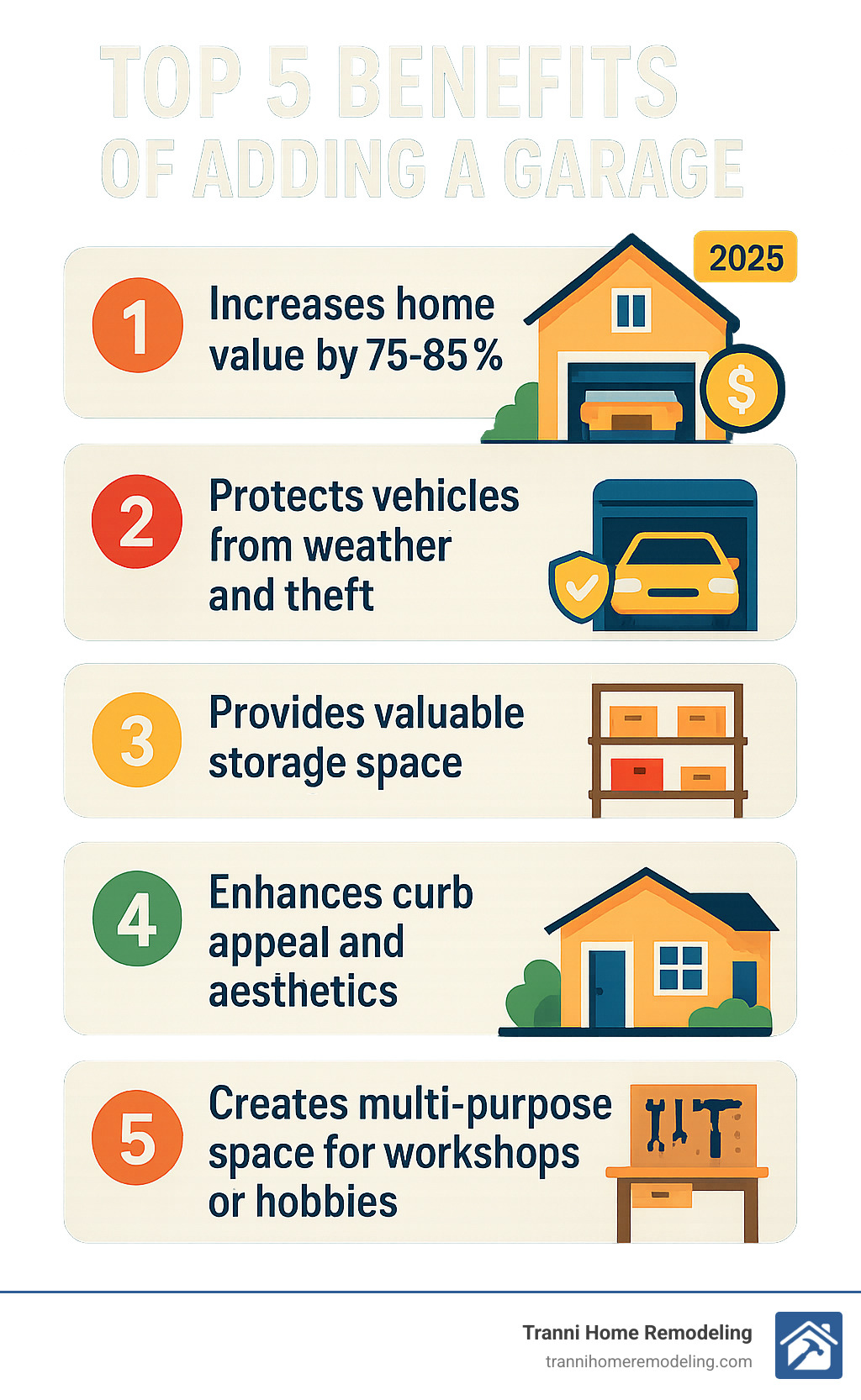
- Increased Home Value: 75-85% return on investment
- Vehicle Protection: Shield cars from weather and theft
- Extra Storage: Organize tools, seasonal items, and equipment
- Improved Curb Appeal: Improve your home’s appearance
- Multi-Purpose Space: Create a workshop, home gym, or hobby area
The garage has evolved far beyond just parking cars. Today’s garages serve as multi-purpose spaces that can function as workshops, home gyms, or even entertainment areas. With at least 50% of buyers considering a garage a must-have feature, it’s one of the most practical additions you can make to your home.
The process involves several key decisions – from choosing between attached and detached options to determining the right size for your needs. You’ll also need to steer permits, design considerations, and construction details to ensure your project meets local building codes and adds maximum value to your property.
As Tyler Tranni, owner of Tranni Home Remodeling, I’ve helped countless homeowners in Billerica and surrounding areas successfully complete garage additions that perfectly match their needs and budgets. My experience adding a garage to homes of all styles has taught me that proper planning and professional execution are essential for a project that delivers lasting value and satisfaction.
Is Adding a Garage a Worthwhile Investment?
The short answer is yes. Adding a garage regularly ranks among the top home-improvement projects for return on investment, with most Middlesex County homeowners seeing 75 – 85 % of their cost reflected in resale value. National data backs this up—see the latest Cost vs. Value Report for confirmation that garage additions consistently deliver one of the best ROIs of any remodeling project. Local agents also confirm that at least half of buyers—especially in winter-prone towns like Burlington, Chelmsford, and Lexington—consider a garage non-negotiable.
Alongside the financial upside, you gain daily perks: protected vehicles, secure storage, and a tidier home. When you compare those benefits with the expense of moving to a larger property, a garage often wins handily.
Understanding the Costs of Adding a Garage
Actual pricing depends on town regulations, size, finishes, and site conditions, but the ranges below (compiled from publicly available internet data) provide a realistic starting point. These are not Tranni Home Remodeling quotes; your exact cost will vary.
| Garage Size | Estimated Cost Range (Basic) | Estimated Cost Range (Turnkey/Custom) |
|---|---|---|
| Single-Car (≈ 240 – 280 sq. ft.) | $20,000 – $45,000 | $65,000 – $150,000+ |
| Two-Car (≈ 440 – 576 sq. ft.) | $35,000 – $60,000 | $90,000 – $200,000+ |
| Three-Car (≈ 720 + sq. ft.) | $50,000 – $80,000 | $160,000 – $300,000+ |
The spread reflects everything from a code-minimum shell to a fully insulated, heated, and architecturally matched structure.
Calculating Your Potential Return on Investment (ROI)
Because parking is scarce in many Middlesex County neighborhoods, garages here often hit the upper end of the 75-85 % national ROI range. A professional appraisal is the best way to quantify your personal gain, but even conservative estimates usually outperform the transaction costs of selling and buying a larger home. For additional value-boosting ideas, explore our home additions services.
What Type of Garage is Right for Your Home?
Finding the perfect design means balancing function, curb appeal, and budget.
Attached vs. Detached Garages
- Attached garages are budget-friendly because they share a wall and utilities with the house—an advantage you’ll appreciate during a February ice storm.
- Detached garages cost more (four walls, separate foundation, longer utility runs) but offer design freedom and isolate workshop noise or fumes from living areas.
If you’re leaning toward an attached option, see our guide on adding an attached garage to a house.
Single, Double, or Multi-Car Garages
- Comfortable single bay: 16 × 24 ft
- Practical two-car: 24 × 24 ft or larger
- Growing families/recreational vehicles: three-car layouts often begin around 36 × 24 ft.
Planning for an extra bay today is far cheaper than expanding later.
Garages with Living Space and Other Options
Adding a second story for a bonus room, office, or in-law suite leverages the foundation you’re already pouring. Our 2-story attached garage additions deliver parking below and conditioned space above. On tighter budgets, a carport can provide weather protection now and be enclosed in the future.
Key Steps in Planning Your Garage Addition
Smart planning prevents expensive changes later.
Sizing, Layout, and Design
Measure your vehicles, sketch storage and work areas, and match roof pitch, siding, and windows so the new structure looks original to the house.
Driveway and Property Layout Considerations
Ensure the driveway allows an easy turn-in, meets local setbacks, and provides room for snow removal and drainage so ice doesn’t pool at the door.
Hiring the Right Professionals
Garage additions involve foundations, structural ties, electrical work, and inspections—well beyond a weekend DIY. Hire a licensed, insured contractor with relevant experience. Tranni Home Remodeling coordinates permits, schedules, and trades so your project stays on track.
The Construction Process: From Foundation to Finishing Touches
A typical two-car addition in Middlesex County takes 6 – 8 weeks once permits are approved.
Securing Permits and Meeting Legal Requirements
Building, electrical, and (if needed) plumbing permits are mandatory in every town. Skipping them can lead to fines or even removal orders, so we handle the paperwork and inspections for you.
Essential Construction Details
Foundations extend below the 4-ft frost line to prevent heaving. After the slab or frost walls cure, framing, roofing, and siding move quickly. Even unheated garages benefit from basic insulation to reduce condensation. We also rough-in ample electrical capacity—adding a 240-V circuit for a future EV charger during construction is far cheaper than after drywall is up.
Frequently Asked Questions about Adding a Garage
Can you add a garage to a manufactured or mobile home?
Absolutely! Adding a garage to a manufactured or mobile home is definitely possible, though it requires a slightly different approach than traditional site-built homes. I’ve worked with several homeowners who thought they were out of luck because they lived in manufactured homes, but there are actually some great options available.
The most straightforward solution is a detached garage, which doesn’t require any structural connection to your manufactured home. These follow the same construction principles as any other detached garage – they need proper foundations (usually concrete slabs or pier foundations) and must meet local building codes and setback requirements.
Attached garages are trickier but not impossible. The key is working with an experienced contractor who understands both manufactured home construction and HUD codes. You’ll need proper engineering to ensure the connection doesn’t compromise your home’s structural integrity or void any warranties. Some manufacturers are pretty strict about modifications, so it’s worth checking your warranty terms first.
Foundation considerations become especially important with manufactured homes. The garage foundation needs to work harmoniously with your home’s existing foundation system, whether that’s permanent foundations, piers, or blocks. Getting this right prevents settlement issues and ensures a solid, long-lasting connection.
Always check with your local building department about specific requirements for manufactured home additions. Some areas have special regulations that don’t apply to site-built homes, and it’s better to know about these upfront than find them mid-project.
How long does it take to build a garage addition?
Most garage additions take 4 to 8 weeks from start to finish, though the exact timeline depends on several factors including size, complexity, weather conditions, and permit processing times. I always tell my clients to expect about 6 weeks for a typical two-car attached garage, which gives us some buffer for unexpected delays.
The planning phase often takes longer than people expect – usually 2 to 4 weeks for permit approval. Simple projects with straightforward designs move faster, while complex additions requiring variances or design review can take longer. In some Massachusetts towns, the permit process can be surprisingly quick, while others take their time reviewing applications.
Once construction begins, the work typically follows a predictable sequence. Site preparation and foundation work takes 3 to 5 days, assuming good weather. Framing and roofing usually requires 5 to 7 days, followed by siding and exterior work for another 3 to 5 days. Electrical and plumbing connections take 2 to 3 days, with finishing touches requiring another 2 to 3 days.
Weather plays a huge role in our Massachusetts climate. Winter construction requires special precautions and can extend the timeline, especially for foundation work and roofing. I’ve had projects delayed by surprise snowstorms, but good planning helps minimize weather-related delays.
Projects involving living space above the garage or complex utility connections naturally take longer. Adding a second story might extend the timeline to 10 to 12 weeks, depending on the finish level and how elaborate the upstairs space becomes.
How does adding a garage affect property taxes?
Adding a garage will likely increase your property taxes since it adds real value to your home. The exact impact varies quite a bit depending on your specific town or city, as each municipality has its own assessment practices and tax rates.
Most assessors will add your new garage to your property’s assessed value during the next assessment cycle. The increase typically reflects a portion of the garage’s construction cost – usually 60% to 80% of what you actually spent. This might seem unfair, but it’s actually based on the garage’s contribution to your home’s market value rather than its construction cost.
Here’s a real-world example: if you spend $50,000 on a garage addition, your assessed value might increase by $30,000 to $40,000. With typical Massachusetts tax rates of $15 to $20 per $1,000 of assessed value, this could translate to an additional $450 to $800 in annual property taxes.
Some municipalities require you to report major improvements, while others find them through building permit records or routine reassessments. It’s worth contacting your local assessor’s office to understand their specific practices and timeline. Some are pretty proactive about finding new improvements, while others might not catch up for a year or two.
While increased taxes are definitely a consideration, the garage also increases your home’s market value – typically by more than the tax increase costs over time. Plus, you’re getting all those daily benefits of having a garage, from weather protection to extra storage space.
Start Your Garage Addition Project Today
Adding a garage is one of those home improvements that makes you wonder why you waited so long. It’s the kind of project that transforms your daily routine – no more scraping ice off windshields during those brutal Massachusetts winters, no more playing Tetris with seasonal decorations in your basement, and no more worrying about whether your car will start after a snowstorm.
The investment goes far beyond convenience. With a 75-85% return on investment, a garage addition is one of the smartest financial moves you can make for your home. In today’s competitive real estate market, having a garage isn’t just nice to have – it’s what buyers expect.
The key to success lies in making informed decisions throughout the process. From choosing between attached and detached options to selecting the right size and features, every choice impacts both your daily life and your home’s value. Working with experienced professionals ensures your project meets local building codes, stays on schedule, and delivers results that exceed your expectations.
At Tranni Home Remodeling, we’ve been helping homeowners in Billerica and surrounding communities create beautiful, functional garage additions for over a decade. We understand the unique challenges of building in Massachusetts – from frost line requirements to architectural styles that complement New England homes. Our commitment to high-quality craftsmanship and outstanding service means your project will be handled with the care and attention it deserves.
Whether you’re dreaming of a simple single-car garage or planning a multi-story addition with living space above, we’re here to guide you through every step. From that first consultation where we discuss your vision and budget to the final walkthrough where you get your keys, our team ensures a seamless experience that delivers exactly what you’re looking for.
Ready to start your garage addition project? The best time to begin planning is now, especially if you want to complete construction before next winter. Explore our home additions services to learn more about our process and schedule your consultation. Let’s discuss how adding a garage can transform your home and make your life easier.
