





Average Cost of Plastering a Room: Top 5 Value Picks
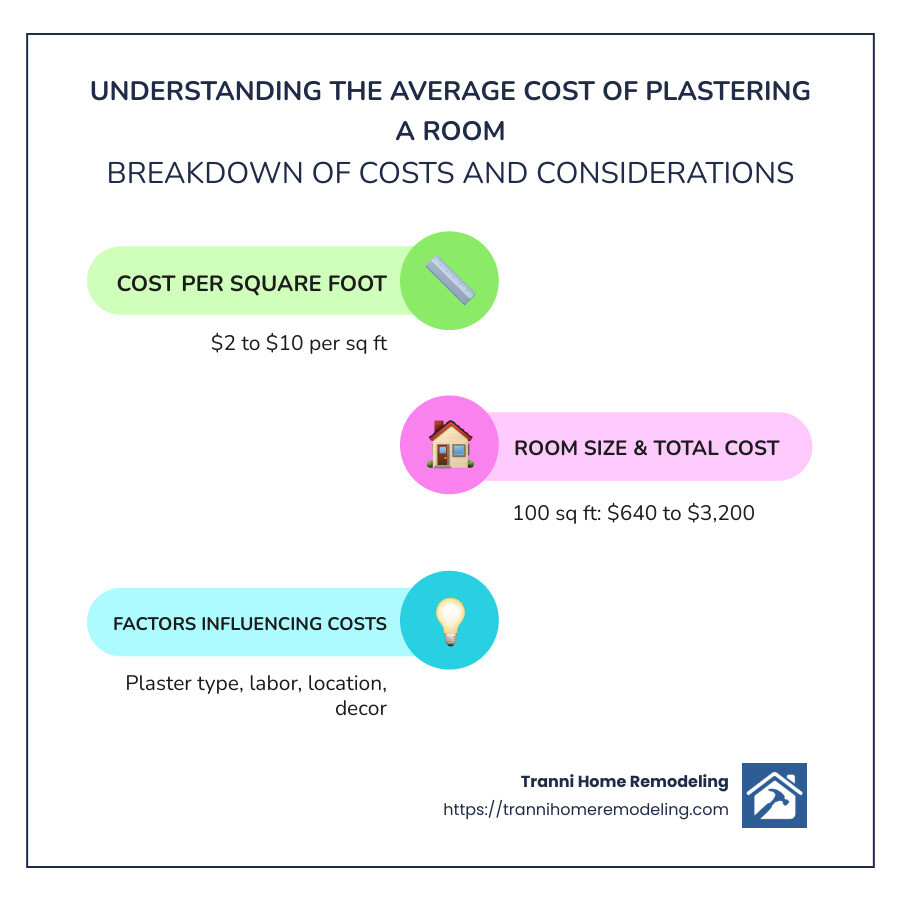
Average cost of plastering a room is a primary concern for many homeowners looking to refresh their interiors. On average, you can expect to pay between $2 to $10 per square foot, translating to $640 to $3,200 for a 100 square foot room. Whether you’re aiming for a smooth finish or a decorative texture, understanding these costs helps plan your budget and manage expectations effectively.
Revitalizing your home often begins with a strong foundation—your walls. Plastering serves not only as a protective layer but also lifts the aesthetic appeal of your space. Unlike drywall, plaster provides a more polished, high-end look and offers additional durability and fire resistance. It’s an investment in both appearance and longevity, making it a valuable addition to any home renovation project.
I’m Tyler Tranni, owner of Tranni Home Remodeling, specializing in changing spaces with high-quality craftsmanship. With experience in home renovations across Billerica, MA, I’ve guided numerous homeowners through understanding the average cost of plastering a room. Let’s explore how plastering can lift your home’s interior, ensuring it reflects your personal style with every wall.
Average cost of plastering a room terms you need:
– affordable plastering services
– interior plastering services
– professional plastering services
Factors Influencing the Cost of Plastering
When planning a plastering project, several factors can significantly impact the overall cost. Understanding these elements can help you make informed decisions and budget effectively. Here’s a breakdown of the key factors:
Room Size
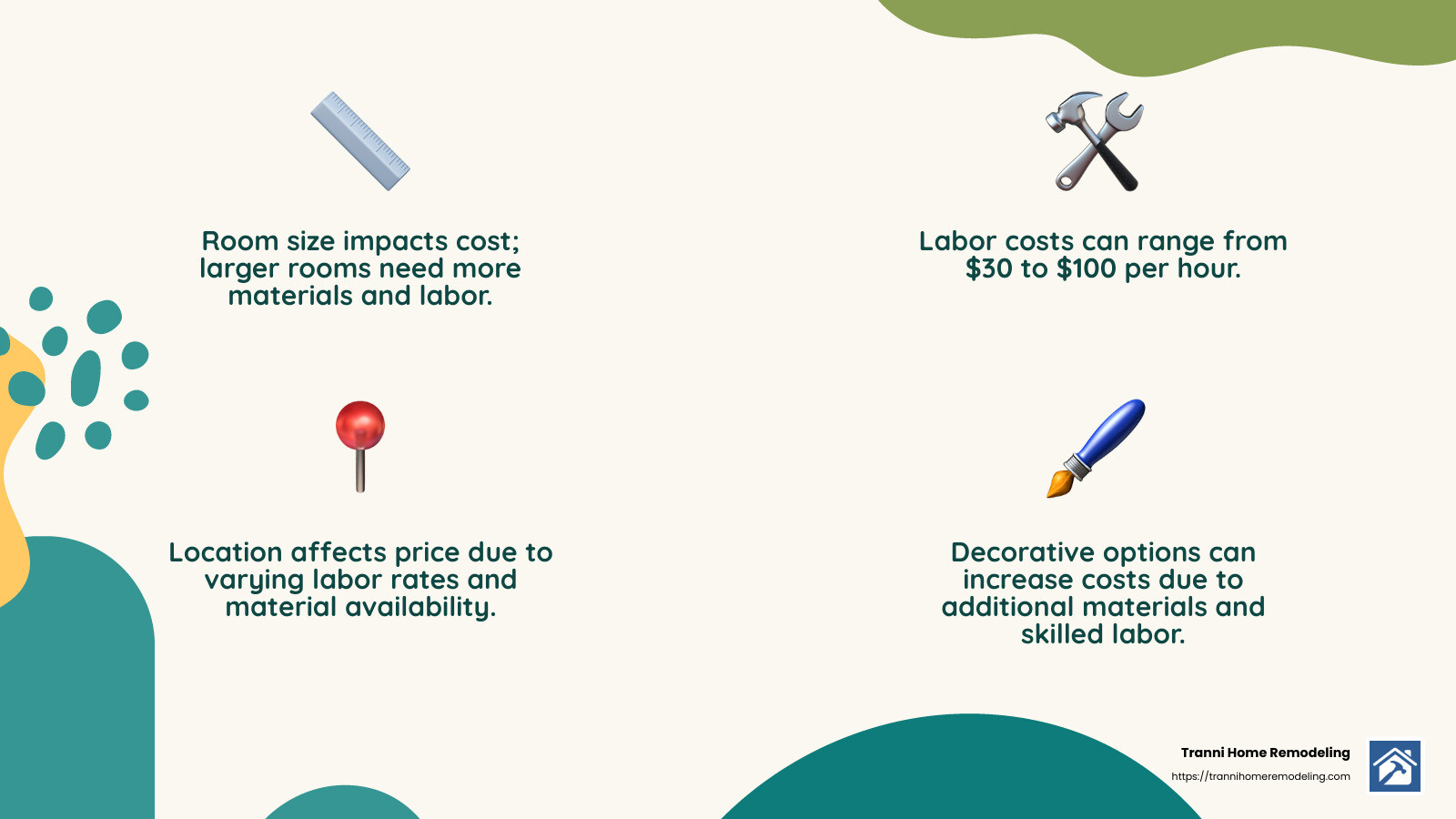
The size of the room directly affects the cost of plastering. Larger rooms require more materials and labor, increasing the total expense. Smaller spaces may seem less costly, but professionals often have a minimum charge for smaller projects.
Plaster Type
The type of plaster you choose plays a crucial role in determining costs. Gypsum plaster is generally more affordable, ranging from $10 to $11 per square foot, while Tadelakt plaster, known for its luxurious finish, can cost $15 to $16 per square foot. Each plaster type offers unique benefits and aesthetic qualities, so consider your priorities and budget when selecting.
Labor Costs
Labor is a significant component of plastering expenses. Plasterers typically charge between $30 to $100 per hour, depending on their experience and your location. Complex techniques or difficult-to-access areas, like high ceilings, can increase labor costs.
Location
Your geographic location can influence costs due to varying labor rates and material availability. For example, in Middlesex County, MA, living costs are higher, which can reflect in the pricing of plastering services. Always get quotes from local professionals to understand regional pricing nuances.
Decorative Options
Adding decorative elements like ornamental plastering or textured finishes can improve the visual appeal of your walls but also raise the cost. These options require additional materials and skilled labor, so factor this into your budget if you desire a more customized look.
Repair Needs
If your walls require repairs before plastering, this will add to the overall cost. Wall repairs can range from $10 to $100 per square foot, depending on the extent of the damage. Addressing issues like cracks or uneven surfaces is essential to ensure a smooth and lasting finish.
By considering these factors, you can better estimate the average cost of plastering a room and make choices that align with your vision and financial plan. Understanding these elements ensures that your investment in plastering adds both beauty and value to your home.
Average Cost of Plastering a Room
When planning to plaster a room, understanding the average cost of plastering a room is essential. Costs can vary widely, but here’s a general idea of what you might expect:
Cost Breakdown
Per Square Foot Costs:
Plastering costs typically range from $2 to $10 per square foot. This price includes both materials and labor. The cost can fluctuate based on the type of plaster used and any additional decorative elements.
Room Size Estimates:
- For a 100 square foot area, expect to spend between $640 and $3,200. This range accounts for different plaster types and project complexities.
- An average-sized room can cost anywhere from $1,200 to $10,000. This variation depends on room dimensions, the plaster type chosen, and any unique design features you might want to include.
Materials and Labor:
Materials and labor are the primary components of plastering costs. Materials include the plaster itself, which varies in price depending on the type (e.g., gypsum, cement, or more luxurious options like Tadelakt). Labor costs can range from $30 to $100 per hour, influenced by the plasterer’s expertise and your location.
Additional Costs:
Beyond the basic materials and labor, several additional costs might arise. These can include:
- Scaffolding or ladders for high ceilings, adding to labor and equipment expenses.
- Decorative finishes or textures, which require more time and skill, thus increasing labor costs.
- Repair work on existing walls, which can range from $10 to $100 per square foot if significant damage needs addressing.
By breaking down these costs, you can better understand the financial commitment involved in plastering a room. This clarity helps you plan effectively, ensuring that your project stays within budget while achieving the desired aesthetic.
Types of Plaster and Their Costs
When it comes to plastering, the type of plaster you choose can significantly impact the overall cost and finish of your project. Here’s a closer look at some popular plaster types and their associated costs:
Veneer Plaster
Cost: $5 to $10 per sq ft
Veneer plaster is a thin, one- or two-coat application that is typically applied over gypsum panels. It results in a smooth and durable finish, making it a popular choice for those seeking sleek walls without the need for molding or trim. The installation requires a highly skilled troweler to achieve the best results.
Venetian Plaster
Cost: $10 to $25 per sq ft
Venetian plaster, also known as lime plaster, is a lime-based option that offers an aesthetic appeal reminiscent of ancient Greek and Egyptian architecture. It transforms into limestone upon interacting with carbon dioxide in the air, providing a soft, earthy appearance with depth and texture. This type of plaster is ideal for those seeking a luxurious and timeless look.
Gypsum Plaster
Cost: $10 to $11 per sq ft
Gypsum plaster is known for its easy installation and smooth finish, making it a practical choice for various surfaces, including brick, blocks, and plasterboards. It provides good thermal insulation and is less likely to shrink and crack. However, it doesn’t fare well with water damage and may be prone to rust if steel corrosion occurs.
Cement Plaster
Cost: $11 to $12 per sq ft
Typically used for outdoor applications, cement plaster is a durable mix of Portland cement, sand, and water. It requires multiple coats and can be applied directly onto masonry or concrete walls. While it is strong and works well in damp conditions, its rigidity makes it less suitable for older homes that are prone to settling.
Acoustic Plaster
Cost: $13 to $14 per sq ft
Acoustic plaster is designed to absorb sound, making it an excellent choice for high-end residential houses or commercial spaces like museums and auditoriums. It offers a high-end finish that can mimic materials like marble or stone. However, it is not suitable for areas with high humidity, as it doesn’t respond well to water or leaks.
Tadelakt Plaster
Cost: $15 to $16 per sq ft
Tadelakt plaster, also known as Moroccan plaster, is a luxurious option that is both waterproof and water-resistant, thanks to its lime-based composition mixed with olive oil soap. This makes it ideal for bathrooms and kitchens. While it provides a beautiful, natural stone-like finish, it is challenging to repair and usually needs replacement if damaged.
Choosing the right type of plaster involves considering both aesthetic preferences and functional needs. Each type offers unique benefits and costs, allowing you to tailor your plastering project to your specific requirements.
Additional Costs and Considerations
When planning a plastering project, it’s important to be aware of additional costs and considerations that can affect your budget. These factors include the need for scaffolding, dealing with high ceilings, incorporating ornamental designs, and addressing unusual shapes. Each of these elements can add complexity and cost to your project.
Skim Coating
Cost: $1.10 to $1.30 per sq ft
Skim coating is a popular method for achieving a smooth finish on walls and ceilings. It’s particularly useful for repairing surfaces with minor damage, cracks, or imperfections. This process involves applying a thin layer of plaster to create a uniform surface. While it can be a cost-effective repair option, the precision required means it’s best left to professionals to ensure a flawless result.
Texturing and Finishing
Cost: $1 to $3 per sq ft
Adding texture to plastered surfaces can improve the aesthetic appeal of a room. Options include dash, lace, two-tone, sand, stucco, and grooved finishes. Each texture offers a unique look and can be custom to suit your style preferences. However, texturing requires skill and creativity, often leading to higher labor costs. It’s important to factor in these additional expenses when planning your project.
Other Considerations
Scaffolding and High Ceilings: If your room has high ceilings, scaffolding may be necessary for safe access, adding to the overall cost. Plastering ceilings is generally more challenging than walls, often resulting in a 15% to 20% increase in labor costs.
Ornamental Designs and Unusual Shapes: Incorporating intricate designs or working with unique architectural features can be more time-consuming and costly. These projects demand a high level of expertise and attention to detail.
Prep Work: Proper surface preparation is crucial for a successful plastering project. This includes filling holes, sanding, and applying primer, which can cost between $1 and $3 per sq ft. Extensive prep work may increase costs by 10% to 30%.
Asbestos or Lead Paint Removal: If your home was built before 1986, it might contain asbestos or lead paint. Removing these hazardous materials can be expensive, with asbestos removal costing $7 to $14+ per sq ft and lead paint removal costing $8 to $15 per sq ft. Testing for these substances is also an additional expense to consider.
Understanding these additional costs and considerations ensures that you’re well-prepared for your plastering project. By accounting for these factors, you can better manage your budget and expectations, leading to a successful and satisfying outcome.
Plastering Walls vs. Ceilings
When it comes to plastering, walls are generally less expensive and easier to manage compared to ceilings. This is due to the inherent challenges and additional labor required for overhead work. Let’s break down the differences and costs involved.
Walls: An Economical Choice
Plastering walls typically costs between $2 and $10 per square foot. This makes it a more budget-friendly option for homeowners. The process involves applying plaster to vertical surfaces, which is generally simpler and less labor-intensive. Because of this, walls are often the first choice for those looking to plaster on a budget.
Ceilings: More Complex and Costly
Ceilings present unique challenges that can increase both the complexity and cost of plastering projects. Plastering a ceiling can range from $390 to $900, depending on factors like height and decorative preferences. The overhead work requires specialized skills and often scaffolding, which adds to the labor costs.
Reasons why plastering ceilings is more demanding:
- Gravity: Working against gravity makes it physically demanding and requires more precision.
- Access: High ceilings may require scaffolding or ladders for safe access, increasing setup time and costs.
- Finish: Achieving a smooth finish on a ceiling is more challenging, often requiring skilled professionals to ensure quality.
Cost Implications
Due to these challenges, plastering ceilings can be 15% to 20% more expensive than walls. The increased labor and potential need for specialized tools and equipment contribute to the higher costs.
For homeowners in locations like Billerica, MA and surrounding areas, understanding these differences can help in planning and budgeting for plastering projects. Knowing that ceilings might incur higher costs allows for better financial preparation and decision-making.
In summary, while plastering walls is a more economical choice, ceilings demand more expertise and resources. This distinction is crucial when planning your next plastering project.
DIY vs. Hiring a Professional
When it comes to plastering, deciding between DIY and hiring a professional can significantly impact your project’s outcome. Let’s explore the tools needed, skill level required, potential risks, and benefits of hiring a professional.
Tools Needed for DIY Plastering
If you’re considering a DIY approach, you’ll need a variety of tools:
- Plastering trowel: Essential for applying and smoothing plaster.
- Hawk: Used to hold plaster while applying it to the wall.
- Mixing bucket: For preparing the plaster mix.
- Sandpaper: To smooth out any rough spots after the plaster dries.
- Spirit level: Ensures your plaster is applied evenly.
These tools require an initial investment, and using them effectively demands practice.
Skill Level and Potential Risks
Skill Level: Plastering is not a beginner-friendly task. It requires a steady hand and an understanding of how plaster behaves. Achieving a smooth finish can be challenging, especially for first-timers.
Potential Risks:
- Uneven application: Can lead to an unattractive finish, requiring additional work or professional intervention.
- Cracking: Improper mixing or application can cause the plaster to crack as it dries.
- Time-consuming: Plastering takes time and patience, especially for those unfamiliar with the process.
Benefits of Hiring a Professional
Hiring a professional plasterer offers several advantages:
- Expertise: Professionals have the experience to deliver a high-quality finish, minimizing the risk of errors.
- Efficiency: What might take a DIYer several days can often be completed by a professional in a much shorter timeframe.
- Quality Materials: Pros often have access to better-quality materials and tools, ensuring a longer-lasting result.
- Safety: Professionals are equipped to handle the physical demands and risks associated with plastering, such as working on ceilings or using scaffolding.
For residents in Billerica, MA and nearby areas, hiring a professional from a reputable company like Tranni Home Remodeling ensures that your plastering project is executed with precision and care. While DIY might seem cost-effective at first, the potential for mistakes and the time investment often make hiring a professional the smarter choice.
In conclusion, while DIY plastering can be a rewarding project for those with the skills and patience, hiring a professional guarantees a polished finish and peace of mind. This decision ultimately depends on your confidence in handling the task and your willingness to invest the necessary time and resources.
Frequently Asked Questions about Plastering Costs
How much do plasterers charge to plaster a room?
Plastering a room can vary widely in cost, but on average, homeowners can expect to pay between $550 and $1,350. This price range reflects the cost for a standard room and includes both materials and labor. The duration of the project typically spans 2 to 4 days, depending on the room size and complexity.
Regional variations can also affect pricing. In areas like Billerica, MA and surrounding regions, local labor rates and material costs can influence the final price. It’s always a good idea to get multiple quotes from local professionals to ensure you’re getting a fair deal.
Is skimming cheaper than plastering?
Yes, skimming is generally a more cost-effective option compared to full plastering. Skimming involves applying a thin 5-8 mm layer of finishing plaster over existing surfaces to create a smooth finish. This method is ideal for minor repairs and refreshing walls without the need for complete replastering.
Skimming can be an economical choice, especially if you’re looking to update the look of your walls without the higher costs associated with full plastering. The price for skimming typically ranges from $1.10 to $1.30 per square foot, making it a budget-friendly option for many homeowners.
Is plastering walls expensive?
The cost of plastering walls can vary based on several factors, including the type of plaster used and the condition of the existing surface. Generally, plastering walls costs between $2 to $10 per square foot. This range takes into account both standard plastering and more specialized techniques or materials that might be used.
Resurfacing or replastering existing walls can increase costs, especially if there is significant preparation work involved. However, the investment in plastering can improve the durability and aesthetic appeal of your home, making it a worthwhile expense for many homeowners.
Conclusion
In summary, plastering is a versatile and valuable investment for homeowners looking to improve the beauty and durability of their spaces. From smooth finishes to intricate textures, plastering offers a range of options to suit any style or need. Whether you choose skimming for a budget-friendly update or opt for high-end finishes like Venetian or Tadelakt plaster, understanding the average cost of plastering a room can help you make informed decisions.
At Tranni Home Remodeling, we pride ourselves on delivering high-quality craftsmanship and outstanding service in every project. With over a decade of experience in the home renovation industry, our team is dedicated to changing your vision into reality. We serve a wide range of locations, including Billerica, MA, and surrounding areas, ensuring that local expertise informs our approach to each unique project.
If you’re ready to lift your home with professional plastering and painting services, contact us today to schedule a consultation. Let Tranni Home Remodeling bring your vision to life with our expert services!
