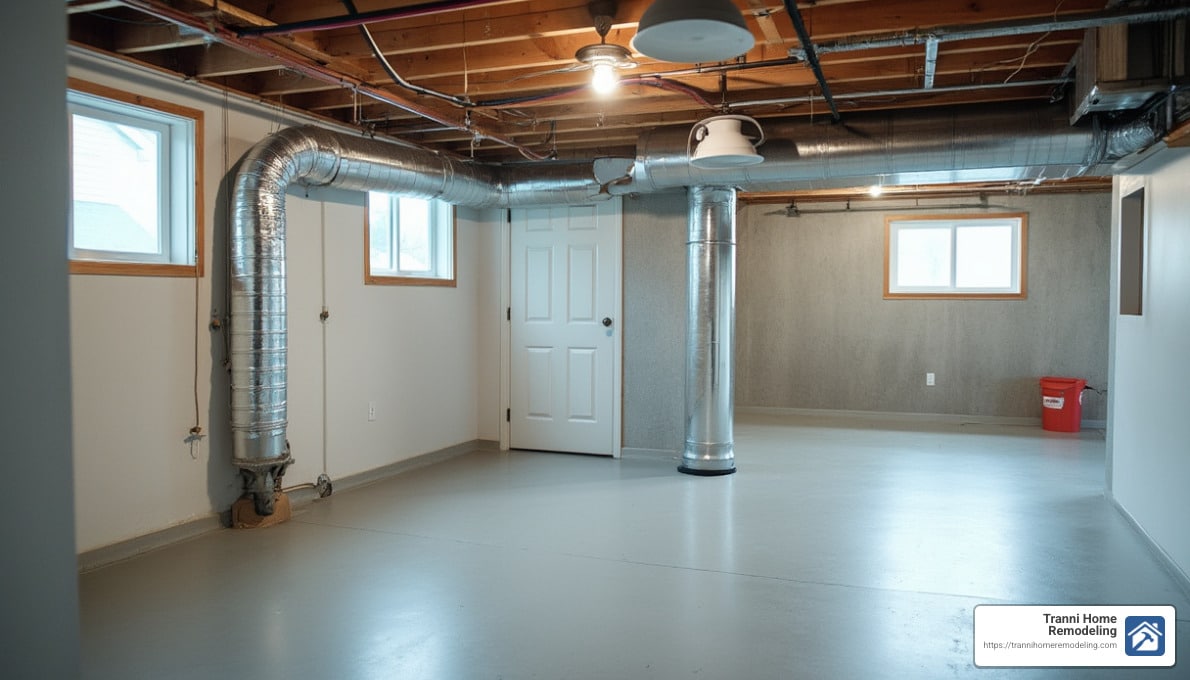





Basement Ventilation Solutions: Top 10 Effective Tips 2025
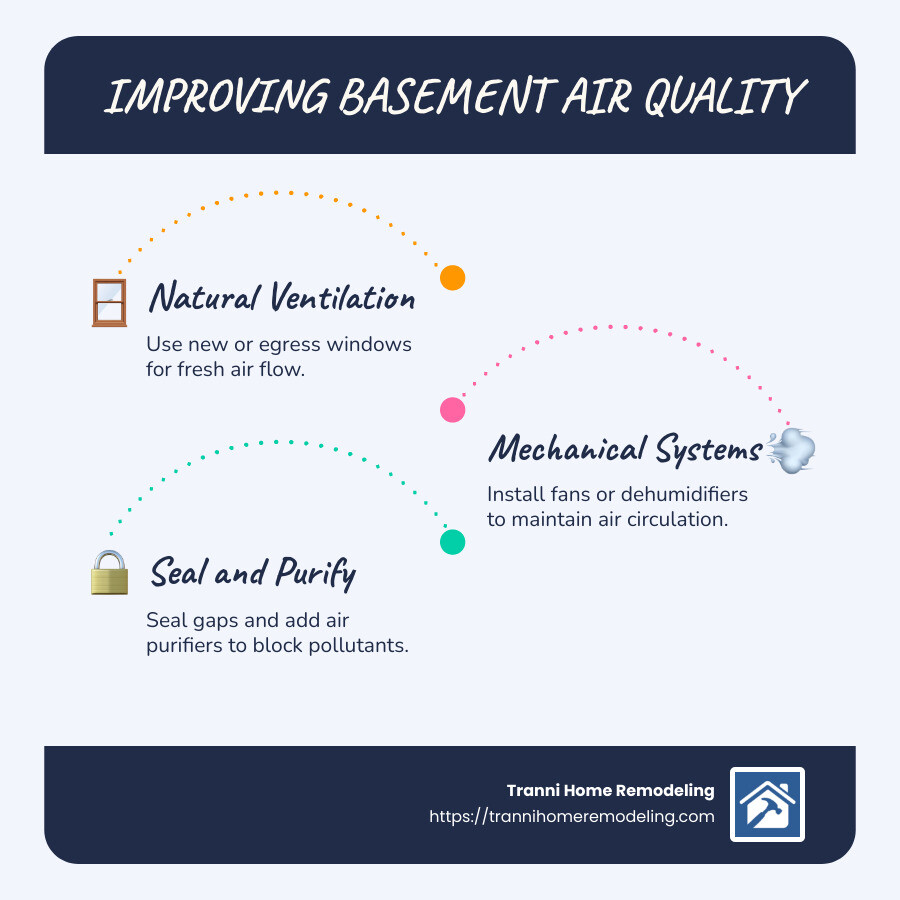
Basement ventilation solutions are crucial for homeowners looking to improve the air quality in their underground spaces. Effective solutions ensure your basement remains free of moisture problems and mould growth while maintaining proper air circulation. Here are key methods for improving basement air:
- Install new windows or egress windows for natural ventilation.
- Use forced air systems like fans and dehumidifiers.
- Seal cracks and gaps to prevent pollutants.
- Consider air purifiers for immediate air quality improvements.
Welcome! I’m Tyler Tranni, owner and operator of Tranni Home Remodeling. With years of experience in the field, including in basement ventilation solutions, I am passionate about helping homeowners in Billerica, MA, and nearby areas improve their indoor environments with quality craftsmanship.
Know your Basement ventilation solutions terms:
– Basement finishing solutions
– Basement lighting solutions
– finishing a basement with a sump pump
Natural Ventilation Methods
When it comes to improving your basement’s air quality, natural ventilation is a great place to start. It’s simple, cost-effective, and can make a big difference in how your basement feels.
Installing New Basement Windows
One of the easiest ways to introduce fresh air into your basement is by installing new windows. Custom glass block windows with vinyl hopper vents are a popular choice. They not only offer privacy and security but are also low maintenance and energy-efficient. Alternatively, awning windows are another excellent option. They can be custom-made to fit any opening and provide great ventilation, even during rainy weather.
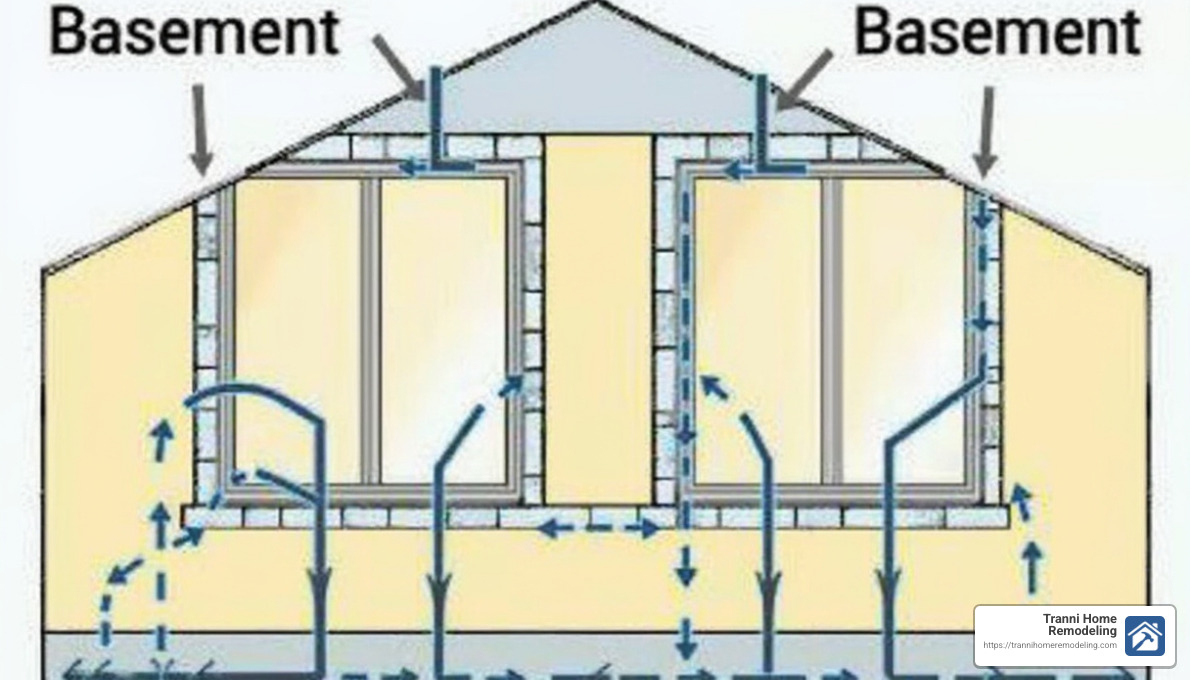
Position your windows strategically to maximize airflow. Ideally, place them opposite each other to create cross-ventilation, allowing fresh air to flow in and stale air to escape naturally. This setup helps reduce moisture buildup and keeps your basement feeling fresh.
Adding Egress Windows
Egress windows serve a dual purpose. They not only provide necessary ventilation but also function as emergency exits. Installing these windows requires careful foundation preparation and creating large openings. While this may seem like a big task, the benefits are substantial.
Having egress windows ensures your basement meets safety codes and offers a clear path to the outside in case of emergencies. Plus, they allow a significant amount of natural light and air, making your basement a more inviting and livable space.
By focusing on these natural ventilation methods, you can significantly improve your basement’s air quality. Whether you’re in Reading, MA, or North Andover, MA, these solutions can be custom to suit your specific needs and preferences.
Next, we’ll explore mechanical ventilation systems and how they can further improve your basement’s environment.
Mechanical Ventilation Systems
While natural ventilation methods are beneficial, sometimes they aren’t enough to keep your basement air fresh and healthy. That’s where mechanical ventilation systems come in. These systems actively move air in and out of your basement, ensuring a constant flow of fresh air.
Forced Air Systems
Forced air systems are a popular choice for basement ventilation. They use fans to push stale air out and bring fresh air in. Small window fans and exhaust fans are simple yet effective tools for this purpose. You can install them in existing windows or ventilation pipes to create a consistent airflow.
Dehumidifiers are another essential component. They remove excess moisture from the air, which helps prevent mold growth and keeps the air comfortable. Some advanced models come with humidity sensors that automatically adjust the settings based on the moisture levels, ensuring your basement stays dry without constant manual adjustments.
Energy Recovery Ventilation (ERV)
If you’re looking for an energy-efficient solution, consider an Energy Recovery Ventilation (ERV) system. These systems are designed to exchange stale indoor air with fresh outdoor air while recovering energy from the exhaust air. This process helps maintain a comfortable indoor temperature, reducing the strain on your heating and cooling systems.
There are two main types of ERV systems: spot ERV and whole house ERV. A spot ERV is ideal for individual rooms like your basement office. It provides targeted ventilation without impacting the rest of the house. On the other hand, a whole house ERV integrates with your existing HVAC system, providing comprehensive ventilation for your entire home.
By implementing forced air systems and ERV systems, you can effectively manage your basement’s air quality. These solutions ensure that whether you’re in Chelmsford, MA, or Winchester, MA, your basement remains a healthy and comfortable space.
In the next section, we’ll dig into sealing and insulation techniques that complement these mechanical solutions, further enhancing your basement’s environment.
Sealing and Insulation
Proper sealing and insulation are critical when it comes to maintaining a healthy basement environment. This step is all about keeping unwanted moisture and pollutants out while ensuring that your mechanical ventilation efforts are as effective as possible.
Proper Sealing Techniques
Sealing cracks and gaps in your basement is the first line of defense against moisture and pollutants. Moisture can seep through even the smallest cracks in your basement walls, floors, windows, and doors. This not only leads to a stuffy atmosphere but also encourages mold growth.
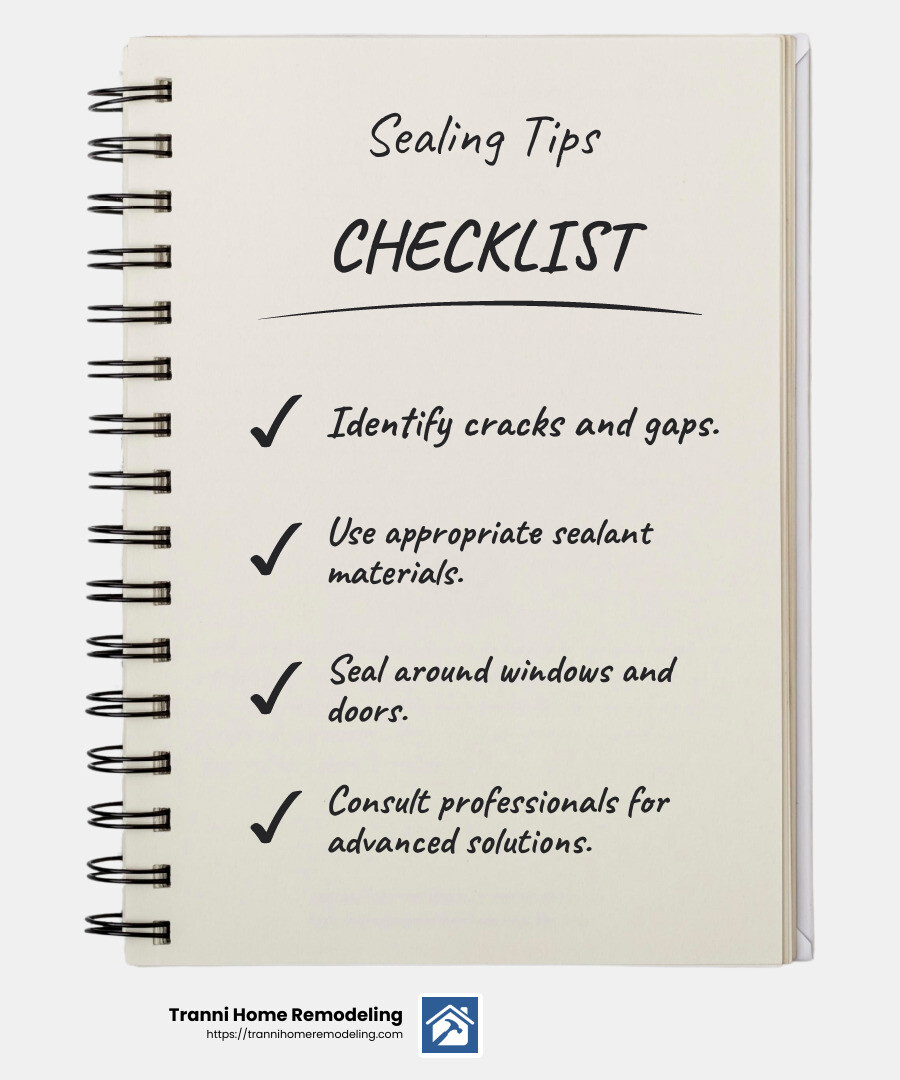
Here’s how you can seal your basement effectively:
- Identify Problem Areas: Start by inspecting your basement for visible cracks or gaps. Pay close attention to corners and joints as these are common trouble spots.
- Use the Right Materials: For small cracks, a simple application of caulk or sealant can do the trick. For larger gaps, you might need to use expanding foam or even consider professional help.
- Seal Around Windows and Doors: Ensure that your basement windows and doors are properly sealed. This prevents outdoor air from bringing in moisture and pollutants. Consider using weather stripping or installing storm windows for added protection.
- Check the Floors and Walls: Don’t overlook your floors and walls. Use a concrete sealer to protect these surfaces from moisture infiltration.
- Professional Inspection: If you’re unsure about the extent of sealing required, it’s wise to consult with professionals. They can provide a more comprehensive assessment and recommend advanced sealing solutions.
Moisture prevention is not just about sealing; it’s also about maintaining the right insulation. Proper insulation helps regulate the temperature in your basement, making it less inviting for moisture to accumulate.
Insulation Tips:
- Insulate Pipes: Cold pipes can cause condensation, leading to moisture problems. Use pipe insulation to prevent this.
- Wall and Ceiling Insulation: Use moisture-resistant insulation materials for your basement walls and ceiling. This not only helps in temperature regulation but also adds an extra layer of protection against moisture.
By employing these proper sealing techniques, you can significantly reduce the risk of moisture and pollutant entry, making your basement more comfortable and healthier. This is especially important in areas like Billerica, MA, or Lexington, MA, where seasonal changes can affect basement conditions.
In the next section, we’ll explore how air purifiers can further improve your basement’s air quality, providing an additional layer of protection against airborne pollutants.
Air Purifiers
When it comes to enhancing the air quality in your basement, air purifiers are a powerful tool. They work by removing harmful particles and odors, making your basement a healthier and more pleasant place to be.
Choosing the Right Air Purifier
HEPA Filtration is a must-have feature for any air purifier you consider. HEPA filters are designed to capture 99.97% of particles as small as 0.3 microns, including dust, pollen, and pet dander. This makes them ideal for tackling common basement air pollutants.
Medical-Grade Purifiers take filtration to the next level. These purifiers use advanced technology to remove even the smallest particles, ensuring that your basement air is as clean as possible. This is particularly beneficial if anyone in your household has allergies or respiratory issues.
Activated Charcoal is another key component to look for. Charcoal filters are excellent at absorbing odors and volatile organic compounds (VOCs). This is crucial for basements, where musty smells can often develop due to dampness and poor ventilation.
Short-Term vs. Long-Term Solutions
- Short-Term Solutions: If you’re looking for a quick fix to improve air quality, a portable air purifier with HEPA and activated charcoal filters can provide immediate relief. These units are easy to set up and can be moved around as needed.
- Long-Term Solutions: For a more permanent solution, consider integrating an air purifier into your existing HVAC system. This ensures continuous filtration of the air throughout your home, not just in the basement.
By selecting the right air purifier, you can effectively combat air pollutants and odors, making your basement a more enjoyable part of your home. This is particularly important in areas like Woburn, MA, or Concord, MA, where basements are often used as living spaces or storage areas.
In the next section, we’ll answer some frequently asked questions about basement ventilation solutions, helping you make informed decisions for your home.
Frequently Asked Questions about Basement Ventilation Solutions
How to Ventilate a Basement?
Ventilating a basement is key to keeping it fresh and free from mold. Here are some effective basement ventilation solutions:
- Natural Ventilation: The simplest method is opening windows and installing vents. This allows fresh air to flow in and stale air to escape. Using strategically placed custom glass block or awning windows can improve this natural airflow.
- Mechanical Systems: If natural ventilation isn’t enough, consider installing mechanical systems such as forced air systems. These systems use fans and ventilation pipes to circulate air efficiently. Some even come with humidity sensors to keep moisture levels in check.
- Air Circulation: Ensure air moves freely by using exhaust fans or small window fans. This helps remove damp and stale air, replacing it with fresh air from outside.
How to Naturally Ventilate a Basement?
Natural ventilation focuses on using the existing structure to improve air quality:
- Cross-Ventilation: Achieve this by opening windows on opposite walls to create a natural breeze through the space. This method is simple yet effective in circulating air.
- Air Ducts: Consider adding air ducts that connect to your home’s HVAC system. This can help pull fresh air into the basement, especially during warmer months when windows might not be an option.
- Egress Windows: Apart from being an emergency exit, egress windows can also improve ventilation. Make sure they’re large enough to allow a good flow of air.
How to Make Basement Air Breathable?
To ensure your basement air is as breathable as possible, consider these strategies:
- Dehumidifiers: These devices are essential in reducing moisture, which can lead to mold and musty odors. Keeping humidity below 60% is crucial for a healthy environment.
- Air Purifiers: Using air purifiers with HEPA filters can remove particles and allergens, making the air cleaner. Activated charcoal filters are great for eliminating odors.
- Vents and Ducts: Install vents and ducts to connect your basement to the main HVAC system. This can help maintain a consistent flow of fresh air and remove stale air effectively.
- AC Connection: If possible, connect your basement to your home’s air conditioning system. This helps regulate temperature and humidity, making the air more comfortable to breathe.
By implementing these methods, you can make your basement a healthier and more pleasant space. Whether you’re in Tewksbury, MA, or Lexington, MA, these strategies can greatly improve the air quality in your home.
Conclusion
At Tranni Home Remodeling, we understand that a basement should be more than just a storage space. It can be a comfortable, functional extension of your home. Our commitment to high-quality craftsmanship and outstanding service ensures that your basement is not only aesthetically pleasing but also a healthy environment.
Effective basement ventilation solutions are crucial to achieving this. By addressing moisture issues and improving air circulation, we help you create a space free from mold and musty odors. Our team specializes in both natural and mechanical ventilation methods, custom to your specific needs. From installing custom windows to integrating advanced mechanical systems, we ensure your basement is a safe and breathable space.
Choosing Tranni Home Remodeling means partnering with a team that prioritizes your home’s structural integrity and your family’s well-being. Our expertise extends across Middlesex County, including areas like Billerica, Bedford, and Chelmsford, MA. We are dedicated to providing solutions that not only improve your basement but also add value to your entire home.
Ready to transform your basement into a more livable space? Contact us today to learn more about our basement finishing services and how we can improve your home’s air quality. Together, let’s make your basement a place you’ll love to spend time in.