





Basement waterproofing solutions: Top 7 Proven Methods
Basement waterproofing solutions are essential for keeping your home safe from water damage and maintaining its structural integrity. If you notice signs like damp walls, mold growth, or musty odors, it’s time to consider these solutions to protect your home. Here’s a quick overview of effective strategies:
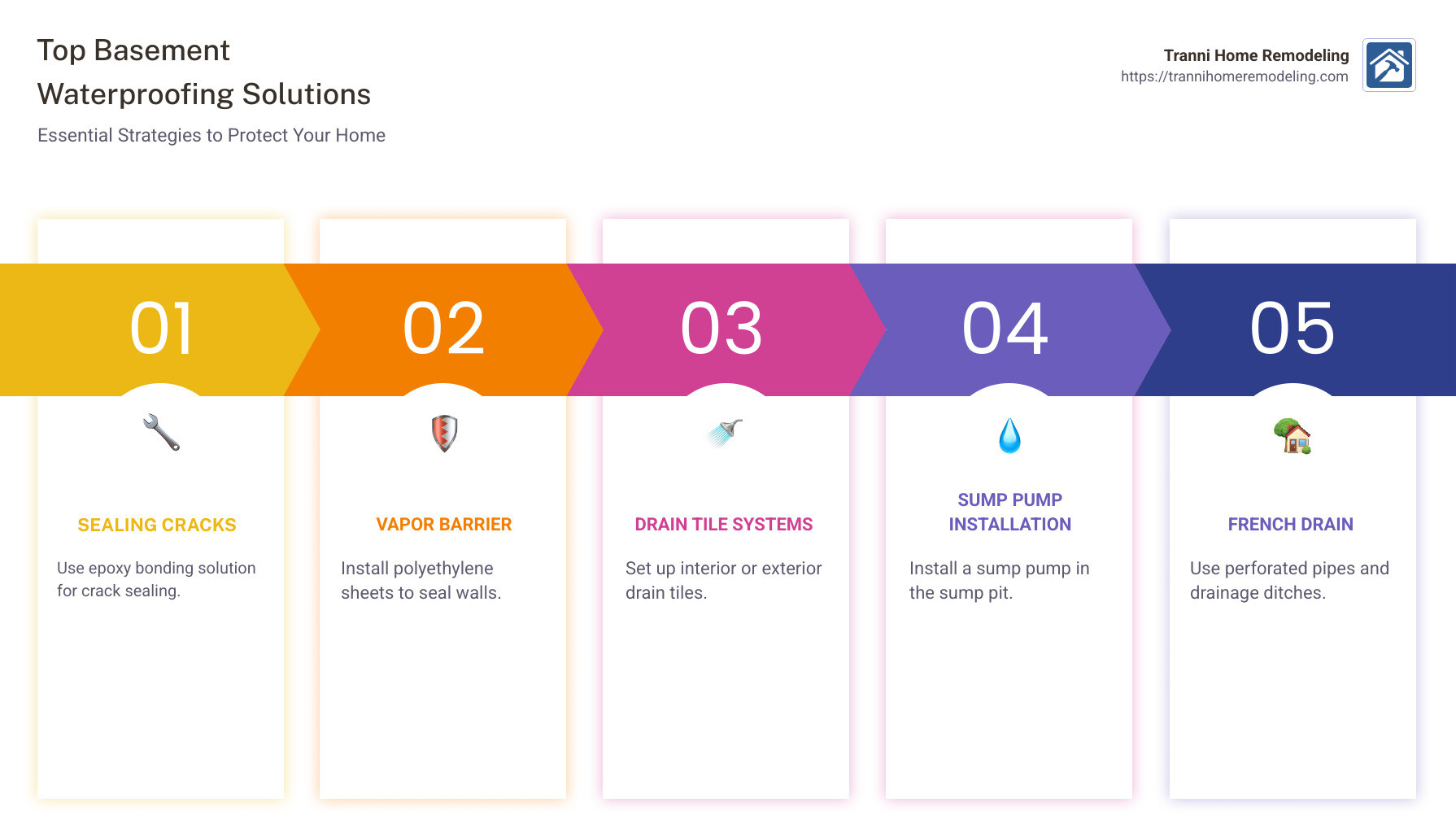
- Sealing cracks with epoxy
- Sealing your basement walls with a vapor barrier
- Installing interior or exterior drain tile systems
- Setting up a sump pump
- Installing a French drain
- Adding gutter extensions
- Properly grading your yard
At Tranni Home Remodeling, our passion for excellence drives us to provide homeowners with basement waterproofing solutions that stand the test of time. With years of experience in changing spaces, I, Tyler Tranni, am dedicated to helping you find the most effective methods to safeguard your home from water-related issues.
Handy Basement waterproofing solutions terms:
– Basement finishing solutions
– Basement ventilation solutions
– finishing a basement with a sump pump
When Do You Need Basement Waterproofing Solutions?
Basement waterproofing solutions become crucial when you start noticing signs of water intrusion in your home. Here’s a simple checklist to help you identify when it’s time to act:
1. Leaking Water
If you see puddles, damp spots on the walls, or wet floors, it’s a clear signal. Water can enter through cracks, cove joints, or even pipe penetrations. These leaks can quickly lead to bigger problems if not addressed.
2. Mold Growth
Mold thrives in moist environments. If the relative humidity in your basement exceeds 70%, mold and mildew can start to grow. This not only damages your property but also poses health risks.
3. Water Damage and Wood Rot
Water exposure can cause wood, like floor joists and furniture, to rot. This can compromise the structural integrity of your home. Look for signs of deterioration in wooden materials.

4. Musty Odors
A musty smell often indicates hidden mold or mildew. This odor can spread to the rest of your home, affecting indoor air quality and potentially leading to respiratory issues.
5. Increased Humidity
When water enters your basement, it can raise the humidity levels throughout your home. This can make your living spaces uncomfortable and promote further mold growth.
If you notice any of these signs, it’s important to take action with basement waterproofing solutions. Early intervention can save you from costly repairs and maintain the value and safety of your home.
Next, we’ll explore how water enters your basement and what you can do to prevent it.
How Does Water Enter Your Basement?
Understanding how water sneaks into your basement is key to keeping it dry and safe. Let’s break down the common entry points:
1. Cove Joints
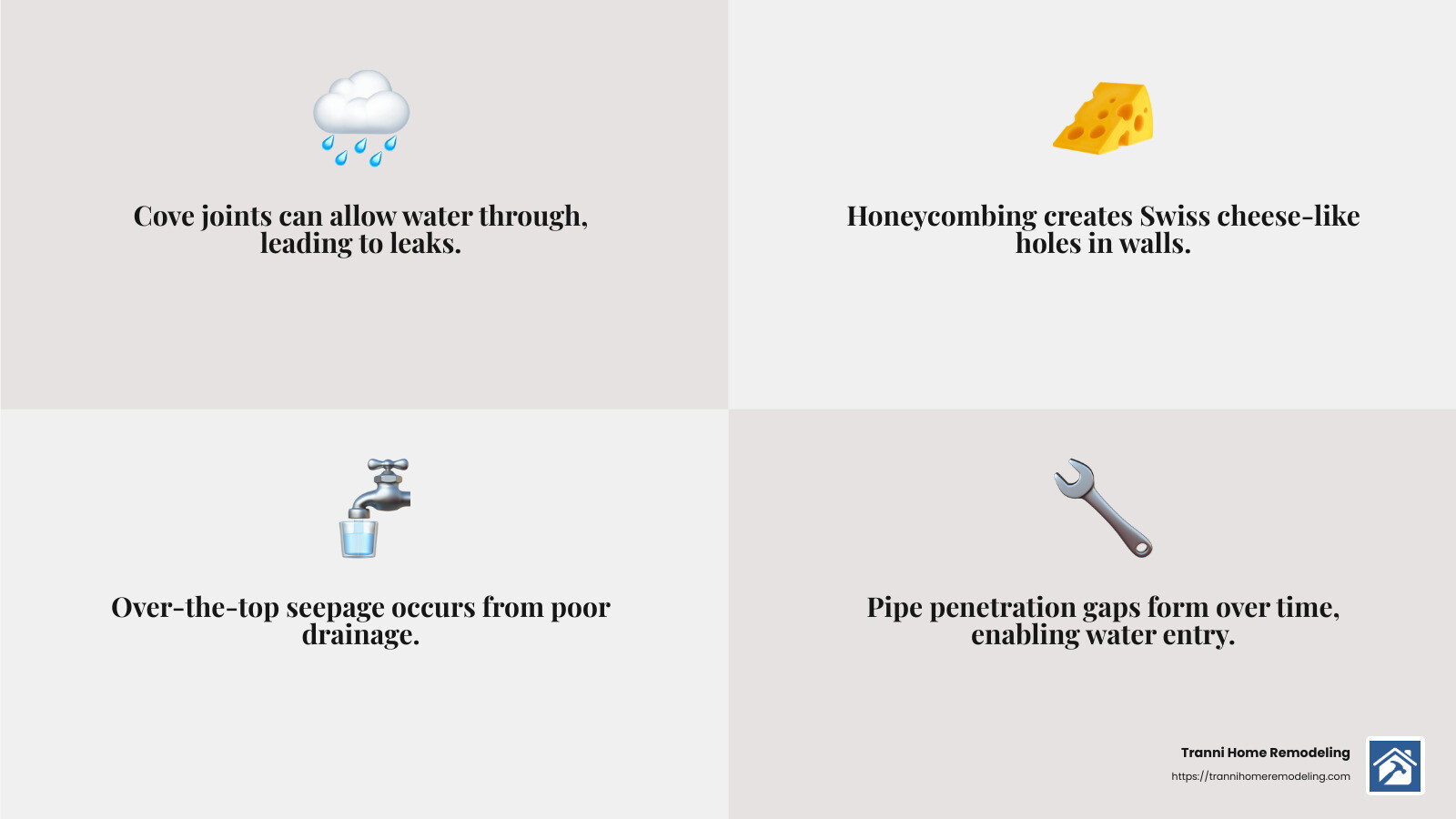
Cove joints are where your basement wall meets the floor. They can become a pathway for water, especially if your walls face hydrostatic pressure from groundwater. This pressure pushes water through weak spots, leading to leaks and dampness.
2. Honeycombing
Honeycombing refers to areas in your concrete walls that have started to crumble or deteriorate. These weak spots allow water to seep through, often unnoticed until significant damage occurs. It’s like having tiny Swiss cheese holes in your walls, inviting water inside.
3. Over-the-Top Seepage
Water can also find its way into your basement through the gap between your basement walls and the ground level outside. This “over-the-top” seepage happens when rainwater or melting snow accumulates and overflows into your basement, especially if your drainage system is inadequate.
4. Pipe Penetration
When pipes are installed, holes are drilled through your basement walls. These holes are often filled with hydraulic cement, but over time, this cement can break down. When this happens, gaps form around the pipes, creating a perfect entry point for water.
5. Cracks
Cracks in your basement walls are a common problem. They can be caused by hydrostatic pressure, which makes the walls bow or lean. Once a crack forms, even a small one, water can easily seep through. Addressing these cracks quickly is essential to prevent further damage.
By identifying and addressing these entry points, you can effectively implement basement waterproofing solutions to keep your home dry. Next, we’ll dive into the top solutions to tackle these issues and protect your basement from water damage.
Top 7 Basement Waterproofing Solutions
Keeping your basement dry is crucial for the safety and longevity of your home. Here’s how you can tackle water issues with these top basement waterproofing solutions:
Sealing Cracks with Epoxy
Cracks in your basement walls are like open invitations for water. Professionals recommend using an epoxy bonding solution to seal these cracks. A 2-part epoxy is injected into the cracks, which not only waterproofs but also reinforces the wall structure. This method is effective for preventing leaks and maintaining the integrity of your basement walls.
Sealing Your Basement Walls with a Vapor Barrier
To keep moisture out, consider using a vapor barrier. This involves applying a thin polyethylene sheet against your basement walls. These sheets, ranging from 10 to 20-mil thick, are designed to channel water into a drain tile system, safely carrying it away from your home. This method is especially useful in preventing moisture from seeping through your foundation.
Install an Interior or Exterior Drain Tile System
A drain tile system is a network of pipes that collects and redirects water. You can choose between an interior drain tile, placed under your basement floor, or an exterior system, installed outside your walls. Both systems direct water to a sump pump, which then expels it away from your home, keeping your basement dry.
Install a Sump Pump
A sump pump is a critical component of any waterproofing strategy. Placed in a sump pit, this pump activates when water levels rise, using a discharge line to push the water out of your home. Regular maintenance checks ensure your sump pump is always ready to handle excess water.
Install a French Drain
A French drain is a simple yet effective solution for managing surface water. It consists of a perforated pipe laid just below the ground surface, surrounded by gravel. This setup collects and redirects water to a drainage ditch or a low spot on your property, preventing it from pooling around your foundation.
Install Gutter Extensions
Gutter extensions, or downspout extensions, help move water further away from your home. By extending the reach of your gutters, you can prevent water from pooling near your basement walls, reducing the risk of seepage and soil erosion.
Grade Your Yard Properly
Proper property grading ensures water flows away from your home rather than towards it. If your yard slopes towards your house, water can build up in the soil, leading to potential leaks. Adjusting the slope with additional soil can help direct rainwater away, protecting your basement from water intrusion.
By implementing these basement waterproofing solutions, you can effectively safeguard your home against water damage. Up next, we’ll explore additional methods to keep your basement dry and comfortable.
Additional Basement Waterproofing Methods
While the primary waterproofing solutions are essential, there are additional methods that can further protect your basement from water damage. These methods are cost-effective and can improve the overall effectiveness of your waterproofing strategy.
Waterproof Paint
Waterproof paint is an affordable option for those looking to add an extra layer of protection to their basement walls. While it offers only limited damp proofing, it can be a quick fix for minor moisture issues. Costing around $1–$2 per square foot, it’s a budget-friendly way to improve your existing waterproofing efforts. However, it’s best used in conjunction with other methods for more comprehensive protection.
Gutter System Installation
Proper gutter installation is crucial for managing excess runoff and protecting your home’s foundation. By ensuring that gutters are free of debris and properly directed, you can prevent water from pooling around your home. Gutter extensions further help by directing water away from your basement walls, reducing the risk of seepage and soil erosion. This simple step can significantly improve the durability of your home’s foundation.
SaniDry Dehumidifier
Humidity control is vital for maintaining a dry and healthy basement environment. The SaniDry Dehumidifier is designed to reduce moisture levels, preventing mold growth and improving indoor air quality. Its air filtration capabilities also help eliminate musty odors, making your basement a more comfortable space. This dehumidifier works efficiently to maintain the right humidity levels, ensuring long-term protection against dampness.
These additional methods, when combined with primary basement waterproofing solutions, offer a robust defense against water-related issues. By taking these extra steps, you can ensure your basement remains dry, safe, and ready for use. Next, we’ll address some common questions about basement waterproofing to help you make informed decisions.
Frequently Asked Questions about Basement Waterproofing Solutions
What is the best waterproofing method for basements?
Choosing the best waterproofing method for your basement depends on the specific issues you’re facing. Epoxy and polyurethane are both highly effective for sealing cracks and preventing water intrusion. Epoxy creates a strong, durable bond, while polyurethane is flexible and can expand to fill gaps.
For a more budget-friendly option, cementitious materials are popular. These are easy to apply and provide a solid waterproof barrier. However, they might not be as durable as epoxy or polyurethane for severe issues. It’s best to consult with a professional to determine the right solution for your basement’s needs.
What is the most cost-effective way to waterproof a basement?
If you’re looking to waterproof your basement without breaking the bank, waterproof paint is a great starting point. It costs around $1–$2 per square foot and offers a basic level of moisture protection. While not a standalone solution, it can be part of a larger strategy to keep your basement dry.
Cementitious coatings are another cost-effective option. They provide a solid barrier against moisture and are relatively easy to apply. These methods are best used alongside other waterproofing techniques for maximum effectiveness.
Can I waterproof my basement myself?
Yes, you can tackle some DIY waterproofing tasks, especially if you’re dealing with minor issues. Start by sealing basement walls with waterproof paint and removing mold. Basic tasks like cleaning gutters and ensuring proper yard grading can also be done yourself.
However, for more complex problems like significant cracks or persistent leaks, it’s wise to hire a professional. They have the expertise and tools needed to provide long-lasting solutions, ensuring your basement stays dry and safe.
Conclusion
At Tranni Home Remodeling, we understand that your home is more than just a building—it’s your sanctuary. That’s why we are committed to providing top-notch basement waterproofing solutions to protect your home from water damage and ensure its longevity. Based in Billerica, MA, we take pride in our high-quality craftsmanship and outstanding service, helping homeowners across Middlesex County achieve peace of mind.
Why Choose Us?
Our team is dedicated to delivering exceptional results. With over a decade of experience in the home renovation industry, we have honed our skills to offer solutions that are both effective and reliable. We believe in using only the best materials and techniques, ensuring that our work stands the test of time.
Our Commitment to You
When you choose Tranni Home Remodeling, you’re choosing a partner who cares about your home’s well-being. We don’t just fix problems; we provide comprehensive solutions that improve the comfort and safety of your living space. Whether it’s sealing cracks with epoxy or installing a sump pump, we tailor our services to meet your specific needs.
Your Next Steps
Ready to protect your basement from water damage? Visit our Basement Finishing page to learn more about how we can help you transform your basement into a dry, functional space. Our team is here to guide you through every step of the process, ensuring your satisfaction with our work.
At Tranni Home Remodeling, we are not just building homes; we are building trust and lasting relationships with our clients. Let us help you create a home that is safe, beautiful, and uniquely yours.
