





Bathroom renovation contractors: 7 Proven Steps for Success 2025
The Essential Guide to Hiring Bathroom Renovation Contractors
If you’re looking for bathroom renovation contractors, here’s what you need to know:
- Average Cost: $10,000-$30,000 (can range from $5,000 for basic updates to $50,000+ for luxury renovations)
- Typical Timeline: 4-6 weeks for completion
- Must-Have Qualifications: Valid license, insurance, references, written contract
- Best Hiring Process: Get 3+ detailed quotes, check reviews, verify credentials, sign detailed contract
A bathroom renovation is one of the most impactful home improvement projects you can undertake. Not only does it improve your daily life with improved functionality and aesthetics, but it also significantly boosts your home’s value. According to research, bathrooms are one of the top deciding factors for homebuyers, making professional renovations a smart investment.
Finding the right bathroom renovation contractors is critical to your project’s success. With over 1 million bathrooms remodeled by professional contractors since 1991 (according to industry data), it’s clear that homeowners recognize the value of expert help. The difference between a DIY disaster and a stunning change often comes down to hiring skilled professionals who understand plumbing, electrical work, tiling, and the many other specialized trades involved.
Most bathroom remodeling projects involve coordinating multiple elements – from demolition to final fixtures – making experienced contractors essential for a smooth process. A professional can help you steer permits, material selection, and unexpected challenges like water damage or outdated wiring found during demolition.
I’m Tyler Tranni, owner of Tranni Home Remodeling, and I’ve guided countless homeowners through successful bathroom changes with our team of experienced bathroom renovation contractors who prioritize quality craftsmanship and clear communication throughout every project.
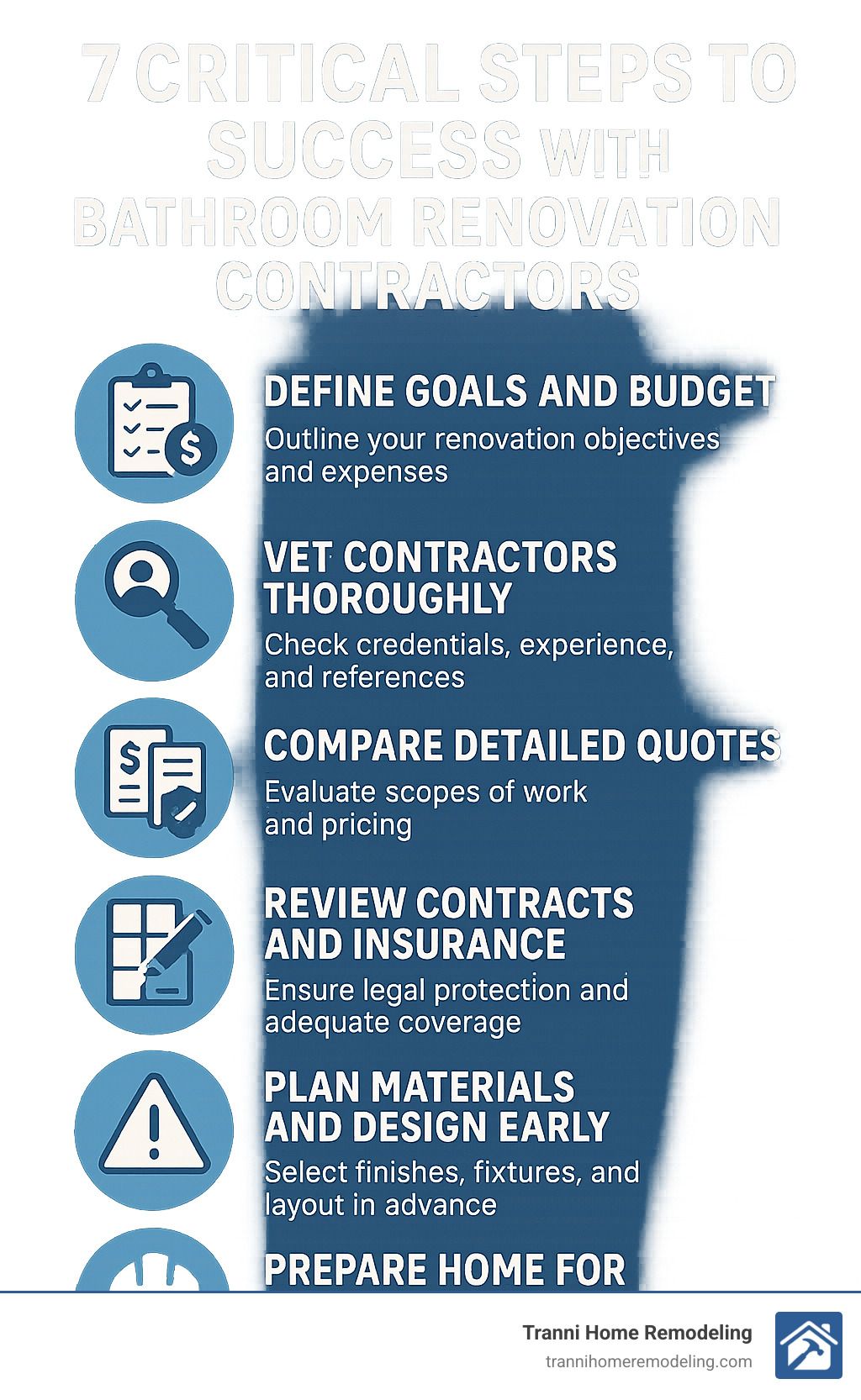
The ROI of Professional Bathroom Remodels
When done correctly, a bathroom renovation offers one of the best returns on investment in home improvement. According to industry data, bathrooms and kitchens are the two most influential rooms for home resale value. Many homeowners are surprised to learn that statistics show renovating a bathroom often adds more value to your home than the cost of the renovation itself.
A well-executed bathroom remodel can recoup 60-80% of its cost in increased home value. This is particularly important in competitive real estate markets throughout Massachusetts, where updated bathrooms can make the difference between a quick sale and a property that lingers on the market.
Beyond the financial benefits, a professionally renovated bathroom transforms your daily routine. As one of our Chelmsford clients noted after their master bath renovation: “Given the craziness of everyday life, the time in your bathroom is some of your only personal time. Having a space that feels like a sanctuary makes a huge difference in my day.”
For aging homeowners in communities like Billerica and Lexington, accessibility upgrades such as curbless showers and grab bars not only improve safety but also allow for comfortable aging in place—an increasingly valuable consideration as more homeowners choose to stay in their homes longer.
Bathroom Remodeling projects deliver both immediate satisfaction and long-term value when executed by qualified bathroom renovation contractors with attention to detail and quality materials.
Step 1: Clarify Your Goals, Style, and Budget
Before you start calling bathroom renovation contractors, take a moment to dream a little. What do you really want from your new bathroom? Are you looking for a quick refresh with some new fixtures and a coat of paint? Or are you imagining a complete change with a whole new layout? Maybe you’re dreaming of a spa-like retreat where you can escape the world, or perhaps you need practical accessibility improvements to age comfortably in your home.
Start your journey by gathering inspiration. Flip through home magazines, browse Pinterest, or save Instagram posts that catch your eye. Pay attention to what makes you pause and think, “I’d love that in my bathroom.” Notice the specific elements that appeal to you most:
- Is it a spacious walk-in shower or a luxurious soaking tub?
- Do you love the clean lines of a floating vanity or prefer traditional cabinetry with lots of storage?
- What lighting creates the mood you want—bright and energizing or soft and relaxing?
- Are you drawn to classic subway tiles or bold patterned options?
- What color palette makes you feel most at home?
Once you have a collection of ideas, sort them into “must-haves” versus “nice-to-haves.” This simple exercise becomes incredibly valuable when you’re making tough budget decisions later in the process.
“I’ve seen such a difference in project satisfaction between clients who come in with a clear vision versus those who decide as they go,” shares our lead designer at Tranni Home Remodeling. “The homeowners who spend time thinking about how they’ll actually use the space—not just how they want it to look—end up with bathrooms they truly love for years.”
Now for the practical part—establishing your budget. Based on internet data, here’s what you might expect to invest in different levels of bathroom renovations:
- Simple refresh of a small bathroom: $5,000-$15,000
- Complete mid-range full bathroom remodel: $15,000-$30,000
- High-end or master bathroom renovation: $30,000-$50,000+
- Luxury custom bathroom with premium features: $50,000-$100,000+
These are internet averages and not actual costs for Tranni Home Remodeling services. Your actual costs will vary based on the scope of your project, material selections, and your specific location within Middlesex County.
Set a Realistic Budget Buffer
If there’s one piece of advice that can save you significant stress during your bathroom renovation, it’s this: build in a 15-20% contingency fund from the start. This isn’t being pessimistic—it’s being realistic. Once bathroom renovation contractors open up walls and floors, particularly in older homes throughout Chelmsford, Tewksbury, or Billerica, surprises often await.
Understanding how your budget typically breaks down helps set proper expectations:
Labor costs will likely account for 40-65% of your total budget. This includes demolition, plumbing, electrical work, carpentry, and installation of all those beautiful materials you’ve selected.
Materials (from tile and fixtures to vanities and lighting) make up the remainder. Higher-end fixtures and custom work increase both material and labor costs—installing a standard shower is much quicker than creating a custom tile masterpiece with multiple showerheads.
A perfect example comes from a recent project in Carlisle. A couple had carefully budgeted for their shower replacement, but once the contractor removed the old shower, they finded significant water damage and pipes that hadn’t been updated since the 1960s. Because they had wisely included a 20% contingency in their planning, they were able to address these issues without compromising their design vision or scrambling to find additional funds.
Your bathroom should be a sanctuary, not a source of stress. Taking time to clarify your goals, define your style, and set a realistic budget with a proper buffer will set you up for renovation success—and a beautiful bathroom you’ll enjoy for years to come.
Step 2: Vet Bathroom Renovation Contractors Like a Pro
Finding the right bathroom renovation contractors shouldn’t be a rushed decision. After all, these professionals will be changing one of the most important rooms in your home. In Massachusetts, contractors must hold appropriate licenses to perform home remodeling work legally – but verification shouldn’t stop there.
Start with the basics: always request proof of both general liability insurance and workers’ compensation coverage. This crucial step protects you from potential liability if accidents occur during your renovation. One homeowner in Chelmsford learned this lesson the hard way when an uninsured worker slipped and sustained injuries in their home, creating a legal nightmare that could have been avoided.
“I always tell homeowners to check the BBB ratings for any contractor they’re considering,” shares our project manager. “It’s an easy way to screen for major red flags before investing more time in meetings and quotes.”
Professional credentials matter too. Contractors who belong to organizations like the National Kitchen & Bath Association (NKBA) or National Association of Home Builders (NAHB) typically commit to ongoing education and industry standards. These memberships signal a dedication to craftsmanship that goes beyond the basics.
When vetting contractors, pay special attention to their familiarity with local building codes in your specific town. Permit requirements in Billerica might differ from those in Burlington or Lexington. An experienced contractor will steer these regulations confidently, saving you headaches down the road.
Don’t hesitate to ask for a portfolio of completed bathroom projects similar to yours. Photos tell part of the story, but speaking with past clients provides invaluable insight. Ask for references – and actually call them! Specific questions about timeline adherence, communication style, and problem-solving abilities will reveal more than generic reviews.
If your project involves specialized elements like a curbless shower with complex waterproofing or ADA-compliant fixtures, verify that your contractor has relevant experience. A bathroom specialist, rather than a general contractor, will typically have deeper expertise with the unique challenges bathrooms present – from waterproofing techniques to proper ventilation systems.
How to Hire a Bathroom Remodeling Contractor
Questions to Ask Bathroom Renovation Contractors Before Signing
The interview process with potential bathroom renovation contractors reveals as much about their professionalism as their portfolio does. When we meet with potential clients, we expect thoughtful questions – and you should expect thoughtful answers.
“What impressed me most during the interview process was how the project manager walked through my bathroom pointing out potential issues with the existing plumbing and suggesting solutions before I even signed a contract,” shared one of our Winchester clients. “That level of proactive problem-solving made me confident in their expertise.”
Start by asking how many bathroom renovations they’ve completed in the past year. Consistent, recent experience with bathrooms specifically (not just general remodeling) matters tremendously for these technical spaces.
Clarify who will be on-site managing your project daily. Some contractors juggle multiple jobs simultaneously, while others provide dedicated supervision. At Tranni Home Remodeling, we believe in having a project lead consistently on-site to maintain quality control and communication.
Timeline discussions should include not just the estimated completion date but also how the contractor handles inevitable delays. Weather, material backorders, and unexpected structural issues can impact schedules – a professional will have contingency plans rather than vague reassurances.
The change order process deserves special attention. If you decide to upgrade your shower fixture mid-project or add recessed lighting, how will this be documented and priced? Changes should always be put in writing with clear cost implications before work proceeds.
Payment schedules reveal much about a contractor’s business practices. Be wary of anyone requesting more than 30% upfront – this can indicate cash flow problems. A balanced payment schedule tied to project milestones protects both parties.
Ask detailed questions about how they’ll protect your home during construction. Dust containment systems, floor protection, and security measures should be standard practice, not afterthoughts.
Finally, invite potential contractors to identify challenges they foresee with your specific project. Their answers will demonstrate experience, honesty, and problem-solving ability – all qualities essential for a successful bathroom renovation.
What to Ask a Contractor When Remodeling a Bathroom
Step 3: Compare Apples to Apples—Quotes, Materials, and Warranties
Once you’ve narrowed down your list of potential bathroom renovation contractors, it’s time to request detailed written quotes. And I can’t stress the word “detailed” enough—vague estimates are like walking blindfolded into a renovation. They inevitably lead to misunderstandings, disappointment, and those dreaded cost overruns.
A truly comprehensive quote should spell out exactly what you’re getting:
- An itemized breakdown showing labor costs for each phase (demolition, plumbing, electrical work, tile installation)
- Specific materials with actual brand names and model numbers (not just “standard toilet”)
- Crystal-clear scope descriptions that define project boundaries
- All permit fees and required inspection costs
- Cleanup and debris removal details
- Complete warranty information covering both craftsmanship and materials
When comparing different proposals, be cautious about any bid that seems dramatically lower than the others. As one Lexington homeowner finded: “The lowest bid was $8,000 less than others, which seemed like a windfall until I realized it completely omitted waterproofing behind the tile—just cement board with no membrane. That shortcut would have created a mold nightmare within months.”
Most reputable bathroom renovation contractors provide workmanship warranties ranging from 1-3 years. Material warranties are separate and typically come directly from manufacturers, ranging from 1 year for basic faucets to lifetime coverage for certain premium fixtures.
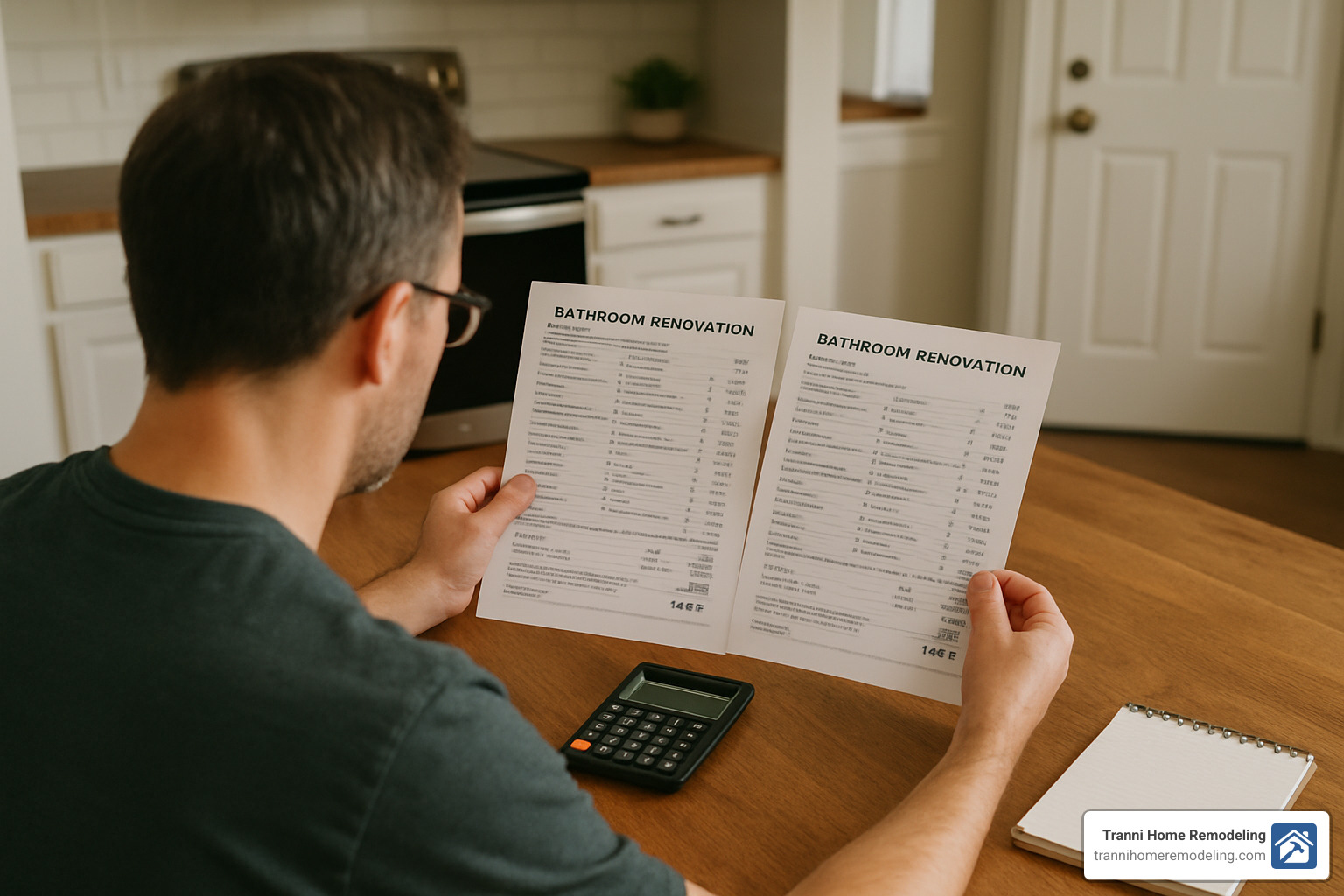
How to Read a Detailed Proposal
A professional proposal should leave nothing to your imagination. Here’s what deserves your attention in each section:
Demolition and Disposal
Look for specific mentions of protecting your adjacent spaces, clear statements about disposal methods, and proper handling procedures for potentially hazardous materials—especially important in older Middlesex County homes that might contain lead or asbestos.
Rough-in Work
This section should detail all plumbing modifications, electrical updates (including required GFCI protection), any framing changes if you’re altering the layout, and critical subfloor preparation and waterproofing methods. This is the hidden infrastructure that makes or breaks your bathroom’s longevity.
Finish Work
Your proposal should specify tile patterns, grout colors, and installation techniques. It should detail exactly how your vanity will be installed, how fixtures will be mounted, and even paint grades with number of coats. The difference between a good and great bathroom often lies in these finishing details.
Inspection and Completion
Look for mentions of required municipal inspections, a clear final walkthrough process, defined cleanup standards, and how warranty documentation will be provided to you.
A recent client from North Reading put it perfectly: “What impressed me most was how the proposal specified exactly how the new shower valve would be installed and tested. My previous contractors had been so vague about these technical details that I never really knew what I was paying for.”
Taking time to carefully review and compare proposals isn’t just about finding the best price—it’s about finding the contractor who has thought through your project completely and communicates transparently about what you’ll receive for your investment.
Step 4: Lock Down Legalities—Insurance, Contracts, and Permits
The paperwork might not be the most exciting part of your bathroom renovation, but it’s absolutely critical for protecting your investment. Many homeowners are eager to skip ahead to the fun part—picking out tile and fixtures—but taking time with these legal details can save you from serious headaches down the road.
Insurance Verification
Before your bathroom renovation contractors lift a single hammer, request certificates of insurance directly from their insurance provider. Don’t just take their word for it! You’ll want to confirm they carry:
- General liability insurance (at least $1 million coverage)
- Workers’ compensation for all employees and subcontractors
- Builder’s risk insurance for larger projects
“I can’t stress enough how important proper insurance is,” says our operations manager. “We had a client in Tewksbury who previously hired an uninsured contractor. When a worker slipped and broke his arm, the homeowner was shocked to receive a claim against their homeowner’s insurance. That’s a situation no one wants to find themselves in.”
Contract Essentials
A solid contract isn’t just a formality—it’s your roadmap and protection. Your agreement should clearly spell out:
- Detailed scope of work that matches your proposal exactly
- Specific materials and products (including brand names and model numbers)
- Payment schedule with amounts tied to completed milestones, not dates
- Concrete start and completion dates with provisions for weather or supply delays
- Process for handling changes that might come up mid-project
- Conditions under which either party can terminate the agreement
- Lien waiver requirements to protect your property
“We provide lien waivers with each payment milestone,” explains our contracts manager. “This documentation proves everyone working on your project has been paid, preventing subcontractors from filing a lien against your home if the primary contractor hasn’t paid them.”
Permit Process
Reputable bathroom renovation contractors will handle permit applications for you, but it’s good to understand what’s typically required:
- Building permits for any structural modifications
- Plumbing permits when moving fixtures or adding new ones
- Electrical permits for lighting changes or added circuits
- Mechanical permits for ventilation upgrades
Each town in Middlesex County has its own permitting quirks. What’s required in Bedford might differ from Wilmington or Tewksbury. A contractor familiar with your specific town will steer these waters more efficiently.
Must-Have Clauses to Protect Homeowners
When reviewing your contract, make sure these protective elements are clearly addressed:
Specific Start and Completion Dates
Your contract should spell out not just when work begins and ends, but also daily work hours and which days crews will be on site. A Burlington client shared: “Having work hours clearly defined in our contract was a lifesaver since I work from home two days a week and needed to schedule important calls during quieter periods.”
Change Order Protocol
Changes happen in almost every project, but they should never be verbal. Insist on a clause requiring all changes to be documented in writing with clear pricing before additional work begins. This simple step has saved countless homeowners from “he said, she said” disputes.
Payment Structure
A reasonable payment structure protects both parties. This typically includes a modest deposit (10-30%), progress payments tied to completed work (not calendar dates), and retention of 5-10% until the final punch list is complete. Be wary of contractors asking for more than 30% upfront or payments based solely on time rather than completed work.
Punch List Process
The end of your project deserves as much attention as the beginning. Your contract should outline a formal walkthrough procedure, specific timeframe for addressing any remaining items, and clear language about withholding final payment until everything meets the agreed-upon standards.
A Chelmsford homeowner recently told us: “The formal change order process saved us thousands. When we decided mid-project to upgrade our shower fixtures, our contractor provided a detailed change order showing exactly how it would affect both cost and timeline before we committed. No surprises!”
Step 5: Plan Materials and Design Details Early
The secret to a smooth bathroom renovation? Planning your materials and design details long before the first tile comes off the wall. Nothing derails a project faster than waiting on backordered fixtures or making last-minute design changes.
“I always tell my clients to have everything selected before we swing the first hammer,” shares our lead designer. “When a homeowner is still picking out tile while we’re ready to install it, that’s when budgets inflate and timelines stretch.”
For your bathroom change, consider these essential elements that need early decisions:
When choosing between shower systems, weigh the benefits of custom tile showers (beautiful but more labor-intensive) against prefabricated units (quicker installation but limited design options). For tubs, acrylic offers affordability while cast iron provides classic durability that lasts generations.
Water-saving fixtures have come a long way in performance while helping conserve resources. Today’s WaterSense-labeled faucets and toilets use at least 20% less water without sacrificing user experience – something our environmentally-conscious Middlesex County homeowners appreciate.
Surface selections dramatically impact both aesthetics and maintenance. While porcelain tile offers incredible durability for floors, natural stone countertops require more care but provide best character. Don’t forget about grout – epoxy versions resist staining better than standard grout but come at a premium price point.
Proper ventilation isn’t just code-required; it’s essential for preventing mold and preserving your new investment. Massachusetts building code requires bathroom fans with capacity rated at minimum 1 CFM (cubic foot per minute) per square foot of bathroom space, with proper venting to the exterior.
Lighting deserves thoughtful planning too. The most successful bathroom designs incorporate multiple layers: ambient lighting for general illumination, task lighting for grooming, and accent lighting to highlight architectural features. Smart mirrors with integrated lighting have become particularly popular among our Billerica and Burlington clients.

Trending Features Homeowners Love in 2024
While timeless design never goes out of style, certain features are captivating homeowners throughout Middlesex County this year.
Curbless showers have transitioned from specialized accessibility feature to mainstream luxury. These zero-threshold designs eliminate the traditional curb between bathroom floor and shower, creating a seamless look that makes spaces feel larger while providing practical benefits for all ages. “It’s the first thing clients request when showing me inspiration photos,” notes our design consultant.
Matte black hardware continues its reign as the finish of choice, offering dramatic contrast against lighter surfaces. This versatile finish works equally well in modern, farmhouse, and industrial-inspired spaces, providing a sophisticated alternative to traditional chrome and brushed nickel.
Heated floors remain the invisible luxury that Massachusetts homeowners absolutely love, especially during our brutal winters. “It’s the upgrade nobody regrets,” laughs one of our project managers. “I’ve literally had clients call me just to say how much they love stepping onto a warm floor on cold January mornings.”
Statement vanities have evolved beyond basic storage. Today’s designs function as furniture pieces with character—fluted details, custom paint colors, mixed materials, and architectural hardware transform utilitarian cabinets into design focal points.
Smart technology integration has become increasingly standard rather than specialty. Digital shower controls let you set precise temperatures, motion-sensor faucets reduce germ spread, and mirrors with integrated lighting, defoggers, and even Bluetooth speakers bring convenience to daily routines.
Large-format tile (24″×48″ or larger) creates cleaner, more spacious-feeling bathrooms with fewer grout lines to clean—a practical benefit that doesn’t sacrifice style. These oversized tiles work particularly well in shower surrounds and as statement walls.
Water-saving fixtures reflect growing environmental consciousness without compromising performance. High-efficiency toilets, low-flow faucets, and smart shower systems can reduce water consumption by 20-30% compared to older fixtures—savings that add up on utility bills while conserving resources.
When these trending elements are thoughtfully incorporated into your bathroom design, they create spaces that feel both current and timeless—the perfect balance for lasting enjoyment and future resale value.
Step 6: Prepare Your Home & Family for the Renovation
Let’s face it—bathroom renovations disrupt your daily routine, especially if you’re remodeling your only bathroom. With some thoughtful preparation, you can minimize the stress and help keep your project running smoothly.
Create a Temporary Bathroom Solution
Living without a bathroom requires some creativity. If you’re renovating your only bathroom, consider renting a portable toilet for your property. While not glamorous, it’s certainly practical! For showers, most of our Billerica and Burlington clients arrange access at a neighbor’s home, local gym, or family member’s house. One resourceful Chelmsford homeowner told us, “I set up a temporary vanity in our laundry room with a mirror, basic toiletries, and a bucket for tooth-brushing. It wasn’t ideal, but it got us through the three weeks!”
Protect Your Home
Before your bathroom renovation contractors arrive, take time to prepare your home:
Clear pathways from the entrance to the bathroom, removing any obstacles or fragile items. Workers will be carrying heavy materials and tools through these areas. Remove valuable or sentimental items from adjacent rooms, and consider covering nearby furniture with plastic sheets. Designate a specific area for material staging and tool storage—ideally somewhere convenient but out of your main living space.
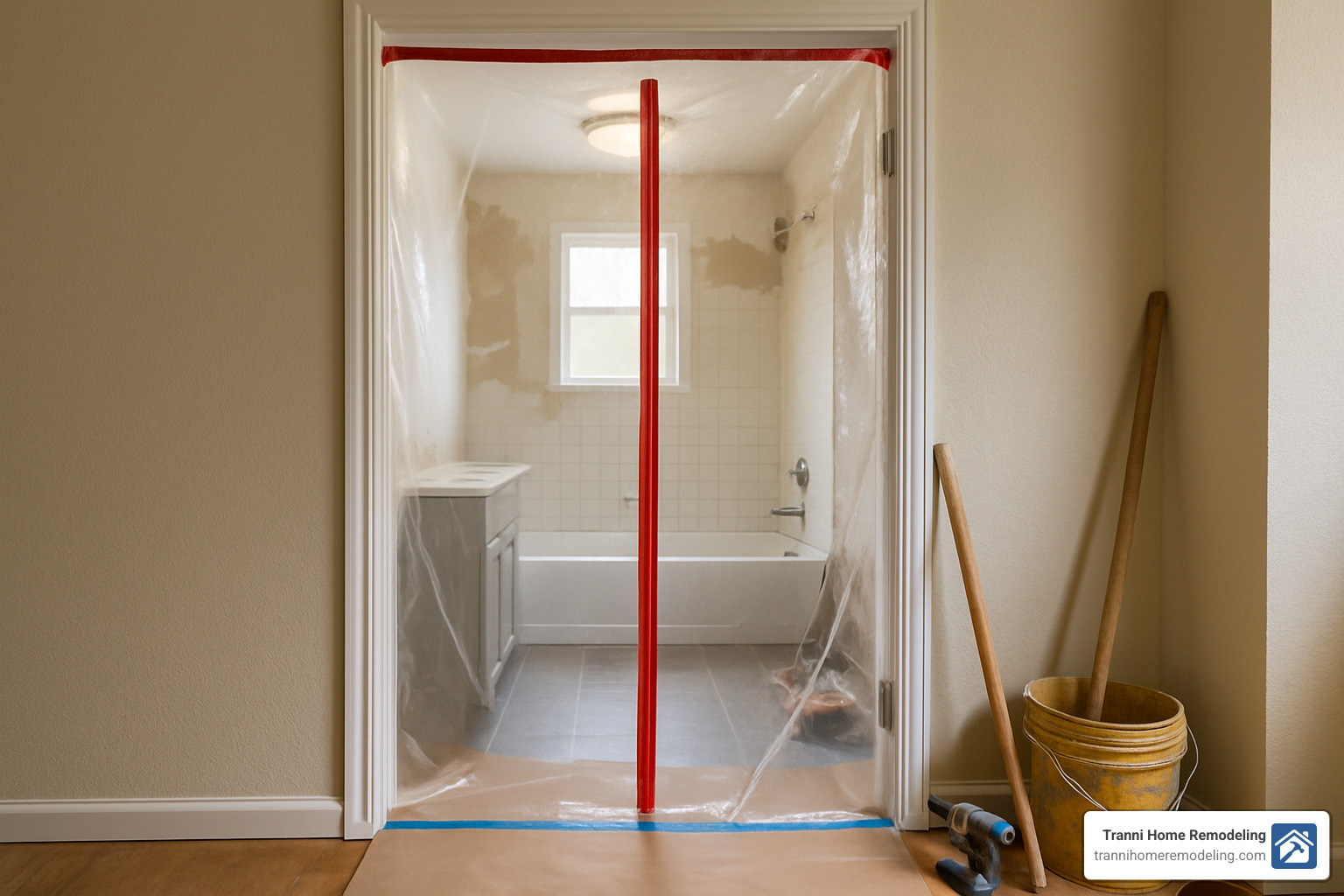
Establish Dust Containment
Dust from demolition can travel surprisingly far throughout your home. Professional bathroom renovation contractors should implement thorough dust control measures including:
Plastic sheeting with zipper doors to seal off the work area, negative air pressure systems for larger projects to prevent dust migration, floor protection in high-traffic areas, and HEPA filtration during particularly dusty phases. At Tranni Home Remodeling, we take dust containment seriously—it’s one of those details that separates professional renovations from DIY projects.
Plan for Pets and Children
Your furry friends and little ones need special consideration during renovations. Secure pets away from construction areas—the noise, dust, and unfamiliar people can be stressful for them. Take time to explain the renovation process and potential dangers to children, establishing clear boundaries around work zones. During particularly disruptive phases like demolition, consider arranging playdates or visits with family members.
“We actually sent our anxious dog to my mother-in-law’s for the first week,” shared a Tewksbury client. “The demolition noise was just too stressful for him, and it gave us one less thing to worry about.”
Notify Neighbors
A little courtesy goes a long way. Let your neighbors know about upcoming work, especially in closer communities like Stoneham or Winchester. Give them a heads-up about potential noise, parking changes for work vehicles, and delivery schedules. This simple step helps maintain good relationships and may even lead to offers of shower access!
Timeline Expectations
Understanding the typical sequence and duration of bathroom renovation phases helps set realistic expectations for the weeks ahead:
Pre-Construction (1-3 weeks) involves finalizing designs, ordering materials, securing permits, and scheduling trade contractors. This phase happens before any physical work begins but is crucial for a smooth project.
Demolition (1-3 days) is quick but messy. Your bathroom renovation contractors will remove existing fixtures, tile, and finishes, then inspect the revealed framing, subfloor, and mechanical systems for any hidden issues.
Rough-Ins (3-7 days) include updating plumbing lines and drains, installing new electrical wiring, repairing damaged framing, and adding blocking for grab bars or heavy fixtures. This phase takes longer but establishes the foundation for your new bathroom.
Waterproofing and Substrate Preparation (2-3 days) is a critical phase where cement board or other tile substrates are installed, shower pans and walls are waterproofed, and shower floors are sloped properly to drains. Never rush this phase—proper waterproofing prevents costly water damage later.
Tile Installation (3-7 days) transforms the space as floor and wall tiles are set, followed by grouting and sealing. The duration depends on tile size, pattern complexity, and any custom details.
Fixture and Finish Installation (3-5 days) brings your bathroom to life as the vanity, countertop, toilet, sink, shower door, and accessories are installed. This phase is exciting as you see your selections come together.
Final Details (1-2 days) include painting walls and ceiling, installing trim and moldings, completing final plumbing connections, and thorough cleaning.
The entire process typically takes 4-6 weeks for a standard bathroom, though complex projects or those requiring special order materials may take longer. As one of our Reading clients wisely advised, “Add at least two weeks to whatever timeline you’re given, especially if you’re ordering custom items. It’s better to be pleasantly surprised than constantly frustrated by delays.”
Patience during renovation pays off with beautiful, lasting results. With proper preparation and realistic expectations, your bathroom renovation can proceed with minimal disruption to your family’s daily life.
Step 7: Manage the Project & Final Walk-Through
Even with excellent bathroom renovation contractors on your side, staying engaged throughout your project makes a tremendous difference in the final outcome. Think of yourself as a partner in the process rather than a bystander.
Maintain Regular Communication
Clear communication prevents most renovation headaches before they start. During a recent master bath renovation in Chelmsford, our client set up a weekly Friday morning check-in that kept everyone aligned. “Those 15-minute conversations saved us countless hours of potential misunderstandings,” she explained.
Decide upfront who your main contact will be (typically the project manager) and establish your preferred communication method. Some homeowners prefer text updates with photos throughout the day, while others value a quick in-person chat at the end of each workday.
The golden rule? Address concerns immediately. Small issues can quickly snowball if left unmentioned, but most can be easily resolved when caught early.
Document Progress
Your smartphone is your best friend during a renovation. Take regular photos as work progresses—not just for your memories, but as documentation of what’s behind the walls before they’re closed up. These images prove invaluable if you need to locate plumbing or electrical components years later.
Keep a simple renovation journal noting key discussions, decisions made, and any weather delays or material backorders that affect your timeline. This documentation helps prevent disputes and keeps everyone accountable.
Manage Payments Appropriately
The payment schedule established in your contract protects both you and your contractor. Remember these principles:
- Link payments to completed work milestones, not dates on a calendar
- Inspect thoroughly before releasing any progress payments
- Maintain your leverage by holding back the final payment (typically 5-10%) until all punch list items are complete
As one Tewksbury homeowner advised: “Don’t feel pressured to write a check just because it’s Friday. Make sure the work that payment covers is actually finished to your satisfaction.”
Prepare for the Final Inspection
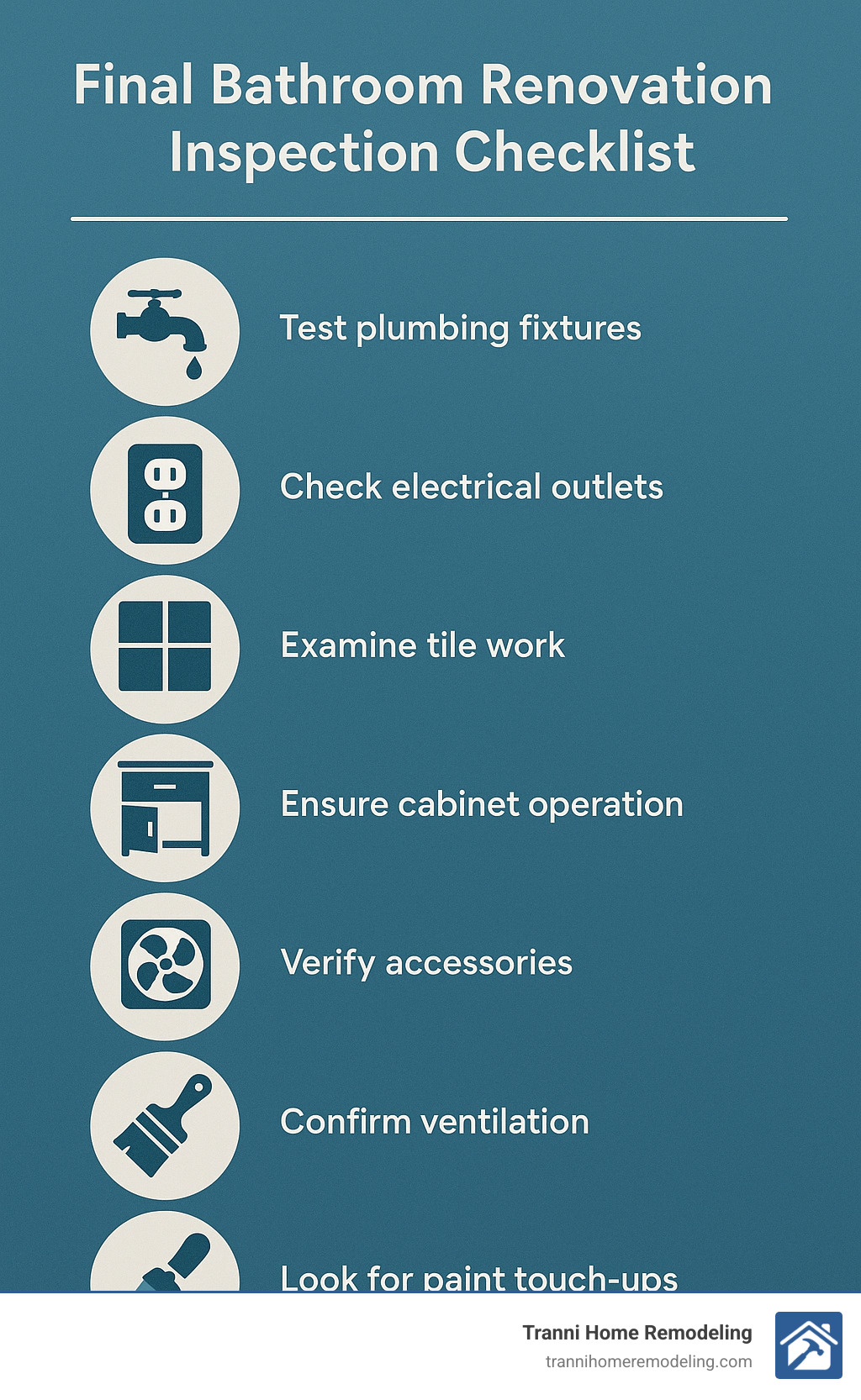
The final walkthrough deserves your full attention. Schedule it for morning hours when natural light is strongest, and plan to spend at least an hour thoroughly examining every aspect of your new bathroom.
Your contractor should guide you through testing all functions and inspecting all finishes, but come prepared with your own checklist covering:
- Water pressure and temperature at all fixtures
- Proper drainage without gurgling or slow spots
- Secure mounting of all accessories and fixtures
- Smooth operation of drawers, doors, and moving parts
- Even grout lines and proper sealing around wet areas
- Functioning ventilation and lighting
- Complete caulking and trim work
“I always run the shower for at least five minutes during final inspections,” notes our project manager. “It’s the only way to truly test waterproofing and drainage, which are the most critical aspects of any bathroom renovation.”
Dealing With Surprises—Plumbing or Electrical Issues
No matter how thoroughly you plan, opening up bathroom walls sometimes reveals unexpected challenges. How these surprises are handled often determines whether your renovation experience is positive or problematic.
Documentation Before Decisions
Professional bathroom renovation contractors should document any unexpected findings with photos and provide a clear explanation of:
- What they’ve finded
- Why it needs addressing (especially if it’s a code or safety issue)
- Your options for resolving it
- How each option affects your budget and timeline
This approach gives you the information needed to make confident decisions without feeling rushed or pressured.
Contingency Planning
This is precisely why we emphasized that 15-20% budget buffer earlier. A Wilmington family recently finded their 1950s cast iron drain pipes had deteriorated from the outside in—something impossible to detect until demolition. Because they had set aside a contingency fund, they could replace the failing plumbing without sacrificing their dream shower or stretching their finances.
Opportunity Identification
Sometimes surprises create unexpected opportunities. During a renovation in Woburn, opening the walls revealed enough space to reconfigure the plumbing for a more spacious shower layout. While this added some cost, the homeowner called it “the best decision we made in the entire project.”
Proactive Solutions
The mark of experienced bathroom renovation contractors is their ability to present solutions, not just problems. When we find water damage or outdated wiring, we immediately present options with clear costs and benefits, often having already contacted specialists who can address these issues without significant delays.
“What impressed me most,” shared a Burlington client, “was how quickly they pivoted when we found old knob-and-tube wiring behind the walls. Instead of just telling me about the problem, they already had an electrician lined up who could start the next morning. That kind of proactive problem-solving made all the difference.”
Frequently Asked Questions About Bathroom Renovations
How much does an average bathroom remodel cost?
When homeowners ask about bathroom remodeling costs, I always emphasize that budgets vary widely based on your specific vision and needs. Based on internet data, here’s what you might expect to invest:
A basic refresh with new paint, updated fixtures, and minor improvements typically runs between $5,000-$15,000. This might include replacing an outdated vanity, installing a new toilet, and freshening up the walls.
For a mid-range full remodel where you’re replacing most elements but keeping the same layout, internet averages suggest budgeting $15,000-$30,000. This usually covers new tile, fixtures, vanity, toilet, and basic lighting upgrades.
An upscale renovation with higher-end materials and some layout modifications generally falls in the $30,000-$50,000 range. This might include custom cabinetry, premium tile work, and improved ventilation systems.
For a luxury custom remodel with top-of-the-line everything—think heated floors, steam showers, smart features, and completely reconfigured spaces—costs typically start at $50,000 and can exceed $100,000 for larger bathrooms.
These are internet averages and not actual costs for Tranni Home Remodeling services. Your specific project could vary based on your bathroom’s size, your material choices, and whether you’re moving plumbing or electrical elements.
I recently spoke with a homeowner from Methuen who shared: “Our initial budget was $25,000, but after adding heated floors, a custom glass shower enclosure, and higher-end tile, we ended up at $32,000. The upgrades were absolutely worth it for the daily comfort and luxury they provide.”
How long will my project really take?
While most bathroom renovation contractors will tell you a standard bathroom renovation takes 4-6 weeks from demolition to completion, the real answer is: it depends on your specific project.
Several factors can extend your timeline beyond the standard estimate:
Material availability plays a huge role in keeping your project on schedule. Some specialty items like custom vanities or imported tile can take 8-12 weeks to arrive. That’s why we recommend ordering key materials well before demolition begins.
Permit approvals vary significantly between towns in Middlesex County. Some municipalities process permits within days, while others might take weeks—especially during busy seasons.
Unexpected findies behind walls can add time. In older homes throughout Bedford or Lexington, we often find outdated wiring, hidden water damage, or non-standard framing that needs addressing before moving forward.
Project complexity naturally affects timing. A simple refresh might take just 2-3 weeks, while a complete reconfiguration with custom tile work could extend beyond 8 weeks.
Our project manager often tells clients: “The most common delays come from homeowners changing their minds mid-project or materials being discontinued after ordering. Having all selections finalized before demolition and ordering materials early can prevent many common delays.”
Can I supply my own fixtures to save money?
Yes, you absolutely can provide your own fixtures—and many homeowners do! This approach offers some clear benefits: you might find better sales than contractor pricing, you’ll have complete control over specific models and brands, and you can purchase items ahead of time to ensure availability.
However, before heading off to that big sale at the home improvement store, consider a few important caveats:
Most bathroom renovation contractors won’t warranty products they didn’t supply. If that beautiful faucet develops a leak six months later, the labor to replace it typically wouldn’t be covered under your contractor’s workmanship warranty.
If a fixture arrives damaged or proves defective during installation, your contractor may charge additional labor to remove and reinstall a replacement. This can quickly erase any savings you achieved on the purchase.
Some contractors also charge handling fees for client-supplied materials to cover the time spent coordinating, inspecting, and potentially returning problematic items.
Perhaps most importantly, you’ll need to ensure proper specifications and compatibility. As one North Andover client finded: “I found a gorgeous vanity online at a great price, but when it arrived, the plumbing rough-in dimensions didn’t match our space. The contractor had to modify both the vanity and the plumbing, adding cost that exceeded what I’d saved.”
If you do decide to supply your own fixtures, provide them to your contractor well before they’re needed and confirm all specifications (size, rough-in dimensions, special installation requirements) in advance. Taking photos of model numbers and measurements can be incredibly helpful for your contractor to verify compatibility before installation day arrives.
Conclusion
A successful bathroom renovation doesn’t happen by accident—it’s the result of careful planning, thorough research, and partnership with qualified bathroom renovation contractors. By following the seven critical steps we’ve outlined, you’ll be well on your way to creating a beautiful, functional space that adds value to your home and joy to your daily routine.
At Tranni Home Remodeling, we’ve guided countless homeowners throughout Middlesex County through their bathroom changes. From modest updates in Billerica to luxury master bath overhauls in Burlington, we’ve seen how attention to detail makes all the difference in the final result.
One of our recent clients in Tewksbury put it perfectly: “What I appreciated most wasn’t just the beautiful finished bathroom—it was how smooth the process felt compared to other renovations we’ve done. Having a roadmap made all the difference.”
Patience pays off when renovating. The homeowners who rush through material selections or skip proper vetting of contractors almost always regret those decisions later. Taking your time with each phase—from initial planning through final inspection—leads to fewer surprises and greater satisfaction.
Your bathroom is one of the most personal spaces in your home. It’s where you begin and end each day, and the right renovation can transform those daily moments from mundane to rejuvenating. Whether you’re looking to update a powder room or create a spa-like master retreat, the investment in quality design and craftsmanship will pay dividends in both enjoyment and home value.
We understand that a bathroom renovation represents a significant investment, both financially and emotionally. That’s why our team is committed to clear communication and exceptional craftsmanship throughout every project we undertake. Our goal isn’t just to meet expectations—it’s to exceed them.
Ready to transform your bathroom into the space you’ve been dreaming of? Visit our home-remodeling hub for additional resources or to schedule a personalized consultation. We’re here to help you steer every decision, from the first design sketch to the final fixture installation.
