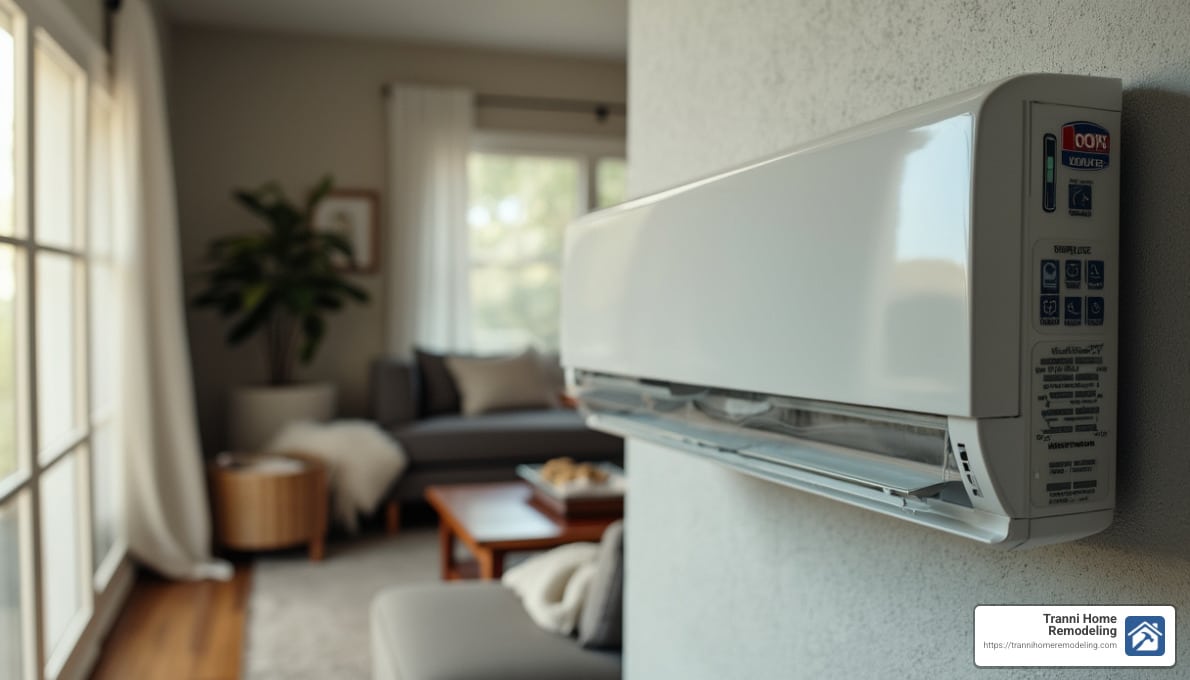





Ductless Heating and Cooling Systems: Top 5 Best Tips
What Are Ductless Heating and Cooling Systems?
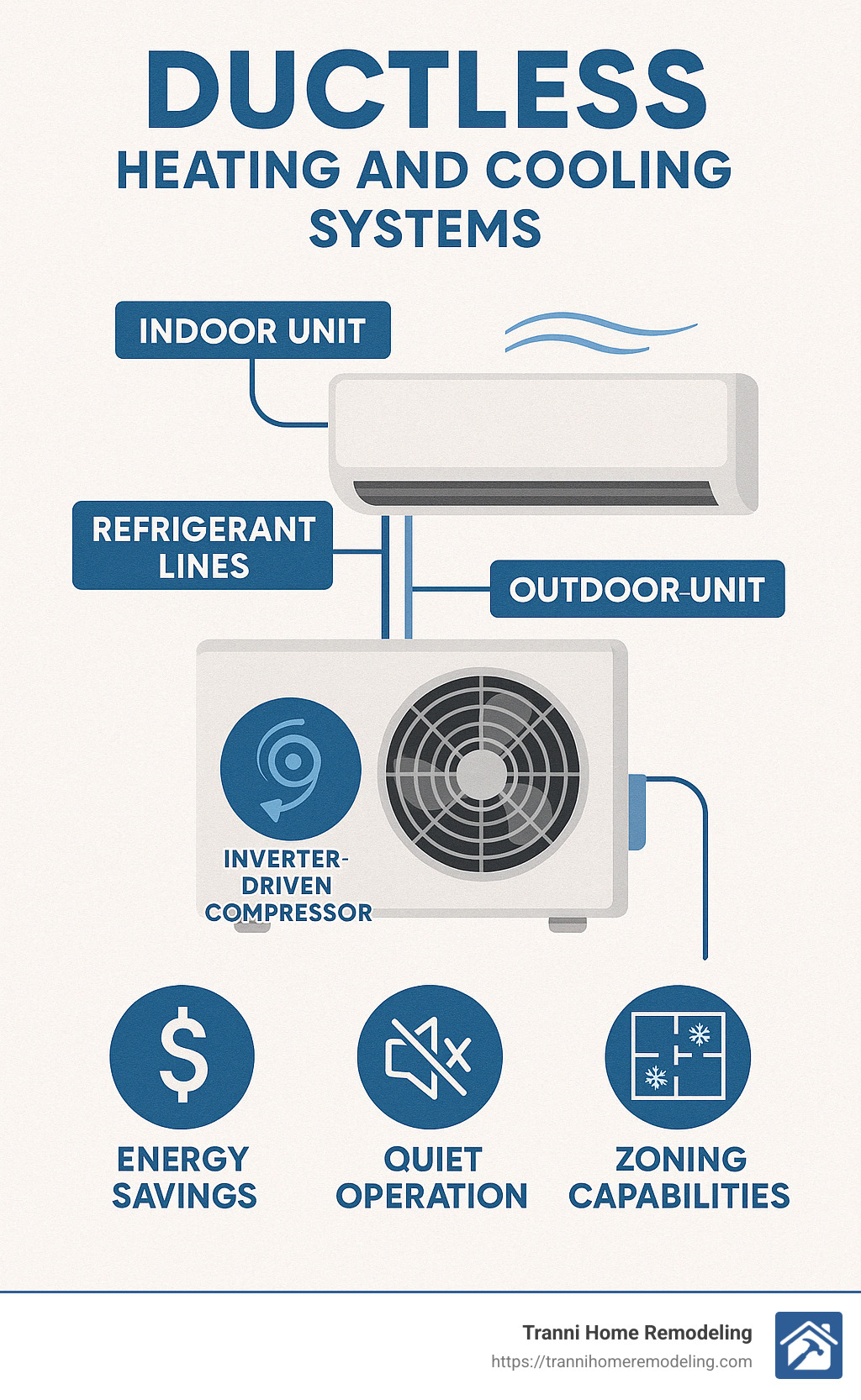
Ductless heating and cooling systems are powerful, energy-efficient HVAC units that provide both heating and air conditioning without relying on traditional ductwork. Ideal for home additions, targeted temperature control, or older homes lacking duct systems, these units offer several key benefits:
- Energy Savings: Ductless systems eliminate up to 25% of energy loss typically caused by ductwork.
- Quiet Operation: Indoor units function quietly, making them perfect for bedrooms or home offices.
- Zoning Capabilities: You can control temperatures individually in each room or zone for maximum comfort.
I’m Tyler Tranni, the owner and operator of Tranni Home Remodeling in Billerica, MA, and I’ve helped many local homeowners upgrade their living spaces with ductless heating and cooling systems. Through my hands-on experience, I’ve come to appreciate just how transformative these systems can be—providing comfort and efficiency without major construction.
Know your ductless heating and cooling systems terms:
– ductless air conditioner with heater
– ductless heat pump system
– mini split ac heat pump
Understanding Ductless Heating and Cooling Systems
When it comes to home comfort here in Middlesex County, more and more homeowners are turning to ductless heating and cooling systems—also known as mini-splits—as a modern, efficient alternative to traditional HVAC systems. Rather than using bulky, energy-losing ductwork, these clever units rely on a straightforward setup that can deliver impressive energy savings and improved indoor comfort.
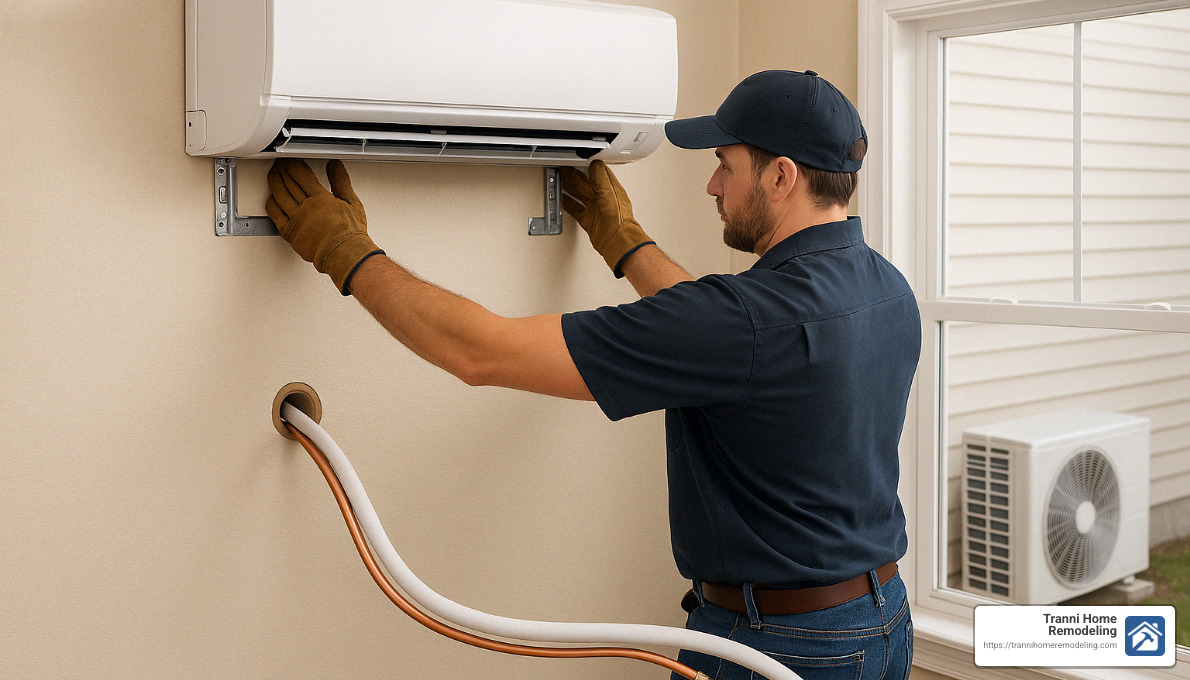
One of the best things about ductless systems is their simple, streamlined design. They’re made up of two main parts: an outdoor condenser/compressor unit and sleek indoor air handlers that can be mounted discreetly on walls, set neatly on the floor, or even tucked up into ceilings. These indoor and outdoor units connect through a slim conduit that carries refrigerant lines, power cables, and a drain line—no extensive remodeling or messy ductwork needed.
At the heart of these systems is inverter-driven compressor technology. While traditional HVAC equipment constantly cycles on and off, inverter-driven compressors adjust their speed smoothly and continuously. This means they only use as much energy as needed to keep your space exactly the right temperature.
James Bowman, a National Technical Manager for a leading HVAC company, perfectly sums up the efficiency advantage:
“Simply by removing the ducts, you end up with a more efficient system.”
And he’s spot on—without ducts, you’re not losing 25% or more of your energy through leaks and poor insulation. This is particularly great news for older homes or those charming historical houses in towns like Concord or Lexington, where adding ductwork would be expensive and disruptive.
How Do Ductless Heating and Cooling Systems Work?
The magic of ductless heating and cooling systems lies in their ability to transfer heat rather than generate it. Let me show you how it works—it’s pretty cool (pun intended)!
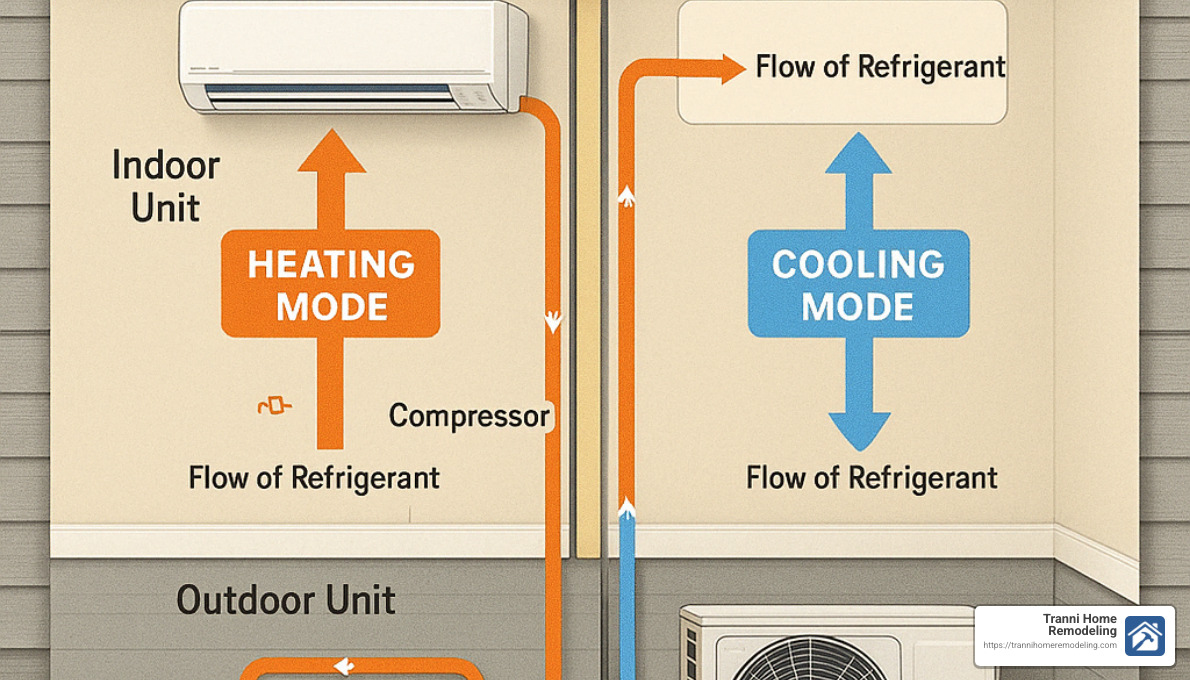
In the cooling season, the indoor unit pulls in warm air from your room, passing it over refrigerant-filled coils. Heat from the air transfers into the refrigerant, cooling the air that’s returned back into your room. The warm refrigerant then travels to the outdoor unit, where it releases that heat outside. The refrigerant cools down and returns indoors, ready to start the process all over again.
But what about winter? You might be surprised to learn these systems work beautifully in reverse, even when it’s chilly outside here in Billerica or Chelmsford. The outdoor unit extracts heat from the outside air (yes, even cold air has heat!), and the refrigerant carries that warmth inside. Your indoor unit then gently circulates cozy warm air into your home.
Because these systems run using inverter-driven compressors, they can adjust their operation quietly and smoothly to maintain a consistent temperature year-round. Say goodbye to the annoying on-and-off cycling—and hello to steady, quiet comfort.
Installation is simpler than you’d think. A small 3-inch hole in an exterior wall is usually all that’s needed to connect indoor and outdoor units. Homeowners in places like Winchester and Bedford often appreciate this minimally invasive approach, especially when preserving historic details or maintaining curb appeal.
Types of Ductless Heating and Cooling Systems
One of the biggest perks of ductless systems is their flexibility. Whether you’re renovating a cozy older bungalow in Carlisle or building a fresh home addition in towns like Tewksbury, there’s likely a ductless setup that’s just right for you.
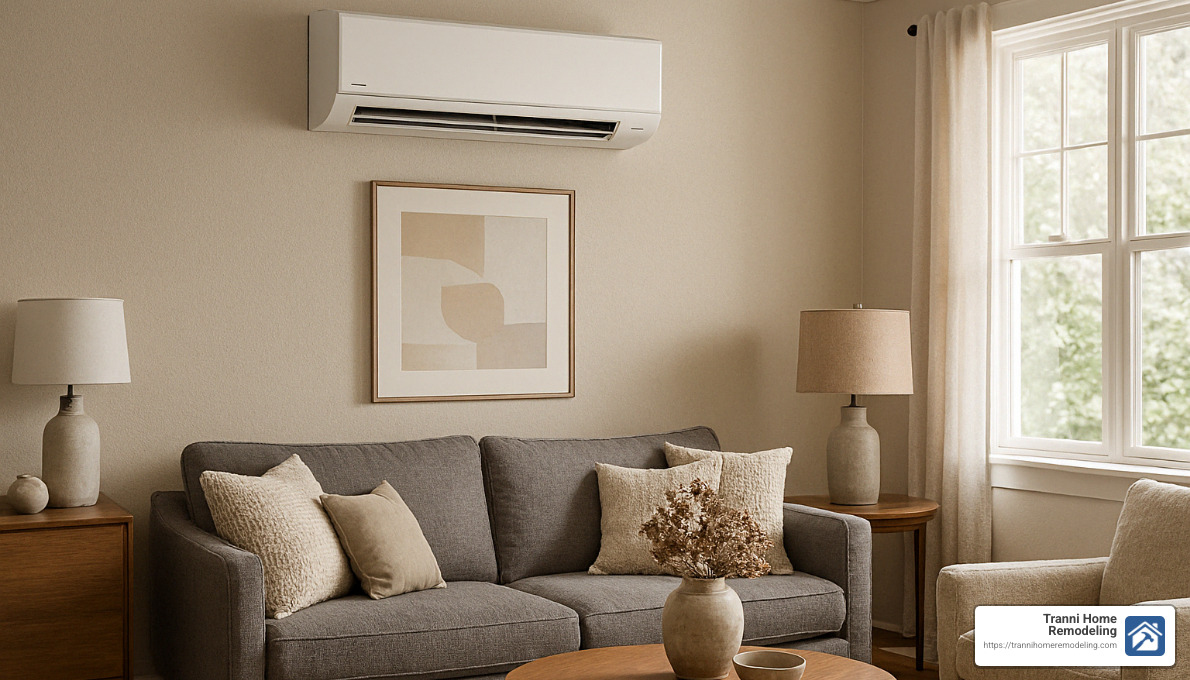
Wall-mounted units are the most popular choice among Middlesex County homeowners because they’re affordable, easy to install, and positioned ideally for optimal airflow. These units sit high on the wall, blending neatly into most rooms.
If your home’s layout makes wall mounting tricky—maybe you have lots of windows or limited available wall space—floor-standing units could be just the ticket. These are set lower down, often near the floor, and they’re easy to access for regular filter cleaning and maintenance.
For a more discreet look, you might choose ceiling cassette units. Installed flush with the ceiling, these units quietly distribute air in multiple directions, perfect for open-concept spaces. They’re becoming a popular choice for modern renovations in Burlington, Bedford, and beyond.
If you want your system to be completely hidden from view, concealed duct units can deliver this cleanest aesthetic. Hidden away in a soffit or a small ceiling cavity, they offer all the benefits of ductless technology without any visible equipment—just simple, neat vents.
Another important consideration: how many rooms or spaces do you want to heat and cool? Single-zone systems pair one indoor unit with one outdoor unit—perfect for a specific trouble spot like a sunroom or converted attic. They’re affordable and efficient for homeowners who only need targeted comfort.
On the other hand, multi-zone systems can connect a single outdoor unit with multiple indoor units—typically up to eight. Each indoor unit has its own thermostat, letting you create individually controlled comfort zones throughout your home. These setups are a smart choice for whole-home solutions, giving you ultimate flexibility. For example, we’ve helped many families in Wilmington and North Reading achieve personalized comfort in bedrooms, living spaces, and even finished basements or garages—all from one efficient system.
At Tranni Home Remodeling, we’ve seen how ductless systems transform homes around Middlesex County. Recently, we installed a multi-zone mini-split system in a charming Billerica home. Wall-mounted units in the bedrooms provided personalized comfort, while a ceiling cassette seamlessly serviced the open living and dining areas.
Want more details about choosing your perfect ductless system? Take a look at our helpful page about Ductless Heat Pump Systems for even more insights.
Whichever type of ductless heating and cooling system you choose, rest assured you’re making a smart investment in your home’s comfort, efficiency, and overall happiness.
Pros and Cons of Ductless Mini-Split Systems
Choosing the ideal heating and cooling solution for your Middlesex County home often involves weighing the positives against any potential drawbacks. As your friendly neighborhood remodeler, at Tranni Home Remodeling, I’ve installed numerous ductless heating and cooling systems throughout towns like Billerica, Lexington, and Concord—and I’ve seen the remarkable difference they can make. But are they the right fit for you? Let’s explore both sides.
Pros:
One of the biggest advantages of ductless mini-split systems is their superior energy efficiency. Traditional ductwork can lose 25–30% of energy due to leaks and poor insulation. By eliminating ducts entirely, these systems avoid this energy waste. ENERGY STAR-certified ductless models can even reduce your heating and cooling costs by up to 30%. Additionally, the inverter technology allows the compressor speed to adjust according to demand, saving you as much as 40% compared to conventional HVAC systems. Great news for homeowners in areas like Winchester or Burlington who are mindful of their energy bills!
Another significant benefit is their flexible installation options. Since ductless systems don’t require extensive ductwork, they’re a fantastic choice for older homes in historic communities like Carlisle and Concord, where adding ducts might be costly or disruptive. Installation typically involves just a small 3-inch hole in the wall connecting indoor and outdoor components. Plus, indoor units can be placed up to 50 feet away from the outside compressor, providing plenty of flexibility. Whether you’re looking at wall-mounted, floor-standing, or ceiling cassette units, there’s an option to suit almost any room layout or aesthetic.
The ability to create precise zone control is another standout feature. Each zone (or room) can have individualized temperature settings, making it ideal for families with differing comfort preferences. No more thermostat wars! This targeted zoning also means you only heat or cool the rooms you’re actively using, leading to even more energy savings and comfort—especially helpful during our chilly Massachusetts winters and hot summers.
Indoor air quality often improves significantly with ductless systems as well. Without ducts, there’s fewer places for dust, pollen, and pet dander to hide. Many systems also include multi-stage filters that catch particles traditional HVAC filters might miss. If someone in your family suffers from allergies in towns like Bedford or Reading, fewer allergens circulating in the air can make a huge difference.
Ductless units operate quietly, making them ideal for bedrooms or home offices. Indoor units can be whisper-quiet—some as low as 19 decibels, quieter than soft conversation. Even the outdoor unit typically operates around 46 decibels, roughly the noise level of a quiet chat. This quiet performance can be a welcome relief for those who value peace and tranquility in neighborhoods like Lincoln or North Reading.
Finally, these systems provide dual functionality, offering heating and cooling in one convenient package. There’s no need for separate heating and air conditioning systems, simplifying your home’s HVAC setup. Modern cold-climate models even work efficiently in temperatures as low as 5°F, covering the bulk of our harsh winter weather here in Middlesex County.
Cons:
While ductless mini-split systems offer many benefits, there are some considerations to keep in mind. One of the most common concerns is the higher upfront costs compared to window units or baseboard electric heating. On average, typical installations across the internet show costs ranging broadly from about $3,000 for a single-zone setup to upwards of $12,000 or more for multi-zone systems. However, keep in mind that the significant energy savings and increased comfort often offset these initial expenses.
Aesthetic considerations might also influence your decision. While modern indoor units are sleek and unobtrusive, some homeowners still prefer an invisible HVAC system—particularly in historic or architecturally sensitive homes in towns like Concord. The units typically come in standard white or neutral colors, so you’ll need to consider how they’ll blend with your home’s interior design.
Maintenance requirements are another factor to think about. Ductless systems need their filters cleaned about once per month to maintain optimal efficiency. It’s also recommended to get a professional inspection and cleaning of the coils annually. Skipping regular maintenance can negatively affect your system’s efficiency and lifespan.
While advanced cold-climate models handle Massachusetts winters quite well, standard ductless units might face efficiency reductions in extremely low temperatures, typically below 5°F. If you live in an especially cold area like Wilmington or Carlisle, you might need to consider these cold-climate models, which can slightly increase the upfront cost.
Lastly, professional installation is a must. This isn’t a weekend DIY project—handling refrigerant and electrical connections requires an experienced professional. Improper installation can lead to lower efficiency, potential system breakdowns, and even safety hazards. Correct sizing and expert installation are critical components of getting the most out of your ductless system.
Is a Ductless System Right for Your Home?
If you’re considering a ductless mini-split system, there are several scenarios where they excel. Older homes without existing ductwork, home additions, or converted spaces like attics and garages are excellent candidates. Whether you’re renovating a historic property in Lexington, adding a sunroom in Chelmsford, or converting a basement in Tewksbury, ductless systems offer a straightforward, efficient solution.
Homes experiencing uneven heating or cooling are also prime candidates. If you have rooms that always feel too hot or too cold, like that kitchen in Reading that heats up when you’re cooking or the sunny addition in Lincoln that swings between extremes, ductless mini-splits can provide targeted comfort exactly where it’s needed.
For multi-family properties throughout Middlesex County, these systems can allow renters to control their own comfort, reducing disputes and managing utility expenses more effectively. They’re also great for energy-conscious homeowners looking to reduce their carbon footprint, as many ENERGY STAR-certified models significantly cut down on greenhouse gas emissions.
Climate is another consideration. Our hot, humid Massachusetts summers mean ductless systems shine at dehumidifying your home while cooling effectively. Cold winters? No problem—just make sure your installer selects a cold-climate model designed for our region’s low temperatures.
At Tranni Home Remodeling, we’ve seen countless homeowners in towns like Burlington and Bedford fall in love with their ductless mini-splits. Whether it’s the energy savings, improved indoor air quality, or simply the unbeatable comfort, these systems often pay for themselves in the long run.
For more detailed information custom to your needs, explore our dedicated pages on Mini Split Heat Pumps or Ductless Heat Pump Systems. Or better yet, give us a call—our friendly team is always happy to help you find the perfect HVAC solution for your home!
Installation and Maintenance of Ductless Systems
Getting the most from your ductless heating and cooling systems starts with proper installation and regular maintenance. When done well, these systems can reliably keep your home comfortable for 15-20 years—or even longer. At Tranni Home Remodeling, we’ve helped countless homeowners throughout Middlesex County install and maintain these energy-efficient units. Here’s what we’ve learned about getting it right.
Professional Installation Process
While ductless mini-splits are less intrusive than traditional HVAC systems, they’re definitely not “plug-and-play.” A professional installation is essential to ensure your system runs smoothly and efficiently right from the start.
It all begins with system sizing and design. Before installing anything, we’ll perform what’s called a Manual J load calculation. This helps us pick the right unit size and capacity for your home’s specific heating and cooling needs. We’ll then carefully plan placements for both indoor and outdoor units, considering your home’s layout, aesthetics, and local climate here in towns like Billerica, Burlington, or Lexington.
Placement matters—a lot. Indoor units are most effective when installed high on the wall, away from sunlight and heat sources, ensuring even air distribution. Outdoor units need a stable surface, good airflow, and should ideally be sheltered from extreme elements. We’ll always take care to position units for minimal noise disruption both inside your home and for your neighbors.
Once we’ve mapped everything out, installation usually takes just 1-2 days. We’ll mount brackets for each unit, drill a discreet three-inch hole for the conduit containing refrigerant lines and electrical connections, and test everything carefully to ensure a leak-free, efficient system. Although prices vary widely based on the specifics, average installation costs found online typically range from around $3,000 for a simple single-zone system to upwards of $12,000 for complex multi-zone installations (these are average costs based on internet data and not actual costs for Tranni Home Remodeling).
Maintenance Requirements
Keeping your system running efficiently isn’t complicated, but it does require regular attention. Monthly, homeowners should clean or wash the air filters—especially important if someone in your home has allergies or you have furry family members. Keep an eye on indoor units to make sure they’re dust-free, and regularly clear away leaves, snow, or other debris from the outdoor unit. Don’t forget to check the drainage line to confirm it’s dripping properly (especially during cooling season!).
Once a year, it’s wise to bring in a professional. Professional maintenance involves a deeper clean of evaporator and condenser coils, checking refrigerant levels, and testing for potential leaks. Your technician will also inspect electrical connections, thoroughly test both heating and cooling modes, and clean out that condensate drain to prevent potential clogs. For more comprehensive guidance, you can check out the ENERGY STAR® Installation Guidelines.
Keeping your system efficient year-round is mostly common sense: avoid extreme temperature settings, use programmable features to save energy when rooms aren’t occupied, and always keep windows and doors closed when your mini-split is running.
We once helped a homeowner in Lexington whose three-year-old ductless system was losing efficiency. When we arrived, the problem was obvious: filters and coils were clogged with dust and debris from neglect. After a thorough cleaning and tune-up, the homeowner reported a nearly 20% reduction in their energy bills!
Tips for Maximizing System Lifespan
Want your ductless heating and cooling system to last as long as possible? Start by scheduling professional maintenance twice a year—once in spring and again in the fall—to prepare your unit for seasonal changes in our Middlesex County climate.
Consider adding surge protectors to safeguard the electronics from unexpected power fluctuations, and always keep the area around your outdoor unit free from vegetation or debris build-up. During the winter months, make sure the outdoor unit is liftd above the level of typical snowfall accumulation to keep it running smoothly.
And here’s a simple but important tip: pay attention to your system. If you notice unusual noises, reduced airflow, or diminished heating or cooling performance, address these signs promptly. Catching small issues early helps avoid bigger headaches down the road.
When installed professionally and maintained regularly, ductless mini-splits can transform comfort in homes throughout Middlesex County—from historic houses in Concord and Carlisle to newer additions in Wilmington and Chelmsford. At Tranni Home Remodeling, we’re always here to help you get the most out of your investment.
Frequently Asked Questions about Ductless Heating and Cooling Systems
Over the years, our team at Tranni Home Remodeling has helped many homeowners in Middlesex County upgrade to ductless heating and cooling systems. During that time, certain questions have popped up again and again. To help you feel confident and informed, here are clear answers to the most common questions we hear.
Can Ductless Systems Work Effectively in Cold Climates?
Living in Middlesex County means we’re no strangers to chilly New England winters. So, it’s understandable you might wonder: can a ductless mini-split really keep my home cozy when temperatures drop below freezing?
The short answer is yes! But you’ll want to choose the right system.
Standard ductless systems usually perform well down to about 32°F. However, if you need reliable heating even on those super-cold winter days, you’ll want to opt for cold climate models (often called hyper-heat systems). These specially designed units provide consistent warmth and can operate effectively in temperatures as low as -13°F to -15°F.
How do they do it? Cold climate mini-splits use advanced inverter-driven compressors and improved refrigerant cycles to draw heat from the outdoor air—even when it feels impossibly cold outside. Many also come with base pan heaters to prevent ice buildup on the outdoor unit.
For example, one homeowner in nearby Carlisle initially had doubts about replacing their aging oil furnace with a ductless system. After installing a cold climate mini-split, they experienced comfortable indoor temperatures all winter—without needing their old backup heaters. Plus, their heating bills went down significantly!
If you’re in an especially cold part of Middlesex County or just like to have extra peace of mind, you can always keep a small supplemental heat source handy for the rare days when temperatures dip into extreme lows.
Are There Tax Credits or Rebates Available for Ductless Systems?
Here’s some great news: You can likely save money on your new ductless system through tax credits or rebates!
On the federal level, thanks to recent legislation, homeowners can now claim tax credits of up to $2,000 when installing qualified energy-efficient ductless heat pumps. This incentive, part of the Inflation Reduction Act, applies to eligible units installed between January 1, 2023, and December 31, 2032. To qualify, make sure you select an ENERGY STAR® certified system.
Closer to home, Massachusetts homeowners can also tap into state-specific incentives. The Mass Save program, for example, offers attractive rebates for installing efficient ductless mini-split heat pumps. These rebates vary based on the system’s efficiency rating, and you might find additional incentives offered by local utility companies right here in Middlesex County.
To make the most of these financial perks, it’s a good idea to partner with experienced contractors (like our team at Tranni Home Remodeling!) who can guide you toward eligible systems, provide all necessary documentation, and help you maximize your savings.
In fact, one client from Bedford leveraged both federal tax credits and local utility rebates, cutting their total installation costs by nearly 30%. Not bad at all!
For detailed eligibility requirements and the latest information, be sure to visit ENERGY STAR® Rebates and Tax Credits.
What Maintenance is Required for Ductless Mini-Splits?
Just like your car or any other appliance, your ductless mini-split will perform best—and last longest—with regular maintenance. Don’t worry though; it’s pretty straightforward!
First, let’s talk filters. They’re the easiest item to maintain, but they’re also critical. We recommend cleaning or washing your indoor unit’s filters every 4 to 6 weeks—more often if you have pets, smokers, or a particularly dusty home. Keeping filters clean can prevent efficiency losses of up to 15%, saving you money on your energy bills and minimizing wear and tear. Plus, many units have handy indicator lights to remind you when filters need attention.
Second, seasonal check-ups are a smart way to catch small issues before they become bigger problems. Before summer arrives, test the cooling function and listen for unusual sounds. Before winter, check that the heating function and defrost cycles run smoothly and ensure condensate drains aren’t clogged.
Finally, professional maintenance at least once per year is essential for keeping your ductless system running smoothly. During a typical professional service, technicians will deep-clean evaporator and condenser coils, check refrigerant levels, inspect all electrical components, and ensure proper airflow and drainage. This thorough check-up keeps your system energy-efficient, extends its lifespan, and maintains your warranty coverage.
Regular care makes a big difference. For instance, we once helped a Wilmington homeowner who had diligently cleaned their filters but skipped professional maintenance for three years. The condensate drain was completely blocked. Luckily, we caught it before water damage occurred—but it was a strong reminder of why annual professional inspections matter.
With proper maintenance, your ductless mini-split system can reliably heat and cool your Middlesex County home for 15-20 years or more, providing consistent comfort and energy savings along the way.
Conclusion

Choosing ductless heating and cooling systems can genuinely transform your home’s comfort and efficiency. Whether you live in an older home in Concord or Carlisle, or you’re considering a newly built addition in Billerica or Bedford, ductless mini-splits offer significant advantages worth considering.
By eliminating traditional ductwork, you immediately benefit from greater energy efficiency, potentially cutting your heating and cooling costs by as much as 30%. And let’s be honest—who doesn’t love lower energy bills?
The flexibility of ductless systems is another big plus. Installation is simple and minimally invasive, ideal for historic homes or spaces that would be challenging to outfit with traditional ductwork. Whether it’s a cozy attic office in Reading, a sunroom in Lexington, or an entire home renovation in Chelmsford, these systems can make almost any space comfortable.
Maybe best of all, ductless mini-splits offer personalized comfort through zoned temperature control. No more thermostat battles in your Wilmington home—everyone can finally agree! Each room can be independently managed, allowing family members to select temperatures that suit their preferences.
Indoor air quality also improves significantly, thanks to advanced filtration. It’s especially helpful for families with allergies or sensitivities. Combine that with their famously quiet operation, and you’ll wonder how you managed without one.
Of course, as with any investment, you’ll want to evaluate your home’s specific needs carefully. Consider your home’s layout, whether you’re looking to supplement or replace your existing heating and cooling, and any particular problem areas that a ductless system could solve. It’s a smart idea to consult professionals who can make sure your system is properly sized and configured—something that can significantly affect long-term performance and savings.
Speaking of long-term, don’t forget about maintenance. Regular upkeep, including monthly filter cleaning and yearly professional service, will keep your ductless system running smoothly for years. With proper care, ductless mini-splits typically last between 15 and 20 years, providing reliable comfort to homeowners throughout Middlesex County.
At Tranni Home Remodeling, we’ve seen how these systems have improved homes across our community—from Winchester to Burlington and everywhere in between. Our team takes pride in helping homeowners select and install quality ductless heating and cooling systems customized specifically to their homes and lifestyle.
If you’re interested in exploring ductless solutions further, check out our detailed guide on Ductless Air Conditioner with Heater systems. And to complement your home’s comfort upgrades, consider exploring our Exterior Remodeling Services as well.
To dig deeper into the science behind these systems, you can check out Air Source Heat Pump on Wikipedia.
Ready to discuss your home’s unique comfort needs? Let’s chat! At Tranni Home Remodeling, we’re always here to help you find the perfect solution.