




Ductless HVAC System: 10 Powerful Benefits for 2025
Understanding Modern HVAC: The Ductless Revolution
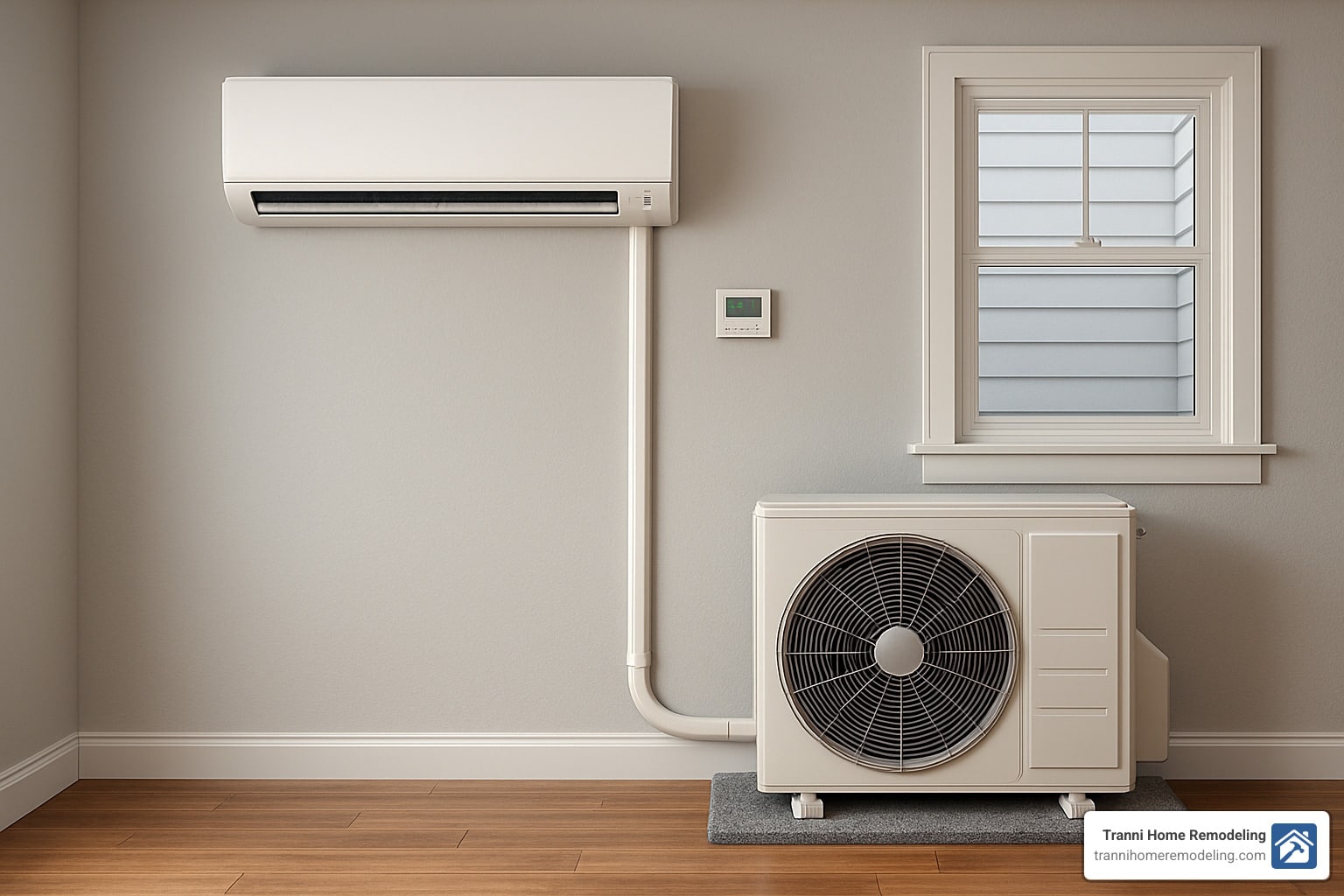
A ductless HVAC system provides home comfort without the maze of traditional ductwork that snakes through walls and ceilings. Instead, these innovative systems connect sleek indoor air handlers directly to an outdoor unit using only small refrigerant lines. They’ve revolutionized how we think about heating and cooling our homes, offering zone-specific temperature control that saves both energy and money.
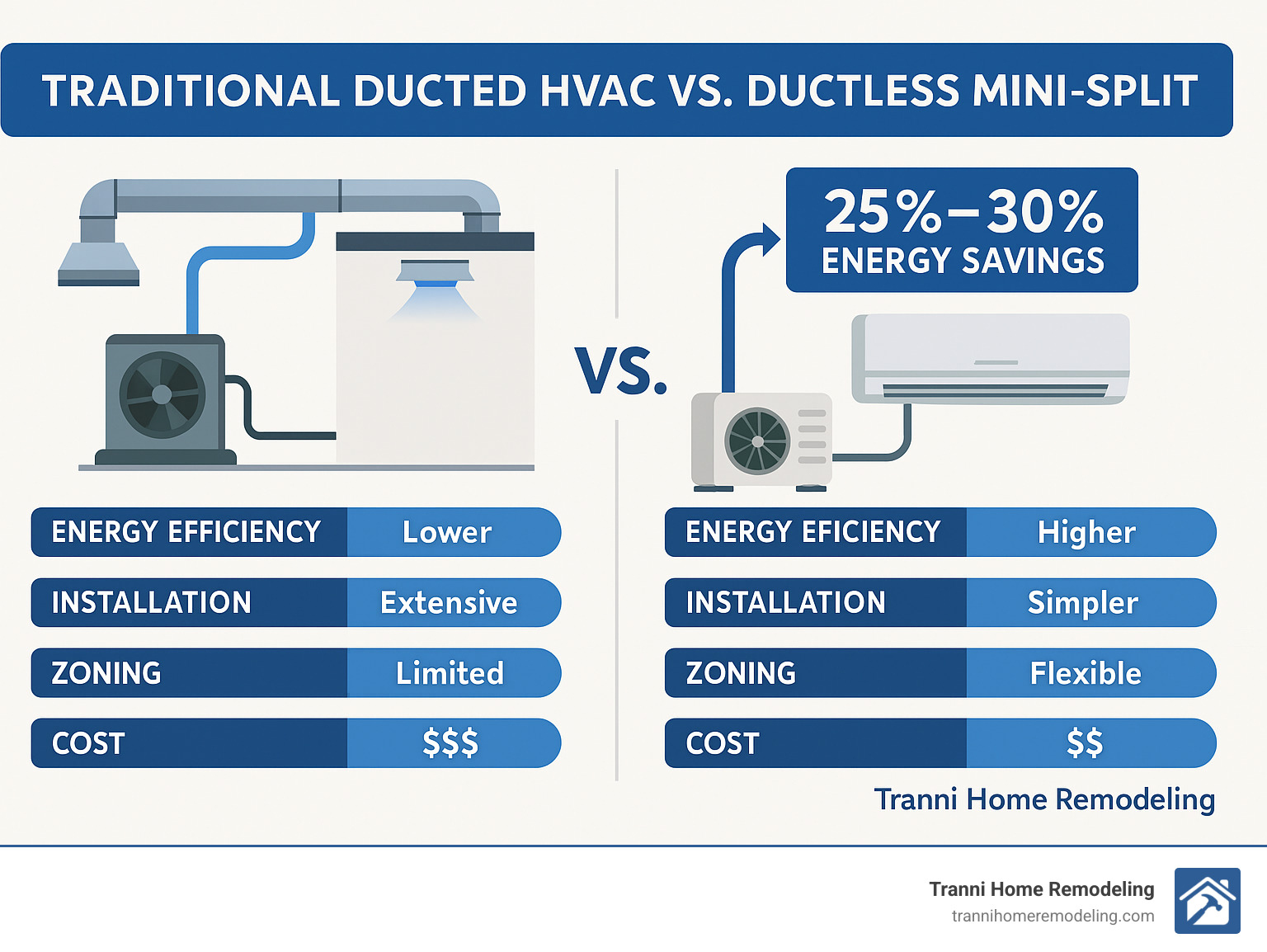
When you hear terms like mini-splits or multi-splits, people are talking about these same ductless HVAC systems. They’re remarkably efficient, using up to 60% less energy than electric radiators while eliminating the 25-30% energy loss typically associated with traditional ducted systems. Installation is surprisingly simple too – requiring just a 3-inch hole to run the refrigerant lines between your indoor and outdoor units.
One of the most appealing features of these systems is their flexibility. A single outdoor unit can support up to 8 indoor air handlers, allowing you to create customized comfort zones throughout your home. This makes them perfect for home additions, older houses without existing ductwork, or when you need to heat or cool specific rooms without affecting the entire house.
The indoor units offer versatile placement options – they can be mounted high on walls, recessed in ceilings, or even installed near the floor. This adaptability helps them blend seamlessly into your home’s design while delivering maximum comfort. Best of all, the installation process is far less invasive than adding traditional ductwork, making these systems ideal for retrofitting older homes or adding comfort to newly finished spaces.
Hi there – I’m Tyler Tranni, owner of Tranni Home Remodeling. I’ve personally overseen the installation of numerous ductless HVAC systems in homes throughout Billerica and surrounding communities. I’ve seen how these systems transform uncomfortable spaces into energy-efficient, personalized comfort zones that homeowners absolutely love.
If you’re curious about the versatility of ductless HVAC systems, check out some specific applications we specialize in:
– ductless air conditioner with heater
– mini split ac heat pump
– ductless heat pump system
What Is a Ductless HVAC System?
A ductless HVAC system is exactly what it sounds like – a heating and cooling solution that works without the maze of ducts you’d find in traditional systems. Instead, these clever systems (also called mini-splits or multi-splits) use refrigerant lines to connect an outdoor unit to one or more indoor air handlers that deliver comfort directly to your living spaces.
These systems first became popular in Japan back in the 1970s but have been gaining serious traction here in Massachusetts, especially for homeowners with older properties that never had ductwork to begin with. What makes them special is their 2-for-1 value – they both heat and cool from a single system by functioning as heat pumps that can extract warmth from outdoor air even during our chilly New England winters.
As James Bowman, National Technical Manager for RectorSeal, puts it: “In the average house, you’re losing 25 percent or more of your energy to ductwork. Simply by removing the ducts, you end up with a more efficient system.”
Key Components You’ll See on Every Ductless HVAC System
When you install a ductless HVAC system in your Billerica home, you’ll become familiar with several key parts that work together to keep you comfortable year-round.
The most visible component is the indoor air handler (sometimes called the evaporator unit), which can be mounted on walls, recessed in ceilings, placed on floors, or even hidden in drop ceilings. Inside this unit sits the evaporator coil that either absorbs heat from your home when cooling or releases heat when warming.
The heart of the system is the inverter compressor in the outdoor unit. Unlike old-school systems that noisily cycle on and off completely, these smart compressors adjust their speed to match exactly what your home needs, saving energy and providing more consistent comfort.
Connecting everything is the line-set – insulated copper refrigerant lines that run between your indoor and outdoor units. This bundle typically includes refrigerant lines, a condensate drain to remove moisture collected during cooling, and power/communication cables.
You’ll control everything with either a wireless remote or smartphone app, with many newer models offering voice control integration. And don’t forget the air filters – most are washable and help trap dust and allergens while protecting your system’s components.
Single-Zone vs. Multi-Zone Ductless HVAC System Design
When we install ductless HVAC systems for our Middlesex County customers, we typically recommend one of two configurations based on their specific needs:
Single-Zone Systems connect one indoor air handler to one outdoor unit, making them perfect for heating or cooling individual spaces like a newly finished basement, sunroom addition, or home office. They’re more budget-friendly upfront and can complement your existing heating and cooling setup rather than replacing it entirely.
Multi-Zone Systems are the whole-home solution, connecting up to eight indoor air handlers to a single outdoor unit. What makes these systems special is that each zone operates independently with its own thermostat, allowing different temperatures in different rooms. This is ideal for colonial-style homes where upper floors tend to run warmer than lower levels.
“The ability to zone is one of the biggest advantages,” as one Massachusetts HVAC professional explains. “If you’ve downsized to a smaller home but still have guest rooms, you can keep those spaces at minimal conditioning levels until needed, saving significant energy.”
In our experience at Tranni Home Remodeling, multi-zone systems have been game-changers for families with different temperature preferences and for homeowners looking to maximize energy efficiency by only conditioning the spaces they’re actively using.
How a Ductless HVAC System Works: Components & Operation
Ever wondered how these sleek wall units can both cool your home in summer and keep you toasty in winter? Understanding how a ductless HVAC system operates helps explain why they’ve become so popular in places like Billerica and throughout Middlesex County.
Unlike traditional furnaces that burn fuel to generate heat, ductless systems are more like heat movers – they transfer heat from one place to another, making them incredibly efficient.
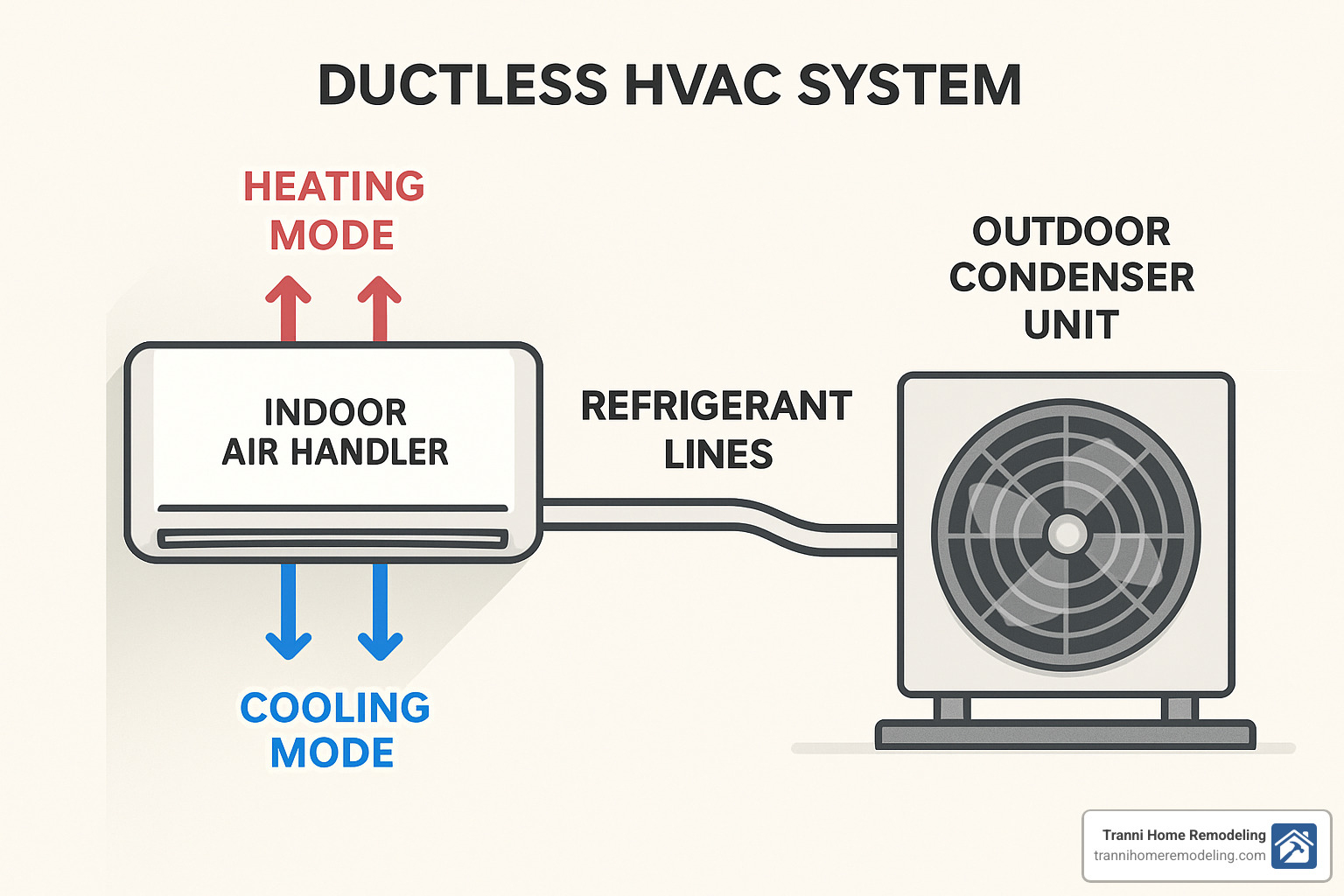
The whole operation revolves around a refrigeration cycle that works in two directions:
In Cooling Mode:
When summer hits and you’re looking for relief, your ductless HVAC system pulls warm air from your room across the indoor evaporator coil. The refrigerant inside absorbs this heat (like a sponge soaking up water) and carries it through copper lines to the outdoor unit. There, the outdoor fan helps release this captured heat into the outside air. The now-cooled refrigerant heads back inside to repeat the process, gradually lowering your room temperature.
In Heating Mode:
When Massachusetts winter arrives, the system cleverly reverses. The outdoor unit now extracts heat from the cold outside air (yes, even cold air contains heat energy!). This heat is compressed, intensifying its temperature, and then carried inside where it’s released into your room. It might seem like magic that heat can be pulled from cold air, but it’s simply smart thermodynamics at work.
The component that makes this seasonal switch possible is the reversing valve – it’s like a traffic director for refrigerant, changing its flow direction depending on whether you need heating or cooling.
Step-by-Step Refrigerant Journey
The refrigerant’s path through your ductless HVAC system is a fascinating cycle of phase changes and energy transfer:
First, heat absorption occurs as liquid refrigerant picks up heat from either your indoor air (in cooling mode) or outdoor air (in heating mode). This causes the refrigerant to evaporate into a gas – similar to how water evaporates from your skin, creating a cooling sensation.
Next comes compression, where the gaseous refrigerant gets squeezed by the compressor, significantly raising its temperature and pressure. Think about how a bicycle pump gets hot when you’re inflating a tire – same principle.
Then heat release happens as this hot, pressurized gas flows through the condenser coil, giving up its heat to the surrounding air while condensing back into a liquid.
Finally, the expansion phase occurs as the liquid refrigerant passes through an expansion valve, which rapidly reduces its pressure. This sudden pressure drop causes the refrigerant to become much colder, preparing it to absorb heat again as the cycle continues.
What makes modern systems so efficient is the variable-speed inverter compressor that continuously adjusts its output. Rather than the jarring on/off cycles of conventional systems, these smart compressors ramp up or down gradually – like a car with a smooth accelerator versus one that only has full-throttle or complete stop.
“It’s like the difference between driving in stop-and-go traffic versus using cruise control on the highway,” I often tell my Billerica customers. “The steady operation uses far less energy than constantly starting and stopping.”
Cold-Climate Performance of a Ductless HVAC System
“But Tyler, will this actually work when it’s freezing outside?” This is probably the most common question I hear from homeowners in our area. It’s a fair concern – traditional heat pumps earned a reputation for struggling in cold weather.
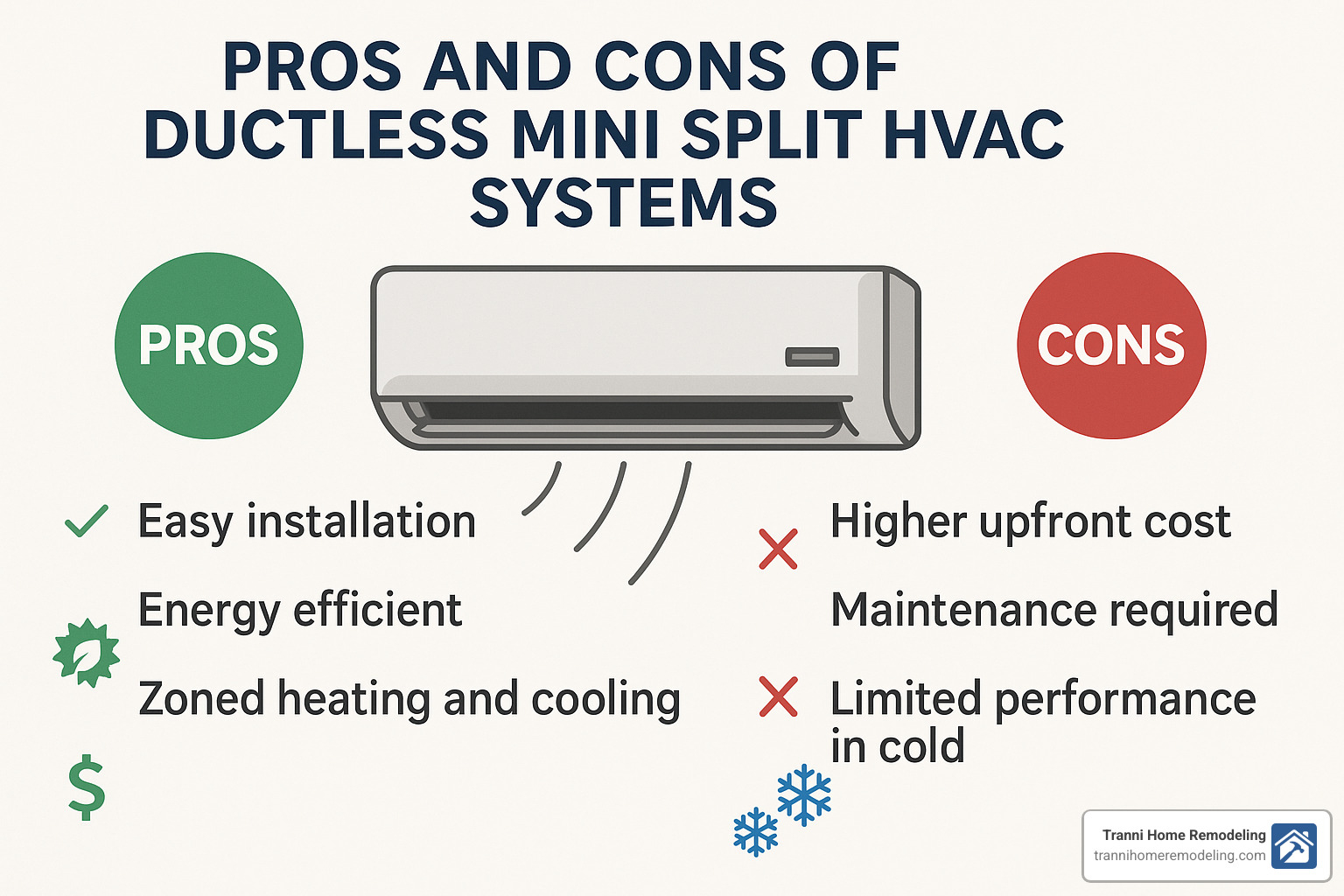
The good news? Modern ductless HVAC systems have completely transformed cold-weather performance. Today’s advanced models include Hyper-Heat Technology with specialized compressors that maintain heating capacity even when temperatures plummet. Many systems are now cold-climate certified, tested to operate efficiently down to 5°F or even lower.
These systems incorporate smart defrost cycles that prevent ice buildup on the outdoor unit. Some models also include backup heat strips for those rare extreme cold snaps we sometimes get in New England.
For homes in Billerica and surrounding communities, we typically recommend cold-climate rated models specifically designed for our winters. These units can extract heat from outdoor air even when temperatures drop well below freezing.
There are some practical considerations for winter operation, though. It’s important to install the outdoor unit above typical snow accumulation levels, ensure proper drainage to prevent ice formation, and maintain clear airflow around the outdoor unit.
As the latest research on cold-climate heat pumps from the Department of Energy shows, properly sized systems can effectively heat homes throughout the winter without significant backup heating requirements in most of Massachusetts.
When we install ductless HVAC systems in older homes around Middlesex County, homeowners are often amazed at how comfortably these systems perform even during the coldest days of January and February.
Pros and Cons at a Glance
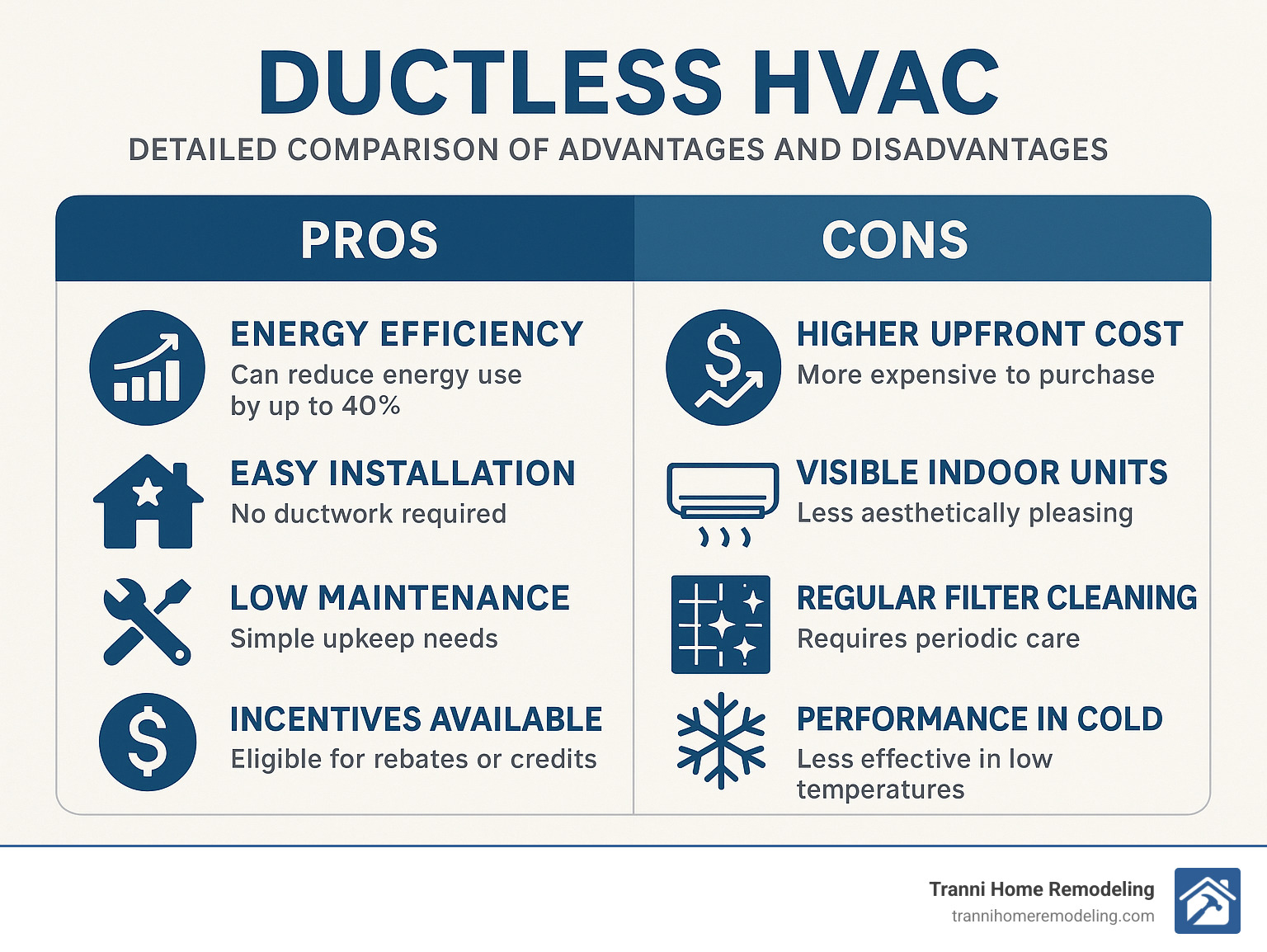
When considering a ductless HVAC system for your home, it’s important to weigh both the advantages and limitations to determine if it’s the right choice for your specific needs.
Top 6 Advantages You’ll Love
The beauty of a ductless HVAC system really shines through in its efficiency. By eliminating ductwork, you’re instantly saving 25-30% of energy that would typically be lost in traditional systems. I’ve had customers call me months after installation just to share how much their utility bills have dropped!
Zone control is another game-changer for families. Remember those thermostat battles at home? With each indoor unit having its own temperature control, everyone gets their perfect comfort level. I installed a system for a family in Billerica where the husband liked it cool, the wife preferred it warm, and their teenager wanted their room “like an icebox” – problem solved!
The installation process is refreshingly simple compared to traditional HVAC. We typically only need to drill a 3-inch hole for the line set, avoiding any major construction headaches. Most of our installations wrap up in just a day or two, with minimal disruption to your daily life.
If you value peace and quiet, you’ll appreciate the whisper-quiet operation. The indoor units run at about 19 decibels – that’s quieter than your refrigerator’s hum. One customer told me she had to check if her unit was actually running because she couldn’t hear it at all!
Those with allergies often notice improved indoor air quality after switching to a ductless system. The multi-stage filtration traps dust, pollen, and other allergens more effectively than many traditional systems. I’ve had customers tell me they’re breathing easier within days of installation.
Finally, there’s the security benefit. Unlike window units that create potential entry points for intruders, ductless systems need only a small, sealed hole. This gives you cooling comfort without compromising your home’s security – especially important for ground-floor rooms.
4 Limitations to Plan Around
Let’s be honest about the upfront investment. Ductless systems typically cost more initially than window units or baseboard heaters. The national average starts around $3,000 per zone and can range up to $14,500 for multi-zone systems. However, when compared to installing a full ducted system (especially in older homes), they’re often more economical – not to mention the long-term energy savings.
Regular maintenance is another consideration. The indoor unit’s filter needs monthly cleaning to maintain efficiency. It’s a simple task – just pop open the cover and rinse the filter – but it’s something you’ll need to remember. I always tell pet owners they might need to clean even more frequently, as fur and dander can accumulate quickly.
Some homeowners are concerned about the aesthetics of indoor units. While manufacturers have made great strides in designing sleeker, more attractive units, they remain visible on walls or ceilings. That said, most of my customers tell me they quickly stop noticing them, especially when enjoying the comfort they provide.
Finally, this isn’t a DIY project – professional installation is required. Ductless systems involve electrical work, refrigerant handling (which requires certification), and proper sizing to ensure efficiency. I’ve seen the aftermath of attempted DIY installations, and trust me, the repair costs far exceed what you’d save by hiring a professional from the start.
In Middlesex County, we’ve found that the advantages typically outweigh the limitations for most homeowners, especially those looking to improve comfort in specific areas of their homes or seeking energy-efficient alternatives to electric baseboard heating. The key is having realistic expectations and planning around the few limitations these systems have.
When a Ductless HVAC System Is the Perfect Fit
There are certain scenarios where a ductless HVAC system isn’t just a good option—it’s the perfect solution. After installing dozens of these systems throughout Middlesex County, we’ve seen how they transform problematic spaces into comfortable havens.
Residential Use-Cases
Have you ever walked into that one room in your house that’s always too hot or too cold? That’s where ductless HVAC systems shine brightest.
Home additions present a common challenge—extending existing ductwork is often prohibitively expensive or physically impossible. I remember helping a Billerica family who added a beautiful sunroom to their colonial home. Rather than tearing up walls to extend ducts, we installed a single-zone mini-split that perfectly matched the glass-heavy space’s unique heating and cooling needs.
Many older homes without ductwork throughout Chelmsford and Tewksbury rely on radiators or baseboard heat with no cooling solution. These charming historic properties deserve modern comfort without sacrificing their character. A ductless HVAC system provides both heating and cooling without the invasive installation that traditional ducted systems require.
For families dealing with room-specific comfort issues, like that perpetually sweltering bedroom over the garage or the freezing north-facing home office, a single-zone mini-split offers targeted relief. One Westford homeowner told me, “After 15 years of avoiding our bonus room in summer, we can finally use it year-round thanks to our mini-split.”
Energy-conscious downsizing has become increasingly common in our area. Empty-nesters who’ve moved to smaller homes but still have guest rooms can use zoned mini-splits to maintain minimal conditioning in rarely used spaces while keeping living areas perfectly comfortable. This approach can reduce energy bills by 30% or more compared to heating and cooling the entire home uniformly.
Finished basements present unique comfort challenges due to their underground location. The natural dampness and temperature fluctuations make them perfect candidates for ductless HVAC systems with built-in dehumidification features. These systems maintain ideal comfort while preventing the moisture problems that often plague below-grade spaces.
In multi-generational homes, temperature preferences can vary dramatically. I’ve worked with families where grandparents prefer temperatures in the mid-70s while their adult children like it cooler. Multi-zone systems allow each generation to set their preferred comfort level without the thermostat battles that plague many households.
Light-Commercial & Specialty Spaces
While our focus at Tranni Home Remodeling is residential, we’ve seen ductless HVAC systems excel in several specialty applications that might be part of your home.
Home studios for music, art, or photography often have specific temperature and humidity requirements. A photographer in Dracut installed a mini-split in her home studio specifically to protect sensitive equipment and materials that could be damaged by humidity fluctuations.
If you have server or equipment rooms with heat-generating electronics, a dedicated cooling solution that operates independently from your home’s main system is essential. These spaces often need cooling even in winter when the rest of your home needs heating.
Yoga or exercise spaces benefit tremendously from precise temperature control. As one Tyngsborough client shared, “I can cool the room for high-intensity workouts, then warm it up for cool-down stretches—all with a simple remote adjustment.”
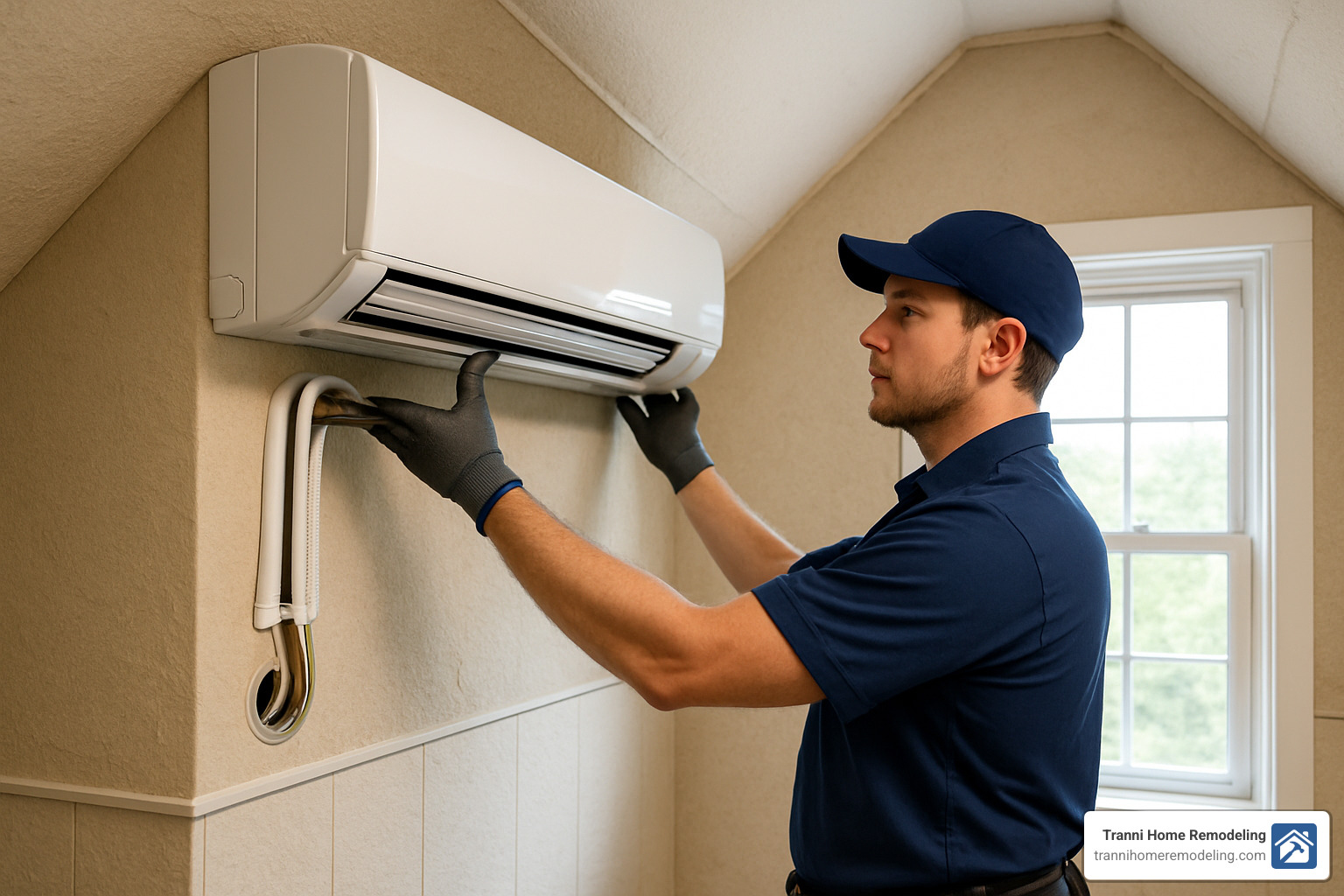
Converted garages or attics that weren’t originally designed as living areas typically lack connection to existing HVAC systems. A Lowell family who converted their attic into a home office during the pandemic found it unusable in extreme weather until we installed a mini-split. “It was freezing in winter and sweltering in summer,” they told me. “Now it’s comfortable year-round, and we didn’t have to tear apart any walls or ceilings.”
The versatility of ductless HVAC systems makes them ideal for these challenging spaces where conventional heating and cooling solutions fall short. Their minimal invasiveness during installation, combined with their zone-specific control capabilities, provides comfort solutions that simply weren’t possible a generation ago.
Sizing, Installation & Maintenance Guide
Getting your ductless HVAC system just right starts with proper sizing and professional installation. As we’ve helped hundreds of Middlesex County homeowners find, these two factors can make all the difference between a system that delivers years of comfortable, efficient performance and one that struggles from day one.
How to Calculate the Right Capacity
When I visit homes in Billerica or surrounding towns, homeowners are often surprised by how detailed our sizing process is. It’s much more than just measuring rooms!
“I thought they’d just look at the square footage and be done,” shared one Chelmsford homeowner. “But they considered everything from our window types to which direction the room faced.”
A proper sizing calculation considers:
Room dimensions including ceiling height (tall ceilings need more capacity)
Insulation quality in your walls, ceiling, and floors (older homes often need larger units)
Window specifications including how many you have, their size, which direction they face, and how energy-efficient they are
External shade factors like trees or neighboring buildings that might block summer sun
Local climate data specific to our Massachusetts weather patterns
How you use the space – a rarely used guest room has different needs than a busy kitchen
While professional contractors use Manual J calculations (the industry standard), here’s a quick rule-of-thumb guide for Massachusetts homes:
- 150-250 sq ft spaces typically need a 6,000 BTU unit
- 250-300 sq ft spaces typically need a 7,000 BTU unit
- 300-350 sq ft spaces typically need an 8,000 BTU unit
- 350-400 sq ft spaces typically need a 9,000 BTU unit
- 400-450 sq ft spaces typically need a 10,000 BTU unit
- 450-550 sq ft spaces typically need a 12,000 BTU unit
Getting the size right matters tremendously. As I explain to homeowners, an oversized system will constantly turn on and off (short-cycling), which reduces efficiency, comfort, and system lifespan. An undersized system will run constantly without ever getting your space comfortable.
Professional Installation Steps & Timeline
When we install a ductless HVAC system in your home, here’s what the process typically looks like:
We start with a thorough site assessment, spending 1-2 hours determining the best locations for both indoor and outdoor units. We’ll identify the optimal route for the line set, confirm your electrical system can support the new equipment, and ensure there’s adequate structural support for mounting.
Next comes indoor unit installation, which takes 1-2 hours per unit. We carefully mount the bracket, drill the 3-inch hole for the line set (much smaller than what’s needed for ductwork!), and attach the indoor unit to its mounting bracket.
The outdoor unit installation follows, taking 2-3 hours. We’ll place it on a concrete pad or wall-mount bracket, ensuring proper clearances for airflow and leveling it carefully for optimal operation.
Then comes the critical line set installation (1-2 hours), where we connect the refrigerant lines between units, install the condensate drain line, and connect all power and communication wiring.
Finally, system startup and testing takes 1-2 hours as we evacuate the lines using a vacuum pump, check carefully for leaks, charge the system with refrigerant if needed, and thoroughly test operation in all modes.
For a single-zone system, we can typically complete the entire installation in one day. Multi-zone systems might take 2-3 days depending on the complexity and number of indoor units.
“The most important part of installation is proper refrigerant line handling,” I always tell customers. “Improper flaring or connections can lead to refrigerant leaks and system failure down the road.”
Routine Maintenance Checklist
Your ductless HVAC system will reward you with years of efficient service if you keep up with some simple maintenance. Here’s what I recommend to our customers:
Monthly maintenance you can handle yourself:
Clean or replace the air filters (this is absolutely critical – dirty filters are the #1 cause of system problems)
Clear away leaves, snow, or debris from around the outdoor unit
Listen for any unusual noises that might indicate problems
Seasonal maintenance for homeowners:
Gently clean the indoor unit’s exterior with a soft cloth and mild detergent
Make sure the condensate drain isn’t clogged
Trim back any vegetation that’s growing near your outdoor unit
Annual professional maintenance:
We’ll thoroughly clean both the evaporator and condenser coils
Check refrigerant levels and top off if needed
Inspect all electrical connections for safety
Test your system’s operation in both heating and cooling modes
Verify proper airflow throughout the system
One Tewksbury customer told me, “I skipped cleaning the filters for a few months and noticed my electric bill creeping up. After I cleaned them, the system ran so much better and my bill dropped right back down.”
For Massachusetts homeowners, scheduling professional maintenance in spring ensures your system is ready for our hot, humid summers, while a fall check-up prepares it for our demanding winter heating season. At Tranni Home Remodeling, we can help set up a maintenance schedule that keeps your system running at peak efficiency year-round.
Cost, Incentives & Energy Savings
Let’s talk dollars and cents when it comes to ductless HVAC systems. Understanding the financial picture helps you make a smart choice that balances upfront costs with long-term savings.
Breaking Down Upfront & Ongoing Costs
When homeowners ask me about costs, I always explain that ductless systems are an investment in comfort and efficiency. Based on internet data (not actual costs for Tranni Home Remodeling), here’s what you might expect to pay:
For a single-zone system serving one room or area, the total typically ranges from $2,000 to $7,000. This includes $1,000-$4,000 for equipment and another $1,000-$3,000 for professional installation.
If you’re looking at a multi-zone system with three indoor units, the investment increases to $5,500-$19,500 total. The equipment itself runs $3,000-$12,000, with installation adding $2,500-$7,500.
Why such wide ranges? Several factors influence the final price:
Equipment tier makes a big difference – basic models cost significantly less than premium systems with advanced features like built-in air purification or humidity control. Cold-climate models designed specifically for Massachusetts winters typically command higher prices but deliver better performance when temperatures plummet.
Don’t forget to budget for potential accessories like condensate pumps (if gravity drainage isn’t possible) or electrical upgrades if your existing service panel needs modification. Some homeowners also opt for winter covers to protect outdoor units during severe weather.
On the ongoing side, your ductless HVAC system will have minimal maintenance costs if you’re diligent about monthly filter cleaning. Many homeowners choose annual service plans ($150-$300) for professional maintenance that helps prevent costly repairs and extends system life.
Finding and Stacking Rebates & Tax Credits
Here’s where the financial picture gets much brighter! Massachusetts residents enjoy some of the nation’s most generous incentives for heat pump technology.
The federal government currently offers a 30% tax credit (up to $2,000) for qualifying heat pump installations through 2032. This is claimed on IRS Form 5695 with your annual tax return – just be sure to keep all documentation of your purchase and installation.
Even more exciting are the Mass Save rebates, which can dramatically reduce your upfront costs. These include up to $10,000 for whole-home heat pump systems or up to $1,250 per indoor unit for partial home conversions. If your household qualifies as moderate-income, you might receive additional incentives that make the switch even more affordable.
“I’ve seen clients combine federal, state, and utility incentives to cover nearly half their system cost,” shares Tyler Tranni. “It transforms the financial equation completely.”
Don’t overlook municipal programs either. Many Massachusetts towns offer their own rebates through municipal light departments or community choice electricity programs. These local incentives can often be “stacked” with federal and state programs for maximum savings.
For the best results, choose ENERGY STAR certified equipment – it’s usually required for rebate eligibility anyway – and work with a contractor who understands the local rebate landscape. We’ve helped countless homeowners steer this process, ensuring they don’t leave money on the table.
The payback period for a ductless HVAC system typically ranges from 3-8 years, depending on your current heating costs and how you use the system. With equipment lifespans of 15-20 years, that means a decade or more of pure savings after you’ve recouped your initial investment.
For Middlesex County homeowners replacing electric resistance heating (like baseboard heaters), the energy savings can be dramatic – often 25-60% reduction in heating costs. Even homes converting from oil or propane typically see significant savings, especially when taking advantage of off-peak electricity rates that many utilities offer specifically for heat pump users.
Want to learn more about how a ductless heat pump system can work for your specific home? Visit our Ductless Heat Pump System page for more detailed information custom to Massachusetts homes.
Ductless vs. Other Cooling Options
When you’re looking to improve your home’s comfort, it’s worth comparing ductless HVAC systems with other popular options. I’ve helped dozens of Middlesex County homeowners steer these choices, and there are significant differences worth understanding.
| Feature | Ductless Mini-Split | Central HVAC | Window AC | Portable AC |
|---|---|---|---|---|
| Energy Efficiency | Very High (SEER 15-30+) | Moderate (SEER 13-21) | Low (SEER 10-12) | Very Low (SEER 8-10) |
| Installation Cost | $2,000-$14,500 | $6,000-$20,000+ (with ductwork) | $150-$700 | $300-$700 |
| Installation Complexity | Moderate | High | Low | None |
| Noise Level | Very Quiet (19-50 dB) | Moderate (40-60 dB) | Loud (50-70 dB) | Very Loud (55-75 dB) |
| Aesthetics | Wall/Ceiling Mounted Unit | Only Vents Visible | Blocks Window | Floor Unit with Vent Hose |
| Security | High | High | Low (Window Access) | High |
| Zone Control | Individual Room Control | Whole House (Zoning Costly) | Single Room Only | Single Room Only |
| Heating Capability | Yes (Heat Pump) | With Furnace/Heat Pump | Rarely | Rarely |
| Maintenance | Monthly Filter Cleaning | Regular Duct Cleaning | Seasonal Install/Remove | Filter Cleaning |
Those window units might look like a bargain at first glance. I remember a client in Billerica who initially balked at the price difference between window units and a ductless HVAC system. “I could buy ten window units for that price!” she told me.
But as we talked through the full picture, the value became clear. “You’re right about the upfront cost,” I explained, “but those window units will cost you much more in energy bills over time, plus you’ll lose your window views, deal with security concerns, and have to lug them in and out every season.”
The noise difference alone is remarkable. At just 19 decibels, the quietest ductless HVAC systems are literally whisper-quiet. You might not even notice they’re running while you’re watching TV. Compare that to the constant drone of a window unit that makes you turn up the volume just to hear your favorite show.
For homes in our area, the heating capability is perhaps the biggest advantage. While window and portable units leave you needing a separate heating solution for our New England winters, a ductless HVAC system handles both seasons beautifully. One of my Tewksbury clients told me, “It’s like getting two systems for the price of one!”
The aesthetics factor matters more to some homeowners than others. Central systems win here with only vents visible, but ductless systems have come a long way in design. Today’s sleek, low-profile indoor units can blend surprisingly well with your decor, while window units always look… well, like window units hanging out of your house.
Security concerns shouldn’t be overlooked either. Window units create potential entry points for intruders – a particular concern for first-floor installations. With a ductless HVAC system, the only penetration in your home’s envelope is a small, sealed hole for the refrigerant lines.
When you weigh all these factors together – efficiency, comfort, year-round use, aesthetics, security, and long-term value – ductless HVAC systems often emerge as the smarter investment for Massachusetts homeowners looking for lasting comfort solutions.
Frequently Asked Questions about Ductless HVAC Systems
Let’s tackle some of the most common questions I hear from homeowners across Middlesex County when they’re considering making the switch to a ductless system.
How many rooms can one outdoor unit serve?
This is probably the question I get asked most often when discussing ductless HVAC systems with homeowners. The short answer is: quite a few! A single outdoor condensing unit can support anywhere from one to eight indoor air handlers, depending on the system you choose.
For most homes in our area, we typically install systems with between one and four indoor units connected to a single outdoor unit. What’s great about this setup is that each indoor unit creates its own independently controlled comfort zone, so you can keep the living room toasty while the bedroom stays cool for sleeping.
Several factors determine exactly how many indoor units will work with your system:
The outdoor unit’s capacity is the main limiting factor – you can’t connect more indoor units than the outdoor unit can handle. Most manufacturers recommend that the total capacity of all your indoor units shouldn’t exceed about 130% of what your outdoor unit can produce. This works because rarely are all zones running at maximum capacity simultaneously.
Your home’s layout matters too. Sometimes the physical distance between rooms makes it more practical to install a second outdoor unit rather than running extremely long refrigerant lines.
“In larger homes, we sometimes recommend multiple outdoor units strategically placed to serve different areas of the house,” I often explain to customers. “This approach can actually improve efficiency and provide redundancy if one system needs service.”
Can a ductless system both heat and cool effectively in Massachusetts winters?
As a Massachusetts resident myself, I completely understand this concern! The good news is that modern cold-climate ductless HVAC systems are specifically engineered to perform well in our harsh New England winters.
Today’s systems can extract heat from outdoor air even when temperatures plummet to 5°F or below – which covers the vast majority of our winter days here in Middlesex County. This is possible thanks to several technological advancements:
Advanced inverter compressors maintain heating capacity even as outdoor temperatures drop, unlike older heat pumps that would struggle in cold weather. Sophisticated defrost cycles prevent ice buildup on the outdoor unit, ensuring continuous operation. The refrigerant mixtures have been optimized specifically for cold-climate performance.
One homeowner in Billerica told me, “I was skeptical about relying on a heat pump in winter, but our system kept us perfectly comfortable even during that cold snap last February when temperatures dropped below zero.”
During extreme cold snaps (below -15°F), efficiency will decrease somewhat, but most systems continue providing heat. Some homeowners maintain a secondary heat source for those few brutally cold days each year, though this is becoming less necessary with each generation of cold-climate heat pumps.
ENERGY STAR confirms this performance, noting that “Cold climate ASHPs are tested for performance down to 5°F,” making them suitable for typical Massachusetts winter conditions.
Is DIY installation worth the risk?
I’m all for DIY projects – I’ve tackled plenty around my own home – but when it comes to ductless HVAC systems, I have to give a clear and emphatic no. The risks simply outweigh any potential cost savings.
First and foremost, most manufacturers will immediately void your warranty if they find the system wasn’t installed by a certified professional. That alone should give you pause, as these warranties typically cover parts for 7-10 years.
Beyond warranty concerns, there are serious practical and legal issues:
Federal law requires EPA certification to purchase and handle refrigerants used in these systems – this isn’t something you can legally do without proper credentials. The electrical work involved requires expertise to ensure safety and code compliance. Proper evacuation and charging of the refrigerant lines requires specialized equipment and training.
Even small mistakes during installation can dramatically impact system performance. As James Bowman wisely notes, “The extra money you spend to have a pro do the job is worth it.” An improperly installed system might use 30% more energy while delivering less comfort and failing years before it should.
One customer shared with me: “I initially thought about trying to install a unit myself after watching some YouTube videos. Looking back, I’m so glad I hired professionals. There were so many complexities they handled that I would have never anticipated.”
Professional installation ensures proper sizing, placement, refrigerant charging, and electrical connections—all critical factors that contribute to your system’s performance, efficiency, and longevity. When you consider that a properly installed system can last 15-20 years, the professional installation cost becomes a very worthwhile investment.
Conclusion & Next Steps
After exploring all the ins and outs of ductless HVAC systems, you can see why they’ve become such a popular choice for Massachusetts homeowners. These innovative systems truly represent one of the smartest comfort upgrades available today, especially for homes throughout Middlesex County.
At Tranni Home Remodeling, we’ve installed these systems in countless homes – from charming historic properties in Concord to modern additions in Burlington. Time and again, we’ve seen how ductless HVAC systems transform problematic spaces into comfortable havens, regardless of what our unpredictable New England weather throws at us.
The advantages speak for themselves. You’ll enjoy energy savings of 25-60% compared to traditional heating and cooling methods. The zone control feature lets everyone in your family customize their comfort preferences (finally putting an end to those thermostat battles!). Plus, most homeowners are pleasantly surprised by how quickly and cleanly we can complete the installation – usually in just a single day for single-zone systems.
What about the financial picture? Between the federal tax credits (currently 30% of the system cost), generous Mass Save rebates, and the ongoing monthly energy savings, most of our customers see an attractive return on their investment. Your specific savings will depend on your current heating system, but many homeowners recoup their costs within 3-8 years through reduced utility bills.
The best part might be the year-round comfort from a single system. No more switching between heating and cooling systems as the seasons change – your ductless HVAC system handles it all with the press of a button.
Is a ductless system right for your home? That depends on your specific needs, your home’s layout, and your comfort priorities. But for many Massachusetts homeowners, especially those with older homes, problematic rooms, or additions, these systems provide an neat solution to long-standing comfort challenges.
Ready to explore your options? We’d love to help. Our experienced team at Tranni Home Remodeling can walk you through the possibilities, help you understand available incentives, and design a system that perfectly fits your home and lifestyle. Most importantly, our professional installation ensures you’ll get the maximum performance and longevity from your investment.
For more information about our comprehensive home improvement services, including exterior remodeling services, visit our website or give us a call to schedule a no-pressure consultation.
Transform your home’s comfort while shrinking your energy bills with a professionally installed ductless HVAC system from Tranni Home Remodeling—your trusted neighbors for home improvement throughout Middlesex County for over a decade.