




Basement Remodeling Cost Per Square Foot: Top 10 Essential Tips 2024
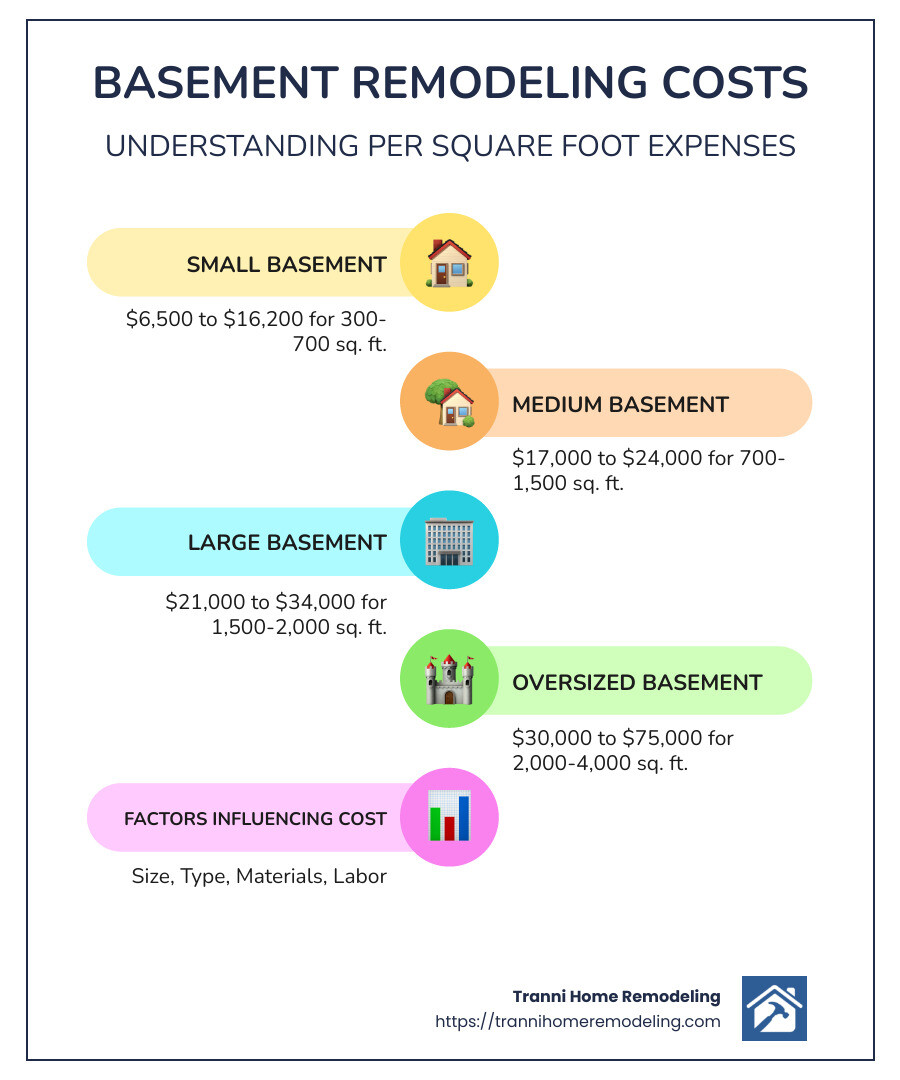
Understanding basement remodeling cost per square foot is crucial when planning your home renovation budget. On average, finishing a basement costs between $30 to $75 per square foot. Prices vary based on the basement’s size and type, as well as the materials and labor required. For instance:
- Small basements (300–700 sq. ft.): Cost about $6,500 to $16,200.
- Medium basements (700–1,500 sq. ft.): Typically range from $17,000 to $24,000.
- Large basements (1,500–2,000 sq. ft.): Expect to spend between $21,000 and $34,000.
- Oversized basements (2,000–4,000 sq. ft.): Could cost anywhere from $30,000 to $75,000.
Identifying your budget and understanding the per square foot costs help ensure a smooth remodeling experience.
I’m Tyler Tranni, the dedicated head of Tranni Home Remodeling in Billerica, MA. I have experience in determining basement remodeling cost per square foot and ensuring each project exceeds client expectations. With my expertise, you’ll be guided effectively through every remodeling decision.
Relevant articles related to basement remodeling cost per square foot:
– average cost to refinish basement
– local basement finishing
– refinish concrete basement floor
Major Cost Factors of Finishing a Basement
When planning your basement remodel, understanding the basement remodeling cost per square foot is key. The cost is influenced by three main factors: the size of the basement, the type of basement, and labor costs.
Cost by Basement Size
The size of your basement is the most significant factor affecting the total cost. Larger basements require more materials and labor, which increases the overall expense. Here’s a breakdown of costs based on different sizes:
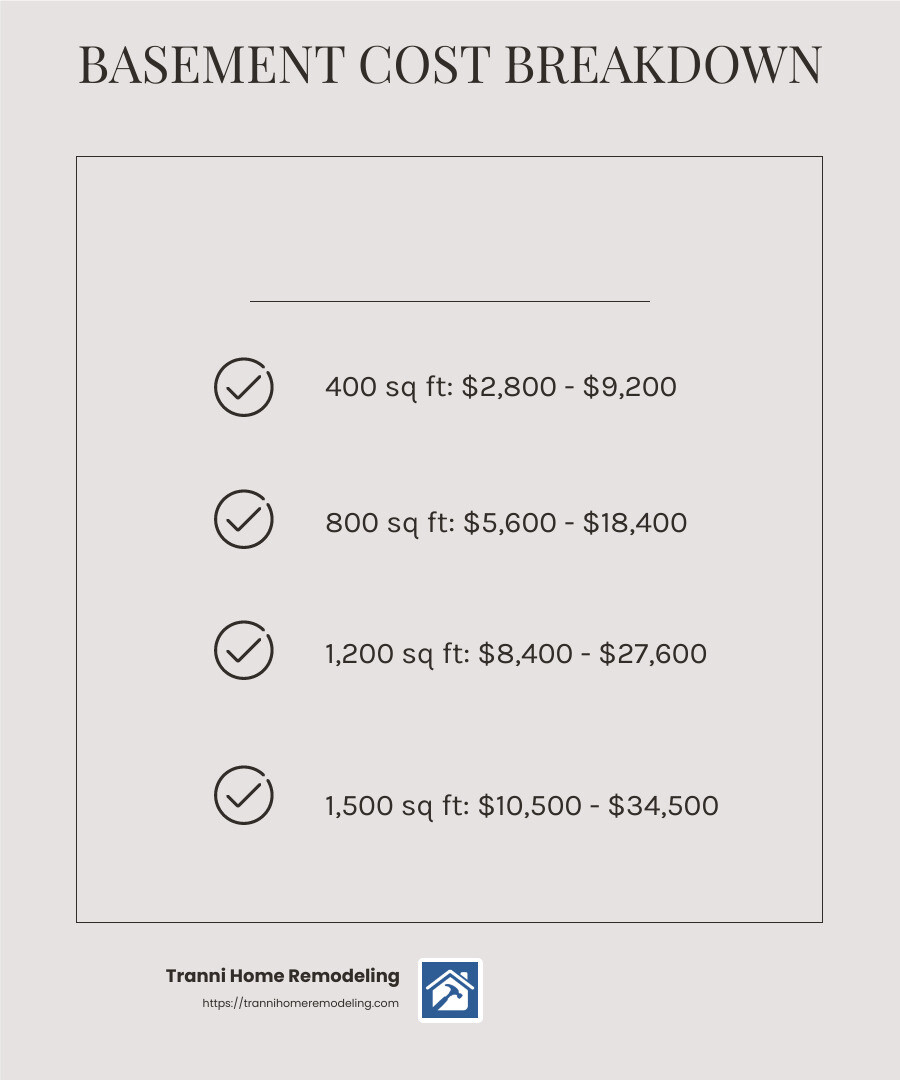
- 400 sq ft: Expect to pay between $2,800 and $9,200.
- 500 sq ft: Costs range from $3,500 to $11,500.
- 700 sq ft: Typically costs $4,900 to $16,100.
- 800 sq ft: Expect expenses between $5,600 and $18,400.
- 1,000 sq ft: Costs can range from $7,000 to $23,000.
- 1,200 sq ft: Prices range from $8,400 to $27,600.
- 1,500 sq ft: Can cost anywhere from $10,500 to $34,500.
These costs reflect a range of $7 to $23 per square foot, depending on materials and finishes.
Cost by Basement Type
The type of basement also plays a crucial role in determining costs.
- Unfinished Basements: These are typically more expensive to finish because they require more work. Such basements often have exposed pipes and ductwork and may only include basic features like laundry facilities or storage.
- Partially Finished Basements: These are less costly to complete as they already have some features like flooring and drywall. They may also have existing plumbing and HVAC systems, reducing the need for extensive new installations.
Labor Costs
Labor is another significant cost factor. Skilled professionals are essential, particularly for plumbing and electrical work. Even if you handle some tasks yourself, hiring licensed experts ensures safety and compliance with building codes.
- Plumbing and Electrical Work: These are specialized tasks that require licensed professionals. Costs can vary based on the complexity of the work.
- General Contractor: Hiring a general contractor to oversee the project can add 10% to 25% to the total cost. However, their expertise can save you time and ensure the project runs smoothly.
Understanding these major cost factors will help you budget effectively for your basement remodel.
Next, we’ll explore additional cost factors, including specific projects like sump pump installation and drywall.
Additional Cost Factors
When finishing a basement, consider various additional cost factors that can significantly impact your budget. Let’s explore these elements, including sump pump installation, framing, drywall, ceiling, insulation, painting, flooring, plumbing work, egress windows, and electrical work.
Sump Pump Installation
A sump pump is crucial for preventing water damage in your basement. There are two main types:
- Pedestal-Style Pump: These are generally less expensive and easier to maintain, with costs ranging from $60 to $170.
- Submersible-Style Pump: These are more powerful and quiet, suited for larger basements. Expect to pay between $100 and $400.
Framing
Framing forms the skeleton of your basement, and costs are typically calculated per linear foot. Hiring a carpenter can range from $4 to $10 per linear foot, depending on the complexity of your design.
Drywall
Drywall installation is a significant part of finishing a basement. Costs vary between $1 to $3 per square foot, including materials and labor. Proper installation is crucial for a polished look.
Ceiling
Choosing the right ceiling can transform your basement’s appearance. Drop ceilings are popular for their ease of access to overhead pipes and wires, costing around $2 to $5 per square foot. However, a more traditional drywall ceiling could cost $2 to $4 per square foot.
Insulation
Insulating your basement is essential for energy efficiency and comfort. Options include:
- Foam Board: Costs range from $0.50 to $1.50 per square foot.
- Fiberglass Batting: Generally costs between $0.40 to $1 per square foot.
- Spray Foam: Offers superior insulation but is more expensive, at $1 to $3 per square foot.
Painting
Painting can improve your basement’s aesthetic. Hiring professionals for indoor painting typically costs $2 to $6 per square foot, factoring in surface area and paint type.
Flooring
Flooring choices can significantly affect your budget:
- Laminate: A cost-effective option, priced at $1 to $3 per square foot.
- Carpet: Offers warmth but can range from $2 to $7 per square foot.
- Hardwood Flooring: More luxurious and durable, costing $6 to $12 per square foot.
Plumbing Work
If your basement includes a bathroom or wet bar, plumbing is critical. Licensed plumbers charge between $45 to $150 per hour, with total costs depending on the complexity of the drainage system.
Egress Windows
Egress windows are not just for safety; they can also add light and appeal. Installing an emergency exit window with a window well can cost between $2,500 and $5,000.
Electrical Work
Electrical work is vital for lighting and powering your basement. Licensed electricians typically charge $50 to $100 per hour. The installation of lighting fixtures and an electrical panel can range from $1,000 to $3,000, depending on the scope.
Understanding these additional cost factors will help you plan and budget effectively for your basement remodeling project. Next, we’ll discuss the furnishings and customizations that can make your basement truly unique.
Furnishings and Customizations
Once your basement is structurally ready, it’s time to think about furnishings and customizations that will make the space uniquely yours. These elements can transform your basement from a basic room into a vibrant, functional area.
Foosball Table
Adding a foosball table can turn your basement into a fun, recreational space. With a typical cost of around $650, it’s an affordable way to add entertainment value. This piece is perfect for game nights and family gatherings.
Basic Furniture
If you’re aiming for a comfortable lounging area, consider investing in basic furniture like couches, loveseats, and end tables. Expect to spend about $2,050 for a decent set. This setup creates a cozy spot for watching TV or just relaxing.
Pool Table
For those who enjoy billiards, a pool table can be a luxurious addition. At around $2,800, it’s a significant investment, but it can serve as the centerpiece for a game room. Make sure you have enough space to accommodate the table and cue sticks.
Laundry Facilities
Incorporating laundry facilities in your basement can improve convenience and free up space in other areas of your home. This addition typically costs about $3,875 and includes plumbing and electrical work to support washers and dryers.
Wet Bar
A wet bar is ideal for those who love to entertain. With costs averaging $8,000, this addition includes plumbing, a sink, and countertops. It’s a great way to serve drinks and snacks during parties or family gatherings.
Kitchenette
For a more comprehensive setup, consider adding a kitchenette. This option, costing around $15,750, provides additional cooking and food prep space. It often includes a small fridge, microwave, and even a stovetop, making your basement a self-sufficient living area.
Home Theater
Transform your basement into a cinematic experience with a home theater. This luxurious addition can cost about $17,500 and includes specialized seating, high-quality audio-visual equipment, and controlled lighting. It’s perfect for movie buffs and improves the overall entertainment value of your home.
These furnishings and customizations can significantly improve your basement’s functionality and appeal. Whether you’re looking to create a recreational hub, a cozy living area, or a self-contained apartment, these options offer flexibility and personalization. In the next section, we’ll explore the permits and repairs necessary to ensure your basement is both safe and compliant.
Permits and Repairs
Before diving into the exciting aspects of basement remodeling, it’s crucial to address permits and repairs. These elements ensure your project is safe, compliant, and free from future headaches. Let’s break down what you need to know.
Building Permits
Obtaining the right building permits is a non-negotiable step in any basement remodeling project. Without them, you risk fines and having to undo completed work. Permit costs can range from $500 to $2,000, depending on the project size and location. It’s essential to check with your local building department to get accurate permit cost information for your project.
Inspection Fees
Once you have permits, expect to pay for inspection fees. These fees ensure that the work complies with local building codes. Regular inspections during different phases of the project help catch issues early, saving you from costly repairs later on.
Structural Damage
Addressing any structural damage is vital before finishing your basement. This might include fixing cracks in the foundation or reinforcing load-bearing walls. Depending on the severity, these repairs can be costly but are necessary to maintain your home’s integrity. Failing to address structural issues can lead to more severe problems down the line.
Foundation Repairs
Foundation repairs are a critical component of basement remodels. Costs can vary significantly, but expect to pay anywhere from $2,000 to $7,000 for common issues. It’s better to invest in these repairs upfront to prevent water intrusion and structural failures.
Mold Remediation
Basements are prone to moisture, making mold remediation a common concern. Mold not only damages your property but also poses health risks. Professional remediation can cost between $500 to $6,000, depending on the extent of mold growth. It’s vital to address mold issues promptly to ensure a safe living environment.
Asbestos Remediation
If your home was built before the late 1970s, you might encounter asbestos in materials like insulation or floor tiles. Asbestos removal must be handled by professionals and can cost from $1,200 to $3,000 or more, depending on the area affected. Removing asbestos is crucial for health safety and compliance with current regulations.
By understanding and preparing for these permits and repairs, you can ensure your basement remodel proceeds smoothly and safely. These steps lay the foundation for a successful project and help avoid unexpected obstacles. Now that we’ve covered the essentials of compliance and safety, let’s explore the importance of waterproofing in your basement remodel.
Waterproofing
Waterproofing is a critical step in ensuring your basement stays dry and free from water damage. Let’s explore the various waterproofing methods available and why they’re essential for your basement remodel.
Waterproof Paint
Waterproof paint is an easy and cost-effective way to add a layer of protection to your basement walls. While it won’t stop significant leaks, it can help prevent minor moisture issues. This paint creates a barrier that keeps dampness from seeping through concrete surfaces. It’s a great starting point for minor moisture control.
Vapor Barriers
Installing vapor barriers is another effective way to manage moisture. These barriers are sheets of plastic or foil placed on walls and floors to prevent moisture from penetrating into the living space. They are especially useful in areas with high humidity. Vapor barriers help protect your insulation and drywall from mold growth and water damage.
French Drains
A French drain is a system designed to redirect water away from your home. It consists of a trench filled with gravel and a perforated pipe that collects and channels water away from the foundation. This system is particularly useful for homes with poor drainage or frequent flooding. Installing a French drain can significantly reduce the risk of water intrusion in your basement.
Exterior Membrane
For a more robust solution, consider applying an exterior membrane to your foundation walls. This involves excavating around your home and applying a waterproof coating to the outside of the foundation. This method is more invasive and costly but offers excellent protection against water intrusion. It’s ideal for basements with severe water issues or in areas with high water tables.
Water Damage Repair
If your basement has already suffered from water damage, addressing it promptly is crucial. Water damage repair may involve replacing damaged materials, treating mold, and reinforcing the structure to prevent future issues. Repair costs can vary widely, but investing in proper repairs is essential to maintaining a safe and healthy basement environment.
By incorporating these waterproofing methods, you can protect your basement from moisture and water damage, ensuring a dry and comfortable space. Waterproofing is a key investment in your basement remodel that can save you from costly repairs down the line.
Next, let’s explore how professional and DIY approaches to basement finishing can impact your project’s success and cost.
Professional vs. DIY Basement Finishing
When it comes to basement remodeling, one of the biggest decisions is whether to hire professionals or take the DIY route. Each option has its advantages and challenges, and understanding these can help you make the best choice for your project.
Professional Basement Finishing
Hiring licensed professionals can save you time and ensure high-quality results. Professionals, like general contractors, have the expertise to handle complex tasks such as plumbing, electrical work, and HVAC system installations. These tasks require specialized skills and must meet local building codes and permit requirements.
- Building Codes and Permits: Professionals are familiar with the necessary permits and codes, ensuring your basement complies with regulations. This can prevent costly fines and ensure safety.
- Complex Installations: Tasks like installing new electrical circuits or rerouting plumbing are best left to experts. These jobs require precise work to avoid issues like leaks or electrical hazards.
- Time and Quality: Professionals can complete the project faster and with better craftsmanship, often offering warranties on their work for added peace of mind.
DIY Basement Finishing
For those who enjoy hands-on projects and have some experience, DIY basement finishing can be a rewarding option. It allows for flexibility and cost savings, especially for simpler tasks like painting, flooring, and decorating.
- DIY-Friendly Jobs: Tasks such as painting, installing trim, laying flooring, and tiling can be tackled by homeowners with the right tools and patience. These projects can significantly reduce labor costs.
- Furnishing and Decorating: Personalizing your space with furniture and decor is a great way to make your basement uniquely yours without needing professional help.
- Learning and Satisfaction: Taking on a DIY project can be a learning experience, offering a sense of accomplishment. However, be realistic about your skill level and the time required.
Before deciding on a DIY approach, consider the scope of the project. Some tasks might seem simple but can become complex quickly. If you’re unsure about any aspect, consulting with a professional can help prevent costly mistakes.
By weighing the pros and cons of each approach, you can choose the method that best fits your skills, budget, and timeline. Whether you opt for professional help or DIY, each path offers unique benefits that can lead to a successful basement remodel.
Next, let’s dig into specific strategies for reducing basement finishing costs.
How to Reduce Basement Finishing Costs
Finishing a basement can be a significant investment, but there are effective ways to keep costs down without sacrificing quality. Here are some strategies to consider:
Open Floor Plan
An open floor plan reduces the need for additional walls, framing, and drywall, which can save a considerable amount on materials and labor. By keeping the space open, you create a versatile area that can serve multiple purposes, from a family room to a home gym.
Midrange Materials
Opting for midrange materials strikes a balance between cost and durability. While high-end materials can quickly drive up costs, choosing quality midrange options ensures longevity without breaking the bank. For instance, consider using laminate or vinyl plank flooring instead of hardwood.
Durability
Investing in durable materials is crucial. While it might be tempting to go for the cheapest options, low-quality materials often lead to frequent repairs or replacements. Choose materials that withstand wear and tear to save money in the long run.
Act as Your Own General Contractor
If you have the time and organizational skills, acting as your own general contractor can save you money. By coordinating subcontractors yourself, you avoid the markup that comes with hiring a professional contractor. However, this requires careful planning and knowledge of the renovation process.
Visible Pipes and Existing Plumbing
Leaving pipes, wiring, and ducts visible can cut down on the costs associated with building a drop ceiling. Additionally, using existing plumbing lines as much as possible reduces the expense of rerouting, which is one of the most costly aspects of basement finishing.
Partially Finished Space
Consider only finishing the areas you plan to use immediately. If part of the basement is intended for storage, leave it unfinished for now. This approach allows you to focus your budget on creating a functional living space while saving on unnecessary expenses.
Delayed Furnishings
Stop at simply finishing the space and save on furnishings for later. Once the basement is finished, you can gradually add furniture and decor as your budget allows. This phased approach helps manage costs and prevents overspending upfront.
By employing these strategies, you can effectively reduce your basement remodeling cost per square foot and achieve a functional and stylish space. Next, we’ll explore how to hire the right professionals to ensure your project is completed smoothly and efficiently.
How to Hire a Professional
Hiring the right professional for your basement remodeling project is crucial to ensure quality work and a smooth experience. Here are some key factors to consider when selecting a contractor:
Licensed Professionals
When hiring a contractor, always ensure they are licensed. A licensed professional has met the necessary requirements and has the expertise needed to handle complex tasks like plumbing and electrical work. This not only guarantees quality but also compliance with local building codes.
Bonded and Insured
It’s essential to choose a contractor who is both bonded and insured. Bonding provides a financial guarantee that the contractor will complete the job as agreed, while insurance protects you from liability in case of accidents or damages during the project.
Better Business Bureau
Check the contractor’s standing with the Better Business Bureau (BBB). A good rating with the BBB indicates a history of satisfied customers and ethical business practices. This can give you peace of mind that the contractor is reliable and trustworthy.
Customer Reviews
Look for customer reviews across multiple platforms like Google and Yelp. Positive feedback from past clients can provide valuable insights into the contractor’s workmanship, reliability, and communication skills. Pay attention to reviews that mention specific aspects of the project, such as adherence to timelines and quality of materials used.
Itemized Estimates
Request itemized estimates from potential contractors. This breakdown of costs helps you understand where your money is going and allows for easy comparison between different bids. It also reduces the likelihood of unexpected expenses cropping up during the project.
Project Timeline
Discuss the project timeline with your contractor before starting. A clear timeline ensures that both parties have the same expectations regarding the project’s duration. Regular updates and a plan for addressing any issues that arise can help keep the project on track and within budget.
By considering these factors, you can hire a professional who will deliver a high-quality basement remodel, ensuring your investment is well-spent.
Frequently Asked Questions about Basement Remodeling Cost Per Square Foot
What is the most expensive part of finishing a basement?
When finishing a basement, the cost of materials often takes the largest chunk of your budget. Essential materials like lumber, insulation, drywall, and flooring significantly impact overall expenses. Lumber is crucial for framing and structural support, while insulation ensures energy efficiency and comfort. Drywall provides the finished walls, and your choice of flooring—whether it’s carpet, laminate, or hardwood—can vary greatly in cost.
How much does it cost to finish a 200 sq ft basement?
The cost to finish a 200 sq ft basement typically ranges from $30 to $50 per square foot, leading to a total cost of $15,000 to $75,000. This range depends on the complexity of the project and the quality of materials used. An open floor plan can help reduce costs by minimizing the need for additional walls and doors, whereas creating multiple rooms will increase expenses for framing, drywall, and electrical work.
How much to finish a basement in Colorado?
In Colorado, finishing a basement can cost between $60 to $90 per square foot. This range accounts for regional labor rates and the need for specific features like an egress window, which is required for safety and compliance with local building codes. Additionally, adding plumbing for bathrooms or wet bars can further increase costs. It’s important to consider these factors when planning your basement remodel in Colorado to ensure you stay within budget.
Conclusion
At Tranni Home Remodeling, we understand that your home is your sanctuary. Based in Billerica, MA, we pride ourselves on delivering high-quality craftsmanship and outstanding service in every project we undertake. Whether you’re looking to transform your basement into a cozy family room or a state-of-the-art home theater, our team is here to bring your vision to life.
With over a decade of experience in the home renovation industry, we have honed our skills in kitchen and bath design, carpentry, and additions. Our expertise ensures that each project is completed to the highest standards, meeting both your expectations and local building codes.
Choosing to remodel your basement is a significant investment, and we are committed to providing value through meticulous planning and execution. We believe in transparent communication, offering itemized estimates and realistic timelines to keep your project on track.
If you’re ready to explore the potential of your basement, we invite you to learn more about our Basement Finishing Services. Let us help you create a space that improves your home and enriches your life.
A well-finished basement not only adds value to your home but also provides a functional and enjoyable space for you and your family. At Tranni Home Remodeling, we are dedicated to making your dream home a reality.