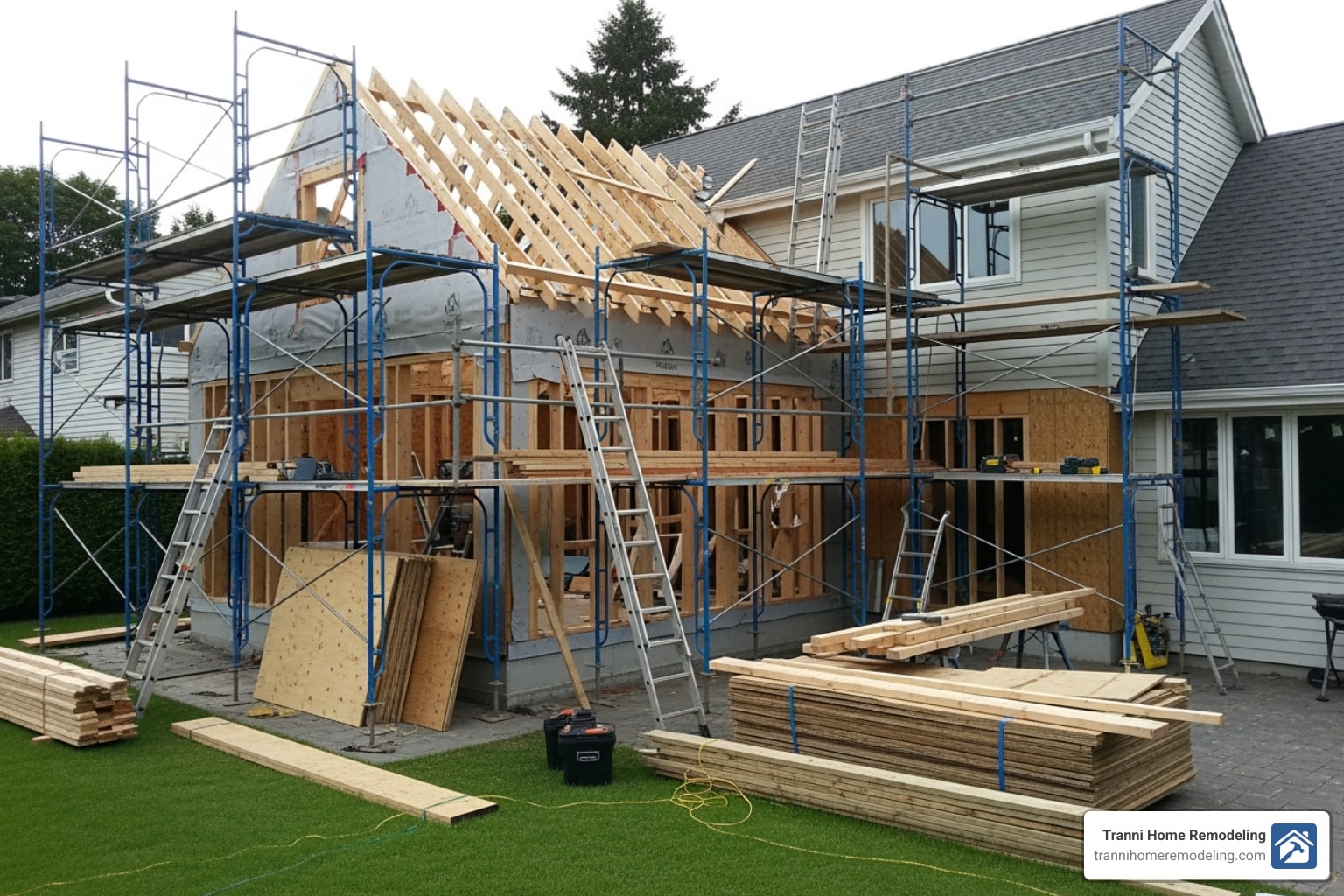





General Contractor Home Additions: 5 Headache-Free Steps
Why Hiring the Right General Contractor for Home Additions Matters
A general contractor home additions project requires careful planning and the right professional to bring your vision to life. Hiring the wrong contractor can turn your dream into a costly nightmare, with blown budgets, extended timelines, and subpar work that can decrease your home’s value. The good news? The right partner ensures your addition can increase home value by 20% to 50% and give you the space you’ve always wanted.
Quick answer for hiring a general contractor for home additions:
- Get multiple quotes – Aim for 3-5 contractors and compare detailed estimates.
- Verify credentials – Check licensing, insurance (minimum $2M liability), and workers’ compensation.
- Review portfolios – Look for similar projects and speak with past clients.
- Ask key questions – About timelines, communication, change orders, and warranties.
- Read the contract carefully – Ensure scope, payment terms, and project schedule are clearly defined.
- Check references – Speak with at least 3 previous clients about their experience.
What to expect:
- Average cost: $21,936 to $83,351 (based on internet data, not Tranni Home Remodeling pricing)
- Timeline: Several months from design to completion
- Labor costs: Up to 50% of total budget
- Permits required: Yes, typically $200-$3,000
- Contingency budget: Add 10-20% for unexpected expenses
As Tyler Tranni, owner of Tranni Home Remodeling, I’ve managed countless general contractor home additions projects throughout Massachusetts. My approach focuses on clear communication, realistic timelines, and quality craftsmanship that homeowners in communities like Billerica can trust.
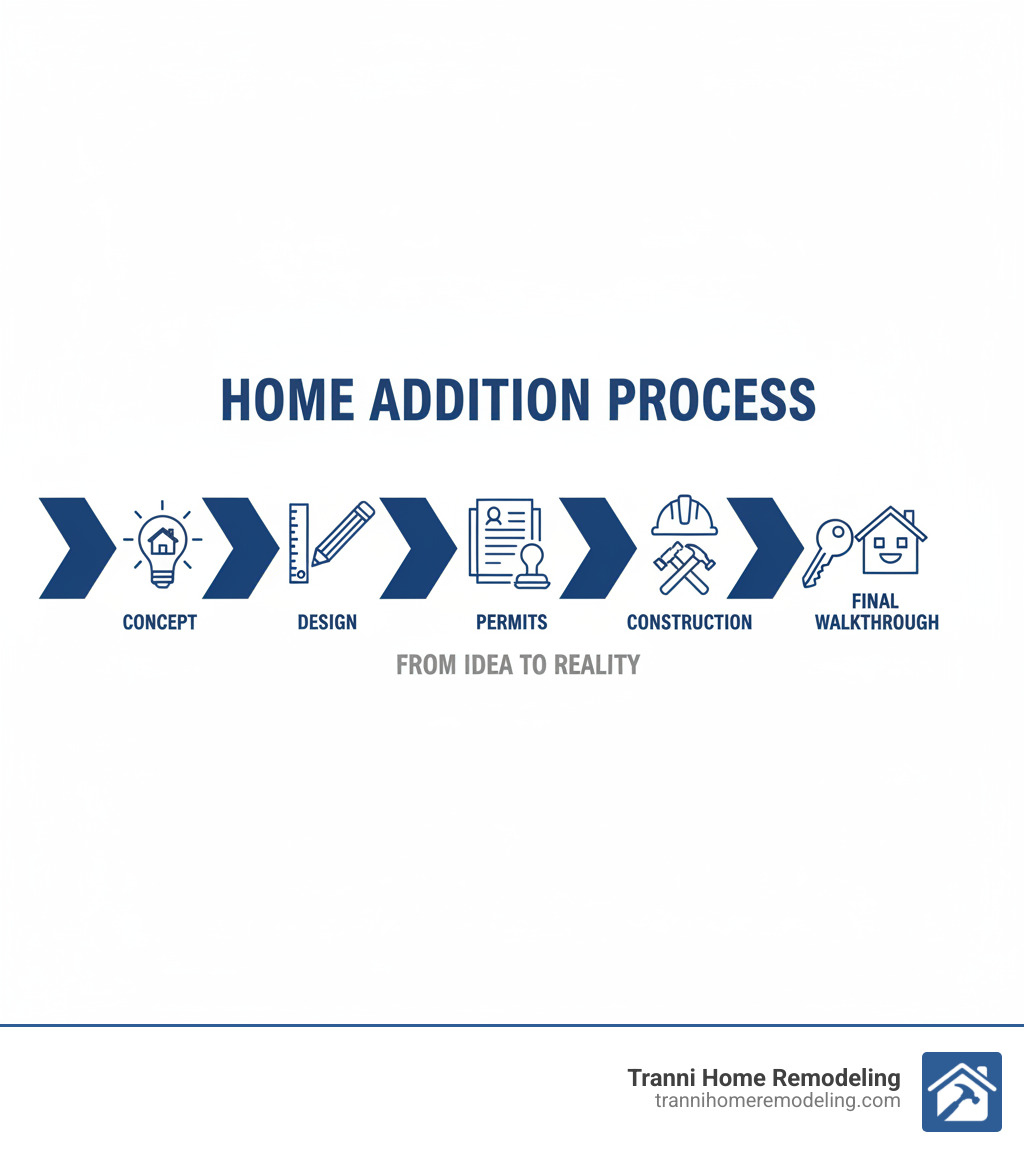
Why Add On? Understanding the Value and Scope of a Home Addition
Is your family growing, or are you simply out of space? A home addition can be a transformative project, offering the extra room you need without the stress and expense of moving. This guide will walk you through everything from initial planning to hiring the right professional, ensuring your project is a success. We believe that expanding your current home is often a smarter, more personal choice than relocating. It allows you to stay in the neighborhood you love, keep your kids in their schools, and avoid the hassle of packing, moving, and adjusting to a new environment.
Breaking Down the Basics: Types, Costs, and ROI
Before you knock down any walls, it’s crucial to understand the fundamentals of a home addition project. Think of this as your roadmap—knowing your options, what you might invest, and the value you’ll gain helps you make confident decisions from day one.
Common Types of Home Additions
Over the years, we’ve helped homeowners create incredible new spaces. Here are the most common types of general contractor home additions we work on:
- Room additions are a classic choice for a new bedroom, bathroom, or home office, expanding your home’s footprint.
- Second-story additions let you build up instead of out, perfect for adding bedrooms or a primary suite without losing yard space.
- Bump-outs are smaller extensions that add a few extra feet to a room, ideal for a walk-in closet or reading nook.
- A sunroom is a fantastic way to bring the outdoors in, often less complex than a fully integrated room. You can learn more on our porches and decks page.
- Garage conversions transform an underused garage into functional living space like a home gym or in-law suite.
- In-law suites, or accessory dwelling units (ADUs), create private living quarters for family or rental income.
- Basement finishing creates valuable living space within your home’s existing footprint. We specialize in basement finishing projects.
- Porches and decks seamlessly extend your usable living area outdoors. We offer comprehensive porch and deck construction services.
Decoding the Cost of a Home Addition
Understanding the financial investment is a critical first step. While we provide detailed quotes based on your specific vision, these industry averages can help you prepare.

Average Costs (based on internet data, not Tranni Home Remodeling pricing):
The average cost of a room addition is around $49,783, with a typical range of $21,936 to $83,351. Per square foot, costs often fall between $80 and $400+, with complex second-story additions ranging from $100 to $500+ per square foot.
Factors Influencing Cost:
Several elements impact the final price of your general contractor home additions project. Key factors include the size of the addition, the quality and type of materials selected (from framing and roofing to interior finishes and window and door replacements), and labor, which can be up to 50% of the budget. Project complexity also plays a major role; moving plumbing or electrical lines, reinforcing foundations, or significant excavation will increase costs. Finally, budget for necessary permits ($200-$3,000), potential architect fees (5-20% of budget), and our general contractor fee (typically 10-20% of the total cost) for managing the entire project.
Please remember that all cost figures mentioned here are national averages based on internet data and are not actual costs for Tranni Home Remodeling. Your specific project cost will depend on its unique scope, materials, and local market conditions.
The Value Proposition: Adding On vs. Moving
Many homeowners wonder whether to add on or move. We believe an addition offers compelling advantages, especially when you love your community.
Customization is a primary benefit—you design a space exactly for your family’s needs. You also avoid moving costs, which include real estate commissions, closing costs, and moving fees that can total tens of thousands of dollars. There’s also the emotional connection to your home and neighborhood. For families in communities like Woburn, Winchester, and Wilmington, staying put preserves a sense of belonging.
Finally, a well-executed addition offers a strong return on investment (ROI), often increasing home value by 20% to 50%. A new primary suite or bathroom can significantly improve appeal (our bathroom remodeling services can help), while outdoor living spaces like a deck can bring an impressive ROI of 40% to 50% (see our porches and decks page). A kitchen remodel often accompanies an addition and also provides a strong return.
The 5-Step Process for Planning Your Home Addition
A successful home addition hinges on meticulous planning. Following a structured process minimizes stress and keeps your project on track from the beginning. This planning phase is the foundation for your entire project.
Step 1: Define Your Vision and Budget
First, clarify your project goals. Why do you need this space, and how will it improve your daily life? Next, define the scope of work by getting specific about what will be built, the materials you want, and your must-have features. A project scope template can help organize your thoughts. Finally, establish a realistic budget that covers construction, design fees, permits, and materials. Most importantly, always include a contingency fund of 10% to 20% of your total budget. Unexpected issues like outdated wiring or foundation problems are common, and this buffer prevents stress and keeps the project moving.
Step 2: Steer Permits and Legal Requirements
Before construction begins, we must steer local regulations to ensure your addition is safe and legal. Zoning laws dictate how large your addition can be and how close it can be to property lines (setbacks). Building codes are detailed safety and structural standards that must be met. The permit process is essential for general contractor home additions and involves submitting detailed plans to your municipality for approval, which can take two to three months. We handle securing all necessary permits, which typically cost between $200 and $3,000.
Step 3: Assemble Your Design Team
Professional design is non-negotiable for most home additions. An architect creates detailed blueprints that consider aesthetics, functionality, and how the new space integrates with your existing home. Architectural fees typically range from 5% to 20% of the total project budget. As a design-build firm, we can handle both design and construction, which streamlines communication and project management by giving you a single point of contact for the entire project.
Step 4: Prepare Your Home for Construction
Construction is disruptive, but preparation can minimize the impact on your daily life.
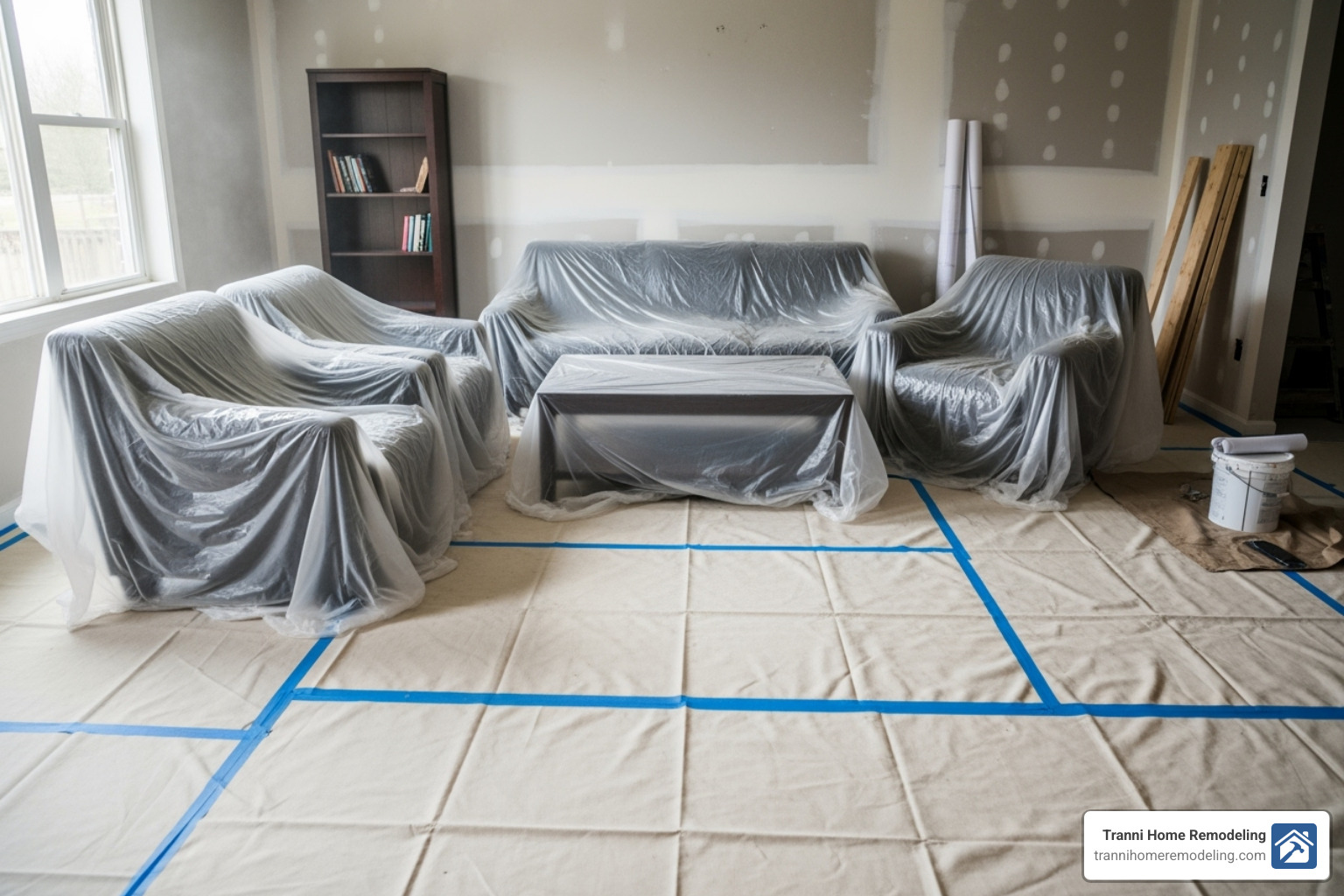
Before we arrive, clear the space by removing furniture, wall hangings, and valuables from the construction area and adjacent rooms. Expect some noise and dust during daily life, but we work diligently to keep the site clean and organized. For pet safety, we recommend keeping them in a designated safe area or with a friend on particularly noisy days. For larger projects, consider renting a temporary storage unit for your personal belongings. A comprehensive home remodeling checklist can be an invaluable resource to guide you through these preparations.
How to Find and Vet General Contractor Home Additions Experts
Choosing your contractor is the most critical decision you’ll make. You need a professional who is skilled, communicates well, and stands behind their work.
Where to Find Reputable General Contractor Home Additions
- Referrals from friends, family, and neighbors are the gold standard. A strong recommendation from someone you trust is invaluable.
- Online directories and professional associations can help you find pre-screened professionals.
- Review portfolios on contractor websites and social media. Look for projects similar to yours and assess the quality of their work.
- Local community recommendations from town forums or neighborhood groups can provide excellent leads from contractors with strong local reputations in areas like Woburn and Winchester.
Vetting Your Candidates: Signs of a Great Contractor
Once you have a list, it’s time to dig deeper.

- Licensing and Insurance: Your contractor must be licensed and carry both liability insurance (we recommend at least $2 million) and workers’ compensation. Ask for proof. The Better Business Bureau offers great tips on this.
- Experience: Ask how many projects like yours they have completed. Experience with similar additions is crucial.
- Positive Reviews and References: Check Google, social media, and the BBB. Ask to speak with past clients.
- Clear Communication: A great contractor is responsive, listens to your vision, and asks thoughtful questions from the start.
- Detailed Quotes: A professional estimate includes a clear scope of work, itemized costs, timelines, and payment terms. Vague quotes are a red flag.
Red Flags to Watch Out For
Trust your instincts. If something feels off, it probably is. Watch out for these warning signs:
- Unusually Low Bids: A bid that’s significantly lower than others often means cut corners, inferior materials, or inexperience.
- High-Pressure Sales Tactics: A reputable contractor’s work speaks for itself; they won’t pressure you to sign immediately.
- Vague Contracts: The contract should detail every aspect of the project. Ambiguity only benefits the contractor.
- Requesting Large Upfront Payments: A deposit of 10-20% is standard. Payments should be tied to project milestones, not paid in large sums upfront.
- Asking You to Pull Permits: This is the biggest red flag. The contractor is always responsible for obtaining permits. If they ask you to do it, it likely means they are not properly licensed or are trying to avoid accountability.
The Hiring Process: Questions to Ask and What to Expect
Once you’ve narrowed your list, a thorough interview will help you make a final choice. A reputable general contractor for home additions will welcome your questions.
Key Questions to Ask a Potential General Contractor for Home Additions
Come prepared with a list of questions to ensure you cover all bases:
- Experience and Team: How many projects like mine have you completed? Can I see your portfolio and speak with references? Who will be on my project team, and do you use trusted subcontractors?
- Project Management: How will we communicate, and how often can I expect updates? What is the estimated project timeline, and how do you handle potential delays?
- Financials: What is the payment schedule? How do you handle change orders or unexpected budget overruns? What warranties do you offer on workmanship and materials?
- On-Site Logistics: What steps do you take to protect my home and manage dust? What are the typical work hours? Will you be handling all necessary building permits?
- Problem Solving: What is your process for conflict resolution if disagreements arise?
Understanding the Contract and Finalizing the Hire
The contract is your legal protection and the blueprint for your project. Review it carefully before signing.
- Scope of Work: Ensure it clearly defines all work to be performed, including specific materials and references to the approved plans.
- Payment Terms: The contract must outline the payment schedule, tying payments to specific project milestones (e.g., foundation complete, framing complete).
- Project Schedule: Look for a realistic start date, estimated completion date, and key milestones.
- Lien Waivers: Request lien waivers from the contractor and subcontractors as payments are made. This protects you from liens if they fail to pay their suppliers.
- Final Walkthrough and Punch List: The contract should specify a final walkthrough process. This is your chance to inspect the work and create a “punch list” of any minor items needing correction before you make the final payment. We don’t consider a job complete until every item on your punch list is resolved.
Start Your Headache-Free Home Addition Project in Massachusetts
A home addition is a significant investment, but with careful planning and the right team, it can dramatically improve your quality of life and boost your home’s value. You get to stay in the community you love while creating a space perfectly customized to your family’s needs.
The key to a successful, headache-free general contractor home additions project is vetting professionals thoroughly and asking the right questions. When you verify credentials, check references, and ensure clear communication, you set your project up for success.
For homeowners in communities like Woburn, Winchester, and Wilmington, partnering with an experienced local company makes all the difference. At Tranni Home Remodeling, we bring over a decade of expertise to every project. Our commitment is to deliver high-quality craftsmanship, communicate clearly, and create spaces our clients love.
We handle everything from permits to final cleanup, so your job is simply to dream about your new space. Our job is to make that dream a reality, without the stress.
Ready to expand your living space? Explore our home addition services to see how we can bring your vision to life. Let’s start the conversation about what’s possible for your home.