





Mini Split Heat Pump: Top Benefits & Savings 2025
Looking to improve your home’s mini split heat pump system? You’re in the right place! Here’s a quick overview:
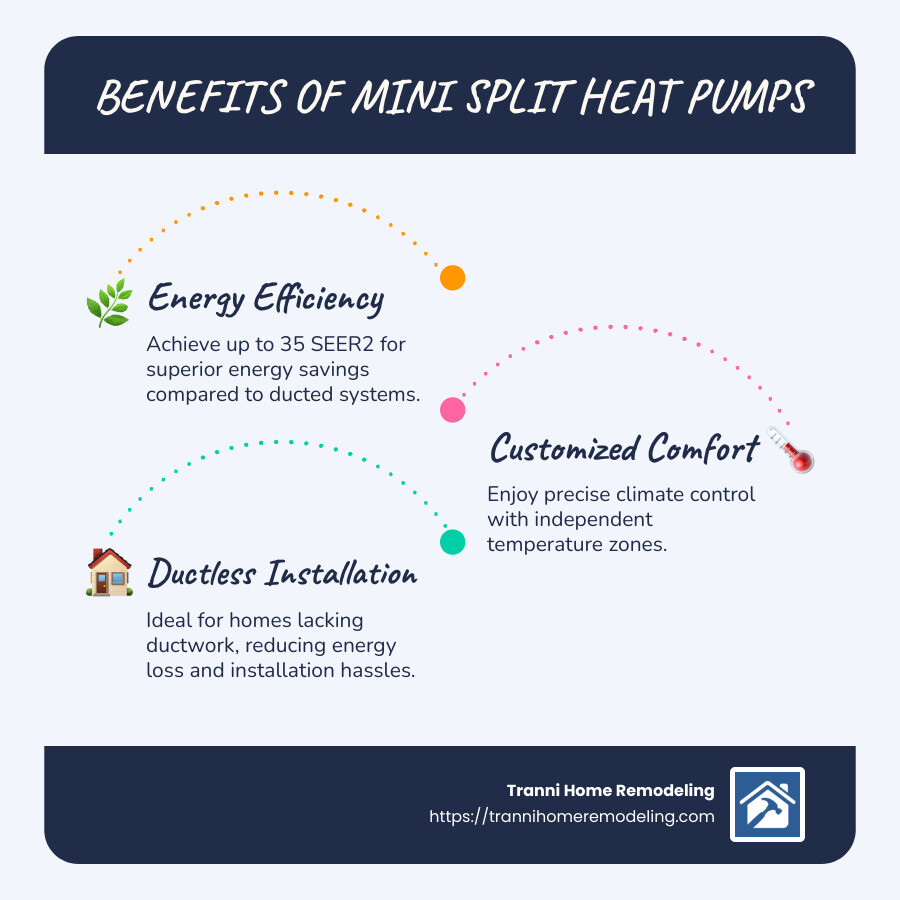
- Energy Efficiency: Mini split heat pumps can offer up to 35 SEER2, which is nearly double the efficiency of some traditional ducted systems.
- Home Comfort: These systems offer precise climate control, allowing you to adjust temperatures independently in different zones.
- Ductless Systems: Ideal for homes without ductwork. They’re easy to install and avoid duct energy loss, saving money on energy bills.
For homeowners in Billerica, MA, focusing on energy efficiency and comfort, a mini split heat pump is a game changer. These systems offer a modern heating and cooling solution that keeps energy costs low while enhancing home comfort.
I’m Tyler Tranni, owner of Tranni Home Remodeling. With years of experience in home updates, I’ve seen how a mini split heat pump can transform homes, offering top-notch energy efficiency and comfort custom to each space.
Basic mini split heat pump glossary:
Understanding Mini Split Heat Pumps
A mini split heat pump is an excellent choice for efficient heating and cooling. Unlike traditional systems, these are ductless, which means they avoid the energy loss associated with ductwork. Here’s how they function:
- Outdoor Compressor: This is the core of the system. It compresses the refrigerant and sends it to the indoor units.
- Indoor Air-Handling Unit: These units are installed inside your home. They receive the refrigerant and either heat or cool the air, depending on the season.
- Refrigerant Tubing: This connects the outdoor and indoor units, allowing the refrigerant to cycle between them.
Mini split heat pumps offer several benefits:
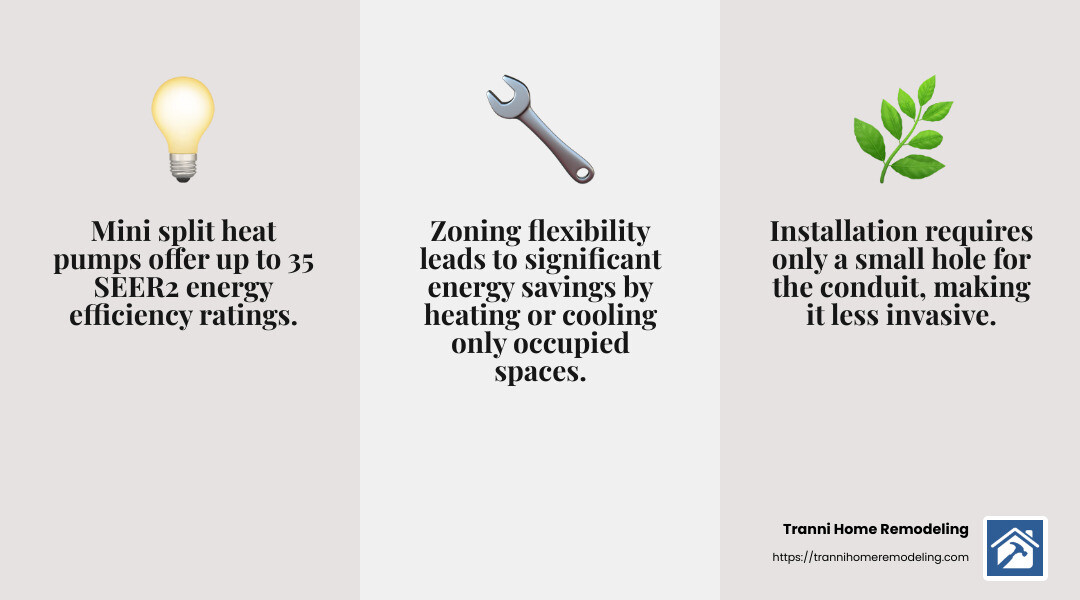
- Energy Efficiency: With ratings up to 35 SEER2, they outperform many ducted systems. This means lower energy bills and a reduced carbon footprint.
- Zoning Flexibility: You can connect multiple indoor units to a single outdoor unit. This allows you to control the temperature in different rooms separately, saving energy by only heating or cooling occupied spaces.
- Ease of Installation: These systems require just a small hole in the wall for the conduit. This makes them less invasive than traditional ducted systems.
However, there are some drawbacks to consider:
- Higher Cost: The initial installation cost can be higher than some other systems. Yet, potential energy savings and incentives can help offset this.
- Installation Challenges: Proper sizing and placement are crucial. An oversized system wastes energy and fails to maintain the right temperature and humidity.
- Aesthetic Concerns: Some might find the indoor units less appealing compared to central systems. Additionally, there needs to be a suitable spot for draining condensate water outdoors.
Understanding these pros and cons can help you decide if a mini split heat pump is right for your home. Next, let’s explore installation and sizing to ensure you get the most out of your system.
Installation and Sizing
Choosing the Right Size
Selecting the correct size for your mini split heat pump is crucial. It’s all about finding the right balance between BTU capacity and the area you need to heat or cool.
- BTU Capacity: BTU stands for British Thermal Unit. It’s a measure of how much energy your unit can produce. Typically, you’ll need about 20 BTU per square foot. So, if you have a 500 square foot room, aim for a unit with around 10,000 BTU.
- Square Footage: Measure the area you want to condition. Larger areas need more BTU. If you’re unsure, it’s better to consult a professional.
- Climate Considerations: Where you live matters too. In colder climates like those in Billerica, MA or Chelmsford, MA, you might need a unit with higher BTU to ensure efficient heating during winter.
Installation Tips
A smooth installation is key to getting the most out of your mini split heat pump. Here are some tips to consider:
- Professional Installation: Always opt for a qualified installer. They can help you avoid common pitfalls like incorrect sizing or poor placement. This ensures your system runs efficiently and lasts longer.
- Placement Options: Choose a location that allows for optimal airflow. Indoor units can be mounted on walls, suspended from the ceiling, or even placed on the floor. The outdoor unit should be in a spot that’s easy to access for maintenance, yet not too visible.
- Regular Maintenance: Keep your system in top shape with regular check-ups. Clean filters, check refrigerant levels, and inspect for any wear and tear. This not only prolongs the life of your system but also maintains its efficiency.
By following these guidelines, you’ll ensure your mini split heat pump is both efficient and effective, providing comfort in your home all year round. Now, let’s explore how to maximize energy efficiency and cost savings with your mini split system.
Energy Efficiency and Cost Savings
Maximizing Efficiency
When it comes to mini split heat pumps, efficiency is the name of the game. These systems are a fantastic way to save on energy costs while keeping your home comfortable.
ENERGY STAR Certification: Look for units with the ENERGY STAR label. These systems meet strict guidelines for energy efficiency, helping you save more on your utility bills.
Regular Maintenance: Keeping your system in top shape is crucial. Regularly clean or replace filters, check refrigerant levels, and inspect for any wear and tear. Regular maintenance ensures your system runs efficiently and lasts longer.
Smart Thermostats: Pairing your mini split with a smart thermostat can further boost efficiency. These devices learn your schedule and adjust temperatures automatically, saving energy when you’re away and keeping you comfortable when you’re home.
Financial Incentives
Investing in a mini split heat pump doesn’t just save on energy bills; it can also save you money through various incentives.
Inflation Reduction Act: This federal initiative offers significant tax credits for energy-efficient home improvements, including heat pumps. You could qualify for up to $2,000 in tax credits, reducing your upfront costs.
Local Rebates: Check with local utilities in areas like Billerica, MA or Chelmsford, MA. Many offer rebates for installing energy-efficient systems, further lowering your costs.
Utility Incentives: Some utility companies provide additional incentives for customers who switch to energy-efficient heating and cooling systems. These incentives can add up, making your investment in a mini split heat pump even more attractive.
By taking advantage of these financial incentives and maintaining your system, you ensure that your mini split heat pump remains a cost-effective and efficient solution for your home. Next, we’ll address some common questions you might have about these systems.
Frequently Asked Questions about Mini Split Heat Pumps
What are the disadvantages of a mini split heat pump?
While mini split heat pumps offer many benefits, they do come with some downsides.
Higher Cost: The initial installation cost can be higher compared to some traditional systems. Although the long-term savings on energy bills often offset this, the upfront expense might be a hurdle for some homeowners.
Installation Challenges: Proper installation is crucial for these systems. Incorrect sizing or poor placement can lead to inefficiency and higher energy use. It’s essential to work with a qualified professional to ensure everything is set up correctly.
Aesthetic Concerns: Some people find the indoor units less visually appealing compared to central systems. While they are sleeker than window units, they still need to be placed somewhere visible in your home.
How many square feet will a mini split heat pump heat?
The heating capacity of a mini split heat pump is typically measured in BTUs (British Thermal Units). This determines how much space the system can effectively heat.
- BTU Capacity: For most homes, a mini split system with a capacity of 9,000 to 12,000 BTUs can comfortably heat 450-550 square feet. Larger spaces may require units with higher BTU ratings.
- Climate Considerations: In colder climates, you might need a system with a higher BTU capacity to maintain comfort. Conversely, in more moderate climates, a lower BTU unit could suffice.
Are mini splits worth it for heat?
Absolutely, especially in terms of energy efficiency.
Energy Efficiency: Mini splits are known for their high efficiency, often achieving SEER ratings up to 35. This makes them more efficient than many traditional heating systems, particularly in moderate climates.
Moderate Climates: In areas like Lexington, MA or North Reading, MA, where the climate is not extreme, mini split systems provide excellent heating performance. They efficiently maintain comfortable temperatures without the high energy costs associated with older systems.
In summary, while mini split heat pumps may have some initial cost and installation considerations, their efficiency and ability to heat specific areas make them a worthwhile investment for many homeowners. Next, let’s explore how to choose the right size and installation tips for these systems.
Conclusion
At Tranni Home Remodeling, we pride ourselves on delivering high-quality craftsmanship and outstanding home renovation solutions. With over a decade of experience, we understand the importance of creating comfortable and energy-efficient living spaces for our clients in Billerica, MA, and surrounding areas like Lexington, MA, and North Reading, MA.
Mini split heat pumps are an excellent choice for homeowners looking to improve their property’s heating and cooling efficiency. These systems offer flexibility, allowing you to control the temperature in individual rooms, which can lead to significant energy savings. With the potential for tax credits and local incentives, the financial benefits of installing a mini split system are clear.
Our team at Tranni Home Remodeling is committed to guiding you through the process of selecting and installing the perfect mini split system for your home. We ensure that each unit is correctly sized and placed to maximize efficiency and comfort, all while maintaining the aesthetic appeal of your living space.
Whether you’re considering a mini split system as part of a larger home renovation or as a standalone upgrade, we are here to help. Our expertise in home additions, kitchen remodeling, bathroom remodeling, and more ensures that we can meet all your renovation needs with precision and care.
Ready to lift your home’s comfort and efficiency? Contact us to learn more about our services and how we can help you achieve your home renovation goals. Let Tranni Home Remodeling be your partner in creating a space that truly reflects your style and meets your needs.
