





Plastering and Painting: 5 Perfect Steps, Flawless Results
Why Plastering and Painting Requires Patience and Preparation
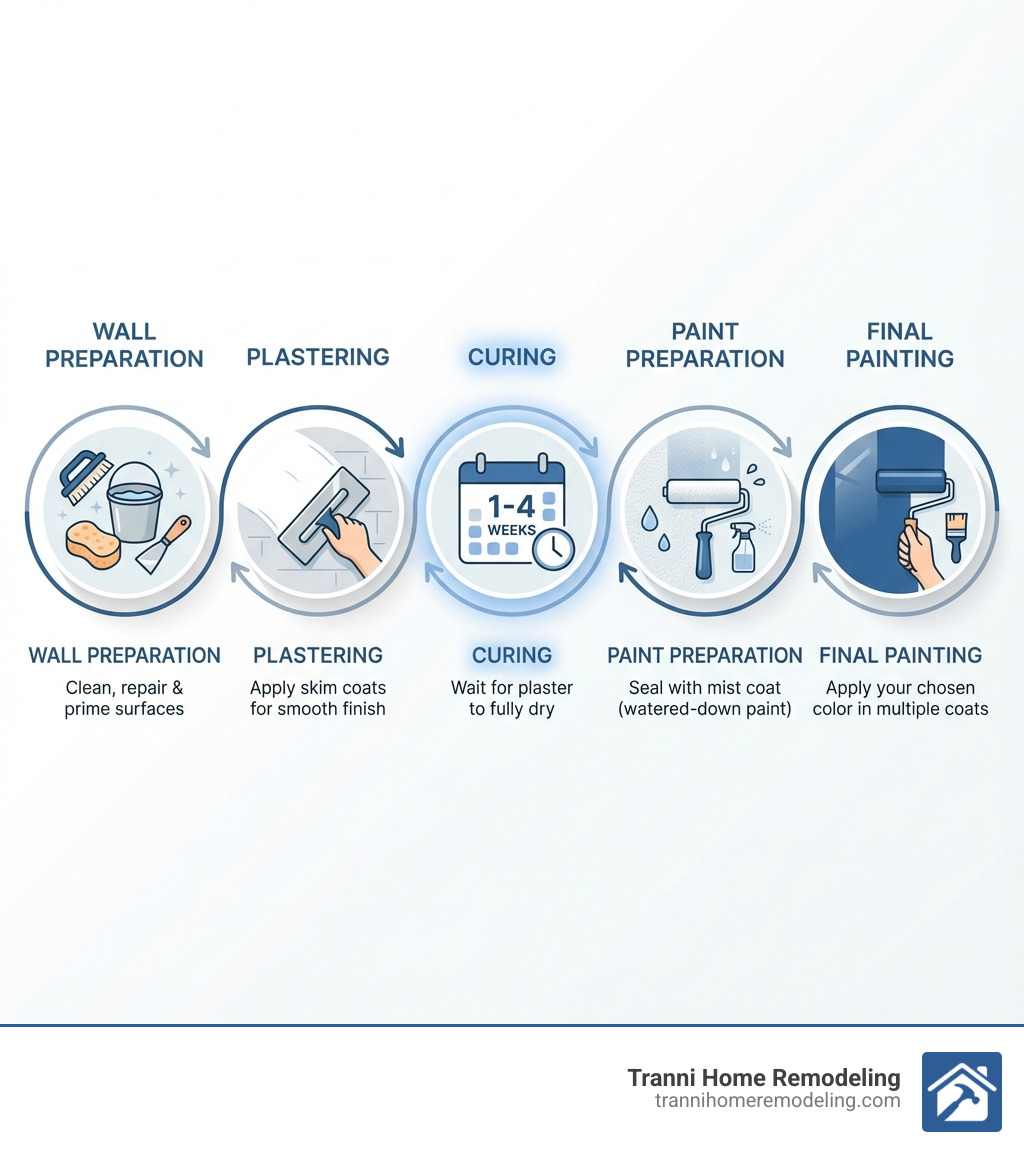
Plastering and Painting is a two-stage process that creates durable, beautiful walls—but success depends entirely on timing and preparation. Here’s what you need to know:
The Essential Timeline:
- Wall Preparation – Clean, repair, and prime surfaces
- Plaster Application – Apply skim coats for smooth finish
- Curing Period – Wait 1-4 weeks for plaster to fully dry
- Paint Preparation – Seal with mist coat (watered-down paint)
- Final Painting – Apply your chosen color in multiple coats
Critical Rule: Never paint wet plaster. Rushing this process leads to peeling paint, trapped moisture, and potential mold growth.
Plastering a wall may seem daunting, but it’s simpler than most homeowners expect. With proper preparation and—most importantly—patience during the curing stage—you can achieve a timeless, professional finish that adds both beauty and value to your home.
The biggest challenge isn’t the application itself. It’s waiting for the plaster to cure completely before painting. Many plasterers recommend 3-7 days minimum, but for truly flawless results, waiting 2-4 weeks ensures all moisture has evaporated. This prevents the most common disaster: paint peeling from improperly dried plaster.
I’m Tyler Tranni, owner of Tranni Home Remodeling. I’ve spent years perfecting the art of Plastering and Painting in homes throughout Billerica and surrounding areas. Our team knows proper timing and technique make the difference between a finish that lasts decades and one that fails within months.
Plastering and Painting word roundup:
Why Choose Plaster? Understanding the Material and Its Benefits
When considering wall finishes for your home, plaster often stands out as a superior choice, offering much more than just a smooth surface. As expert remodelers, we recommend plaster for its many advantages, which contribute to a home’s aesthetics and structural integrity.
One of the most compelling reasons to choose plaster is its remarkable durability and resistance to damage. Unlike drywall, which is easily dented, a properly plastered wall is robust and long-lasting. This strength means fewer repairs, preserving your pristine interiors.
Beyond its physical resilience, plaster also offers superior sound insulation. Its dense composition helps to block out noise, creating quieter, more serene living spaces. This is a significant benefit in busy households or homes in noisier environments. Furthermore, plaster is naturally fire-resistant, adding an extra layer of safety to your home. In a fire, plastered walls can slow the spread of flames, providing crucial extra time for evacuation.
Aesthetically, plaster delivers a high-end, seamless finish that’s hard to replicate. It provides a smooth surface that improves paint crispness and the overall elegance of a room. This timeless appeal has made plaster a preferred choice for centuries, and it continues to be a hallmark of quality craftsmanship.
While drywall installation is quicker, plaster offers superior longevity, performance, and aesthetic quality. It’s an investment in comfort, durability, and visual appeal. For more information on how we can improve your home with this classic technique, explore our plastering services.

Types of Plaster and Their Uses
The world of plaster is diverse, with different types formulated for specific applications and desired outcomes. Understanding these variations is key to selecting the right material for your project:
- Gypsum Plaster: This is the most common type of plaster used today, particularly for interior walls and ceilings. It’s known for its ease of application, quick setting time, and smooth finish. Gypsum plaster is often used over plasterboard to create a seamless surface ready for paint or wallpaper.
- Lime-Based Plaster: A traditional material, lime-based plaster is made from a mixture of lime and marble dust. It’s highly breathable, making it an excellent choice for older or historic homes and buildings in humid areas. Its flexibility helps prevent cracking, and it provides a beautiful, natural finish that ages gracefully. Lime plaster is renowned for its durability and fire resistance.
- Cement-Based Plaster: Composed of concrete and water, cement-based plaster is incredibly strong and durable. It’s often used for exterior applications (rendering) or in areas requiring high impact resistance. It’s a simple, fast-drying option, especially suitable for new construction where time is a factor.
- Synthetic Plaster: Made from a variety of synthetic materials, this type of plaster offers exceptional strength, durability, and often improved flexibility. It can be formulated with specific properties, such as improved water resistance or faster drying times, making it versatile for modern construction and renovation needs.
Each type of plaster brings unique characteristics to a project, from the traditional breathability of lime to the robust strength of cement and the versatile finish of gypsum.
The Curing Game: How Long to Wait Before Painting New Plaster
Allowing new plaster to cure properly is the most critical step in any Plastering and Painting project. Patience during this stage is essential. Rushing the process leads to frustrating and costly paint failures.
Plaster contains a significant amount of water that must evaporate for it to achieve full strength and stability. This process is known as curing. While some moisture dissipates quickly, the chemical hardening process within the plaster continues for a longer period.
A common rule of thumb is to wait anywhere from 1 to 4 weeks before painting new plaster. While some sources suggest 3-7 days, we find a minimum of 2 weeks is necessary for optimal results, especially in areas like Burlington, MA or Lexington, MA, where humidity can fluctuate. This allows approximately 3 days for initial moisture to escape, another 4 days for the plaster to harden sufficiently, and then a buffer of 7 days to account for environmental conditions, bringing the total to a conservative two weeks. For heavier coats or less ideal drying conditions, longer waits are prudent.
Several factors influence how long plaster takes to dry:
- Humidity: High humidity in the air slows down evaporation, extending drying times.
- Temperature: Cooler temperatures also prolong the drying process. Ideal conditions for drying and application are typically between 50–100 °F (air, surface, and material temperatures).
- Ventilation: Good airflow significantly aids in moisture evaporation. Opening windows and using fans (without directly blowing on the plaster, which can cause cracking) can help.
- Plaster Thickness: Thicker coats of plaster naturally take longer to dry than thin skim coats.
For comprehensive technical guidance on preparing plaster surfaces for paint, you can consult resources like this technical guide to preparing plaster for paint. If you are interested in the science behind how plaster cures and hardens, the Plaster overview on Wikipedia also provides useful background information.
Risks of Painting Too Soon
Painting new plaster before it has fully cured is one of the most common mistakes, and it can lead to a host of problems that negate all the hard work of plastering:
- Paint Peeling and Blistering: The most immediate consequence is paint peeling and blistering. Moisture escaping from the plaster pushes the paint film off the surface. This results in a peeling issue that is difficult and costly to fix.
- Trapped Moisture Leading to Mold: Painting over wet plaster traps moisture, creating an ideal environment for mold and mildew. This can lead to health issues and damage your walls.
- Wasted Time and Materials: If the paint fails, you’ll have to scrape it off, re-prepare the surface, and repaint, which wastes time, materials, and causes frustration.
- Poor Adhesion: New plaster is very porous. If not properly sealed after curing, it will “suck up any liquid,” including paint, leading to an uneven finish and poor adhesion of the topcoat.
- Alkaline Reaction: Plaster surfaces are alkaline, with pH levels ranging from 7 to 13+. Painting too soon, especially with non-alkali-resistant paints, can lead to chemical reactions that discolor the paint or prevent it from curing properly. It’s also crucial to avoid using certain primers, such as Polyvinyl acetate (PVA) based primers, over plaster, as they can swell when wet and interfere with adhesion. Similarly, avoid using vinegar/water solutions for cleaning, as they can degrade gypsum plaster.
To avoid these issues, we recommend performing a simple test for dryness:
The Plastic Sheet Test: Tape a 1-foot square piece of clear polyethylene plastic film tightly to the plastered wall. Leave it for 24 hours. If, after this time, you see condensation or water droplets on the underside of the film, the plaster is still too wet and needs more time to dry. Ensure this test is done under typical room conditions (around 77°F and 50% relative humidity).
Your Step-by-Step Guide to Flawless Plastering and Painting
Achieving a smooth, paint-ready plaster wall involves a series of careful steps. While it requires attention to detail, the process is achievable. Here’s our approach:
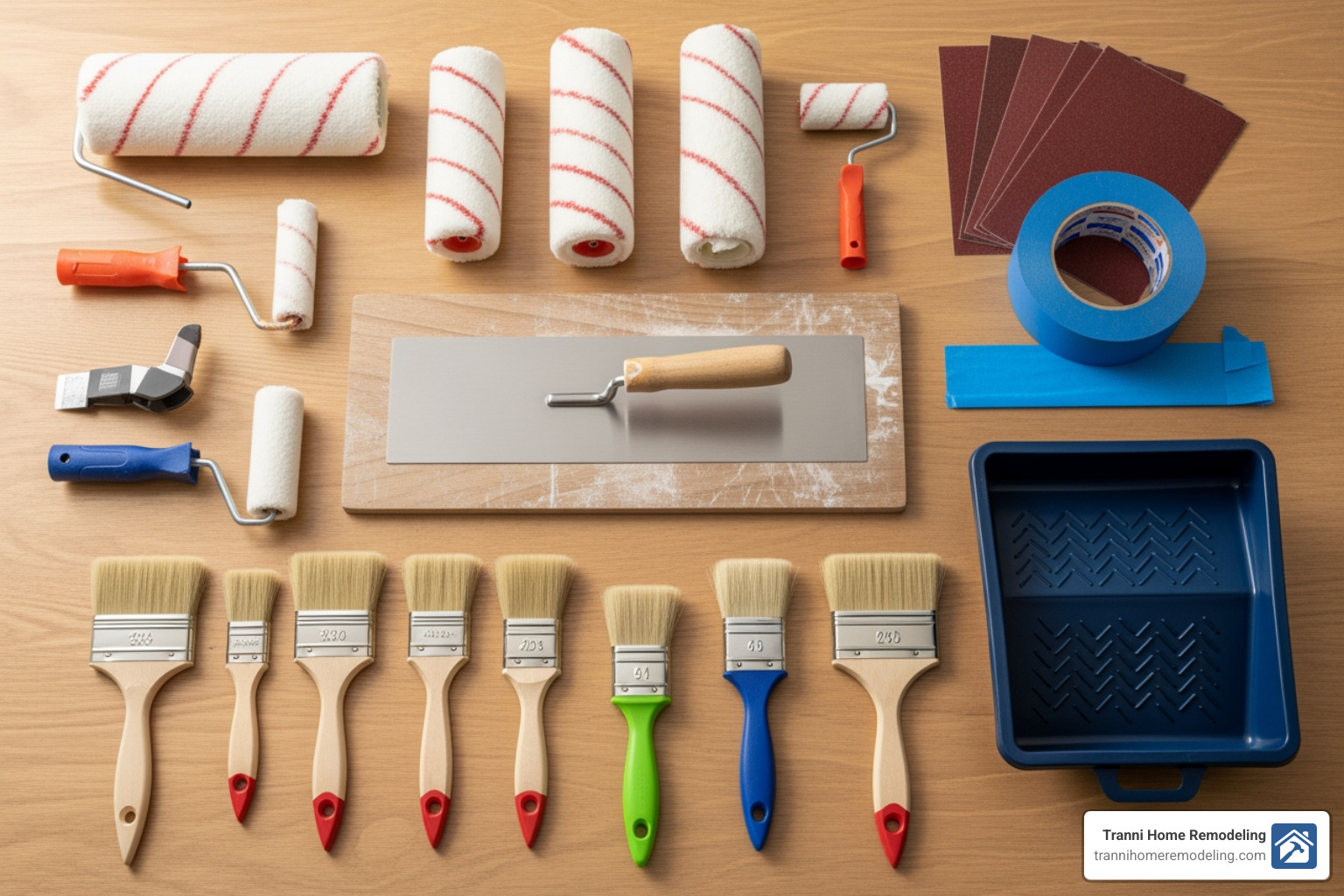
Before you begin, gather all your tools and materials. Having everything on hand ensures a smoother workflow.
Essential Tools for Plastering and Painting:
- Plastering Trowels (various sizes, including a finishing trowel)
- Plasterer’s Hawk Board
- Bucket Trowel
- Large Mixing Buckets (at least two clean ones)
- Power Drill with Paddle Mixer Attachment
- Angle Beading (for corners)
- Scrim Tape (for plasterboard joints and cracks)
- Lump Hammer and Chisel (for removing old plaster)
- Dust Sheets or Floor Protectors
- Water (clean)
- Rubble Sacks
- Wheelbarrow (for debris)
- Rags and Sponges
- Dustpan and Brush
- Fine-grit Sandpaper or Electric Sander (e.g., orbital or detail mouse sander)
- PVA Bonding Agent (diluted)
- Multi-Finish Plaster or appropriate undercoat/skim plaster
- Good Quality Paint Brushes (for edges and mist coat)
- Paint Rollers and Trays
- Alkali-Resistant Primer
- Emulsion Paint (for mist coat and topcoats)
When it comes to maintaining the integrity of your walls, understanding the nuances of plastering is paramount. We also offer specialized plastering repairs to restore damaged surfaces to their original condition.
Step 1: Preparing the Surface for Plaster
Proper preparation is the bedrock of a successful plastering job and prevents future problems.
- Clear and Protect the Area: Move all furniture out of the room and cover floors and any remaining items with heavy-duty dust sheets. Plastering is messy, so thorough protection saves cleanup time.
- Clean the Wall Thoroughly: Remove old wallpaper, loose paint, grease, or grime. Scrub painted walls with sugar soap. For old, flaky plaster, gently scrape away loose material.
- Repair Cracks and Holes: Fill any significant cracks or holes with appropriate filler. For plasterboard joints or small cracks, apply scrim tape (self-adhesive mesh tape) to prevent them from reappearing.
- Apply a PVA Bonding Agent: This step is crucial for porous surfaces like bare brick or old plaster. Mix PVA glue with water (typically 1 part PVA to 4 parts water) and apply it evenly. Allow it to become tacky before plastering (check manufacturer instructions). This ensures the new plaster adheres and prevents the wall from absorbing moisture too quickly from the mix. For very absorbent surfaces, a second coat may be needed.
Step 2: Applying the Skim Coat
With the surface prepped, it’s time for the art of plastering. The goal is a smooth, even finish.
- Mix Plaster to the Right Consistency: Follow the manufacturer’s instructions. Add plaster powder to clean water in a bucket and use a paddle mixer on low speed. Mix to a smooth consistency like thick custard. Mix in small batches to prevent it from setting too early.
- Apply a Thin First Coat: Scoop plaster onto your hawk board. With your trowel, apply a thin, even coat (1-2mm) to the wall, working from the bottom up. This first “tightening” coat should cover the entire surface, with the plaster pressed firmly into the wall.
- Smoothing Techniques: After about 15-20 minutes, when the first coat has started to firm up but is still workable, use a clean trowel to gently smooth the surface. This helps to flatten any ridges and consolidate the plaster. Keep your trowel clean by regularly wiping it with a damp rag.
- Apply a Second Coat to Fill Imperfections: Once the first coat is firm enough, apply a second, slightly thicker coat. This “laying on” coat fills any dips to achieve final smoothness. Work systematically for consistent coverage.
Once the second coat is applied, you’ll go through a series of “trowelling up” stages, progressively smoothing and compacting the plaster as it stiffens. This involves using firm pressure and the correct angle of your trowel, often lubricating the surface with a fine mist of water from a spray bottle or a damp brush for the final passes. The goal is a glass-smooth finish with no trowel marks.
Step 3: Prepping Cured Plaster for Paint
After the plaster has fully cured, the final preparation for painting begins. This stage is crucial for a durable and beautiful paint finish.
- Final Smoothness Check: Once the plaster is dry (after the 2-4 week cure time), inspect the surface. Run your hand over it to feel for minor ridges or bumps.
- Light Sanding of Ridges: Gently sand any slight ridges or high spots with fine-grit sandpaper (180-220 grit). Be careful not to sand too aggressively. The goal is to feather out imperfections, not remove large amounts of material.
- Wiping Down Dust: After any sanding, thoroughly wipe down the entire plastered surface with a clean, slightly damp cloth to remove all dust. Dust left on the wall will prevent the primer and paint from adhering properly.
- Applying a “Mist Coat” (Watered-Down Emulsion) to Seal the Porous Surface: This is a critical step for new, porous plaster, which will absorb paint if not sealed. A mist coat is watered-down emulsion paint (typically a 1:1 ratio of paint to water). Apply it evenly with a roller or brush. It soaks into the plaster, creating a uniform surface for your topcoats and making painting easier. Let the mist coat dry completely before applying primer or topcoats.
New plaster needs to be sealed before you paint or decorate to prevent issues further down the line. This mist coat is your first line of defense against patchy, peeling paint.
DIY vs. Hiring a Pro: When to Call for Expert Help
While a DIY Plastering and Painting project can be appealing, it’s important to assess the scope and your skill level. Plastering is a craft that takes practice to master.
For smaller, straightforward repairs or a single, easily accessible wall, a dedicated DIY enthusiast with patience might achieve satisfactory results. However, for most significant projects, we firmly believe that hiring a professional plasterer is the wisest choice.
Consider the complexity of your project:
- Large Rooms or Multiple Areas: Plaster sets quickly, requiring continuous, efficient work. Covering large surfaces, especially with high ceilings, demands speed, stamina, and consistent technique that novices often lack.
- Extensive Repairs or Uneven Surfaces: If walls require significant repair or leveling, a professional has the expertise to ensure a flat, plumb surface.
- Complex Architectural Features: Plastering around intricate moldings, archways, or bay windows requires specialized skills and tools.
- Time Constraints: Professionals work faster, minimizing disruption to your home. An experienced plasterer can often plaster a room in a single day.
The benefits of hiring a professional, like our team at Tranni Home Remodeling, are numerous:
- Expertise and Efficiency: We possess the experience and specialized techniques to achieve a flawless, smooth finish every time, handling any challenges that arise with precision.
- Guaranteed Finish: Professionals stand by their work, offering peace of mind that the job will be done correctly and to a high standard. This means avoiding “sinister paint peeling issues” and other costly mistakes.
- Proper Tools and Materials: We come equipped with all the necessary professional-grade tools and know exactly which materials are best suited for your specific wall type and desired finish.
- Preparation and Cleanup: Professionals ensure proper surface preparation and take measures to protect your home, minimizing mess and dust.
For those looking to refresh their space with both expert plastering and a beautiful paint job, our Drywall and Plaster Contractors are ready to help.
Understanding Costs and Finding Local Experts
Plastering costs vary based on room size, wall condition, plaster type, and your location. Based on internet data, the average cost to plaster a small room in the US might range from approximately $1,500 to $5,000, while larger rooms or more complex jobs could easily exceed $8,000. These are average costs based on internet data and not actual costs for Tranni Home Remodeling. Professionals typically charge by the day or by the square foot, and their rates reflect their skill, experience, and the quality of their work.
When seeking a professional for your Plastering and Painting project, we recommend looking for reputable companies with a strong track record. For homeowners in our service areas, such as Woburn, MA, Winchester, MA, Lexington, MA, Reading, MA, Burlington, MA, or Chelmsford, MA, we pride ourselves on delivering outstanding quality and service. Always ask for references, review portfolios, and obtain detailed quotes to ensure you’re making an informed decision.
Frequently Asked Questions about Plastering and Painting
We often get questions about plastering and painting from homeowners starting on renovation projects. Here are some of the most common ones:
What are the most common mistakes in Plastering and Painting?
The primary pitfalls we see homeowners fall into include:
- Improper Surface Preparation: Failing to properly clean, repair, or prime the wall leads to poor adhesion, uneven finishes, and paint failure.
- Painting on Wet or “Green” Plaster: As discussed, this is a recipe for disaster. Painting on wet plaster traps moisture, leading to peeling, blistering, and potential mold.
- Using the Wrong Type of Primer: New plaster is alkaline and needs an alkali-resistant primer. Standard or PVA-based primers can cause discoloration or adhesion issues.
- Rushing the Drying and Curing Stages: Patience is key. Cutting corners on drying times for either the plaster or subsequent paint coats compromises the longevity and appearance of the entire finish.
How is pointing different from plastering?
While both involve applying a material to masonry, pointing and plastering serve distinct purposes:
- Pointing: This technique involves filling the joints between individual bricks or stones in masonry work. Its primary purpose is to make these joints water-tight, preventing moisture ingress, and to improve the aesthetic appearance of the brickwork. Different pointing styles exist, each offering a unique look and level of weather resistance.
- Plastering: This involves applying a continuous, smooth coating over an entire wall or ceiling surface, typically indoors. The goal is to create a flat, uniform substrate that is ready for decorative finishes like paint or wallpaper. Plastering also improves the durability and resistance to damage of the underlying wall structure.
Pointing focuses on the gaps between individual masonry units, while plastering covers the entire surface for a smooth finish.
Can I paint directly onto old, previously painted plaster?
Yes, but proper preparation is crucial for a lasting finish. As we always say, “surface preparation is the key to a successful paint job, both from a structural standpoint and a beauty standpoint.” Here’s our recommended approach:
- Inspect and Repair: First, inspect and repair any cracks, holes, or loose sections with a suitable repair compound.
- Clean the Surface: Clean the entire wall thoroughly to remove any dirt, grease, grime, or dust. Sugar soap is an excellent choice for this. Rinse the walls with clean water and allow them to dry completely.
- Sand Glossy Finishes: If the existing paint has a glossy or semi-gloss finish, lightly sand the surface to “de-gloss” it and create a “key” for the new paint to adhere to. Use fine-grit sandpaper (180-220 grit) and wipe away all dust afterward.
- Apply a High-Quality Primer: Even over existing paint, a good primer is beneficial. It helps to ensure uniform absorption, blocks stains, and provides a consistent base for your new topcoats. Choose a primer compatible with your existing paint and your new topcoat.
By following these steps, you can achieve a fresh, durable paint finish over your existing plaster walls.
Conclusion: Achieving a Professional Finish on Your Plaster Walls
Mastering Plastering and Painting is about understanding materials, respecting the process, and exercising patience. Each step, from prep to the final paint, is vital for a professional, long-lasting finish. A perfectly finished wall lifts your home’s aesthetic appeal and adds significant value and durability.
While this guide is comprehensive, plastering can be challenging, especially for complex projects. That’s where our decade of experience at Tranni Home Remodeling comes in. Our team of skilled craftsmen specializes in delivering high-quality plastering and painting services throughout Middlesex County, Massachusetts, including areas like Billerica, Woburn, Winchester, and Lexington.
Ready to transform your home with walls that are not just beautiful, but built to last? Contact us for professional Painting and Plastering Services. Let us bring our expertise to your next home renovation project.