





Why Eco-Friendly Bathroom Remodeling Matters
Eco-friendly bathroom remodel projects are changing how homeowners approach renovations—reducing environmental impact while creating healthier, more efficient spaces. These upgrades focus on water conservation, sustainable materials, energy efficiency, and waste reduction to benefit both your home and the planet.
Key Components of an Eco-Friendly Bathroom Remodel:
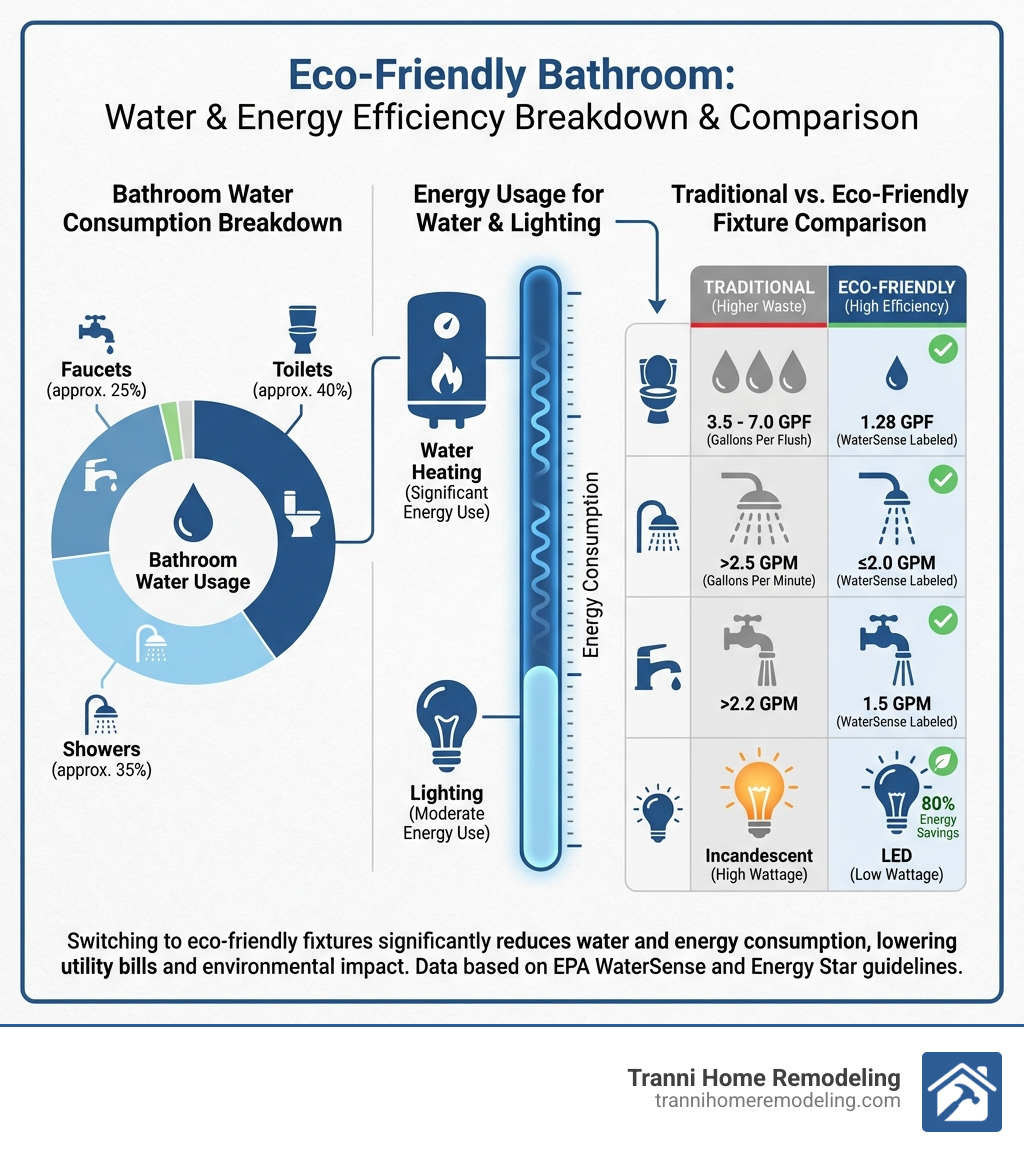
- Water Conservation: Install WaterSense-labeled fixtures like low-flow toilets (1.28 gpf), showerheads (2.0 gpm or less), and faucets (1.5 gpm) to save thousands of gallons annually
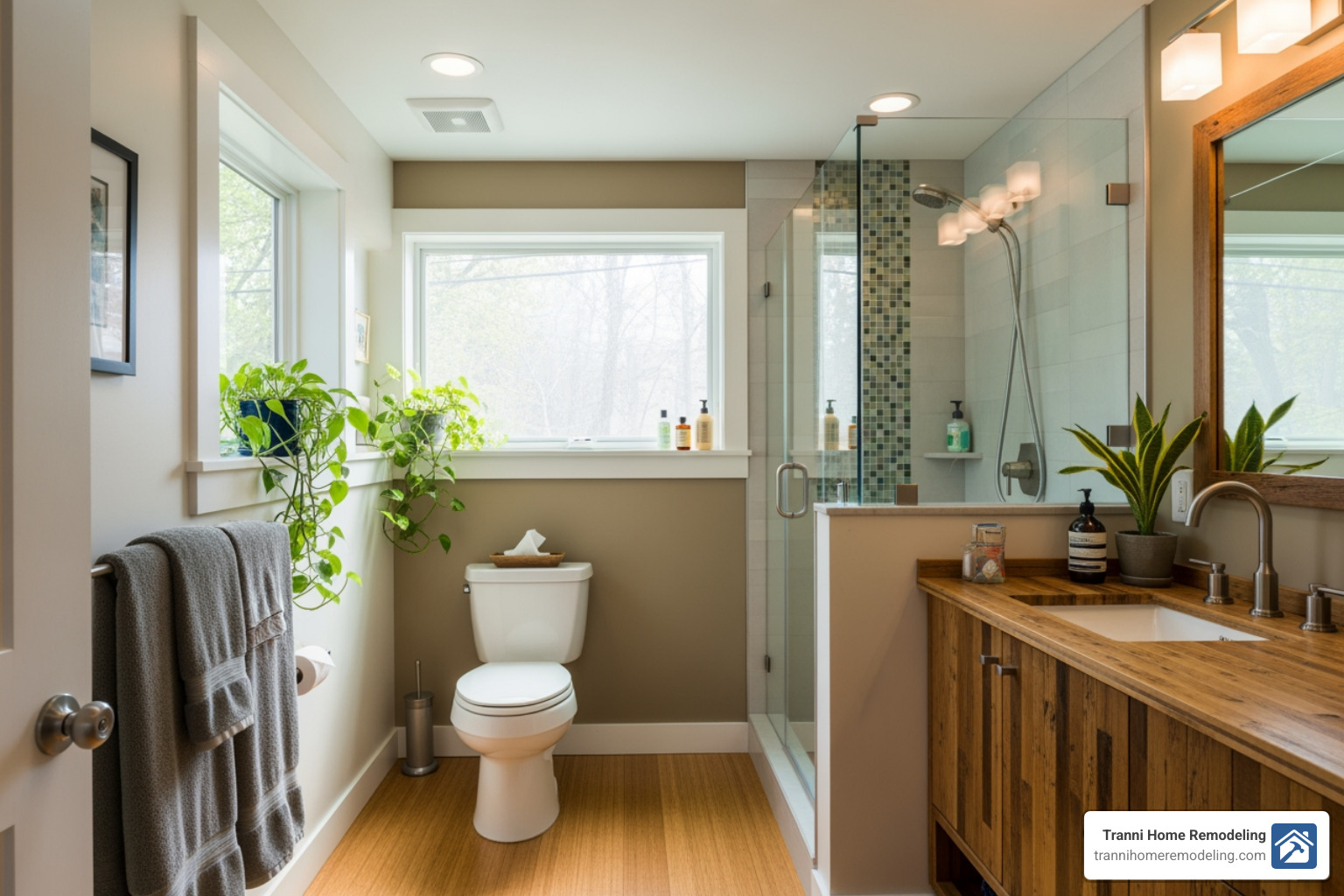
- Sustainable Materials: Choose bamboo, reclaimed wood, recycled glass, and low-VOC paints for healthier indoor air quality
- Energy Efficiency: Upgrade to LED lighting (80% energy savings), Energy Star-rated ventilation fans, and tankless water heaters
- Waste Reduction: Salvage reusable materials, donate old fixtures, and recycle construction debris
According to the EPA, bathrooms consume nearly 60% of household water. Traditional toilets can waste 3.5 to 7 gallons per flush, while modern high-efficiency models use just 1.28 gallons. A leaky toilet alone can waste up to 200 gallons per day. Beyond water savings, residential buildings are responsible for almost 40% of U.S. carbon dioxide emissions—making eco-conscious remodeling a critical step toward sustainability.
The benefits extend beyond environmental impact. Eco-friendly upgrades lower monthly utility bills, increase property value, improve indoor air quality by reducing VOC exposure, and create more durable, long-lasting spaces. Whether you’re replacing outdated fixtures or completing a full renovation, sustainable choices deliver comfort without compromise.
I’m Tyler Tranni, owner of Tranni Home Remodeling in Billerica, MA, and I’ve spent years helping homeowners create beautiful, functional spaces through expert craftsmanship. My experience with eco-friendly bathroom remodel projects has shown me that sustainable upgrades aren’t just good for the environment—they’re smart investments that improve your home’s comfort, efficiency, and value for years to come.
Key terms for Eco-friendly bathroom remodel:
- Bathroom Remodeling Contractor
- how to hire a bathroom remodeling contractor
- what to ask a contractor when remodeling a bathroom
Planning Your Eco-friendly bathroom remodel
Starting on an eco-friendly bathroom remodel begins with thoughtful planning. It’s more than just selecting pretty finishes; it’s about making choices that benefit your home, your health, and the planet in the long run. We believe that a well-planned remodel should consider the entire lifecycle of materials and their impact.
When we plan an eco-friendly renovation in areas like Billerica, MA, North Andover, Dracut, or Lowell, we’re not just looking at immediate aesthetics. We’re considering aspects like the embodied energy of materials, their durability, and their potential for recycling or reuse. This holistic approach helps us achieve true sustainability.
A primary benefit of an eco-friendly bathroom remodel is the creation of a healthier home environment. By reducing exposure to harmful chemicals and improving air quality, we contribute to your family’s well-being. These renovations can also significantly increase your property value, as buyers increasingly seek homes with lower utility bills and sustainable features. Furthermore, eco-friendly remodels can contribute to certifications like LEED, a globally recognized symbol of sustainability achievement. We’re here to guide you through every step of planning your sustainable oasis. For more detailed information on our bathroom remodeling services and how we can integrate eco-conscious practices, visit our More info about bathroom remodeling services page.
Maximizing Water Conservation and Efficiency
Water conservation stands at the core of any eco-friendly bathroom remodel. Given that the bathroom is where we consume nearly 60% of our household water, even small changes can lead to significant savings. We focus on integrating fixtures and systems that drastically reduce water usage without compromising performance or comfort.
Here’s a quick comparison of standard versus WaterSense-labeled fixture flow rates:
| Fixture Type | Standard Flow Rate | WaterSense Labeled Flow Rate | Potential Annual Savings |
|---|---|---|---|
| Showerheads | 2.5 gallons per minute (gpm) | 2.0 gpm or less | Up to 40 gallons per day (average family) |
| Faucets | 2.2 gpm | 1.5 gpm or less | 700 gallons per year (average family) |
| Toilets | 1.6 gallons per flush (gpf) (older models up to 7 gpf) | 1.28 gpf or less | Up to 13,000 gallons per year (average family) |
Source: EPA WaterSense
Choosing WaterSense-labeled products is a straightforward way to ensure efficiency. These products are certified by the EPA to meet strict water efficiency and performance criteria. Beyond fixtures, we also consider innovative solutions like greywater systems. These systems capture gently used water from sinks, showers, and washing machines, then filter and redirect it for non-potable uses like irrigating your yard or garden. This can significantly reduce your outdoor water consumption, which accounts for one-third of residential water use—over 7 billion gallons each day in the U.S.
Leak prevention is another critical aspect. A leaky toilet can waste up to 200 gallons per day, and even small drips from faucets can add up. During your remodel, we carefully check all plumbing for leaks and install high-quality, durable components to prevent future issues.
Water-Wise Fixtures for an Eco-friendly bathroom remodel
When selecting fixtures for your eco-friendly bathroom remodel, we prioritize those that offer maximum water savings while maintaining excellent functionality.
- Toilets: The current federal standard for low-flush toilets is 1.6 gpf, but advancements allow for models using only 1.28 gpf or even less. Dual-flush toilets are an excellent choice, offering two flush options: a lighter flush for liquid waste and a full flush for solid waste. This can save up to 61% of water compared to conventional models. Some innovative designs even feature a sink mounted over the toilet tank, reusing handwashing water for the next flush. The EPA’s WaterSense label is your best indicator of efficiency for toilets.
- Showerheads: Standard showerheads use 2.5 gpm, but WaterSense-labeled models use no more than 2.0 gpm. If your home has a showerhead older than 1992, it could be flowing at up to 5.5 gpm! Water-saving showerheads, like those with Noken Eco-Air technology, can save up to 10% of water while maintaining perceived pressure. We can install options with thermostatic valves for precise temperature control, reducing the amount of water wasted while waiting for the perfect warmth. You can find more scientific research on water savings from efficient showerheads on the EPA WaterSense Showerheads page.
- Faucets: WaterSense labeled bathroom sink faucets use a maximum of 1.5 gpm, reducing water use by 30% or more from the standard 2.2 gpm without sacrificing performance. We can also add aerators to existing or new faucets to curb water flow to as little as 0.5 gpm. Motion-sensor faucets are another option, ensuring water only flows when needed, further minimizing waste.
Innovative Water Heating Solutions
Improving energy efficiency in your bathroom extends to how you heat water. About 18% of the energy used in a home is for heating water, so upgrading your water heater during an eco-friendly bathroom remodel can lead to substantial energy savings. We consider various high-efficiency options suitable for residential HVAC systems:
- Tankless Water Heaters: These units heat water on demand, eliminating the standby energy losses associated with traditional storage tanks. Gas tankless water heaters have been found to use 22% less energy than conventional gas storage units. This means you only heat the water you need, when you need it.
- Heat Pump Water Heaters: These electric water heaters move heat from the surrounding air to the water, making them two to three times more energy-efficient than conventional electric resistance water heaters.
- Solar Thermal Water Heaters: Using the power of the sun, solar water heaters can cut your water heater energy costs by 50%. While they may have a higher upfront cost and often require a backup system for cloudy days, the long-term savings and environmental benefits are significant.
When selecting a new water heater, we always look for the ENERGY STAR label, which signifies superior energy efficiency. You can explore certified models on the Energy Star Certified Water Heaters website. These advanced systems not only reduce your energy consumption but also contribute to a smaller carbon footprint for your home in communities like Woburn, MA, or Wilmington, MA.
Choosing Sustainable Materials and Finishes
The materials we choose for your eco-friendly bathroom remodel have a profound impact on its sustainability, aesthetics, and indoor air quality. We believe in selecting materials that are not only beautiful and durable but also responsibly sourced and environmentally friendly.
For surfaces, we often recommend:
- Bamboo: A rapidly renewable resource, bamboo is durable, moisture-resistant, and offers a unique aesthetic for flooring, cabinetry, or even countertops.
- Cork: Also a renewable material, cork flooring is soft underfoot, naturally antimicrobial, and resistant to mold and mildew, making it ideal for bathrooms.
- Recycled Glass: For countertops, tiles, or decorative accents, recycled glass adds a unique shimmer and diverts waste from landfills. More than 19 million plastic bottles have been repurposed into thousands of pre-sloped and tile-ready shower pan systems since 2015, showcasing the potential of recycled content.
- Reclaimed Wood: Using reclaimed wood for vanities, shelving, or accent walls adds character and reduces the demand for new timber. When using wood products, we always look for certifications like the Forest Stewardship Council (FSC) label, ensuring the wood comes from responsibly managed forests. You can learn more about what this means on the FSC Label Meaning page.
- Stone Tiles: Naturally durable and long-lasting, stone tiles are an excellent choice. We prioritize locally sourced stone to reduce transportation emissions.
The durability of chosen materials is also key to sustainability. High-quality, long-lasting materials reduce the need for frequent replacements, minimizing waste and resource consumption over time. For sustainable and expertly installed flooring options, you can visit our More info about flooring installations page.
Sustainable Materials for an Eco-friendly bathroom remodel
Beyond the primary surfaces, every detail in your eco-friendly bathroom remodel can be an opportunity for a sustainable choice:
- Paints and Finishes: We exclusively recommend low-VOC (Volatile Organic Compound) or zero-VOC paints and finishes. These options release fewer harmful chemicals into your indoor air, contributing to better air quality and a healthier home. This is especially important in the bathroom where humidity can exacerbate off-gassing from traditional paints. For more on our painting services, see our More info about painting and plastering services.
- Cabinetry: Traditional plywood, pressed wood, particle board, and medium-density fiberboard (MDF) often use glues containing formaldehyde, a known carcinogen. We opt for formaldehyde-free woods, solid wood, recycled wood, bamboo, or recycled steel for cabinets and vanities.
- Tiles: Look for tiles with a high percentage of recycled content, such as recycled ceramic or glass tiles. Noken Ceramic, for example, uses reusable and recyclable materials for sanitary fittings, and their slate shower trays incorporate 60% recycled white marble, 30% eco-resin, and 10% mineral perlite.
- Natural Plasters: These can be a beautiful and breathable alternative to traditional wall coverings, contributing to healthier indoor air.
- Antibacterial Surfaces: Some eco-friendly materials are inherently antibacterial or feature special coatings, reducing the need for harsh chemical cleaners and maintaining a hygienic environment.
By making these mindful material selections, we ensure your renovated bathroom in Andover, MA, Methuen, MA, or Middleton, MA is not only stunning but also a testament to sustainable living.
Enhancing Energy Efficiency and Indoor Air Quality
An eco-friendly bathroom remodel isn’t just about water; it’s also about minimizing energy consumption and ensuring superior indoor air quality. Residential and commercial buildings are responsible for almost 40 percent of U.S. carbon dioxide emissions, making energy-efficient upgrades a crucial step towards a greener future. We focus on integrating smart solutions that reduce your energy footprint and create a healthier breathing environment. You can find more information on the impact of buildings on emissions from the Scientific research on building emissions.
- LED Lighting: The simplest and most impactful energy upgrade is switching to LED lights. LED lights use only 25% of the energy used by traditional incandescent bulbs and have a life expectancy 25 times longer. Some sources even state they save up to 80% or 90% of energy. This dramatically reduces electricity consumption and the frequency of bulb replacement. We strategically place LED fixtures and can incorporate dimmers or motion sensors to ensure lights are only on when needed.
- Energy-Efficient Ventilation: A well-ventilated bathroom prevents mold, mildew, and excess humidity, which can negatively impact air quality and the longevity of your materials. We install ENERGY STAR certified exhaust fans, which use 60% less energy on average compared to non-certified models. These newer models are quieter and often include humidity sensors, ensuring they run only when necessary to clear the air effectively.
- Natural Light: Maximizing natural light plays a significant role in an eco-friendly bathroom remodel. Strategic window placement, skylights, or solar tubes can flood your bathroom with daylight, reducing the need for artificial lighting during the day. Natural light also helps to reduce and prevent mildew or mold by keeping the space brighter and drier.
- Radiant Floor Heating: For comfortable warmth, we often recommend installing underfloor heating. This eco-friendly heating system operates at a lower temperature than traditional forced-air systems, heats the room quickly, and can even be powered by renewable energy sources. It provides clean, less polluted air, and eliminates ductwork heat loss, making it a highly efficient option for your home in Reading, MA, or North Reading, MA.
By combining these elements, we create bathrooms that are bright, fresh, and exceptionally energy-efficient, contributing to a healthier home and a healthier planet.
Waste Reduction and Responsible Disposal
Reducing waste is a cornerstone of our approach to an eco-friendly bathroom remodel. A renovation project inevitably generates debris, but with careful planning, much of it can be diverted from landfills through recycling, donation, and repurposing. We accept the “3 Rs” – Reduce, Reuse, Recycle – to minimize our environmental impact and promote a circular economy.
Here’s a list of common bathroom materials that can often be recycled:
- Ceramic and Porcelain Tiles: Many recycling centers accept clean, broken tiles.
- Glass: Shower doors, mirrors, and glass tiles can often be recycled.
- Metal: Old fixtures like faucets, showerheads, and pipes are valuable scrap metal.
- Wood: Cabinets, vanities, and framing lumber can be recycled or salvaged.
- Plastics: Shower surrounds or tubs made from certain plastics may be recyclable.
Before demolition begins, we assess existing fixtures and materials for their potential to be reused or repurposed. Old vanities, sinks, faucets, and even toilets (especially those in good condition or with unique vintage appeal) can often be donated to local salvage stores or architectural salvage companies. You can also list usable items on online marketplaces for others to pick up. For example, some people might treasure an old pink toilet!
Repurposing is another creative way to reduce waste. An old dresser can be transformed into a stylish sink stand, or vintage fixtures can add unique character to your new bathroom. We’ve even seen how innovative products like shower pan systems made from PET plastic foam repurpose over 19 million plastic bottles since 2015, turning waste into durable building materials.
By working with us, you ensure that your eco-friendly bathroom remodel not only incorporates sustainable new materials but also responsibly manages the existing ones, contributing to a truly green renovation process in communities like Stoneham, MA, or Tewksbury, MA.
Frequently Asked Questions about Green Remodeling
Homeowners in Billerica and the surrounding areas often have questions about the practicalities of undertaking an eco-friendly bathroom remodel. Here, we address some of the most common inquiries.
How much does an eco-friendly bathroom remodel cost?
The cost of an eco-friendly bathroom remodel can vary widely, just like any other renovation project. Based on average costs reported across the internet, a basic eco-friendly remodel might start around $5,000, while a luxury, high-end renovation incorporating advanced sustainable technologies and premium materials could easily exceed $55,000. These are general averages and not actual costs for Tranni Home Remodeling.
While some eco-friendly materials or fixtures might have a higher upfront cost, many offer significant long-term savings through reduced utility bills (water and energy). This improved efficiency often leads to a strong return on investment (ROI) over the lifespan of your home, making the slightly higher initial investment worthwhile. The overall cost will depend on the size of your bathroom, the extent of the remodel, and the specific eco-friendly choices you make.
What are the primary benefits of low-VOC paints?
The advantages of using low-VOC (Volatile Organic Compound) paints and finishes in your eco-friendly bathroom remodel are substantial, primarily impacting indoor air quality and health.
- Improved Indoor Air Quality: Traditional paints and finishes release VOCs into the air, sometimes for years after application. These chemicals can cause headaches, nausea, dizziness, and respiratory irritation. Low-VOC or zero-VOC paints significantly reduce these harmful emissions.
- Reduced Toxin Exposure: Formaldehyde, for example, is a known carcinogen often found in glues used in conventional pressed wood products and can off-gas from some traditional paints. By choosing low-VOC options, we eliminate these dangerous compounds from your home. You can find more information on formaldehyde from this Scientific research on formaldehyde.
- Allergy and Asthma Relief: For individuals with allergies or asthma, the reduced chemical burden in the air can lead to fewer symptoms and a more comfortable living environment.
- Environmental Safety: Beyond your home, fewer VOCs released means less air pollution, contributing to a healthier outdoor environment as well.
Choosing low-VOC paints is a simple yet powerful step towards a healthier and more sustainable bathroom.
How can I find a qualified eco-expert contractor?
Finding a contractor with expertise in eco-friendly renovations is crucial for a successful eco-friendly bathroom remodel. You’ll save time, headaches, and money by choosing someone familiar with sustainable products and practices. Here’s what we recommend looking for:
- Experience and Portfolio: Look for contractors who can demonstrate previous eco-friendly projects. Ask to see their portfolio and inquire about specific sustainable materials or techniques they’ve used.
- Green Certifications: While not mandatory, certifications in green building practices indicate a contractor’s commitment and knowledge.
- Sustainable Sourcing Knowledge: A knowledgeable eco-expert contractor will be able to guide you on sourcing environmentally friendly materials, from FSC-certified wood to recycled content tiles, and potentially local suppliers in areas like Chelmsford, Lowell, or Burlington.
- Commitment to Waste Reduction: Discuss their approach to construction waste. Do they recycle demolition debris? Do they have relationships with salvage stores?
- Local Expertise: A contractor familiar with local building codes and climate considerations in Billerica and the surrounding communities can offer custom advice for energy efficiency and moisture management.
We pride ourselves on our high-quality craftsmanship and our commitment to sustainable practices, ensuring your eco-friendly bathroom remodel is handled with expertise and care.
What are some common mistakes to avoid during an eco-friendly bathroom remodel?
Even with the best intentions, it’s easy to stumble into common pitfalls during an eco-friendly bathroom remodel. We help our clients avoid these mistakes:
- Failing to Consider the Full Lifecycle of Materials: It’s not just about what a material is made from, but also how it’s produced, transported, installed, and what happens to it at the end of its life. For example, a “natural” material sourced from far away might have a larger carbon footprint than a recycled material sourced locally.
- Overbuilding or Choosing Excessively Large Fixtures: Bigger isn’t always better for the environment. An oversized shower or bathtub, while luxurious, consumes more water and energy. We work with you to design a functional and comfortable space that meets your needs without unnecessary excess.
- Ignoring Ventilation: Proper ventilation is critical in a bathroom to prevent mold and mildew, which can compromise indoor air quality and the longevity of materials. Don’t overlook installing an efficient, ENERGY STAR-rated exhaust fan, ideally with a humidity sensor.
- Poor Waste Management: Simply tossing all demolition debris into a dumpster negates many eco-friendly efforts. Ensure your contractor has a plan for recycling, donating, or repurposing old materials.
- Skipping Permits: While not directly eco-friendly, failing to secure necessary permits can lead to costly rework, fines, and potential issues with insurance or future home sales. We ensure all necessary permits are obtained for your remodel in areas like Lowell, MA, or Lynnfield, MA.
Avoiding these common mistakes ensures your eco-friendly bathroom remodel is truly sustainable and delivers on its promises.
Conclusion
An eco-friendly bathroom remodel is a powerful investment in your home’s future and the planet’s well-being. By focusing on water conservation, sustainable materials, energy efficiency, and waste reduction, you create a space that is not only beautiful and comfortable but also healthier, more cost-effective, and environmentally responsible.
At Tranni Home Remodeling, based in Billerica, MA, we bring over a decade of experience and high-quality craftsmanship to every project. We are dedicated to helping homeowners in Billerica and the surrounding areas build a sustainable future, one beautiful bathroom at a time. Let us help you transform your vision into an eco-conscious reality.
