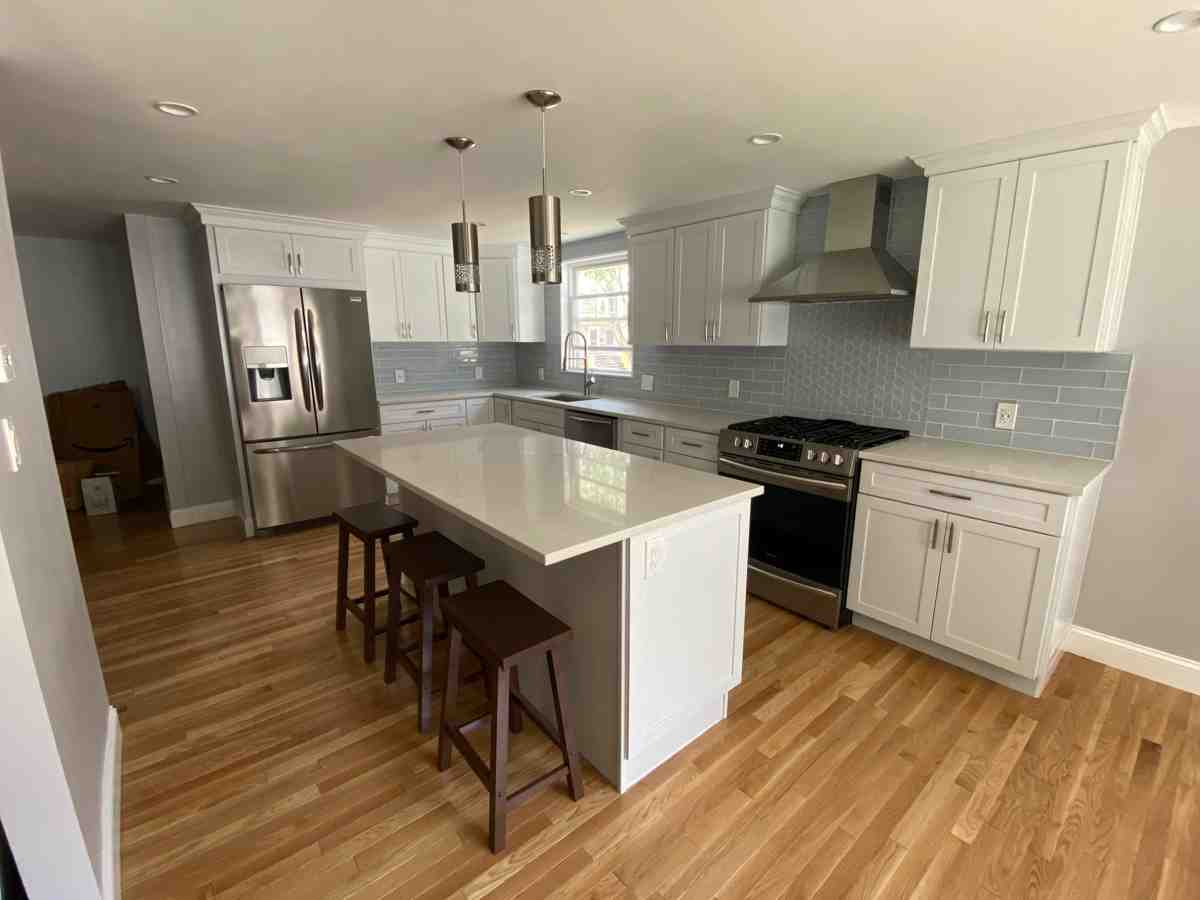





Why a Professional Kitchen Renovation Is Worth Getting Right
Professional kitchen renovation is one of the highest-impact home improvements you can make — both for daily life and long-term home value.
Here’s what you need to know at a glance:
- Average cost: Roughly $15,000–$120,000+ depending on scope (Please note: these are average costs based on internet data and do not represent actual project pricing for Tranni Home Remodeling)
- ROI: Homeowners typically recoup 52%–85% of their investment at resale
- Timeline: 4–16 weeks for most residential projects, depending on materials and scope
- Key decisions: Full remodel vs. cabinet refacing, custom vs. in-stock cabinets, layout changes vs. cosmetic updates
- Who to hire: Specialized remodeling companies offer design, permits, and installation under one roof — a major advantage over big-box retailers or general contractors
The kitchen is the most-used room in most homes. When it doesn’t work — bad layout, outdated storage, poor lighting — it affects everything. That frustration is exactly why so many homeowners in Billerica, MA and surrounding areas start researching a renovation, sometimes years before pulling the trigger.
This guide walks you through every stage of the process: planning, materials, costs, permits, and how to choose the right professional for the job.
I’m Tyler Tranni, owner of Tranni Home Remodeling, and I’ve spent years delivering professional kitchen renovations for homeowners across Billerica and the Merrimack Valley. In this guide, I’ll share what I’ve learned from real projects — so you can move forward with confidence.
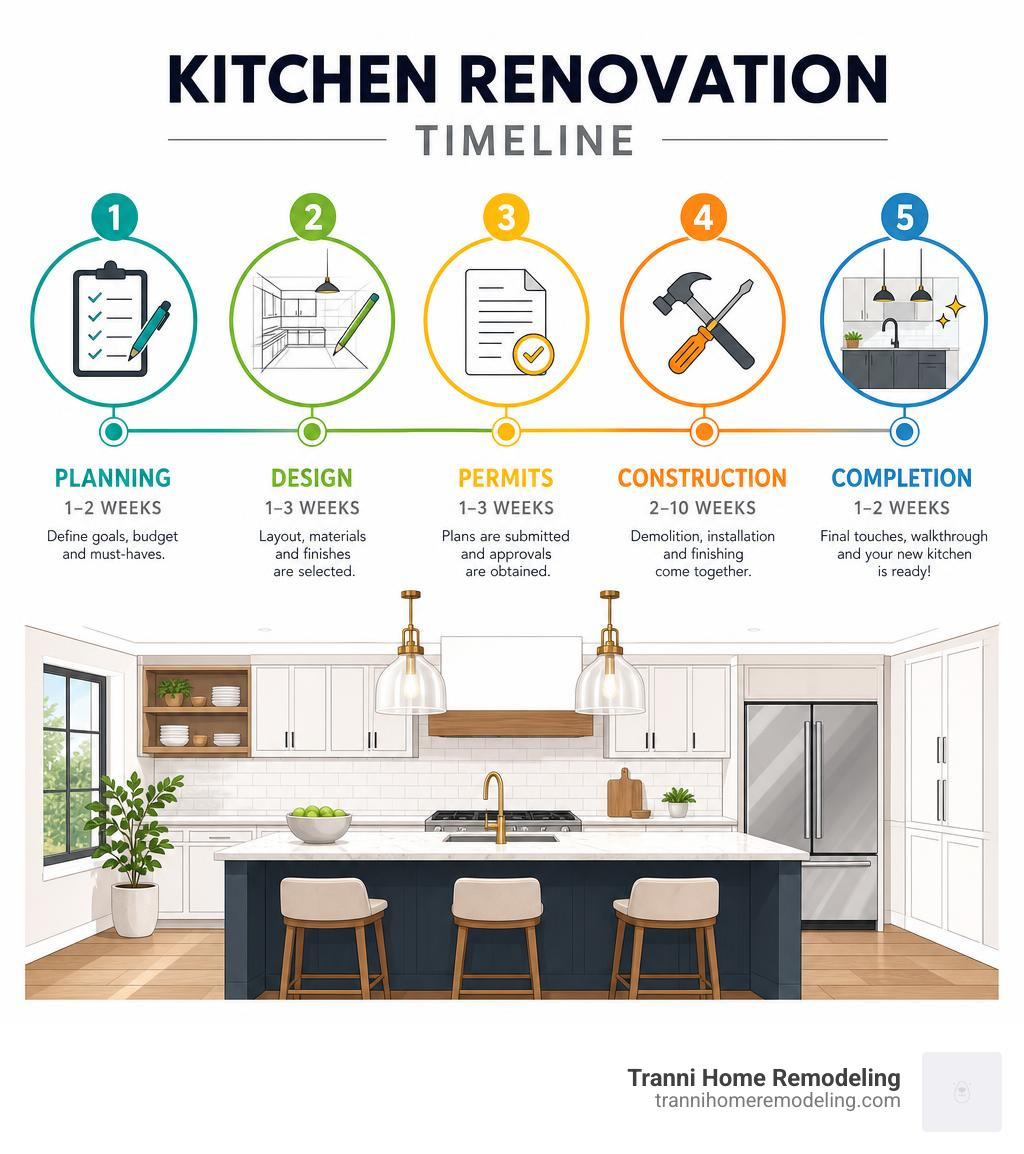
Must-know Professional kitchen renovation terms:
Planning Your Professional Kitchen Renovation
A successful professional kitchen renovation does not start with a sledgehammer; it starts with a pencil and a floor plan. Before you pick out a single slab of quartz or look at paint swatches, you must analyze how your family actually uses the space.
The cornerstone of functional kitchen design is the “work triangle” — the invisible path connecting your refrigerator, cooktop, and sink. If these three elements are too far apart, you will waste energy walking back and forth. If they are too close together, you will feel cramped and crowded, especially if more than one person cooks at the same time. Modern designs often expand this concept into distinct “zones” for meal prep, cooking, cleaning, and storage.
When planning a kitchen renovation, you should also think about structural changes. Are you looking to remove a wall to create an open-concept living space? This is a popular way to improve family communication and make a cramped home feel twice as large. However, removing walls often requires structural beams, rerouting plumbing, and updating electrical wiring.
Working with local design resources can help you refine these ideas. For instance, consulting with specialized designers can help you balance high-end aesthetics with practical, daily usability.
Custom Cabinetry in a Professional Kitchen Renovation
Cabinets are the visual anchor and the primary storage engine of your kitchen. When planning your layout, you must choose between custom cabinets, semi-custom cabinets, or in-stock options.
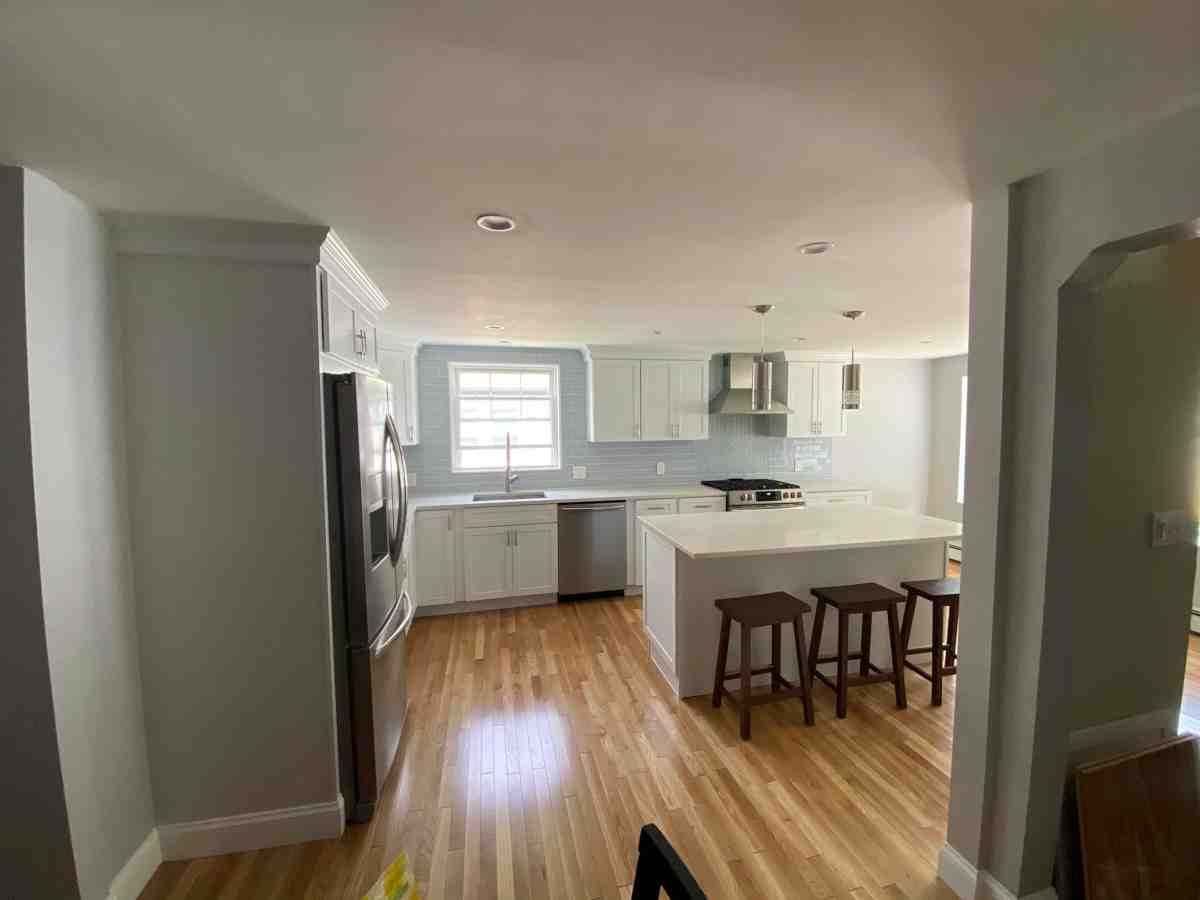
- Custom Cabinetry: Built from scratch to fit your kitchen’s exact dimensions. Custom cabinets are ideal for older or historic homes in towns like Carlisle, MA or Chelmsford, MA, where walls are rarely perfectly straight and standard cabinet sizes leave wasted space. They allow for specialized features like deep pot drawers, pull-out spice racks, and custom appliance panels.
- In-Stock Cabinets: Pre-manufactured in standard sizes. While they are budget-friendly and readily available, they limit your design flexibility.
- Cabinet Refacing: If your existing cabinet boxes are structurally sound, sturdy, and you like your current layout, cabinet refacing is an eco-friendly and cost-effective alternative. This process involves keeping the existing cabinet frames, applying a new wood veneer, and replacing all doors, drawer fronts, and hardware.
Lead times are a critical factor to keep in mind when scheduling your project. According to industry data, custom cabinet lead times typically range from 7 to 16 weeks. In contrast, in-stock cabinets are often available immediately or within 4 weeks.
Because cabinetry is such a major investment, working with an experienced kitchen remodeling contractor ensures your measurements are exact down to the millimeter, preventing costly delays during installation.
Regulatory Compliance in a Professional Kitchen Renovation
Many homeowners overlook the boring but vital side of remodeling: building codes, permits, and inspections. A professional kitchen renovation is not just a cosmetic makeover; it involves complex electrical, plumbing, and structural systems.
In Massachusetts, particularly across Middlesex County towns like Billerica, Chelmsford, and Lexington, local building departments strictly enforce the state building code. If your project involves moving plumbing lines, adding new electrical outlets, or knocking down walls, you must secure the proper permits.
Experienced kitchen renovation contractors handle this entire process for you. They will file the paperwork, coordinate with local inspectors, and ensure all work complies with safety standards, such as:
- GFCI Outlets: Must be installed near all water sources to prevent electrical shock.
- Dedicated Circuits: High-draw appliances like refrigerators, microwaves, and dishwashers require their own dedicated electrical circuits.
- Proper Ventilation: Range hoods must vent outdoors to maintain indoor air quality.
Skipping permits might save a little time upfront, but it can cause massive headaches later. Unpermitted work can lead to fines, force you to tear out finished work for inspections, and create major obstacles when you try to sell your home.
Specialized Remodeling Companies vs. Big-Box Retailers
When you decide to remodel, you have a few paths to choose from: hiring a specialized kitchen remodeling company, working with a big-box retailer like Home Depot or Lowe’s, or hiring a general contractor.
| Feature | Specialized Remodeling Company | Big-Box Retailer | General Contractor |
|---|---|---|---|
| Design Process | In-house designers, 3D renderings, custom material matching | Standard computerized templates, limited customization | Often outsourced or relies on homeowner’s plan |
| Project Management | Dedicated project manager from start to finish | Subcontracted installers, multiple points of contact | Hands-on, but handles multiple different types of jobs |
| Customization | High; custom cabinetry, unique layouts, historic matching | Moderate to low; mostly standard cabinet sizes | Varies; depends on subcontractor network |
| Permits & Codes | Handled completely by the company | Often excluded or left to the subcontractor | Handled by the contractor |
While big-box retailers are excellent for purchasing materials, their installation services often rely on a rotating network of local subcontractors. This can lead to inconsistent communication and scheduling delays.
A specialized remodeling company provides a single point of contact, ensuring that the designer who drew your layout is in constant communication with the carpenters installing your cabinets. If you are looking for local inspiration or design resources in the Merrimack Valley, you can explore regional design portfolios online. Understanding why hire a contractor to remodel your kitchen boils down to this: you are paying for seamless coordination, accountability, and peace of mind.
Design and Installation Standards
A professional design process is highly collaborative. It typically begins with an in-home consultation to measure your space and discuss your goals.
From there, designers use advanced software to create a detailed 3D rendering of your new kitchen. This allows you to see exactly how your chosen cabinets, countertops, and appliances will look together before any construction begins. It also lets you test different layouts and color palettes with the click of a button.
Once you approve the design, a dedicated project manager coordinates the logistics. They will manage material deliveries, schedule the trade professionals (plumbers, electricians, tile setters), and ensure the job site stays clean and safe. This level of organization is standard among high-quality kitchen remodel services, ensuring your project stays on schedule and within budget.
Commercial vs. Residential Kitchen Workflows
While residential kitchens focus on warmth, comfort, and family gathering, commercial kitchens are designed for high-volume production, speed, and strict health regulations.

The differences between the two are substantial:
- Materials: Residential kitchens utilize warm wood, natural stone, and decorative tile. Commercial kitchens rely almost exclusively on non-porous stainless steel and epoxy flooring for easy cleaning and sanitization.
- Ventilation: Commercial kitchens require massive, heavy-duty ventilation systems to clear grease, heat, and smoke, which must meet strict fire safety codes.
- Regulatory Requirements: Commercial projects must comply with health department regulations, ADA accessibility standards, and commercial fire codes.
For commercial foodservice spaces, layouts must prioritize staff movement, safety, and workflow efficiency over residential design trends. Upgrading utility systems in these environments requires careful planning to meet modern commercial performance standards.
Costs, Timelines, and ROI of Kitchen Remodeling
Let’s talk about the financial side of a kitchen remodel. When researching costs online, you will find a wide range of figures.
According to general internet data, the average cost of a kitchen remodel ranges from $13,000 to $38,000. However, high-end, fully custom renovations in upscale homes can easily exceed $120,000+.
Please note: These figures are wide ranges based on national internet data and do not represent actual project pricing for Tranni Home Remodeling. Every home is unique, and actual costs depend on your specific layout, material choices, and structural needs.
Investment and Resale Value
A kitchen remodel is a major investment, but it is also one of the most reliable ways to increase your home’s resale value. Homeowners can typically expect to recoup 52% to 85% of their kitchen remodel investment when selling their home.
Beyond financial return, a modern kitchen improves your home’s energy efficiency. Upgrading to ENERGY STAR-rated appliances and installing LED lighting can significantly reduce your monthly utility bills. LED bulbs are highly efficient, generate very little heat, and can last up to 50,000 hours, saving you hundreds of dollars in energy and replacement costs over their lifespan.
To help you visualize how different scopes of work affect your budget, here is a comparison of typical renovation levels:
| Renovation Scope | Typical Updates Included | Average Timeline | Estimated ROI |
|---|---|---|---|
| Minor / Cosmetic | Cabinet refacing, new hardware, fresh paint, basic countertop upgrade | 2 to 4 weeks | Up to 85% |
| Mid-Range | Semi-custom cabinets, quartz countertops, new tile backsplash, mid-tier appliances | 4 to 8 weeks | 60% to 75% |
| Major / Custom | Custom cabinetry, structural wall removal, layout reconfiguration, premium appliances, custom lighting | 8 to 16+ weeks | 52% to 65% |
Planning a smart budget means balancing your personal style with practical upgrades. For more tips on budgeting and finding local contractors, check out our guide on kitchen remodeling.
Frequently Asked Questions about Kitchen Remodeling
Renovating a kitchen is a major undertaking, and it is completely normal to have questions. Here are answers to some of the most common concerns we hear from homeowners.
How long does a typical kitchen renovation project take?
The timeline for a kitchen renovation depends entirely on the scope of work.
A minor cosmetic update or cabinet refacing project can be completed in 2 to 4 weeks. A mid-range remodel typically takes 4 to 8 weeks. A major, down-to-the-studs custom renovation — especially one involving structural changes, moving plumbing lines, or waiting on custom cabinets — can take 8 to 16 weeks or more.
During the active construction phase, your kitchen will be out of commission. We always recommend setting up a temporary kitchen space in another room with a microwave, coffee maker, and mini-fridge to minimize disruption to your daily routine.
Should I reface or replace my kitchen cabinets?
This decision comes down to three factors: your budget, your existing cabinet boxes, and whether you want to change your kitchen’s layout.
- Reface if: Your current layout works well, your cabinet boxes are structurally sound (no water damage, warping, or soft spots), and you want to save money while giving your kitchen a fresh, updated look.
- Replace if: Your current layout is dysfunctional, you need more storage space, or your cabinet boxes are made of cheap, failing materials. If you want to move your sink, stove, or refrigerator, you will need to replace the cabinets to accommodate the new layout.
What permits are required for a kitchen remodel?
In Massachusetts, you will generally need a combination of the following permits for a kitchen remodel:
- Building Permit: Required for structural changes, such as removing walls, installing new windows, or replacing structural drywall.
- Electrical Permit: Required for installing new outlets, upgrading your electrical panel, or running new wiring for appliances.
- Plumbing Permit: Required for moving your sink, installing a new dishwasher, or rerouting water and gas lines.
Your contractor should handle securing all necessary permits and scheduling the required inspections with your local town hall.
Conclusion
A professional kitchen renovation is an investment in your home’s value, your comfort, and your family’s daily life. Whether you are looking to open up your floor plan, upgrade to custom cabinetry, or completely reimagine your space, working with an experienced team ensures the job is done right, on time, and up to code.
At Tranni Home Remodeling, based in Billerica, MA, we specialize in high-quality craftsmanship and outstanding service. We proudly serve homeowners across Middlesex County, including:
- Andover, MA
- Bedford, MA
- Billerica, MA
- Burlington, MA
- Carlisle, MA
- Chelmsford, MA
- Dracut, MA
- Lexington, Lynnfield, Methuen, North Andover, North Reading, Reading, Stoneham, Tewksbury, Wilmington, Winchester, and Woburn.
If you are ready to stop fighting a dysfunctional layout and start designing your dream kitchen, we are here to help. Contact us today to connect with a professional kitchen designer and take the first step toward a beautiful, functional home.
Like us on Facebook!