





upgrading electrical in old home: 10 Essential Steps 2025
The Hidden Dangers Behind Your Walls
Upgrading electrical in old home is essential for safety, functionality, and peace of mind. If you’re wondering what this process involves, here’s a quick overview:
Key Steps to Upgrade Electrical in an Old Home:
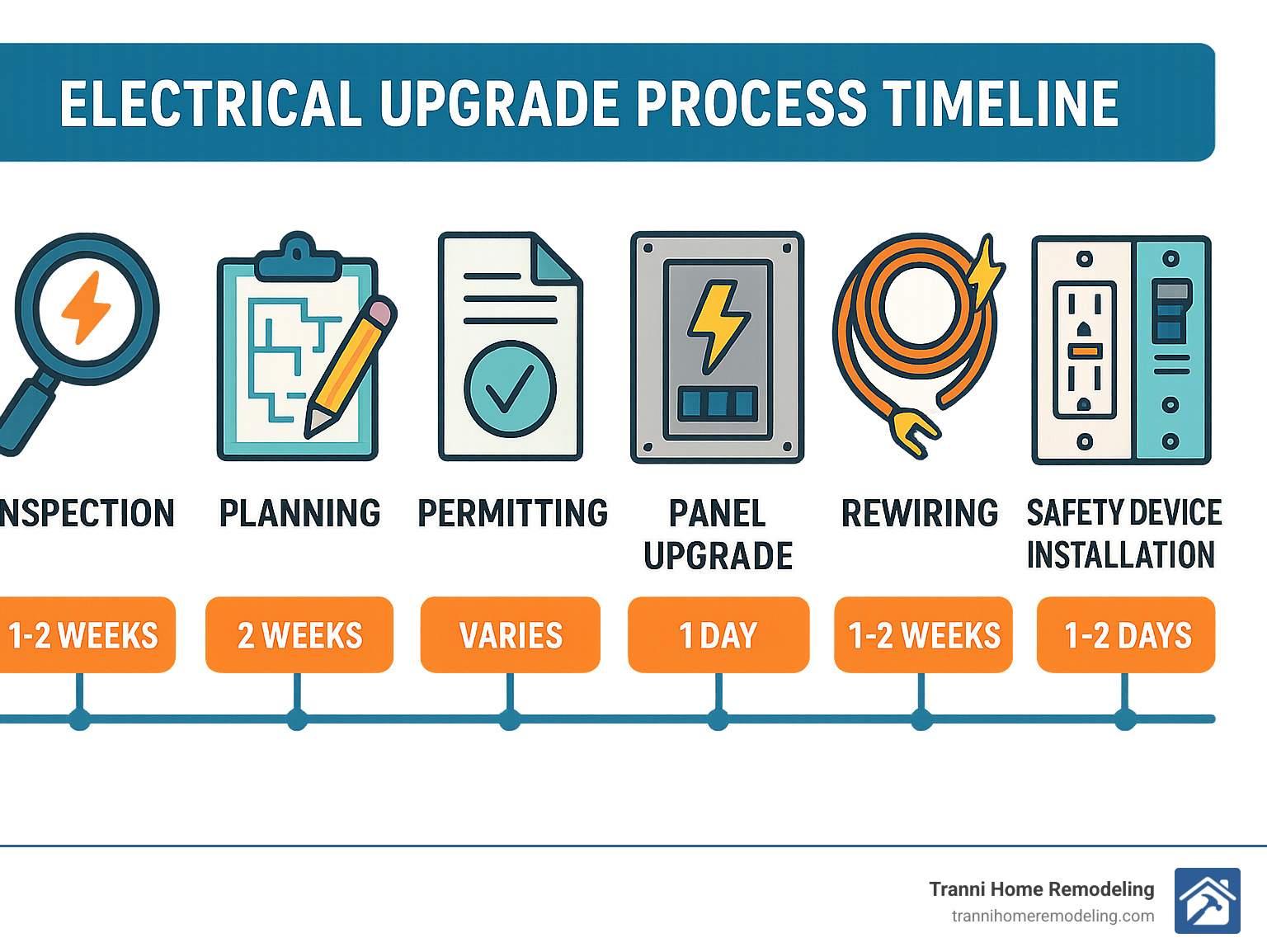
1. Inspection – Have a licensed electrician assess your current system
2. Panel upgrade – Replace outdated fuse boxes or panels with modern 200-amp service
3. Rewiring – Replace hazardous knob-and-tube or aluminum wiring with copper
4. Safety devices – Install GFCI outlets in kitchens/bathrooms and AFCI breakers
5. Add outlets – Increase outlet count to meet modern needs
6. Permits and inspections – Ensure all work is code-compliant
The lights flicker when you run the microwave. Your breakers trip regularly. Extension cords snake across rooms because there aren’t enough outlets. These aren’t just annoyances – they’re warning signs that your old home’s electrical system needs attention.
Older homes have undeniable charm and character, but their electrical systems weren’t designed for today’s technology demands. A home built in the 1950s was wired for basic lighting and maybe a refrigerator and radio – not computers, entertainment systems, air conditioning, and countless charging devices.
According to the Electrical Safety Foundation International, approximately 51,000 home electrical fires occur each year, resulting in around 500 deaths and $1.3 billion in property damage. Many of these tragedies could be prevented with proper electrical upgrades.
I’m Tyler Tranni, owner of Tranni Home Remodeling, and I’ve guided countless homeowners through the process of upgrading electrical in old home systems to ensure their safety while preserving their home’s character. Our team specializes in careful electrical upgrades that protect your investment while minimizing disruption to your beautiful old home.
Upgrading electrical in old home terms explained:
– Home wiring replacement
– change 100 amp panel to 200 amp
– new electrical panel old wiring
Why Upgrade the Electrical System in an Old Home?
When our team visits homeowners in Middlesex County, we often hear: “My lights still turn on, so why should I upgrade?” The truth is, functional lights are just the bare minimum of what your electrical system should provide.
The National Fire Protection Association has identified faulty wiring as the number one cause of residential fires. Homes with outdated electrical systems face significantly higher risks. Beyond keeping your family safe, there are compelling reasons to consider upgrading electrical in old home systems:
Safety First: Those charming old wiring systems like knob-and-tube or aluminum wiring might have character, but they deteriorate over time. What was cutting-edge in 1940 has become a serious fire hazard in 2023. A professional upgrade dramatically reduces these risks.
Modern Power Demands: Think about it – homes today use 3-4 times more electricity than those built in the 1960s. Your grandmother’s house wasn’t designed to handle multiple TVs, computers, air conditioning, and dozens of charging devices. That old 60-amp or 100-amp service is likely straining under the weight of modern life.
Insurance Requirements: Many homeowners find the hard way that their insurance company either refuses coverage or charges premium rates for outdated electrical systems. Some won’t touch homes with knob-and-tube wiring at all, leaving you financially vulnerable.
Code Compliance: While older systems may be “grandfathered in,” any modifications typically require bringing the affected areas up to current code. Better to plan this upgrade than have it forced upon you during another project.
Energy Efficiency: Modern electrical systems deliver power more efficiently, potentially reducing those monthly utility bills that keep climbing.
Home Value: Updated electrical systems can increase your property value by 3-5% and make your home significantly more attractive to potential buyers who don’t want to deal with electrical headaches.
As Greg Fletcher, a master electrician with over 30 years of experience, explains, “Aluminum wiring connections often loosen up over time…that can cause overheating and possibly fires. That’s why we recommend upgrading these systems even if they appear to be functioning.”
According to the Electrical Safety Foundation International, approximately 51,000 home electrical fires occur annually, causing around 500 deaths and $1.3 billion in property damage. Many could have been prevented with proper electrical upgrades.
Signs You Can’t Ignore
Before diving into the upgrade process, let’s identify the warning signs that your electrical system needs immediate attention:
Flickering or dimming lights when you run the microwave or air conditioner? That’s your system crying for help, not a ghost.
Warm or discolored outlets or switches indicate dangerous overheating happening inside your walls.
Frequently tripped breakers or blown fuses are your system’s way of saying “I can’t handle this!” rather than just being annoying.
Buzzing sounds from outlets or switches could mean electricity is arcing where it shouldn’t be.
Burning smells near electrical fixtures represent immediate fire danger – don’t ignore these!
Shock or tingling sensation when touching appliances means electricity is finding paths it shouldn’t.
Two-prong ungrounded outlets throughout the home leave your electronics vulnerable and increase shock risk.
Visible damaged or frayed wiring in basements, attics, or crawl spaces is an accident waiting to happen.
One Lexington homeowner told us after an upgrade: “We were playing a constant game of ‘electrical musical chairs’ with our devices before the upgrade. Now, with adequate outlets and capacity, everything has its place, and we don’t worry about overloading the system.”
Safety Risks of Outdated Wiring
The dangers of outdated electrical systems go far beyond inconvenience:
Shock and Electrocution Risk: Older wiring often lacks proper grounding, significantly increasing the risk of electrical shock. The Consumer Product Safety Commission reports approximately 400 people are electrocuted in the U.S. annually, with home wiring being a major contributor.
Fire Hazard: Deteriorated insulation, overloaded circuits, and loose connections generate heat and sparks. The ESFI reports that electrical distribution systems are the third leading cause of home fires – a statistic no homeowner wants to be part of.
Ungrounded Circuits: If your home was built before 1960, you likely have two-prong outlets without that crucial third prong that provides grounding protection for modern electronics. This isn’t just inconvenient – it’s dangerous for both people and expensive devices.
Overloaded Conductors: When wires carry more current than they were designed for, they heat up. This silent problem deteriorates insulation and can eventually cause fires inside your walls where you can’t see them until it’s too late.
Aluminum Wiring Corrosion: Homes built between 1965-1973 often used aluminum wiring, which expands and contracts more than copper, leading to loose connections and potential fire hazards. These homes are 55 times more likely to have fire hazard conditions than those with copper wiring – a risk not worth taking with your family’s safety.
Identifying Your Existing Wiring & Panel
Before planning any upgrade, we need to identify what you’re currently working with. Different eras of home construction used different wiring methods, each with its own considerations.

Common Wiring Types in Older Homes:
Walking into an attic or basement of an older home can feel like stepping into an electrical time capsule. Those strange ceramic fixtures with wires running through them? That’s knob-and-tube wiring, the great-grandfather of modern electrical systems.
Knob-and-Tube Wiring (pre-1940s) was the first standardized residential wiring method. Those porcelain knobs supported wires along joists while ceramic tubes protected wires passing through wood framing. While ingenious for its time, it lacks the safety features we now take for granted. There’s no grounding wire, the insulation crumbles with age, and it can’t handle your modern appliances. The biggest danger? When homeowners add insulation that traps heat around these wires – a potential recipe for disaster.
“I’ve seen knob-and-tube wiring that’s been functioning for over 80 years,” says our master electrician, “but that doesn’t mean it’s safe to keep using it. It’s like driving a Model T on the highway – it wasn’t designed for today’s demands.”
Aluminum Wiring (1960s-1970s) appeared during a copper shortage and seemed like a smart alternative – until problems emerged. Aluminum expands and contracts more than copper when heated, gradually loosening connections. While not all aluminum wiring needs immediate replacement, it requires special attention and often remediation with specialized connectors approved for aluminum wire.
BX or Armored Cable (1930s-1950s) looks like a metal-covered snake running through your walls. This flexible metal cladding offered better protection than knob-and-tube, but here’s the catch – many installations lack a dedicated grounding wire. The metal sheathing itself was supposed to serve as the ground, a method now considered inadequate by modern standards.
Cloth-Insulated Wiring (1920s-1950s) has a distinctive fabric-like covering over rubber insulation. Time hasn’t been kind to these materials – the rubber becomes brittle, cracks, and eventually exposes bare conductors. When we find this wiring during a renovation, replacement is typically the only safe option.
According to the National Association of Certified Home Inspectors, knob and tube wiring is particularly concerning because “its insulation is susceptible to deterioration… and it lacks a grounding conductor, which is a safety feature that has been required in electrical installations since 1962.”
How to Determine If Your Wiring Is Safe or Needs Replacement
While nothing replaces a professional inspection, here are some initial steps you can take to assess your electrical system:
Start with a visual inspection of any exposed wiring in basements, attics, and crawl spaces. Look for cracked insulation, discoloration, or any signs of heat damage. One Chelmsford homeowner told us, “I never thought to look at the wires in my basement until your article. Finding those frayed cloth wires was a wake-up call.”
Perform an age check by determining when your home was built or last rewired. Anything before the 1980s deserves professional evaluation. Those charming Middlesex County colonials and Victorians almost certainly need electrical updates.
Examine your electrical panel for warning signs: rust or corrosion, warm spots (use the back of your hand, never touch directly), buzzing sounds, or manufacturer names like Federal Pacific Electric (FPE) or Zinsco – both known for dangerous failure rates and should be replaced immediately.
Finally, consider a simple outlet test using an inexpensive tester from any hardware store. These devices can quickly identify improper wiring and grounding issues throughout your home.
For a truly comprehensive assessment, we always recommend having a licensed electrician perform a thorough inspection. At Tranni Home Remodeling, our home wiring replacement services begin with a detailed evaluation to identify both immediate safety issues and future upgrade opportunities.
When Your Electrical Panel Is the Bottleneck
Your electrical panel is like your home’s heart – if it’s not up to the task, the whole system suffers. Many homeowners focus on visible issues like outlets and switches, but an undersized or outdated panel can undermine every electrical improvement you make.
Amperage Ratings Explained:
Think of your panel’s amperage rating as the size of your home’s electrical pipeline. A 60-amp service (common before 1970) is like trying to supply a modern home through a drinking straw – technically possible but constantly strained. A 100-amp service (standard in the 1970s-1980s) provides the minimum for a smaller home but struggles with today’s demands.
Most modern homes require at least a 200-amp service to comfortably handle contemporary appliances, electronics, and HVAC systems. Larger homes over 3,000 square feet or those with extensive electrical needs (workshop, electric vehicle charging, hot tub) often benefit from 400-amp service.
“It’s very hard on these devices if the voltage drops off,” explains Bob Hauser, a veteran electrician we work with. “Many people don’t realize their electronics are being damaged by voltage fluctuations from an overloaded panel.”
Warning signs that your panel needs upgrading electrical in old home include:
Breakers that trip frequently, especially when multiple appliances run simultaneously. One Billerica family told us they couldn’t run their microwave and toaster at the same time without losing power – a classic sign of an inadequate panel.
If you still have a fuse panel instead of circuit breakers, it’s definitely time for an upgrade. While fuses can be safe when properly maintained, they’re limited in capacity and inconvenient to replace.
Other telltale signs include a service rated less than 100 amps, no room for additional circuits, a warm panel cover, visible rust or corrosion, or breakers that won’t stay reset.
At Tranni Home Remodeling, our Electrical Panel Upgrades service addresses these issues, ensuring your home has the capacity it needs for modern living while maintaining the character and charm that made you fall in love with your older home in the first place.
Upgrading Electrical in Old Home: Planning the Project
There’s something deeply satisfying about breathing new life into an older home while preserving its character. But when it comes to upgrading electrical in old home systems, proper planning isn’t just satisfying—it’s essential for your family’s safety and peace of mind.
I’ve guided hundreds of Middlesex County homeowners through this process, and I can tell you this isn’t something to tackle during a free weekend. Electrical upgrades require thoughtful coordination, professional expertise, and careful attention to local building requirements.
Defining the Scope
Every home tells its own story, and every electrical upgrade project is unique. Your century-old Victorian in Bedford will have different needs than a 1960s ranch in Billerica. A comprehensive upgrade typically includes several key components:
The electrical heart transplant begins with your service entrance upgrade – replacing the meter, weather head, and service cable that connect your home to the utility grid. Next comes the panel replacement, typically installing a modern 200-amp panel that can handle today’s electrical demands.
The most involved part is often the rewiring phase, where we replace outdated or unsafe wiring throughout your home. This goes hand-in-hand with adding circuits for major appliances and safety upgrades like GFCI and AFCI protection. We’ll also focus on outlet additions to end the extension cord ballet many older homes require, all while ensuring proper grounding improvements throughout the system.
“We couldn’t do everything at once due to our budget,” shares Maria from Chelmsford, “so our electrician helped us prioritize. We started with the panel and safety issues, then tackled the kitchen and bathrooms. We’re doing the bedrooms next year. Breaking it into phases made it manageable both financially and logistically.”
If your budget doesn’t allow for a complete overhaul, don’t worry. Many of our clients take a phased approach, starting with critical safety upgrades and panel replacement, then addressing room-by-room rewiring as time and finances permit.
Building Codes & Permit Essentials
When I mention permits to homeowners, I often see eyes roll. I get it—nobody loves paperwork. But electrical permits aren’t just bureaucratic hoops to jump through; they’re your assurance that the work meets safety standards and protects your investment.
Your electrician will typically handle the application process, submitting the necessary plans and specifications to your local building department. Permit fees vary by location and project scope, generally ranging from $50 for simple work to $300 for complete rewires.
Most projects require multiple inspections—typically a rough-in inspection before walls are closed up and a final inspection after completion. Be sure to keep all permits and inspection certificates for insurance purposes and future home sales. They’re like your electrical system’s birth certificate!
The work itself must comply with the National Electrical Code (NEC), which sets the foundation for electrical safety standards and updates every three years. The International Residential Code (IRC) covers broader building requirements, and many towns in Middlesex County add their own local amendments to these codes.
While “grandfathering” rules may allow existing wiring to remain if it was compliant when installed, any modifications typically trigger requirements to bring the affected areas up to current code. This can sometimes expand the scope of work, but remember—these codes exist to protect you and your family.
Minimizing Wall Damage and Mess
“But what about my walls?” This concern comes up in nearly every consultation, especially in communities like Concord and Lexington with their treasure trove of historic homes. Nobody wants their cherished plaster walls and architectural details damaged during an electrical upgrade.
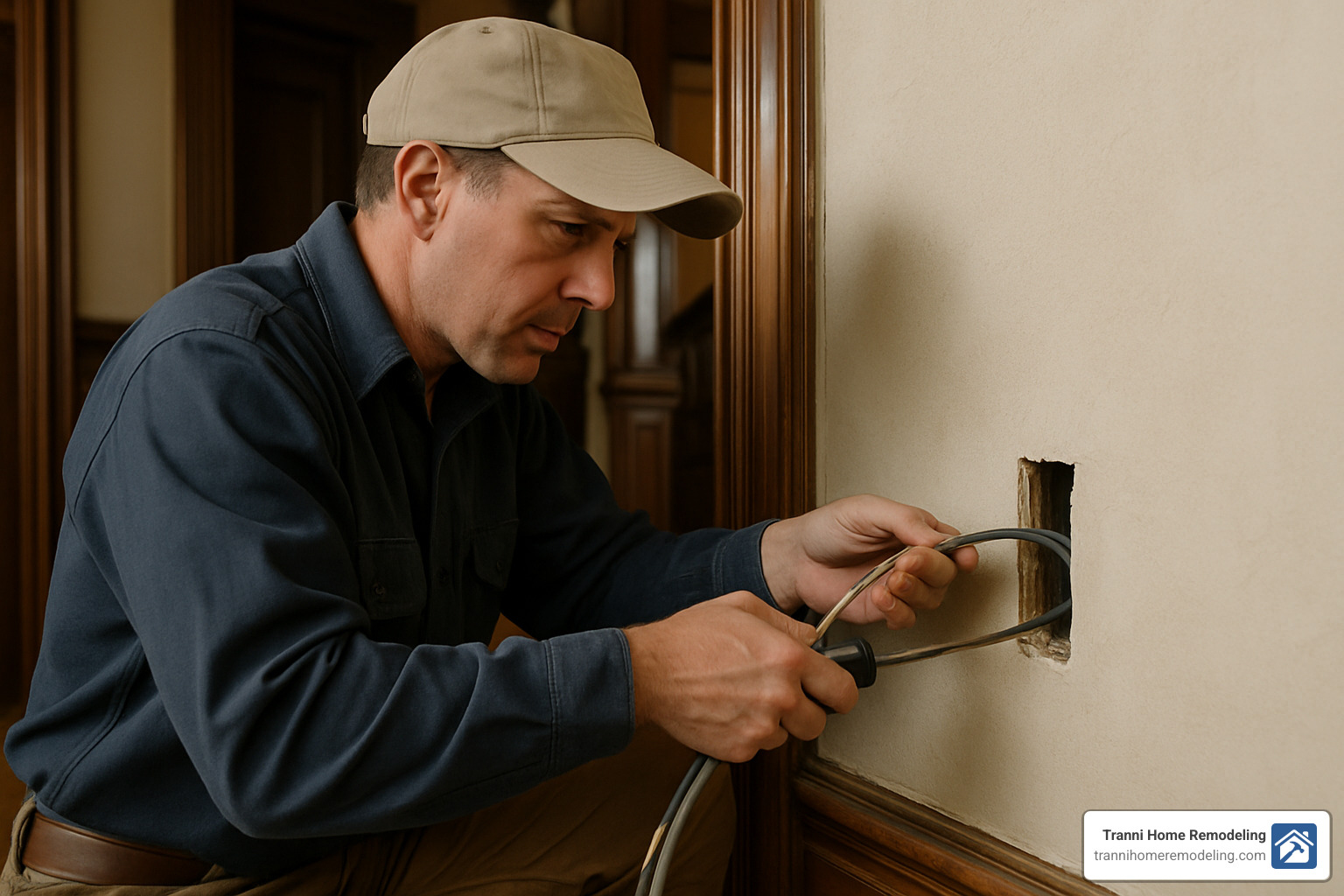
The good news? Experienced electricians have developed techniques to minimize disruption to your home’s character. Wire fishing uses specialized tools to route new wiring through existing walls with minimal openings. When possible, we use strategic routing through attics, basements, and crawl spaces to access wall cavities from above or below.
In some cases where fishing isn’t possible, decorative surface raceways can house wiring on wall surfaces in an aesthetically pleasing way. We also look for existing pathways, following old wiring routes when feasible. And when openings are necessary, we practice careful plaster preservation, making them small and precise for easier repair.
“Our home was built in 1892,” shares Tom from Carlisle. “I was convinced we’d need to gut walls to rewire, but our electrician managed to thread new wiring through the existing walls with just a few strategic access points. They were respectful of our home’s history at every step.”
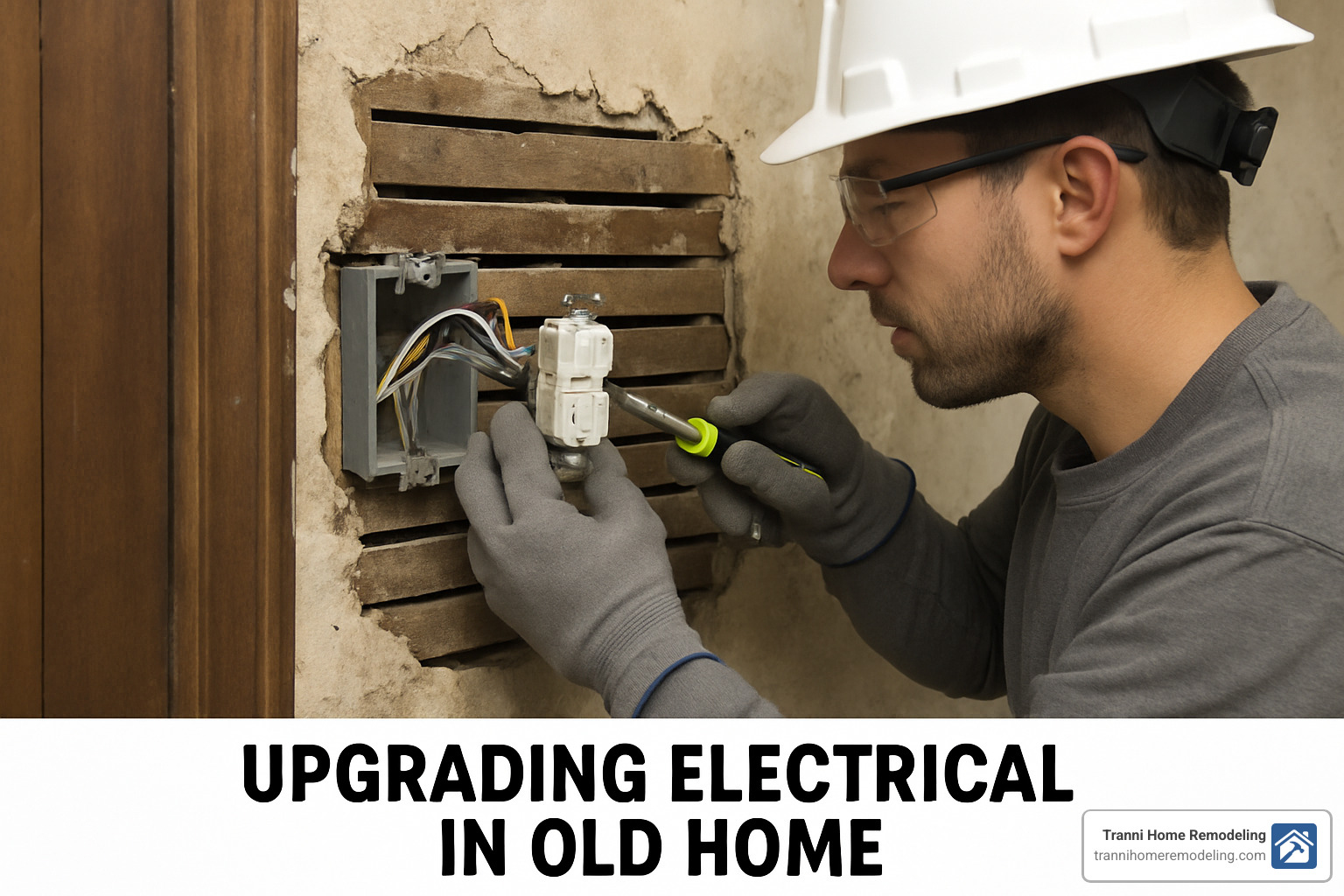
At Tranni Home Remodeling, we take special pride in our work with historic homes, using techniques that preserve your home’s unique character while bringing its electrical system safely into the 21st century. If you’re considering upgrading electrical in old home systems, I recommend finding an electrician with specific experience in older homes. Ask about their methods for minimizing damage and request references from similar projects.
Finding the right professional partner for your electrical upgrade journey makes all the difference between a stressful renovation and a smooth change that respects your home’s history while ensuring its future safety.
Step-by-Step Electrical Upgrade Roadmap
Let’s walk through what actually happens during the process of upgrading electrical in old home systems. This roadmap will give you a clear picture of what to expect when we tackle your project.

Upgrade the Service Panel First
Think of your electrical panel as the heart of your home’s electrical system. Replacing it first creates the foundation for all the improvements that follow.
When we upgrade your panel, we follow a careful process that typically takes a full day. First, we’ll conduct a load calculation to analyze your home’s electrical demands. For most homes today, we recommend 200 amps to handle modern appliances and electronics comfortably.
Before work begins, we’ll coordinate with your utility company, who will temporarily disconnect your service during the replacement. This usually means your power will be off for about 4-6 hours, but we schedule this carefully to minimize disruption to your family.
Often, the electric meter needs replacement too, especially if you’re increasing capacity. Then comes the actual panel installation, where we remove the old panel and install the new one, making sure all circuits are properly labeled (no more mystery switches!).
Once installed, a municipal inspector will verify everything meets code requirements before the utility company restores power to your home.
“Most homeowners are surprised at how smooth the panel upgrade process is,” explains Tyler Tranni. “We handle all the coordination with the utility company and inspectors so you don’t have to worry about it.”
For more details on this critical first step, check out our Replace Electrical Panel service page.
Rewire Critical Circuits Room-by-Room
After upgrading your panel, we typically focus on the most critical areas of your home first. This targeted approach addresses immediate safety concerns while allowing you to spread costs over time if needed.
Kitchen circuits are usually our first priority since kitchens combine water, numerous appliances, and heavy electrical usage. We’ll install dedicated 20-amp circuits for major appliances like your refrigerator, microwave, and dishwasher, plus multiple 20-amp circuits for countertop outlets. All outlets within 6 feet of water sources get GFCI protection to prevent shock hazards.
Bathrooms come next, with dedicated 20-amp circuits and GFCI protection throughout. We’ll also ensure proper wiring for ventilation fans to prevent moisture issues.
In laundry rooms, we install dedicated circuits for washers and dryers, with GFCI protection for all outlets.
Your HVAC system requires properly sized dedicated circuits for heating and cooling equipment, with separate circuits for air handlers and condensers to prevent overloads.
We also address specialty needs like electric vehicle charging circuits (typically 40-50 amps), home office setups with surge protection, and entertainment system circuits that keep your electronics safe from power fluctuations.
Many of our Middlesex County customers complete their electrical upgrades over 2-3 years, starting with the panel and highest-risk areas. This phased approach makes the project more manageable both logistically and financially.
Install Modern Safety Devices (GFCI, AFCI, Surge)
Today’s electrical codes require safety devices that simply weren’t available when older homes were built. These devices provide crucial protection against common electrical hazards that cause fires and injuries.
Ground Fault Circuit Interrupters (GFCI) are perhaps the most familiar safety devices. These outlets detect imbalances in electrical current that could indicate electricity taking an unintended path—potentially through a person. When that happens, they shut off power in milliseconds, preventing serious shock or electrocution.
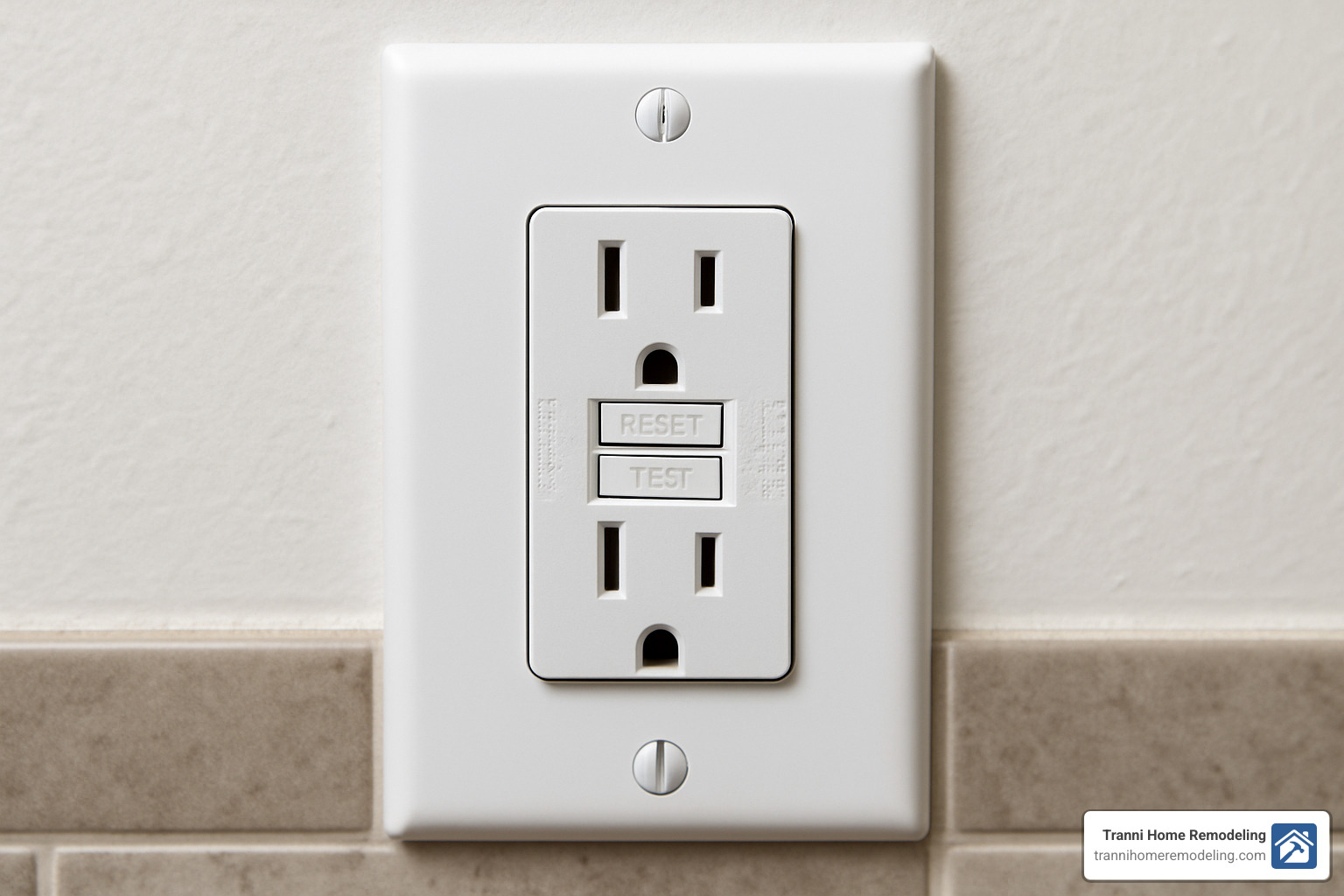
We install GFCI protection in all the danger zones: kitchens (especially near sinks), bathrooms, garages, outdoor outlets, basements, laundry rooms, and anywhere else near water sources.
Arc Fault Circuit Interrupters (AFCI) are less visible but equally important. These devices detect dangerous electrical arcs—unintended electrical discharges that often cause fires inside walls where you can’t see them developing. AFCIs are now required for most circuits in new construction and should be part of any comprehensive upgrade.
Whole-House Surge Protection is the third key safety component. Power surges from lightning, utility switching, or even your own appliances cycling on and off can damage sensitive electronics throughout your home. We install a whole-house surge protector at your panel as the first line of defense, with additional plug-in protectors offering secondary protection for particularly sensitive equipment.
“These safety devices typically add about 5-10% to the cost of an electrical upgrade,” notes Tyler, “but they’re absolutely worth it. I’ve seen GFCIs prevent potential electrocutions and AFCIs catch wiring issues before they caused fires. That’s peace of mind you can’t put a price on.”
For a comprehensive approach to upgrading electrical in old home systems, we recommend incorporating all these safety devices as part of your plan. Your family’s safety is too important to compromise.
Costs, Financing & Value Boost
The question I hear most often from homeowners in Middlesex County is straightforward: “Tyler, what’s this going to cost me?” While every old home has its unique challenges, I can share some general guidelines about the investment required when upgrading electrical in old home systems.
Based on current market trends, rewiring a house typically costs between $10,000 and $30,000, which translates to roughly $5 to $17 per square foot. However, these figures can swing dramatically depending on your specific situation and home’s characteristics.
Here’s a practical comparison of what you might expect to invest:
| Upgrade Type | Typical Cost Range | What’s Included |
|---|---|---|
| Panel Upgrade Only | $1,800 – $4,500 | New 200-amp panel, meter upgrade, main breaker |
| Critical Rooms Rewire | $3,000 – $9,000 | Kitchen, bathrooms, laundry room rewiring with safety devices |
| Partial House Rewire | $8,000 – $15,000 | Panel plus selected rooms, no wall restoration |
| Full House Rewire | $10,000 – $30,000 | Complete rewiring of all circuits, panel upgrade |
| Premium Upgrade | $25,000 – $50,000 | Full rewire plus smart home integration, structured wiring |
Note: These are average costs based on internet data and not actual costs for Tranni Home Remodeling. Your project may vary significantly based on your specific home and needs.
What Factors Move the Price Needle When Upgrading Electrical in Old Home
When I sit down with homeowners in Concord or Lincoln to discuss their electrical upgrade, I explain how several key factors will influence their investment:
Home Size makes an obvious difference – more square footage means more wiring, more outlets, and more fixtures. A cozy 1,500 sq ft Cape requires significantly less material and labor than a sprawling 3,500 sq ft Colonial.
Wall Composition matters tremendously. As one Lexington homeowner told me, “I had no idea that my plaster walls would affect the cost so much!” Homes with original plaster walls typically cost 25-30% more to rewire than those with drywall, as the work requires more care and precision.
Panel Capacity choices affect both current and future needs. While a 100-amp panel costs less initially, most families find that a 200-amp panel provides the capacity they need for modern living and potential additions like EV chargers.
Accessibility can make or break your budget. Crawling through a cramped attic space or navigating a stone foundation requires more time and effort than working in a home with easy access to all areas.
Wiring Type plays a major role too. I recently worked with a family in Bedford whose 1930s home still had original knob-and-tube wiring throughout – replacing this required more extensive work than updating more recent copper wiring would have.
One Billerica homeowner shared her experience: “We initially budgeted for just a panel upgrade, but when the electrician found knob-and-tube wiring in the walls, we realized we needed a more comprehensive solution. It was more expensive than expected, but the peace of mind is worth every penny.”
Funding the Upgrade Without Blowing Your Budget
When homeowners see the estimates for a complete electrical overhaul, their first reaction is often concern about financing. Fortunately, several options can make this essential safety upgrade more manageable:
Personal Home Improvement Loans offer a straightforward solution with relatively quick approval processes. These unsecured loans typically come with terms of 5-7 years and can cover your entire project without touching your home equity.
Home Equity Loans let you borrow against your home’s value with fixed interest rates. The interest is often tax-deductible, making this an attractive option for homeowners who have built up equity. As one Acton client told me, “Using our home’s equity felt like the house was paying for its own upgrade.”
Home Equity Lines of Credit (HELOCs) provide more flexibility than traditional loans. You can draw funds as needed during your project, paying interest only on what you use – perfect for phased electrical upgrades where costs might evolve.
Phased Implementation is perhaps the most practical approach for many families. We start with the panel and most critical safety issues, then address additional areas as budget allows. One Bedford homeowner shared, “Breaking the project into three phases over 18 months made it much more manageable for our family budget.”
Some utility companies offer rebates for electrical upgrades that improve energy efficiency, and certain communities have local government programs with low-interest loans for safety improvements in older homes.
At Tranni Home Remodeling, we understand that upgrading electrical in old home systems represents both a significant investment and an essential safety measure. We work with each family to develop a custom approach that addresses immediate concerns while planning for long-term improvements. Your family’s safety is too important to compromise on, but that doesn’t mean the project can’t be structured to fit your financial situation.
Maintaining Safety & Future-Proofing After the Upgrade
The day your electrical upgrade is complete feels like a weight lifted off your shoulders. That flickering light that used to keep you up at night? Gone. The worry about running the microwave and toaster at the same time? A thing of the past. But upgrading electrical in old home systems isn’t just about fixing today’s problems—it’s about creating a foundation for tomorrow’s needs.
Regular Inspection and Maintenance
Even the most modern electrical system needs regular attention to stay safe. Think of it like changing the oil in your car—preventative maintenance that saves you from bigger headaches down the road.
“Most homeowners forget about their electrical system until something goes wrong,” says Tyler Tranni. “But a simple annual check can catch small issues before they become dangerous problems.”
Your post-upgrade maintenance checklist should include:
Annual visual inspections of outlets and switches for discoloration, which might indicate overheating. Take a few minutes to examine visible wiring in basements and attics for any signs of damage from pests or moisture.
Test those GFCI and AFCI devices monthly by pressing the “test” button—they should trip immediately. If they don’t, call an electrician right away. These safety devices can deteriorate over time, and regular testing ensures they’ll work when you need them most.
Every 5-10 years, invest in a professional inspection. A licensed electrician can spot potential issues that aren’t visible to the untrained eye, using thermal imaging to identify hot spots before they become fire hazards.
Keep your electrical panel area clean and accessible—no storage boxes or holiday decorations blocking access. A clear path to your panel could make all the difference during an emergency. And while you’re there, check that circuit labels are still accurate and legible.
Future-Proofing Your Electrical System
When we’re upgrading electrical in old home systems for Middlesex County homeowners, we always recommend thinking about what your needs might be 5-10 years from now.
Smart Home Readiness has become a top consideration. If you’re not ready to invest in smart home technology today, at least prepare for it. During your upgrade, have neutral wires run to all switch locations—smart switches require them, and adding them later is much more expensive. Request deeper electrical boxes that can accommodate the larger size of smart devices. Some homeowners are even installing smart electrical panels that allow remote monitoring and control of individual circuits from your phone.
Electric Vehicle Charging is another forward-thinking addition. Even if you don’t drive an electric car today, the trend is clear—more Americans are making the switch every year. Pre-wiring for a future charging station during your upgrade might cost a few hundred dollars, while adding it later could run into thousands. A dedicated 50-amp circuit gives you flexibility for various charging options down the road.
Solar Preparation makes sense for many Massachusetts homeowners. Our state offers excellent incentives for residential solar installation. When planning your panel upgrade, discuss solar readiness with your electrician. Certain panel configurations work better with solar integration, and planning ahead can save significant costs later.
Structured Cabling for internet and home automation is worth considering while your walls are open. As one Lincoln homeowner told us, “We had our electrician run Cat6 cable throughout the house during our rewiring project. It cost a fraction of what it would have later, and now our Wi-Fi dead zones are gone.”
Battery Storage systems are becoming more popular as power outages increase in frequency. Modern electrical panels can be configured to work with battery backup systems that keep essential circuits running during outages. This isn’t just convenience—it can be life-saving for those with medical equipment or during extreme weather events.
For more information on integrating new panels with existing wiring, visit our page on New Electrical Panel Old Wiring.
Insurance & Resale Perks
The benefits of upgrading electrical in old home systems extend beyond safety and convenience—they can actually save you money and increase your home’s value.
Many insurance companies offer premium discounts for homes with updated electrical systems. Some insurers won’t cover homes with knob-and-tube or aluminum wiring at all, or they’ll charge significantly higher premiums. After a professional upgrade with proper permits and inspections, homeowners often see insurance rate reductions of 5-20%. That monthly savings can help offset the cost of your upgrade over time.
When it comes to resale value, an updated electrical system becomes a major selling point, especially in communities like Concord and Lexington with their beautiful historic homes. Buyers today are savvy about electrical systems and often request inspections specifically looking at the wiring.
“When we sold our 1930s Colonial in Winchester,” one homeowner shared, “the first question every buyer asked was about the electrical system. Having documentation of our complete upgrade made our home stand out in a competitive market, and we believe it added at least $15,000 to our sale price.”
Real estate appraisers take note of updated systems too. While they might not add dollar-for-dollar value equal to your investment, they do increase overall home valuation and marketability. More importantly, outdated electrical systems can become deal-breakers during home sales, potentially costing you much more in price reductions or lost sales.
Planning for Tomorrow’s Power Needs While Upgrading Electrical in Old Home
Electrical demands have increased dramatically over the decades, and there’s no sign of this trend slowing down.
When planning your upgrade, consider your service capacity needs carefully. While 200-amp service is standard today and sufficient for most homes, you might want to consider 300 or 400 amps if your home is larger than 3,000 square feet, you’re planning to add electric heating or cooling systems, installing an EV charger, or anticipating high-demand additions like a workshop, hot tub, or pool.
As one Carlisle homeowner finded: “We upgraded to 200 amps, which seemed plenty at the time. Two years later, we added an electric car and a hot tub, and now we’re constantly managing our electrical usage to avoid tripping breakers. I wish we’d gone with 300 amps from the start.”
The data infrastructure in your home is becoming just as important as the power infrastructure. Nearly 50% of homes built today include structured wiring for data, security, and entertainment systems. Adding this during your electrical upgrade is significantly more cost-effective than doing it later when walls are closed up.
Choose expandable panels with room for growth. Panels with spaces for additional circuits allow for future expansion without another major upgrade. Some newer panel systems even allow for modular expansion, making future additions simpler and less expensive.
At Tranni Home Remodeling, we’ve guided hundreds of homeowners through the process of upgrading electrical in old home systems with an eye toward both current safety and future needs. Our approach balances immediate requirements with thoughtful planning for tomorrow’s electrical demands, ensuring your investment continues to serve you well for decades to come.
Frequently Asked Questions about Upgrading Electrical in Old Homes
How long does a full-house rewiring usually take?
When homeowners ask me about timing for upgrading electrical in old home systems, I always explain that a complete electrical upgrade typically takes between 3 and 10 days. This timeline varies based on several important factors that affect your specific project:
Your home’s size naturally impacts the timeline – a cozy Cape will take less time than a sprawling Colonial in Concord. Accessibility matters tremendously too; homes with easy-to-reach attics and basements move faster than those where electricians need to squeeze into tight crawlspaces or steer complex wall structures.
The scope of your project makes a huge difference as well. A simple panel replacement might be completed in just 1-2 days, while a comprehensive rewiring of every circuit in your Middlesex County home requires more time and coordination.
Local permitting and inspection schedules can sometimes add unexpected days to your timeline. In busier municipalities, you might wait several days for an inspector to approve work before walls can be closed up.
As Wes Carver, an experienced electrical contractor, often tells his clients: “A typical whole-house rewiring takes five days to two weeks. We work room by room to minimize disruption to the household.”
At Tranni Home Remodeling, we understand living through a renovation can be challenging. That’s why we provide detailed timelines before starting your project and keep you updated throughout the process, so you’re never left wondering when your home will feel normal again.
Can any parts of the upgrade be DIY?
While upgrading electrical in old home systems generally requires professional expertise, there are a few aspects homeowners with proper knowledge can tackle themselves:
With appropriate precautions and basic electrical understanding, you can safely replace standard light fixtures after properly identifying and shutting down the circuit. Swapping decorative outlet and switch faceplates is another simple task most homeowners can handle confidently. For temporary protection, installing plug-in GFCI adapters provides an interim safety measure until permanent solutions are installed. Basic maintenance like monthly testing of GFCI and AFCI devices using their test buttons is also something every homeowner should learn to do.
However, I always emphasize to my clients that most electrical work should be left to licensed professionals. Panel upgrades or replacements, circuit installations, service entrance modifications, room rewiring, new outlet installations, and any work requiring permits absolutely demand professional expertise. DIY electrical work often voids insurance coverage and can create serious safety hazards if not done correctly.
As one Lexington homeowner finded after attempting a seemingly simple outlet replacement: “What looked easy on YouTube turned into a nightmare when I finded aluminum wiring behind the outlet. I immediately called a professional and learned a valuable lesson about the complexities hiding in old home electrical systems.”
Will upgrading my electrical system increase home value?
Yes, upgrading electrical in old home systems typically provides an excellent return on investment for several compelling reasons:
Buyers are increasingly savvy about electrical systems and willing to pay a premium for homes with safe, updated wiring and panels. The peace of mind that comes with knowing a home won’t need immediate electrical work carries significant value in today’s market.
Your home will sail through inspections more easily during sales when it has recent electrical upgrades. Many real estate transactions hit snags when inspectors flag outdated electrical systems, often leading to price reductions or cancelled sales.
The insurance benefits translate directly to lower ownership costs, making your property more attractive to potential buyers. Many insurance companies offer reduced rates for homes with modern electrical systems, savings that transfer to new owners.
When marketing your home, phrases like “fully rewired” or “200-amp service” serve as powerful selling points that help your listing stand out, particularly in areas with predominantly older housing stock like Concord, Lexington, or Bedford.
Real estate professionals consistently estimate that electrical upgrades return 85-90% of their cost in increased home value, with some competitive markets seeing full 100% returns.
A real estate agent I work with in Lexington recently shared: “When I list a historic home that has had a complete electrical upgrade, I prominently feature it in the listing. It addresses one of the biggest concerns buyers have about older properties, often making the difference between a quick sale and a home that sits on the market.”
Conclusion
Upgrading electrical in old home systems is a journey worth taking. It might seem overwhelming at first, but the rewards are immeasurable – a safer home, better functionality, and the peace of mind that comes from knowing your family is protected from electrical hazards.
Think about what we’ve covered together. From replacing dangerous knob-and-tube wiring that’s been hiding in your walls for decades to installing modern safety devices that can prevent fires and shocks, each step brings your beloved older home into the present while honoring its past.
I’ve seen the relief on homeowners’ faces when they no longer have to worry about flickering lights or tripping breakers. One Concord homeowner told me, “For years, I couldn’t run the microwave and toaster at the same time. Now my kitchen works the way it should – it’s like living in a completely different house.”
At Tranni Home Remodeling, we’ve guided countless families through this process across Middlesex County. Each home tells its own story – the stately Colonials in Concord, charming Victorians in Lexington, or mid-century ranches in Billerica – and we approach each project with respect for that unique character and history.
We understand it’s not just about fixing today’s problems. It’s about protecting the home you love, preserving your investment, and preparing for whatever technologies tomorrow might bring. An upgraded electrical system means your historic home can continue to serve your family for generations to come, combining vintage charm with modern reliability.
The most satisfying part of our work comes after everything is finished. That moment when a homeowner realizes they don’t have to think about their electrical system anymore – no more worrying about overloaded circuits, no more extension cords snaking across rooms, no more wondering if that strange smell is coming from the walls. Just reliable, safe power that works the way it should.
Ready to start your own electrical upgrade journey? We’d love to help you develop a comprehensive plan that addresses your immediate safety concerns while setting the stage for years of trouble-free electrical service. Whether you need a complete rewiring or just a panel upgrade, our team brings the same dedication to quality craftsmanship and attention to detail.
For more information about our complete range of home improvement services, visit our home remodeling page.
Your historic home deserves modern electrical safety – and you deserve the peace of mind that comes with it.
