




Window Installation Cost: Top Factors & Tips 2024
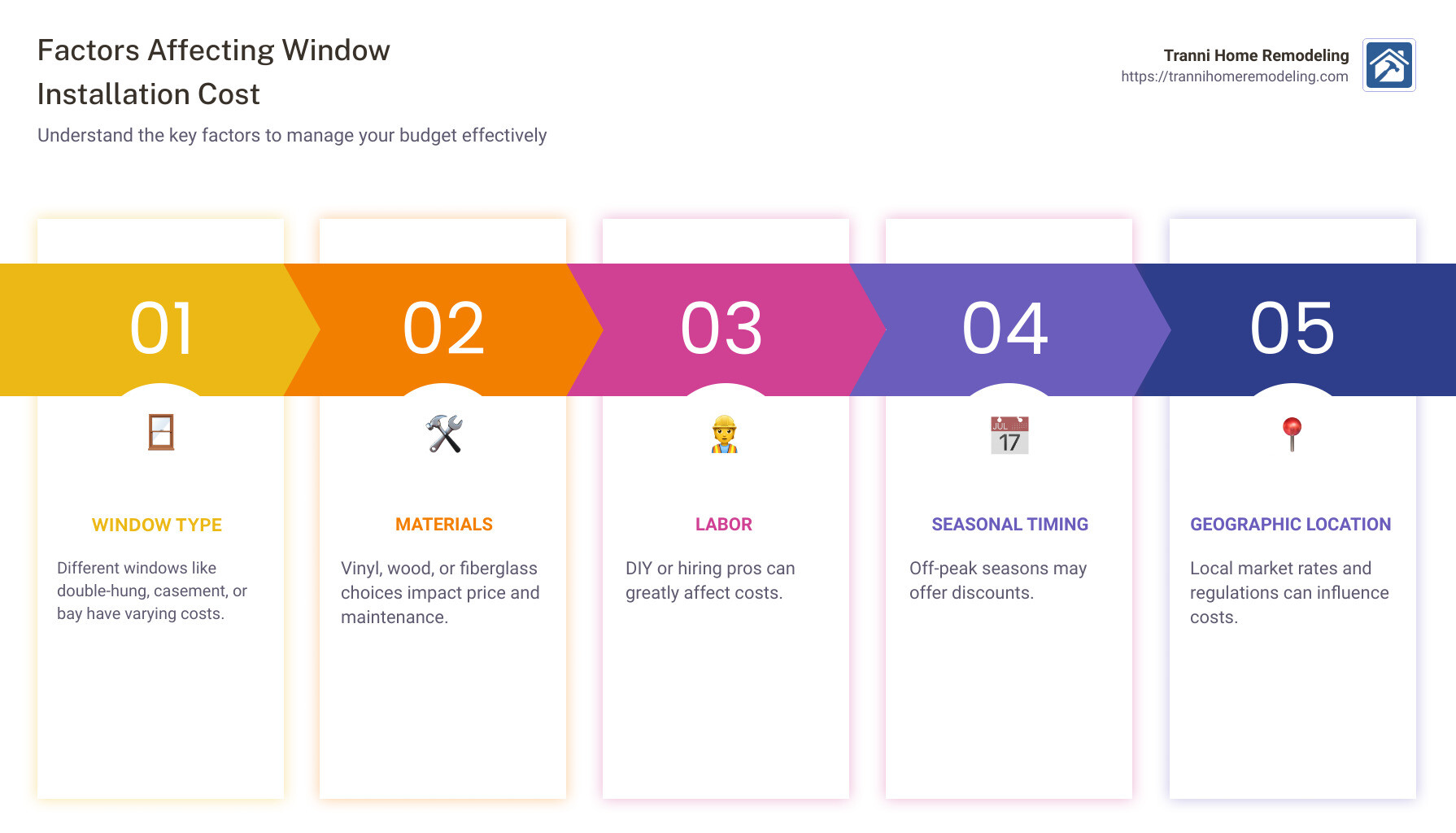
Window installation cost is a key concern for many homeowners in Billerica, MA, seeking to upgrade or replace their windows. The overall price can vary based on several critical factors:
- Window Type: Double-hung, casement, or bay windows each come with different price points.
- Materials: Choices like vinyl, wood, or fiberglass impact both the upfront cost and long-term maintenance.
- Labor: Hiring experienced professionals versus DIY can greatly affect cost.
- Seasonal Timing: Off-peak seasons may offer discounts.
Understanding these elements can help manage your budget effectively, ensuring you get the best value while improving your home’s comfort and efficiency.
I’m Tyler Tranni, owner and operator of Tranni Home Remodeling. With years of experience in the home improvement industry, I have overseen countless window projects, helping clients make informed decisions about window installation cost. This expertise gives me unique insights into balancing quality and affordability for homeowners in Billerica. Now, let’s explore what influences window installation cost and how you can achieve the best results for your home.
Window installation cost terms at a glance:
– adding windows to a house
– replacing windows in house
– vinyl window replacement
Average Window Installation Cost
Factors Affecting Window Installation Cost
When considering window installation cost in Billerica, MA, several factors come into play. Understanding these can help you plan your budget effectively.
Cost Range
The cost of window installation can vary widely. Homeowners can expect to pay anywhere from $300 to $1,800 per window, depending on the type and materials used. But what exactly influences this range?
Materials
The material of the window frame is a significant cost driver. Options include:
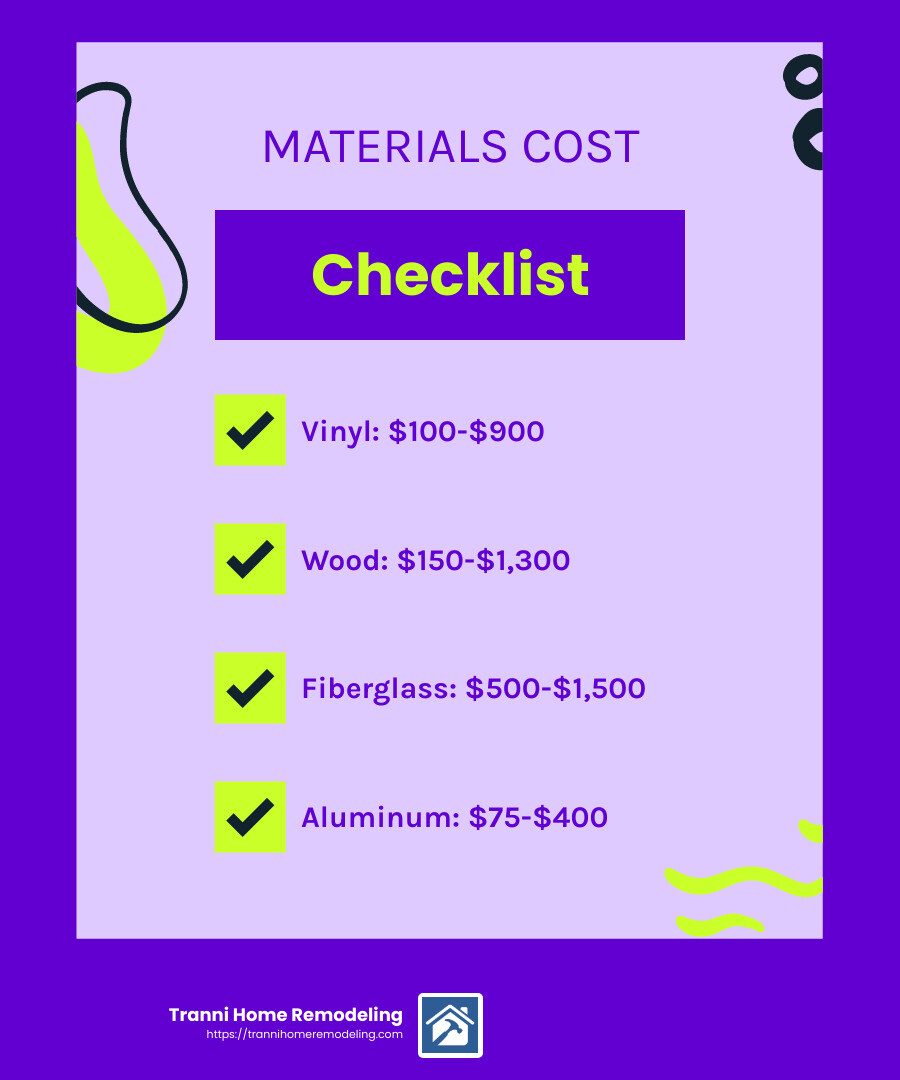
- Vinyl: Generally the most affordable, ranging from $100 to $900. It’s durable and requires little maintenance.
- Wood: Offers a classic look but comes with a higher price tag, between $150 and $1,300. It also requires regular upkeep.
- Fiberglass: Known for its strength and energy efficiency, but costs are higher, ranging from $500 to $1,500.
- Aluminum: Budget-friendly but less energy-efficient, priced around $75 to $400.
- Composite: A blend of materials offering durability and efficiency, costing $300 to $1,200.
Labor
Labor costs are another significant component, often ranging from $500 to $1,500 per window. Professional installation ensures expertise and safety, especially for complex window types like bay or bow windows.
Window Type
The type of window you choose also impacts the cost. For example, a simple single-hung window will be less expensive than a large bay window, which requires more materials and labor.
Installation Company
Choosing the right company is crucial. Companies with a solid reputation may charge more, but they often provide better service and warranties. It’s wise to get quotes from multiple providers to ensure competitive pricing.
Glass Type
The glass type can also affect the overall cost. Options like double-pane or triple-pane glass offer better insulation but come at a higher price. Specialty glass treatments, such as tempered or laminated glass, add to the cost but offer benefits like increased safety and noise reduction.
Home Age
Older homes may present unique challenges, such as non-standard window sizes or structural issues, which can increase labor costs. Homes built over 70 years ago might require custom window solutions to match existing architecture.
By considering these factors, homeowners in Billerica can make informed choices to balance cost with quality and efficiency. Next, we’ll dig into the specific costs associated with different window materials.
Window Installation Cost by Type
When it comes to window installation, the type of material you choose can significantly impact both the upfront window installation cost and long-term benefits. Here’s a breakdown of the most common window materials—vinyl, wood, fiberglass, aluminum, and composite—along with their cost ranges, pros, and cons.
Vinyl Windows
Cost Range: $300–$1,700
Pros:
- Affordable: Vinyl is generally the most budget-friendly option.
- Low Maintenance: Requires little upkeep, making it a convenient choice for busy homeowners.
- Durable: Resistant to moisture and weather conditions, ensuring longevity.
Cons:
- Aesthetic Limitations: Not as visually appealing as other materials.
- Color Fading: Over time, vinyl can fade when exposed to direct sunlight.
Wood Windows
Cost Range: $300–$2,000
Pros:
- Classic Beauty: Offers a timeless and attractive appearance that improves any home.
- Customizable: Can be painted or stained to match your home’s decor.
Cons:
- High Maintenance: Requires regular upkeep to prevent warping and rotting.
- Costly Repairs: Prone to damage, leading to potentially expensive repairs.
Fiberglass Windows
Cost Range: $300–$1,900
Pros:
- Energy Efficient: Excellent insulation properties, reducing energy bills.
- Strong and Durable: Can withstand extreme weather conditions without warping.
Cons:
- Higher Cost: More expensive than vinyl or aluminum options.
- Limited Availability: Not as widely available as other materials, which may limit choices.
Aluminum Windows
Cost Range: $400–$900
Pros:
- Strong and Lightweight: Ideal for larger window installations without compromising durability.
- Cost-Effective: One of the more affordable materials for window frames.
Cons:
- Poor Insulation: Less energy-efficient, which can lead to higher energy costs.
- Condensation Issues: More prone to condensation, which can lead to mold or mildew.
Composite Windows
Cost Range: $400–$1,900
Pros:
- Energy Efficient: Combines the best qualities of wood and vinyl for excellent insulation.
- Low Maintenance: Resistant to warping and rotting, reducing the need for frequent upkeep.
Cons:
- Quality Variation: The quality can vary significantly between manufacturers.
- Higher Price Point: Generally more expensive than vinyl or aluminum options.
Each material offers unique benefits and challenges, so weigh these factors against your budget and aesthetic preferences. The choice of material will not only affect the initial window installation cost but also influence maintenance needs and energy efficiency over time.
Next, we’ll explore how different window styles impact the overall cost of installation.
Window Installation Cost by Style
Bay Windows
Cost Range: $500–$2,200
Pros:
- Natural Light: Bay windows allow plenty of natural light, brightening up any room.
- Aesthetic Appeal: They add a touch of elegance and can improve curb appeal.
- Extra Space: Offers additional space inside the home, which can be used for seating or storage.
Cons:
- Higher Installation Cost: More complex to install, leading to increased labor costs.
- Maintenance: Requires regular upkeep to prevent leaks and drafts.
Bow Windows
Cost Range: $2,100–$3,620
Pros:
- Panoramic Views: Provides a broader view of the outdoors with its curved design.
- Increased Home Value: Can significantly boost the aesthetic and market value of a home.
Cons:
- Expensive: Generally costs more than bay windows due to the additional panes.
- Complex Installation: Requires professional installation, which can add to the overall cost.
Casement Windows
Cost Range: $400–$2,400
Pros:
- Ventilation: Opens fully, allowing maximum airflow into the room.
- Energy Efficiency: Forms a tight seal when closed, reducing energy costs.
Cons:
- Limited Size Options: Larger sizes can be cumbersome to operate.
- Obstruction: May interfere with outdoor spaces or pathways when opened.
Double-Hung Windows
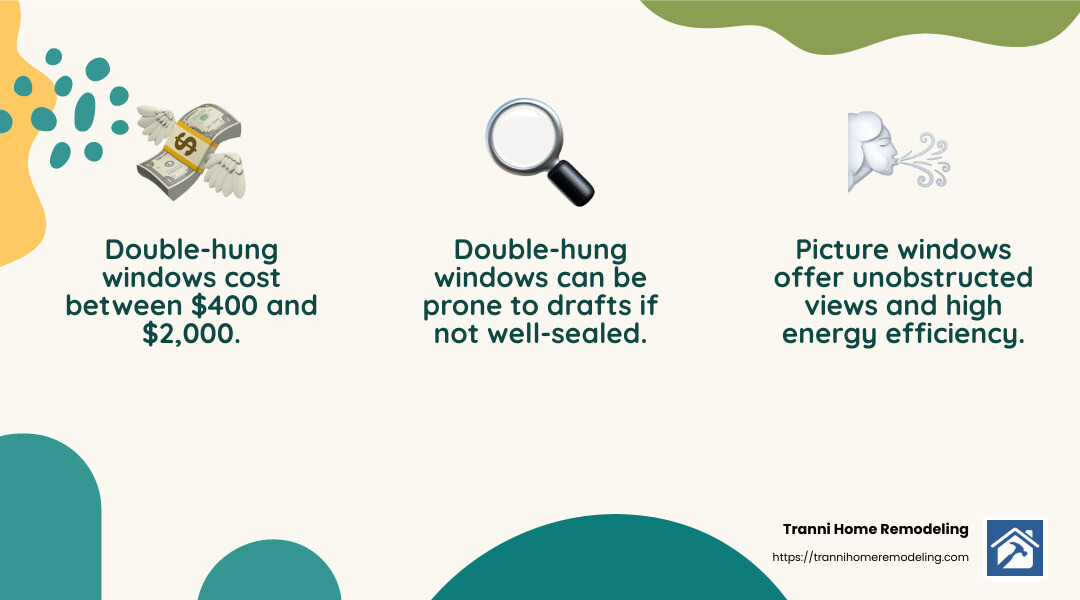
Cost Range: $400–$2,000
Pros:
- Versatile Design: Can be opened from the top or bottom for flexible ventilation.
- Easy to Clean: Both sashes can tilt inward, simplifying cleaning.
Cons:
- Cost: Slightly more expensive than single-hung windows.
- Drafts: Can be prone to air leaks if not properly sealed.
Picture Windows
Cost Range: $300–$2,000
Pros:
- Energy Efficiency: Fixed design means no drafts, making them highly energy-efficient.
- Unobstructed Views: Provides a wide, clear view of the outside.
Cons:
- No Ventilation: Since they don’t open, they don’t provide airflow.
- Limited Use: Not ideal for rooms where ventilation is a priority.
Each window style offers distinct advantages and disadvantages. Considering factors like natural light, ventilation, and aesthetic appeal can help you choose the right style for your home while keeping the window installation cost within budget. Next, we’ll dig into how the number of windows affects installation costs.
Window Installation Cost by Number of Windows
The number of windows you’re installing plays a crucial role in determining the overall window installation cost. Whether you have a small, medium, or large home, understanding these costs can help you budget effectively.
Small Homes
For small homes, typically featuring 6 to 8 windows, the cost range for window installation is approximately $4,500 to $6,000. Small homes often have fewer windows, making the total installation cost more manageable. This range can vary based on the window type and materials chosen.
Medium Homes
Medium-sized homes usually have 8 to 12 windows. The installation costs for these homes generally fall between $6,000 and $9,000. This price range reflects the average number of windows found in a medium home and can be influenced by additional factors like window style and labor costs.
Large Homes
Large homes, with 12 to 16 windows, can expect installation costs to range from $9,000 to $12,000. For very large homes with 16 to 20 windows, costs can escalate to $12,000 to $15,000. When replacing 20 to 24 windows, the expenses could reach $15,000 to $18,000. Finally, for homes with 25 windows, the cost might be between $18,000 and $20,000.
These estimates provide a helpful starting point, but consider other factors like window type, material, and installation complexity. Bulk purchasing can sometimes offer discounts, potentially reducing overall costs.
Understanding how the number of windows affects your budget allows for better financial planning. Next, let’s explore additional factors that can impact window installation costs.
Additional Cost Factors
When planning for window installation, several factors can influence the overall window installation cost. Let’s dig into these elements, including the number of panes, type of glass, and energy-efficient upgrades.
Number of Panes
The number of panes in a window significantly impacts the cost. Here’s a quick breakdown:
- Single-Pane Windows: These are the most basic and affordable option, typically ranging from $150 to $400. However, they offer minimal insulation and energy efficiency.
- Double-Pane Windows: A popular choice for their balance of cost and efficiency, double-pane windows cost between $450 and $1,000. They provide better insulation by trapping air between two layers of glass.
- Triple-Pane Windows: These offer the best insulation, ideal for colder climates, but come at a higher cost of $500 to $2,000. The extra pane adds significant insulation and noise reduction.
Type of Glass
The type of glass you choose also affects the installation cost:
- Insulated Glass: This glass type is designed to reduce heat loss, making it more energy-efficient. It’s a common choice for double or triple-pane windows.
- Double-Glazed Glass: Known for its excellent insulation properties, double-glazed glass adds an extra layer of protection, often used in colder regions.
- Tempered Glass: This safety glass is designed to shatter into small, less harmful pieces. It’s more expensive but ideal for high-traffic areas or homes with children.
Energy-Efficient Upgrades
Investing in energy-efficient upgrades can save you money in the long run:
- Low-E Coating: This coating helps control heat transfer through the window, keeping your home cooler in summer and warmer in winter. Although it costs more upfront, it can reduce energy loss by 30%–50%.
- Tint: Window tint can block UV rays and reduce glare, offering a cheaper alternative to low-E coatings.
- Laminate: Laminated glass offers additional safety and soundproofing benefits.
- Weatherstripping: Ensures a tight seal around the window, preventing drafts and improving energy efficiency.
Other Considerations
- Window Location: Hard-to-reach windows, like skylights, can increase labor costs due to the need for special equipment.
- Home Age: Older homes might require structural repairs or custom-sized windows, adding to the cost.
- Geographic Location: Labor costs and material availability can vary by region, affecting the overall price.
- Project Cleanup: Don’t forget to budget for cleanup after installation. Some companies include this in their service, while others charge separately.
These factors are crucial when calculating your window installation budget. By understanding each element, you can make informed decisions that suit your needs and financial plan. Next, let’s explore the pros and cons of DIY window installation versus hiring a professional.
DIY vs. Hiring a Pro
When considering window installation cost, one major decision is whether to tackle the project yourself or hire a professional. Each option has its own set of pros, cons, and considerations.
DIY Window Installation
Pros:
– Cost Savings: You can save about 15% on labor costs by doing it yourself. This can be significant, especially if you’re replacing multiple windows.
– Personal Satisfaction: Completing a project on your own can be rewarding and give you a sense of accomplishment.
Cons:
– Complexity: Window installation can be tricky, especially with large or irregularly shaped windows. Mistakes in measurement or installation can lead to costly repairs.
– Time-Consuming: DIY installation can take several days, especially for those with little experience. Expect to spend 2-3 days on the project, including preparation and cleanup.
Tools and Materials:
– You’ll need specialized tools like a pry bar, level, tape measure, and caulking gun. These can add to the cost if you don’t already own them.
Risks:
– Safety Concerns: Handling heavy windows and working at heights can be dangerous. Without proper safety measures, there’s a risk of injury.
– Warranty Issues: Many manufacturers require professional installation to honor warranties. DIY installation might void these warranties, leaving you unprotected.
Hiring a Professional
Pros:
– Expertise: Professionals bring experience and skill, ensuring the job is done right the first time.
– Efficiency: A professional team can typically complete the installation in a day, minimizing disruption to your home.
– Safety: Pros have the right equipment and know-how to handle heavy windows safely, reducing the risk of accidents.
Cons:
– Cost: Hiring a professional is more expensive upfront, with labor costs ranging from $50 to $300 per window.
– Scheduling: You’ll need to coordinate with the contractor’s availability, which might delay your project.
Cost Comparison:
– While DIY might seem cheaper, the potential for costly mistakes and the value of a professional warranty can make hiring a pro a smarter financial decision in the long run.
In summary, while DIY window installation might appeal to those looking to save money, the complexity and risks often make hiring a professional the better choice. Next, we’ll address some frequently asked questions about window installation costs.
Frequently Asked Questions about Window Installation Cost
How much should I pay to install windows?
The cost to install windows can vary greatly depending on several factors, including the type of window, materials used, and whether you hire a professional. On average, window installation costs range from $300 to $1,500 per window. This price includes both the materials and labor. If you’re considering energy-efficient upgrades or custom designs, expect the cost to be on the higher end of the spectrum.
What is the average labor cost to install a new window?
Labor costs for window installation typically range from $100 to $300 per window. This can increase if the installation is complex or if the window is located in a difficult-to-reach area. For example, installing windows on higher floors or dealing with older homes that might require additional structural work can push labor costs to $600 or more per window. Hiring a professional ensures that the installation is done correctly and safely, which can save money on potential repairs down the line.
How much does it cost to install a window in a wall?
Installing a window in a wall where there wasn’t one before is a more complex task and can be quite expensive. This process, known as a “cut-out” installation, involves creating a new opening, which requires additional labor and materials. Costs for this type of installation can range from $1,000 to $5,000 or more, depending on the size of the window and the complexity of the job. Factors such as the need for structural changes, electrical work, and finishing can all influence the final cost.
In the next section, we’ll explore additional factors that can influence the cost of window installation and how you can manage these costs effectively.
Conclusion
In summary, window installation costs can vary widely based on several factors, including the type and style of windows, materials used, and whether you choose to hire a professional. While the average cost ranges from $300 to $1,500 per window, more complex installations or premium materials can push costs higher. It’s essential to consider these factors when planning your window replacement project to ensure you stay within budget.
At Tranni Home Remodeling, we pride ourselves on delivering high-quality craftsmanship and exceptional service. With over a decade of experience, we specialize in changing homes with beautiful, efficient window installations. Our team is dedicated to helping you choose the best options for your home, ensuring both aesthetic appeal and energy efficiency.
For more information on our services or to get a free quote, visit our Windows and Doors page. Our experts are ready to assist you with all your window installation needs.
Feel free to contact us with any questions or to discuss your project further. We look forward to helping you improve your home’s beauty and functionality with our top-notch window solutions.