





Basement sauna installation: Ultimate 3-Step Guide
Turn Your Basement Into a Personal Wellness Retreat
Basement sauna installation is changing how homeowners create personal wellness spaces in their homes. Here’s what you need to know:
Key Steps for Basement Sauna Installation:
- Site Assessment – Check moisture levels, ceiling height (7-foot minimum), and utility access
- Choose Sauna Type – Traditional Finnish (steam) or infrared (dry heat)
- Electrical Setup – Install dedicated 240V circuit with professional electrician
- Framing & Insulation – Build frame with R11-R19 insulation and foil vapor barrier
- Install Components – Add cedar paneling, benches, heater, and ventilation system
- Safety Testing – Complete burn-off cycle and safety checks
Your basement offers the perfect environment for a sauna. The natural privacy, sound insulation, and stable temperatures make it an ideal location. Plus, basements maintain cooler temperatures year-round, so the extra heat from your sauna won’t overheat the rest of your house.
The health benefits are impressive too. Regular sauna use can help with detoxification through sweating, improved circulation, stress relief, and muscle recovery. It’s like having your own spa retreat just steps away from your living room.
I’m Tyler Tranni, owner of Tranni Home Remodeling, and I’ve helped dozens of homeowners in the Billerica area create stunning basement retreats, including custom basement sauna installations that perfectly fit their space and lifestyle. My team and I understand the unique challenges of basement renovations and the specific requirements for safe, effective sauna installation.

Explore more about Basement sauna installation:
Why Your Basement is the Perfect Spot for a Sauna
When it comes to basement sauna installation, your basement offers advantages that no other room in your house can match. After working with countless homeowners in the Billerica area, I’ve seen why basements consistently deliver the best sauna experience.
Privacy is the biggest game-changer. Your basement naturally shields you from curious neighbors and the daily chaos upstairs. There’s something incredibly relaxing about knowing you can step into your sauna without worrying about who might see or hear you. This seclusion creates the perfect environment for true relaxation and stress relief.
The sound insulation that comes with being underground is another huge benefit. Your basement walls naturally muffle sound, so you can enjoy peaceful meditation or quiet conversation without disturbing the rest of your household. Plus, the gentle sounds of your sauna won’t travel upstairs during evening sessions.
Year-round usability is where basements really shine. Since basements stay cooler and maintain more stable temperatures throughout the seasons, your sauna won’t overheat your home during summer months. This natural heat containment also means your sauna operates more efficiently, keeping energy costs reasonable while providing consistent performance.
The health benefits of having the many benefits of an in-home sauna right in your basement are remarkable. Regular sauna use supports detoxification through sweating, improves circulation, and provides incredible stress relief after long days. Many of my clients tell me their basement sauna has become their favorite spot for unwinding and muscle recovery.
Maximizing existing square footage is smart home improvement. Instead of letting basement space sit unused for storage, a sauna transforms that area into a valuable wellness retreat. If you already have a basement gym, a sauna becomes the perfect addition for post-workout recovery and relaxation.
At Tranni Home Remodeling, we understand how to make the most of your basement’s unique advantages. Our Basement Finishing Solutions expertise allows us to integrate your new sauna seamlessly into your existing space, creating a basement retreat that feels both luxurious and perfectly suited to your home’s layout.
Planning Your Ultimate Basement Sauna
The key to a successful basement sauna installation lies in careful planning from day one. Think of this phase as laying the foundation for years of relaxation and wellness – skip the planning, and you might end up with problems that are expensive and frustrating to fix later.

Site Assessment
Every basement is unique, and what works in one space might not work in another. That’s why we always start with a thorough site assessment to understand exactly what we’re working with.
Moisture is your biggest enemy when it comes to basement saunas. Even the slightest dampness can lead to mold, wood rot, and structural problems down the road. We check humidity levels, look for water stains, and examine the foundation for any signs of moisture intrusion. If your basement has any water issues, these must be addressed first with proper Basement Waterproofing Solutions before even thinking about installing a sauna.
Ceiling height matters more than you might think. You’ll need at least seven feet of clearance for proper heat circulation and comfortable seating. Most Massachusetts basements meet this requirement, but it’s worth double-checking, especially if you have ductwork or pipes hanging down that could interfere with your sauna placement.
Location is everything when it comes to utilities. Your sauna will need dedicated electrical service, so choosing a spot near your electrical panel makes the installation much simpler and more cost-effective. We also consider ventilation needs and how the sauna will fit into your overall basement layout.
Budgeting
Let’s talk numbers because basement sauna installation costs can vary dramatically based on your choices. According to average cost data, you might spend anywhere from $3,000 for a basic DIY infrared unit to $15,000 or more for a large, custom-built traditional sauna with professional installation.
The wide range comes down to several factors: size (a two-person sauna costs much less than a six-person model), materials (basic hemlock versus premium cedar), heater type (infrared versus traditional rock heaters), and installation complexity (simple plug-in versus full electrical and ventilation work).
These are average costs based on internet data and not specific quotes from Tranni Home Remodeling. For an accurate estimate custom to your specific basement and needs in areas like Woburn, MA or Winchester, MA, it’s best to schedule a consultation with our team.
Choosing the Right Type of Sauna
The sauna type you choose will shape your entire installation experience and daily use for years to come. Let’s break down your two main options:
| Feature | Traditional (Finnish) Sauna | Infrared Sauna |
|---|---|---|
| Heat Type | Steam and convection from heated rocks | Direct radiant heat to your body |
| Temperature | Hot and steamy (180-200°F) | Milder dry heat (120-150°F) |
| Humidity | Variable – add water for steam | Always dry |
| Installation | More complex with professional wiring | Often simpler, plug-and-play |
| Electrical Needs | Usually requires 240V dedicated circuit | Many use standard 110V outlets |
Traditional Finnish saunas give you that authentic spa experience with the ritual of ladling water over hot rocks to create bursts of steam. They run hotter and typically require more complex installation, including professional electrical work and robust ventilation systems.
Infrared saunas heat your body directly rather than heating the air around you. They’re generally easier to install, run at lower temperatures, and many homeowners find them more comfortable for longer sessions. The trade-off is you miss out on the steamy, traditional sauna experience.
Wood selection plays a crucial role in your sauna’s performance and longevity. Cedar remains the gold standard for its natural resistance to moisture and insects, plus that wonderful aroma when heated. Hemlock and poplar are solid alternatives that cost less while still providing good performance.
Key Considerations for a Basement Sauna Installation
Once you’ve settled on your sauna type, several practical considerations will determine how smoothly your installation goes.
Flooring needs special attention in basement environments. You’ll want something that can handle moisture and temperature changes without warping or becoming slippery. Sealed concrete, ceramic tile, or specialized sauna flooring all work well. If your current basement floor needs work, our Refinish Concrete Basement Floor service can create the perfect foundation.
Drainage requirements depend on your sauna type and personal preferences. Traditional saunas benefit from floor drains since you’ll be using water on the rocks, but many basement installations work fine with good ventilation and regular cleaning. If you don’t have existing drainage, adding it involves significant work that’s best handled by professionals.
Electrical work is absolutely not a DIY project. Traditional saunas typically need a dedicated 240V circuit, while infrared models might work with standard outlets. Either way, the electrical requirements must meet local codes and safety standards. Our Electrical Services team handles all the wiring, permits, and inspections to keep your family safe.
Building permits are required in most Massachusetts communities for sauna installations, especially when electrical work is involved. Requirements vary by town, so whether you’re in Lexington, MA or Bedford, MA, we always check with local building departments before starting work. It’s much easier to get permits upfront than to deal with compliance issues later.
The Step-by-Step Basement Sauna Installation Process
Creating your personal wellness retreat through basement sauna installation is an exciting journey that transforms unused space into something truly special. While I’ll walk you through the complete process, it’s important to understand that certain steps—especially electrical work—require professional expertise to ensure both safety and code compliance.
Think of building a sauna like constructing a specialized room within a room. Each step builds upon the previous one, creating a space that’s not just functional, but truly luxurious.
Step 1: Framing, Insulating, and Wiring
The magic starts with creating a solid foundation through careful framing, proper insulation, and strategic electrical planning.
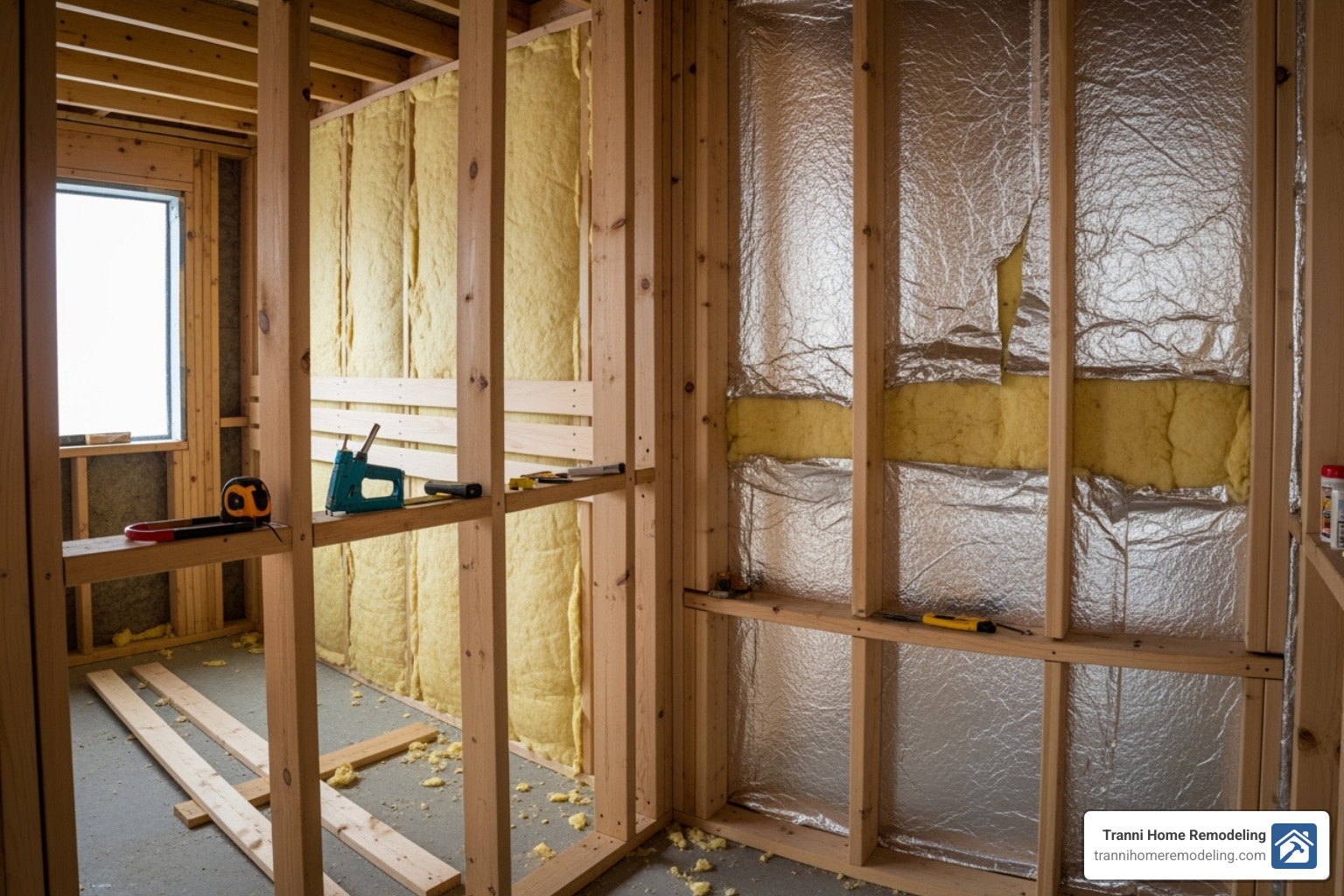
Framing your sauna walls begins with quality 2×4 lumber that can handle the heat and humidity. If you’re lucky enough to have a basement corner available, you’re already ahead of the game—two walls are done for you! We always choose lumber that’s been treated to resist moisture and heat damage.
Proper insulation makes the difference between an energy-efficient sauna and one that struggles to maintain temperature. Mineral wool insulation is our go-to choice because it’s naturally fire-resistant and handles moisture beautifully. We install R-11 insulation in interior walls and ceiling areas, bumping up to R-19 for any exterior-facing walls.
The foil vapor barrier is where many DIY projects go wrong, but it’s absolutely critical. This reflective barrier does double duty—it prevents moisture from seeping into your home’s structure while bouncing heat back into the sauna. Every seam gets carefully stapled and sealed with specialized tape.
Electrical rough-in work happens before we close up the walls, and this is where professional expertise becomes non-negotiable. A licensed electrician will run the proper gauge wiring for your heater, lighting, and ventilation systems. They’ll also ensure everything meets local electrical codes. Our Fine interior carpentry team handles the finishing touches that hide all wiring for a clean, polished look.
Step 2: Installing Paneling, Benches, and Flooring
Once the bones are in place, we move to the elements that transform your space into a true sauna experience.

Installing tongue-and-groove paneling creates that classic sauna atmosphere. While cedar remains popular for its natural aroma and resistance properties, we often recommend thermally modified woods like thermo-aspen or thermo-spruce for basement installations. These materials offer superior durability and resist the warping and mold issues that can occur in below-grade environments. We start installation from the bottom and work upward, ensuring tight, professional joints throughout.
Multi-level bench construction requires both comfort and durability in mind. Most saunas feature a two-tier setup—a lower bench about 18 inches from the floor and an upper bench positioned about 18 inches above that. We build these using moisture-resistant framing and exclusively use stainless steel fasteners to prevent corrosion. Every surface gets thoroughly sanded to eliminate any possibility of splinters.
Non-slip flooring completes the foundation of your sauna experience. Whether you choose ceramic tile for easy maintenance, sealed concrete for durability, or specialized waterproof engineered wood for warmth, we ensure the surface provides safety and complements your sauna’s overall aesthetic.
Step 3: Heater, Door, and Ventilation Installation
The final installations bring your sauna to life, providing the essential heat, access, and airflow that make everything work together safely.
Heater placement and safety requires precise positioning and professional installation. We mount the heater on the wall opposite the door, maintaining exact clearances from wooden surfaces as specified by the manufacturer. Safety guards protect users from accidental contact while allowing proper heat circulation. This is another area where licensed electrical work is essential—the connections must be perfect for both safety and performance.
Sauna door installation involves more than just hanging a door. Safety regulations require all sauna doors to swing outward, allowing quick exit if someone feels unwell or needs to leave rapidly. Most quality sauna doors feature insulated glass panels that prevent heat loss while adding visual appeal. Our Windows & Doors expertise ensures proper installation and weatherstripping for optimal performance.
Proper ventilation systems are absolutely crucial for basement saunas, where natural airflow can be limited. We install an intake vent positioned near the heater and an exhaust vent on the opposite wall to create effective air circulation. For basement installations, we typically recommend mechanical ventilation with a fan system that vents directly outside. This approach prevents humidity buildup and ensures fresh air circulation that’s especially important in below-grade spaces. Our Basement Ventilation Solutions can integrate seamlessly with your sauna’s needs. For additional guidance on ventilation best practices, check out this resource on Ensuring proper sauna ventilation.
Each step in this process builds toward creating a space where you can truly unwind and enjoy the health benefits of regular sauna use, right in the comfort of your own basement.
Sauna Safety, Maintenance, and Enjoyment
Your basement sauna installation is finally complete, and you’re probably eager to step inside and enjoy that first relaxing session. But hold on just a minute – there are a few important safety steps and practices we need to cover first to ensure you get the most out of your investment.
Before you even think about your first sauna session, you’ll need to perform a first-use burn-off for traditional saunas. This isn’t just a suggestion – it’s essential for your safety. Run the heater for at least an hour on its highest setting with the sauna completely empty and the door slightly ajar. This process burns off any residual manufacturing materials, dust, or chemical residues that might be lingering from the construction process. Trust me, you don’t want to be breathing in those fumes during your relaxing wellness session.
Once you’ve completed the burn-off, establishing a regular cleaning schedule will keep your sauna in pristine condition for years to come. After each use, simply wipe down the benches and floors with a mild soap solution – nothing fancy or harsh needed. The key is allowing your sauna to air dry thoroughly afterward. This simple routine prevents buildup and keeps everything looking and smelling fresh.
If you’ve installed a traditional sauna with rocks, you’ll want to check those heater stones periodically. Over time, the intense heat cycles can cause some stones to crack or crumble. It’s not a big deal when it happens – just replace any damaged stones to maintain efficient heat transfer and prevent debris from accumulating around your heater.
Wood maintenance is surprisingly straightforward. The high-quality woods we recommend are naturally durable, but a little care goes a long way. Avoid using harsh chemicals on any wooden surfaces – they can damage the wood and create unpleasant odors when heated. If you notice any staining or wear over time, a light sanding can often restore the wood’s original appearance. The most important thing is ensuring your sauna dries out completely after each use to prevent any moisture-related issues.
Now for the serious stuff – health precautions. While saunas offer incredible benefits, they’re not right for everyone in every situation. We strongly recommend consulting with your doctor before using a sauna if you have any pre-existing health conditions, especially heart disease or abnormal blood pressure. Pregnant women should also check with their healthcare provider first. For families with young children, individuals under 5 years old should get medical clearance before sauna use.
Age restrictions aren’t just about safety – they’re about ensuring everyone can enjoy the experience appropriately. Older children can often use saunas safely with proper supervision and shorter sessions.
Finally, never underestimate the importance of hydration. Sweating is your body’s natural detoxification process, but it also means significant fluid loss. Keep a water bottle handy and drink before, during, and after your sauna session. Your body will thank you for it.
Following these simple guidelines ensures your basement sauna installation will provide years of safe, relaxing, and health-boosting enjoyment for you and your entire family. After all, what’s the point of creating this amazing wellness retreat if you can’t enjoy it safely and responsibly?
Frequently Asked Questions about Basement Saunas
Over the years, I’ve had countless conversations with homeowners throughout Massachusetts about basement sauna installation. Whether I’m working in Lexington, Burlington, or Chelmsford, the same thoughtful questions keep coming up. Let me share the answers to the most common ones.
How much does a basement sauna installation cost?
This is always the first question, and honestly, it’s a smart one to ask upfront. Based on average internet data, you’re looking at quite a range. A simple DIY kit might start around $3,000, while a large, custom-built sauna can easily run over $15,000 or even $20,000 for premium installations.
The wide price range comes down to several factors: size (a compact two-person sauna versus a family-sized retreat), materials (basic cedar versus premium thermally-modified woods), heater type (infrared versus traditional Finnish), and labor costs if you’re going the professional route.
For homeowners in areas like Woburn, MA or Winchester, MA, I always recommend getting an accurate quote for a full basement renovation that includes your sauna. Every project is unique, and those online estimates can only tell you so much about your specific situation.
Can I put a sauna in a damp basement?
Here’s where I have to be the voice of reason – absolutely not without fixing the moisture problem first. I’ve seen too many homeowners get excited about their sauna plans, only to find their basement isn’t ready for it.
A damp basement is like trying to build a sandcastle at high tide. You’re fighting a losing battle against moisture, mold, and potential structural damage. The good news? Most moisture issues can be solved with proper basement waterproofing and ventilation systems.
Think of it this way – investing in waterproofing first isn’t just protecting your sauna investment, it’s protecting your entire home. Once we get your basement properly dried out and sealed, then we can create the perfect environment for your wellness retreat.
Do I need a special permit for a basement sauna in Massachusetts?
This one’s tricky because every town has its own rules. What’s required in Lexington, MA might be different from what’s needed in Bedford, MA.
Generally speaking, if your basement sauna installation involves new electrical circuits (which most do) and construction work, you’ll likely need a building permit. The electrical work alone – especially that dedicated 240V circuit for traditional saunas – usually triggers permit requirements.
I always tell my clients: check with your local building department before we start. It might seem like extra paperwork, but it’s so much better than having to redo work later. Plus, having proper permits actually protects your investment and can help with insurance claims if anything ever happens.
The permit process isn’t as scary as it sounds, and most building departments are helpful when you explain what you’re planning. They want your project to be safe just as much as we do.
Create Your Dream Basement Retreat
Your basement sauna installation journey represents so much more than just adding another room to your home. It’s about creating a personal sanctuary where you can escape the daily grind, prioritize your health, and enjoy the kind of luxury that used to require expensive spa visits.
Think about it – you’ve just transformed what was probably underused storage space into a wellness retreat that’s available 24/7. The privacy you’ll enjoy in your basement location means no scheduling appointments or dealing with crowded facilities. The natural sound insulation creates a peaceful environment where you can truly disconnect and recharge.
The health benefits we discussed throughout this guide – from improved circulation and detoxification to stress relief and muscle recovery – become part of your daily routine. After a tough workout in your basement gym, you can step directly into your sauna for the perfect recovery session. It’s convenience and wellness rolled into one incredible package.
From a financial perspective, you’ve made a smart move. A well-executed basement sauna installation adds significant value to your home while maximizing your existing square footage. You’ve essentially gained a luxury amenity without the expense of adding square footage to your home’s footprint.
At Tranni Home Remodeling, we’ve seen how these projects transform not just basements, but entire lifestyles. Our commitment to professional craftsmanship ensures your sauna installation meets all safety codes and building requirements. We understand that safety and compliance aren’t just checkboxes – they’re essential for your family’s well-being and your peace of mind.
The value of professional expertise becomes clear when you consider the complexity we’ve covered: proper moisture management, electrical requirements, ventilation systems, and building code compliance. These aren’t areas where shortcuts pay off in the long run.
Ready to take the next step? For a seamless and professional change of your entire basement, including a stunning new sauna, explore our Basement Finishing services. Let us help you create the ultimate basement retreat that perfectly fits your lifestyle and exceeds your expectations.
Your dream wellness retreat is closer than you think – and it’s right downstairs.
