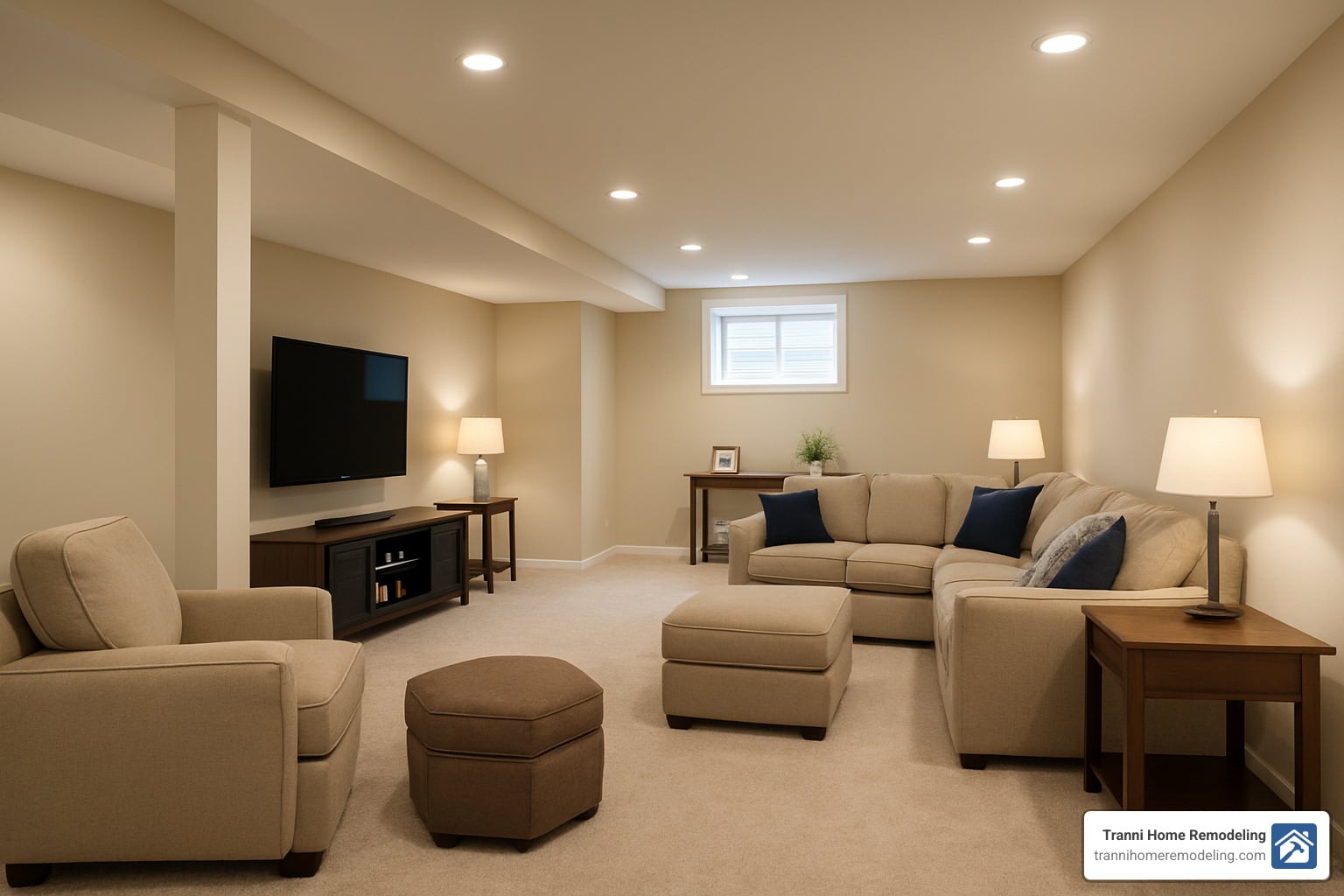





Basement Finishing Services: 7 Powerful Ways to Save in 2025
Transform Your Underused Space: The Power of Basement Finishing
That dark, forgotten space beneath your home? It’s actually a gold mine of potential just waiting to be finded.
Hi there! I’m Tyler Tranni, owner of Tranni Home Remodeling, and I’ve seen the look of amazement on countless homeowners’ faces when they see what their basement can become. Throughout Massachusetts, we’ve been changing cold concrete caves into warm, inviting living spaces that families absolutely love.
Basement finishing services aren’t just about throwing up some drywall and calling it a day. It’s a comprehensive change that converts your underused below-grade space into a fully functional extension of your home. We’re talking proper insulation that keeps the space comfortable year-round, durable flooring that stands up to moisture concerns, strategic lighting that eliminates that “basement feel,” and all the fixtures that make a space truly livable.
The numbers tell an impressive story too. Most homeowners recover up to 70% of their investment when they sell their home. Plus, you’re adding up to 50% more usable living space to your home without the massive expense and disruption of building an addition. And let’s not forget the improved energy efficiency that comes with properly insulating what was once a major source of heat loss.
Best of all, this change doesn’t have to break the bank. While the average cost runs between $40-$80 per square foot (depending on materials and features you choose), strategic planning and material selection can make this project fit various budgets. Most projects wrap up in about 30-45 days, meaning you can go from cold storage to cozy living space in just over a month.
Whether you’re dreaming of a home theater where movie nights become magical, a playroom where kids can be as loud as they want, or a guest suite that makes visitors feel truly welcome, your basement has the potential to become whatever your family needs.
At Tranni Home Remodeling, we specialize in balancing quality craftsmanship with budget-conscious solutions. We’ll help you steer important considerations like basement lighting solutions that banish those shadows, basement ventilation solutions that keep the air fresh and healthy, and even options to refinish concrete basement floor for an economical yet attractive finish.
Your basement doesn’t have to stay the forgotten floor of your home. With the right vision and expertise, it can become the space your family never knew they needed—but soon won’t be able to live without.
Understanding Basement Finishing Services: Definitions, Benefits & ROI
That dark, dusty space beneath your home holds incredible potential. When properly finished, your basement can add up to 50% more living area without expanding your home’s footprint. But what exactly does finishing a basement involve, and is it worth the investment?
What Are Basement Finishing Services?
Basement finishing services transform raw, unfinished space (you know—concrete floors, exposed joists, visible pipes) into comfortable, functional living areas your family will actually use.
This comprehensive process typically includes:
Professional framing creates defined rooms and spaces, while proper electrical work brings light and power to what was once a dark cave. Plumbing installations make bathrooms and wet bars possible, and quality insulation keeps the space comfortable year-round while improving energy efficiency. The change continues with drywall, new flooring (whether carpet, luxury vinyl, or tile), ceiling treatments, trim work, paint, and all those finishing touches that make a space feel complete.
At Tranni Home Remodeling, our Basement Finishing approach addresses the unique challenges basements present—like moisture control and limited natural light—while maximizing their potential. As Mark from Tewksbury told us, “I couldn’t believe the difference. Our basement went from a place we avoided to the room where everyone wants to hang out!”
Basement Finishing Services vs Basement Remodeling
Though often used interchangeably, these terms actually describe different projects:
Basement Finishing means starting with a completely unfinished space—concrete walls, exposed ceiling joists, visible utilities—and creating a fully livable area from scratch.
Basement Remodeling involves updating or reconfiguring an already finished or partially finished basement. This might mean changing the layout, upgrading materials, or adding new features to an existing space.
This distinction affects everything from permitting to timeline to budget. Finishing typically requires a complete permit package and takes 30-45 days, with costs generally running $40-$80 per square foot. Remodeling permits vary with scope, timelines can be shorter (1-4 weeks depending on changes), and costs range widely based on the extent of changes ($25-$100+ per square foot).
A properly finished basement offers tremendous benefits beyond just extra space. It increases your home’s value—often recovering up to 70% of project costs at resale. It improves energy efficiency by adding insulation to what was previously an uncontrolled area. Many homeowners are surprised to learn that finished basements can even qualify for certain tax advantages as home improvements.
Code compliance is critical in basement projects, particularly regarding egress windows (required for bedrooms), ceiling height requirements, and specific insulation R-values. Getting these details right not only ensures safety but prevents costly corrections later.
As Sarah from Billerica shared after her basement finishing project, “We thought we just wanted extra space for the kids, but our finished basement has become command central for the whole family. The return on investment isn’t just financial—it’s completely changed how we live in our home.”
With proper planning and professional execution, basement finishing services can transform your home’s forgotten underground space into its most valuable asset.
Budgeting & Step-By-Step Process Without Breaking the Bank
Let’s talk dollars and sense for your basement change. I’ve seen the look of relief on homeowners’ faces when they realize their dream basement is actually within reach financially. Based on internet data and industry averages (not specific to Tranni Home Remodeling), basement finishing services typically range from $25 to $90 per square foot. That’s quite a spread, right? The final cost depends on your choices, your space, and your vision.
Your basement budget pie gets sliced in several ways. Framing and drywall usually take about 15-20% of your total budget, while electrical work and lighting claim another 10-15%. If you’re dreaming of a basement bathroom or wet bar, set aside 10-20% for plumbing. Flooring needs 10-15%, with insulation and ceiling work each requiring 5-10%. The remaining budget gets divided between painting, HVAC modifications, permits, and project management.
Here’s something I can’t stress enough: waterproofing first, finishing second. Always. I’ve seen too many beautiful basements ruined by moisture issues that weren’t addressed properly. Before you hang a single piece of drywall, make sure your basement is dry and will stay that way. Our Basement Waterproofing Solutions guide walks you through the essentials.
Budget-Friendly Step-by-Step Process
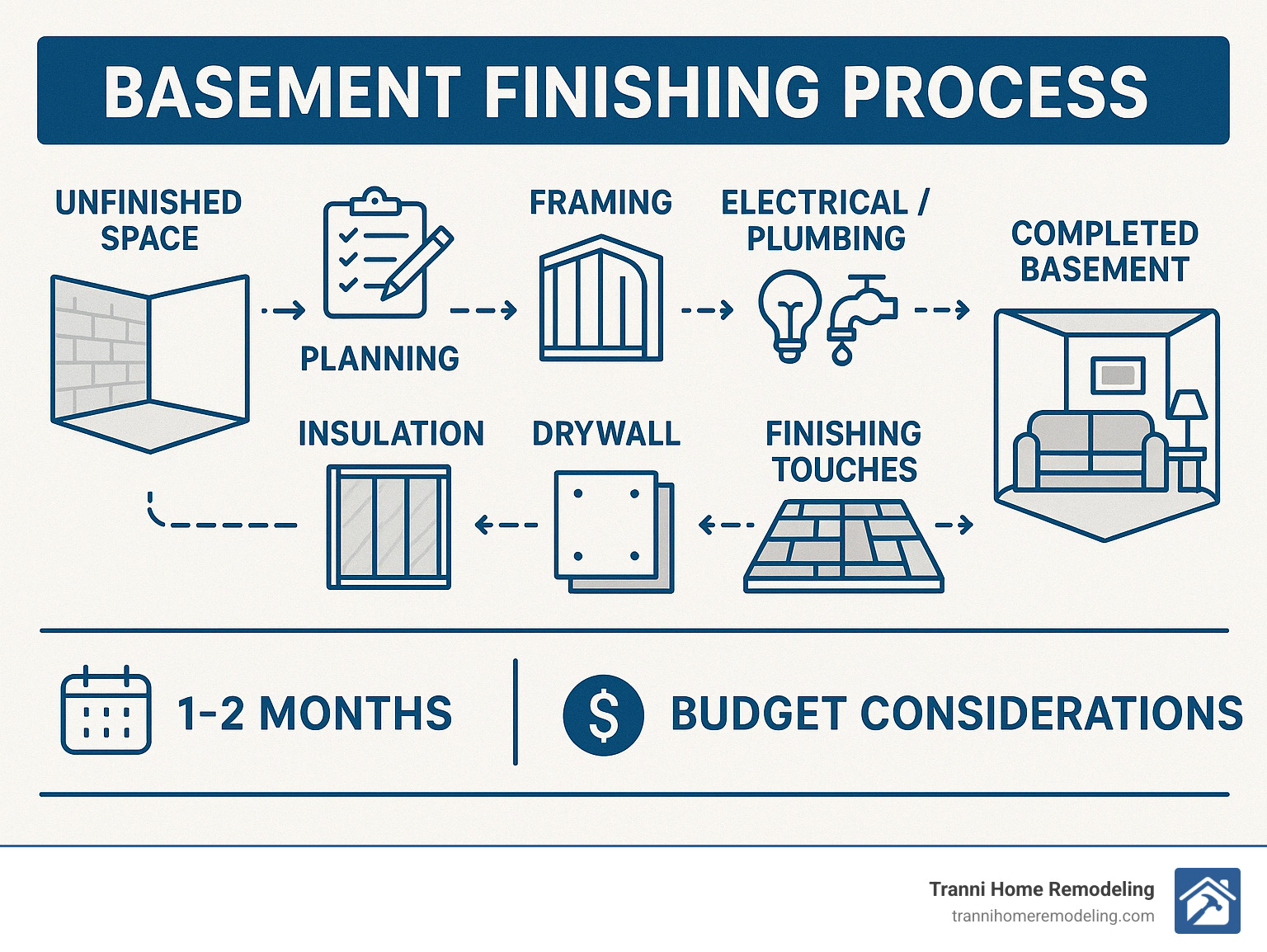
Your basement change journey typically spans about 30-45 days, moving through distinct phases. We start with assessment and planning in week one, where we evaluate your space, identify any moisture concerns, and create your preliminary design. This is also when we apply for those all-important permits.
Weeks 1-2 focus on waterproofing and preparation. “Think of this as your basement’s raincoat,” I often tell clients. We address any moisture issues, install sump pumps if needed, seal foundation cracks, and put in vapor barriers.
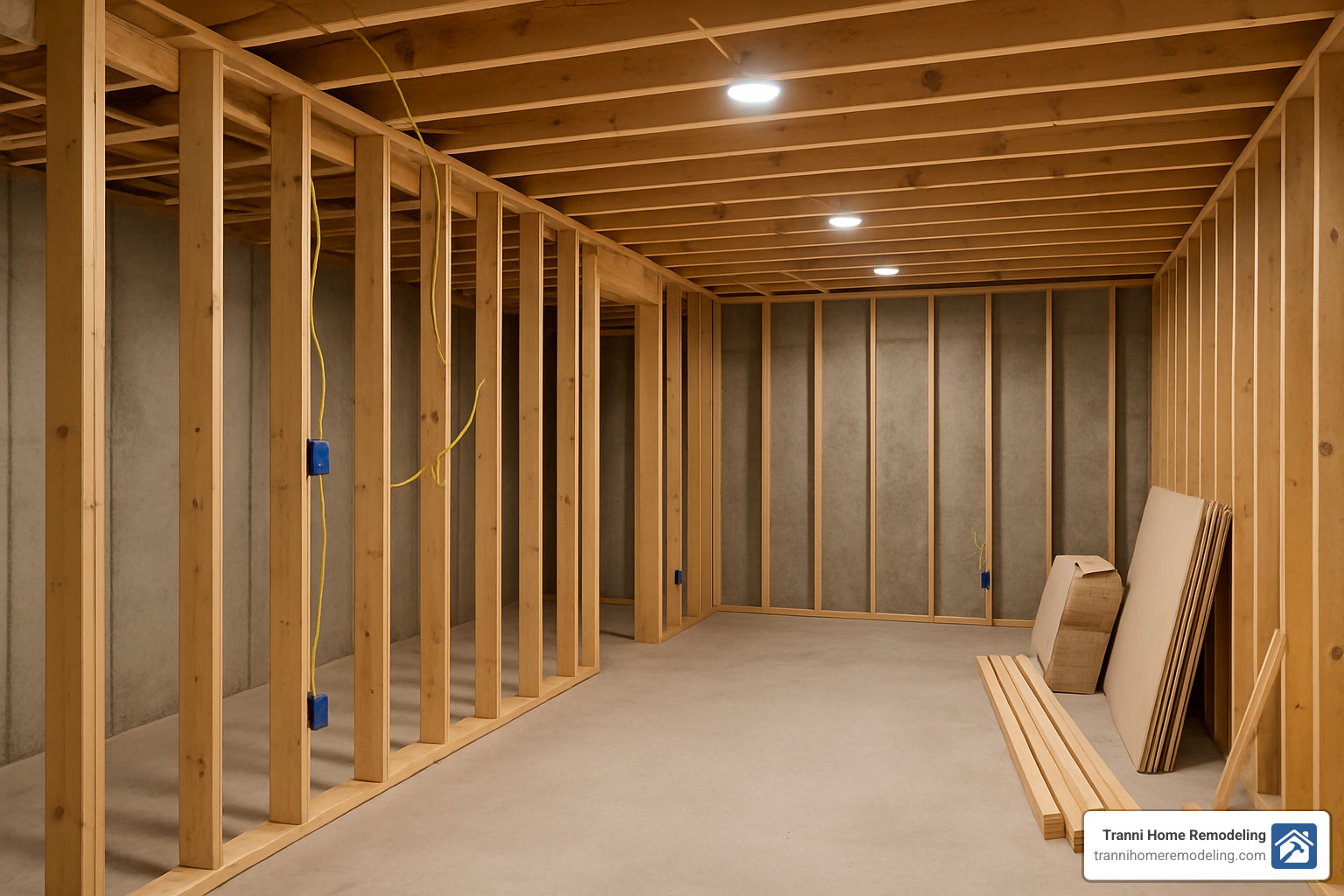
By weeks 2-3, we’re framing out your new spaces. This is when your basement starts to take shape, with room divisions and doorways becoming visible. It’s also when we work around those sometimes-annoying support columns, turning them from eyesores into design features.
The next phase is all about the behind-the-scenes work. During weeks 3-4, we handle the rough-ins: electrical wiring, plumbing lines, and HVAC modifications. Then comes insulation and drywall in weeks 4-5, which dramatically transform the space and set the stage for the finishing touches.
Flooring and ceiling installation happens in weeks 5-6, followed by the finishing touches in weeks 6-7. This includes painting, installing fixtures, and completing any custom features. Finally, week 7 brings final inspections, cleanup, and your project completion walkthrough.
For a deeper dive into what these projects typically cost, our Basement Remodeling Cost Per Square Foot guide provides valuable insights.
Budget-Friendly Material Choices
Your material selections can dramatically impact your bottom line. I remember a client in Tewksbury who was initially set on hardwood flooring until we discussed luxury vinyl plank (LVP). Not only did she save significantly, but the LVP has performed beautifully in her basement environment for years.
| Feature | Budget-Friendly | Mid-Range | Luxury |
|---|---|---|---|
| Flooring | Vinyl sheet ($1-3/sq ft) | Luxury vinyl plank ($3-7/sq ft) | Engineered hardwood ($8-15/sq ft) |
| Wall Finish | Paint on drywall ($1-2/sq ft) | Textured finish ($3-5/sq ft) | Wood paneling/stone accents ($8-20/sq ft) |
| Ceiling | Drop ceiling ($2-5/sq ft) | Drywall ceiling ($3-7/sq ft) | Coffered or tray ceiling ($15-25/sq ft) |
| Lighting | Basic recessed ($15-30 each) | LED recessed with dimming ($30-60 each) | Smart lighting system ($500-2000+) |
| Bathroom | Basic 3-piece ($3,000-5,000) | Mid-range fixtures ($5,000-10,000) | Luxury spa-like ($10,000-25,000+) |
Many of our Billerica clients have found that mid-range options often provide the best balance of quality and value. As one homeowner told me after we finished her basement, “I’m so glad we spent a bit more on better lighting but saved on the flooring. The space feels luxurious, but we didn’t break the bank.”
When planning your basement finishing services project, phased payments can help manage cash flow. Most contractors, including us at Tranni Home Remodeling, structure payments around project milestones rather than requiring the full amount upfront. And if you’re considering financing options, many homeowners have found success with home equity loans or lines of credit, which often offer favorable interest rates for home improvement projects.
Design Ideas & Trending Features on a Budget
Your basement holds incredible potential without requiring a fortune to transform. I’ve helped countless Massachusetts homeowners create spaces they love while keeping costs manageable. Let me share some ideas that blend style and function without emptying your wallet.
Popular Basement Uses That Won’t Break the Bank
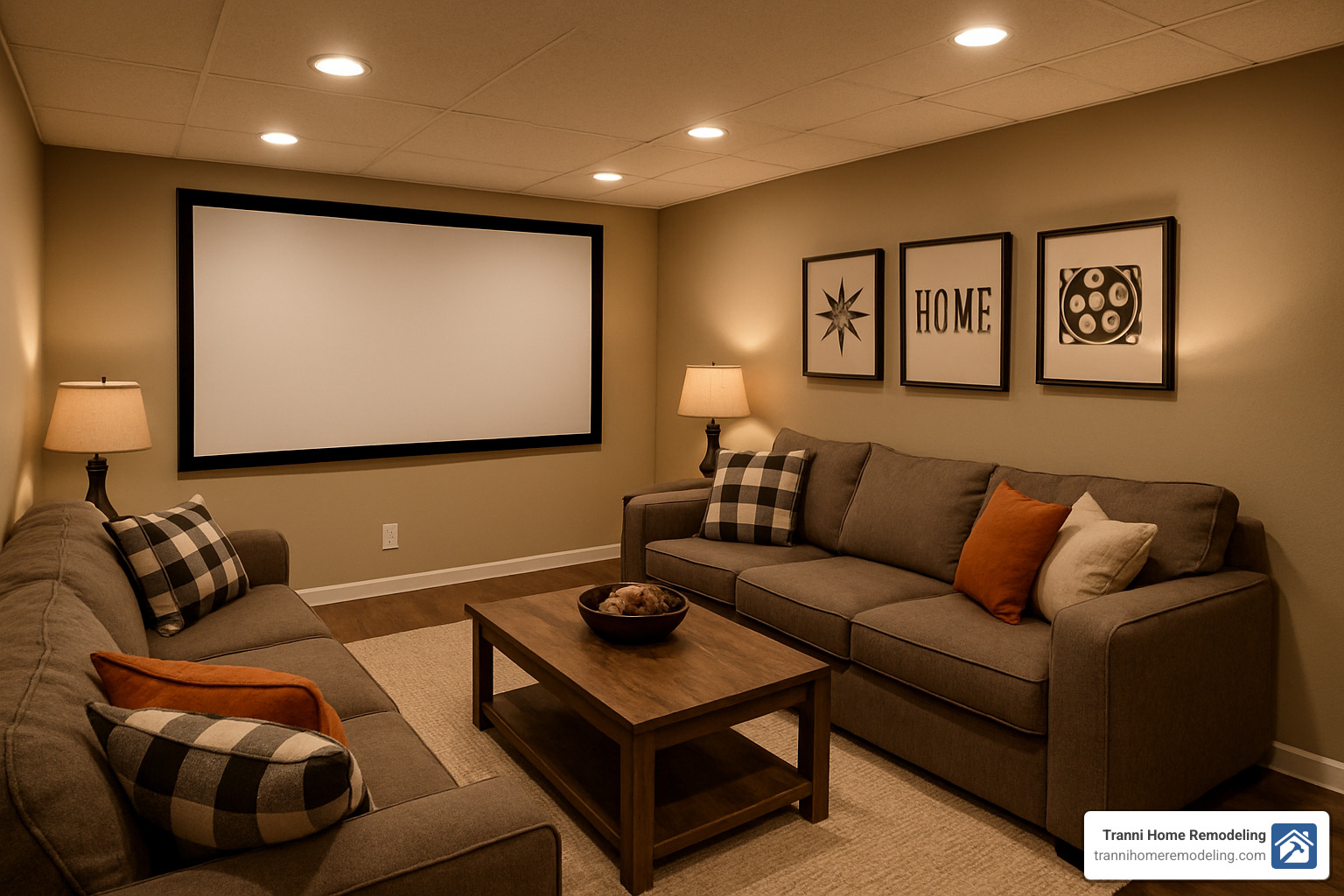
Turning your basement into a home theater can be more affordable than you might think. Skip the expensive built-in seating and opt for a comfortable sectional instead. One of my Billerica clients created a dramatic look by simply painting one wall a deep navy blue rather than installing costly wall treatments. A quality projector and screen often costs less than a large-screen TV while delivering a more authentic theater experience.
Home gyms make perfect sense in basement spaces. Instead of expensive poured rubber flooring, consider interlocking rubber tiles that you can install yourself. Large mirrors not only help you check your form during workouts but also make the space feel significantly larger and brighter. Focus your budget on good ventilation rather than expensive climate control systems – your workouts will be more comfortable, and your wallet will thank you.
Creating a welcoming guest suite doesn’t require completely separate rooms. Partial walls or stylish room dividers can define spaces while maintaining an open feel. A three-quarter bath (shower, sink, toilet) saves considerable money compared to a full bathroom with tub. For ultimate flexibility, Murphy beds or high-quality sleeper sofas allow the space to serve multiple purposes when guests aren’t visiting.
“We wanted a space where our kids could play freely without worrying about noise or mess,” shared a client from Tewksbury. “Tranni helped us create a colorful, safe playroom with smart storage solutions that didn’t break our budget.” Colorful paint and wall decals create a fun atmosphere without the expense of custom built-ins, while durable vinyl plank flooring stands up to years of play.
A home office in your basement provides the quiet separation many remote workers crave. Prefabricated desks and shelving systems can look surprisingly high-end for a fraction of custom built-ins’ cost. The key is investing in excellent lighting – poor lighting makes even expensive spaces feel dreary.
Trending Budget-Friendly Features
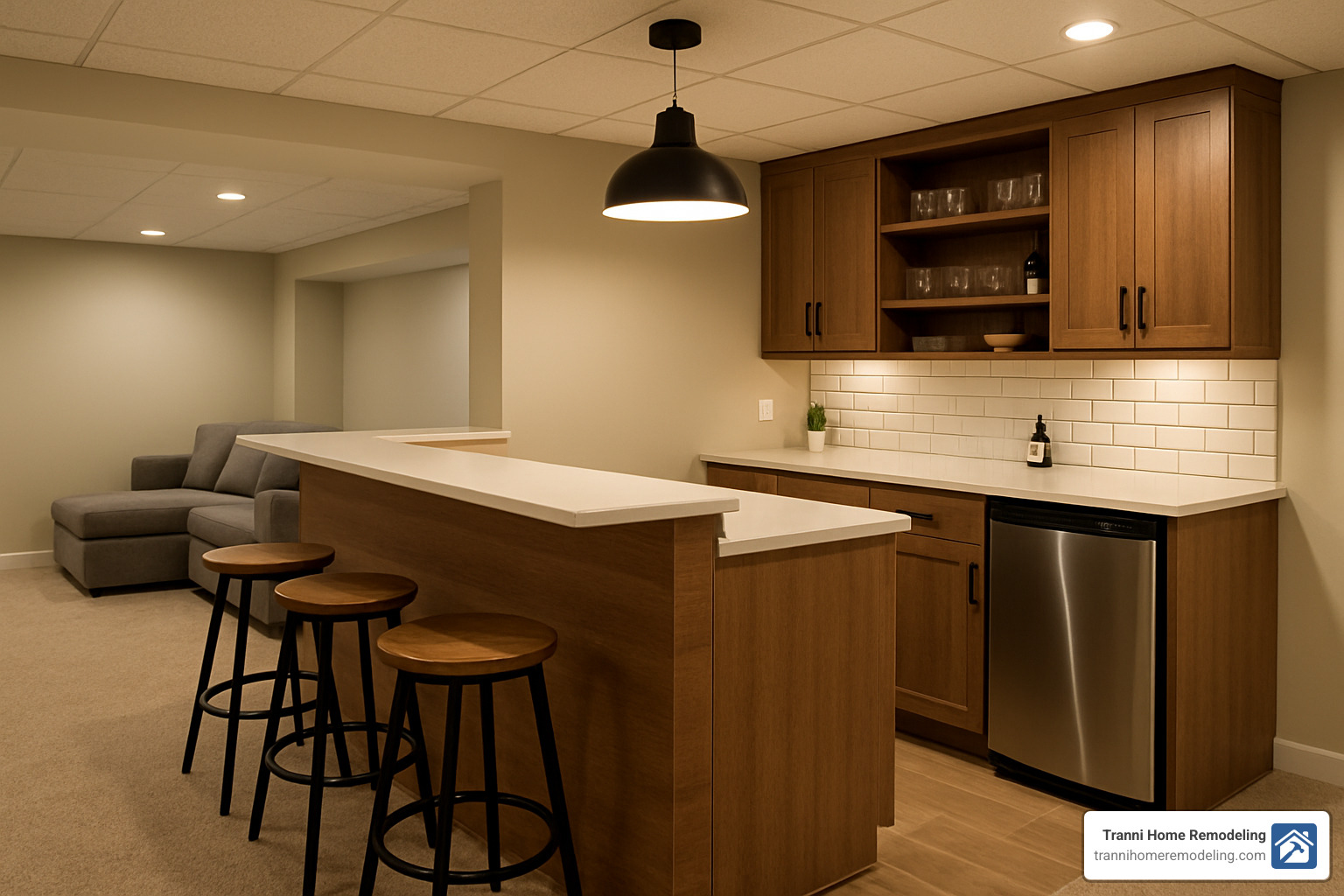
Modular bar systems have revolutionized basement entertainment spaces. These pre-made components create a custom look at a fraction of custom cabinetry’s cost. I recently installed one for a Wilmington family that looks completely built-in but cost about 40% less than a custom solution. The beauty of modular systems is that you can expand them over time as your budget allows.
Smart lighting doesn’t have to break the bank. Rather than extensive rewiring for smart switches, wireless smart bulbs provide the same functionality at lower cost. Zone lighting lets you highlight architectural features without extensive electrical work. One of my favorite budget tricks is using LED strip lighting behind floating shelves or under a bar counter – it creates a high-end ambiance for less than $100.
Luxury vinyl plank (LVP) flooring has become my go-to recommendation for basement finishing services. It’s completely waterproof, looks remarkably similar to hardwood, and costs significantly less. Many of my clients have successfully installed it themselves, saving hundreds on labor costs. The click-lock systems make installation surprisingly straightforward.
The open ceiling concept has gained popularity for good reason. By painting exposed joists and ductwork (usually in black or dark gray), you create an industrial-chic look while saving thousands on drop ceiling or drywall ceiling installation. This approach also preserves precious ceiling height in basements with limited clearance.
Multi-purpose room designs maximize your investment by allowing spaces to serve multiple functions. Sliding room dividers cost less than permanent walls while offering flexibility. Modular furniture and storage systems adapt as your family’s needs change over time. One Chelmsford family created a space that serves as a playroom by day and adult entertainment space by evening with thoughtful furniture and storage choices.
For more specialized ideas, check out our Basement Lighting Solutions and Basement Storage Solutions guides. If you’re considering custom cabinetry for your bar or entertainment center, our partners at MKE Cabinetry offer beautiful options at various price points.
Want to see our Basement Finishing Services in action? Check out our video showcasing our basement changes.
Family-Friendly Features on a Budget

When designing with children in mind, safety and durability become top priorities without requiring premium prices. Rounded corners and soft surfaces protect active little ones – simple corner protectors cost just a few dollars each but prevent painful bumps and bruises. Carpet tiles in play areas provide warmth and cushioning while being individually replaceable if damaged (much more budget-friendly than replacing entire carpets).
Washable wall paints in semi-gloss or satin finishes stand up to tiny fingerprints and artistic expressions. One Reading family loves the magnetic paint section we created in their basement playroom – it cost less than $50 but provides endless entertainment. Similarly, a chalkboard paint area gives creative kids a designated space for artistic expression without worrying about wall damage.
Moisture-resistant materials are non-negotiable in basement environments, especially with children. Mold-resistant drywall costs only slightly more than standard drywall but creates a healthier environment. Proper ventilation reduces humidity and prevents musty odors – simple bathroom fans can often be sufficient when strategically placed.
A client in Reading told us, “The kid-friendly playroom you designed has been life-changing. The washable surfaces and smart storage have made cleanup so much easier, and the kids absolutely love their new space.”
By focusing on these practical yet creative approaches to Basement Finishing Services, you can create a space your family will love without stretching your budget beyond comfort. The key is knowing where to invest and where to save – something we’ve helped hundreds of Massachusetts families steer successfully.
Pro vs DIY: Choosing the Right Team & Key FAQs
When it comes to changing your basement, one of the biggest decisions you’ll face is whether to tackle it yourself or hire professionals. This choice affects not just your wallet, but also the quality, timeline, and your personal stress levels throughout the project.
DIY Considerations for Basement Finishing Services
There’s something satisfying about completing a project with your own two hands. And yes, the DIY route can save you 30-50% on labor costs for your basement finishing project. But before you grab that hammer, let’s get real about what you’re signing up for.
The potential savings are tempting – you’ll avoid the $20-45 per square foot in labor costs, skip the 10-20% contractor markup on materials, and save on project management fees. But there’s always a “but,” isn’t there?
If you don’t already own them, specialty tools can set you back $1,000-3,000 right off the bat. And that YouTube tutorial makes everything look so easy until you’re standing in your basement wondering why your walls don’t look like theirs. First-time DIYers often make mistakes that end up requiring professional correction – sometimes costing more than if they’d hired pros from the start.
A homeowner in Chelmsford learned this lesson the hard way: “I thought I’d save money doing it myself. Three months in, I was only halfway done, had failed two inspections, and realized I needed professional help. The cost to fix my mistakes ended up being more than if I’d just hired pros from the beginning.”
Time is another factor many DIYers underestimate. What professionals can complete in 30-45 days often stretches to 3-6 months of evenings and weekends for homeowners. And let’s not forget safety – electrical work, plumbing, and structural changes carry real risks when done without proper training.
That said, certain aspects of basement finishing can be DIY-friendly: painting and decorating, installing pre-fabricated cabinets, some types of flooring installation (with proper prep), and basic trim work. But for electrical wiring, plumbing, HVAC modifications, structural changes, waterproofing, and egress window installation – calling in the pros isn’t just smart, it’s often safer and required by code.
For a realistic look at costs, check out our guide on the Average Cost to Refinish Basement.
Hiring a Pro: What to Look For
If you’ve decided professional basement finishing services are the way to go (and your future self thanks you), here’s what to look for in a qualified contractor:
Experience and specialization matter tremendously. Ask how many basements they’ve finished and whether they understand the unique challenges of below-grade spaces. A general contractor and a basement specialist might both be skilled, but the specialist will anticipate and prevent problems specific to basements.
Licensing and insurance aren’t just formalities – they’re your protection. Verify current state licensing, confirm they carry liability insurance and workers’ compensation, and check that they pull proper permits for all aspects of work. In Massachusetts, working without permits can lead to hefty fines and complications when selling your home.
When reviewing estimates, look for detail – not just a bottom-line number. Quality contractors provide line-item breakdowns of costs, clearly specify materials, and tie payment schedules to project milestones. If someone can’t explain where your money is going, that’s a red flag.
Don’t skip checking references and reviews. Contact recent clients, check online reviews across multiple platforms, and if possible, visit completed projects. Past performance is often the best predictor of future results.
Good communication systems prevent headaches. Ask how they’ll keep you updated, whether they use project management software you can access, and who your main point of contact will be during the project. Clear communication prevents misunderstandings and ensures your vision becomes reality.
Finally, get clarity on warranty coverage. What aspects of the work are warranted? How long does the warranty last? Is it transferable if you sell your home? Strong warranties reflect a contractor’s confidence in their work.
At Tranni Home Remodeling, we pride ourselves on comprehensive warranties and using only moisture-resistant materials specifically designed for basement environments. As one client in Winchester noted, “Their attention to detail regarding moisture control and proper ventilation showed me they truly understand basement finishing, not just general remodeling.”
Frequently Asked Questions about Basement Finishing Services
Q: How long does a typical basement finishing project take?
A: Most professional basement finishing projects take between 30-45 days from start to finish, assuming no major complications. Larger spaces, complex designs (like adding bathrooms or kitchenettes), material availability issues, permitting delays, or unexpected problems finded during construction can all extend this timeline. We always provide a detailed schedule at the start of each project so you know exactly what to expect.
Q: Do I need a permit to finish my basement in Massachusetts?
A: Yes, Massachusetts building codes require permits for basement finishing projects. Requirements vary by municipality but generally include building permits for structural work, electrical permits for wiring, plumbing permits for bathrooms or wet bars, and mechanical permits for HVAC changes.
Massachusetts also has specific requirements for egress windows in basement bedrooms, minimum ceiling heights, and smoke/carbon monoxide detector placement. At Tranni Home Remodeling, we handle all permitting processes for our clients, ensuring full code compliance and preventing future headaches.
Q: What kind of warranties should I expect?
A: Professional basement finishing companies typically offer warranties ranging from 1-5 years on workmanship, while materials often carry separate manufacturer warranties. At Tranni Home Remodeling, we provide a 2-year warranty on all workmanship, pass through all manufacturer warranties on materials, and offer extended warranty options for additional peace of mind.
As one client in North Reading said, “The warranty coverage gave us confidence in our investment, but what really impressed us was how quickly they addressed a minor issue that came up six months after completion.”
Q: How can I ensure proper ventilation in my finished basement?
A: Proper ventilation prevents moisture problems and maintains air quality in your finished basement. Options include extending existing HVAC systems downstairs, installing dedicated dehumidification systems, adding mechanical ventilation like bathroom exhaust fans, or using specialized air exchange systems. The right solution depends on your specific basement conditions and intended use.
For more detailed information, visit our guide on Basement Ventilation Solutions.
Q: Can any basement be finished, or are some spaces unsuitable?
A: While most basements can be finished, some situations present significant challenges. Basements with severe water intrusion issues need those problems resolved first. Spaces with less than 7 feet of ceiling height don’t meet Massachusetts building code requirements. Areas with radon levels above EPA recommendations require mitigation systems, and basements with major structural issues need those addressed before finishing.
At Tranni Home Remodeling, we always conduct a thorough assessment before beginning any project to identify potential issues and determine if your basement is suitable for finishing. Sometimes the pre-work is what makes the difference between a beautiful, lasting finished basement and one with ongoing problems.
Conclusion
Changing your basement from a forgotten storage area into a beautiful, functional living space is one of the smartest investments you can make in your home. I’ve seen how a well-executed basement finishing project can completely change how families live in and enjoy their homes.
At Tranni Home Remodeling, we’ve guided countless homeowners throughout Middlesex County on this journey, helping them steer the process while respecting their budget constraints. Our team has developed a deep understanding of the unique challenges basement spaces present—from managing moisture issues to creating proper lighting in naturally dark environments.
When you’re considering your own basement change, remember these essential points:
Plan thoroughly before swinging the first hammer. The most successful projects start with comprehensive planning that anticipates potential challenges. One client in Tewksbury told me, “The two extra weeks we spent planning saved us thousands in changes we might have made mid-project.”
Address moisture control as your top priority. No amount of beautiful finishes can overcome water problems. Proper waterproofing isn’t just a good idea—it’s the foundation for everything else.
Select materials specifically designed for below-grade environments. The basement presents unique conditions that require specialized products for long-term success and durability.
Think about tomorrow, not just today. The most successful basement projects balance immediate needs with flexibility for the future. Creating multi-purpose spaces often delivers the best long-term value.
Partner with professionals who specialize in basement environments. The knowledge gap between general contractors and basement specialists can make a dramatic difference in both the process and the results.
Whether you’re dreaming of a cozy home theater for family movie nights, a guest suite for visiting relatives, a playroom where kids can be kids without worrying about noise, or a multi-purpose space that adapts to your changing needs, a professionally finished basement delivers exceptional value for your investment.
The change isn’t just about adding square footage—it’s about creating new possibilities for how you live in your home. As one client in Burlington recently shared, “Our finished basement has completely changed our family dynamics. We actually spend time together now instead of everyone retreating to their separate bedrooms.”
Ready to explore the possibilities for your basement? I’d love to discuss how Tranni Home Remodeling can help you create the basement of your dreams while respecting your budget. For more information about our basement finishing services, visit our Basement Finishing Services page or give us a call to schedule your consultation.