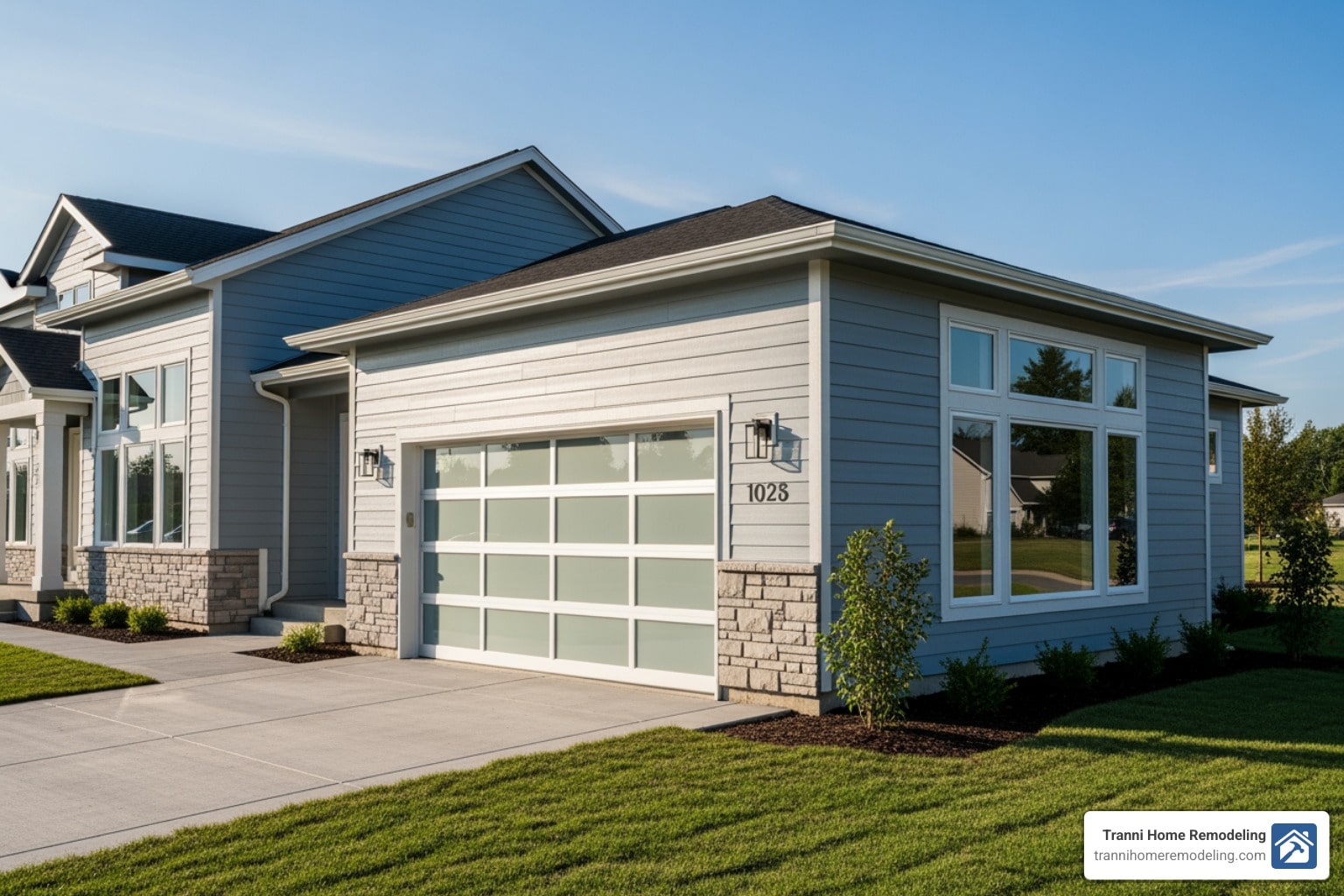





Why a Garage Addition Near Me Makes Sense for Your Home
A Garage Addition Near Me is a home improvement project that involves either adding a new garage structure to an existing property or expanding your current garage space. This can take the form of an attached garage (connected directly to your home), a detached garage (a separate building), or an expansion that increases the size of your existing garage to accommodate more vehicles, storage, or even living space above.
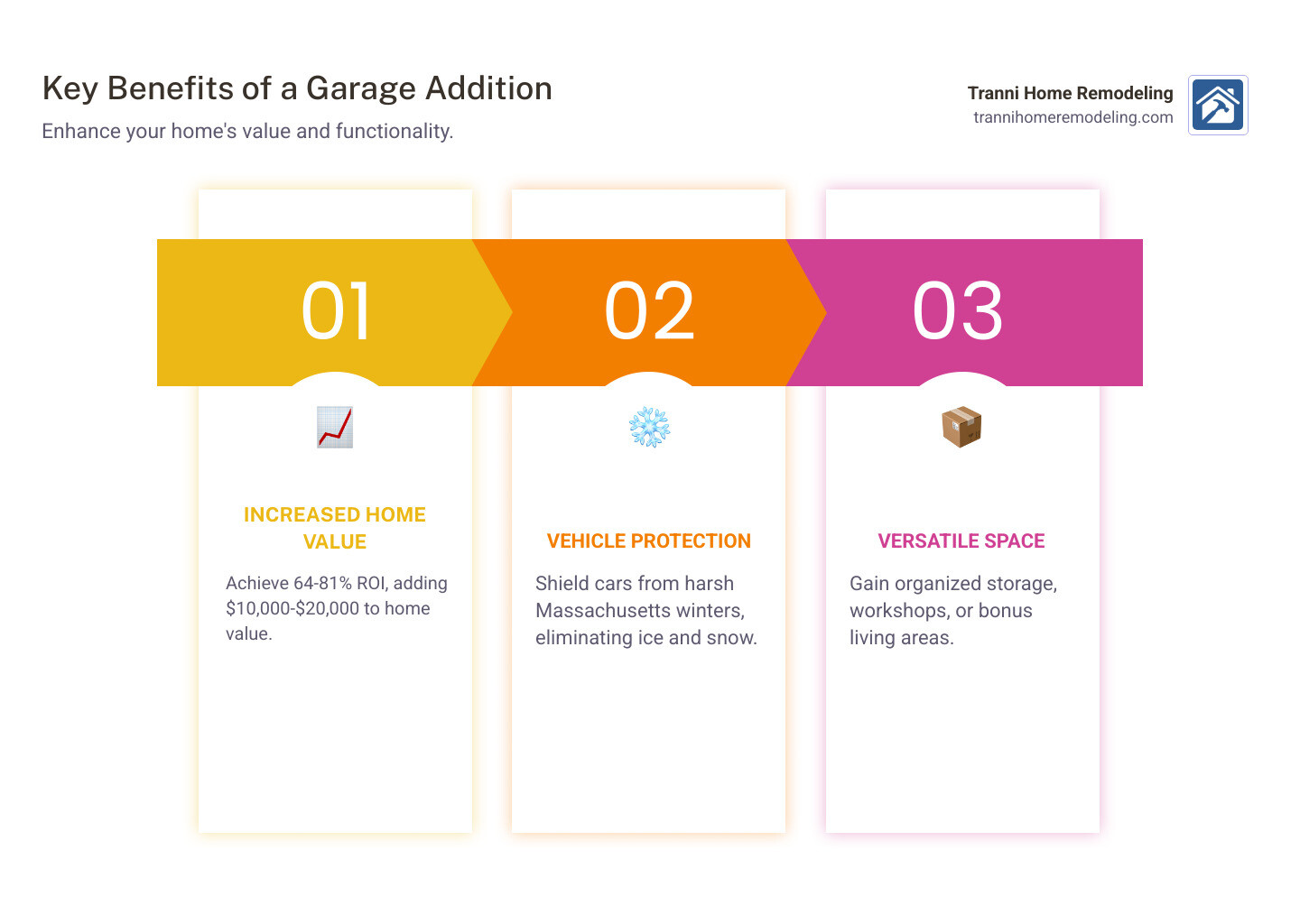
Key Benefits of a Garage Addition:
- Increased Home Value: Delivers a 64-81% return on investment, with homes selling for $10,000-$20,000 more on average
- Vehicle Protection: Shields cars from harsh Massachusetts winters, eliminating snow scraping and ice removal
- Improved Storage: Provides organized space for tools, sports equipment, and seasonal items
- Added Convenience: Offers direct home access, especially valuable during cold weather
- Flexible Space: Can include workshops, mudrooms, or bonus living areas above
A garage addition is particularly valuable in Massachusetts, where winter weather takes a toll on vehicles and homeowners alike. The convenience of covered parking means no more scraping ice off windshields or tracking snow and salt into your house.
Whether you need space for an extra vehicle, want better storage solutions, or are looking to create a dedicated workshop area, a well-planned garage addition seamlessly integrates with your home while boosting both functionality and property value. The typical single-car garage measures 12 by 22 feet, while a two-car garage spans 24 by 24 feet, though dimensions can be customized to fit your specific needs and property layout.
I’m Tyler Tranni, owner and operator of Tranni Home Remodeling in Billerica, MA, and I’ve helped countless homeowners successfully plan and execute Garage Addition projects that improve their homes’ value and functionality. With years of hands-on experience in home remodeling and a deep understanding of local building codes and Massachusetts weather considerations, I know what it takes to create a garage addition that looks like it was always part of your home.
Know your Garage Addition terms:
Planning Your Garage Addition: Key First Steps
Adding a garage to your home in Massachusetts is a significant investment that requires careful thought and meticulous planning. Before any construction begins, we encourage our clients to clearly define their needs and understand the practical and regulatory aspects involved. This initial phase is crucial for ensuring a smooth project and a result that perfectly complements your home and lifestyle.
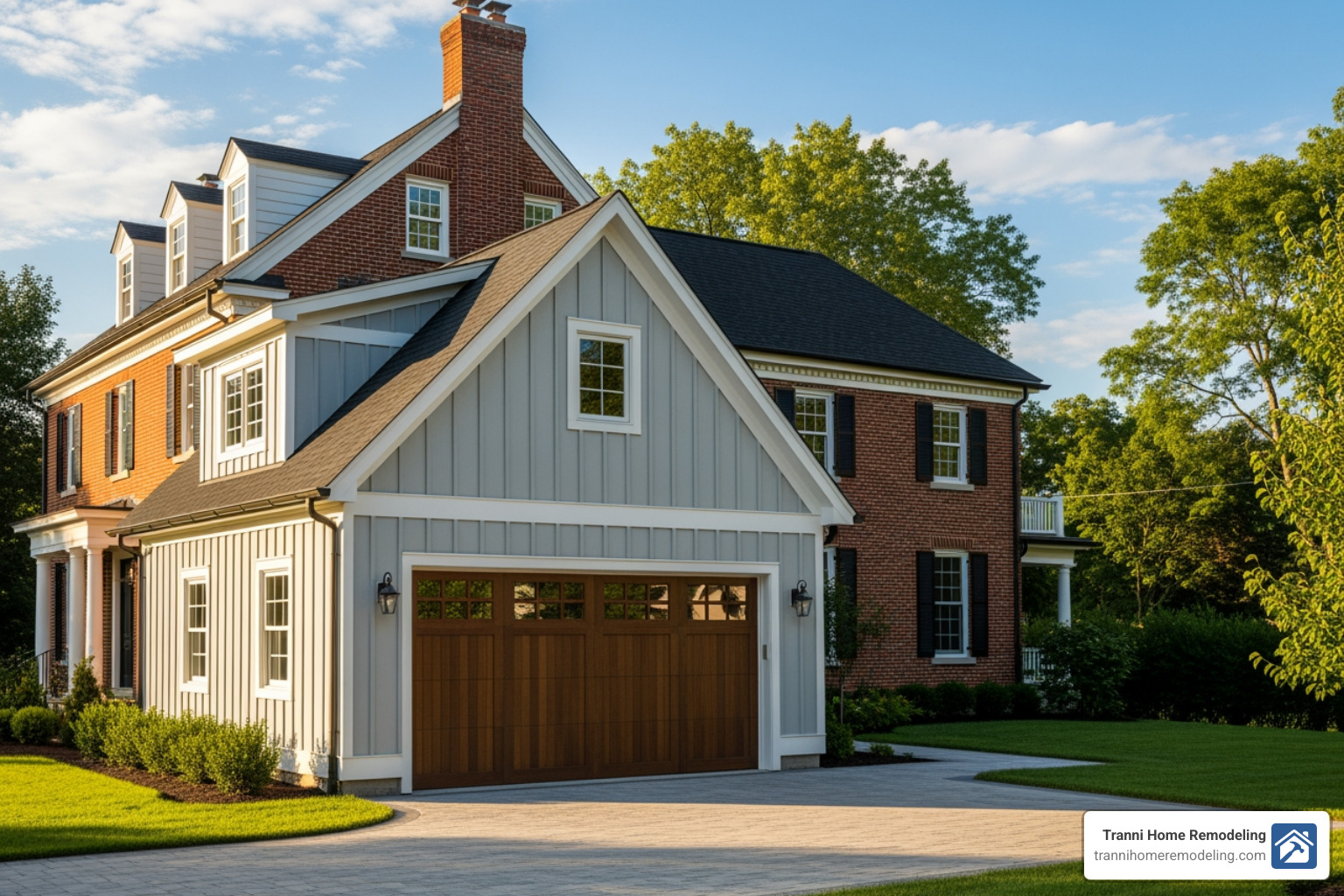
The first step is to consider your “why.” Are you looking for extra vehicle space, improved storage, a dedicated workshop, or perhaps bonus living space? Your intended use will heavily influence the size, design, and features of your Garage Addition. For example, a single-car garage typically measures 12 by 22 feet, while a two-car garage usually spans 24 by 24 feet. However, if you own larger vehicles or plan for extensive storage, you’ll need to adjust these dimensions accordingly.
Next, we evaluate your property’s specifics. This includes your lot size and layout, which dictates where a new structure can be placed and how large it can be. We also look at your existing driveway configuration and how it might need to change to accommodate easier access to your new garage. It’s also important to check for any underground utilities or septic systems that could impact the chosen location.
A critical part of planning any home addition in Massachusetts involves understanding and adhering to local zoning laws and building permits. These regulations dictate everything from how close your garage can be to property lines (setback requirements) to its maximum height and size. Our team at Tranni Home Remodeling is well-versed in the specific requirements for towns like Billerica, Bedford, Wilmington, and Concord, and we ensure all necessary permits are secured before construction starts. Permit costs in Massachusetts can vary by municipality but typically range from $500 to $2,000 for comprehensive remodels, and this should be factored into your budget.
Budgeting is another essential component. We help you consider all potential costs, including materials, labor, design fees, permits, and site preparation. It’s always a good idea to factor in an additional 15-20% contingency for unforeseen expenses. Consulting with an experienced contractor like us from the outset can provide you with accurate estimates and help you make informed decisions. According to industry data, garage additions typically deliver a 64–81% return on investment, making it a smart financial move for most homeowners.
Attached vs. Detached Garages: Making the Right Choice
One of the fundamental decisions you’ll face is whether to build an attached or detached garage. Both options offer distinct advantages and disadvantages, and the best choice for you depends on your specific needs, property layout, and budget.
Here’s a comparison to help you decide:
| Feature | Attached Garage | Detached Garage |
|---|---|---|
| Cost Comparison | Approximately 10-15% less expensive to build | Generally more expensive per square foot |
| Convenience | Direct access to home, especially in bad weather | Requires walking outside to access |
| Design Flexibility | Often needs to match home’s existing style | More freedom in placement and architectural style |
| Noise & Fume Separation | Potential for noise/fumes to enter home | Keeps noise, fumes, and odors separate from living space |
| Property Layout | Requires suitable wall space on existing home | Can be placed almost anywhere on the property (subject to zoning) |
| Shared Utilities | Easier to connect to existing electrical, plumbing, and residential HVAC systems | Requires new utility runs, potentially increasing cost |
Attached garages are often popular for their convenience, especially during our cold, snowy Massachusetts winters. The ability to step directly from your car into your home without facing the elements is a significant benefit. They are also generally more cost-effective to build because they share a wall and often a foundation with the existing house, making it easier and cheaper to extend utilities like electricity and residential HVAC.
Detached garages, on the other hand, offer greater flexibility in placement and design. If your lot size or layout makes an attached addition difficult, a detached structure might be the perfect solution. It allows you to keep potential noise, fumes, or odors from workshops or vehicle maintenance separate from your living areas. While they typically cost more to build per square foot due to requiring a separate foundation and utility runs, they can also offer more architectural freedom and the potential for future expansion. We often see detached garages used for specialized purposes, like a dedicated woodworking shop or a space for classic car storage.
Navigating Challenges and Local Regulations
Building a Garage Addition in Massachusetts, like any significant home renovation, comes with its own set of challenges and regulatory problems. Our expertise at Tranni Home Remodeling lies in guiding you through these complexities, ensuring your project is compliant, safe, and successful.
Massachusetts Building Codes and Setback Requirements: Every town, from Lexington to North Andover, has specific building codes and zoning ordinances that must be followed. These codes dictate everything from the structural integrity of your new garage to fire safety measures and how far your structure must be from property lines (setback requirements). For instance, building codes typically require footers for additions to account for frost lines, a crucial consideration in our New England climate to prevent foundation movement. We handle the intricate details of permits and inspections, ensuring your project meets all local and state standards.
Structural Integration: If you’re planning an attached garage, seamless structural integration is paramount. This includes ensuring the new foundation matches the existing house’s foundation type and carefully integrating the new roofline to avoid leaks and maintain architectural harmony. Modifying existing walls or headers to create new access points also requires careful planning and execution to maintain the overall structural integrity of your home.
Yard Space and Aesthetics: Maximizing functionality while preserving yard space and maintaining curb appeal can be a challenge. We work with you to find the ideal placement that balances your needs with the aesthetic flow of your property. Our goal is to make your new Garage Addition look like it was always part of your home, not an afterthought.
Understanding and navigating these challenges is where our experience truly shines. We are familiar with the specific requirements in our service areas, including Bedford, Burlington, Carlisle, Chelmsford, and Dracut. Our commitment is to ensure proper compliance, avoiding costly delays and complications during construction. For more information on how we approach larger projects, you can visit our general More info about home additions page.
Designing a Garage That Complements Your Home
When adding a Garage Addition, the goal isn’t just to create more space; it’s to improve your home’s overall aesthetic and value. A well-designed garage should look like a natural extension of your existing home, seamlessly blending with its architectural style rather than appearing “tacked-on.”

Achieving architectural harmony is key. This means paying close attention to details like matching rooflines and exterior materials. For example, if your home has a specific roof pitch or shingle type, your garage’s roof should ideally mirror this. Similarly, the siding, trim, and window styles of your new garage should complement those of your main house. We ensure that our material choices, from the foundation to the roof, align with your home’s existing character.
Consider the placement and style of windows in your Garage Addition. They should reflect the size, shape, and placement of the windows on your main house for a balanced appearance. Additionally, matching exterior lighting, landscaping, and creating clear walkways or breezeways can visually and functionally connect the garage to the rest of your property. Our team works diligently to integrate every element, ensuring the addition boosts your curb appeal and property value in towns like Lynnfield, Lincoln, and Lexington.
Popular Garage Addition Designs and Layouts
A Garage Addition can be far more than just a place to park your car. Modern garage designs offer incredible versatility, allowing you to integrate functional and desirable spaces that improve your home and lifestyle. Here are some popular designs we frequently help homeowners with:
- Multi-Car Garages: Beyond just parking, a multi-car garage provides ample space for vehicles, additional storage for tools, sports equipment, or even a small workshop, helping to keep driveways clear and belongings organized.
- Attached Garage with a Breezeway: A breezeway is a covered walkway connecting the garage to the home. It offers a protected transition from the elements and can add a unique architectural element, enhancing curb appeal.
- Bonus Room Above: One of the most popular ways to maximize a Garage Addition is by building a bonus room above it. This versatile space can become a guest suite, home office, playroom, gym, or even a rental unit, adapting to your family’s changing needs over time.
- Dedicated Workshop Space: For the hobbyist or DIY enthusiast, a garage can be designed with a dedicated area for projects. This might include specialized lighting, ample outlets, a workbench, and custom storage solutions.
- Integrated Mudroom: Adding a mudroom to your garage entry provides a practical transitional space to shed muddy boots, wet coats, and sports gear before entering the main house. This is especially useful for active households or in areas with harsh weather, keeping your home cleaner and more organized.
Regardless of the design you choose, we also focus on the quality of your Windows and Doors to ensure energy efficiency and aesthetic appeal.
Understanding the Costs of a Garage Addition
One of the first questions homeowners ask us about a Garage Addition is, “How much will it cost?” While there’s no single answer, as costs vary widely based on size, materials, and features, we can provide a comprehensive overview based on industry averages. These are average costs based on internet data, and not actual costs for Tranni Home Remodeling, which can provide a personalized estimate.
Average Cost Ranges
Building a Garage Addition can range significantly in price. For a basic 12′ x 24′ one-car garage, homeowners might spend around $14,200, equating to roughly $49 per square foot. However, a single-car garage could start at a minimum of $15,000, and an elaborate two-car garage with custom features could cost up to $100,000 or more.
For an unfinished garage, average costs typically range from $15,000 to $40,000. If you’re considering a 24’x24′ garage, you could expect costs to fall between $20,000 and $50,000, with more elaborate designs or premium materials pushing these figures higher. Attached garages are generally 10% to 15% less expensive to build than detached garages due to shared walls and easier utility access.
Cost Per Square Foot
The cost per square foot for a Garage Addition can vary from $20 to $50 for labor alone, with the total project cost per square foot often reflecting the complexity and finish level. We’ve seen averages around $49 per square foot for basic unfinished structures, but finished, insulated, and well-appointed garages can easily exceed $100 per square foot.
Labor Costs
Labor is a significant portion of any construction project, typically encompassing about 50-60% of the total garage construction price. This includes the work of carpenters, electricians, plumbers, roofers, and other skilled tradespeople. Our team of experienced professionals ensures high-quality craftsmanship throughout the entire process.
Material Choices
The materials you choose will have a substantial impact on your overall budget. For instance, the type of siding (vinyl, wood, fiber-cement), roofing (asphalt shingles, metal), and interior finishes (drywall, insulation, flooring) all contribute to the final cost. We guide you through selecting durable, high-quality materials that fit your budget and complement your home’s aesthetic, ensuring longevity and value.
ROI Statistics
A Garage Addition is consistently one of the smartest home investments. Industry data shows that garage additions typically deliver a strong return on investment (ROI), ranging from 64% to 81%. This means a significant portion of your investment can be recouped when you sell your home, often increasing its market value by $10,000 to $20,000 more than similar houses without a garage.
Breaking Down Your Garage Addition Budget
To provide a clearer picture, here’s a breakdown of typical cost components for a Garage Addition:
- Foundation Costs: This includes excavation, grading, and pouring the concrete slab and footings. Costs will vary based on soil conditions and whether you opt for a basic slab-on-grade or a more complex foundation.
- Framing & Lumber: The skeletal structure of your garage, including walls and roof trusses. The size and complexity of the design will dictate these costs.
- Roofing: Materials and installation for the roof, including shingles, underlayment, and flashing. We match your existing roof type for seamless integration.
- Siding: The exterior finish of your garage, chosen to match your home’s siding. Options range from vinyl to more premium materials.
- Electrical Services: Running new electrical lines for lighting, outlets, and potentially an automatic garage door opener. The complexity of your electrical needs will influence the cost. For more details, see our Electrical Services page.
- Insulation: Essential for temperature control and energy efficiency, especially if you plan to use the garage as a workshop or have a bonus room above. Finishing expenses for insulation and drywall can range from $1,200 to $3,500 or more.
- Plumbing & Residential HVAC: If you plan for a sink, bathroom, or a heated/cooled space, installing plumbing and residential HVAC systems can add anywhere from a few hundred to several thousand dollars.
- Plastering and Painting Services: For a finished interior, this includes drywall installation, plastering, and painting. Our Plastering and Painting Services ensure a professional finish.
- Garage Door & Opener: The cost of the garage door itself, which can vary widely by style and material, plus an automatic opener (typically $150 to $500 or more).
The Construction Process: From Blueprint to Build
Building a Garage Addition is an exciting journey that transforms your home. At Tranni Home Remodeling, we follow a structured process to ensure efficiency, quality, and transparency from start to finish.
Our journey together begins with an Initial Consultation. We meet with you at your home in our service area, perhaps in Woburn or Winchester, to discuss your vision, needs, and budget. This is where we gather all the essential information to understand your project fully.
Following the consultation, we move into Design & Blueprints. Our team works to translate your ideas into detailed architectural plans, ensuring the design aligns with your home’s style and your functional requirements. These blueprints are crucial for accurate cost estimates and for obtaining necessary approvals.
The Permitting Process is a critical step where our expertise truly benefits you. We prepare and submit all required documentation to your local municipality (like Tewksbury or Stoneham) to secure building permits. This ensures your Garage Addition complies with all local building codes and zoning regulations, preventing costly delays down the line.
Once permits are secured, Site Preparation begins. This involves clearing the construction area, excavating, and grading the land to create a level and stable base for the foundation. We also carefully check for any underground utilities to prevent damage during excavation.
The construction then proceeds through various stages, culminating in the Final Inspection. This is where local authorities verify that all work has been completed according to code and approved plans, ensuring the safety and quality of your new Garage Addition.
Step-by-Step Guide to Your Garage Addition Project
Here’s a general overview of the construction steps involved in bringing your Garage Addition to life:
- Foundation Pouring: After site preparation, the foundation is laid. This typically involves pouring concrete footings to support the garage walls and then a concrete slab for the floor. Proper curing of the concrete is essential to prevent cracking and ensure durability, especially given Massachusetts’ climate.
- Wall & Roof Framing: Next, the skeletal structure of the garage is erected. This includes framing the walls with wood or steel according to structural plans and then installing roof trusses or rafters. Sheathing (plywood or OSB) is then applied to the exterior walls and roof for structural stability.
- Exterior Finishing: Once the framing is complete, the exterior takes shape. This involves installing your chosen roofing material (shingles, metal, etc.), including underlayment and flashing for weatherproofing. Siding is then applied to the walls, matching your home’s existing exterior for a cohesive look.
- Utility Rough-ins: If your Garage Addition includes electrical outlets, lighting, or plumbing (for a sink or bathroom), the rough-in work for these utilities is completed at this stage, before insulation and drywall. This also includes any rough-ins for residential HVAC systems.
- Insulation & Drywall: To ensure comfort and energy efficiency, insulation is installed in the walls and ceiling. Following this, drywall or other interior paneling is hung, creating the interior surfaces of your garage.
- Interior Finishing: The final touches inside the garage include plastering and painting the walls, installing any trim or molding, and laying down the final flooring (e.g., concrete sealant, epoxy coating, or tile). Garage doors and windows are installed, ensuring they are properly sealed and weatherproofed.
Why Hiring a Professional is Crucial
While some homeowners might consider a DIY approach for certain projects, a Garage Addition is a complex undertaking that greatly benefits from professional expertise. Here’s why hiring a seasoned contractor like Tranni Home Remodeling is crucial:
- Code Compliance: Massachusetts has stringent building codes and local zoning regulations. Our team is intimately familiar with these rules in towns like Reading, North Reading, and North Andover, ensuring your Garage Addition meets all legal requirements and passes inspections without issues.
- Structural Integrity: A garage must be structurally sound to withstand the elements and safely support its contents. We have the engineering knowledge to ensure proper foundation, framing, and roof construction, preventing future problems.
- Project Management: Building a garage involves coordinating multiple trades (carpenters, electricians, plumbers, roofers, etc.), managing material deliveries, and adhering to a schedule. Our project management expertise ensures a smooth process, keeping the project on track and within budget.
- Quality Craftsmanship: Our decade of experience in home renovation translates into high-quality craftsmanship. We ensure every detail, from the foundation to the Fine Interior Carpentry, is executed with precision and durability in mind, resulting in a Garage Addition that looks great and lasts for years.
- Timeline Adherence: We understand that living through a construction project can be disruptive. Our efficient planning and execution aim to complete your Garage Addition in a timely manner, minimizing inconvenience for your family.
Choosing a professional like us means investing in peace of mind, knowing your Garage Addition will be built correctly, safely, and beautifully.
Frequently Asked Questions about Garage Additions
We often receive questions from homeowners considering a Garage Addition. Here are some of the most common ones, along with our expert answers:
How much value does a garage addition add to a home?
A garage addition is a smart investment, with a reported average ROI of 64% to 81%. It can also increase a home’s sale price significantly, making it more attractive to potential buyers. In Massachusetts, where covered parking is highly valued due to our winters, a garage can add an average of $10,000 to $20,000 more to your home’s selling price compared to a similar house without one.
Can I convert my garage into living space later?
Yes, converting a garage is possible but requires careful planning. You must meet stricter building codes for living spaces, including insulation, moisture barriers, heating, and proper ventilation. You may also need to replace the lost parking spaces elsewhere on your property. This type of project is similar in scope to a basement finishing project. We recommend consulting with an architect and a contractor to ensure all requirements are met and to provide cost-effective solutions for such a conversion.
How long does a garage addition take to build?
The timeline for a Garage Addition can vary based on size, complexity, permitting, and weather conditions (which can certainly impact projects here in Massachusetts!). On average, a standard attached garage project can take anywhere from 4 to 8 weeks from the start of construction to completion. Larger, more complex projects, especially those with bonus rooms or extensive utility work, could take 3 to 4 months or even longer. Permitting can add several weeks to the initial planning phase, so it’s always best to start that process early.
Start Your Garage Addition Project Today
A Garage Addition is more than just extra space; it’s an investment in your home’s functionality, value, and your daily comfort, especially here in Massachusetts. By maximizing value and enhancing functionality, you’re not just building a garage; you’re improving your lifestyle.
With Tranni Home Remodeling, you benefit from our professional expertise, high-quality craftsmanship, and commitment to seamless integration. We pride ourselves on creating additions that look like they were always part of your home, delivering outstanding service to homeowners across Billerica, Wilmington, Lexington, and surrounding towns.
Ready to explore the possibilities for your home? Let’s discuss your vision for a new Garage Addition. We’re here to guide you through every step, from initial design to final construction, ensuring a beautiful and functional outcome that you’ll enjoy for years to come.
Get started on your home addition by contacting us today!
Like us on Facebook!