





Add a Garage to a House: 7 Vital Reasons for 2025
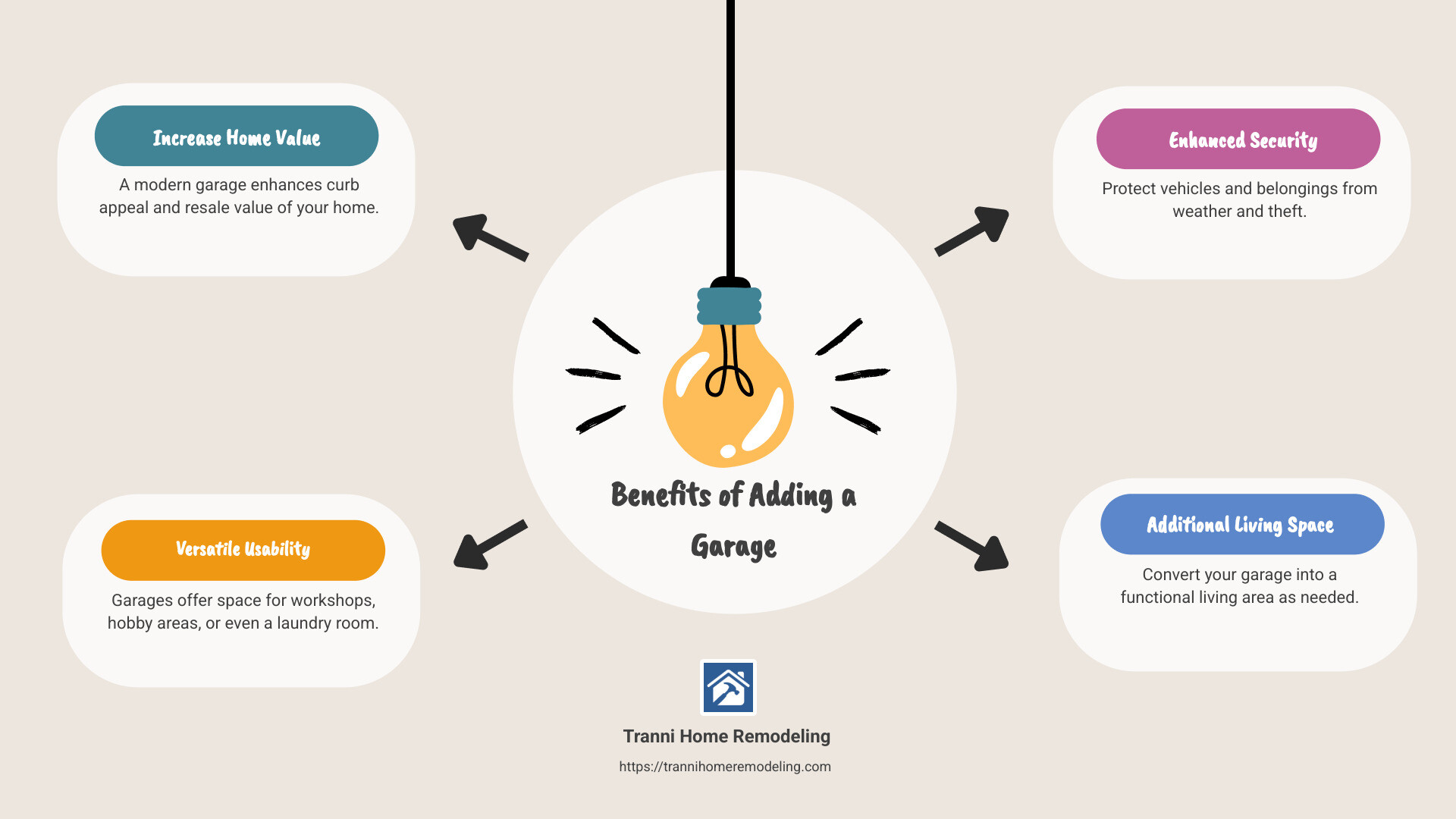
Add a garage to a house and you’ll open up a new dimension of home improvement that combines utility with an increase in property value. From providing a safe shelter for your vehicle to creating a versatile space that can transform into a workshop, hobby area, or even an additional living space, a garage addition offers numerous benefits. Here’s why adding a garage is a smart move:
- Increase Home Value: A modern garage is a sought-after feature that improves curb appeal and resale value.
- Versatile Usability: Beyond vehicle storage, use your garage for workshops, hobby spaces or even as a laundry room.
- Improved Security: Protect your vehicle and belongings from the elements and potential theft.
As Tyler Tranni of Tranni Home Remodeling, I’ve dedicated my career to turning homes into dream living spaces. My experience in home additions, including how to efficiently add a garage to a house, has shown me the profound impact a well-designed garage can have. Let’s explore how you can maximize the potential of adding a garage.
Understanding the Basics of Adding a Garage
When you add a garage to a house, grasp the basics to make informed decisions. From zoning laws to choosing between an attached or detached garage, understanding these elements will guide your project to success.
Zoning Laws
Before you start construction, check your local zoning laws. These rules determine how close your garage can be to property lines and other structures. Visit your local planning department in areas like Andover or Bedford, MA to get the specifics. They will inform you about any special restrictions, such as deeper setbacks for garage doors.
Garage Types
Choosing the right type of garage is crucial. Here are the main options:
- Attached Garage: Built as an extension of your home, sharing one or more walls. It’s convenient for easy access, especially in bad weather. However, it must match your home’s design, and there’s a risk of fumes or noise entering the house.
- Detached Garage: Stands alone, offering flexibility in location and design. It’s perfect for keeping noise and fumes away from living spaces. On the downside, it can be more expensive due to additional construction and utility setup.
- Carport: A semi-covered structure, usually open on at least one side. It’s budget-friendly and provides basic weather protection but lacks security and storage options.
- Tandem Garage: Designed to house vehicles in a single-file line, ideal for narrow lots. It’s space-efficient but can be inconvenient for accessing vehicles parked at the back.
Attached vs. Detached Garage
Choosing between an attached and detached garage depends on your needs and budget.
- Cost: An attached garage is generally less expensive because it requires fewer walls and can use existing utilities. A detached garage, while offering more design freedom, tends to be pricier due to separate construction and utility needs.
- Convenience: An attached garage offers direct access to your home, which is handy during inclement weather. A detached garage might require you to brave the elements to reach your car.
- Security: An attached garage can improve security as you can enter your home without stepping outside. However, a detached garage keeps fumes and noise at a distance, which might be preferable for some homeowners.
Understanding these basics will help you make the right choice for your garage addition. Next, we’ll dive into key considerations like size requirements and driveway planning to ensure your garage integrates seamlessly with your home.
Add a Garage to a House: Key Considerations
When planning to add a garage to a house in areas like Chelmsford or Lexington, MA, there are several key considerations to keep in mind. Understanding these will ensure your project is successful and meets your needs.
Zoning and Code Restrictions
Before you break ground, it’s crucial to understand local zoning laws. Check with your local planning department to learn about setbacks and building codes specific to your area. For example, some communities may require deeper setbacks on sides with garage doors. These rules help maintain neighborhood aesthetics and safety.
- Setbacks: These are the distances you must maintain between your garage and property lines. They ensure your garage doesn’t encroach on neighboring properties.
- Building Codes: These codes dictate construction standards, such as wall height and roof design. Adhering to them is essential for safety and compliance.
Size Requirements
Garages come in various sizes, but it’s important to plan according to your needs. For a single-car garage, a minimum of 14 feet by 20 feet is recommended. If you’re planning for two cars, aim for at least 20 feet by 24 feet. A little extra space can make a big difference in comfort and functionality.
- Single-Car Garage: Minimum 14′ x 20′
- Two-Car Garage: Minimum 20′ x 24′, but consider adding extra space for storage or a workshop.
Driveway Planning
Your garage needs a driveway, and its design is crucial for accessibility and safety. In newer neighborhoods, driveways are typically 10 to 14 feet wide to accommodate modern vehicles. If space allows, consider a turnaround area to make exiting easier, especially if you live on a busy street.
- Single-Car Driveway: At least 10 feet wide
- Two-Car Driveway: At least 20 feet wide
Design Integration
A garage should complement your home’s architecture, not overshadow it. This means integrating design elements like rooflines and materials to create a cohesive look.
- Architectural Harmony: Use similar materials and colors to blend your garage with your home.
- Visual Appeal: Consider adding windows or house-like details to improve the garage’s appearance.
Attached vs. Detached Garage
Your choice between an attached or detached garage will affect cost, convenience, and security.
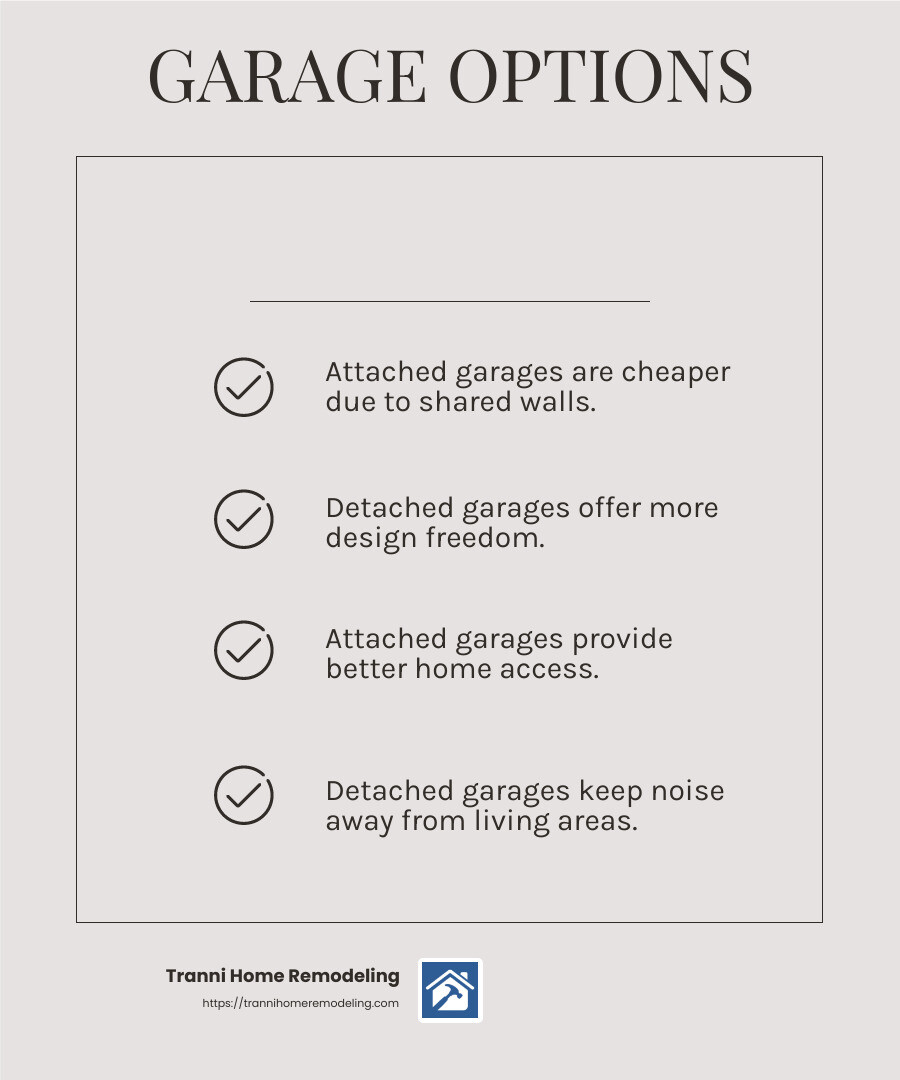
- Cost Comparison: An attached garage is usually less expensive due to shared walls and utilities. A detached garage might be pricier but offers more design freedom.
- Convenience: An attached garage allows easy access to your home, especially useful during bad weather. A detached garage might require a covered walkway or breezeway for protection.
- Security: An attached garage improves security by allowing you to enter your home directly from your car. However, a detached garage keeps noise and fumes away from living areas.
By considering these factors, you can make informed decisions and ensure a seamless integration of your new garage. Up next, we’ll explore estimating costs and budgeting for your garage addition.
Estimating Costs and Budgeting
When you’re planning to add a garage to a house in Middlesex County, MA, understanding the costs and budgeting effectively is crucial. Let’s break down the various costs and explore financing options to help you plan your garage addition.
Cost Breakdown
- Materials
- Concrete Foundation: Expect to spend around $75 to $100 per cubic yard. This forms the base of your garage and is essential for stability.
- Framing Lumber: The prices can range from $2 to $5 per linear foot. This is your garage’s skeleton, so quality matters.
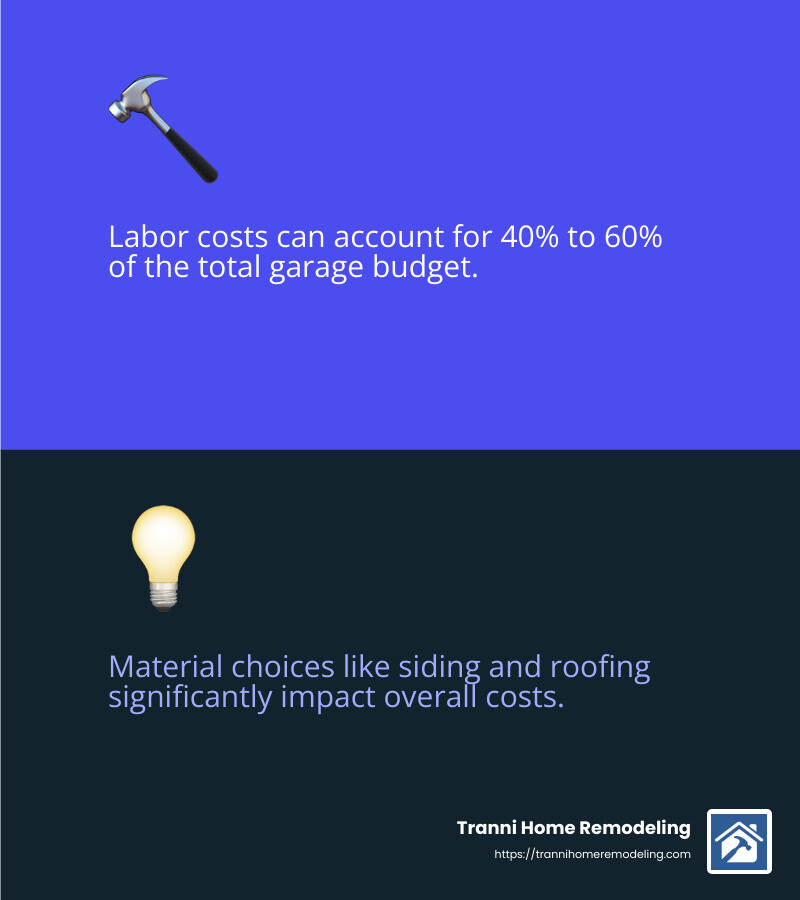
- Siding and Roofing: Vinyl siding is a cost-effective choice, while cement-based siding is pricier but more durable. Roofing options like asphalt shingles are economical, whereas metal roofing lasts longer but comes at a higher cost.
- Labor
- Labor costs can account for 40% to 60% of your total budget. Hiring skilled contractors ensures quality work but will increase expenses. Always get multiple quotes to compare.
- Additional Features
- Electrical Work: Adding outlets or lights will boost functionality but also increase costs. Consider energy-efficient options like LED lights.
- Plumbing: If you’re adding a utility room or bathroom, plumbing work will be substantial.
- Insulation: Essential for climate control, especially if you plan to use the garage for more than just parking.
Financing Your Garage Addition
- Loan Options
- Home Equity Loan: This option allows you to borrow against your home’s equity. It often has lower interest rates compared to other loans.
- Personal Loan: An unsecured loan with higher interest rates, but no collateral is needed.
- Construction Loan: Specifically for home improvement projects, this loan covers the cost of building and converts to a mortgage once the work is complete.
- Mortgage Adjustments
- You might consider refinancing your mortgage to include the cost of the garage addition. This can spread the cost over a longer period, reducing monthly payments.
- Budget Tips
- Plan Thoroughly: Avoid costly changes by having a detailed plan from the start.
- DIY Where Possible: If you have the skills, consider taking on tasks like painting to save on labor costs.
- Choose Cost-Effective Materials: Opt for durable yet affordable materials to keep costs down.
By understanding these factors, you can create a realistic budget and explore the best financing options for your garage addition. Next, we will dig into design and construction to ensure your garage not only meets your needs but also improves your home’s value.
Add a Garage to a House: Design and Construction
Designing the Perfect Garage
When planning to add a garage to a house, the design phase is crucial. It sets the stage for a successful construction project that improves your home’s value and functionality.
Garage Size: Start by determining the garage size that suits your needs. A single garage typically starts at 14 ft. by 20 ft., while a double garage can be at least 22 ft. by 24 ft. Consider future needs like storage or workspace to avoid feeling cramped later.
Architectural Harmony: Ensure the garage complements your home’s architecture. Match rooflines, materials, and colors for a cohesive look. Adding windows and design elements similar to your house can create a seamless integration.
Construction Plans: Work with an expert to create detailed plans. This includes the layout, door placements, and additional features like windows or storage. An expert can help refine your vision and ensure the garage fits well with your existing home structure.
Garage Plans and Expert Consultation: Consulting with an architect or a designer ensures your garage plans meet local building codes and aesthetic preferences. They can provide insights into maximizing space and enhancing visual appeal, ensuring your garage is both functional and stylish.
Construction Process
Building a garage involves several key steps. Each must be executed carefully to achieve a durable and compliant structure.
Building Permits: Before construction, secure the necessary permits from your local planning department. Permits ensure compliance with zoning laws and safety standards. This step might require submitting your construction plans for approval.
Contractor Selection: Choose a reputable contractor with experience in garage construction. Check references and past projects to ensure quality workmanship. A good contractor can manage timelines, budgets, and any unexpected challenges that arise.
DIY Considerations: If you have construction skills, consider handling some tasks yourself, like painting or installing shelving. This can reduce labor costs. However, leave complex tasks like electrical work or plumbing to professionals to ensure safety and compliance.
By focusing on these elements, you can ensure that your garage is well-designed and constructed to meet your needs. Next, we will explore frequently asked questions about adding a garage to further guide you through the process.
Frequently Asked Questions about Adding a Garage
Do you need permission for a garage?
Yes, you do need permission to add a garage to a house. This involves obtaining building permits and ensuring compliance with local zoning laws.
Zoning Laws: These laws dictate where and how you can build on your property. Before you start, check with your local planning department. They will inform you about setbacks, which are the distances you must maintain from property lines, and any height restrictions.
Building Permits: Permits are crucial for ensuring that your garage is safe and meets all local building codes. You’ll need to submit detailed plans for approval, which might include site plans and floor plans. Working with a knowledgeable contractor can simplify this process, as they are often familiar with local regulations and can help steer the permit application.
Is it worth adding a garage to a house?
Absolutely, adding a garage can be a smart move for several reasons:
Home Value Increase: A garage can significantly boost your home’s resale value. Houses with garages often sell faster and at higher prices. According to Forbes, this addition can make your home more attractive to potential buyers.
Practical Benefits: Beyond increasing value, a garage offers practical benefits. It provides secure storage for vehicles and belongings, and can serve as a workshop or hobby space. Imagine having a dedicated area for your DIY projects or a safe spot for your sports equipment.
How much does it cost to add a garage to a house?
The cost to add a garage to a house can vary widely based on several factors:
Cost Range: On average, a garage addition can add between $5,000 and $25,000 to your property value. However, the actual cost of building one can be higher, depending on the size and features you choose.
Influencing Factors: Several elements influence the final cost. This includes materials, labor, and any additional features like insulation or electrical wiring. Custom features, such as a mother-in-law suite or an Accessory Dwelling Unit (ADU) above the garage, can add more to the overall cost.
When budgeting, consider consulting with an appraiser to get an accurate estimate of how much value the garage will add to your home. This can help ensure your investment is worthwhile.
By understanding these aspects, you can make informed decisions about your garage addition. Next, we will dive into the conclusion to provide expert advice and planning tips for your project.
Conclusion
Adding a garage to your home is more than just a practical decision—it’s a strategic investment. At Tranni Home Remodeling, we understand the intricacies involved in this process and are here to guide you every step of the way. With over a decade of experience, we’ve honed our skills in project planning and execution to ensure your garage addition is seamless and stress-free.
Project Planning:
Proper planning is crucial for a successful garage addition. This includes understanding zoning laws, securing building permits, and deciding between an attached or detached garage. Our expert team will help you steer these complexities with ease, ensuring that all legal requirements are met and that your design aligns with your vision.
Expert Advice:
Our expertise is your advantage. We provide custom advice on everything from design integration to selecting the right materials. Whether you’re looking to create a simple parking space or a multifunctional area with workshop capabilities, we offer solutions that fit your needs and budget. Our commitment to high-quality craftsmanship ensures your garage not only looks great but also adds significant value to your home.
Why Choose Tranni Home Remodeling?
Choosing the right partner for your garage addition is crucial. With our focus on outstanding service and quality, we guarantee a result that exceeds expectations. We’re based in Billerica, MA, and serve numerous locations across Middlesex County, making us a convenient choice for local homeowners.
Ready to take the next step? Contact us today to discuss your project and find how we can transform your home with a new garage addition. Let us help you achieve your garage goals with our expert guidance and exceptional service.
