




Basement bar installation: 5 Easy Steps to Your Dream
Your Dream Basement Bar Awaits
Basement bar installation transforms unused space into the ultimate entertainment hub. Whether you envision a simple dry bar or a full wet bar with plumbing, understanding the key steps and costs is crucial for a successful project.
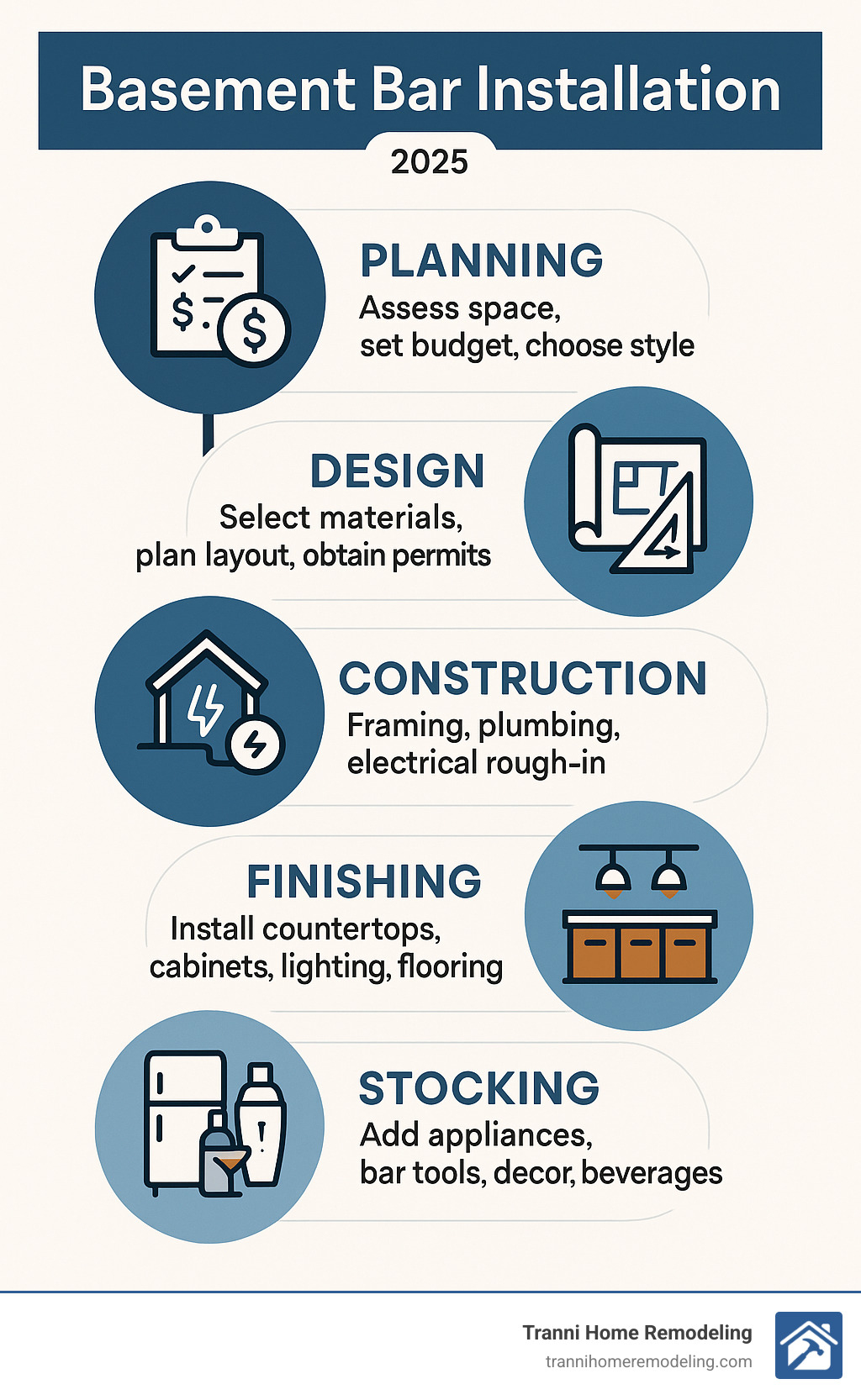
Quick Guide to Basement Bar Installation:
- Choose Your Style: Dry bar or a wet bar with a sink.
- Plan Your Layout: Standard bar height is 42 inches, with 24-30 inches per seat.
- Handle Utilities: Plan for electrical outlets, lighting, and plumbing (for wet bars).
- Select Materials: Choose countertops, cabinets, flooring, and a backsplash.
- Install Components: Assemble the bar frame, fixtures, and finishing touches.
The average cost can range from $2,000 to $10,000 for basic installations, while high-end custom projects can reach $22,500 or more. Major cost factors include the bar’s size, the choice between a wet or dry setup, and your material selections.
While DIY projects can save money, complex features like sinks, advanced lighting, or high-end finishes benefit from professional installation to ensure quality and code compliance. As Tyler Tranni, owner of Tranni Home Remodeling, I’ve seen how proper planning turns a simple addition into a lifestyle-enhancing space for homeowners in Billerica and surrounding areas.
Basement bar installation vocabulary:
Planning Your Perfect Pour: Bar Types, Costs, and Designs
Smart planning is the first step in your basement bar installation. The decisions you make now about style, budget, and design will shape how you enjoy your space for years to come.
Choosing Your Style: Wet vs. Dry Bars
The first major decision is choosing between a wet bar and a dry bar. This is simply about whether your bar includes running water.
A dry bar is a simple, budget-friendly option with a counter and cabinets for storage. With no sink or plumbing, installation is straightforward. Dry bars can be built-in for a permanent look or consist of freestanding cabinets for more flexibility.
A wet bar adds a bar sink and running water, offering incredible convenience for rinsing glasses, getting ice, and cleaning up. While this requires plumbing work, the functionality is a major benefit for those who entertain often.
The cost differences are significant. Adding plumbing for a wet bar can double or triple the cost of a dry bar. However, if you’re already planning other basement renovations, combining the plumbing work can be more cost-effective.
For more inspiration on changing your entire basement space, check out our guide on amazing basement renovations.
Budgeting for Your Build: What Does a Basement Bar Cost?
Understanding the costs upfront helps avoid surprises. The average cost to install a basement bar ranges from $2,000 to $10,000, with high-end projects reaching $22,500 or more. Please note these are average costs based on internet data, and your actual project costs will vary based on your specific needs and location.
- Cost by size: A small 4-foot bar might cost $400 to $6,000, while a large 15-foot bar can range from $1,500 to $22,500, depending on the complexity.
- Cost by features: A simple bar cart can be found for $150 to $1,000, while a custom dry bar for seating costs between $2,000 and $10,000. High-end installations with wet bars and premium materials can easily exceed $22,500.
Material choices like countertops and cabinets also dramatically impact the final price. Laminate is affordable, while granite or quartz adds elegance and expense. Stock cabinets are budget-friendly, but custom cabinetry offers a perfect, custom fit.
For a complete picture of basement project investments, explore our insights on basement remodeling cost per square foot.
Popular Basement Bar Design Trends
Make your basement bar installation reflect your personality with a design that wows your guests.
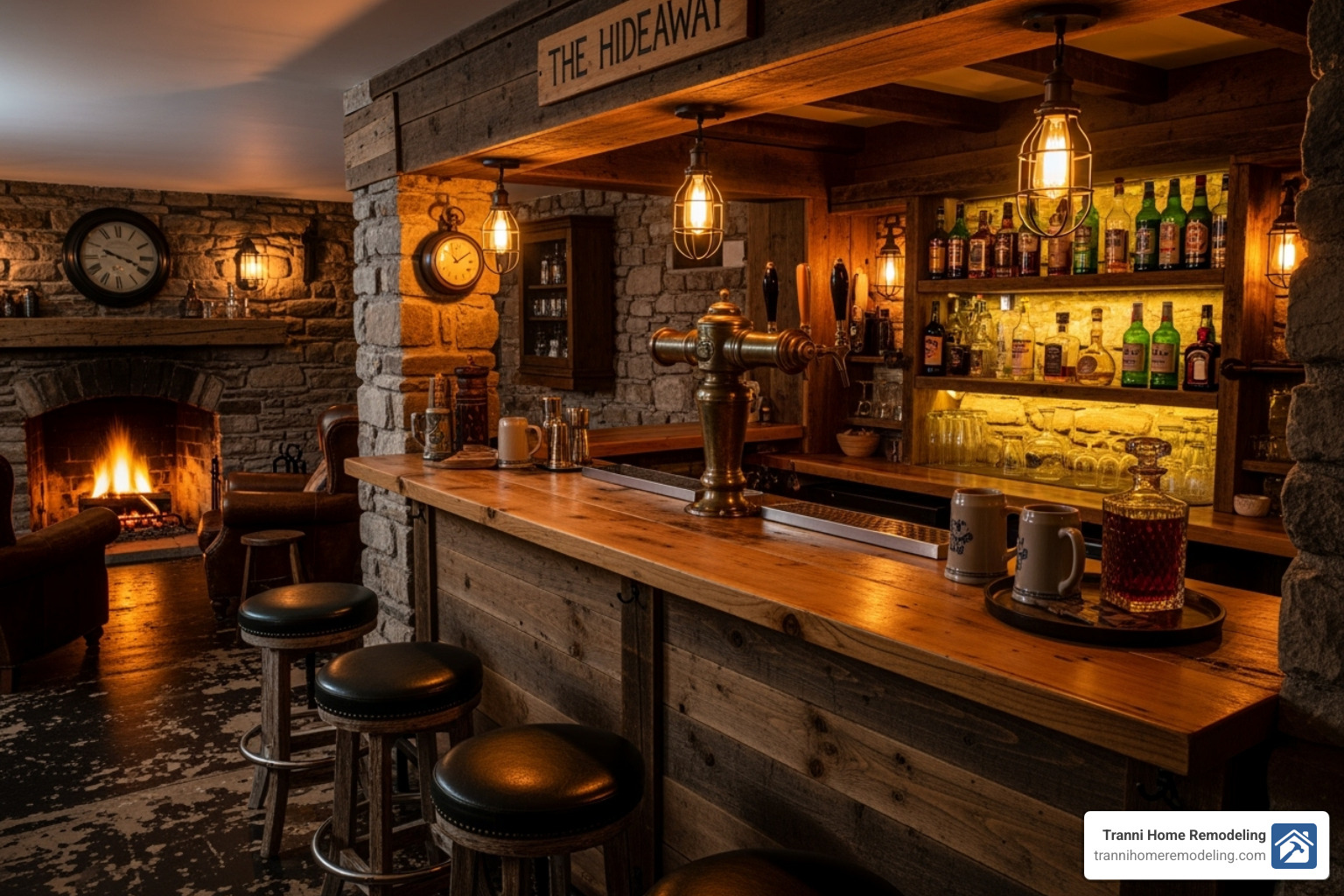
- Rustic Style: Reclaimed wood, natural stone, and warm lighting create a welcoming feel, perfect for New England basements.
- Modern Minimalist: Sleek quartz countertops, handleless cabinets, and strategic lighting offer a sophisticated, uncluttered look.
- Industrial Chic: Exposed brick, metal accents, and Edison bulbs bring a trendy, urban vibe to your space.
- Home Brewery Theme: Kegerator tap systems, beer fridges, and even space for brewing equipment are popular for beer enthusiasts.
The best designs balance functionality and aesthetics. Your bar should work for how you entertain. Personalization is key, whether it’s displaying a collection, sports memorabilia, or family photos. The most successful bars are a natural extension of the homeowner’s personality.
The Nuts and Bolts: Essential Components for Your Basement Bar
A great bar is more than just a counter. This section details the key components that bring your basement bar to life, from foundational elements to unique add-ons.
The Foundation: Cabinets, Countertops, and Flooring
The foundation of your basement bar installation consists of cabinets, countertops, and flooring. Getting these right is essential.
- Bar Cabinets: Cabinets provide storage and support the countertop. Stock cabinets are a budget-friendly choice, while custom cabinetry offers a unique, perfect fit. A pro tip is to use upper wall cabinets as a base, secured to the floor, for a high-end look at a lower cost.
- Countertop Materials: This is where your style shines. Quartz and granite are durable and beautiful, handling spills and daily use with ease. Wood countertops, like butcher block, add warmth and character but require regular sealing to protect against moisture.
- Backsplash: A backsplash can transform your space. Tile offers endless design flexibility, faux brick panels create a pub-like feel, and mirrored backsplashes make smaller spaces feel larger.
- Flooring: In a basement, flooring choice is critical. Luxury Vinyl Plank (LVP) offers the look of hardwood with superior water resistance. Ceramic or porcelain tile is another waterproof, easy-to-clean option. We always recommend a waterproof barrier and pressure-treated wood for cabinet bases to protect your investment from moisture.
For comprehensive advice on choosing the perfect flooring, check out our guide on best flooring options for a basement bar area.
Let There Be Light: Setting the Mood
Lighting creates the perfect atmosphere for your basement bar installation. The secret is layering different types of light.
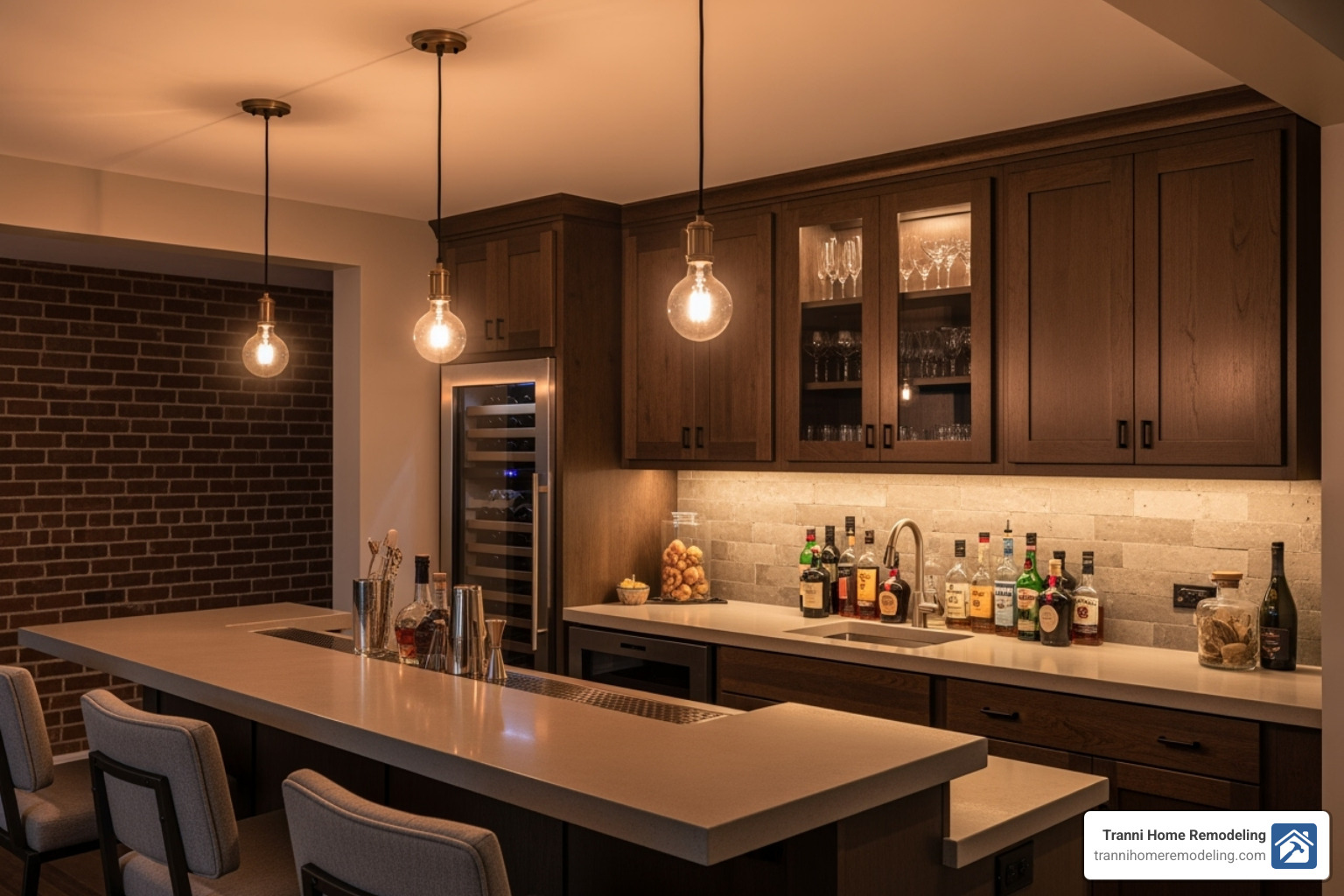
- Ambient Lighting: General illumination, usually from recessed lights on dimmers, allows you to adjust the brightness to fit the mood.
- Task Lighting: Under-cabinet lighting illuminates prep areas and sinks, ensuring you can see what you’re doing.
- Accent Lighting: This is where the fun begins. Pendant lights create a focal point, while LED strip lights can add a pop of color. Backlit shelving gives your bar a professional, high-end look.
Using smart bulbs allows you to change the entire color scheme with your voice or phone. The goal is to create depth and highlight your bar’s best features.
For more creative ways to brighten your lower level, explore our basement lighting solutions.
Must-Have Features and Creative Add-ons
Lift your basement bar installation with features that add convenience and personality.
- Appliances: A beverage fridge is a must for cold drinks. For beer lovers, a kegerator brings the brewery experience home. A wine cooler or custom racks provide proper wine storage. For perfect cocktails, consider a countertop clear ice maker.
- Creative Touches: A glass rinser, like those in commercial bars, makes cleanup a breeze. Custom neon signs add personality and atmosphere. Hidden storage is both practical and fun.
- Entertainment: A dart board area or a quality sound system keeps guests entertained. Display shelving showcases your best bottles and glassware, while a footrail adds comfort for those sitting at the bar.
The Ultimate Guide to Basement Bar Installation
This section breaks down the installation process, helping you decide between a DIY approach and hiring a professional.
DIY vs. Professional Basement Bar Installation
Should you tackle your basement bar installation yourself or hire pros? The answer depends on your skills, time, and the project’s complexity.
The DIY Route
A simple dry bar using stock cabinets can be a rewarding project if you have woodworking skills and time. You can save significantly on labor costs. This approach is best for those who are comfortable with basic tools and aren’t on a tight deadline.
When to Call the Professionals
We always recommend hiring experts for any work involving plumbing, complex electrical, or structural changes. A wet bar requires proper drainage and GFCI outlets near water—mistakes can lead to costly water damage or safety hazards. Professionals are also essential for installing high-end materials like granite or custom cabinetry, where precision is key.
Time is another major factor. A professional team can complete a project in a fraction of the time it might take a DIYer. For homeowners in Billerica, Woburn, and nearby towns, we handle everything from permits to cleanup, ensuring a smooth process.
Critical Considerations for a Flawless Basement Bar Installation
Successful basement bar installation requires attention to several critical details.
- Permits and Codes: Before starting, check with your local building department. Most towns in Middlesex County require permits for basement renovations. Skipping this step can cause issues when you sell your home or file an insurance claim.
- Plumbing Reality: For a wet bar, proper drainage is essential. If your basement is below the main sewer line, you’ll need a pump system, which is a job for a licensed plumber.
- Electrical Safety: Your bar will need dedicated circuits for appliances, and all outlets near a sink must be GFCI-protected for safety.
- Moisture Control: Basements are prone to humidity. Proper ventilation, like an exhaust fan, is crucial to prevent mold and protect your investment from warping.
- Common Mistakes to Avoid: The biggest errors include underestimating a project’s complexity, using materials not suited for basements (like standard drywall instead of moisture-resistant types), and poor layout planning that impedes traffic flow.
For guidance on working with experienced professionals, check out our contractors to finish a basement resource.
Essential Tools and Materials for the Job
Understanding the required tools and materials helps you communicate effectively with contractors.
- Core Materials: The frame is built with pressure-treated lumber (2x4s or 2x6s) to resist moisture. You’ll also need plywood, cabinets, your chosen countertop, and a backsplash.
- Essential Tools: A professional installation requires precision tools like a miter saw, cordless drill, level, stud finder, and tape measure. Specialized plumbing and electrical tools are also necessary for wet bars.
Having the right tools is only half the battle. Knowing how to use them safely and effectively is why professional installation is often the smartest choice.
Frequently Asked Questions about Basement Bars
Here are answers to common questions about planning a basement bar.
How can I customize my basement bar?
Customizing your basement bar installation is what makes the space uniquely yours. The best bars tell a story about the homeowner.
- Custom Cabinetry: Design storage that perfectly fits your collection, whether it’s whiskey, wine, or craft beer.
- Unique Hardware: Swap standard pulls for vintage or industrial hardware to make a big impact with a small detail.
- Personalized Decor: Display your interests, from vintage signs and sports jerseys to a unique wine cork wall.
- Themed Designs: Create a rustic lodge, a sleek modern lounge, or a tribute to your favorite Irish pub.
- Open Shelving: Display your finest bottles and glassware, turning your collection into a design element.
The goal is to create an inviting space where memories are made.
What maintenance does a basement bar require?
A well-built basement bar installation is low-maintenance, but regular care keeps it looking new.
- Regular Cleaning: Wipe down countertops after each use and clean up spills immediately.
- Check for Leaks: Monthly, check under the sink and around plumbing connections for any drips.
- Appliance Care: Clean the coils on mini-fridges and kegerators. Regularly clean beer lines and descale ice makers.
- Restock Supplies: Keep an eye on expiration dates for mixers and garnishes.
- Countertop Care: Wood countertops need periodic re-oiling. Use pH-neutral cleaners on quartz and granite.
- Ventilation: Ensure exhaust fans are working to control humidity.
These simple habits will keep your bar ready for guests for years to come.
When should I absolutely hire a professional for my basement bar installation?
While the DIY spirit is admirable, some tasks require a professional for safety, quality, and peace of mind.
You should always hire a professional for:
- Complex Plumbing: Installing sinks, dishwashers, or ice makers involves supply and drain lines. A mistake can lead to catastrophic water damage.
- New Electrical Circuits: Adding outlets or dedicated circuits is not a DIY job. Improper wiring is a serious fire hazard.
- Structural Changes: Any work that affects your home’s structure, like moving a wall, requires an expert.
- High-End Materials: Protect your investment in granite, quartz, or custom cabinetry by having them installed by experienced professionals.
- Code Compliance: Professionals in areas like Billerica and Woburn understand local building codes and handle the permitting process, ensuring your project is legal and safe.
Ready to Raise the Bar in Your Home?
A basement bar installation is more than just a home improvement project; it’s an investment in your lifestyle. It creates a dedicated space for making memories with friends and family, adding enjoyment and real value to your home.
Successful projects start with proper planning. Understanding costs, choosing features that fit your lifestyle, and working with experienced professionals are the keys to creating a space you’ll love for years. Whether you envision a simple dry bar or a full-service wet bar, the right approach makes all the difference.
For homeowners throughout Billerica, Woburn, Andover, Burlington, Chelmsford, Dracut, Lynnfield, Methuen, North Andover, North Reading, Reading, Stoneham, Tewksbury, Wilmington, Winchester, and the greater Middlesex County area, partnering with a local team ensures your vision becomes a reality without the stress of going it alone.
At Tranni Home Remodeling, we have over a decade of experience changing basements into beautiful, functional spaces. We understand the unique challenges of New England basements, from moisture control to proper ventilation, and we build spaces that are both stunning and durable.
Our focus on high-quality craftsmanship and outstanding service means you’ll get a basement bar you’re proud to show off. We guide you through every step, from design to the final touches.
Like us on Facebook!
Start planning your dream basement today!