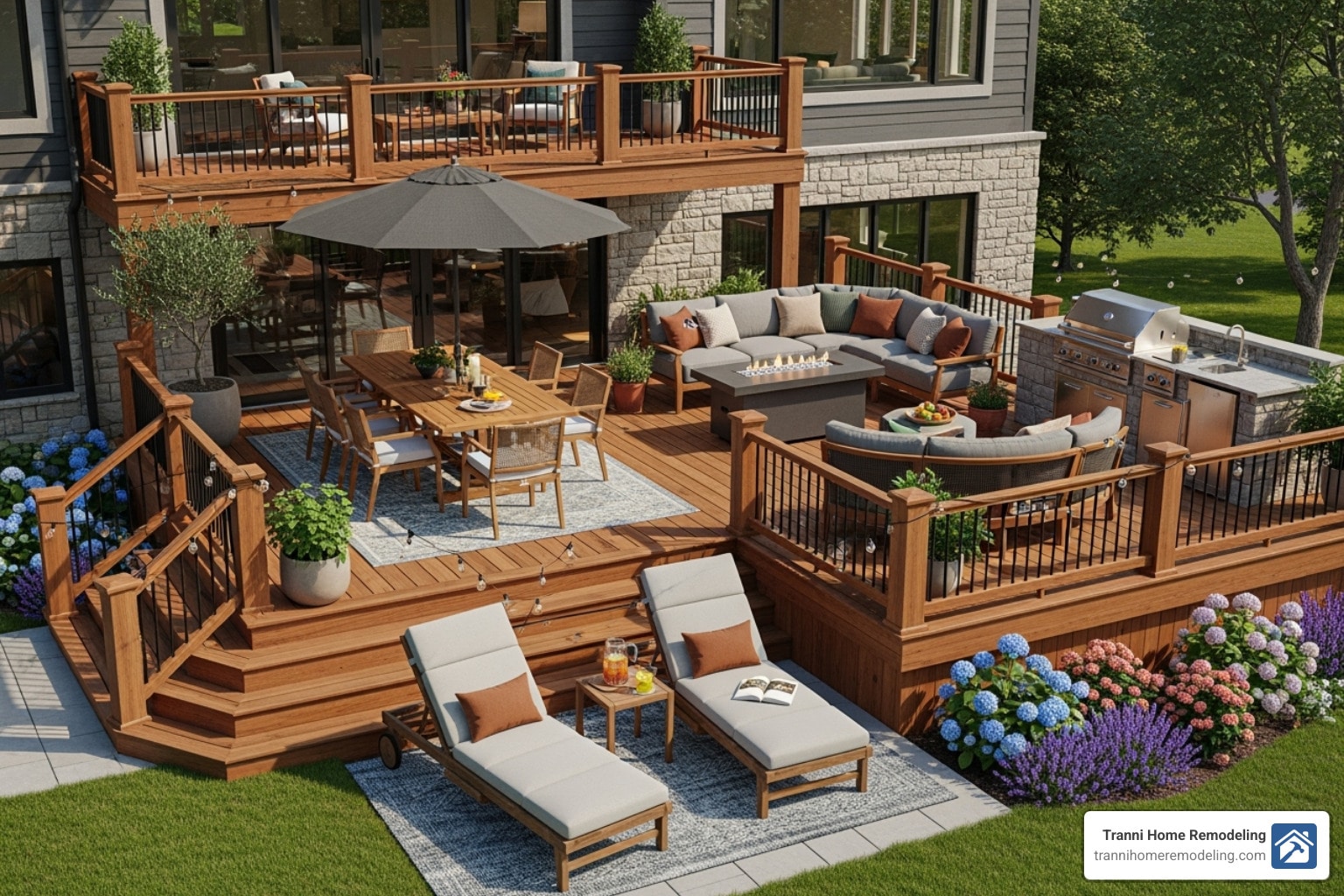





Build Decks 2025: Ultimate Hero Guide
Why Building a Deck is Your Home’s Best Investment
Learning how to build decks can transform your outdoor space into a valuable extension of your home. Understanding the process is key, whether you plan a DIY project or hire a professional.
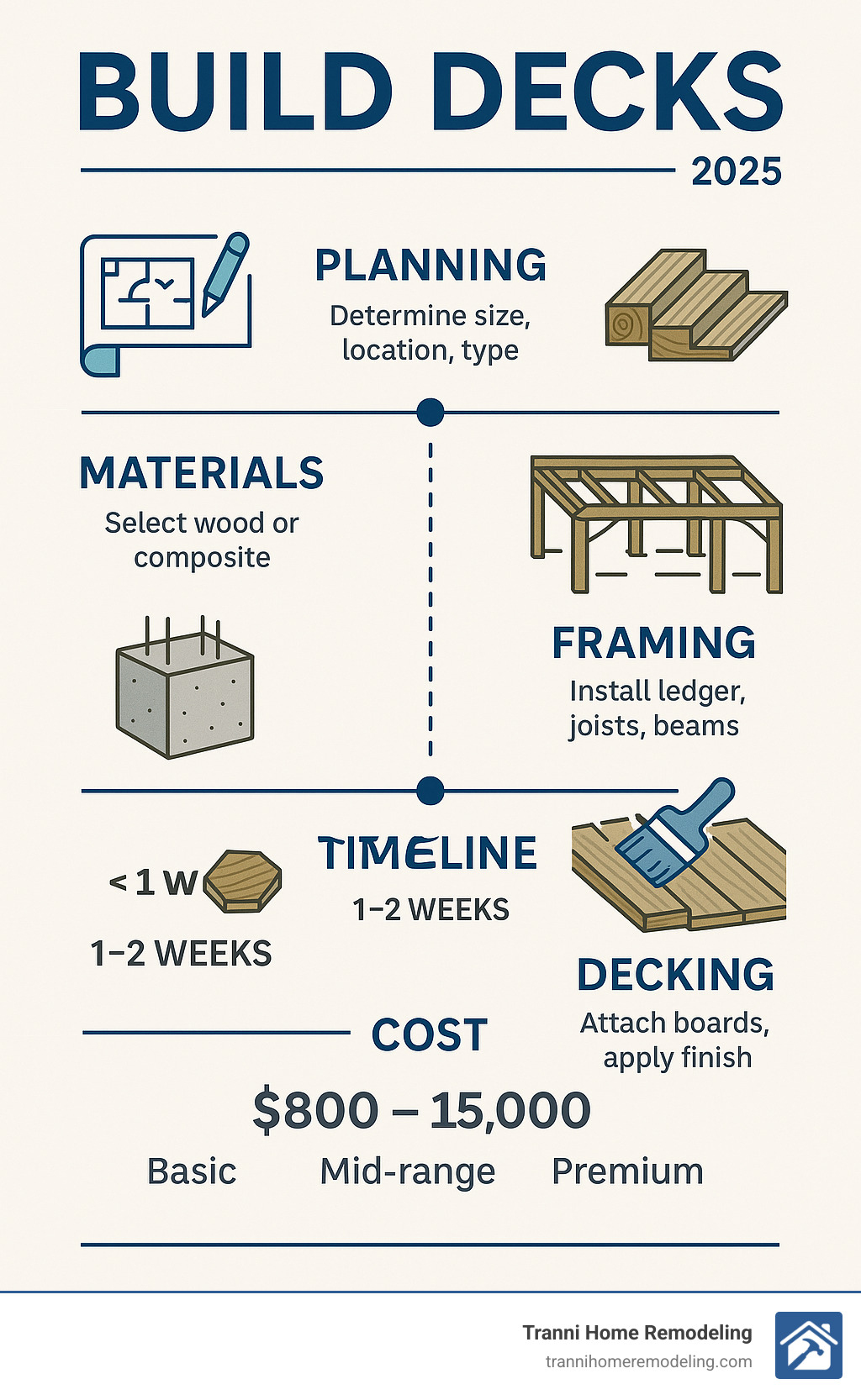
The Deck Building Process at a Glance:
- Plan your design – Determine size, location, and deck type.
- Obtain permits – Check local building codes and requirements.
- Choose materials – Select from pressure-treated wood, cedar, or composite.
- Prepare the site – Level the ground and mark the layout.
- Install foundation – Dig footings and set concrete piers.
- Build the frame – Attach the ledger board and install joists and beams.
- Add decking boards – Install with proper spacing and fasteners.
- Install railings and stairs – Follow safety codes for height and spacing.
- Apply finishing touches – Seal, stain, or add features like lighting.
Average Costs to Build Decks:
- Basic pressure-treated deck: $800 – $2,400 for 10×16 feet
- Mid-range composite deck: $2,400 – $7,200 for a similar size
- Premium materials with features: $5,000 – $15,000+
These are average internet-based costs and not actual Tranni Home Remodeling pricing.
As Tyler Tranni, owner of Tranni Home Remodeling in Billerica, I’ve helped countless homeowners build decks that improve their outdoor living. While some homeowners can tackle this project, expert guidance ensures safety, code compliance, and long-lasting results.
Key terms for build decks:
Planning Your Perfect Outdoor Oasis
A solid plan is your best friend when you build decks. This initial phase ensures your deck meets your needs, fits your space, and sails through local regulations in towns like Billerica, Wilmington, or Andover. First, consider your deck’s primary purpose: will it be a quiet spot for coffee, a stage for family gatherings, a grilling station, or a hot tub nook? Its function will guide its size, shape, and features. For sloped yards, multi-level decks are a popular solution to create distinct zones for different activities.
To help visualize your project, various online deck design tools allow you to experiment with ideas, generate material lists, and get a rough cost estimate. These tools can be a great way to explore different layouts and features before committing to a final plan.
Understanding Deck Costs
Budgeting is a critical step. We recommend setting a comfortable cost range before diving into design specifics. Several factors influence the final cost: project complexity (a simple ground-level deck is less expensive than a multi-level or second-story design), material choice, and labor costs, which typically make up about two-thirds of a professional build. Don’t forget to account for permit fees and potential site preparation costs like demolition or grading.
Below are average material costs. These are broad internet averages and are not the actual prices from Tranni Home Remodeling. Your project’s specific requirements and current market conditions will determine the final cost.
| Material Type | Average Cost per sq. ft. (Material Only) | Example Total Cost for 400 sq. ft. Deck (Material Only) | Lifespan | Maintenance |
|---|---|---|---|---|
| Pressure-Treated Wood | $3 – $9 | $1,200 – $3,600 | 15-20 years | High (annual sealing/staining) |
| Cedar | $4 – $12 | $1,600 – $4,800 | 20-25 years | Moderate (regular sealing) |
| Composite Decking | $5 – $15 | $2,400 – $6,000 | 25 years or more | Low (occasional cleaning) |
| Exotic Hardwood (Ipe) | $10 – $30 | $4,000 – $12,000 | 25-40 years | Moderate (oiling to maintain color) |
| Aluminum | $15 – $45 | $6,000 – $18,000 | 30+ years | Low (occasional cleaning) |
These are average internet-based costs and not actual Tranni Home Remodeling pricing.
Long-term maintenance is also a key budget consideration. A wood deck might cost around $400 annually for upkeep, while a composite deck of the same size could cost less than $10 to clean. This makes composite a cost-effective choice in the long run, despite a higher upfront price.
Choosing a Deck Design
Your deck’s design defines its look and function. Common types include:
- Attached platform decks: The most common type, built directly off the back of a house.
- Detached island decks: Freestanding structures, great for creating a separate zone in the yard or for properties with uneven terrain.
- Wraparound decks: Extend around multiple sides of a home, offering an expansive outdoor living area.
- Multi-level decks: Perfect for sloped ground, creating usable spaces on different elevations with added visual interest.
We have special expertise in building decks near pools. You can find more information about our services for Local Pool Deck Builders. Many design principles also overlap with porches, which you can see in our Porches Portfolio.
Navigating Local Permits
This is a step you cannot skip. When you build decks, almost every project requires a permit to ensure it is built safely and meets local building codes. This protects you, your family, and future homeowners. Building without a permit can lead to fines, demolition orders, and problems when selling your home.
Before starting work, contact your local building department in towns like Woburn, Reading, or Andover. They provide specific requirements, forms, and inspection schedules. Generally, any deck more than 30 inches off the ground requires stairs and railings, which are included in the permit process. To avoid delays, start the permit process during the winter for a spring or summer build.
Gearing Up: Materials and Tools for the Job
With your plan and permits in hand, the next step is gathering materials and tools. Choosing the right components is key to building a deck that is both beautiful and durable.
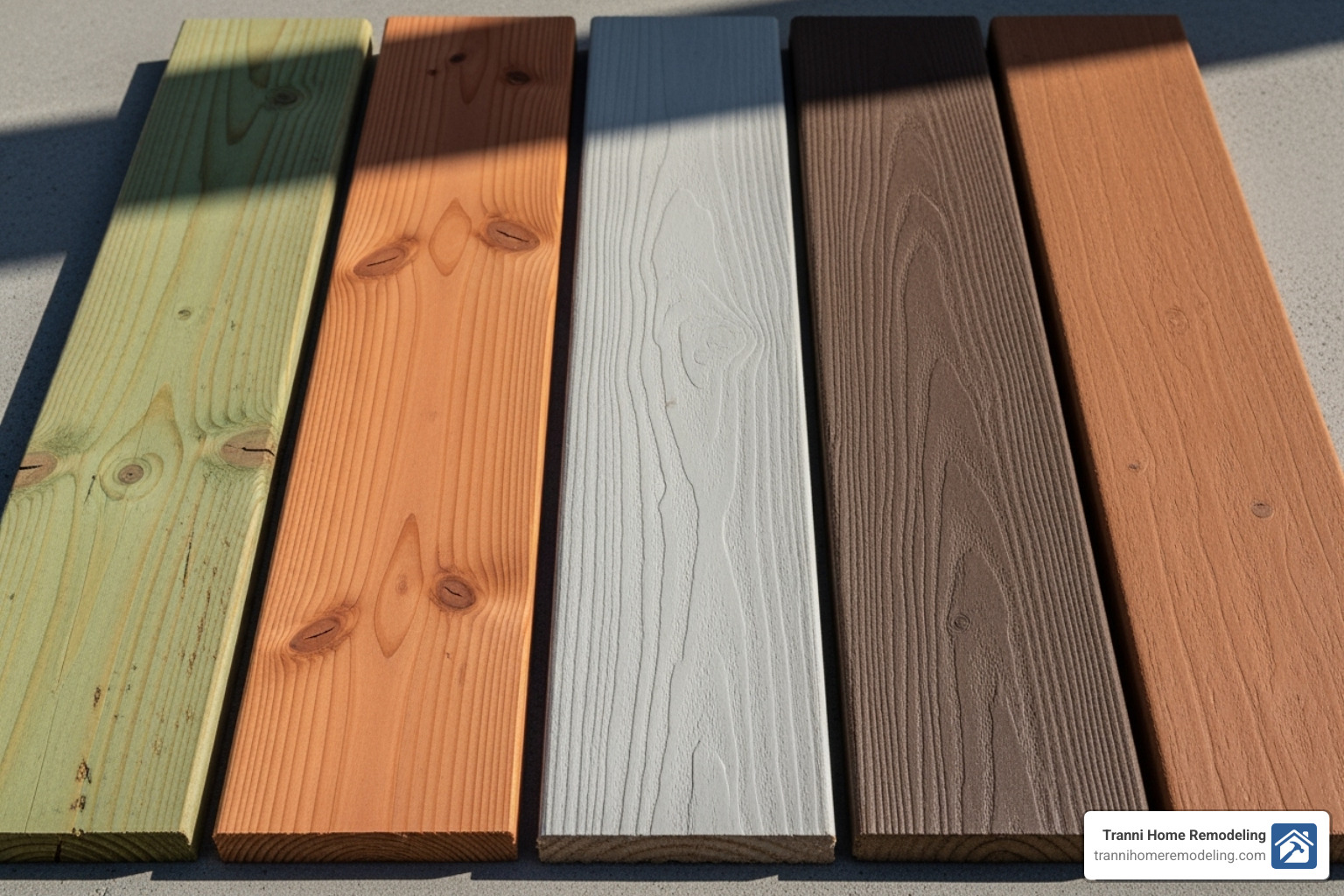
How to Choose the Right Decking Materials
The material you pick shapes your deck’s appearance, longevity, and maintenance needs.
- Pressure-treated lumber is the most budget-friendly option. It’s chemically treated to resist rot and insects but requires regular cleaning and sealing to prevent warping and splintering.
- Cedar and redwood offer natural resistance to pests and rot with a stunning, rich aesthetic. They require regular sealing to maintain their color and protect them from the weather.
- Composite decking, made from recycled plastic and wood fibers, is a low-maintenance champion. It resists fading, rot, and termites and lasts 25 years or more with just occasional cleaning. While the initial cost is higher than wood, minimal maintenance often makes it more cost-effective long-term.
- PVC decking contains no wood fibers, making it exceptionally durable, moisture-resistant, and low-maintenance. It is often the most expensive option but offers superior longevity.
Here’s a quick comparison:
| Feature | Pressure-Treated Wood | Composite Decking |
|---|---|---|
| Initial Cost | Approx. $3 – $9 per sq. ft. (material only) | Approx. $5 – $15 per sq. ft. (material only) |
| Lifespan | 15-20 years | 25 years or more |
| Maintenance | High (annual cleaning, sealing/staining required) | Low (occasional cleaning only) |
These are average internet-based costs and not actual Tranni Home Remodeling pricing.
Whether you prefer wood or composite, we are expert installers. Learn more about our Composite Decking Installer Near Me and Wood Deck Installation Near Me services.
Essential Tools and Safety Gear
Building a deck requires a specific set of tools. A professional build relies on equipment like circular and miter saws for precise cuts, power drills, levels, and post-hole diggers. The cost of acquiring these tools for a single project can be substantial, which is one reason many homeowners choose to hire a professional.
Safety gear is non-negotiable. Always use:
- Goggles or safety glasses
- Gloves
- Ear protection
- A dust mask, especially when cutting treated lumber
- Sturdy work boots
- GFCI-protected power cords for outdoor work
Understanding Deck Construction
Now, let’s review the essential construction phases required to build decks. This overview covers the structural components and their installation.
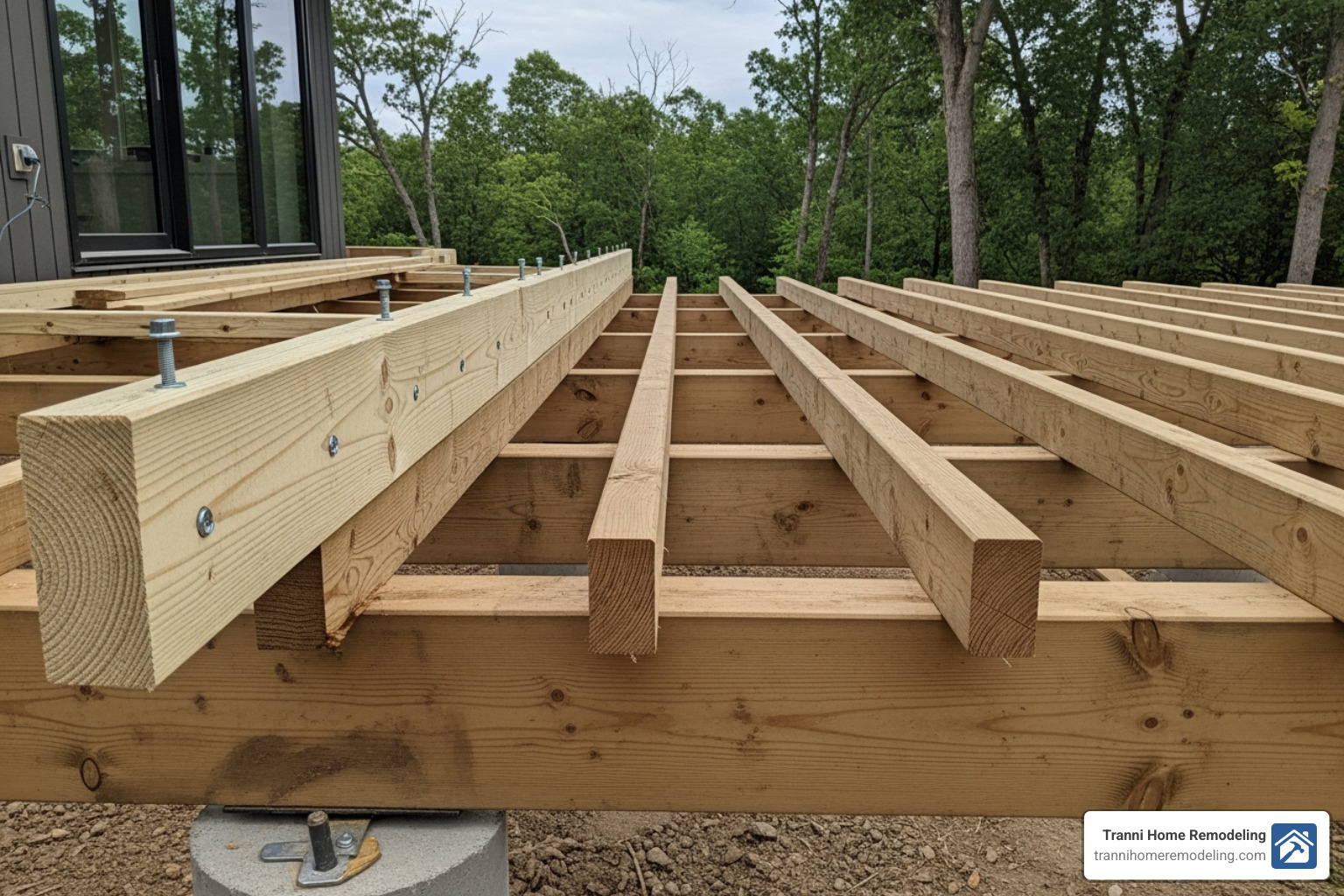
- Site preparation: The site must be cleared, leveled, and graded for proper drainage. Gravel is often placed under the deck area to prevent weed growth.
- Layout and footings: The deck’s perimeter is laid out using batter boards and string lines. Footing locations are marked, and it’s critical that these footings extend below the local frost line to prevent shifting. In Massachusetts towns like Billerica or Chelmsford, this depth is specified by the building department. Concrete is poured and must cure for a full week before bearing any load.
- Ledger board and flashing: For attached decks, the ledger board is the main support beam connected to the house. It must be securely fastened and waterproofed with a membrane and metal flashing to prevent moisture damage to your home—a common and costly point of failure in amateur builds.
- Posts, beams, and joists: Posts support the beams, which in turn support the joists (the framing that holds the deck boards). All framing must be level, plumb, and properly spaced according to code. Joists are secured with metal hangers for a strong, lasting connection.
As experienced Deck and Fence Installers Near Me, we ensure all structural elements are built to exceed safety standards.
How to build decks with safe stairs and railings
Stairs and railings are critical safety features, governed by strict building codes.
- Stairs: Each step’s rise (height) and run (depth) must be consistent to prevent tripping hazards.
- Guardrails: Decks more than 30 inches above the ground require guardrails, typically 36 to 42 inches high.
- Balusters: The vertical pickets in a railing must be spaced so a 4-inch sphere cannot pass through, a key safety measure for children.
- Posts: Railing posts must be securely bolted to the deck frame for stability.
Essential safety precautions when you build decks
Safety is paramount during construction.
- Call 811 before you dig: This free service locates and marks underground utility lines to prevent dangerous accidents.
- Use proper lifting techniques: Lift with your legs, not your back, and get help with heavy lumber.
- Operate tools safely: Read all manuals and wear appropriate personal protective equipment (PPE).
- Handle treated wood with care: Wear gloves and a dust mask when cutting pressure-treated wood and wash your hands thoroughly after handling.
- Ensure structural stability: Never allow anyone on the deck until it is fully completed and has passed all required inspections.
Finishing Touches and Long-Term Care
Once the main structure is complete, finishing touches transform the deck into a personalized outdoor oasis.
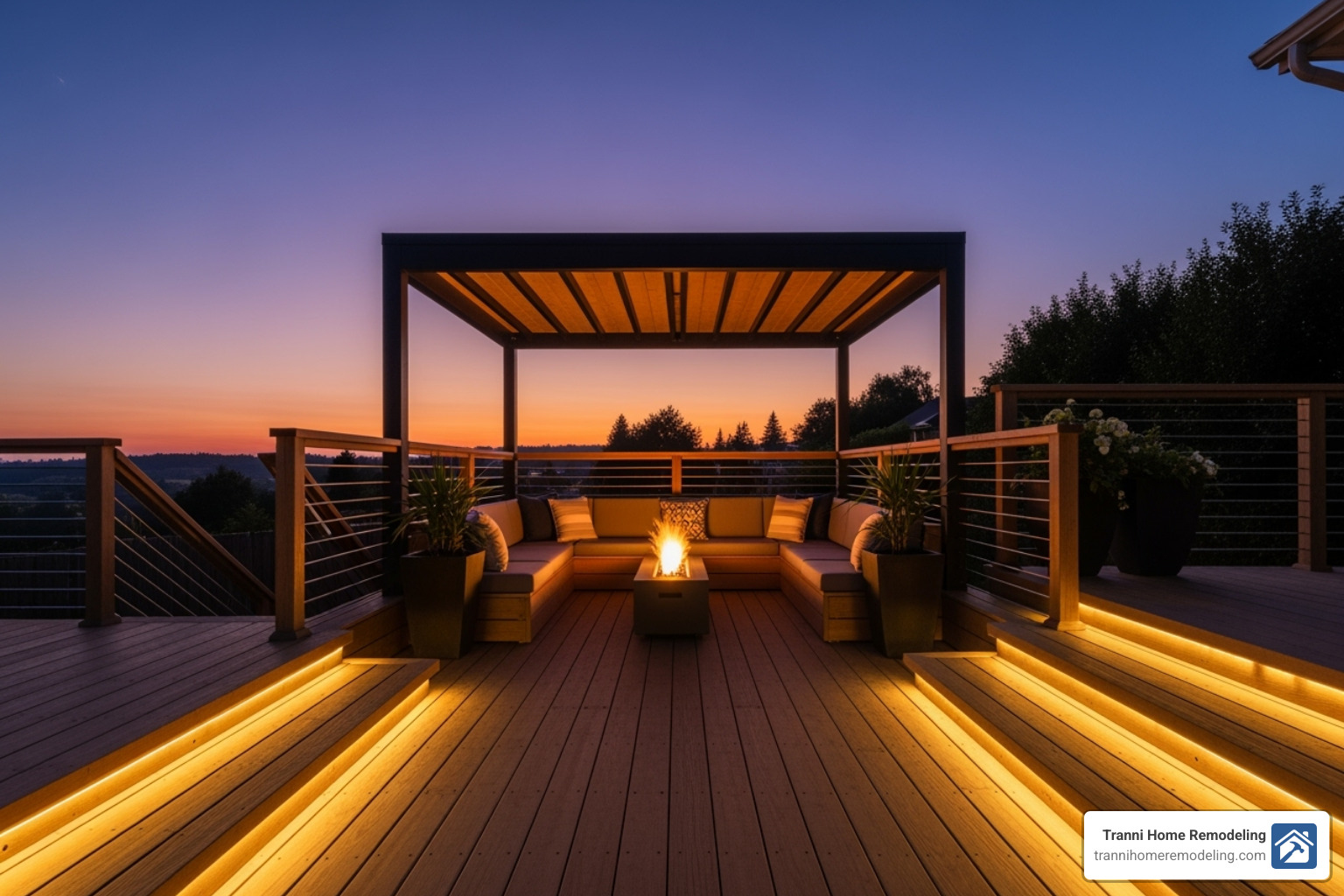
For wood decks, applying a water-resistant finish, stain, or sealer is vital to protect against moisture and UV damage. Composite and PVC decks only require occasional cleaning. To achieve a polished look, fascia boards can be installed to cover the joist and beam ends.
Enhancing Your Deck with Additional Features
Lift your outdoor space with features that add function and comfort.
- Lighting: Low-voltage lighting creates ambiance and improves safety. Individual fixtures can range from $8 to $30 per light, while solar post caps offer a wire-free option.
- Utilities: For safety, outdoor GFCI outlets are a must for plugging in lights or appliances, typically costing $150 to $450 to install. For outdoor kitchens, adding plumbing for a sink can cost $350 to $1,850, and running gas lines for a grill typically costs $15 to $50 per linear foot. A complete outdoor kitchen can range from a basic $5,000 setup to a deluxe installation costing $50,000 or more.
- Structures: Pergolas add shade and a sense of enclosure, while built-in seating and planters can be integrated into the design to save space and add greenery.
Please remember, these are average internet-based costs and not actual Tranni Home Remodeling pricing. Your specific project costs will vary.
Deck Maintenance for Longevity
Proper maintenance extends your deck’s life and keeps it looking great.
Wood decks require annual cleaning and sealing or staining every 1 to 3 years to prevent mold, mildew, and rot. This can cost around $400 annually. In contrast, composite decks are low-fuss, needing only occasional washing with soap and water, which can cost less than $10 a year. This long-term saving is a key reason many homeowners choose composite.
Regardless of the material, regularly inspect your deck for loose fasteners or any signs of damage, especially in areas that stay wet. Catching issues early prevents more significant problems. If you need assistance, our team of Wood Deck Repair Contractors Near Me can restore your deck’s safety and beauty.
DIY vs. Hiring a Professional: Making the Right Choice
One of the biggest decisions is whether to build decks yourself or hire a professional. This choice depends on your skill, time, and the project’s complexity.
The DIY route can be rewarding and save on labor costs. However, it’s a significant undertaking. A basic deck requires a time commitment of 4 to 6 days, plus a week for concrete to cure. The tool requirements are extensive, and the physical demands of lifting heavy lumber and digging holes are considerable. The learning curve for proper framing and code compliance is steep, and mistakes can be costly.
Hiring a professional is the recommended choice for several reasons:
- Complex designs: Multi-level decks, curves, or intricate features require specialized knowledge.
- Attached decks: Properly installing a ledger board and flashing is critical to prevent water damage to your home’s structure. A mistake here can have catastrophic consequences.
- Code compliance: Professionals are experts in local building codes in towns like Billerica, Andover, or Wilmington, ensuring your deck passes inspection without expensive revisions.
- Peace of mind: If you’re short on time or experience, an expert guarantees a safe, high-quality result.
Why Hiring a Local Expert Matters
In Massachusetts, local expertise is invaluable when you build decks. Each town has unique building codes, permit processes, and inspection requirements.
A professional contractor like Tranni Home Remodeling brings over a decade of experience, ensuring your deck is built to the highest standards of quality and safety. We steer local codes in the communities we serve, from Billerica to Andover, seamlessly. We are licensed and insured, protecting you from liability. We know the specific requirements for our climate, from frost line depth for footings to the right materials to withstand New England weather.
Our relationships with local building inspectors help streamline the approval process, avoiding delays. A professionally built deck not only looks better but performs better and lasts longer. When you’re ready to find the Best Deck Builders In My Area, we’re here to turn your vision into a reality.
Frequently Asked Questions about Building a Deck
Here are answers to some common questions homeowners have when they plan to build decks.
How long does it take to build a deck?
The timeline varies with complexity. A simple 10×16 foot deck might take an experienced DIYer 4 to 6 days of construction, not including the week for concrete footings to cure. A professional crew, with specialized tools and efficient processes, can often complete the same project in just a few days, ensuring a faster path to enjoying your new space.
Do I need a permit to build a deck in Massachusetts?
Almost certainly, yes. In Massachusetts, most towns like Billerica or Reading require a permit for any deck that is attached to a house, is over 30 inches high, or exceeds a certain size. Always check with your local building department before starting. A professional contractor will handle the entire permitting process for you, ensuring everything is filed correctly and all inspections are scheduled.
What is the best material to build a deck with?
The “best” material depends on your priorities for budget, aesthetics, and maintenance.
- Pressure-treated wood is the most affordable option upfront but requires annual sealing and staining.
- Composite decking has a higher initial cost but offers superior durability and low maintenance, often lasting 25 years or more with just occasional cleaning. Its long-term value makes it a popular choice for homeowners seeking a hassle-free investment.
- Cedar and Redwood offer a classic, natural look but also require regular upkeep to maintain their beauty.
Build Your Dream Deck with Confidence
You’ve explored what it takes to create a dream outdoor space. Building a deck is a rewarding project that transforms a simple yard into a vibrant extension of your home—a place for making memories. The keys to a successful project are always proper planning, choosing quality materials, and an unwavering focus on safety.
From design to the final nail, every step is critical for a deck that not only looks fantastic but also stands the test of time. It’s an investment in your home’s value and your family’s quality of life.
For a professionally crafted outdoor space that is built to last, meets all safety codes, and perfectly brings your vision to life, the best choice is to partner with a trusted local expert. Here at Tranni Home Remodeling, we are passionate about helping homeowners achieve their outdoor dreams. Explore our porches and decks services to see how we can transform your backyard into the perfect oasis.
Like us on Facebook!