




Ductless air conditioning system installation: Smart 2025
Understanding Ductless AC Before You Start
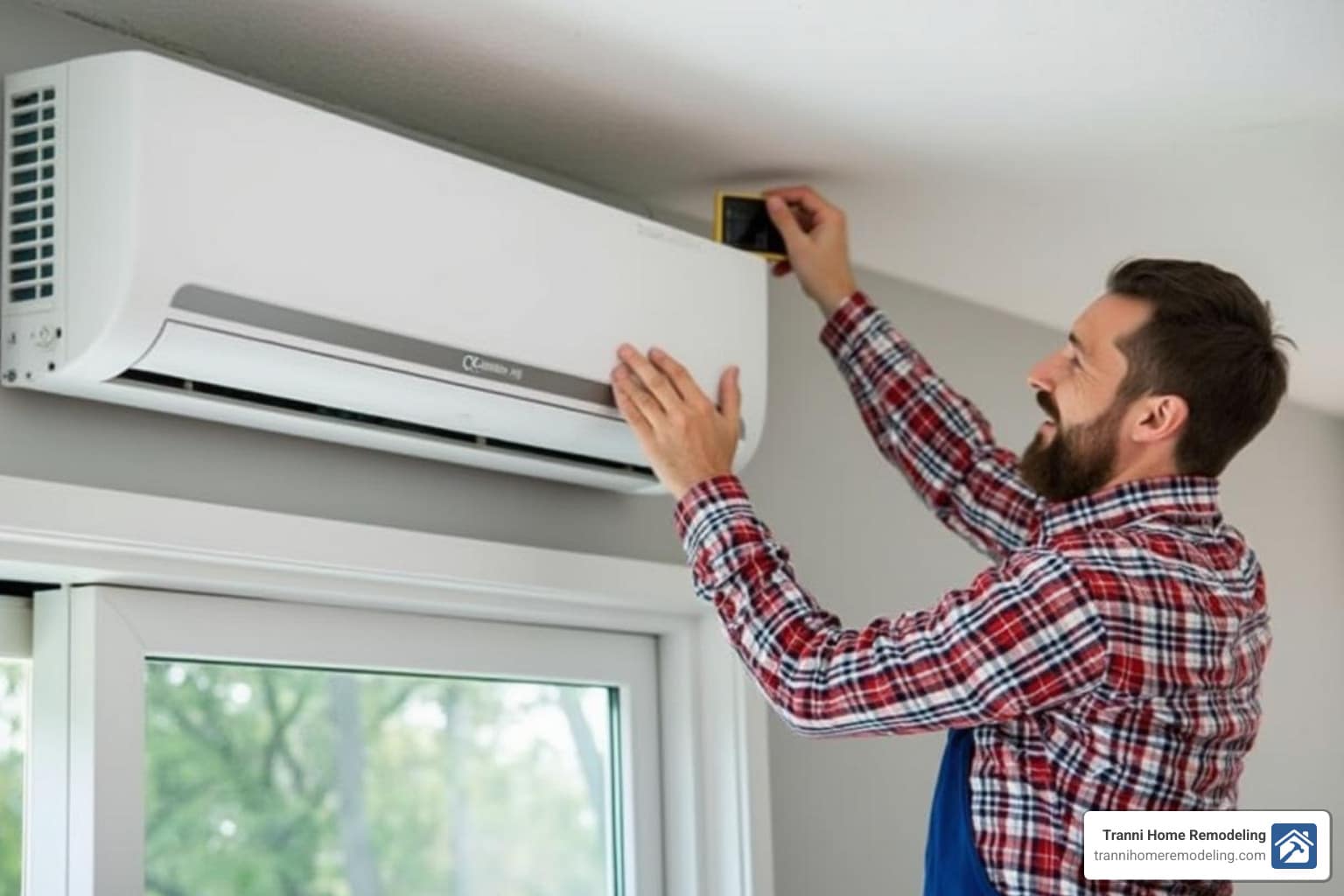
Ductless air conditioning system installation is a popular choice for homeowners wanting to cool specific areas without the cost of traditional ductwork. Also known as mini-splits, these systems have an outdoor condenser connected to one or more indoor air handlers via refrigerant lines, passing through a small hole in the wall.
Quick Installation Overview:
- Indoor Unit: Wall-mounted air handler placed 6+ feet from the floor.
- Outdoor Unit: Condenser on a concrete pad or wall brackets.
- Connection: A 2-3 inch hole for refrigerant lines and electrical wiring.
- Power: A dedicated 220V electrical circuit.
- Professional Required: EPA certification is needed for refrigerant handling.
A ductless system transfers heat by circulating refrigerant between the indoor and outdoor units. The indoor unit cools your space by blowing air over cold coils, while the outdoor unit releases the captured heat. This process avoids the energy loss from ductwork, which can exceed 30% in central air systems.
The benefits are significant: mini-split systems can save up to 50% on home heating costs and provide precise, room-by-room temperature control. However, professional installation is vital. As Tyler Tranni, owner of Tranni Home Remodeling, I’ve overseen numerous installations in Billerica and surrounding areas. While understanding the process is helpful, the technical skill required makes a professional essential for safety, efficiency, and warranty protection.
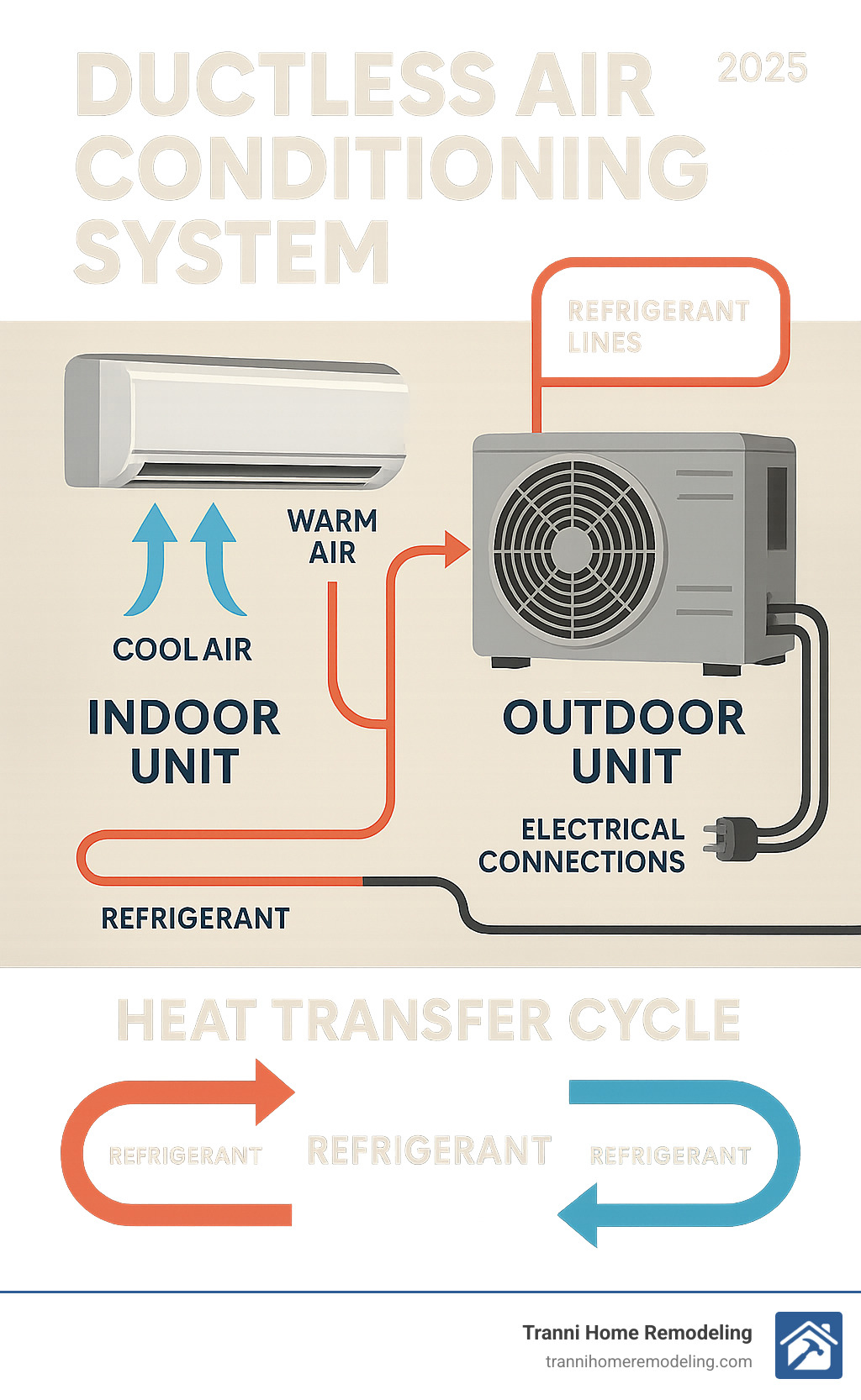
Basic ductless air conditioning system installation terms:
The Major Pros and Cons
When considering a ductless air conditioning system installation, it’s important to weigh the pros and cons. We review these with our clients in Middlesex County to ensure the best fit for their home and budget.
| Feature | Ductless Mini-Splits | Traditional Central Air (with ducts) |
|---|---|---|
| Ductwork Needed | No | Yes |
| Zoning Capability | Excellent (room-by-room control) | Limited (whole house or large zones) |
| Energy Efficiency | Very High (no duct loss, precise control) | Moderate (significant duct loss possible) |
| Installation Ease | Relatively easy (no major renovation) | Complex (requires extensive ductwork installation) |
| Aesthetics | Indoor units visible on walls/ceilings | Vents are subtle, main unit hidden |
| Air Filtration | Basic (can be supplemented) | Generally better (can integrate advanced filters) |
| Cost (Initial) | Higher than window units, comparable to central AC | Varies, can be high if ducts need installing |
| Noise Level | Very quiet indoors, outdoor unit quiet | Can be noisy (furnace/air handler fan, duct noise) |
Zoned cooling is a major advantage. You can set different temperatures in different rooms, conditioning only the spaces you use and leading to significant energy savings. The main drawback is aesthetics, as the indoor units are visible on your walls. While installation is less invasive than adding ducts, it still requires professional precision.
Energy Efficiency and Savings
The high energy efficiency of ductless systems is a key selling point for homeowners in Andover, Burlington, and our other Massachusetts service areas.
The SEER2 (Seasonal Energy Efficiency Ratio) rating measures this efficiency. While the federal minimum is 15, many mini-splits have SEER2 ratings from 17 to over 40. This range allows you to balance upfront cost with long-term energy savings.
Their efficiency comes from eliminating duct loss. Central air systems can lose over 30% of their energy through ducts, but mini-splits deliver conditioned air directly into the room. This direct delivery and zoned control mean they use minimal energy, potentially reducing consumption by up to 40% compared to conventional systems. To ensure you’re choosing an efficient model, look for the ENERGY STAR® label, which certifies that the product meets strict EPA guidelines.
Planning Your Installation: Sizing, Placement, and Tools

Proper planning is crucial for a successful ductless air conditioning system installation. Rushing this step can lead to an improperly sized system that either fails to cool your space or cycles on and off inefficiently.
The first step is sizing, which involves BTU calculations. While room size is a starting point, other factors are critical. A 400-square-foot room might need 9,000 to 15,000 BTUs depending on insulation quality, window placement (especially south-facing windows), and local climate considerations. In Massachusetts, our humid summers require a system that can handle both temperature and moisture.
This is where choosing between single-zone and multi-zone systems is important. A single-zone system is great for one area, while a multi-zone system allows independent control of multiple rooms. A professional assessment helps homeowners in Woburn and surrounding areas avoid the frustration of an improperly sized system. For more details, see our Mini Split Heat Pump page.
Key Factors for Your Ductless Air Conditioning System Installation
Every detail matters when planning your ductless air conditioning system installation. Choosing the right indoor unit location is key. Wall-mounted units, the most popular choice, should be placed high on a wall (at least six feet up) for even air distribution, away from direct sunlight or heat sources.
For a more discreet look, ceiling cassettes sit flush with the ceiling and distribute air in four directions. Floor-mounted units are a good option for rooms with limited wall space or for easier maintenance access.
Outdoor unit placement is equally important. The condenser needs a stable foundation, like a concrete pad or wall brackets, with proper clearance (at least two feet on all sides) for airflow. We also consider proximity to the power source, as the system requires a dedicated 220V circuit, and plan the installation to meet local codes while minimizing electrical work.
Tools and Materials Overview
This is where a ductless air conditioning system installation proves it’s not a typical DIY project. The specialized tools required are extensive.
Professionals use a drill with a hole saw to create the 2-3 inch wall opening and a level to ensure the indoor unit is perfectly horizontal to prevent water damage. The most complex work involves refrigerant handling, which requires tools like a vacuum pump, refrigerant gauge, and flaring tool. Using these tools correctly requires EPA certification and extensive experience. The vacuum pump, for instance, removes air and moisture from the lines—a critical step that, if done improperly, can damage the system and void the warranty.
Finishing work involves sealant, conduit for line protection, and various electrical components. Understanding these tools helps appreciate the complexity, but it underscores why professional installation is the only safe and effective option.
The Professional Ductless Air Conditioning System Installation Process
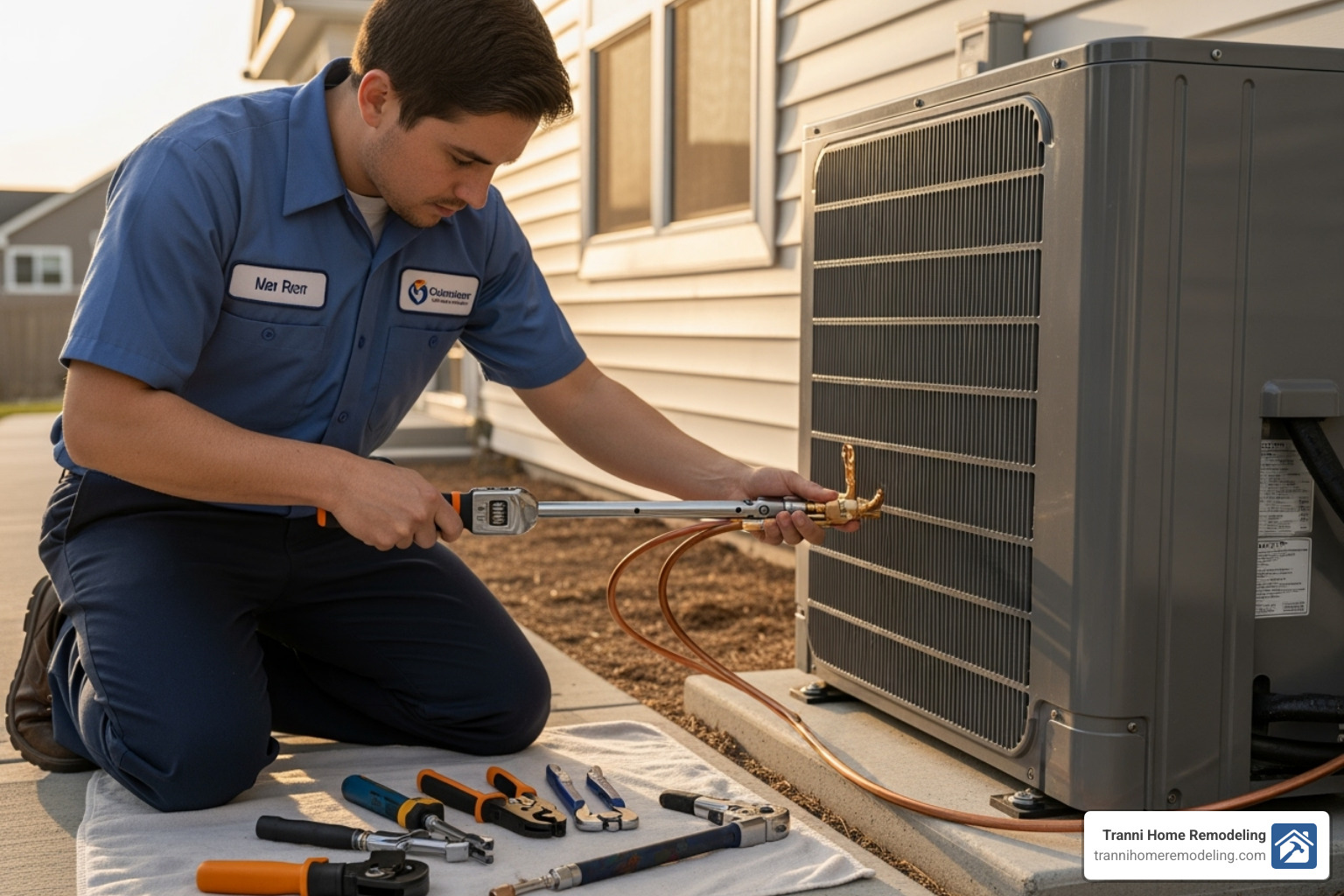
This overview explains what happens during a professional ductless air conditioning system installation. It is for educational purposes only and highlights why proper training is essential.
Critical Safety Warning: DIY installation involves high-voltage electricity and pressurized refrigerants, which can cause serious injury or death. It also requires permits, EPA certification, and will void your manufacturer’s warranty. At Tranni Home Remodeling, our licensed and insured technicians handle every aspect of your HVAC installation safely and professionally.
Step 1: Mounting the Indoor Unit
This phase sets the foundation for your system’s performance.
- Select the Wall: We find a spot on an exterior wall that allows for optimal air circulation, away from heat sources that could interfere with the thermostat.
- Install the Mounting Plate: Using a level, we securely fasten the metal bracket to the wall. Proper leveling is critical for condensate drainage. We use heavy-duty anchors if wall studs are not available.
- Drill the Conduit Hole: We drill a 2-3 inch hole through the wall, angled slightly downward to the outside to ensure gravity-fed drainage. We first verify the wall cavity is clear of any wiring or plumbing.
- Secure the Indoor Unit: The refrigerant lines, drain line, and wiring are passed through the hole, and the indoor unit is hooked securely onto the mounting plate.
Step 2: Placing the Outdoor Unit and Connecting Lines
This is the most technically demanding phase of the ductless air conditioning system installation.
- Prepare the Foundation: The outdoor condenser is placed on a stable, level base, such as a concrete pad or wall brackets, to keep it off the ground and away from water or snow.
- Position the Condenser: We ensure adequate clearance on all sides for airflow and future maintenance. While modern units are quiet, we also consider placement to minimize any potential noise disruption.
- Run and Protect Lines: The line set (refrigerant lines, wiring, drain line) is routed along the exterior and protected with a weather-resistant conduit for a clean look and protection from damage.
- Connect Refrigerant Lines: This step requires EPA-certified technicians. We use a flaring tool and a torque wrench to connect the copper lines to the manufacturer’s exact specifications to prevent leaks.
- Establish Drainage: The condensate drain line is routed with a continuous downward slope away from your home’s foundation.
- Connect Electrical: A licensed electrician connects the system to a dedicated circuit and installs a disconnect box near the outdoor unit, ensuring all work meets local codes.
Step 3: Finalizing the System
These final steps are crucial for long-term performance.
- Leak Test with a Vacuum Pump: We attach a vacuum pump to the refrigerant lines to remove all air and moisture. This deep vacuum is held for 30-60 minutes to ensure the system is perfectly sealed. Skipping this step can destroy the compressor.
- Release Refrigerant: Once the system is confirmed to be leak-free, we open the service valves to release the factory-charged refrigerant. We may adjust the charge based on the line set length for optimal performance.
- Seal the Wall Penetration: We thoroughly seal the hole in the wall with weather-resistant sealant to prevent air leaks, moisture, and pests.
- Test the System: We power on the unit and conduct a full operational check—testing cooling, heating, airflow, and remote functions to confirm everything meets manufacturer specifications. Only then is your ductless AC unit installation complete.
Budgeting and Long-Term Care
Investing in a ductless air conditioning system installation is a smart move for homeowners in Winchester, Lincoln, and throughout Middlesex County. Understanding the costs and long-term care is key to maximizing your investment.
Understanding the Costs of Ductless Air Conditioning System Installation
One of the first questions homeowners ask is about cost. Based on industry data, the average cost to install a ductless mini-split system typically falls between $2,000 and $10,500. For complex multi-zone systems in larger homes, the investment can reach $17,000 or more.
Please note: These are average costs based on general internet data, not actual quotes from Tranni Home Remodeling. We provide custom quotes based on your home’s specific needs, ensuring our affordable HVAC installation services fit your budget.
Several factors influence the final price:
- System Size (BTUs): Larger spaces require more powerful, and thus more expensive, units.
- Number of Zones: A single-zone system is less expensive than a multi-zone system designed to cool several rooms.
- Efficiency (SEER2 Rating): Higher-efficiency units cost more upfront but provide greater long-term savings on utility bills.
- Installation Difficulty: Long line sets or complex routing can increase labor costs.
- Brand and Features: Premium brands and smart features can increase the initial investment.
While the upfront cost of a ductless HVAC system can be comparable to central air, it is often a more budget-friendly choice for homes without existing ductwork, especially considering the long-term energy savings.
Essential Maintenance for Longevity
With proper care, a ductless mini-split system can last up to 20 years. Routine maintenance is simple and ensures your system runs efficiently.
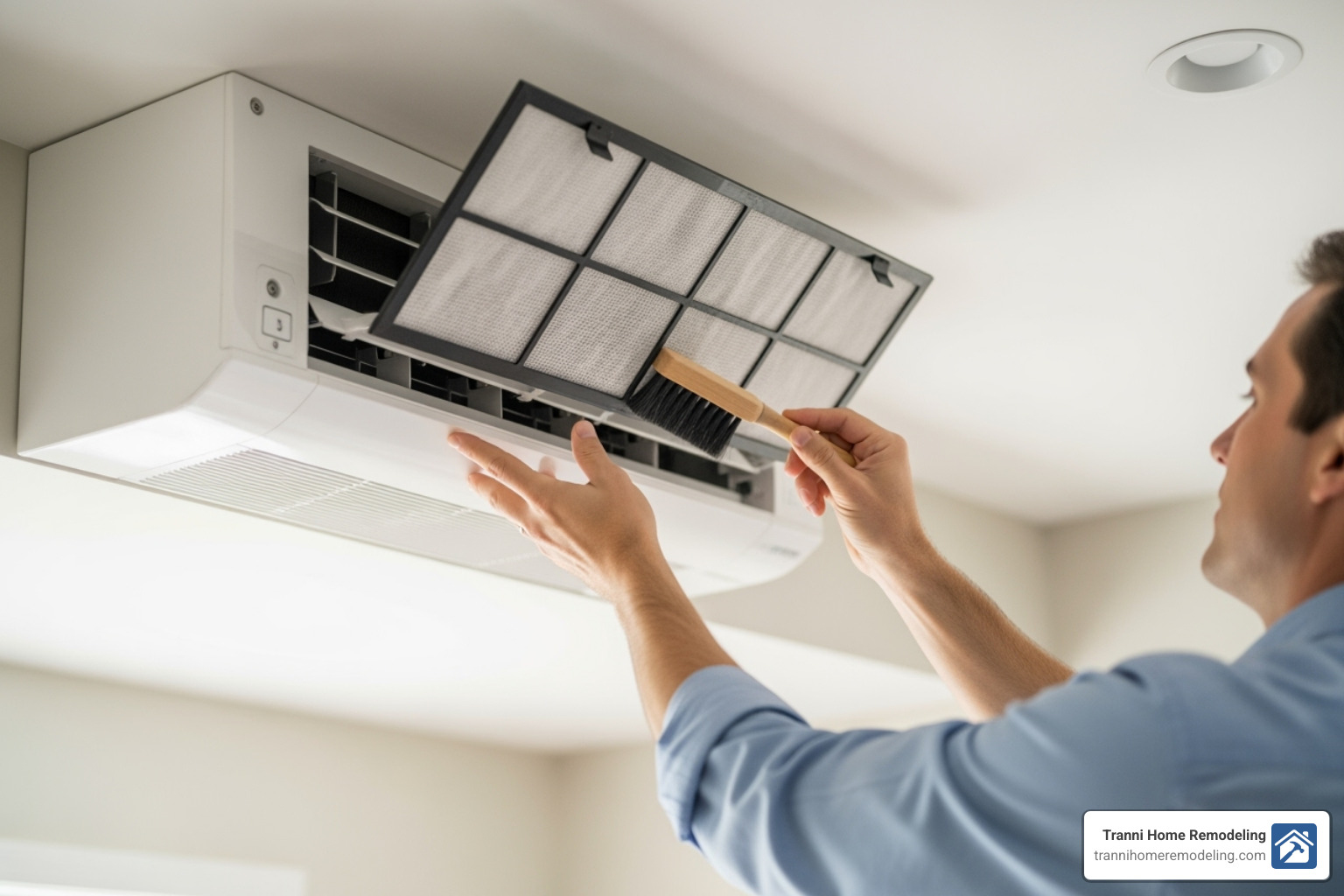
- Clean Filters Monthly: The most important task you can do is clean the indoor unit’s air filters. Simply pop them out, rinse with water, let them dry, and slide them back in. In homes with pets or allergies, you may need to do this every two weeks.
- Keep Coils and Outdoor Unit Clear: Gently brush any loose debris from the outdoor unit’s coils and ensure the area around it is clear of leaves, grass, and snow (at least two feet of clearance). A professional should perform a deep cleaning of both indoor and outdoor coils annually.
- Check the Drain Line: Occasionally check that the condensate drain line is clear and flowing freely to prevent water backups.
- Schedule Annual Professional Tune-ups: A yearly check-up from a certified technician is the best way to ensure longevity. They will inspect refrigerant levels, clean components, check electrical connections, and catch minor issues before they become major problems. For reliable air conditioning services near me, our team is ready to help.
Why Professional Installation is Non-Negotiable
The title of this article is a guide to understanding the ductless air conditioning system installation process, not a recommendation for self-installation. An informed homeowner makes better decisions, but when it comes to the actual work, professional installation is non-negotiable for several critical reasons.
The Risks of DIY vs. The Benefits of a Pro
Attempting a DIY installation without proper training and tools carries significant risks that far outweigh any potential cost savings.
DIY Risks:
- Safety Hazards: You will be working with high-voltage electricity and pressurized refrigerants. A mistake can lead to electrocution, fire, or severe frostbite.
- Improper Sizing: A unit that is too small will run constantly, while one that is too large will short-cycle, leading to poor humidity control and premature failure.
- Refrigerant Leaks: Improperly flared connections will leak refrigerant, harming the environment, reducing efficiency, and eventually destroying the compressor. Handling refrigerants legally requires EPA certification.
- Voided Manufacturer Warranty: Nearly all manufacturers void their warranties if the system is not installed by a licensed HVAC professional. This leaves you responsible for all repair costs.
- Code Violations: Installations in Middlesex County require permits and adherence to local building codes. A DIY job can result in fines and orders to redo the work.
Benefits of a Professional:
When you hire a team like Tranni Home Remodeling, you are investing in peace of mind. With over a decade of experience in home renovations and HVAC, we ensure a smooth process in Billerica, Andover, and beyond.
- Safety and Compliance: We handle all electrical and refrigerant protocols safely and ensure your installation meets all local codes.
- Optimal Performance: We perform precise calculations to ensure your system is perfectly sized and charged for maximum efficiency and comfort.
- Warranty Protection: Your manufacturer’s warranty remains fully intact.
- Long-Term Support: We offer comprehensive HVAC services, including maintenance and repairs, to support your system for its entire lifespan.
Choosing a professional HVAC installer near me is an investment in safety, efficiency, and lasting comfort.
Conclusion: A Smart Investment in Your Home’s Comfort
It’s clear why ductless air conditioning system installation is a popular choice for homeowners. The combination of zoned comfort, significant energy savings, and flexible installation makes it an ideal solution for modern homes. Whether you have an older home in Wilmington without ductwork or want better energy control in Lexington, a ductless system delivers.
The financial benefits are compelling. With potential energy savings of up to 50% on heating and the elimination of duct losses, the system can pay for itself over time while increasing your home’s value. What’s more, with simple, routine maintenance, a professionally installed ductless system can serve your family for up to 20 years.
As we’ve emphasized, realizing these benefits depends entirely on professional installation. The technical complexity, safety risks, and warranty requirements make this a job for certified experts. Our team at Tranni Home Remodeling has seen how a quality installation is the key to a system that excels.
We are proud to bring our high-quality craftsmanship to homeowners throughout Middlesex County, including Billerica, Andover, Bedford, Burlington, Carlisle, Chelmsford, Dracut, Lincoln, Lynnfield, Methuen, North Andover, North Reading, Reading, Stoneham, Tewksbury, and beyond. We believe your home’s comfort system is about creating the perfect environment for your family.
For expert guidance and professional HVAC Installation Services, contact our team today. We’re ready to help you achieve unparalleled comfort and efficiency in your home.
Like us on Facebook!