





How to Hire a Contractor for Kitchen Remodel: 7 Proven Steps 2025
Planning Your Kitchen Remodel Success
How to hire a contractor for kitchen remodel is a critical first step in changing your kitchen into the heart of your home. Finding the right professional can mean the difference between a dream kitchen and a renovation nightmare.
“Planning your ultimate dream kitchen involves plenty of decisions, but the most important decision you’ll face is choosing the right contractor to bring your vision to life.”
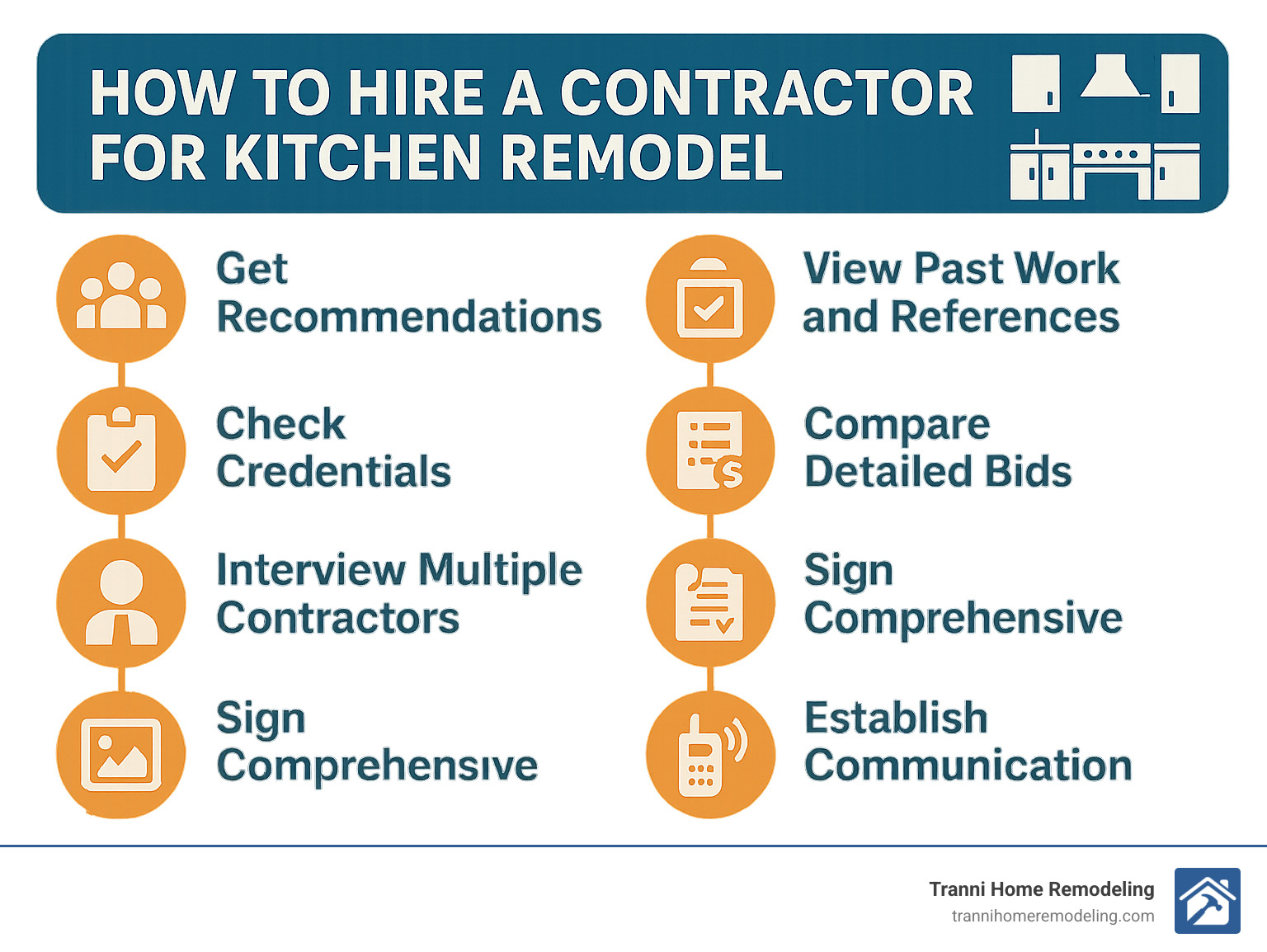
For those wanting a quick answer, here’s how to hire a kitchen remodel contractor:
- Get recommendations from friends, family, and neighbors
- Check credentials (license, insurance, and bonding)
- Interview at least 3 contractors with a prepared list of questions
- View past work and contact references
- Compare detailed bids with identical project specifications
- Sign a comprehensive contract covering scope, timeline, and payment terms
- Establish clear communication protocols before work begins
Choosing a contractor is similar to selecting a surgeon for your home—you need someone skilled, trustworthy, and experienced to execute your vision correctly.
I’m Tyler Tranni, owner of Tranni Home Remodeling, and with years of experience managing kitchen renovation projects throughout Middlesex County, I’ve guided countless homeowners through how to hire a contractor for kitchen remodel decisions that resulted in beautiful, functional spaces they love.
How to hire a contractor for kitchen remodel glossary:
– what to tell your contractor when remodelling your kitchen
– contractor cost for kitchen remodel
– kitchen remodel companies
Why a Kitchen Remodeling Contractor Is Worth the Investment
Wondering if you really need a specialized kitchen remodeling contractor? Let me assure you—it’s one of the smartest investments you’ll make in your renovation journey.
Think of your kitchen renovation as a complex puzzle where every piece must fit perfectly. A dedicated kitchen contractor brings specialized expertise that general handymen simply can’t match. At Tranni Home Remodeling, our kitchen specialists understand the intricate dance between plumbing, electrical, ventilation, cabinetry, countertops, and appliances—all working harmoniously in what’s often the busiest room in your home.
Project management might not be the first thing that comes to mind when planning your dream kitchen, but it’s absolutely crucial. Your renovation involves coordinating plumbers, electricians, cabinet installers, countertop fabricators, and more—all in the perfect sequence. When we handle this orchestration for you, you’re free to focus on the exciting design decisions instead of juggling contractor schedules and deliveries.
Did you know that 46% of remodeling work involves fixing errors made by previous contractors? Many of these costly mistakes stem from permit navigation and code compliance issues that could have been avoided with proper expertise. Our team knows the local Middlesex County building codes inside and out, ensuring your beautiful new kitchen is also a safe and legal one.
“Choosing a remodeling contractor is like selecting a surgeon for your home,” as the saying goes in our industry. Your kitchen truly is the heart of your home—why would you trust it to anyone but a specialist?
More info about Kitchen Remodel Services
Benefits Over DIY & Handyman Options
While the DIY approach might seem budget-friendly at first glance, it often leads to unexpected costs and headaches down the road. Here’s why professional contractors provide better value:
Working with a qualified kitchen remodeling contractor offers significant risk reduction. We carry comprehensive liability insurance and workers’ compensation, protecting you from financial responsibility if accidents occur during construction. This liability shield alone provides tremendous peace of mind throughout your project.
The workmanship quality difference is immediately noticeable in professionally remodeled kitchens. From perfectly level cabinets to properly vented plumbing and safely installed electrical work, these specialized skills require training and experience. When we complete your kitchen, everything works as it should—the first time.
Perhaps most surprisingly, professional kitchen remodels typically deliver better cost-efficiency in the long run. With established supplier relationships, bulk purchasing power, and the ability to avoid costly mistakes, we often save homeowners money compared to DIY attempts that require fixes later.
The resale value impact can’t be overlooked either. A professionally remodeled kitchen typically yields 70-80% return on investment when selling your home. DIY work, especially if not up to code, can actually decrease your home’s value or complicate the selling process when inspectors find issues.
As one wise homeowner put it after attempting their own renovation: “I quickly learned that hiring a contractor wasn’t an expense—it was an investment in getting my kitchen done right.” When you factor in the cost of mistakes, rework, and your valuable time, how to hire a contractor for kitchen remodel becomes less about if you should and more about finding the right partner for your journey.
How to Hire a Contractor for Kitchen Remodel: A 7-Step Roadmap
Finding the perfect kitchen remodeling contractor doesn’t happen by accident—it’s the result of careful research and due diligence. As a Middlesex County homeowner, you deserve a renovation partner who will transform your kitchen dreams into reality without the nightmares that can come with poor planning.

I’ve created this proven 7-step roadmap to guide you through what might seem like an overwhelming process. Think of it as your personal checklist for success:
Your journey begins with building a reputable shortlist of contractors who come highly recommended. Did you know that 42% of homeowners find their contractors through word-of-mouth? That’s because personal experiences speak volumes.
Next, you’ll want to verify credentials before getting too invested. A legitimate contractor will happily provide license information, proof of insurance, and any professional certifications they hold. This step alone can save you countless headaches down the road.
The interview process is where you’ll really get a feel for who you’re dealing with. Come prepared with specific questions about their team structure, communication style, and how they handle the inevitable changes that arise during renovations.
When it comes to comparing estimates, the lowest bid isn’t always the best value. You’ll need to examine the details carefully to ensure you’re comparing apples to apples across different proposals.
A solid contract is your protection throughout the project. This document should clearly outline everything from start and finish dates to payment terms and warranties.
Once work begins, managing payments and schedules becomes crucial. A structured payment plan tied to completed milestones keeps everyone accountable and your project moving forward.
Finally, maintaining open communication throughout your remodel will help prevent misunderstandings and ensure your vision comes to life as planned.
Organizations like HomeAdvisor and the National Association of the Remodeling Industry offer valuable resources to support your search for the perfect kitchen remodel contractor.
This methodical approach has helped countless homeowners steer the contractor hiring process successfully. In the following sections, we’ll dive deeper into each step, giving you the confidence to make informed decisions about who will transform the heart of your home.
1. Build a Reputable Shortlist Near You
Let’s face it—finding the right kitchen contractor starts with who you know. It’s no surprise that 42% of homeowners begin their search through recommendations from friends and family. There’s something reassuring about hearing, “They did my kitchen and I absolutely love it!”
Start by having coffee with neighbors who’ve recently updated their kitchens. Ask them the real questions: Did the contractor show up when promised? How did they handle unexpected issues? Would they invite this person back into their home? These candid conversations can save you headaches down the road.
For those of us in Middlesex County, your local network is gold. Chat with homeowners in Billerica, Burlington, or Chelmsford who’ve completed kitchen projects. Their experiences—good or bad—provide invaluable insights you won’t find online.
Don’t stop with just neighbors though. Your search should include:
Kitchen design centers and cabinet dealers are excellent resources—they work with contractors daily and know who delivers quality work. Local building inspectors have seen it all and can tell you which contractors consistently meet code requirements. Even your local lumberyard can offer insights about contractors who purchase quality materials and maintain good payment histories.
While personal recommendations form the foundation of your search, online resources can help round out your list. The Better Business Bureau is worth checking for A+ rated contractors with clean records. Professional associations like the National Association of the Remodeling Industry (NARI) and the National Kitchen & Bath Association (NKBA) maintain directories of certified professionals who’ve demonstrated expertise in kitchen renovations.
At Tranni Home Remodeling, we’re proud that many of our new clients come from referrals—there’s no higher compliment than a client telling their friends about their beautiful new kitchen!
National Association of the Remodeling Industry
Better Business Bureau link
2. Verify Licenses, Insurance & Certifications
Once you’ve got your shortlist of potential kitchen remodeling contractors, it’s time for the verification dance – and trust me, this isn’t a step you want to skip!
First things first, check that your contractor holds a valid license. Here in Massachusetts, any home improvement contractor worth their salt must be registered with the Office of Consumer Affairs and Business Regulation. It takes just a few minutes to verify their status through the state’s website, but those few minutes could save you months of headaches down the road.
“A license isn’t just a piece of paper – it’s proof that your contractor has met basic competency requirements and understands building codes,” explains Tyler Tranni of Tranni Home Remodeling. “Would you visit a doctor who doesn’t have a medical license? Your home deserves the same level of professional care.”
Insurance verification is your next critical step. Don’t just ask, “Are you insured?” Instead, request actual certificates directly from their insurance agent for:
- General liability insurance (at least $1 million coverage)
- Workers’ compensation for all employees
- Property damage protection
This isn’t about being difficult – it’s about protecting your home and finances. If an uninsured worker falls off a ladder in your kitchen, guess who might be financially responsible? That’s right – you could be.
Don’t forget to check if your contractor is bonded. A bonded contractor has purchased a surety bond, giving you financial recourse if they abandon your project mid-way or fail to pay suppliers (who could otherwise place a lien on your home).
Professional certifications are the cherry on top that separate good contractors from great ones. Look for designations like Certified Kitchen Designer (CKD), Certified Bath Designer (CBD), or Certified Graduate Remodeler (CGR). For eco-conscious Middlesex County homeowners, LEED certification indicates expertise in sustainable building practices.
At Tranni Home Remodeling, we understand the importance of these credentials – that’s why we maintain all required licenses, comprehensive insurance coverage, and ongoing professional certifications. We’re happy to provide verification because we know that how to hire a contractor for kitchen remodel decisions start with trust and transparency.
An example of license verification
3. Interview Like a Pro—Questions That Matter
Sitting down with potential contractors is a bit like a first date – you’re trying to figure out if this relationship has potential before making a commitment. This conversation is your golden opportunity to peek behind the curtain of their business and see if they’re truly the right fit for your kitchen dreams.
I always recommend my Middlesex County clients chat with at least three contractors before making a decision. When you ask each the same questions, patterns emerge that make your choice clearer. Here’s what you should be asking:
About their business operation, you’ll want to know how long they’ve been renovating kitchens and what percentage of their work comes from happy repeat customers or referrals (a high number here is a great sign!). Ask if they belong to professional associations like NARI or NKBA – these memberships often indicate a commitment to industry standards and continuing education.
The project management conversation is crucial. Find out who you’ll be texting or calling when questions arise – will it be the owner you’re speaking with now, or a dedicated project manager? A clear answer here prevents the frustration of playing phone tag later. Ask how often they’ll be on-site and how they coordinate the parade of plumbers, electricians, and cabinet installers who’ll be marching through your home.
Their process details matter tremendously. How do they handle those inevitable “while we’re at it” changes that pop up mid-project? What’s their payment schedule look like – and are they expecting a large deposit upfront? Request itemized pricing so you can see exactly where your money is going. And don’t forget to ask about their communication style – will you get daily updates, weekly meetings, or access to a project management app?
About your specific kitchen, ask if they’ve tackled similar projects in your neighborhood. Have them walk you through potential challenges they anticipate with your particular layout or home age. Get a realistic timeline (and then mentally add 25% – that’s just renovation reality!). And the practical question many forget: will your kitchen be even partially usable during certain phases of the remodel?
Pay close attention to how they respond, not just what they say. Are they rushing you through questions or taking time to explain concepts? Do they seem genuinely excited about your project or just going through the motions? The contractor who leans in when you share your vision and asks thoughtful follow-up questions is often the one who’ll bring the same enthusiasm to your actual project.
You’ll be seeing this person in your home regularly for weeks or months. Your comfort level with them is just as important as their technical skills and price point.
4. Compare Apples to Apples: Estimates, Bids & Timelines
Getting multiple bids is smart, but they’re only useful if you’re comparing the same project. When I meet with Middlesex County homeowners, I always recommend providing each contractor with identical project specifications so you can truly evaluate who’s offering the best value.
A professional kitchen remodel bid shouldn’t be a single bottom-line number. Instead, look for detailed breakdowns that include:
- Materials (which typically account for about 40% of your total budget)
- Labor costs (the skilled professionals who’ll transform your space)
- Overhead expenses (insurance, permits, and administrative costs)
- Profit margin (usually 15-20% for reputable contractors)
When you receive a bid that’s dramatically lower than others, pause before celebrating. In my experience, unusually low estimates often come with hidden costs down the road. The contractor might be planning to use lower-quality materials, hiring uninsured workers, or simply underestimating the scope to win your business.
A thorough timeline is just as important as accurate pricing. Your contractor should provide you with:
A clear project roadmap that includes specific start dates, major milestone completions (like when demolition ends and when cabinets will be installed), and a realistic completion date. At Tranni Home Remodeling, we also specify our daily work hours so you know exactly when to expect our team in your home.
One often-overlooked aspect of kitchen remodeling is the contingency budget. Even with perfect planning, surprises happen—especially in older homes where opening up walls can reveal unexpected issues. I always advise clients to set aside an additional 10-25% beyond the contract price for these possibilities.
| Contract Type | Pros | Cons | Best For |
|---|---|---|---|
| Fixed-Price | Predictable cost, Lower risk for homeowner | Less flexibility for changes | Well-defined projects with clear specifications |
| Cost-Plus | Transparency in actual costs, Flexibility for changes | Less predictable final cost, Requires more oversight | Complex projects where scope may evolve |
Understanding contract types can save you headaches later. Fixed-price contracts provide budget certainty but may limit flexibility, while cost-plus arrangements offer transparency but require more oversight on your part.
How to hire a contractor for kitchen remodel decisions should always include careful comparison of these details. Taking the time to thoroughly review each bid now will help ensure your kitchen remodel stays on budget and on schedule later.
5. Secure a Bulletproof Contract
The moment has arrived to put everything in writing. A detailed contract isn’t just paperwork—it’s your peace of mind throughout your kitchen change journey.
“The strength of your contract directly correlates to the smoothness of your remodel,” is something I often tell my clients at Tranni Home Remodeling. Think of your contract as the blueprint for your working relationship, not just your kitchen.
Your bulletproof contract should include these essential elements:
Your scope of work needs to be crystal clear—listing specific materials, brands, model numbers, colors, and finishes. Vague descriptions like “install new cabinets” should instead read “install Kraftmaid Vantage maple cabinets in Chestnut finish with soft-close drawers and doors.”
The timeline section should map out your renovation journey—from demolition day to the moment you’re cooking in your new kitchen. Include specific start and completion dates, along with major milestones that help you track progress.
A smart payment schedule ties your payments to completed work, not arbitrary dates. For example, you might pay 10% upon signing, 25% after demolition and rough-ins, 25% after cabinet installation, 25% after countertops, and the final 15% upon completion and final inspection.
Your contract should clearly spell out the change order process. Changes are almost inevitable in kitchen remodels, and having a documented process for approving modifications and their associated costs prevents misunderstandings later.
Warranty information deserves special attention. What’s covered? For how long? Who’s responsible for honoring the warranty—the contractor, manufacturer, or both? At Tranni Home Remodeling, we stand behind our work with clear warranty terms that give our Middlesex County homeowners confidence.
Lien release provisions protect you from potential claims by subcontractors or suppliers. These documents confirm that everyone involved in your project has been paid, preventing anyone from placing a lien on your property.
Don’t overlook permit responsibilities. Your contract should clearly state who will obtain necessary permits and schedule required inspections. Professional contractors like us handle this paperwork as part of our service.
Finally, include cleanup details. Daily tidying and thorough final cleanup should be explicitly mentioned—because nobody wants to cook in a construction zone.
For larger kitchen renovations, having an attorney review your contract is money well spent. A few hundred dollars for legal review could save you thousands in potential disputes.
The Federal Trade Commission’s “Cooling-Off Rule” may give you three business days to cancel a contract without penalty in certain situations—know your rights before you sign.
When we prepare contracts at Tranni Home Remodeling, we ensure every detail is covered, giving you the confidence that your kitchen remodel contractor relationship starts on solid ground. After all, the clearer the agreement, the smoother your kitchen change will be.
6. Manage Payments & Stay on Schedule
The way you handle payments can make or break your kitchen remodeling experience. A structured payment schedule protects both you and your contractor while keeping the project moving forward smoothly.
In my years at Tranni Home Remodeling, I’ve found the most successful payment arrangements follow this pattern:
A modest initial deposit of 10% gets things rolling without putting too much of your money at risk. Then, three milestone payments of about 25% each keep work progressing steadily. Finally, holding back 15% as retainage until final completion gives you leverage to ensure those last finishing touches get done properly.
Never pay for everything upfront – this is a major red flag! A reputable contractor understands the importance of earning payments through completed work. In fact, Massachusetts law limits initial deposits, protecting homeowners from contractors who might take the money and run.
Avoid cash payments whenever possible. They leave no paper trail and offer little protection if disputes arise. Instead, use checks or credit cards that provide documentation and potential recourse if needed.
Throughout your kitchen remodel, documentation becomes your best friend. Before the first hammer swings, take detailed “before” photos of your existing kitchen from multiple angles. Then, keep a visual record of progress by photographing each stage of completion. These photos prove invaluable if questions arise about what work was actually completed.
Beyond photos, maintain a comprehensive project file containing:
– All permits and inspection reports
– Written change orders with signatures
– Material delivery receipts
– Communications with your contractor
– Notes from progress meetings
This documentation serves dual purposes – it helps you track adherence to the timeline and provides evidence if disagreements occur later.
Kitchen remodels often take longer than initially estimated. Build some flexibility into your expectations, especially for older homes where surprises lurking behind walls can extend timelines. A good contractor will communicate proactively about any delays and work diligently to get back on schedule.
How Much Does a Contractor Charge for a Kitchen Remodel?
7. Keep Communication Flowing During the Remodel
The most beautiful kitchen designs can fall apart without one crucial ingredient: consistent communication. Think of your renovation as a relationship – it needs regular check-ins and honest conversations to thrive.
Weekly meetings with your contractor aren’t just helpful; they’re essential. At Tranni Home Remodeling, we’ve found that a 30-minute sit-down each week prevents small issues from snowballing into major headaches. These meetings give both you and your contractor space to address concerns, review progress, and adjust expectations if needed.
“My best projects always involve homeowners who communicate openly,” shares Tyler Tranni. “When we know what’s on your mind, we can address it immediately – saving time, money, and a lot of stress.”
Before demolition day, establish your preferred communication style. Are you a text message person? Do you prefer detailed emails with photos attached? Or are you more comfortable with phone calls? Let your contractor know upfront, and be realistic about your availability. If you can’t respond during work hours, create a plan for urgent decisions that might arise while you’re unavailable.
Project management apps have revolutionized how to hire a contractor for kitchen remodel relationships. Tools like Buildertrend, CoConstruct, or even simple shared photo albums allow you to:
- Track daily progress with photos
- Access important documents in one place
- Communicate about specific issues with visual references
- Approve changes without in-person meetings
When questions or concerns arise (and they will), address them promptly but respectfully. Your contractor wants your project to succeed as much as you do. Frame concerns as collaborative problems to solve rather than accusations.
Stay informed about permit inspections, which represent critical milestones in your project. Your contractor should notify you when inspections are scheduled and share the results immediately afterward. Understanding this process helps you track progress accurately and anticipate potential delays if an inspection doesn’t pass the first time.
In Middlesex County homes, especially older properties in towns like Billerica or Burlington, unexpected findies behind walls can necessitate quick decisions. Having a clear chain of command for decision-making prevents bottlenecks. If multiple family members are involved, designate one person as the primary contact to avoid conflicting instructions that could confuse your contractor.
The best kitchen renovations aren’t just about cabinets and countertops – they’re built on trust, transparency, and teamwork. When communication flows freely, your dream kitchen will follow.
Safeguards & Red Flags While Hiring a Kitchen Contractor
When it comes to how to hire a contractor for kitchen remodel projects, being aware of potential warning signs can save you thousands of dollars and countless headaches. Think of these red flags as your personal protection system during the hiring process.
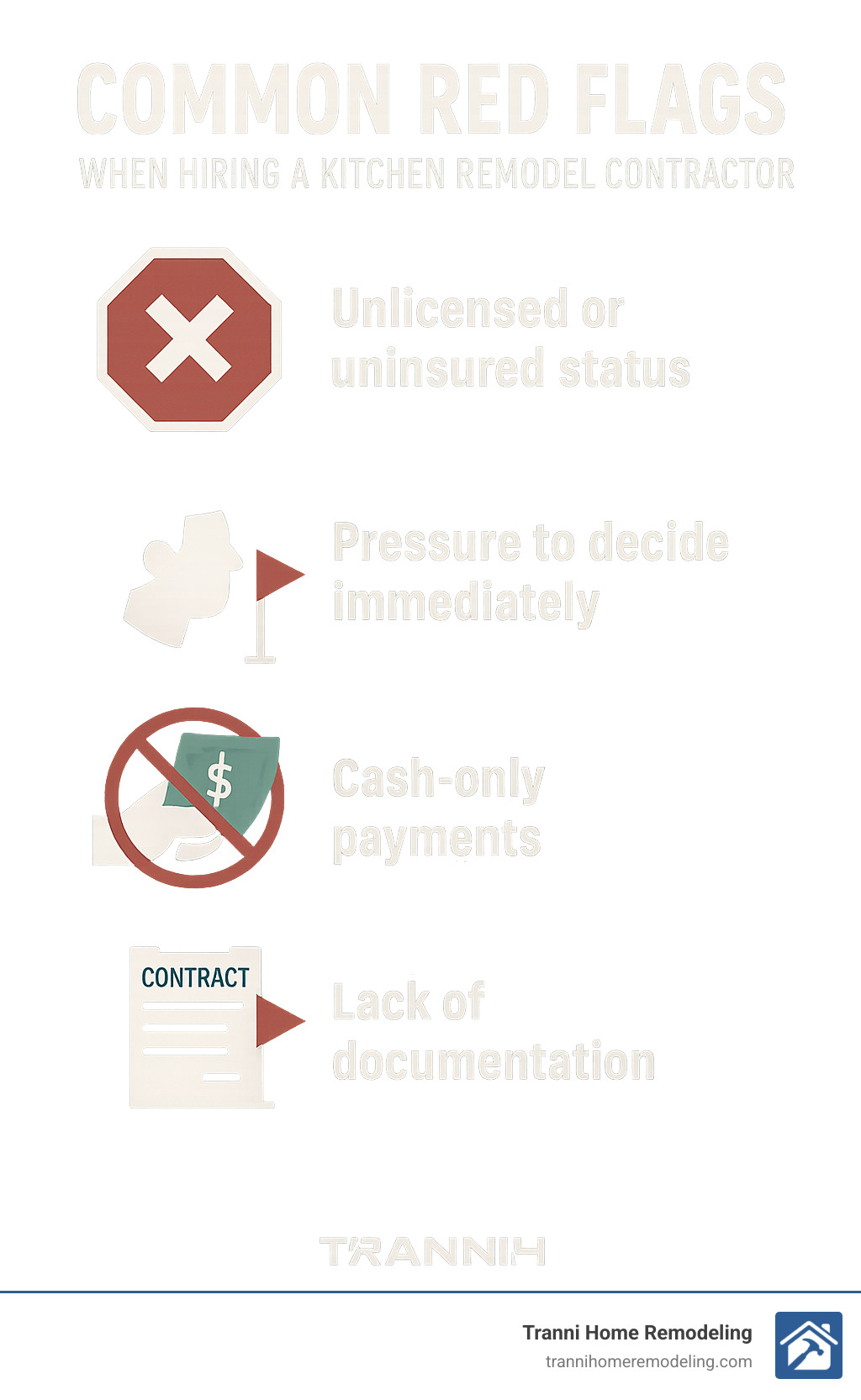
I’ve seen Middlesex County homeowners encounter all sorts of challenges when vetting contractors. One client in Billerica told me they almost hired someone who refused to provide insurance documentation—a huge red flag! Legitimate professionals like our team at Tranni Home Remodeling will always readily share license numbers and proof of insurance without hesitation.
Be wary of the “today only” special offer. A contractor who pressures you to sign immediately doesn’t respect your need to make an informed decision about such a significant investment. Your kitchen renovation deserves thoughtful consideration, not a rushed commitment.
Cash-only payment requests should immediately raise eyebrows. Not only does this often indicate potential tax evasion, but it also leaves you without a paper trail if something goes wrong. Proper contractors welcome checks, credit cards, or electronic transfers that create documentation of your transaction.
The absence of a written contract is practically asking for trouble. I remember a Chelmsford family who relied on a handshake agreement—only to find themselves with half-finished cabinets and a contractor who suddenly “remembered” different terms than they did. Always get everything in writing!
When a contractor seems reluctant to pull permits, they’re essentially saying they don’t want their work inspected. Permits aren’t just bureaucratic red tape—they ensure your renovation meets building codes and safety standards that protect your family and your investment.
That surprisingly low bid? Unfortunately, it usually leads to one of two outcomes: cut corners that compromise quality or a steady stream of “unexpected” charges that balloon your final cost. If a bid comes in significantly lower than others, ask specifically what’s excluded.
Established contractors maintain professional websites and manage their online reputation. A complete absence of reviews or online presence could indicate either a new business or one that doesn’t want to be easily tracked down.
Full payment upfront is never standard practice in our industry. Professional kitchen remodelers operate with progress payments tied to completed work. This protects you by ensuring you’re only paying for work that’s actually been finished to your satisfaction.
Vague timelines like “We’ll get to it when we can” or “It’ll take as long as it takes” indicate poor project management. Professional contractors provide detailed schedules with specific milestones because they understand how disruptive kitchen renovations can be to your daily life.
Limited references—or reluctance to provide them—suggests a contractor may not have many satisfied clients. Quality professionals have numerous happy homeowners willing to vouch for their work and are proud to share these success stories.
How to Hire a Contractor for Kitchen Remodel Without Regrets
The secret to how to hire a contractor for kitchen remodel success lies in the principle of “trust but verify.” Even with the most highly recommended professionals in Tewksbury or Wilmington, due diligence remains essential.
Take time to verify everything your potential contractor tells you. Call those references and ask specific questions about how problems were handled. “Were there any unexpected issues, and how did the contractor address them?” often reveals more than “Were you happy with the work?”
I encourage homeowners to visit current job sites when possible. This gives you a look at work quality, job site cleanliness, and how the contractor interacts with clients. A contractor who balks at this request may have something to hide.
Don’t just take a photocopy of an insurance certificate—contact the insurance provider directly to confirm the policy is current and adequate. I’ve seen cases where contractors showed outdated insurance documents, leaving homeowners completely exposed to liability.
Keep meticulous records throughout your project. Create a dedicated folder (physical or digital) for all project documents. Save every email, text message, and take dated photos as work progresses. This documentation creates accountability and provides evidence if disagreements arise later.
What to Do If Things Go Sideways
Despite careful planning and vetting, problems sometimes occur. When they do, addressing them promptly and appropriately can make all the difference.
Start with direct, calm communication. Rather than accusatory statements like “You’re doing this all wrong!” try “I notice this appears different from what we specified in the contract. Can we discuss this?” Reference specific contract language when discussing concerns.
Document everything with photos and detailed notes. If your contractor promised to fix something, send a follow-up email summarizing what was agreed upon. This creates a paper trail that can be invaluable if issues escalate.
If direct communication doesn’t resolve the problem, it’s time to escalate appropriately. Contact the contractor’s supervisor or company owner. At Tranni Home Remodeling, we take customer concerns seriously and want to know immediately if something isn’t meeting expectations.
Consider mediation if tensions continue to rise. Organizations like the Better Business Bureau offer mediation services that can help resolve disputes without costly litigation. These neutral third parties often help both sides find middle ground.
This is precisely why we recommend retaining that final 15% payment until project completion—it provides significant leverage to ensure satisfactory completion of all contracted work. Most contractors will work hard to address punch list items when that final payment is still pending.
As a last resort, you may need to file complaints with licensing boards, consumer protection agencies, or small claims court. Hopefully, by following the earlier steps in this guide, you’ll never reach this point!
Wrapping Up the Project: Final Walk-Through, Warranties & Maintenance
The final stretch of your kitchen remodel deserves just as much attention as the exciting beginning stages. After weeks of construction dust and decisions, you’re almost there—but don’t rush through these crucial final steps.
The walk-through is your moment of truth. Schedule this inspection when you can be fully present and focused—not while you’re rushing to another appointment. Walk through your beautiful new kitchen with your contractor, clipboard in hand, noting any items that still need attention. This “punch list” might include minor touch-ups like paint corrections, cabinet adjustments, or fixture issues. At Tranni Home Remodeling, we encourage our clients to test everything—turn on faucets, open and close all drawers, and check every appliance.
“The most successful final walk-throughs happen when homeowners take their time and aren’t afraid to point out even small concerns,” says Tyler Tranni. “We want you to be completely satisfied, not just mostly happy.”
Make sure all required inspections have been completed and permits are officially closed out. This documentation is invaluable if you ever sell your home, as open permits can cause serious headaches during real estate transactions.
Your contractor should provide a folder containing all the important paperwork for your new kitchen, including:
– Appliance warranties and registration cards
– Care instructions for countertops, cabinets, and specialty fixtures
– Maintenance schedules for any specialized equipment
– Paint colors and material specifications (for future touch-ups)
– Contact information for subcontractors who worked on your project
Lien releases are absolutely essential before making your final payment. These documents confirm that all subcontractors and suppliers have been paid in full, protecting you from potential claims against your property. A reputable contractor like Tranni Home Remodeling will provide these without being asked, but always verify you have them before writing that final check.
Only after everything on your punch list has been properly addressed and all documentation is in your hands should you release the final payment. This isn’t about being difficult—it’s about ensuring the contract has been fulfilled completely.
Don’t forget to register your new appliances and products to activate their warranties. Many manufacturers now offer online registration, making this process quick and simple. Taking a few minutes now can save significant headaches if warranty service is needed later.

Finally, if you’re pleased with your renovation experience, consider leaving an honest review online. Your feedback helps other Middlesex County homeowners make informed decisions when looking for a trusted kitchen remodeling partner. Share specific details about what went well and how problems were handled—these authentic insights are invaluable to others starting on their own how to hire a contractor for kitchen remodel journey.
At Tranni Home Remodeling, our relationship with clients doesn’t end at final payment. We stand behind our work with solid warranties and remain available to answer questions about maintaining your beautiful new kitchen for years to come.
What to Tell Your Contractor When Remodelling Your Kitchen
Frequently Asked Questions about Hiring a Kitchen Remodel Contractor
How long does a typical kitchen remodel take?
I’m often asked this question during initial consultations, and the honest answer is: it depends. Most kitchen remodels take between six weeks and four months to complete, with the timeline varying based on several key factors.
Your kitchen’s size plays a significant role—a cozy 10×10 space typically moves faster than a sprawling open-concept design. Structural changes like removing walls or relocating plumbing add considerable time. And those gorgeous custom cabinets you’ve been eyeing? They might have a 6-8 week lead time before they even arrive at your home.
The permit process in Middlesex County municipalities can also affect your timeline. Some towns move applications through quickly, while others might take a few weeks for approval.
One thing I always prepare my clients for is the “demo day surprise”—those unexpected issues that only become visible once we open up walls. Water damage, outdated wiring, or non-compliant plumbing can add days or weeks to your project.
At Tranni Home Remodeling, we build realistic timelines with some cushion for these surprises, keeping you informed every step of the way. Our clients appreciate knowing what to expect, even when the unexpected happens!
What payment schedule protects homeowners best?
When it comes to payments, the right structure creates a win-win for both homeowners and contractors. The payment schedule I recommend to all my clients follows this structure:
10% deposit when you sign the contract—this secures your spot on our schedule and helps cover initial material orders.
Three payments of 25% tied to specific milestones, not calendar dates. These typically align with completion of demolition, rough-in work (plumbing, electrical, etc.), and cabinet installation. This approach ensures you’re paying for completed work, not promises.
15% final payment held until you’re completely satisfied with the finished project. This final retention gives you leverage to ensure every item on your punch list gets addressed.
I strongly caution against any contractor requesting more than 30% upfront—this is often a red flag. Your payment schedule should reflect progress on your project, not a contractor’s cash flow needs. By maintaining this balance, both parties stay motivated to keep the project moving forward smoothly.
Who pulls permits—the homeowner or the contractor?
Let me be crystal clear on this one: your contractor should handle all permitting. When we pull permits as contractors, we’re taking legal responsibility for ensuring all work meets building codes and passes inspection. It’s not just a convenience for you—it’s a critical protection.
If a homeowner pulls permits themselves, they become the legally responsible party for code compliance. This shifts liability from the professional to you, which is never in your best interest.
Be extremely wary of any contractor suggesting you obtain permits yourself. This is often a sign they may be unlicensed, uninsured, or trying to avoid accountability for their work. It could also indicate they’ve had problems with the building department in the past.
At Tranni Home Remodeling, we handle all permitting as part of our comprehensive service. We have established relationships with building departments throughout Middlesex County and understand the specific requirements of each town. This expertise helps your project move through the approval process smoothly, avoiding unnecessary delays and ensuring everything is done by the book.
Proper permits aren’t just bureaucratic hoops—they’re essential safeguards that protect your investment and ensure your beautiful new kitchen is safe for your family for years to come.
Conclusion
Knowing how to hire a contractor for kitchen remodel projects truly sets the foundation for renovation success. The seven-step roadmap we’ve shared isn’t just a checklist—it’s your pathway to a stress-free change of your home’s most important space.
At Tranni Home Remodeling, we see your kitchen as more than walls, cabinets, and countertops. It’s where morning coffees lead to heart-to-heart conversations, where holiday meals bring families together, and where everyday moments become cherished memories. We’ve spent over a decade serving our neighbors throughout Middlesex County—from Billerica to Burlington to Chelmsford and beyond—bringing kitchens to life with craftsmanship that stands the test of time.
When you partner with us, our relationship doesn’t end when we pack up our tools. We believe in building connections as lasting as our renovations, providing support long after the final inspection and standing firmly behind our work with robust warranties that protect your investment.
Your dream kitchen is waiting just beneath the surface of your current space. We’d love to help reveal it through thoughtful design, skilled craftsmanship, and attention to the details that matter most to you. Our team guides you from that first excited conversation about possibilities all the way through to the moment we hand you the keys to your stunning new kitchen.
More info about our full Kitchen Remodeling service
The contractor you choose doesn’t just renovate a room—they improve your daily living experience for years to come. Make this choice with care, and you’ll find yourself enjoying a kitchen that not only meets your needs but exceeds your expectations in both beauty and function.
Ready to start your kitchen journey? We’re just a phone call away, eager to transform your vision into the heart of your home that you’ve always imagined.
