





HVAC Technician 101: Essential Guide
Understanding the Essential Role of HVAC Technicians
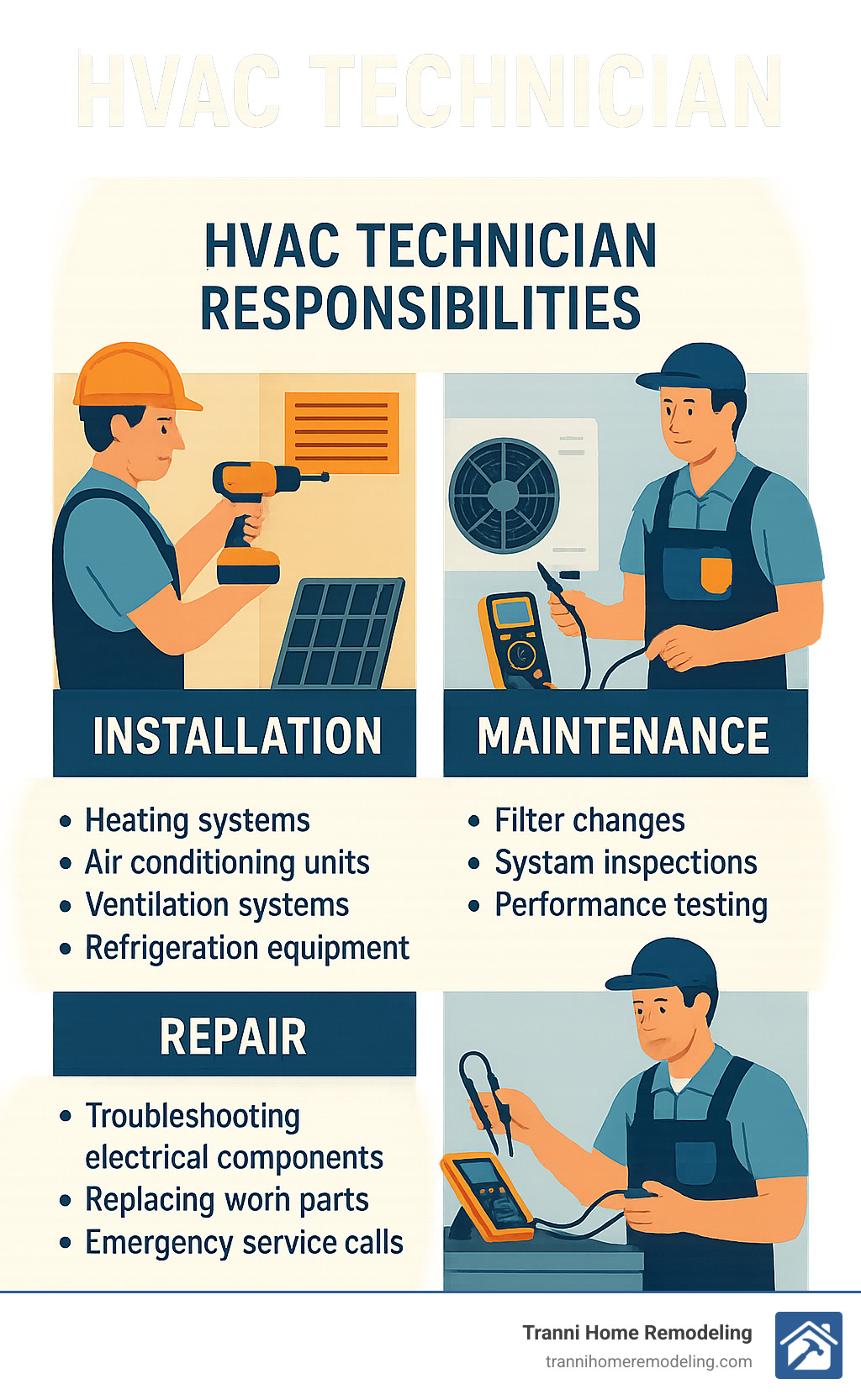
An hvac technician is a skilled professional who installs, maintains, and repairs heating, ventilation, air conditioning, and refrigeration (HVACR) systems. These specialists ensure indoor comfort by:
- Installing new HVAC systems and components
- Diagnosing system malfunctions using specialized tools
- Repairing or replacing faulty parts and equipment
- Performing routine maintenance and tune-ups
- Handling refrigerants safely according to EPA regulations
- Explaining technical issues to customers in simple terms
When your home’s heating fails on a cold winter morning or your AC breaks during a summer heatwave, an hvac technician comes to the rescue. These professionals work in various settings, from cramped attics to commercial rooftops, often in extreme temperatures to keep our indoor environments comfortable.
The demand for skilled HVAC professionals continues to grow, with the U.S. Bureau of Labor Statistics projecting 40,100 job openings annually through 2034. This growth is driven by new construction, the need to replace aging systems, and a focus on energy efficiency.
As Tyler Tranni, owner of Tranni Home Remodeling, I’ve worked with many talented hvac technicians during home renovations. Their expertise is crucial for integrating new HVAC systems into kitchen and bathroom remodels, ensuring proper ventilation and climate control.
Key terms for hvac technician:
What Does an HVAC Technician Do? A Day in the Life
Ever wonder what it’s like to be an hvac technician? It’s nothing like a desk job. Days start early, often before sunrise, tackling new challenges. Some mornings begin at the shop loading the van, while others start directly at a customer’s home for an emergency repair.
The variety keeps things interesting. One hour you might be in a cramped crawl space diagnosing a furnace, and the next on a commercial rooftop installing a new AC system. No two days are alike, which is one of the best parts of the job.
An hvac technician serves diverse customers and locations. We might repair a refrigerant leak at a restaurant in Woburn, install a heating system for a family in Winchester, or perform maintenance at an apartment complex in Wilmington. Our work takes us to homes, offices, retail stores, and manufacturing facilities.
The work environment is varied. We work comfortably indoors but just as often battle the elements outdoors or steer tight spaces like attics and basements. It’s a hands-on profession that keeps you moving. To see a typical day, check out this video: A day in the life of an HVAC technician.

Key Responsibilities and Duties
Being an hvac technician means wearing many hats. Installation work is a big part of the job, from traditional central air to modern Ductless Heating and Cooling Systems. This involves connecting ductwork, wiring electrical components, and ensuring everything meets local building codes.
Routine maintenance is crucial for keeping systems running smoothly. We clean units, replace filters, lubricate parts, and test performance to prevent expensive breakdowns. It’s like an annual checkup for your home’s climate system.
When systems break down, our troubleshooting skills shine. We use diagnostic tools to identify electrical, mechanical, and component issues. It’s like being a detective, following clues to solve why a system isn’t working.
Customer communication is more important than many realize. We explain complex technical issues in simple terms. Discussing repairs or recommending maintenance plans builds essential customer trust.
The Critical Role of Safety in the HVAC Profession
Safety is critical for every hvac technician. We deal with electricity, pressurized refrigerants, and heavy equipment daily, so following safety protocols is a matter of life and death.
Electrical safety requires constant vigilance. We follow lockout/tagout procedures, use insulated tools, and ensure proper grounding to prevent shocks. Even experienced technicians are never complacent around electricity.
Personal protective equipment varies by job. Safety glasses protect our eyes, while heavy-duty gloves shield our hands. In confined spaces or with certain chemicals, respirators and masks are essential.
Working in confined spaces like attics, crawl spaces, and utility rooms presents unique challenges. We’re trained to work safely in these areas, maintaining proper ventilation and team communication.
Most critically, proper refrigerant handling requires special knowledge and certification. These chemicals can be harmful if mishandled. Every hvac technician must be certified per EPA refrigerant handling requirements to handle refrigerants safely and legally.
The Path to Becoming a Skilled HVAC Technician
Thinking about becoming an hvac technician? It’s a rewarding career that combines problem-solving, hands-on work, and the satisfaction of keeping people comfortable. The journey requires dedication, education, training, and certifications. The HVAC field offers multiple pathways, whether you’re a recent high school graduate, a career changer, or someone who loves working with their hands.
Essential Skills and Qualifications for an HVAC technician
To succeed as an hvac technician, you’ll need a few key qualities. Solid mechanical aptitude is a must—understanding how things work and being comfortable with tools. Problem-solving skills are also crucial, as you’ll diagnose everything from cooling issues to strange noises in a heating unit.
Don’t underestimate customer service and communication skills. You’ll need to explain complex issues to homeowners clearly and patiently. The work is also physically demanding, requiring you to lift heavy equipment, crawl into tight spaces, and have good stamina. Finally, a solid understanding of electrical knowledge is essential for modern, sophisticated HVAC systems.
Education and Training Pathways
Becoming an hvac technician doesn’t require a four-year degree. A high school diploma or GED is the starting point. From there, you have several options:
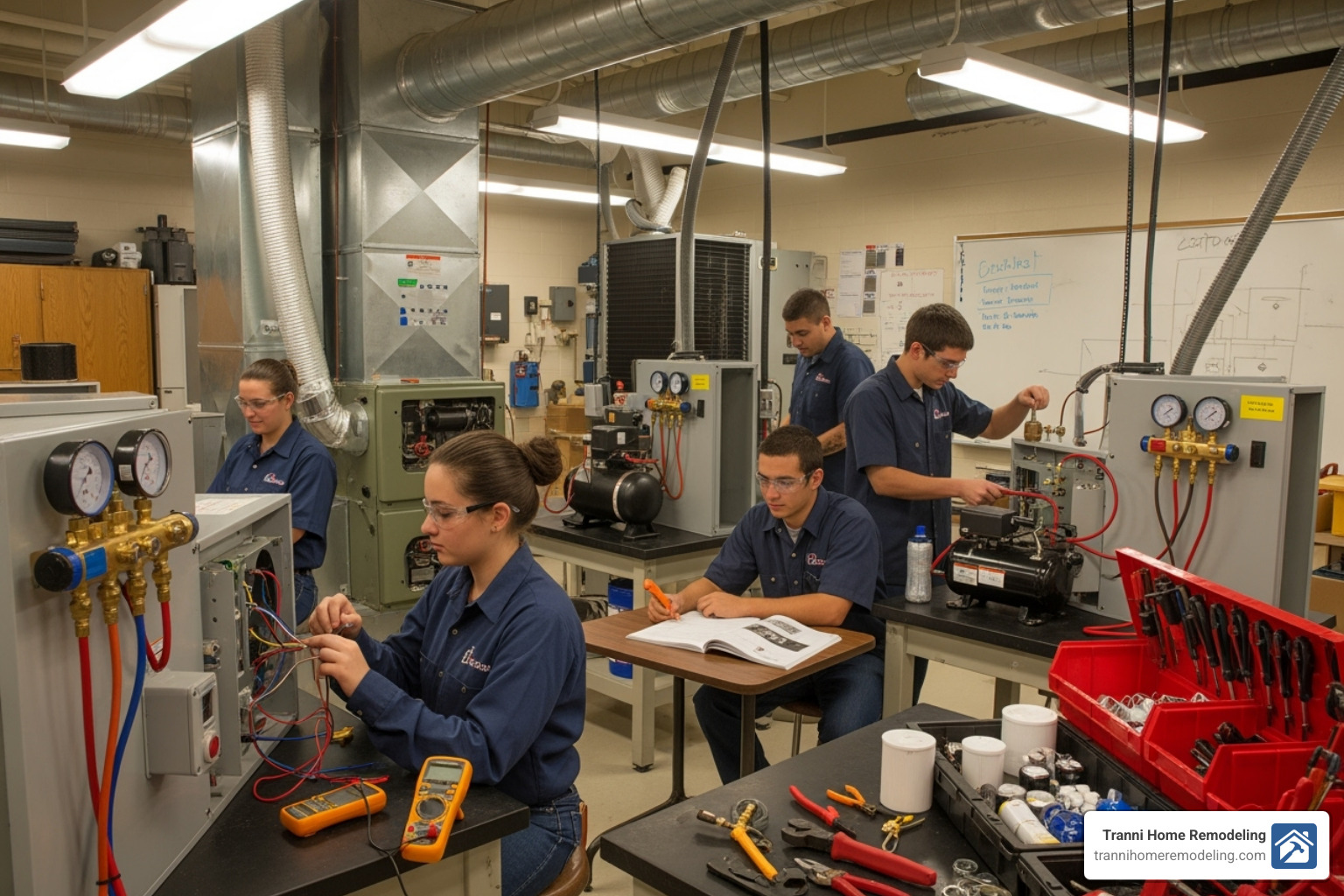
- Vocational and technical schools offer focused HVAC/R training programs that last from six months to two years, combining classroom learning with hands-on lab work.
- Community colleges offer two-year associate degree programs for a more comprehensive education, diving deeper into HVAC theory.
- Apprenticeships offer the best of both worlds. These programs, detailed at Apprenticeship program information, last three to five years. You earn money while learning from experienced technicians on real jobs, from maintenance in Winchester to installations in Woburn. Many employers prefer candidates with apprenticeship experience.
Must-Have Licenses and Certifications
To work legally and professionally, you’ll need certain licenses and certifications.
The EPA Section 608 Certification is non-negotiable. This federal requirement ensures you handle refrigerants safely. Most technicians get the Universal certification, which covers all system types.
State and local licensing requirements vary. Regulations differ between Massachusetts towns like Billerica and Wilmington, so check local rules. The State licensing board requirements website is a great resource.
Voluntary certifications like NATE (North American Technician Excellence) and HVAC Excellence are highly valued. They demonstrate your competency, help you stand out in the job market, and can lead to higher pay. Each certification builds your professional credibility and earns trust from customers and employers.
Career Outlook: Job Growth and Earning Potential
The future looks incredibly bright if you’re considering becoming an hvac technician! This isn’t just another trade—it’s a career path with exceptional stability and growth potential.
Job Demand and Industry Growth
The U.S. Bureau of Labor Statistics projects that hvac technician employment will grow 8% from 2024 to 2034, much faster than most careers. This translates to an impressive projected 40,100 job openings annually over the next decade.
What’s driving this demand? New construction is booming in areas like Billerica, Winchester, and Wilmington, and every new building needs a quality HVAC system. There’s also the replacement factor, as thousands of older systems across Massachusetts need upgrading.
Technology is also creating more opportunities. Modern Heating and Air Conditioning systems are incredibly sophisticated, with smart thermostats and advanced diagnostics that make skilled technicians more valuable than ever.
The push toward energy efficiency is another major growth driver, creating steady demand for technicians who understand the latest high-efficiency equipment and green technologies.
What is the Earning Potential for an HVAC Technician?
Let’s talk money. The earning potential for an hvac technician is impressive and grows substantially with experience and specialized skills.
According to May 2024 data, the median annual wage for HVAC mechanics and installers was $59,810 nationally. However, the lowest 10% earned less than $39,130, while the highest 10% earned more than $91,020. This wide range shows a real opportunity for growth.
Important note: These figures represent national averages based on internet data and are not actual costs or salaries for Tranni Home Remodeling. Your earning potential will vary based on your location, specific employer, experience level, and certifications.
The experience factor makes a huge difference. While new technicians might start around $40,000-$48,000, those with several years of experience often earn $70,000-$85,000. Top-tier technicians with specialized certifications can command salaries well over $100,000, with some earning $120,000 or more annually.
Here’s how earnings typically progress with experience, based on broad national averages:
| Experience Level | Average Annual Salary Range (National Average) |
|---|---|
| Entry-Level | $40,000 – $60,000 |
| Mid-Career (3-7 yrs) | $55,000 – $85,000 |
| Senior/Specialist (7+ yrs) | $75,000 – $120,000+ |
This career path is attractive for its job security. People always need heating and cooling, regardless of the economy. Plus, many hvac technicians eventually start their own businesses, creating even greater earning potential.
The HVAC Career: Pros, Cons, and Future Trends
Every career has pros and cons, and being an hvac technician is no different. Having worked with many technicians on home remodeling projects, I’ve seen the rewards and demands of this profession. Here’s the complete picture to help you make an informed decision.
Weighing the Pros and Cons
When considering this career, it’s important to understand both sides. The profession offers high job security because people always need heating and cooling. With tens of thousands of job openings projected annually, it’s a recession-proof career.
The good earning potential is a major advantage, with experienced technicians earning six figures. The hands-on work is deeply satisfying as you solve real problems. Each call brings problem-solving satisfaction, and the variety keeps things interesting, from a new system installation in a Wilmington home to troubleshooting a commercial unit in Woburn.
However, there are challenges. The work is physically demanding, involving heavy lifting and tight spaces. Expect irregular hours during peak seasons, with emergency calls on nights, weekends, or holidays. You’ll also be working in extreme temperatures, like sweltering attics or freezing basements, often when the climate system is broken.
The Future of HVAC: Technology and Green Initiatives
The HVAC industry is evolving rapidly. Smart home integration is becoming standard, so technicians must understand how systems connect to smartphones and automation networks. Homeowners in Woburn and Winchester increasingly expect seamless smart home integration.
Advanced diagnostic tools like digital gauges and infrared cameras are making diagnostics more precise. AI tools may soon help technicians make faster, more informed decisions.
The push toward energy-efficient systems is creating new opportunities. Technologies like Ductless Heat Pump Systems are gaining popularity for reducing energy consumption. This aligns with green building standards and the desire to lower utility bills.
Environmental regulations are also driving change with new refrigerants, which means ongoing training is essential to stay current.
Career Advancement and Specialization
Starting as an hvac technician isn’t a dead end. The career ladder offers growth to senior technician, mentoring newcomers and handling complex calls. From there, you can become a field supervisor, managing teams and ensuring quality control.
Project manager roles are for those who enjoy the big picture, overseeing large installations. I’ve worked with many who started as technicians and now coordinate complex projects in the Billerica area.
Many experienced technicians pursue business ownership, starting their own HVAC companies. With the right skills and knowledge, entrepreneurship is a natural progression.
Specialization opens doors to higher earning potential. You might focus on commercial systems, industrial refrigeration, or cutting-edge technologies like Mini Split AC Heat Pump systems.
Frequently Asked Questions about HVAC Technicians
People considering an hvac technician career have questions. As a home remodeler in Billerica for over a decade, I’ve had many conversations about this field. Here are answers to the most common questions.
How long does it take to become an HVAC technician?
The timeline to become a qualified hvac technician depends on your chosen path. There’s no single correct route, which is a great aspect of this profession.
- Certificate programs can get you ready for entry-level work in six to twelve months. They teach fundamentals and prepare you for essential certifications like EPA Section 608.
- Associate’s degree programs take about two years and provide a more comprehensive foundation, covering advanced technical aspects, troubleshooting, and business fundamentals.
- Apprenticeships take three to five years but let you earn while you learn. Working with experienced pros provides real-world experience that employers prefer.
Learning never stops in this field due to advancing technology and changing regulations.
Is HVAC a good career for someone in the Billerica, MA area?
Absolutely yes! Living and working in Billerica and surrounding towns like Woburn, Winchester, and Wilmington, I see high demand for skilled hvac technicians.
Our New England climate creates steady HVAC work. We have brutal winters and sweltering summers, meaning we rely heavily on both heating and cooling systems year-round.
The area has steady new construction, and thousands of existing homes need maintenance and system replacements. Many older homes in our neighborhoods will need upgrades to more efficient models. Skilled trades are highly respected here, making it a stable career with excellent earning potential.
Do I need to be good at math to be an HVAC technician?
You don’t need to be a math genius to succeed as an hvac technician. The math is practical and straightforward, not complex theory.
Daily calculations involve basic arithmetic and simple algebra for things like heating/cooling loads, airflow requirements, and electrical measurements. We also use temperature and pressure conversions for refrigerants.
This math has immediate, real-world applications. When calculating BTU requirements for a new furnace, the numbers have clear meaning and directly impact a family’s comfort.
Many successful technicians were initially nervous about the math, but it clicked into place with hands-on application. The calculations become second nature with practice.
Conclusion
The role of an hvac technician is more than a career choice; it’s a way to become essential to your community’s comfort and well-being. Whether you’re drawn to the problem-solving, job security, or satisfaction of restoring comfort, this profession is meaningful.
We’ve explored how hvac technicians are the unsung heroes of home comfort. From diagnosing failures to installing efficient Mini Split AC Units, they combine technical skill with customer care. The career offers stability, with over 40,000 annual job openings, and competitive earning potential that grows with experience.
The path to becoming an hvac technician is accessible via certificate programs, associate degrees, or apprenticeships. Each route leads to a rewarding career where your skills are in demand and your work makes a real difference.
As Tyler Tranni, I’ve worked with many talented hvac technicians on our remodeling projects in Billerica and surrounding towns like Woburn, Winchester, and Wilmington. Their expertise is invaluable when integrating new HVAC systems into renovations. At Tranni Home Remodeling, we know exceptional craftsmanship includes a home’s heating and cooling systems.
If you’re considering upgrading to a new, energy-efficient system for your home, we invite you to explore our HVAC Installation Services or contact us for a consultation. We’re committed to helping you create the perfect indoor environment for your family’s comfort and well-being.
