





Heating and Air Conditioning 2025: Smart Comfort
Why Understanding Your Home’s Comfort System Matters
Heating and air conditioning systems are essential for year-round comfort, but many homeowners don’t know how they work. Understanding your HVAC system is key to tackling uneven temperatures, high energy bills, or planning an upgrade. This knowledge can save you money and prevent future headaches.
Quick Overview: Heating and Air Conditioning Essentials
- What it is: HVAC (Heating, Ventilation, and Air Conditioning) systems control your home’s temperature, humidity, and air quality.
- Main components: Furnace or heat pump, air conditioner, ductwork, thermostat, and air handler.
- Average lifespan: 15-20 years with proper maintenance.
- Key efficiency ratings: SEER (cooling), AFUE (heating), HSPF (heat pumps).
- Maintenance frequency: Change filters every 1-3 months; schedule professional tune-ups annually.
For homeowners, the most critical fact is that heating and cooling account for nearly half of a home’s energy consumption. Making smart choices about your system directly impacts your comfort and budget. Regular maintenance alone can improve efficiency by up to 15% and extend your system’s life by years. Understanding these basics helps you make informed decisions about repairs, upgrades, and energy savings.
As Tyler Tranni, owner of Tranni Home Remodeling, I’ve helped many homeowners in Billerica and surrounding areas integrate heating and air conditioning systems during major renovations. The best time to upgrade your HVAC system is often during a remodel when walls are open and access is easier, ensuring seamless comfort and maximum efficiency.
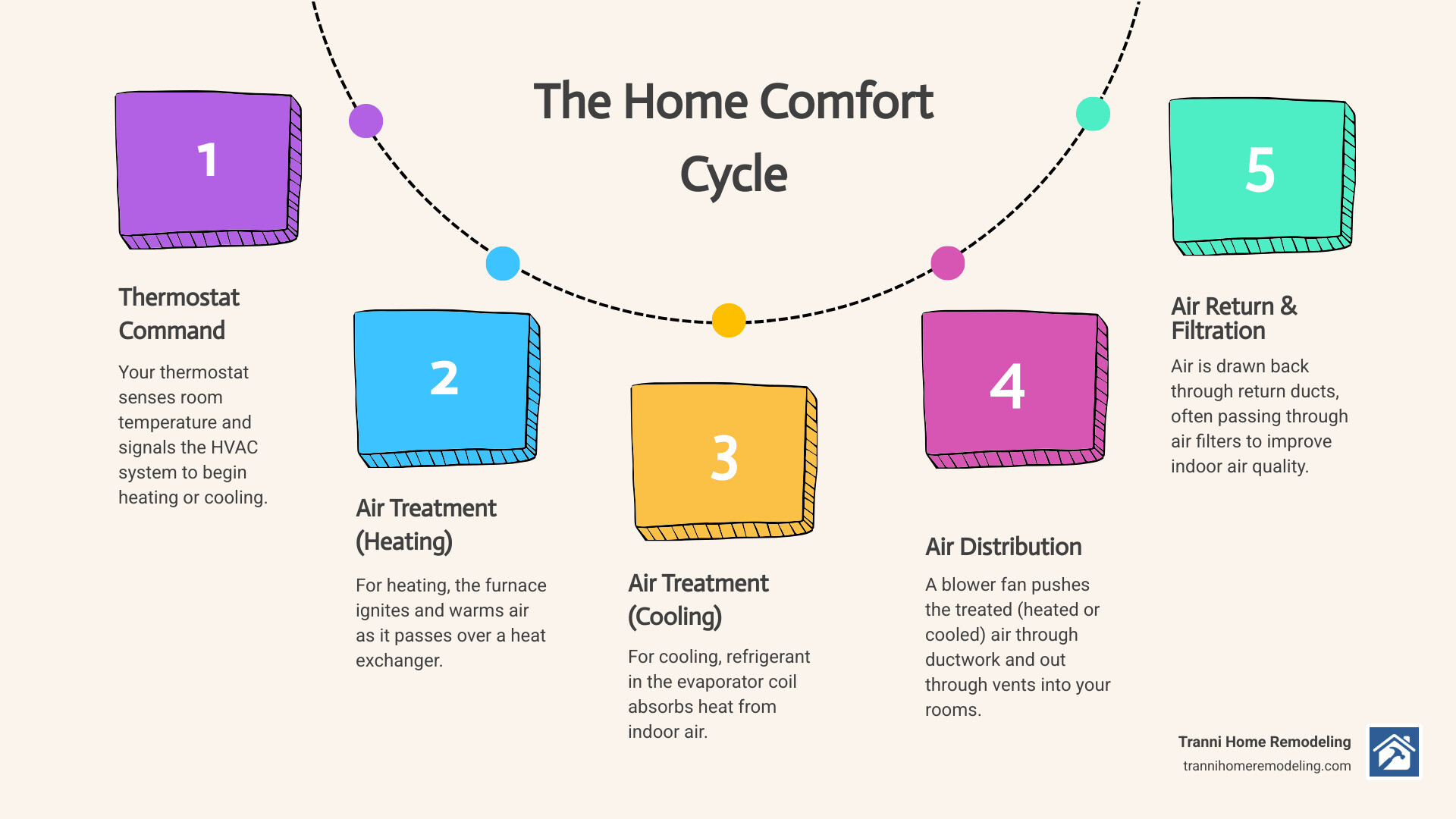
Essential heating and air conditioning terms:
How Your HVAC System Works: The Core Components
Your heating and air conditioning system is like your home’s circulatory system, moving air to keep every room comfortable. Understanding the basics of how it works can help you spot problems early and make smarter decisions about maintenance and upgrades.
The Heating Process
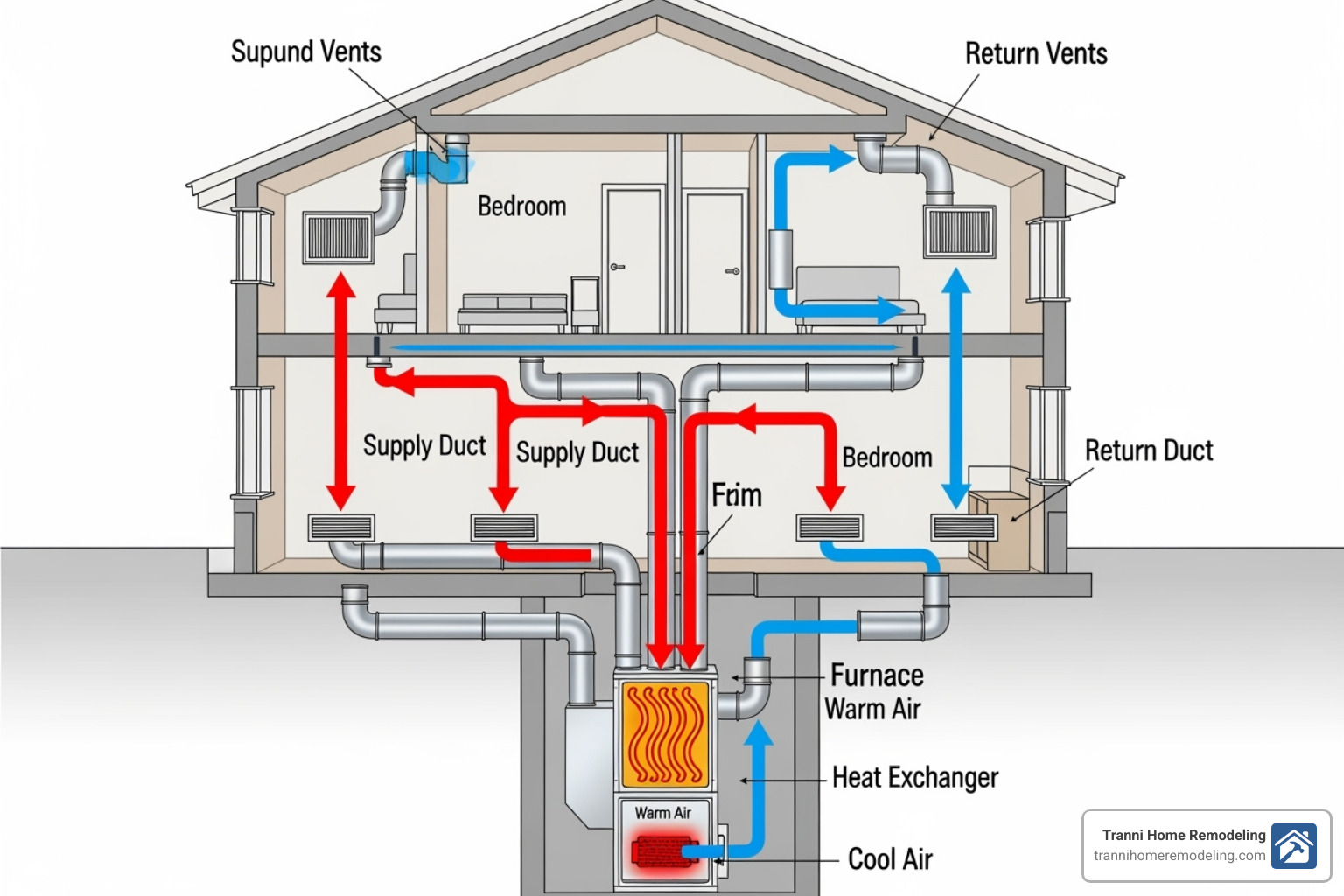
During a Massachusetts winter, your heating system follows a precise sequence. The thermostat detects a drop in temperature and signals the furnace to turn on. Inside the furnace, a burner ignites, heating a component called the heat exchanger. The blower fan then pushes cool return air from your home across the hot heat exchanger. This newly warmed air is distributed through your ductwork to heat your home, while combustion gases are kept safely separate.
The Cooling Process
Instead of creating heat, your air conditioner removes it from your home using a special substance called refrigerant. The process starts at the indoor evaporator coil, where cold liquid refrigerant absorbs heat from your home’s air, turning into a gas. This gas travels to the outdoor unit, where the compressor pressurizes it, making it even hotter. It then moves to the condenser coil, where it releases the captured heat to the outside air. The refrigerant turns back into a cool liquid and cycles back indoors to repeat the process. This continuous heat transfer keeps your home cool. If you’re considering alternatives for specific areas, look into ductless AC unit installation.
The Ventilation System
Ventilation is the unsung hero of your HVAC system, ensuring fresh, clean air. The air handler and its blower circulate air through ductwork to every room via vents and registers. As air moves, it passes through air filters that trap dust, pollen, and other particles. This continuous circulation is vital for maintaining consistent temperatures and good indoor air quality. Without proper ventilation, even the best heating and cooling equipment can’t create a truly comfortable environment. For a complete overview, visit our page on heating, ventilation, and air conditioning.
Choosing the Right Heating and Air Conditioning System
Selecting a new HVAC system is a major investment in your home’s comfort. For homeowners in areas like Woburn, MA and Winchester, MA, choosing the right heating and air conditioning system is crucial for handling our varied seasons. Getting it right means years of reliable comfort and lower energy bills.
Types of Residential HVAC Systems
Modern heating and air conditioning offers more choices than ever. Understanding the main types helps you find the best fit for your home.
- Central Air & Furnace: The most common setup, using a central AC and furnace with shared ductwork for whole-home comfort.
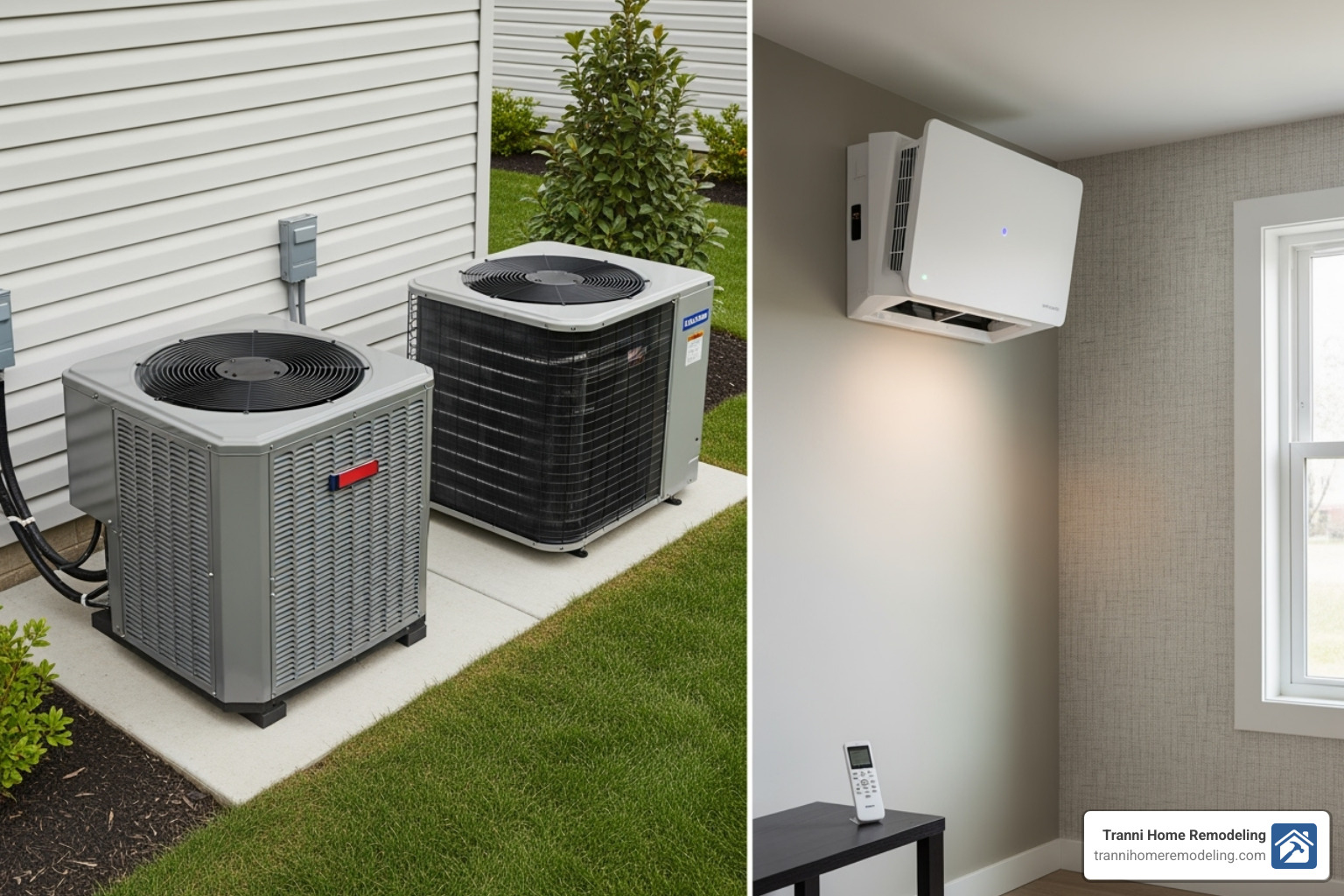
- Heat Pumps: These all-in-one systems heat and cool by moving heat. They are highly efficient, often delivering 3-4 units of heat for every unit of electricity used. Learn more about Mini Split Heat Pump technology.
- Ductless Mini-Splits: Ideal for homes without ductwork or for zoning specific areas. They consist of an outdoor unit and one or more indoor heads, offering high efficiency and room-by-room control. Explore Ductless Heating and Cooling Systems.
- Geothermal Systems: Use the earth’s stable underground temperature for highly efficient heating and cooling, offering significant long-term savings.
- Packaged Units: Combine all components into a single outdoor unit, perfect for homes with limited indoor space.
Key Factors for Selecting Your System
Finding the right system means matching it to your home and needs. Here are the most important factors:
- System Sizing: Measured in tons (cooling) and BTUs (heating), proper sizing is critical. An oversized system wastes energy, while an undersized one struggles to keep up. A professional calculation is essential.
- Efficiency Ratings: Look for SEER (cooling), HSPF (heat pump heating), and AFUE (furnace heating). Higher numbers mean lower utility bills.
- Home Age & Insulation: Older, less-insulated homes may need more heating and cooling capacity. We specialize in HVAC Installation for Older Homes.
- Local Climate: Massachusetts’ climate demands a system that can handle both humid summers and frigid winters.
- Budget: Consider both the upfront cost and long-term energy savings. A more efficient system can pay for itself over its lifespan.
Understanding Installation Costs
Understanding installation costs helps you budget effectively. Please note: the prices mentioned here are average costs based on internet data and not actual costs for Tranni Home Remodeling. We provide detailed, transparent quotes for every project.
The average cost for a new central AC installation can range from $3,500 to $7,000, but complex installations with high-efficiency units and new ductwork can cost $15,000 to $25,000 or more. The final price depends on the system type, size, efficiency, and labor complexity.
Don’t forget rebates and incentives. Government and utility programs can offer significant savings on high-efficiency systems. It’s worth checking for local rebates that can help offset the cost. At Tranni Home Remodeling, we provide Affordable HVAC Installation Services that balance quality and value.
Maintenance, Repairs, and Indoor Air Quality
Your heating and air conditioning system needs consistent care to run smoothly, just like a car. Routine maintenance is far more affordable than emergency repairs.
The Importance of Regular HVAC Maintenance
A well-maintained HVAC system can improve efficiency by up to 15%, saving you money, especially in places like Lexington, MA. Regular tune-ups also extend its lifespan by 5-10 years, improve performance for consistent comfort, and prevent costly breakdowns by catching small issues early. A professional maintenance visit typically includes cleaning coils, checking refrigerant, lubricating parts, inspecting electrical connections and ductwork, and clearing drains.
Common Heating and Air Conditioning Problems & Diagnosis
Even with good maintenance, problems can arise. Watch for these warning signs:
- Uneven Temperatures: Often indicates ductwork problems, airflow blockages, or an improperly sized system.
- Strange Noises: Banging, squealing, or grinding sounds point to mechanical problems like loose parts or failing motors that need immediate attention.
- Poor Airflow: Usually caused by a clogged filter, blocked ducts, or a blower fan issue.
- Leaks: Water pooling around your indoor unit could be a clogged drain or a refrigerant leak, which requires a professional.
- Thermostat Issues: If the temperature on the thermostat doesn’t match the room, the unit may be faulty.
While changing filters is a simple DIY task, most other heating and air conditioning repairs require a qualified professional for a safe and correct fix.
Enhancing Your Home’s Air Quality
Your HVAC system is key to your home’s air quality. Consider these upgrades for a healthier indoor environment:
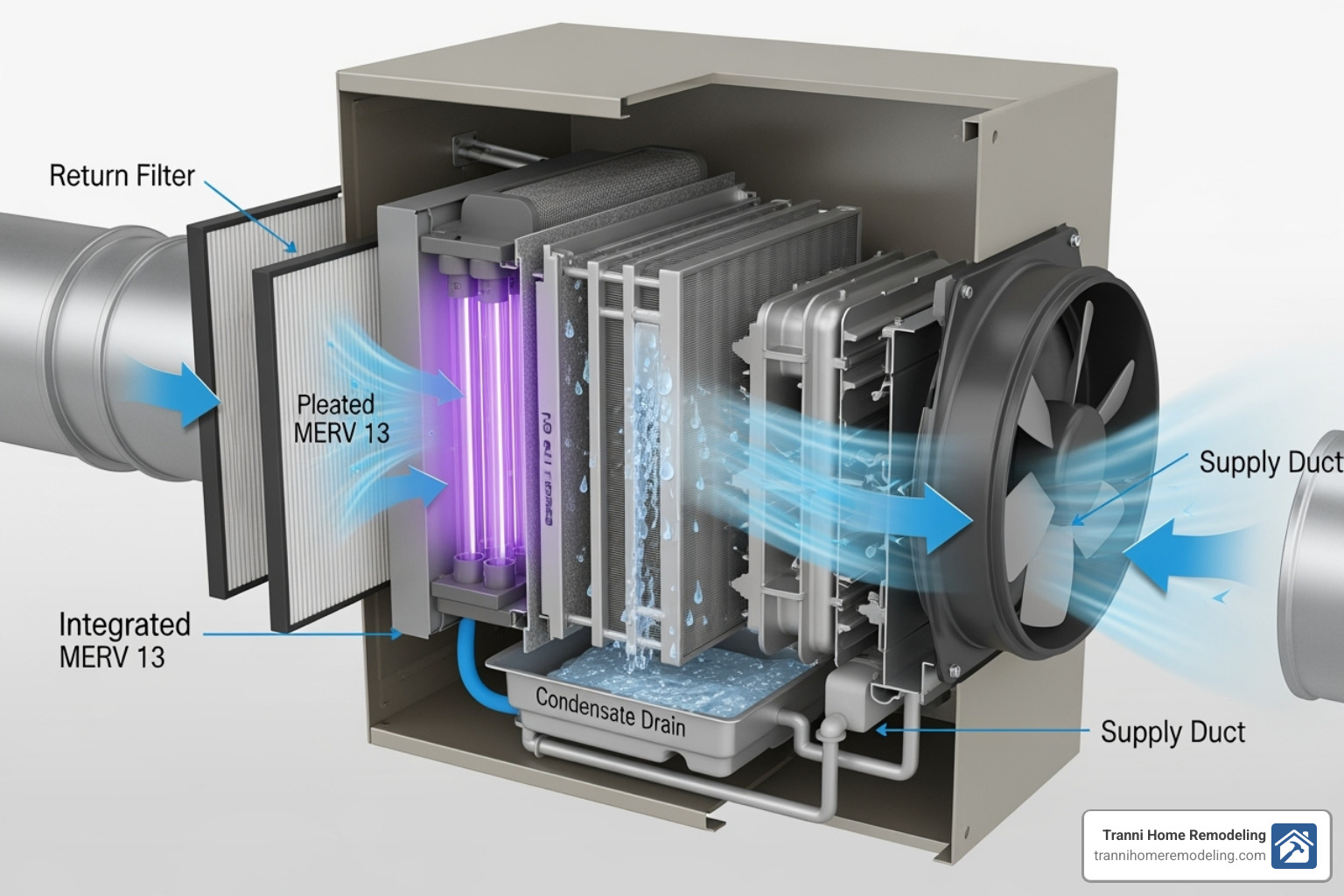
- High-Efficiency Filters: Pleated filters with a high MERV rating capture more dust, pollen, and dander.
- Humidifiers & Dehumidifiers: These maintain optimal indoor humidity (30-50%), preventing issues from dry air or excess moisture.
- UV Light Purifiers: Installed in your ductwork, these units kill bacteria, viruses, and mold spores as air circulates.
- Whole-Home Air Purifiers: These integrate with your HVAC system to remove microscopic particles and VOCs from the air.
The Future of Home Comfort: Efficiency and Innovation
The heating and air conditioning industry is changing fast, offering homeowners more comfort, lower bills, and a smaller environmental footprint. Whether you’re planning a renovation in Andover, MA, or considering an upgrade in North Reading, these innovations are redefining home comfort.
Energy Efficiency and Smart Thermostats
Since heating and air conditioning can account for nearly half of your home’s energy use, efficiency is key. Upgrading to a high-SEER air conditioner or high-AFUE furnace can cut energy costs by up to 20%, saving you money and reducing your carbon footprint.
Smart thermostats are another game-changer. Their benefits include:
- Remote Access: Control your home’s climate from anywhere with your smartphone.
- Learning Algorithms: These devices learn your habits and adjust temperatures automatically to save energy without sacrificing comfort.
- Energy Reports: Get detailed insights into your energy consumption to identify more ways to save.
Many smart systems are recognized for their innovation, setting new standards in the industry. To see how these technologies fit into a renovation, explore our Heating and Cooling services.
Innovations in the HVAC Industry
The industry is focused on making systems smarter and more efficient.
- Variable-Speed Technology: Unlike single-speed systems that are either on or off, variable-speed units adjust their output to precisely meet your home’s needs. This results in more consistent temperatures, better humidity control, and quieter operation.
- New Refrigerants: The industry is shifting to more environmentally friendly refrigerants like R-32, which has a much lower global warming potential.
- Smart Home Integration: Modern HVAC systems can connect with other smart devices, allowing for unified control through a single app or voice commands.
- Geothermal Heat Pumps: These ultra-efficient systems use the earth’s stable temperature for heating and cooling, offering massive long-term energy savings.
- Ductless Systems: A Ductless Air Conditioner with Heater provides flexible, efficient heating and cooling for homes without ductwork or for specific zones.
These innovations create a home environment that is more comfortable, efficient, and responsive to your lifestyle.
Frequently Asked Questions about Heating and Air Conditioning
Homeowners in towns like Dracut, MA, and Lincoln, MA, often have questions about their heating and air conditioning systems. Here are answers to some of the most common ones.
How often should I replace my HVAC air filter?
Replacing your air filter is one of the most important maintenance tasks. The frequency depends on your filter type and home environment. Basic fiberglass filters need changing more often than high-efficiency pleated filters. If you have pets or allergies, or live in a dusty area, you’ll need to change it more frequently. A good rule of thumb is to check the filter monthly and replace it every 1-3 months. A dirty filter restricts airflow, increases energy bills, and can lead to costly damage.
What is the average lifespan of an HVAC system?
The average lifespan is 15-20 years, but this varies. Furnaces may last this long, while air conditioners and heat pumps are often in the 10-15 year range. The single biggest factor is maintenance history. A well-maintained system can last well beyond its expected lifespan, while a neglected one can fail prematurely. Heavy usage and poor initial installation can also shorten a system’s life.
Should I repair or replace my old HVAC system?
This is a common dilemma for homeowners in North Reading, MA, and beyond. Consider these factors:
- Age: If your system is over 10-15 years old, replacement becomes a more attractive option.
- Repair Frequency & Cost: Are you constantly calling for repairs? Use the 50% rule: if a repair costs 50% or more of a new system’s price, it’s time to replace it.
- Energy Efficiency: An older system can be an energy hog. A new, high-efficiency unit can cut heating and cooling costs by 20% or more, offering significant long-term savings.
- Comfort: If your old system can no longer provide consistent comfort, a new one will dramatically improve your quality of life.
The decision is about both money and peace of mind. For solutions that fit your home renovation, see our HVAC Installation Services.
Conclusion
Understanding your heating and air conditioning system empowers you to make smart decisions for your home’s comfort and efficiency. The key takeaways are clear: choose the right system for your needs, ensure it’s installed by a professional, and commit to regular maintenance.
Professional installation is critical. An improperly sized or installed unit will never perform efficiently, regardless of its quality. Likewise, routine maintenance, like changing filters and scheduling annual tune-ups, is the best way to protect your investment, extend your system’s life, and prevent costly repairs.
At Tranni Home Remodeling, we know that integrating a new HVAC system during a renovation is the ideal approach. For homeowners in towns like Lexington, MA or Bedford, MA, this timing allows for seamless installation and maximum efficiency. Whether you need a high-efficiency central system or a flexible ductless solution, we can help.
Ready to achieve the perfect indoor climate? Learn more about our Mini Split AC & Heat Pump services and find how we can transform your home’s comfort. Your comfort is our craft.
Like us on Facebook!
