





kitchen backsplash designs: 8 Stunning Ideas for 2025
The Magic of Kitchen Backsplash Design
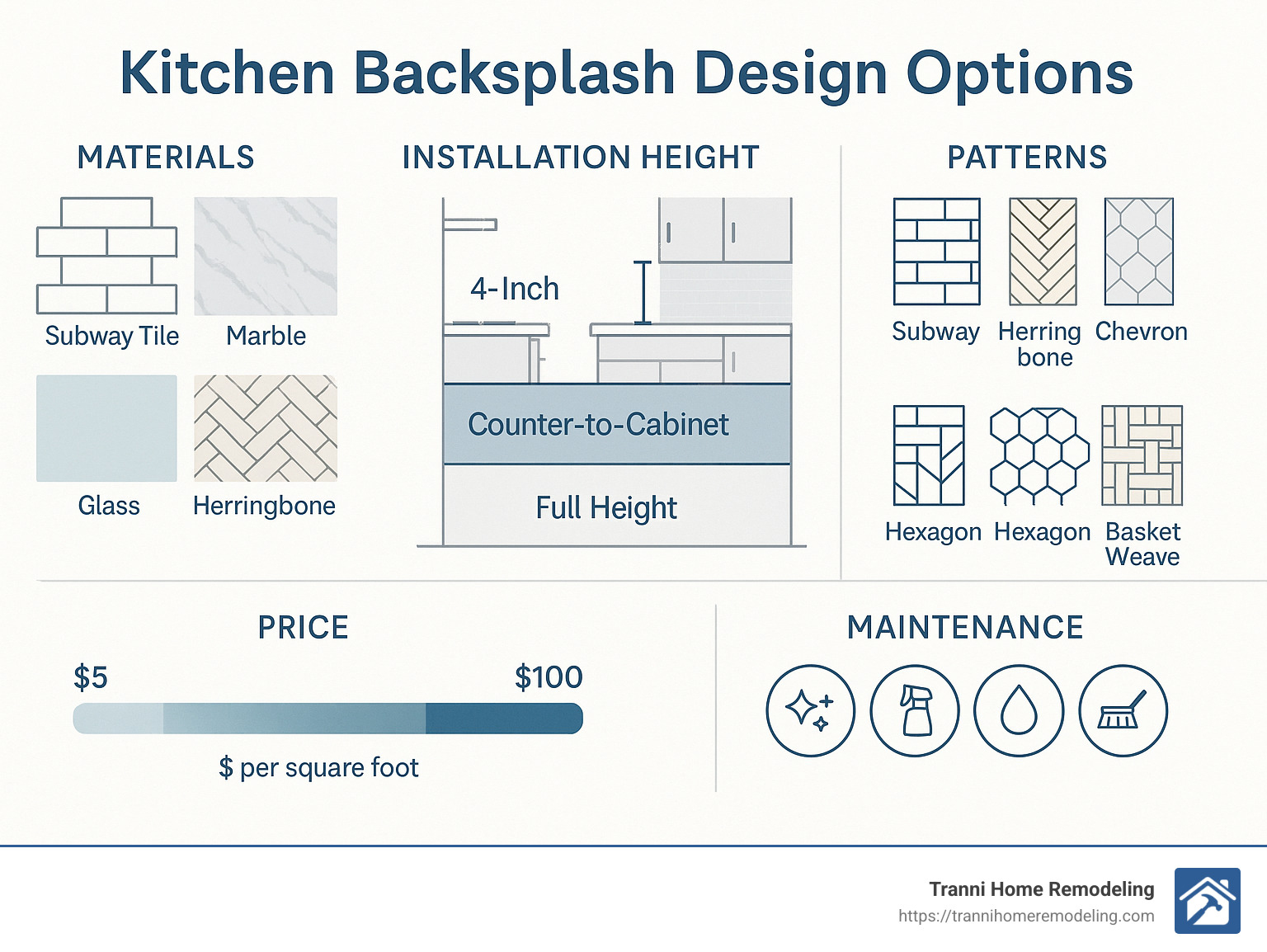
Kitchen backsplash designs are one of the most impactful elements in any kitchen renovation. If you’re looking for quick inspiration, here are the top kitchen backsplash options in 2023:
- Subway Tile – Timeless, clean, and versatile
- Marble Slab – Luxurious, seamless appearance
- Glass Mosaic – Reflective and adds depth
- Herringbone Pattern – Classic arrangement with visual interest
- Peel-and-Stick – Budget-friendly and DIY-friendly
- Zellige Tile – Handcrafted with unique variations
- Counter-Match – Continues countertop material up the wall
- Mixed Materials – Combines different tiles for zoned effects
A backsplash serves as both protection for your walls and a statement piece that can transform your kitchen’s entire look. Located between your countertops and cabinets, this functional surface shields walls from cooking splashes, stains, and moisture while allowing you to inject personality through color, texture, and pattern.
Beyond aesthetics, the right backsplash can make cleaning easier, increase your home’s value, and tie together other design elements in your kitchen. Whether you prefer the timeless appeal of subway tile, the luxury of marble, or the contemporary feel of glass and metal, your backsplash choice can set the tone for the entire room.
I’m Tyler Tranni, owner of Tranni Home Remodeling, and I’ve helped countless Billerica homeowners select and install perfect kitchen backsplash designs that balance beauty, functionality, and durability. My team specializes in creating custom kitchen solutions that reflect your unique style while addressing practical needs.
Kitchen backsplash designs glossary:
– kitchen cabinet designs
– kitchen layout ideas
– best kitchen designs
Kitchen Backsplash Designs: 8 Standout Ideas at a Glance
Walking into a kitchen with a stunning backsplash is like finding the perfect accessory that ties an entire outfit together. Here in Middlesex County, I’ve watched kitchen backsplash designs evolve from simple protective surfaces to breathtaking focal points that can make or break a kitchen’s personality.
Today’s backsplash trends offer incredible variety – from timeless classics that never go out of style to bold statements that showcase your unique taste. What’s fascinating is how color psychology influences these choices. The soft blues and greens I’ve installed in many Billerica homes create serene, calming kitchens where families love to gather. Meanwhile, vibrant reds and oranges energize cooking spaces, perfect for those who see their kitchen as the heart of home entertainment.
Don’t underestimate the power of neutrals, though! Whites, beiges, and grays remain incredibly popular across our New England communities, where traditional architecture often meets contemporary interior design. These versatile palettes provide the perfect backdrop for seasonal decor changes or future cabinet updates.
Your budget will naturally influence your backsplash selection. Based on internet data (not Tranni Home Remodeling pricing), you might spend anywhere from $5-7 per square foot for basic ceramic tiles with installation, while premium materials like hand-painted artisan tiles or seamless marble slabs can range from $30 to $150+ per square foot. The investment varies dramatically based on materials, complexity, and installation requirements.
What I find particularly interesting in our local communities like Lexington, Concord, and Winchester is the beautiful balance homeowners strike between traditional New England aesthetics and modern functionality. White kitchens continue to dominate the landscape, making the backsplash an ideal opportunity to introduce personality through texture, pattern, and subtle pops of color.
If your kitchen features white cabinets (as so many in our area do!), you might appreciate our specialized guide: Backsplash Ideas for White Cabinets. We’ve curated options specifically designed to complement and improve white cabinetry.
Now, let’s explore eight remarkable backsplash options that can completely transform your kitchen space. From timeless subway tiles to dramatic marble statements, these designs offer something for every style preference and practical need. Each option brings its own unique benefits, helping you create a kitchen that’s both beautiful and functional for years to come.
Classic Subway Style
There’s something magical about subway tile that has kept it a kitchen favorite for over a century. These rectangular beauties—traditionally 3×6 inches, though you’ll find them in various sizes today—offer clean lines and a timeless appeal that works in virtually any kitchen style, from ultra-modern to charmingly traditional.
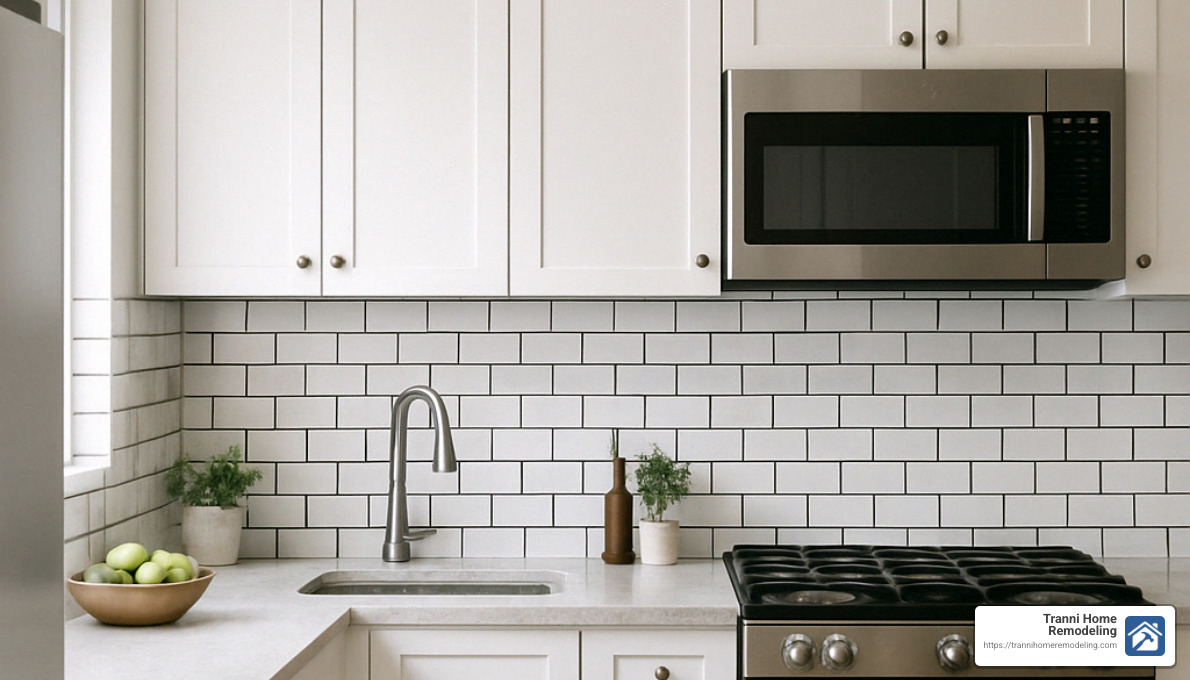
Ceramic subway tiles are like the little black dress of kitchen backsplash designs—endlessly versatile. You can arrange them in so many ways: the classic staggered pattern (reminiscent of brickwork), neat stacked rows for a more contemporary feel, or even in sophisticated herringbone or chevron arrangements when you want to add some visual pizzazz.
One of our favorite design tricks is pairing crisp white subway tiles with dark grout. This simple contrast not only makes the pattern pop visually but also offers practical benefits for busy families. Dark grout won’t show tomato sauce splatters as readily and helps mask the inevitable discoloration that happens over time. It’s a small detail that adds tremendous character and practicality.
For homes throughout Middlesex County, especially those with historical charm in communities like Concord or Winchester, subway tile strikes that perfect balance between honoring architectural heritage and meeting modern needs.
Why Subway Tiles Remain Timeless in Kitchen Backsplash Designs
Subway tiles have a fascinating origin story—they were first developed for New York City subway stations in the early 1900s when designers needed surfaces that were clean, bright, and could withstand heavy use. This practical heritage makes them perfect for kitchens, where durability matters just as much as good looks.
Their staying power comes from remarkable versatility. Kitchen backsplash designs featuring subway tiles work beautifully whether your style is farmhouse cozy, sleek and modern, or classically traditional. Today’s options go well beyond the standard 3×6 format—you’ll find mini 2×4 tiles for more intricate patterns, elongated 2×8 or 4×12 versions for contemporary spaces, and everything in between.
From a budget perspective, standard ceramic subway tiles remain wonderfully accessible, often starting around $0.15-$7 per tile depending on quality, finish, and where you purchase them. This affordability makes them perfect for generous installations without emptying your wallet.
Perhaps what homeowners appreciate most about subway tile is its universal appeal when it comes time to sell. It’s considered a “safe” design choice that resonates with a wide range of potential buyers. As experienced designer Jana Roach puts it, “I adore subway tile…it transcends trends and decor styles.”
Cost & Maintenance of Subway Kitchen Backsplash Designs
Based on internet data (not Tranni Home Remodeling pricing), expect to budget around $7-$25 per square foot installed for subway tile backsplashes. Basic ceramic options sit at the lower end of this range, while handcrafted or specialty glazed tiles can command premium prices.
One of the biggest selling points of subway tile is its fuss-free maintenance—a genuine blessing for busy households. For glazed ceramic subway tiles, everyday cleaning couldn’t be simpler: just wipe with a damp cloth and mild soap. For deeper cleaning sessions, any non-abrasive cleaner will do the trick without damaging the surface.
Grout is really the only maintenance consideration worth mentioning. Traditional white grout can show coffee splashes and cooking stains more readily, though it can be refreshed with specialized cleaners or even color-restoring grout pens. Many of our Billerica clients opt for medium to darker grout from the start to minimize visible staining.
For the best long-term results, we recommend sealing grout lines annually—a simple weekend project that takes just an hour or two but significantly extends that “just-installed” look. This small bit of preventative care keeps your kitchen backsplash designs looking fresh and beautiful for years to come.
Luxe Marble Statements
For those seeking luxury and natural beauty, marble backsplashes deliver unparalleled elegance. These stunning natural stone surfaces bring organic veining patterns and subtle color variations that create visual drama and sophistication in any kitchen space.
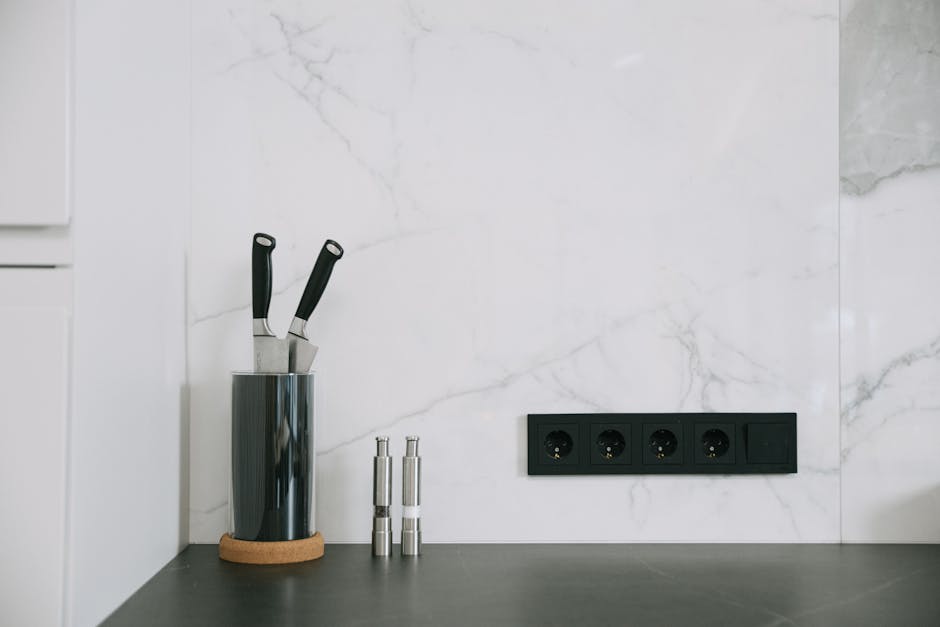
The most coveted marble varieties for kitchen backsplash designs each bring their own distinctive character. Carrara marble offers a soft white or blue-gray background with delicate gray veining that works beautifully in transitional kitchens. For those wanting more drama, Calacatta marble features a whiter background with bold, eye-catching veining in gold or gray tones that makes a statement. Statuario marble, with its bright white background and distinctive gray veining (often in linear patterns), creates a look of refined luxury that’s hard to match with any other material.
One of my favorite approaches when working with marble is extending the material from countertop to ceiling, especially behind a range. This creates a stunning focal point that transforms the entire kitchen. As one of our clients in Lincoln, MA told us after their renovation, “The full-height marble backsplash completely lifted our kitchen—it’s like artwork we get to enjoy every day.”
| Characteristic | Marble | Quartzite |
|---|---|---|
| Appearance | Natural veining, classic luxury | Similar to marble but with crystalline sparkle |
| Durability | Softer, more porous | Harder, more resistant to scratches |
| Maintenance | Requires regular sealing | Less frequent sealing needed |
| Heat Resistance | Good | Excellent |
| Etching from Acids | Vulnerable | More resistant |
| Price Range | $40-120/sq ft installed | $60-150/sq ft installed |
| Best For | Classic, luxury aesthetics | Marble look with higher durability |
Kitchen Backsplash Designs That Pair Marble with Bold Fixtures
Marble backsplashes truly shine when paired with complementary fixtures and hardware. Warm brass or gold fixtures create a beautiful contrast against cool marble tones, adding depth and interest to your kitchen. For a more contemporary look, matte black hardware offers sophisticated contrast that makes the marble’s natural patterns pop even more.
For a truly custom kitchen, consider integrating your marble backsplash with other thoughtful design elements. A waterfall countertop edge that continues the stone down the sides of an island creates a cohesive, high-end look. Open shelving installed against a marble backsplash gives a floating effect that showcases both your beautiful dishes and the natural stone behind them. And a statement range hood framing the marble creates a focal point that draws everyone’s eye when they enter the room.
“Marble backsplashes become even more striking when you think of them as a canvas for other elements,” shared a recent client from Winchester whose kitchen renovation featured Calacatta marble paired with antique brass fixtures. “The combination of textures—smooth stone, warm metal, and wood accents—creates depth that feels both luxurious and welcoming.”
Pros & Cons of Marble Kitchen Backsplash Designs
When it comes to the advantages of marble, nothing quite matches its natural beauty with one-of-a-kind veining patterns that ensure your kitchen is truly unique. Its timeless appeal transcends trends, making it a safe bet for long-term satisfaction. From a value perspective, marble increases home resale potential and creates an immediate luxury statement that impresses guests. It’s also naturally cool and heat resistant, making it practical behind cooking areas. Many homeowners also appreciate how marble ages beautifully, developing a patina over time that tells the story of your kitchen.
However, marble does come with considerations. It requires regular sealing (typically annually) to prevent staining, which means a bit more maintenance than some alternatives. Being more porous than engineered materials, it’s susceptible to etching from acidic substances like lemon juice or vinegar—something to keep in mind if you cook with these ingredients frequently. The price point is higher than many alternative materials, with costs based on internet data (not Tranni Home Remodeling pricing) ranging widely. And finally, natural variations can make matching slabs challenging for large installations, requiring careful planning during the selection process.
For homeowners who love marble’s beauty but worry about maintenance, we often suggest exploring marble-look porcelain or quartz alternatives. These materials offer similar aesthetics with improved durability and lower maintenance requirements—giving you the best of both worlds.
Modern Glass & Metal Shine
For contemporary kitchens seeking a sleek, reflective surface that amplifies light, glass and metal backsplashes offer stunning options with practical benefits.
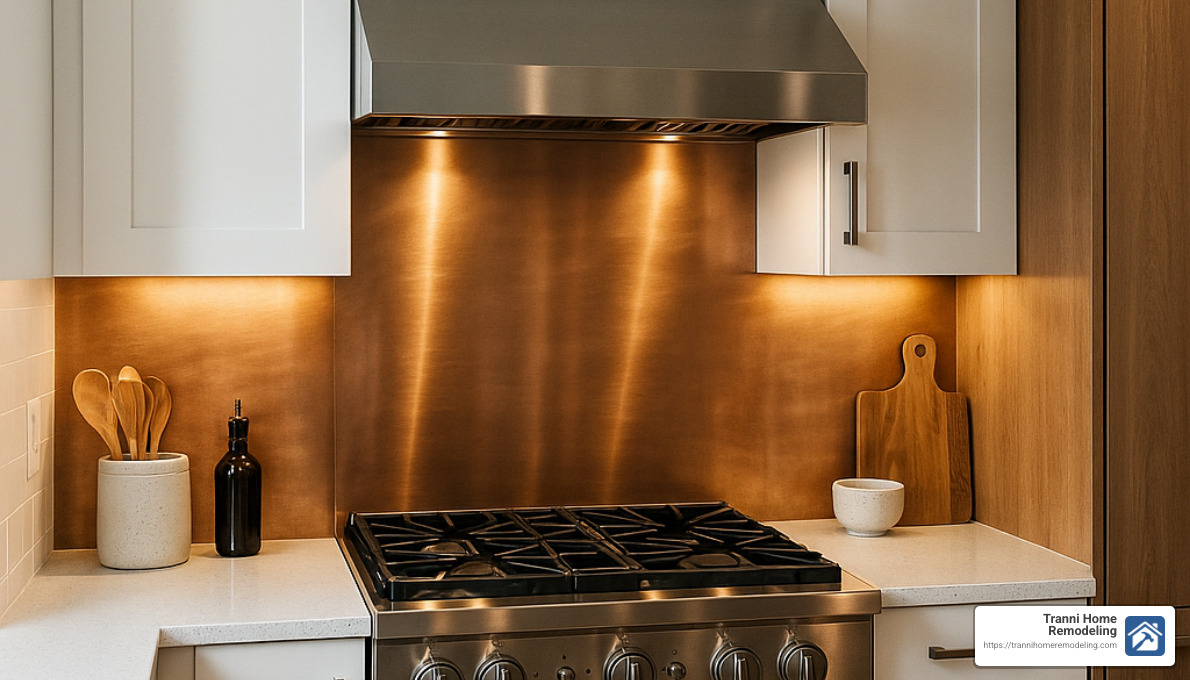
Walking into a kitchen with glass or metal elements creates an immediate impression of modernity and sophistication. Glass backsplashes bring a luminous quality through various forms – from tiny mosaic pieces that create a shimmering effect to larger format tiles that minimize grout lines. Back-painted glass panels offer a completely seamless look with unlimited color options, while mirrored glass tiles can make even the smallest kitchen feel spacious and bright.
Metal backsplashes tell their own unique story. Stainless steel brings an industrial-chic vibe that pairs beautifully with professional-grade appliances. Copper elements add warmth and character, developing a rich patina over time that tells the story of your kitchen. Brass and bronze finishes introduce a golden glow that feels both contemporary and timeless, while repurposed tin ceiling tiles offer vintage charm with modern reflectivity.
I remember a recent Lexington renovation where we installed copper-colored stainless steel tiles against crisp white cabinetry. The homeowner couldn’t stop smiling during the reveal. “The metallic backsplash completely transformed our kitchen,” she told me. “It reflects light throughout the day, making the space feel larger and more dynamic. I never thought a backsplash could change the feel of a room so dramatically.”
For more inspiration on incorporating metal into your kitchen backsplash designs, take a look at these Brilliant Ideas.
How Glass Improves Small-Space Kitchen Backsplash Designs
Glass backsplashes perform magic in smaller kitchens, particularly in townhomes or condos throughout Middlesex County. The secret lies in their reflective properties.
When light hits a glass surface, it bounces and multiplies, creating an expanded sense of space that’s perfect for compact kitchens. This light-enhancing quality is especially valuable in spaces with limited natural light, where every ray counts.
The translucent quality of glass creates a visual depth that makes walls appear to recede rather than advance. This optical illusion is subtle but effective in making tight spaces feel more open. Glass also offers incredible color flexibility – back-painted options can match any palette, allowing for perfect coordination with existing elements.
One of my favorite small-kitchen changes happened in Burlington, where we installed iridescent glass mosaic tiles in a narrow galley kitchen. The homeowner later told me, “The way these tiles catch and reflect light makes our small kitchen feel twice as large. Plus, the subtle color shifts throughout the day keep the space feeling dynamic and interesting, never static.”
Large-format glass panels eliminate grout lines entirely, creating clean, continuous surfaces that visually expand the space while offering practically effortless cleaning – a double win for small-space living.
Comparing Ceramic, Glass & Metal for Kitchen Backsplash Designs
When guiding clients through material selection, I always emphasize the importance of understanding how each option performs in real-world kitchen conditions.
Ceramic tile offers reliable performance at an accessible price point. It stands up well to heat and daily kitchen activities, though it may chip if something heavy impacts it. Cleaning is straightforward, though grout lines require periodic sealing to prevent staining. Based on internet data (not Tranni Home Remodeling pricing), ceramic backsplashes typically range from $7-30 per square foot installed, making them ideal for budget-conscious renovations that don’t sacrifice style.
Glass tile lifts kitchens with its reflective properties and depth of color. It resists staining and moisture beautifully, though it can crack if subjected to hard impacts. Most glass backsplashes handle kitchen heat well, though extreme temperature fluctuations might cause issues with some varieties. The cleaning advantage is significant – glass surfaces wipe clean with minimal effort, and there’s typically less grout to maintain. Internet data suggests glass backsplashes range from $20-50 per square foot installed, representing a mid-range investment that pays dividends in light reflection and visual interest.
Metal tile and sheets bring best contemporary flair with excellent durability. While they might dent if struck hard, they generally withstand kitchen demands beautifully. Their heat resistance is exceptional – perfect for installation behind ranges. Cleaning is simple, though some finishes (particularly high-polish ones) may show fingerprints more readily. According to internet data, metal backsplashes typically range from $20-75 per square foot installed, making them appropriate for contemporary or industrial-inspired spaces where their distinctive character can shine.
“The material selection really comes down to both aesthetic preference and practical considerations,” I often tell clients during consultations. “For areas directly behind ranges, ceramic or metal often makes the most sense for their superior heat resistance. Meanwhile, glass works beautifully in other areas where its reflective properties can maximize light and create visual expansion.”
When choosing between these options, consider not just appearance but also your cooking habits, maintenance preferences, and how the material will interact with your kitchen’s lighting throughout the day.
Bold Patterns & Shapes
For homeowners ready to make a statement, patterned tiles and distinctive shapes offer a playground of creative possibilities. These kitchen backsplash designs lift your kitchen from merely functional to truly extraordinary.
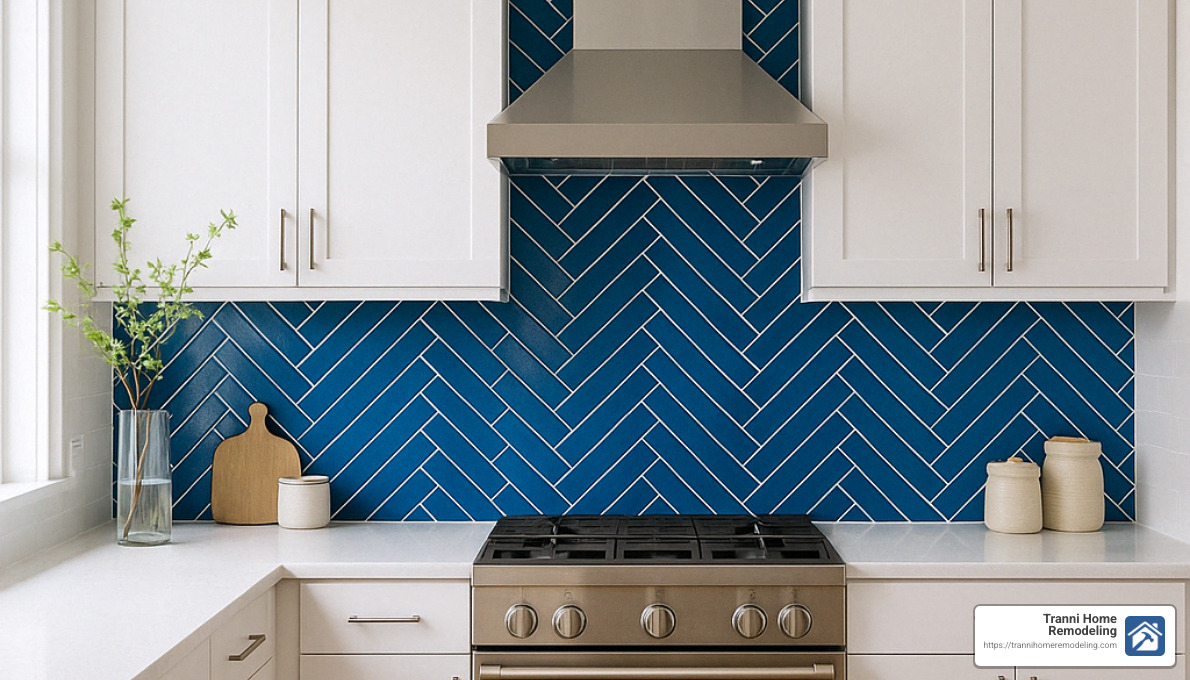
When you walk into a kitchen with a herringbone backsplash, your eye immediately catches the dynamic V-shaped pattern that creates a sense of movement and sophistication. Or perhaps you’re drawn to the sharp, precise zigzags of chevron, with tiles cut at perfect 45° angles for a more dramatic effect.
Hexagon tiles bring a natural, honeycomb feel that works beautifully in both modern and traditional spaces. I’ve installed these in several Billerica homes where clients wanted something distinctive without being overwhelming. The six-sided shape creates visual interest while still feeling somehow organic.
Arabesque tiles, with their curved, ornate shapes inspired by Moorish architecture, bring an old-world elegance that pairs surprisingly well with contemporary kitchens. For something more playful, penny rounds offer charming circular patterns that add texture and character.
Encaustic-look tiles (either genuine cement tiles or their more practical porcelain lookalikes) deliver bold geometric patterns with rich colors that can transform your backsplash into the kitchen’s centerpiece.
A recent client in Concord captured it perfectly after we installed her blue herringbone backsplash: “I was nervous about choosing something so distinctive, but it’s become the focal point everyone comments on. Against our white cabinets, it adds personality without overwhelming the space.”
The beauty of these patterned options is their versatility—they work beautifully in subtle, neutral tones for a sophisticated look, or in bold colors when you want to make a dramatic statement.
Kitchen Backsplash Designs That Double as Artwork
The most exciting backsplashes go beyond mere surface covering to become legitimate artistic statements in your kitchen.
Color-blocking techniques use solid-colored tiles to create geometric compositions that feel like modern art. I recently completed a project in Billerica where we used three complementary blue tones in a staggered block pattern that transformed a modest kitchen into something truly special.
Graphic motifs bring storytelling to your kitchen through tiles with printed or painted designs. These can create murals or repeating patterns that reflect your personality or interests. One family incorporated tiles featuring herbs and cooking utensils in a playful, illustrative style.
Mosaic medallions offer intricate tile arrangements that create a focal point, typically centered behind a range. These artistic installations draw the eye and become conversation pieces that guests invariably comment on.
A Winchester homeowner perfectly summed up her reaction to the hand-painted ceramic tile focal point we installed behind her range: “It’s like having a piece of art in the kitchen that’s also completely practical.”
For truly personalized expressions, custom-printed ceramic tiles can feature family recipes or meaningful quotes. Mosaic interpretations of favorite landscapes or abstract designs bring personal significance to your space. And authentic Zellige tiles—handcrafted Moroccan tiles with intentionally imperfect surfaces—catch light in unique ways that bring your backsplash to life throughout the day.
As designer Anna Lood from Clay Imports aptly puts it, “Tile is design eye candy.” When used thoughtfully, your backsplash becomes not just a practical surface but the most compelling design element in your kitchen.
Mixing & Matching Multiple Backsplash Materials in One Kitchen
One sophisticated approach that’s gaining popularity is using different backsplash materials to define distinct zones within a kitchen. This technique adds visual interest while also serving practical purposes.
Your cooking zone deserves heat-resistant materials like ceramic or porcelain, often in a statement pattern behind the range. For a recent Chelmsford renovation, we installed a dramatic arabesque pattern in this area, creating a focal point that anchored the entire kitchen design.
Prep zones benefit from practical, easy-clean surfaces like quartz or solid-surface materials that withstand splashes and spills from food preparation. These areas typically surround sinks and countertops where most cooking activities happen.
Bar and entertainment areas offer opportunities for more decorative options like glass mosaics or mirrored tiles that add sparkle and conversation value where guests typically gather.
The secret to successfully mixing materials is maintaining cohesion through a consistent color palette. Even wildly different materials can work together when they share complementary tones. Thoughtful transition points—often at corners or cabinet breaks—help define where one material ends and another begins. Metal transition strips provide clean separation between different materials while adding a subtle design element.
In a recent Lexington project, we paired a dramatic marble slab behind the range with simple subway tile in complementary tones throughout the rest of the kitchen. The result defined the cooking area as a focal point while maintaining visual harmony throughout the space.
For more ideas on optimizing your kitchen layout with thoughtfully placed backsplash zones, visit our guide to Kitchen Layout Ideas.
Budget-Friendly Peel-and-Stick Solutions
Kitchen renovations don’t always require breaking the bank or calling in professionals. The world of peel-and-stick backsplashes has undergone quite a change in recent years, offering remarkably convincing aesthetics that won’t empty your wallet.
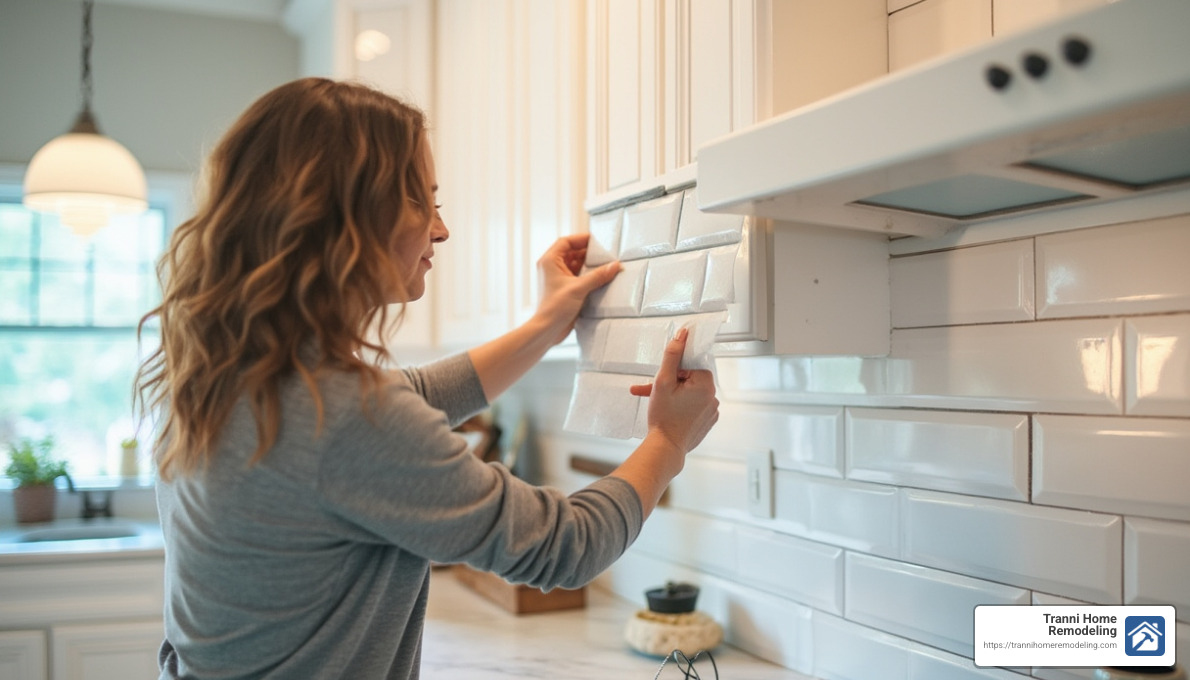
Today’s peel-and-stick market offers impressive variety. You’ll find vinyl tiles that convincingly mimic ceramic, stone, or metal finishes with remarkable realism. For those seeking dimension, gel tiles create eye-catching 3D effects that add depth. Composite materials have become sophisticated enough to pass for glass or stone at a glance. Even thin stone veneers have entered the peel-and-stick arena, bringing natural materials into this affordable category.
Most of these products feature adhesive backing that sticks directly to properly prepared walls. Some systems use separate adhesive mats or liquid adhesives for extra staying power in challenging environments.
A client from Billerica who recently updated her starter home kitchen told us, “I was completely skeptical about peel-and-stick options until I saw what’s available now. My friends visit and run their hands across the backsplash because they can’t believe it’s not traditional tile. The technology has come so far!”
Benefits of Peel-and-Stick Kitchen Backsplash Designs
The appeal of peel-and-stick options extends far beyond just saving money (though that’s certainly a major perk).
Time efficiency might be the biggest advantage for busy homeowners. While traditional tile projects can stretch across multiple days or even a weekend, most peel-and-stick installations can be knocked out in a single afternoon. You can literally transform your kitchen in hours rather than days.
The minimal mess factor cannot be overstated. Anyone who’s lived through a traditional tile installation knows the dusty aftermath of mortar mixing, tile cutting, and grout application. Peel-and-stick options eliminate virtually all of this debris and cleanup.
For those in rental properties, these backsplashes offer a renter-friendly solution that won’t sacrifice your security deposit. Many options can be carefully removed without damaging walls when it’s time to move on.
The immediate gratification aspect appeals to many homeowners too. Unlike traditional tile that requires waiting for mortar to set and grout to cure, peel-and-stick options are ready for immediate use as soon as you finish installation.
Perhaps most importantly, these products offer genuine DIY accessibility. Even homeowners with minimal renovation experience can achieve results that look professionally installed when they follow instructions carefully.
Based on internet data (not Tranni Home Remodeling pricing), peel-and-stick backsplashes typically range from $5-30 per square foot for materials. The most convincing, high-quality options generally fall between $8-15 per square foot – still significantly less than many traditional tile installations.
Common Mistakes to Avoid with DIY Peel-and-Stick Backsplash
While these products are designed to be user-friendly, certain pitfalls can quickly reveal the DIY nature of your project if you’re not careful.
Inadequate surface preparation tops the list of common mistakes. Walls must be impeccably clean, smooth, dry, and free of dust or grease before application. In many kitchens, this means light sanding and priming for optimal adhesion. Rushing through this prep work almost guarantees disappointing results.
Heat exposure issues create problems for many homeowners. Not all peel-and-stick products can withstand the temperatures directly behind ranges or near other heat sources. Always check manufacturer specifications and maintain recommended clearances – usually at least 6 inches from direct heat sources.
Nothing screams “amateur installation” faster than poor seam alignment. Taking time to carefully align edges makes all the difference in the final appearance. When possible, choose patterns that naturally minimize visible seams, or plan your layout to place seams in less noticeable areas.
Many DIYers make the mistake of skipping wall repairs before installation. Underlying wall imperfections will show through thin peel-and-stick materials. Take time to fill and sand any holes or uneven areas before you begin.
In kitchens, moisture protection remains crucial, particularly around sinks. Ensure edges are properly sealed with silicone caulk to prevent water infiltration that could compromise adhesion over time.
“I always tell our clients that the secret to a successful peel-and-stick installation isn’t in the application – it’s in the preparation,” shares our installation team leader. “The extra hour spent getting your walls perfectly ready will save you from disappointment later. You simply can’t rush through wall prep and expect professional results.”
For those considering a kitchen update on a budget, peel-and-stick kitchen backsplash designs offer a compelling combination of affordability, convenience, and increasingly impressive aesthetics that can tide you over until you’re ready for a more permanent solution.
Full-Slab & Counter-Match Elegance
When you want to make a truly sophisticated statement in your kitchen, few options compare to the seamless beauty of a full-slab backsplash. This luxurious approach continues your countertop material up the wall, creating a flowing, uninterrupted surface that exudes contemporary elegance.
Walking into a kitchen with a full-slab backsplash makes an immediate impression. The continuous flow of material creates a clean, high-end look that’s both striking and practical. With minimal or no grout lines to interrupt the surface, these backsplashes are not only beautiful but also incredibly easy to clean.
Several materials work wonderfully for this application. Quartz offers outstanding durability with consistent patterning that’s perfect for modern spaces. Granite brings natural variation and excellent heat resistance for serious cooks. Soapstone delivers a soft, matte appearance that develops a gorgeous patina over time. Solid surface materials like Corian allow for seamless integration with unlimited color options. And porcelain slabs have become increasingly popular for their ability to mimic natural stone while offering improved durability and lower maintenance.
“My clients are consistently amazed by how transformative a full-slab backsplash can be,” shares Tyler Tranni. “It’s like the difference between wearing a well-custom suit versus something off the rack—everything just looks more purposeful and refined.”
For more comprehensive kitchen change ideas beyond just backsplashes, visit our kitchen remodel ideas page.
When to Choose a Counter-Match Kitchen Backsplash Design
Not every kitchen calls for this approach, but certain situations make counter-matched backsplashes particularly effective:
In open-concept homes where your kitchen is visible from living spaces, the clean, continuous look creates visual harmony that connects different areas. The absence of busy tile patterns allows the eye to flow smoothly throughout the space.
For modern and minimalist designs, the reduction of visual breaks aligns perfectly with clean-lined design principles. As one Billerica homeowner remarked after her renovation, “The continuous surface gives my kitchen the gallery-like quality I was hoping for—simple, neat, and timeless.”
When you’ve invested in a showcase-worthy material with dramatic veining or unique characteristics, extending it up the wall maximizes its impact. Why limit beautiful stone to just your countertops when it can become the room’s centerpiece?
In smaller kitchens, continuous surfaces without the visual interruption of grout lines can make compact spaces feel larger and more cohesive. The simplified visual plane tricks the eye into perceiving more space.
Based on internet data (not Tranni Home Remodeling pricing), full-slab backsplashes typically represent a premium investment, with installed costs ranging from $50-150+ per square foot depending on material selection. While this exceeds the cost of many tile options, the dramatic effect often justifies the investment for homeowners seeking a truly distinctive kitchen.
Maintenance Tips for Large-Format Kitchen Backsplash Designs
One of the greatest advantages of slab backsplashes is their simplified maintenance routine. Without countless grout lines to scrub, daily cleaning becomes much easier. However, proper care is still essential to maintain their beauty:
Joint sealing deserves special attention. Where slabs meet, ensure seams are properly filled with color-matched silicone or epoxy. These joints should be inspected annually for any signs of separation that could allow moisture penetration.
Different materials require specific care approaches. Natural stones need annual sealing to prevent staining and maintain their resistance to moisture. Quartz requires no sealing but should be cleaned with non-abrasive products to preserve its finish. Solid surfaces offer the advantage of being repairable—minor scratches can typically be buffed out by professionals.
Pay special attention to edge protection where your backsplash meets the countertop. This transition point needs proper sealing to prevent moisture infiltration that could damage the underlying wall structure.
Heat considerations matter even with temperature-resistant materials. While materials like granite handle heat well, all stones can potentially crack with extreme temperature changes. Maintain manufacturer-recommended clearances around cooktops and use trivets when placing hot items nearby.
A simple maintenance routine of daily wiping with appropriate cleaners and an annual check of seams and sealant will keep your slab backsplash looking stunning for years. The investment in this neat design choice pays dividends in both beauty and practicality.
“What my clients love most about their slab backsplashes years later isn’t just how they look,” notes Tyler, “but how easy they are to maintain. In busy households, that simplified cleaning routine becomes something they appreciate every single day.”
For more information about our comprehensive kitchen remodeling services, visit our Kitchen Remodeling page.
Frequently Asked Questions about Kitchen Backsplash Designs
Over the years, our team at Tranni Home Remodeling has fielded countless questions from homeowners throughout Middlesex County about their kitchen backsplash designs. I’ve compiled the most common questions we hear, along with straightforward answers to help guide your decision-making.
What material is easiest to maintain?
When it comes to low-maintenance options, glazed porcelain and ceramic tiles are clear winners. Their non-porous, sealed surfaces resist staining, moisture, and bacteria growth—making them ideal for busy family kitchens. A quick wipe with a mild cleaner is usually all they need to look fresh.
Glass backsplashes deserve honorable mention in the easy-care category. Their smooth, non-porous surface doesn’t harbor food particles or grease, and they can be cleaned with standard glass cleaners for a streak-free shine. Many of our clients in Bedford and Billerica have chosen glass specifically for this practical benefit.
If you’re considering a seamless look, quartz and solid-surface backsplashes offer excellent maintenance profiles. Unlike natural stone, they don’t require sealing and resist most household stains beautifully.
Natural stone backsplashes like marble and granite create undeniable beauty but do require more attention. Annual sealing is necessary to maintain their stain resistance, and acidic substances should be wiped promptly to prevent etching.
I remember a client in Tewksbury who initially hesitated about her marble backsplash dreams due to maintenance concerns. Six months after installation, she told me, “I was overthinking the maintenance—it takes me five minutes with a stone cleaner each week, and once a year we apply sealer. The gorgeous veining I get to enjoy every day makes that tiny bit of extra care completely worthwhile.”
Should the backsplash be lighter or darker than cabinets?
This question depends entirely on the atmosphere you’re trying to create in your kitchen:
For a timeless, classic look that won’t feel dated in five years, consider choosing a backsplash lighter than your cabinets. This approach creates a bright, airy feeling that tends to have broader appeal—particularly important if you might sell your home in the coming years. White subway tile paired with medium-toned wood cabinets exemplifies this timeless approach.
If you’re after a bold statement that defines your cooking area as a focal point, try a darker backsplash against lighter cabinets. This high-contrast look creates visual drama while offering the practical benefit of hiding cooking splatters more effectively. A charcoal tile backsplash against white cabinetry can create stunning definition.
For homes with two-tone kitchens (perhaps with navy lower cabinets and white uppers), consider a backsplash that incorporates colors from both cabinet finishes. This creates cohesion and ties the different elements together beautifully.
One of our Lexington clients summed it up perfectly: “The contrast between my white cabinets and deep blue backsplash creates such energy in the space—it’s the first thing visitors comment on when they enter our kitchen.”
The contrast relationship significantly impacts the kitchen’s overall feeling. High contrast creates drama and energy, while low contrast produces a calmer, more serene environment. There’s no universal right answer—just the right choice for your specific space and preferences.
Is DIY installation realistic for most homeowners?
The honest answer is: it depends on both your skill level and the complexity of your chosen backsplash.
For homeowners with basic DIY skills, certain backsplash projects are absolutely achievable. Peel-and-stick products have come a long way in recent years and are specifically engineered for DIY application. Similarly, simple layouts using standard-sized ceramic tiles in straight patterns can be successfully tackled by homeowners willing to learn the basics and take their time.
Projects using simplified adhesive systems like tile mats can also be DIY-friendly, eliminating some of the messier aspects of traditional mortar application. Small backsplash areas with minimal outlets or specialty cuts are naturally more approachable for beginners.
However, some backsplash projects are better left to professionals:
Natural stone installation, particularly large-format slabs, requires specialized tools and expertise to handle the heavy, delicate materials properly. The cost of a single mistake with expensive marble can quickly exceed what you’d have paid for professional installation.
Complex patterns like herringbone, basket weave, or intricate mosaics demand precision that comes with experience. Even small alignment errors become glaringly obvious in geometric patterns.
Glass tile requires special cutting tools and techniques to prevent chipping and breakage. The transparency of glass also makes any substrate imperfections highly visible, demanding meticulous preparation.
Kitchens with irregular shapes requiring numerous precise cuts around outlets, windows, or cabinets present significant challenges for DIYers.
A thoughtful middle ground I often suggest to clients is handling simple field tiles themselves but hiring professionals for complex cuts around outlets or for creating feature areas. This hybrid approach can save money while ensuring critical details are handled properly.
As one of our installation specialists likes to say, “The key question isn’t just ‘Can I do it?’ but ‘Will I be satisfied with the results?'” A professional installation typically takes 1-3 days and ensures proper substrate preparation, precise cuts, and optimal material performance that will stand the test of time.
A backsplash is both highly visible and a long-term investment in your home. Sometimes the peace of mind that comes with professional installation is worth every penny.
Conclusion
Selecting the perfect kitchen backsplash design is a journey that balances beauty, practicality, and budget. Through this guide, we’ve explored options ranging from timeless subway tiles to luxurious marble slabs, contemporary glass and metal finishes to bold patterns that make a statement. Each choice offers unique benefits while serving the essential purpose of protecting your walls from the inevitable splashes and spills of daily cooking.
As you plan your project, it’s helpful to have a general sense of investment. Based on internet data (not Tranni Home Remodeling pricing), professional backsplash installations typically range from $800 for straightforward ceramic tile projects to $3,500 or more for premium materials and intricate patterns. Of course, these figures vary widely depending on your kitchen’s size, the materials you select, and the complexity of installation.
I’ve seen how the right backsplash can completely transform a kitchen’s personality. One of my favorite projects was for a family in Billerica who chose a stunning blue herringbone pattern that instantly became the conversation piece of their home. What had been a perfectly functional but forgettable kitchen became a space filled with character and warmth.
At Tranni Home Remodeling, we’ve guided hundreds of homeowners throughout Middlesex County through this decision process. We understand that your backsplash isn’t just a practical surface—it’s an opportunity to express your personal style and lift your entire kitchen experience. Our team takes pride in providing thoughtful guidance from the initial material selection through meticulous installation, ensuring results that will bring you joy for years to come.
Whether you’re planning a quick refresh with a budget-friendly option or investing in a complete renovation with premium materials, the perfect backsplash creates that finishing touch that makes your kitchen feel truly complete. It’s often these seemingly small details that make the biggest impact on how you experience your home every day.
Ready to explore kitchen backsplash designs for your home? We’d love to help bring your vision to life. Contact us to schedule a consultation, or visit our Kitchen Remodeling page to learn about our comprehensive renovation services and see examples of our craftsmanship.
Your dream kitchen is waiting—and the perfect backsplash might be the missing piece that ties it all together.
