





Second Story Addition Contractor: 5 Best Tips
Why a Second Story Addition Contractor Could Be Your Best Investment
You love your neighborhood and your kids are settled in great schools, but your home is just too small. You need another bedroom, a home office, or a spacious master suite. You face two choices: uproot your life and move, or build up.
Adding a second story is an effective way to gain space without leaving the community you love. You preserve your yard, avoid the stress of moving, and can significantly increase your home’s value. However, a project this complex requires the right team. A second story addition contractor is a licensed professional who specializes in designing and building a new floor on top of an existing home. They assess your home’s structure, coordinate design and engineering, manage the entire construction process, and ensure all work meets local building codes.
This is a major investment, often costing between $100,000 and $300,000 or more, with a timeline of three to six months for construction. Finding the right contractor is critical to avoid cost overruns, delays, and structural problems. The right choice means a smooth process and a beautiful new floor that looks like it was always meant to be there.
This guide walks you through the process, from feasibility to completion. I’m Tyler Tranni, owner of Tranni Home Remodeling, and I’ve spent years helping homeowners in Billerica, MA, and surrounding towns transform their homes. When you’re ready to hire a second story addition contractor, you’ll have the knowledge to make a confident decision.
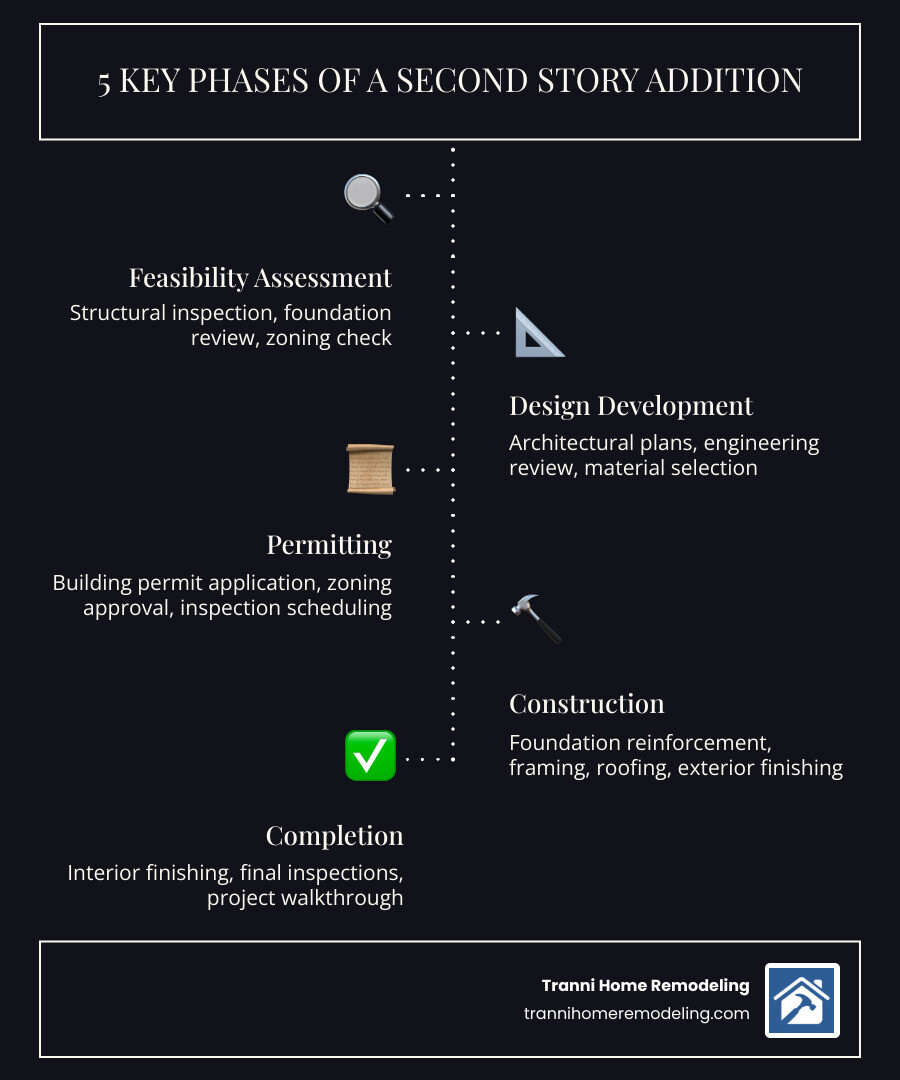
Know your second story addition contractor terms:
Why Build Up? Weighing the Pros, Cons, and Feasibility
When your home feels too small, you face a big decision: move or improve. For many families who love their neighborhood, a second-story addition is the answer. Let’s review the benefits, challenges, and the crucial question of feasibility.
The Primary Benefits of Adding a Second Story
The most obvious benefit is increased living space—potentially doubling your square footage. This means more bedrooms, another bathroom, or a dedicated home office. A key advantage is that you preserve your yard space, unlike a ground-level addition that consumes your patio or garden. A second story can also provide improved views and an opportunity for layout optimization, such as moving all bedrooms upstairs to create a more open-concept first floor. A well-executed addition can also significantly improve your property value, building substantial equity in your home.
For more information about how we approach home expansions, check out our home additions services.
Potential Challenges and Risks to Consider
A second-story addition is a major project. The significant cost—typically $100,000 to $300,000 or more—requires serious financial planning. The project also causes major disruption to daily life. Construction involves removing your roof, creating noise and dust, and most families find they need temporary housing for at least part of the process. Other risks include potential structural complications with your existing foundation and navigating zoning restrictions and permit delays. An experienced second story addition contractor is essential for managing these challenges.
Is Your Home’s Structure Suitable for an Addition?
Not every home can support a second story without significant structural work. Before any design work begins, a qualified structural engineer must perform a thorough foundation inspection. They will examine your foundation, footings, and load-bearing walls to determine if they can handle the additional weight. In many cases, foundation reinforcement is necessary, which could involve adding new concrete footings or steel supports.
The engineer will also assess your home’s framing and the soil conditions beneath it. Their role is non-negotiable; they provide the detailed calculations and plans to ensure your home is safe for decades to come. An initial consultation with a qualified contractor is your first step. At Tranni Home Remodeling, we understand the construction methods in Billerica and Wilmington, and we can help coordinate the engineering evaluation to give you a realistic assessment of what’s possible.
The Blueprint: Planning, Designing, and Budgeting Your New Floor
Once you’ve confirmed your home is structurally sound for an addition, the planning phase begins. This is where your ideas are turned into a concrete plan.
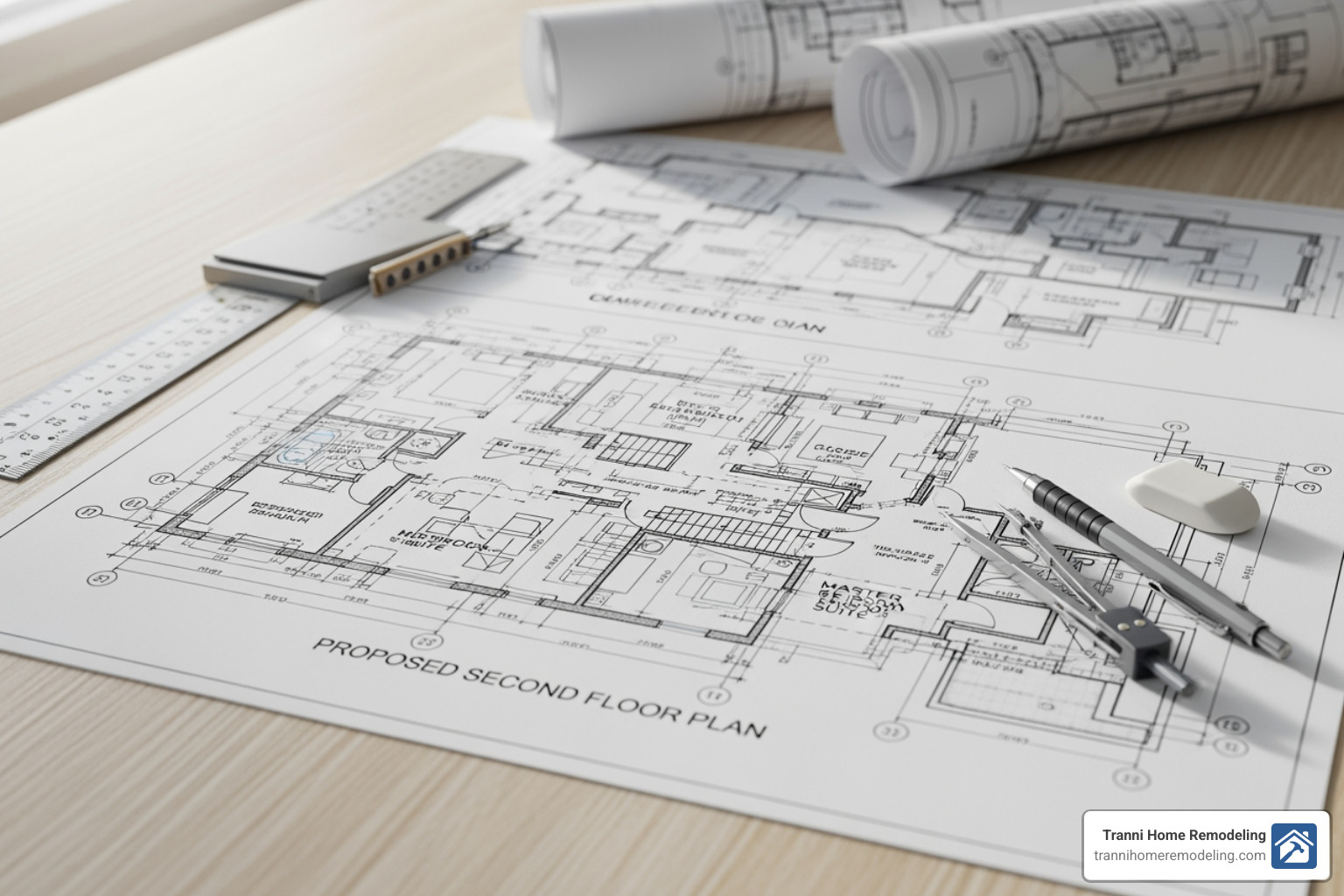
Key Steps in the Planning and Design Phase
A successful project starts with a solid plan. The process begins with an initial consultation to discuss your needs, budget, and style. Next, a licensed architect creates architectural drawings that detail layouts, window placements, and roof lines. A structural engineer then reviews these plans to specify necessary reinforcements and ensure everything is sound. After that, you’ll begin selecting materials and finishes for everything from roofing and siding to flooring and fixtures. Finally, your contractor will steer the permit application process with your local building department, a step that can take six weeks or more. An experienced second story addition contractor handles all of this for you.
At Tranni Home Remodeling, we manage every detail of this phase with the same commitment to quality that defines our home remodeling services.
Exploring Design Options for Your Second Story
You have several paths to consider for your addition. A full second-story addition builds a new floor over your home’s entire footprint, offering the maximum space gain but also being the most expensive and disruptive. A partial addition, such as building over an existing garage, is a popular choice for adding a master suite or home office with less expense. A modular addition, where sections are built off-site and craned into place, can reduce on-site construction time and disruption, though it has its own logistical costs.
| Feature | Full Second-Story Addition | Partial Addition (e.g., over garage) | Modular Addition |
|---|---|---|---|
| Cost | Highest overall, but often best value per square foot | Lower overall than full, but may not be significantly cheaper due to fixed costs | Potentially lower due to factory efficiency, but transport/crane costs apply |
| Timeline | Longest, due to extensive on-site work and structural changes | Shorter than full, but still requires significant construction | Potentially faster on-site construction, but includes factory build time |
| Disruption | Most disruptive, often requiring temporary relocation | Moderately disruptive, may still require temporary relocation | Less on-site disruption once modules are delivered and installed |
| Space Gain | Maximum | Moderate | Varies based on design, but efficient |
Understanding the Costs of a Second Story Addition
A second-story addition is a significant investment. Based on internet data, the average cost typically ranges from $100 to $300 per square foot. Your specific cost will depend on factors like size, complexity, materials, and structural requirements. A simple, rectangular addition with standard finishes will cost less than one with vaulted ceilings, multiple bathrooms, and custom features. High-end materials like custom cabinetry and designer tiles will also increase the budget.
For a 1,000-square-foot addition, this means a typical cost of $100,000 to $300,000 or more. These are average costs based on internet data and not actual costs for Tranni Home Remodeling—we provide detailed estimates customized to your project. We always advise building a contingency fund of 10% to 20% into your budget. This fund covers unexpected issues, like finding rotted framing or needing an electrical panel upgrade, and provides peace of mind.
How to Hire the Right Second Story Addition Contractor and Team
Finding the right professionals is the most important step for a successful second-story addition. This project requires a coordinated team of experts.

Finding Your Dream Team: Contractors, Architects, and Engineers
Your team consists of three key players. The architect is the design visionary who translates your needs into functional, aesthetic plans. The structural engineer is the safety expert who ensures your home can support the new floor and specifies all structural requirements. The general contractor is the project conductor who oversees the entire build, managing subcontractors, schedules, and quality control.
Look for professionals with local experience. A contractor who has worked in Wilmington, MA, and surrounding towns understands local codes and inspection processes. Personal referrals and online reviews are great starting points. At Tranni Home Remodeling, we have strong relationships with top-tier architects and engineers throughout Middlesex County.
Vetting Your Second Story Addition Contractor: A Checklist
Once you have a shortlist of contractors, it’s time for due diligence. This extra effort now can save you headaches later.
- Ask the right questions: How many second-story additions have they completed? Can they provide recent references? What is their project management process?
- Verify licensing and insurance: Confirm the contractor holds a valid state license and carries both liability insurance and workers’ compensation. You can check a contractor’s HIC registration status online.
- Review their portfolio: Look for photos of past second-story additions. Do they blend seamlessly with the original home? Pay attention to details like trim work and rooflines.
- Talk to references: Ask past clients about communication, budgeting, timeliness, and whether they would hire the contractor again.
- Confirm specific experience: A second-story addition requires specialized knowledge of vertical construction, structural loads, and weatherproofing that differs from other types of remodeling.
Comparing Bids and Signing the Contract
When you receive proposals, don’t just look at the bottom line. Get at least three detailed, itemized quotes that break down costs for materials, labor, permits, and other expenses. A lump-sum bid is a red flag. Ask questions to understand any cost differences between bids.
Be wary of unusually low bids, vague contract terms, or demands for large upfront payments. A fair contract should include a payment schedule tied to project milestones, such as the completion of framing or passing a major inspection. This protects both you and the contractor. At Tranni Home Remodeling, our contracts are transparent and detailed, ensuring you know exactly what to expect.
The Build: Navigating the Construction Journey from Start to Finish
With your team and plans in place, the physical change of your home begins. This phase has the biggest impact on your daily life, so knowing what to expect is key.
The Typical Project Timeline: From Design to Completion
A second-story addition unfolds in distinct phases over a significant period.
- Design & Permitting (3-4 months): This initial phase involves finalizing architectural drawings, getting engineering approval, and submitting plans to your local building department. The permit process alone can take six weeks or more.
- Construction (3-6 months): Once permits are secured, work begins. This includes foundation reinforcement, framing the new floor, installing the roof, and completing the exterior.
- Finishing Work (1-2 months): The final stage includes all interior work like electrical, plumbing, insulation, drywall, flooring, and painting, as well as final exterior details.
From start to finish, the entire journey typically takes 7 to 12 months.
Living Through the Renovation: Housing and Home Prep
Living in your home during a second-story addition is challenging and often unsafe. When the roof is removed, your home is exposed to weather, and the noise, dust, and safety hazards are significant. Most homeowners require temporary housing during the main construction phases. This cost should be factored into your overall budget.
Before work begins, we take measures to protect your ground floor by covering furniture, sealing vents, and laying down floor protection. We also use plastic barriers to manage dust. It’s wise to remove all valuables and sensitive items from areas near the construction zone. Our plastering and painting services ensure a seamless finish between the old and new spaces.
Best Practices for Managing Your Project to Stay on Track
A smooth project requires a partnership between you and your contractor.
- Communicate Clearly: Schedule weekly meetings with your second story addition contractor to review progress and address concerns.
- Document Changes: Put any changes to the plan in writing through a formal change order. This prevents misunderstandings and creates a clear record.
- Plan for the Unexpected: Use your contingency fund to handle unforeseen issues, such as finding outdated wiring or needing extra structural work.
- Stay on Budget: Regularly review expenses against your quote and track your contingency spending. A good contractor provides transparent cost updates.
At Tranni Home Remodeling, we guide homeowners through this process with clear communication, ensuring a rewarding change of your home.
Maximizing Your Investment: ROI, Cost-Saving, and Legal Must-Knows
A second-story addition is a strategic investment in your property. Understanding its financial impact and the legal framework is crucial for success.
The Financial Impact: Resale Value and Long-Term Equity
When you add a second story, you’re not just gaining space—you’re building substantial equity. In desirable communities like Winchester, a well-executed addition significantly boosts your home’s market value. More square footage, additional bathrooms, and modern master suites are highly sought after by buyers. While the return on investment (ROI) varies by market, second-story additions consistently rank among the most valuable home improvements, with homeowners often recouping a large portion of their investment upon sale. Even if you don’t plan to sell, you’re building long-term equity that can be leveraged in the future.
Smart Strategies for Saving Money Without Sacrificing Quality
Managing your budget is important, and there are smart ways to save without compromising quality.
- Choose cost-effective materials: Modern luxury vinyl plank flooring can mimic hardwood at a lower cost, and it’s highly durable.
- Opt for stock vs. custom: High-quality stock windows, doors, and cabinets can provide excellent results for less than custom-made options. We offer a range of quality windows and doors that balance value and performance.
- Salvage and reuse: Sometimes, materials like wood beams or architectural details from the demolition can be refurbished and incorporated into the new design, saving money and adding character.
Phasing the project is generally not practical for a second-story addition, as the structural and weatherproofing work must be completed in one continuous sequence.
Navigating Legal and Permit Requirements in Your Municipality
This is where an experienced second story addition contractor is invaluable. Every town has specific building codes that ensure your addition is safe and structurally sound. Additionally, zoning laws govern what you can build, including height restrictions and setback requirements (how far your home must be from property lines).
The permit process involves submitting plans for review, followed by a series of mandatory inspections at critical stages of construction (e.g., foundation, framing, electrical). Each inspection must pass before work can proceed. A contractor who handles all permitting saves you from navigating this complex landscape. At Tranni Home Remodeling, we manage this entire process for our clients in North Reading, Stoneham, and throughout Middlesex County, leveraging our relationships with local building departments to keep projects moving smoothly.
Frequently Asked Questions about Hiring a Second Story Addition Contractor
Homeowners have many questions about second-story additions. Here are answers to some of the most common ones.
How do I know if my foundation can support a second story?
You can’t know without a professional assessment. A qualified structural engineer must evaluate your home’s foundation, footings, and soil to calculate the load-bearing capacity. They will provide detailed plans for any reinforcements needed to safely support the new floor. An experienced second story addition contractor will coordinate this essential evaluation.
Is it better to build up or build out?
The right choice depends on your property, budget, and local zoning laws. Building up preserves your yard space but is more disruptive and often requires you to move out temporarily. Building out with a ground-floor addition requires available land and is subject to setback limits, but it can sometimes be less disruptive to your daily life. A knowledgeable contractor can help you weigh the pros and cons for your specific situation.
Can I live in my house during a second-story addition?
It is generally not recommended and often unsafe. The process involves removing your roof, which exposes the home to weather and creates significant noise, dust, and safety hazards. Most experienced contractors strongly advise arranging temporary housing during the most intensive phases of construction for the safety of your family and the efficiency of the work crew. This cost should be included in your project budget from the start.
Conclusion
You’ve learned what a second story addition contractor does, the pros and cons of building up, and how to steer the planning and construction process. A second-story addition can completely transform your home, allowing you to gain the space you need without leaving the neighborhood you love.
This project can add bedrooms, a dream master suite, or a home office, all while building serious equity in your property. However, a successful outcome depends on one critical factor: hiring the right contractor. You need a professional who understands structural engineering, can steer local permitting, and communicates clearly every step of the way.
At Tranni Home Remodeling, we have spent over a decade helping homeowners in Billerica, MA, and the surrounding Middlesex County communities bring their visions to life. We treat your home, your investment, and your family’s future with the care they deserve. We are committed to high-quality craftsmanship and outstanding service.
If you’re ready to build up instead of moving out, we’re here to help. Contact us for a consultation on your home addition project! Let’s turn your second-story dreams into reality.
Like us on Facebook!
