





Why Finding the Right Kitchen Remodel Contractor Is Harder Than It Looks
Knowing how to find a contractor for a kitchen remodel can be the difference between a smooth renovation and a costly nightmare. Here’s the short answer:
How to find a contractor for a kitchen remodel — quick steps:
- Ask for referrals from neighbors, friends, or family who’ve had recent kitchen work done
- Search online platforms like Houzz, Google, or the BBB for local, verified contractors
- Verify credentials — check for a Massachusetts HIC registration, Construction Supervisor License, and proof of insurance
- Interview at least 3 contractors and ask for itemized written bids
- Check references from recent, similar kitchen projects
- Review the contract carefully before signing anything
It sounds straightforward. But the reality? Most homeowners skip at least one of these steps — and that’s where projects go sideways.
Only 12% of kitchen contractors hold a professional certification like NKBA or NARI. That means the majority of people bidding on your kitchen have no third-party validation of their skills. Add in the fact that the average kitchen project generates $3,500–$7,000 in unexpected change orders, and it’s clear why getting the vetting process right matters before a single cabinet comes off the wall.
Homeowners who follow a structured hiring process report 73% higher satisfaction with their finished kitchen than those who simply go with the lowest price. That stat alone is worth slowing down for.
I’m Tyler Tranni, owner and operator of Tranni Home Remodeling in Billerica, MA — and after years of completing kitchen remodels across Middlesex County, I’ve seen what separates a successful hire from a regrettable one. This guide covers everything you need to know about how to find a contractor for a kitchen remodel the right way, so you can move forward with confidence.

How to find a contractor for kitchen remodel word roundup:
- kitchen remodeling contractors near me
- kitchen remodeling cost
- how to hire a contractor for kitchen remodel
Understanding Your Options: The 4 Types of Kitchen Remodeling Professionals
Before you start dialing numbers, you need to know who you actually need to hire. There is no one-size-fits-all solution for a kitchen renovation. Depending on whether you are tearing down walls in Chelmsford or just replacing dated cabinets in Woburn, your choice of professional will vary.
We always recommend looking at your layout, structural goals, and design needs to determine the right path. To help you decide, we have broken down the main differences in our guide on to contractor or not to contractor.
General Contractors vs. Kitchen-Specific Firms
General Contractors (GCs) are the project managers of the construction world. They oversee the entire project, hire and manage specialized subcontractors (like electricians and plumbers), pull permits, and ensure the project meets local building codes.
- When to hire: Choose a GC if your kitchen remodel is part of a larger home addition, requires structural modifications (like taking down a wall to create an open-concept space), or involves moving major plumbing and gas lines.
- Subcontractor management: GCs have established networks of trusted tradespeople, which ensures your project doesn’t grind to a halt waiting for an electrician.
- The trade-off: While GCs are master coordinators, they may not possess specialized kitchen design expertise. If you want help picking out the perfect backsplash or optimizing your work triangle, you may want to consult local experts like Burlington, MA Kitchen Designers to refine the layout before the GC begins building.
Kitchen-Specific Remodeling Firms focus almost exclusively on kitchens and bathrooms. They live and breathe layout optimization, cabinetry lines, and countertop materials.
- When to hire: Hire them if your remodel stays within the existing footprint of your home but requires highly specialized design, custom storage solutions, and precise material selections.
Design-Build Firms vs. Cabinet Installers
Design-Build Firms offer a unified, single-source solution. They handle everything from the initial architectural drawings and interior design to the actual construction and finishing touches.
- When to hire: If you want a stress-free, turnkey experience and have the budget for it, a design-build kitchen remodel contractor is an excellent choice. By integrating design and construction under one roof, these firms can often compress the overall project timeline by 3 to 6 weeks.
- The cost factor: This convenience typically comes with a design fee ranging from $3,000 to over $15,000, depending on the complexity of the project.
Cabinet Installers and Specialty Contractors are trade specialists. They do not manage plumbing, electrical, or structural framing; they focus purely on their specific craft.
- When to hire: If you are keeping your existing layout and only replacing the cabinets and countertops, hiring a specialized cabinet installer is highly economical.
- Industry Fact: Cabinetry and new cabinet installation can consume up to 30% of your total remodeling budget, making it one of the largest single expenses in a kitchen renovation. Hiring a dedicated specialist ensures these expensive pieces are hung level, plumb, and square.
How to Find a Contractor for Kitchen Remodel: A Step-by-Step Vetting Process

Now that you know what type of professional you need, let’s look at the actual step-by-step vetting process. Following a structured system ensures you filter out unreliable workers early. If you want to dive deeper into the preparation phase, check out our guide on how to hire a contractor for kitchen remodel.
Sourcing Local Candidates: How to Find a Contractor for Kitchen Remodel
Don’t just open a search engine and click the first ad you see. The most reliable way to find a contractor is to combine local networking with digital verification.
- Leverage Word-of-Mouth (42% of Homeowners): Ask neighbors in Billerica, Chelmsford, or Tewksbury who recently completed renovations. Word-of-mouth referrals are highly reliable because they come with honest, unbiased feedback.
- Visit Local Material Suppliers: Go to local lumber yards, tile shops, or plumbing showrooms. Ask the staff behind the desk who they recommend. These suppliers know which contractors pay their bills on time, keep their promises, and do clean work.
- Use Trade Associations: Search directories for the National Kitchen & Bath Association (NKBA) or the National Association of the Remodeling Industry (NARI).
- Avoid Lead-Gen Pitfalls: Be aware that many national lead-generation websites charge contractors $15 to $75 per lead. This cost is often passed directly to you. For a highly detailed overview of general sourcing strategies, read the How to Hire a Contractor: Complete Guide for 2026.
Verifying Licenses, Insurance, and Credentials
In Massachusetts, you must verify two distinct licenses before hiring anyone to touch your home:
- Home Improvement Contractor (HIC) Registration: This is required for almost all residential contracting work in MA. It protects you through the state’s Guaranty Fund if a contractor abandons your project or performs substandard work.
- Construction Supervisor License (CSL): This is required for structural work, wall removals, and projects requiring a building permit. The CSL holder must pass a state-administered exam covering building codes and safety regulations.
You can verify both of these licenses instantly on the official mass.gov portal.
Additionally, never accept a verbal “yes” regarding insurance. Request a current Certificate of Insurance (COI) sent directly from the contractor’s insurance agency. It must show:
- General Liability Insurance: A minimum of $1,000,000 to cover property damage.
- Workers’ Compensation Insurance: This is mandatory in Massachusetts. If a worker is injured on your property and the contractor doesn’t carry workers’ comp, you could be held legally and financially liable.
Checking References and Portfolios
When a contractor provides references, don’t just call and ask, “Did they do a good job?” Ask specific, revealing questions to find your true match. If you want a fun, relatable take on this step, read finding your kitchen contractor soulmate without losing your mind.
When calling past clients, ask:
- Did they show up on time every day, or did the site sit empty for weeks?
- How did they handle unexpected issues or clean up at the end of the day?
- Was the final invoice consistent with the original estimate, or did they surprise you with unapproved change orders?
Also, check their portfolio for local home styles. A contractor who only remodels ultra-modern condos might struggle with the unique structural challenges of a historic colonial home in Concord or Carlisle.
Evaluating Bids and Understanding the Contractor Cost for Kitchen Remodel
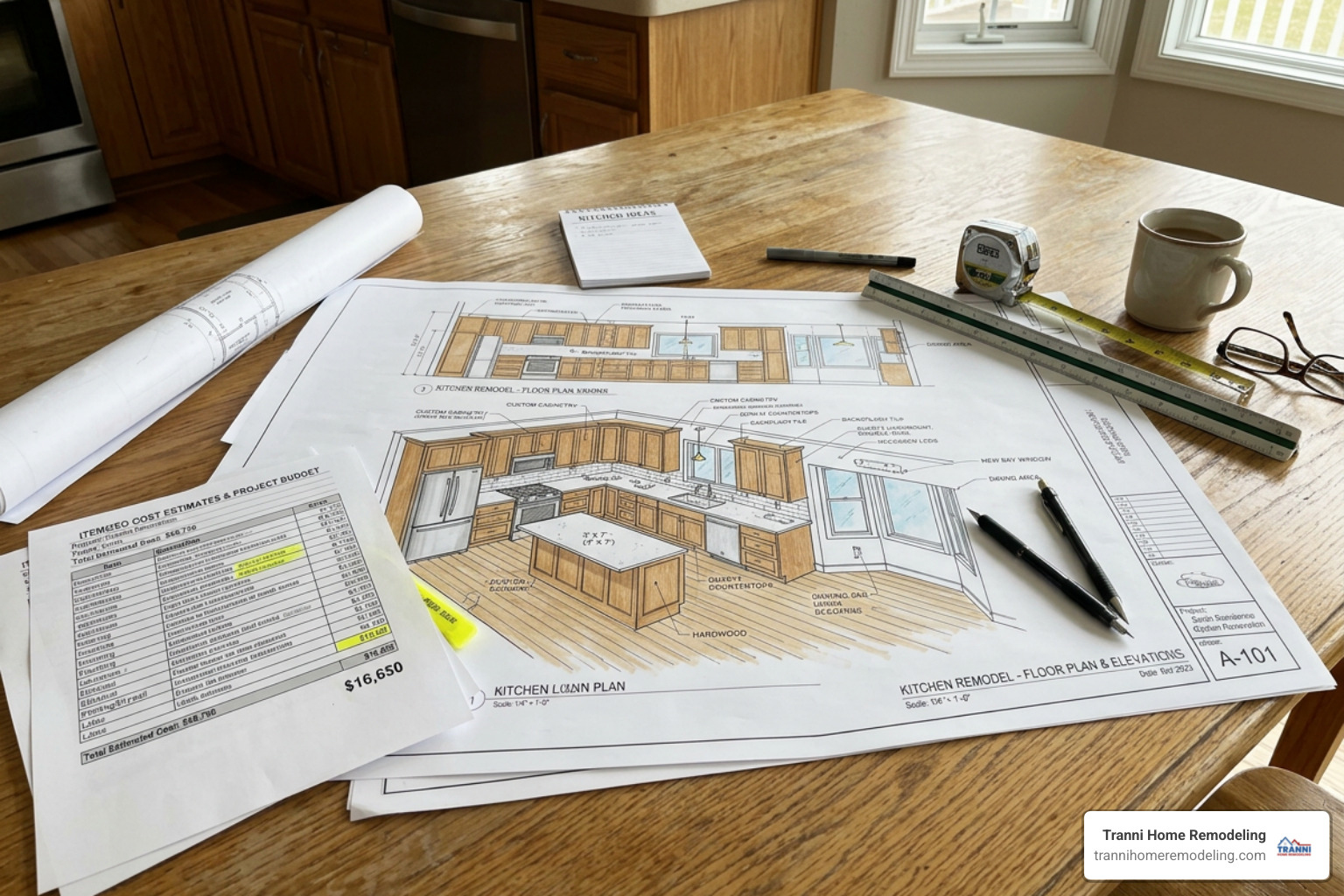
Pricing is where most misunderstandings occur. To protect yourself, always insist on written bids rather than vague verbal estimates. To understand how these fees are calculated, you can read our detailed breakdown of contractor cost for kitchen remodel.
What a Detailed Written Bid Must Include
A professional bid must be highly detailed and itemized. If a contractor hands you a single-page document that simply says “Kitchen Remodel: $45,000,” run the other way.
A secure, detailed bid must include:
- Detailed Scope of Work: Exactly what will be demolished, built, and finished.
- Material Specifications: Brand names, model numbers, dimensions, and finishes. It should specify “Kohler model K-596 faucet” rather than “new faucet.”
- Permit Fees: Clarification on who pulls the permits and who pays for them.
- Subcontractor Costs: Itemized costs for plumbing, electrical, and plastering.
Please note: All pricing structures and service costs listed in this guide are average cost ranges based on internet market data and do not represent the actual pricing of Tranni Home Remodeling.
When looking at average internet data for Massachusetts, kitchen remodeling costs vary widely depending on the scale and finishes:
- Minor/Cosmetic Updates (70–120 sq ft): Average costs range from $15,000 to $60,000+.
- Mid-Range Remodel (120–200 sq ft): Average costs range from $35,000 to $120,000+.
- High-End/Major Structural Renovation: Average costs range from $75,000 to $300,000+.
As you can see, high-end, custom kitchen renovations can easily exceed three times the cost of standard, mid-range updates due to structural work, premium quartz countertops, and custom cabinetry.
Comparing Multiple Estimates Line-by-Line
To compare your bids accurately, you must understand the different contract types. Use this comparison table to evaluate your options:
| Contract Type | How It Works | Best For | Risk Level for Homeowner |
|---|---|---|---|
| Fixed-Price (Lump Sum) | A single, set price for the entire scope of work. | Projects with highly detailed, finalized plans and material specs. | Low. The contractor absorbs any labor or material cost overruns, provided there are no change orders. |
| Cost-Plus | You pay the actual cost of materials and labor, plus a set percentage fee (typically 15-25%) for the contractor’s overhead and profit. | Complex, historic renovations where structural surprises are highly likely. | Medium-High. If material or labor costs increase, your total cost rises automatically. |
| Time & Materials (T&M) | You pay an hourly rate for labor plus the retail or wholesale cost of materials. | Very small, unpredictable repairs or early-stage exploratory work. | High. There is no guaranteed maximum price, which can easily lead to budget overruns. |
The Danger of the Lowest Bid: About 70% of the time, the lowest bid is the riskiest. Unusually low bids usually mean the contractor made an error, omitted necessary items (like permits or dumpsters), or plans to cut corners using cheap materials and unlicensed labor.
Essential Elements of a Secure Kitchen Remodel Contract
Once you have chosen your contractor, the contract is your primary legal protection. Never let work begin without a signed, fully detailed agreement. For a comprehensive look at what to include, read our guide on the role of a kitchen remodeling contractor.
Milestone-Based Payment Schedules
Never pay more than 10% to 30% of the total project cost as an upfront deposit. In fact, some states legally cap initial deposits to protect consumers. Instead, structure your payments around clear, verifiable milestones:
- Deposit: 10% to 30% upon signing the contract (to secure the start date and order initial materials).
- Milestone 1: 20% upon completion of demolition and rough framing.
- Milestone 2: 20% upon completion of rough plumbing, electrical, and insulation inspections.
- Milestone 3: 20% upon cabinet and countertop installation.
- Milestone 4: 15% upon drywall plastering, priming, and flooring installation.
- Final Retainage: Hold back the final 5% to 10% of the contract value until the entire punch list is completed, the final building inspection is passed, and you have received all lien waivers.
Lien Waivers: Before making progress payments, require your general contractor to provide signed lien waivers from all subcontractors and material suppliers. This prevents a subcontractor from placing a lien on your home if the GC fails to pay them.
Change Orders and Dispute Resolution
The average kitchen remodeling project generates $3,500 to $7,000 in change orders. This is because opening up walls often reveals hidden issues, such as outdated wiring or rotted framing from old plumbing leaks.
To protect your budget, your contract must include a strict written change order clause. This clause should state that no extra work will be performed, and no additional fees will be charged, unless a written change order is signed by both parties before the work begins. Every change order must clearly state:
- The exact scope of the additional work.
- The precise cost adjustment (addition or deduction).
- The exact impact on the project timeline.
Additionally, establish clear communication protocols. We recommend scheduling a brief, weekly on-site meeting with a written agenda to review progress, discuss upcoming decisions, and resolve any minor issues before they turn into major disputes.
Red Flags to Watch For When Hiring a Kitchen Contractor
Trust your gut. If a contractor makes you feel uncomfortable or defensive during your initial meeting, they will likely be even harder to work with once they have your deposit. To help you avoid common pitfalls, we have compiled the ultimate guide to selecting the best contractor for kitchen remodel.
Warning Signs During the Initial Consultation
- Vague or Avoidant Answers: If a contractor cannot clearly explain who will supervise the job daily, how they handle dust control, or what their warranty covers, they likely lack kitchen-specific experience.
- Suggesting You Skip Permits: If a contractor asks you to pull the building permits yourself as an “owner-builder,” or suggests skipping permits to “save money,” this is a massive red flag. It usually means they are unlicensed, unregistered, or blacklisted by the local building department.
- No Physical Business Address: Avoid contractors who operate solely out of a PO box or a pickup truck with no permanent, verifiable physical address.
- Refusal to Put Promises in Writing: If they say, “Don’t worry, we’ll take care of that,” but refuse to write it into the contract scope, do not hire them.
High-Pressure Tactics and Unrealistic Low Bids
- High-Pressure Sales: Beware of contractors who offer a “special discount” that is only valid if you sign the contract today.
- Demanding Large Upfront Deposits: Any contractor who demands a 50% or higher deposit before bringing any tools or materials to your home is likely using your money to finish a previous project.
- Too-Good-to-Be-True Pricing: If two contractors bid around $65,000 and a third bids $32,000, the low bidder is either wildly inexperienced or planning to hit you with massive change orders later.
Frequently Asked Questions about Kitchen Remodeling Contractors
FAQ 1: What is the first step in how to find a contractor for kitchen remodel?
The absolute first step is to clarify your project goals, establish a realistic budget range, and write a basic project brief. Before contacting contractors, determine:
- Are you keeping your existing layout, or do you want to move walls, appliances, and plumbing?
- What are your must-have features (e.g., a central island, a double wall oven, or custom pantry pull-outs)?
- What is your maximum budget limit, including a 10% to 20% contingency fund for unexpected surprises?
Having these goals clearly defined ensures you receive accurate, comparable bids from the contractors you interview.
FAQ 2: How much does a contractor charge for a kitchen remodel in Massachusetts?
Based on average internet market data for Middlesex County, a standard professional kitchen remodel typically ranges from:
- Minor Kitchen Refresh: $15,000 to $60,000+.
- Mid-Range Remodel: $35,000 to $120,000+.
- High-End/Custom Renovation: $75,000 to $300,000+.
Disclaimer: These figures represent broad internet averages and are not the actual service costs for Tranni Home Remodeling.
Generally, general contractors and design-build firms charge an overhead and profit margin of 15% to 25% of the total project cost, which is built directly into their itemized bids.
FAQ 3: Do I need a permit for a kitchen remodel in towns like Wilmington or Woburn?
Yes. In almost all Massachusetts towns (including Wilmington, Woburn, Billerica, and Burlington), you must obtain building, electrical, and plumbing permits for a kitchen remodel.
Any project that involves opening walls, modifying structural framing, running new electrical circuits (which is always required for modern kitchen appliances), or altering plumbing lines requires permits and official inspections. A licensed contractor should always handle pulling these permits, as they are legally responsible for ensuring the work complies with the Massachusetts State Building Code.
Conclusion
Finding a trustworthy contractor doesn’t have to be an overwhelming chore. By taking your time, verifying licenses, checking references, and insisting on a highly detailed written contract, you can protect your home and your wallet.
At Tranni Home Remodeling, we believe in delivering outstanding service, high-quality craftsmanship, and complete transparency from the initial consultation to the final walkthrough. Based in Billerica, MA, we proudly serve homeowners throughout Middlesex County, including Bedford, Burlington, Carlisle, Chelmsford, Concord, Tewksbury, Wilmington, Winchester, and Woburn.
If you are ready to turn your dream kitchen into a reality with a local team you can trust, explore our Tranni Home Remodeling Kitchen Remodeling Services and schedule your consultation today!
