




What Is a Ceiling Skim Coat — and Do You Need One?
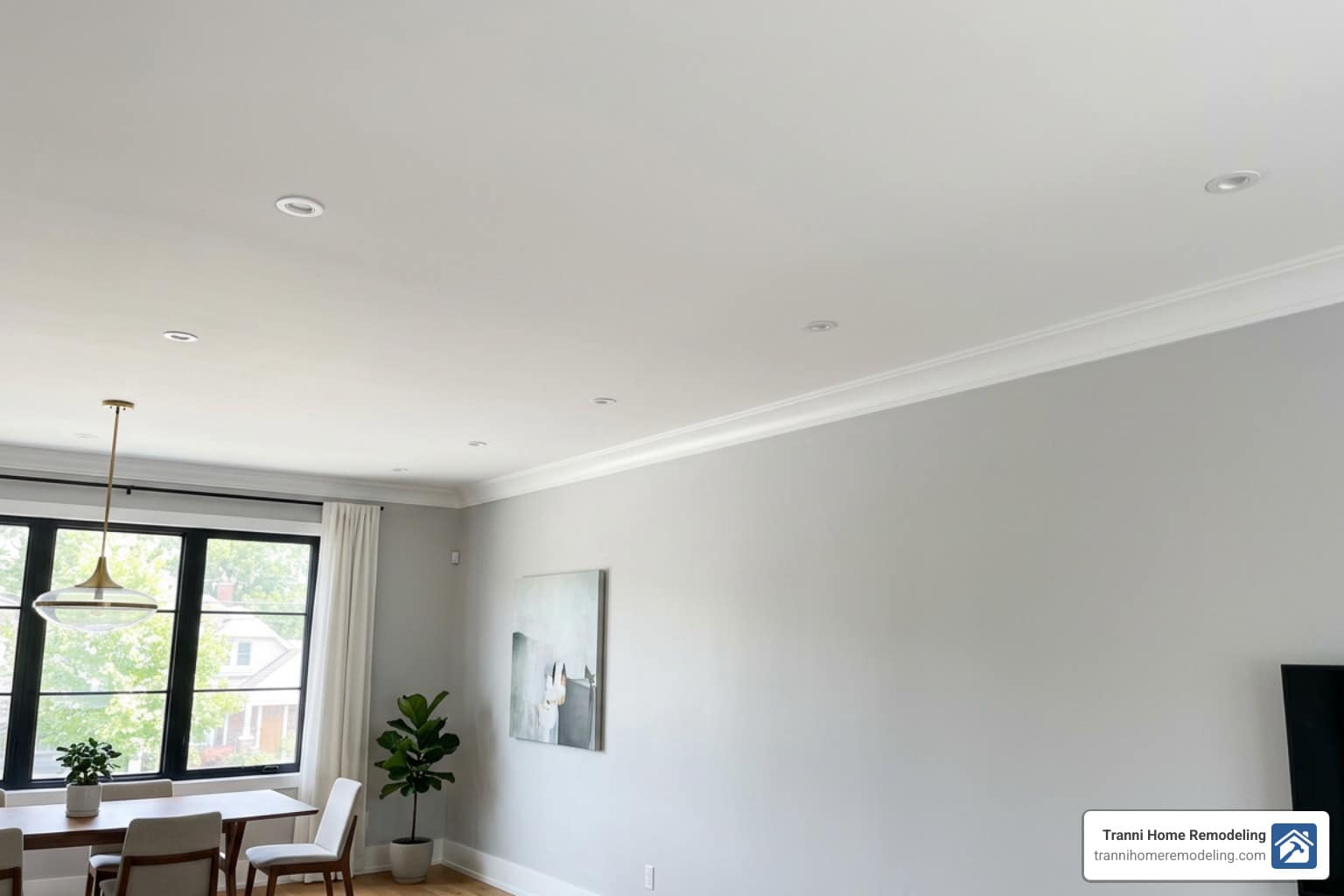
A ceiling skim coat is a thin layer of joint compound spread across your ceiling to create a flat, smooth, paint-ready surface. It’s one of the most effective ways to eliminate cracks, hide old textures, and give any room a clean, modern look — without tearing out your drywall.
Here’s a quick summary of what you need to know:
- What it is: A thin coat (roughly 1/8 in.) of joint compound applied over your entire ceiling
- Why homeowners do it: To cover damaged plaster, old popcorn texture, cracks, or uneven surfaces
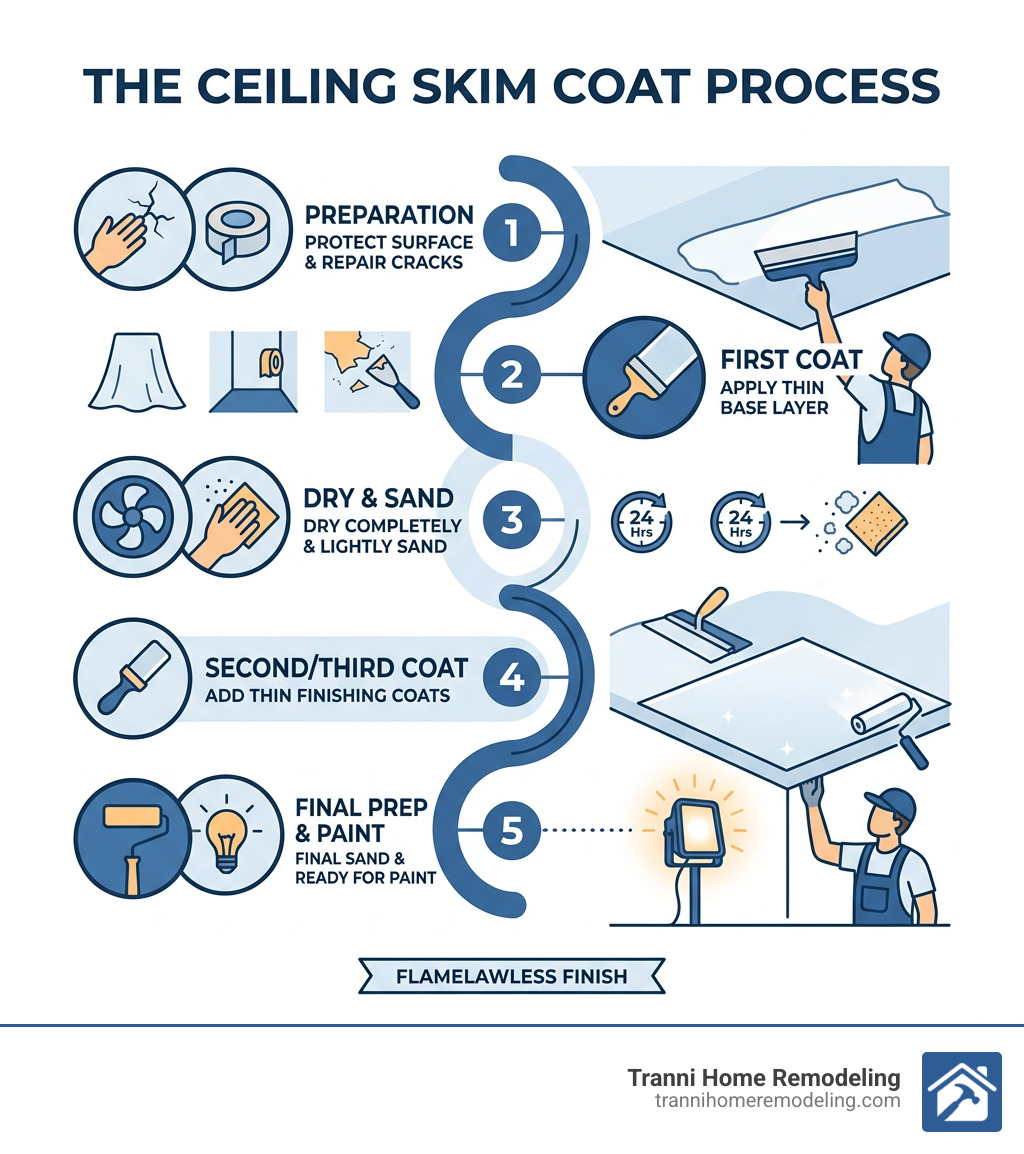
- How many coats: Typically 2–3 thin coats, with sanding between each
- Drying time: About 24 hours per coat; full project can take up to one week
- End result: A Level 5 smooth finish — the highest quality drywall finish available
- DIY or pro? DIY is possible, but overhead work is physically demanding and mistakes are hard to fix
If your ceiling has seen better days — whether from water damage, decades-old texture, or just years of wear — skim coating is usually the most cost-effective path to a flawless finish.
I’m Tyler Tranni, owner of Tranni Home Remodeling in Billerica, MA, and I’ve helped countless homeowners across the area transform tired, damaged ceilings with professional ceiling skim coat work. In this guide, I’ll walk you through everything you need to know — from prep to final paint — so you know exactly what the process involves.
Related content about Ceiling skim coat:
Why Choose a Ceiling skim coat for Your Home?
When we walk into homes in places like Lexington or Concord, we often see ceilings that tell a story—usually one involving outdated design trends from the 1970s. Whether it’s a heavy “knockdown” texture or a deteriorating plaster surface, the ceiling often acts as a visual anchor that makes a room feel smaller or more cluttered.
Choosing a Ceiling skim coat is about more than just aesthetics; it’s about surface restoration. By applying a fresh layer of compound, we can essentially reset the clock on your drywall or plaster. This process is often much faster and cleaner than tearing down old boards and installing new ones, which can significantly impact the average-cost-of-plastering-a-room.
Achieving a Level 5 Ceiling skim coat
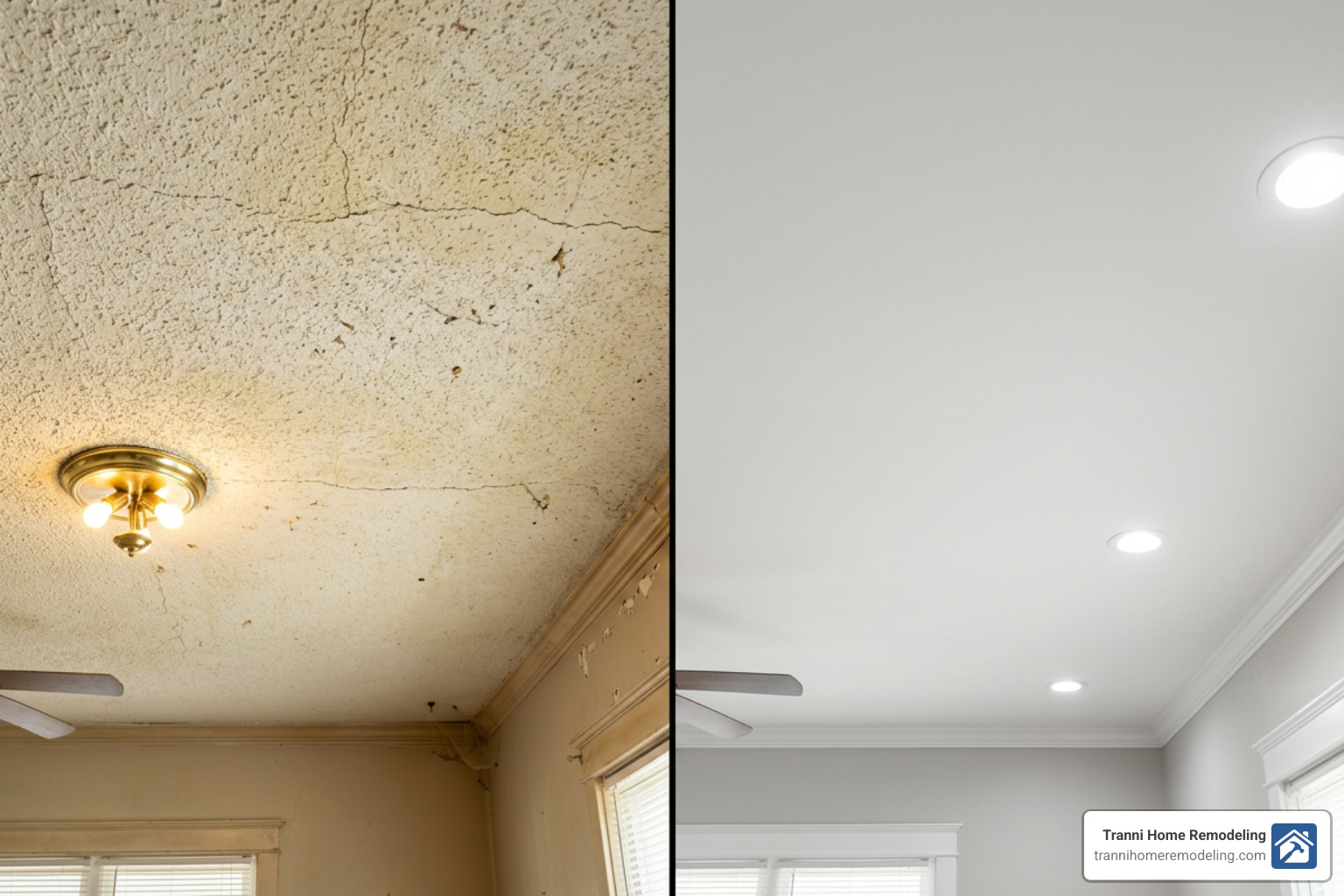
In drywall, there are five levels of finish. Most standard homes have a “Level 4” finish, where joints are taped and sanded, but the paper texture of the drywall is still visible under the paint. A Ceiling skim coat aims for Level 5—the gold standard.
A Level 5 finish involves applying a thin film of joint compound over the entire surface, not just the joints. This creates total surface uniformity. This is particularly vital in rooms with “critical lighting”—large windows or recessed lights that sit close to the ceiling. Without a Level 5 finish, the shadows cast by those lights will reveal every bump and seam.
| Feature | Level 4 Finish | Level 5 (Skim Coat) |
|---|---|---|
| Coverage | Joints and fasteners only | 100% of the surface area |
| Texture | Visible drywall paper texture | Glass-smooth uniform surface |
| Lighting | Best for low/indirect light | Essential for critical/harsh light |
| Paint Prep | Good for flat/matte paints | Required for eggshell/glossy paints |
Pros and Cons of Smoothing Your Ceiling
Before you dive into a project in Winchester or Woburn, it’s important to weigh the benefits against the challenges.
The Pros:
- Preserves Base Walls: You don’t have to risk damaging your home’s framing with a full tear-out.
- Hides Imperfections: It’s the best way to mask different kinds of coating like orange peel or old water stains.
- Elevates Value: A smooth ceiling is a high-end detail that makes millwork and lighting pop.
- Moisture Repair: It can stabilize surfaces that have suffered minor humidity damage, often handled through plastering-and-painting-services.
The Cons:
- Labor Intensive: Working overhead is a workout for your neck, back, and arms.
- Dust: Even with vacuum attachments, sanding creates fine dust that requires careful containment.
- Time: You cannot rush the drying process. Each coat needs roughly 24 hours to cure.
Essential Tools and Materials for a Professional Finish
To get that glass-like finish we’re known for at Tranni Home Remodeling, you can’t just use a basic putty knife. Professional-grade results require a specific kit.
- Joint Compound: We often prefer “ultra-lightweight” or “Plus 3” formulas for ceilings because they have less shrinkage and are easier to sand.
- Skimming Blade: These wide, flexible blades (often 24″ to 32″) allow you to smooth large areas in a single pass, reducing the number of “lap marks.”
- Roller with a 3/4″ Nap: This is our “secret” for speed. We roll the mud onto the ceiling like paint before smoothing it with the blade.
- Pole Sander: Essential for keeping your feet on the ground (or a low bench) while reaching the entire ceiling.
Selecting the Right Joint Compound
Not all “mud” is created equal. When you look at different drywall compounds, you’ll find three main types:
- All-Purpose: Contains more glue. It’s great for the first coat because it sticks to almost anything, but it’s harder to sand.
- Lightweight Topping: Designed specifically for the final coats. It sands like a dream but doesn’t have the same “grip” as all-purpose.
- Setting-Type (Hot Mud): This comes in powder form and hardens via a chemical reaction. It’s great for filling deep cracks because it doesn’t shrink, but it’s very difficult for beginners to smooth out before it sets.
Dust Management and Safety Gear
If you are working in a home in Bedford or Billerica, the last thing you want is white dust in your HVAC system. We highly recommend using a Festool Planex drywall sander or a similar vacuum-assisted sanding system. These tools can capture over 95% of the dust at the source.
Beyond the mess, safety is paramount. Drywall dust contains silica, which is harmful if inhaled over time. Always wear a properly fitted N95 or P100 respirator. If you’re working on a home built before 1978, you must also be mindful of lead paint, and for homes pre-1990, popcorn ceilings should be tested for asbestos. For complex safety situations, it’s always best to consult drywall-and-plaster-contractors.
Step-by-Step Guide to Achieving a Flawless Finish
Achieving a professional Ceiling skim coat is a test of patience. We follow a rigorous process to ensure the finish lasts for decades.
Preparing Textured and Popcorn Surfaces
You can’t build a smooth house on a bumpy foundation. If you have a “popcorn” ceiling, the first step is usually removal. We wet the texture slightly to soften the glue and scrape it off.
Once the heavy texture is gone, we use the Festool Planex drywall sander to “knock down” the remaining peaks. Our goal is to remove about 20% to 30% of the texture height. This allows our first coat of mud to sit flatter. If we’re working on a basement-ceiling-drywall-installation, we also ensure all screws are set slightly below the surface.
Related services:
Application and Smoothing Techniques
- Mix the Mud: We thin the joint compound with a little water until it reaches the consistency of thick yogurt or toothpaste. This makes it easier to roll on.
- Roll it On: Using a 3/4″ nap roller, we apply the mud to a 4×4 foot section.
- The First Pass: Take your Skimming Blade and pull it across the mud at a 30-degree angle. Don’t press too hard; you want to leave a thin, even layer.
- Overlapping: Always overlap your passes by about 2-3 inches to prevent ridges.
- Directional Changes:
- Coat 1: Apply parallel to the longest wall.
- Coat 2: Apply perpendicular to the first coat.
- Coat 3: (If needed) Apply parallel to the first coat again.
Finishing Touches: Priming and Painting
Once your final coat is dry and has been lightly sanded with 220-grit paper, the ceiling will look beautiful—but it’s extremely porous. If you paint directly onto raw joint compound, the moisture will be sucked out of the paint instantly, leading to a blotchy finish called “flashing.”
You must use a high-quality Primer (specifically a PVA sealer or a high-build drywall primer). This seals the surface and ensures the paint adheres properly.
For the final look, we love Ceiling Bright White by Sherwin-Williams. It has a flat finish that further hides any microscopic imperfections and makes the room feel airy. This final stage is part of our comprehensive plastering-and-painting workflow.
Maintenance for Your Ceiling skim coat
A well-done Ceiling skim coat requires very little maintenance, but there are a few things to keep in mind:
- Moisture Control: In bathrooms, ensure your exhaust fan is powerful enough. Excessive steam can eventually soften joint compound.
- Hairline Cracks: Local homes shift with the seasons. If a tiny crack appears, it can usually be touched up with a tiny bit of spackle and paint.
- Dusting: Use a soft microfiber duster once or twice a year to keep the surface bright.
For long-term care, our painting-and-plastering-services can help with periodic refreshes.
Frequently Asked Questions about Ceiling Skim Coating
How many coats are needed for a Ceiling skim coat?
Typically, a minimum of two coats is required. The first coat fills the “valleys” of the texture, and the second coat creates the smooth “plateau.” If you are covering a very heavy popcorn texture, a third coat is often necessary. We always allow for overnight curing between coats to ensure the moisture has fully evaporated.
What is the average cost of skim coating a ceiling?
Based on internet data, the cost to professionally skim coat a ceiling can range from $1.50 to $18.50 per square foot. For a standard 12×14 bedroom, this might range anywhere from $250 to over $3,000 depending on the height of the ceiling, the complexity of the prep work, and the level of finish required. Please note that these are average internet costs and not the specific pricing for Tranni Home Remodeling.
Can I skim coat over a painted popcorn ceiling?
Yes, but it’s more challenging. Paint acts as a barrier, making it harder for the new mud to “bite” into the surface. We usually apply a specialty bonding primer first to ensure the Ceiling skim coat doesn’t peel off later. If the paint is failing or peeling, we must scrape it back to a sound surface first. For these tricky repairs, check out our guide on plastering-repairs-wall.
Conclusion
At Tranni Home Remodeling, we believe that the ceiling is the “fifth wall” of a room. A perfectly executed Ceiling skim coat can be the difference between a room that looks “renovated” and one that looks truly “transformed.” Our team in Billerica brings over a decade of experience to every project, ensuring that homeowners in Burlington, Wilmington, and beyond receive the highest quality craftsmanship.
If you’re ready to say goodbye to your textured ceilings and hello to a flawless, modern finish, we’re here to help. From home additions to expert plastering-services, we treat every home as if it were our own.