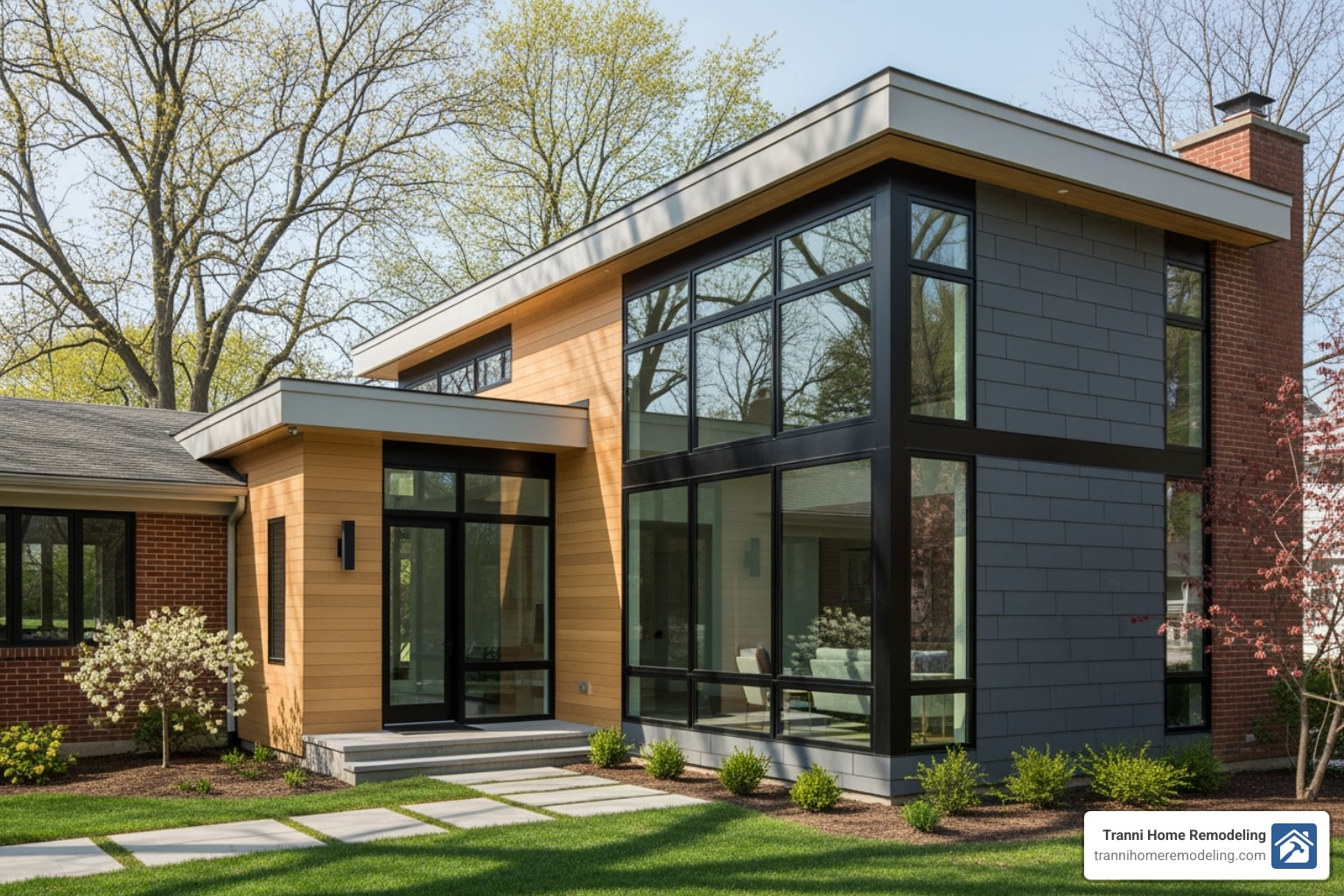





Why a Home Addition and Remodel Might Be Your Best Investment
Home addition and remodel projects offer a strategic way to expand your living space without the hassle and expense of moving. Here’s what you need to know:
- When to Consider: Your family is growing, you need a home office, or your layout feels cramped and outdated
- Main Options: Build out (expand footprint), build up (add second story), or finish existing space (basement/attic)
- Typical Costs: Range from $25,000-$75,000 for partial renovations to $100,000-$600,000+ for major additions
- Key Benefits: More space, increased home value, no need to relocate, and the ability to design exactly what you need
- Planning Essentials: Budget for 10-20% contingency, secure proper permits, and hire licensed professionals
Love your home but need more space? You’re not alone. With high interest rates making moving expensive, a survey from Discover Home Loans reveals that more than half of Americans would rather renovate their home than buy a new one. Whether you’re expanding your kitchen, adding a master suite, or building a second story, this planning guide will walk you through everything you need to know about expanding your living space successfully.
I’m Tyler Tranni, owner and operator of Tranni Home Remodeling in Billerica, MA, where I’ve spent over a decade changing homes through comprehensive home addition and remodel projects. From kitchen expansions to full second-story additions, I’ve helped countless homeowners in the Billerica area create the space they need without leaving the neighborhoods they love.
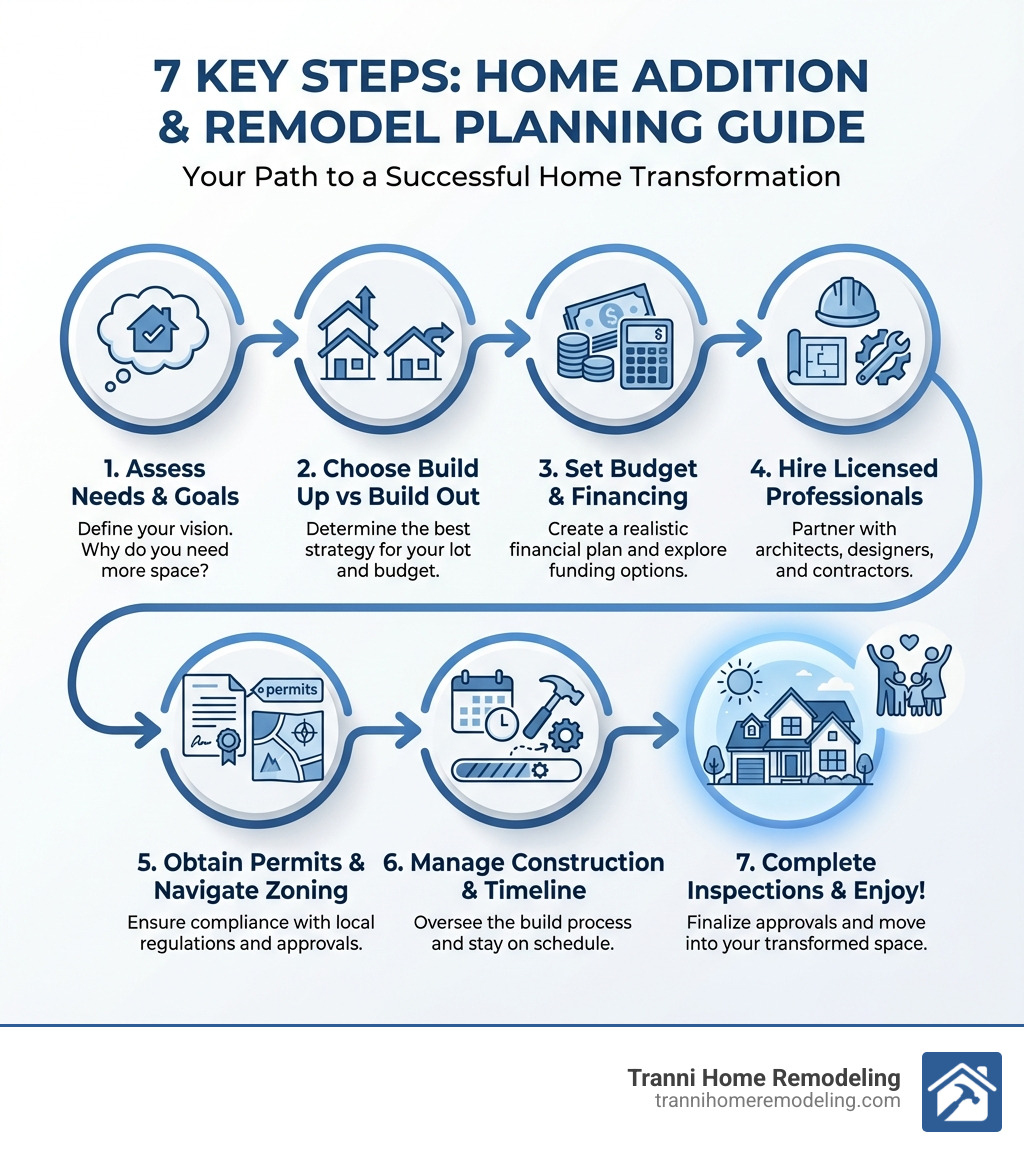
Glossary for home addition and remodel:
Assessing Your Space: Signs You Need a Home Addition and Remodel
Before diving into blueprints and budgets, the first step in any home addition and remodel project is to assess your current living situation. What’s working, and more importantly, what isn’t? This crucial evaluation helps define your project goals, consider your long-term needs, and anticipate potential challenges and construction disruption. Understanding these key factors upfront will set the stage for a successful and satisfying outcome. For more insights into home improvements, you can explore more info about home remodeling services.
When a Remodel Is Enough vs. When You Need More
It’s a common dilemma: do you simply update what you have, or do you need to expand? The signs you need a home addition and remodel versus just a remodel often come down to space and functionality.
Signs a remodel is enough:
- Outdated layout: Your kitchen feels stuck in the 80s, or your bathroom could use a refresh. You’re content with the overall size but want to improve flow, functionality, and aesthetics within existing walls.
- Cosmetic updates: Peeling paint, worn flooring, or old fixtures are making your home feel drab.
- Improving flow: Perhaps moving a non-load-bearing wall could open up a cramped space.
- Budget constraints: Remodeling typically costs 25 to 50 percent of adding on, making it a more budget-friendly option if you can achieve your goals without increasing square footage.
Signs you need a home addition:
- Growing family: A new child, aging parents moving in, or teenagers needing more privacy. Your home simply lacks the square footage for everyone.
- Lack of square footage: You need a dedicated home office, a larger kitchen, a family room, or an in-law suite, and your existing footprint can’t accommodate it.
- Specialized spaces: You dream of a home gym, a sunroom, or a dedicated craft area that doesn’t currently exist.
If your needs extend beyond cosmetic changes or minor reconfigurations, a home addition and remodel is likely the path forward.
The Power of Combining a Home Addition with a Remodel
Often, the smartest solution isn’t choosing between an addition or a remodel; it’s recognizing the potential in doing both. Combining these efforts leads to a more holistic design and seamless integration between your new and existing spaces. As HGTV puts it, an addition is really a remodel—it’s about reconfiguring your entire home to work better for you.
When we combine projects, we can achieve:
- Design cohesion: The new space doesn’t feel “tacked on.” Instead, it flows naturally with the original structure, matching architectural styles and materials. We ensure the lines between original and new are impossible to discern.
- Cost efficiency: Bundling projects can save money on labor, permits, and materials. For example, if we’re already opening walls for an addition, it’s the perfect time to upgrade aging infrastructure like plumbing and electrical in adjoining rooms. This proactive approach can prevent future, more expensive fixes. Our electrical services can be seamlessly integrated into your project.
- Upgrading infrastructure: Many older homes in Middlesex County, MA, have electrical or plumbing systems that need updating. When walls are open for an addition, it’s an opportune time to bring these systems up to code, enhancing safety and functionality throughout your home.
- Repurposing old space: An expanded kitchen might mean your old dining area can become a cozy reading nook or a mudroom. This creates opportunities to reimagine your entire home’s functionality.

Popular Types of Home Additions and Their Benefits
There’s a wide world of possibilities when it comes to home addition and remodel projects. Here are some popular types we often build for homeowners in towns like Wilmington, MA, and Reading, MA, along with their benefits:
- Conventional Room Addition: This is your classic expansion, adding new rooms or extending existing ones. It significantly increases square footage and can transform your home’s functionality.
- Bump-Out: A smaller, more economical expansion, typically extending a single room by a few feet. It’s perfect for creating a breakfast nook in the kitchen, adding space to a bathroom, or expanding a closet.
- Sunroom: A versatile, light-filled space with many windows, often designed to bring the outdoors in. It’s ideal for plant lovers, sun worshippers, or anyone wanting a protected recreational area. Explore our Porches & Decks services for more.
- Second-Story Addition: When land is limited, building up is the answer. This involves adding an entire new floor to your home, often doubling your living space.
- Garage Addition: Adding a new garage or expanding an existing one, sometimes with living space above it.
- Basement Finishing: Converting an unfinished basement into a livable space like a family room, home office, or extra bedrooms. This is often a cost-effective way to add significant value and square footage without changing your home’s exterior footprint.
- Accessory Dwelling Unit (ADU): A self-contained living space, either attached to your home or as a separate structure, complete with a kitchen and bathroom. Ideal for in-laws, adult children, or rental income.
- Master Suite Addition: Creating a luxurious private retreat, often including a spacious bedroom, walk-in closet, and an en-suite bathroom.
Build Up vs. Build Out: Choosing the Right Expansion Strategy
One of the most fundamental decisions in a home addition and remodel is whether to build out (expand horizontally) or build up (add vertically). This choice hinges on several critical factors, including your property size, available yard space, how the addition will integrate with your existing home layout, accessibility needs, and your goals for increasing home value.
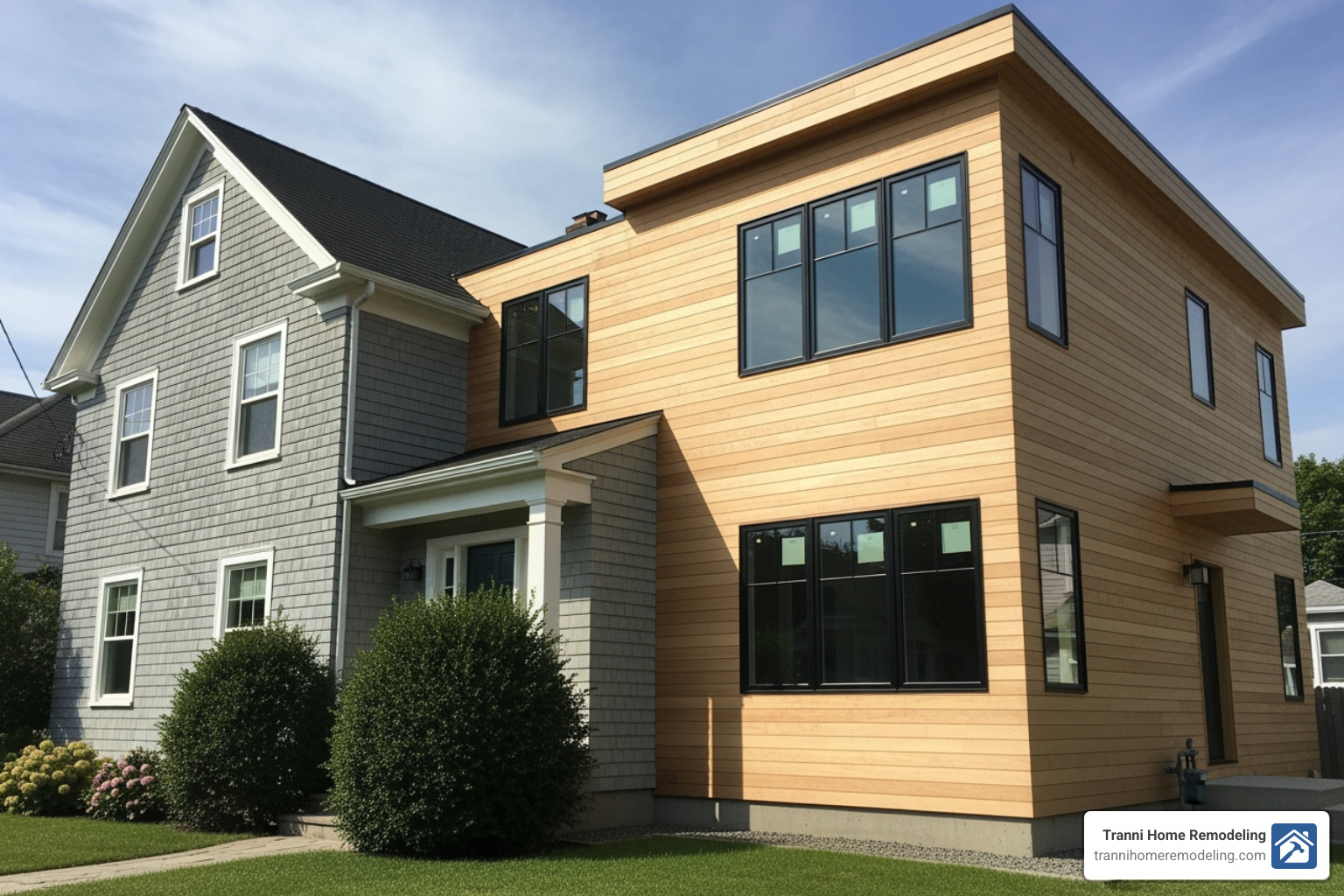
Building Out: Expanding Your Home’s Footprint
Building out involves extending your home’s footprint onto your property. This can be a single room or an entire new wing.
Pros of Building Out:
- Layout flexibility: Building out often offers greater flexibility in creating open-concept living spaces, which are highly sought after today.
- Accessibility: A ground-floor addition is perfect for aging in place or creating an accessible suite for family members.
- Less structural complexity: Generally, building out requires less structural overhaul to the existing house compared to building up.
Cons of Building Out:
- Sacrificing yard space: This is the most significant drawback, especially for homeowners in towns like Tewksbury, MA, or Chelmsford, MA, where lot sizes might be smaller.
- New foundation costs: You’ll need to pour a new foundation, which can be a substantial expense.
- Landscaping impact: Existing landscaping may need to be removed or reconfigured.
Building out is ideal for:
- Kitchen expansions that need more square footage for an island or dining area.
- Adding ground-floor master suites.
- Creating a large family room or sunroom.
Building Up: Adding a Second Story
Building up involves adding a second story or even a third level to your existing home.
Pros of Building Up:
- Preserving outdoor space: This is a major advantage for homeowners who love their yard and don’t want to sacrifice green space.
- Maximizing small lots: In densely populated areas like Woburn, MA, or Stoneham, MA, building up is often the only way to significantly increase living space.
- Significant value increase: Adding an entire floor can substantially increase your home’s value and overall square footage, often more dramatically than building out, especially if it adds multiple bedrooms and bathrooms.
Cons of Building Up:
- Structural reinforcement needed: Your existing foundation and walls will need to be strong enough to support the added weight. This often requires significant structural engineering and reinforcement, adding to costs.
- More disruptive construction: Living through a second-story addition can be highly disruptive, as a large portion of your roof and sometimes upper walls are removed. Many families choose to relocate temporarily.
- Higher complexity: This type of project involves complex engineering, construction, and coordination.
Building up is ideal for:
- Adding multiple bedrooms for a growing family in towns like Woburn, MA.
- Creating a master suite retreat with privacy.
- Maximizing space on a small lot in areas like Reading, MA, or Winchester, MA.
The Benefits of Adding a Bathroom or Master Suite
Regardless of whether you build up or out, certain additions offer exceptional value. Adding a bathroom or a master suite is consistently ranked among the most beneficial home addition and remodel projects.
- Return on Investment (ROI): A survey revealed that a new bathroom often yields the strongest return on investment when it’s time to sell the house. A midrange bathroom addition in New England can recoup around 60-70% of its cost, while an upscale one might still see 30-40% recouped.
- Improved comfort and privacy: A dedicated master suite provides a personal oasis, complete with a private bathroom, offering much-needed comfort and privacy.
- Accommodating family needs: An additional bathroom can alleviate morning rush hour stress for larger families, while a master suite caters to the needs of parents or provides a comfortable space for guests.
- Increased market appeal: Homes with modern, functional bathrooms and luxurious master suites are highly attractive to potential buyers, speeding up sale times and often commanding higher prices.
Our bathroom remodeling services can help you design and build the perfect new bathroom or master suite for your home.
Planning for Success: Budgeting, Financing, and Legal Problems
A successful home addition and remodel project is built on meticulous pre-construction planning. This involves careful financial planning, understanding the costs, securing the right financing, and navigating the sometimes-complex world of legal compliance, including permits, zoning laws, and building codes.
How Much Does a Home Addition and Remodel Typically Cost?
The cost of a home addition and remodel varies widely based on numerous factors:
- Size and complexity: Larger, more intricate additions with custom features will naturally cost more.
- Materials: High-end finishes, custom cabinetry, and specialized fixtures drive up costs.
- Labor: Skilled labor, especially for trades like plumbing and electrical, constitutes a significant portion of the budget. Labor can account for up to 50% of the total budget for a home addition.
- Regional differences: Costs in Massachusetts are generally higher than national averages, often 15-25% above due to a strong economy and skilled workforce.
Please remember that these are average costs based on internet data and are not actual costs for Tranni Home Remodeling. We recommend contacting us for a personalized quote.
| Type of Addition (Average Cost Range) | Cost per Square Foot (Average) | Overall Cost Range (Average) |
|---|---|---|
| Bump-out | $85 – $200 | $10,000 – $70,000+ |
| Conventional Addition | $225 – $450 | $50,000 – $500,000+ |
| Second-Story Addition | $225 – $500 | $100,000 – $600,000+ |
| Garage Addition | $180 – $240 | $25,000 – $150,000+ |
| Accessory Dwelling Unit (ADU) | $200 – $500 | $60,000 – $300,000+ |
| Finished Basement | $50 – $150 | $4,000 – $75,000+ |
How to Finance Your Project
Financing a home addition and remodel can seem daunting, but several options are available:
- Home equity financing: This is a popular choice for homeowners with significant equity. Options include a home equity line of credit (HELOC) or a cash-out refinance. These often offer lower interest rates than personal loans or credit cards.
- Personal loans: These are typically unsecured and have higher interest rates but can be quicker to obtain for smaller projects.
- Savings: If you have sufficient personal savings, this is always the most cost-effective option as you avoid interest payments.
Regardless of your chosen financing method, we always advise creating a contingency fund of 10-20% of your total budget. This buffer is crucial for covering unforeseen expenses that often arise during construction, especially in older homes common in our service areas like Dracut, MA, and Tewksbury, MA.
Navigating Permits, Zoning Laws, and Building Codes
Understanding local regulations is paramount for any home addition and remodel. We work closely with homeowners in Middlesex County communities, such as Woburn, MA and Winchester, MA, to steer these requirements.
- Zoning Regulations: These dictate what you can build on your property, including:
- Setbacks: Minimum distances from property lines.
- Height limits: Maximum allowable height for structures.
- Lot coverage: The percentage of your lot that can be covered by buildings.
- Building Permits: Almost all home addition and remodel projects require a building permit. These ensure your project complies with safety and structural standards. The permit process typically involves submitting detailed plans for review and undergoing inspections at various stages of construction. Permit costs vary by municipality but typically range from $500 to $2,000 for comprehensive remodels.
- Building Codes: The same Construction Code standards apply to both home additions and new constructions, ensuring structural integrity, fire safety, and proper installation of electrical and plumbing systems.
Working with remodeling contractors in Massachusetts who are familiar with local rules is essential to avoid costly delays and ensure compliance. We handle the complexities of these regulations for you.
Choosing Your Team and Maximizing Your Investment
Your home addition and remodel project is a significant investment, both financially and emotionally. Choosing the right team is critical for successful project management, ensuring high-quality craftsmanship, and maximizing your return on investment and long-term value.
How to Choose the Right Contractor
Selecting a qualified contractor is the single most important decision you’ll make. Here’s our advice for vetting potential partners:
- Check licenses and insurance: In Massachusetts, ensure your contractor is properly licensed and carries comprehensive insurance. This protects you from liability in case of accidents or damage.
- Review portfolios and ask for references: Look at their past work, especially projects similar to yours. Speak to previous clients about their experience, communication, and satisfaction with the final outcome.
- Communication style: A good contractor maintains clear and consistent communication throughout the project, keeping you informed of progress and any potential issues.
- Design-build firms: Consider a design-build firm like Tranni Home Remodeling. This approach streamlines the process by having design and construction under one roof, fostering better collaboration and often leading to a smoother project.
- Importance of a detailed contract: A clear, written contract should outline the scope of work, materials, timeline, payment schedule, and change order procedures. This protects both parties and prevents misunderstandings.
With over a decade of experience and a reputation for high-quality craftsmanship and outstanding service, we pride ourselves on being a trusted partner for home addition and remodel projects in Billerica, MA, and surrounding towns like Dracut, MA, and Tewksbury, MA.
How a Home Addition Increases Your Home’s Value
A well-executed home addition and remodel can significantly increase your home’s value, but it’s not just about adding square footage.
- Return on Investment (ROI): While ROI varies by project type and market, additions generally offer a good return. Kitchen and bathroom remodels often yield the strongest ROI. For example, a midrange minor kitchen remodel in New England can recoup over 110% of its cost.
- Added amenities: Features like an extra bedroom, a dedicated home office, or a luxurious master suite make your home more attractive and functional.
- Market appeal: A modern, cohesive design that blends seamlessly with the existing structure improves your home’s overall appeal to buyers.
- Neighborhood value: As the saying goes, location, location, location! Investing in a home addition and remodel in a desirable neighborhood like North Andover, MA, or Chelmsford, MA, is more likely to yield a strong return.
Long-Term Considerations for Your New Space
When planning your home addition and remodel, think beyond the immediate needs. Considering the long-term impact ensures your investment continues to serve you for years to come.
- Future-proofing and flexible use spaces: Design spaces that can adapt as your needs change. A playroom today might be a home office tomorrow, or a guest room could become a caregiver’s suite.
- Aging in place: If this is your “forever home,” consider accessibility features like wider doorways, curbless showers, or even an elevator shaft for future installation, especially if building out on the ground floor.
- Maintenance requirements: Factor in the maintenance needs of new materials and systems.
- Increased property taxes: Adding square footage and value to your home will likely result in higher property taxes.
- Homeowner’s insurance adjustments: Inform your insurance provider about the addition to ensure adequate coverage during construction and after completion.
Frequently Asked Questions about Home Additions
What is the most cost-effective way to add a room to a house?
Converting existing, unfinished space like a basement or attic is typically the most budget-friendly option as it often requires less structural work and no new foundation. A small bump-out is another cost-effective way to expand a single room.
How long does a home addition project usually take?
The timeline varies significantly based on the project’s scale. A simple bump-out might take 2-4 months, while a full second-story addition can take anywhere from 6 months to over a year, factoring in design, permitting, construction, and inspections.
Will I have to move out during the construction?
It depends on the scope. For a self-contained ground-floor addition, you can often remain in your home, though you’ll experience noise and disruption. For major projects like a second-story addition or a whole-house remodel, temporarily relocating is often necessary for safety and convenience.
Start Building Your Dream Space Today
Starting on a home addition and remodel journey is an exciting prospect that can transform your living space and improve your lifestyle. The key takeaways are clear: careful planning is essential, combining projects often maximizes impact, and partnering with the right professional team is crucial for success.
At Tranni Home Remodeling, we bring over a decade of experience, high-quality craftsmanship, and outstanding service to every project. We’re dedicated to helping homeowners in Billerica, MA, and across Middlesex County create a space that perfectly fits their lifestyle and long-term needs.
Ready to expand your home without moving? Contact us to discuss your home addition project today, and let’s build the home you’ve always dreamed of.