





Traditional Bathroom Remodel: 38 Inspiring Ideas
Why Traditional Bathroom Remodels Create Timeless Value
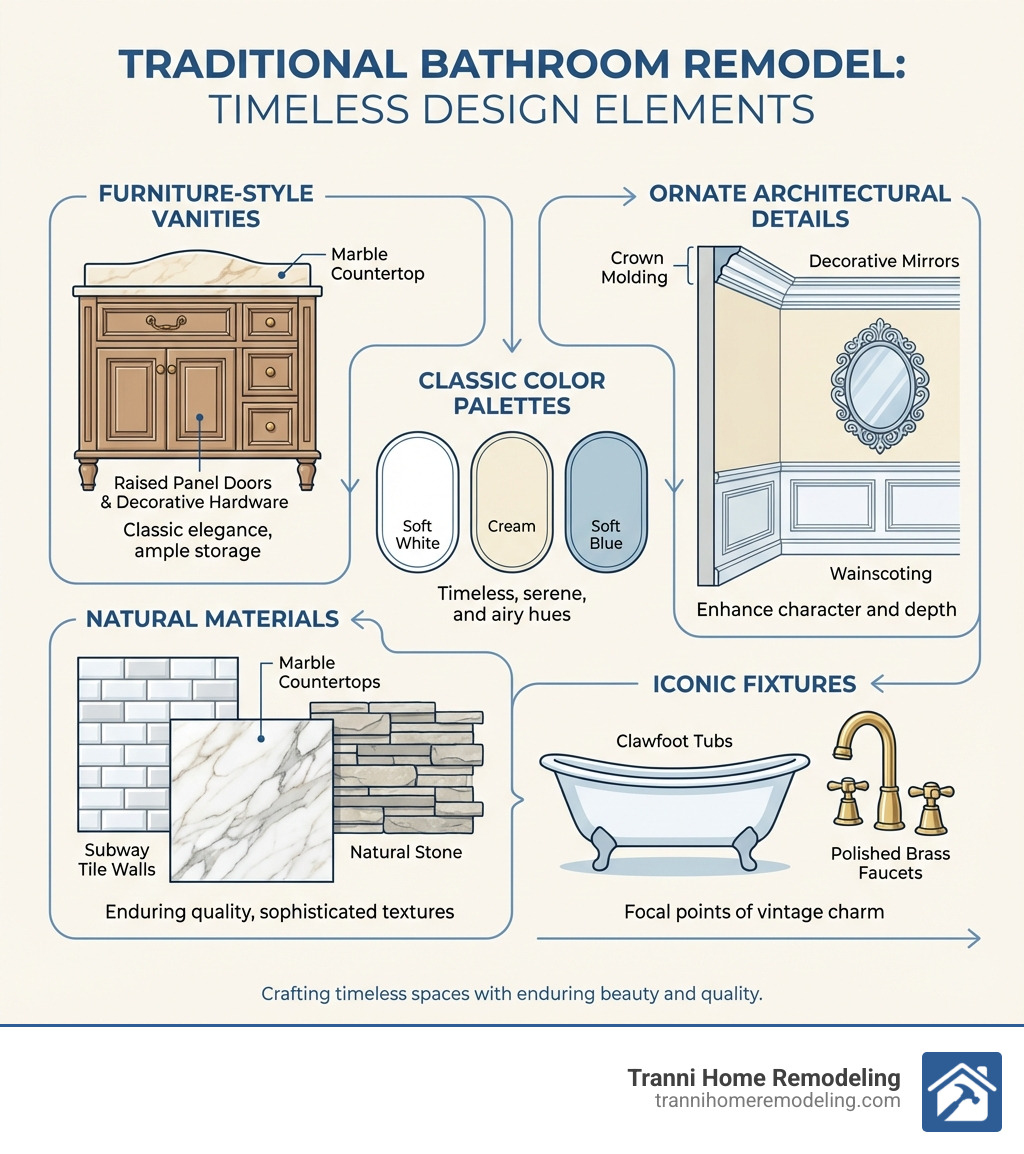
A Traditional bathroom remodel transforms your space into a timeless sanctuary that blends classic elegance with modern functionality. This renovation style is defined by:
- Furniture-style vanities with inset cabinets and ornate hardware
- Classic materials like marble, natural stone, and polished brass
- Architectural details including wainscoting, crown molding, and decorative trim
- Timeless color palettes featuring whites, creams, soft blues, and neat neutrals
- Iconic fixtures such as clawfoot tubs, pedestal sinks, and crystal chandeliers
According to the 2023 Houzz Bathroom Trends Study, 57% of homeowners are planning or actively renovating their bathrooms, with traditional styles remaining consistently popular. These remodels typically cost between $15,000 and $25,000 for mid-range projects, though high-end renovations can exceed this range significantly. The appeal lies in their ability to age gracefully—mixing elements from different eras creates a sophisticated look that won’t feel dated in five years.
As Tyler Tranni, owner of Tranni Home Remodeling in Billerica, MA, I’ve guided countless homeowners through traditional bathroom remodel projects that honor classic design principles while incorporating modern conveniences. With years of hands-on experience in bathroom renovations, I understand how to balance timeless aesthetics with the practical needs of busy families.
Must-know Traditional bathroom remodel terms:
- Bathroom Remodeling Contractor
- how to hire a bathroom remodeling contractor
- what to ask a contractor when remodeling a bathroom
The Hallmarks of Traditional Bathroom Design
When we talk about traditional bathroom design, we’re envisioning a space that feels both rich in history and comfortably familiar. This style isn’t about fleeting trends; it’s about creating an enduring aesthetic that exudes elegance and sophistication. We focus on foundational elements that define this classic look, ensuring every detail contributes to a cohesive and inviting atmosphere.
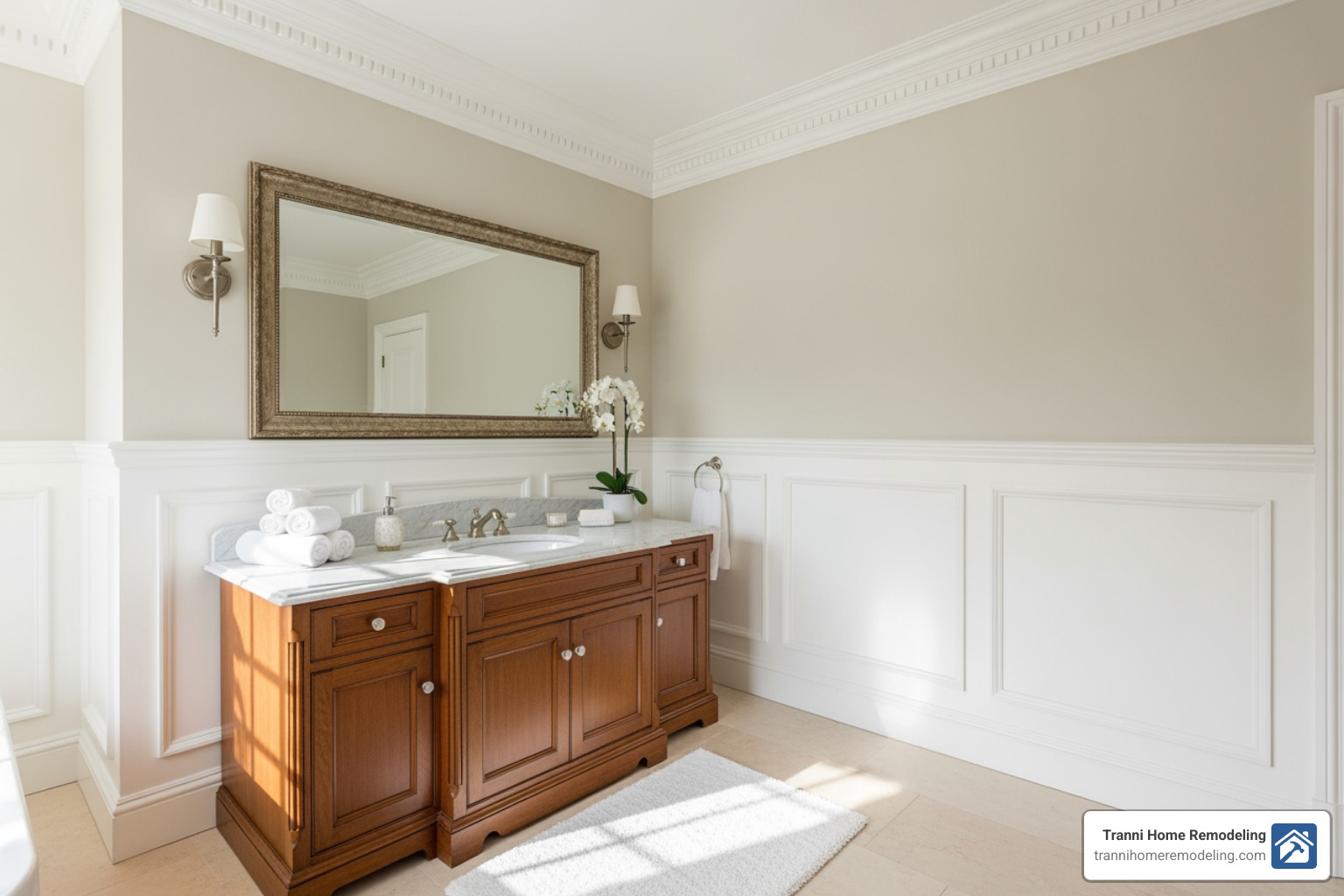
The core principles of a traditional aesthetic are anchored in architectural details, a thoughtful color palette, and the careful selection of materials. We often incorporate furniture-style vanities that bring a sense of warmth and permanence, along with architectural details like wainscoting, crown molding, and decorative trim that add character and depth. Natural materials are paramount, lending authenticity and a luxurious feel that stands the test of time. And if you’re considering enhancing your home with custom architectural elements, we also offer fine interior carpentry services to bring those visions to life.
Timeless Color Palettes for a Serene Escape
Color plays a pivotal role in setting the mood for a traditional bathroom. We gravitate towards palettes that are soft, inviting, and inherently classic.
- Classic Black and White: This iconic duo offers unparalleled sophistication. Whether it’s a checkerboard floor, subway tiles with dark grout, or a crisp white vanity against a black accent wall, black and white creates a striking yet timeless look. It’s a scheme that never goes out of style.
- Soft Neutrals: Creams, beiges, and warm grays provide a serene and calming backdrop. These colors allow other elements, like luxurious materials or intricate fixtures, to truly shine. They create a spacious and airy feel, perfect for a tranquil retreat.
- Soothing Blues and Sage Green: These gentle hues evoke a sense of calm and nature. A soft blue can make a bathroom feel like a spa, while sage green adds an organic, earthy touch. They pair beautifully with white and natural wood tones.
- Gold and Brass Accents: While not a primary color, the metallic accents are crucial. Polished brass or antiqued gold fixtures add a touch of luxury and warmth, complementing all the above palettes beautifully. They act as jewelry for your bathroom, elevating the entire design.
Choosing the right paint and finishes is crucial for durability and aesthetics. For expert advice on selecting the perfect colors and ensuring a flawless finish, explore our plastering and painting services.
Luxurious Materials and Finishes
The tactile experience of a traditional bathroom is defined by its materials. We prioritize high-quality, durable, and beautiful elements that contribute to the overall luxurious feel.
- Marble Countertops: Marble is a cornerstone of traditional design. Its unique veining and cool, smooth surface instantly lift a space. Whether it’s Carrara, Calacatta, or Statuario, marble adds an undeniable touch of opulence to vanities and even shower surrounds.
- Natural Stone Tiles: Beyond marble, we often incorporate other natural stones like limestone or travertine for flooring and wall applications. These materials offer subtle variations in color and texture, creating a rich, organic feel that synthetic alternatives simply cannot replicate.
- Polished Nickel and Unlacquered Brass Fixtures: These metals are the jewelry of the traditional bathroom. Polished nickel offers a sophisticated, silvery gleam that mimics antique silver, while unlacquered brass develops a beautiful patina over time, adding character and an authentic vintage appeal. These finishes are consistently popular for their timeless charm.
- Hardwood Flooring: While tile is common, solid hardwood flooring, properly sealed and protected, can bring best warmth and elegance to a traditional bathroom, especially in areas outside the immediate wet zones.
- Crystal Accents: From chandeliers to cabinet knobs, subtle crystal elements catch the light and add a touch of sparkle and glamour, reinforcing the luxurious aesthetic.
When selecting and installing these premium materials, expertise is key. Our flooring installation services ensure that your chosen tiles and flooring are laid with precision and care, providing a flawless foundation for your traditional design.
Essential Features for Your Traditional Bathroom Remodel
Once we’ve established the overarching design principles and material choices, we dig into the specific, iconic elements that truly define a traditional bathroom. These features are not just functional; they are integral to the aesthetic, creating a space that feels both grand and inviting.
The Centerpiece: Vanities and Sinks
The vanity is often the focal point of a traditional bathroom, merging storage with style. We see several beloved styles that capture this essence:
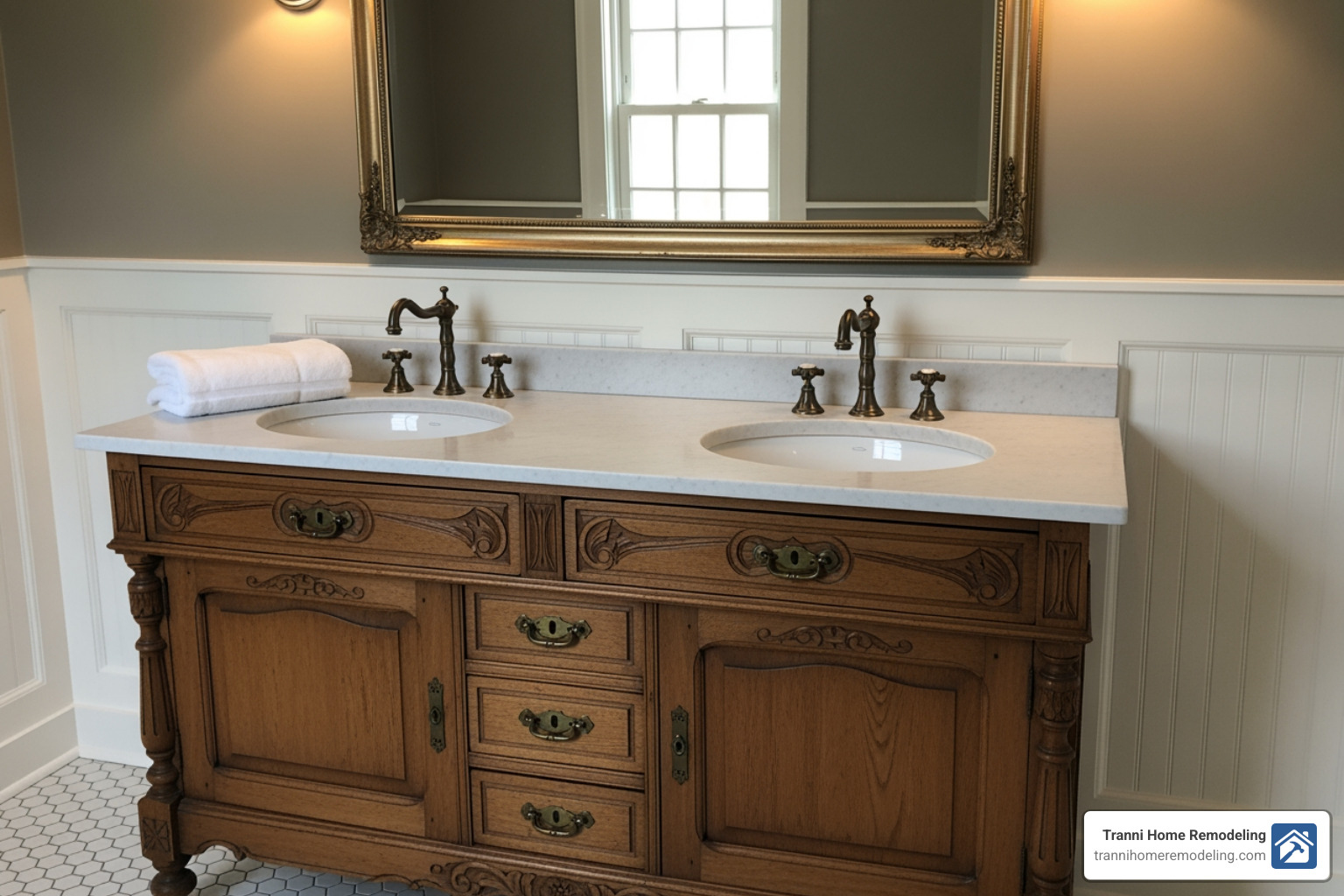
- Furniture-Style Vanities: These vanities resemble fine pieces of furniture, often featuring intricate detailing, turned legs, or paneled doors. They bring a sense of warmth and bespoke craftsmanship to the bathroom.
- Repurposed Dressers: A unique and charming approach is to convert an antique dresser into a vanity. This not only adds character but also provides a one-of-a-kind piece with a story. Imagine a vintage curved dresser transformed into a double vanity, instantly elevating the space.
- Pedestal Sinks: For a classic, space-saving option, especially in powder rooms or smaller bathrooms, a pedestal sink offers neat simplicity.
- Console Sinks: Similar to pedestal sinks but often featuring exposed legs and a shelf or towel bar underneath, console sinks provide a refined, open feel.
- Inset Cabinets: Regardless of the vanity style, inset cabinet doors (where the door sits flush within the frame) are a hallmark of traditional, high-quality cabinetry, providing a clean and custom look.
- Ornate Hardware: The right hardware acts like jewelry. Think polished nickel, unlacquered brass, or even crystal knobs and pulls that complement the vanity’s style and the room’s overall aesthetic.
The Ultimate Relaxation: Bathtubs and Showers
The bathing area in a traditional bathroom is designed for luxury and comfort, often becoming a sculptural element in itself.
- Freestanding Tubs: A freestanding tub, whether a contemporary soaking tub or a classic clawfoot, instantly creates a focal point and a sense of grandeur. Placing it under a window can dramatically improve its appeal.
- Clawfoot Bathtubs: These iconic tubs, with their distinctive feet, are synonymous with vintage charm and luxurious soaks. They are perfect for a French Country or Victorian-inspired traditional bathroom.
- Alcove Tubs with Decorative Surrounds: For those who prefer a built-in option, an alcove tub can be liftd with beautiful tile surrounds, wainscoting, or other decorative paneling.
- Walk-in Showers with Classic Tile: Even with a focus on tubs, a spacious walk-in shower is essential. We often use classic tiles like subway tiles or marble tiles for the walls, creating a clean, timeless look.
- Frameless Glass Doors: To maintain an open and airy feel, especially in smaller spaces, frameless glass shower doors are a popular choice. They allow the beautiful tilework to be seen and prevent the bathroom from feeling visually cluttered.
The Foundation: Classic Tile and Flooring
The flooring and wall tiles are not just practical surfaces; they are integral to the traditional aesthetic, providing texture, pattern, and durability.
- Basketweave Tile: This intricate mosaic pattern, often in black and white or subtle grays, is a quintessential traditional flooring choice. It adds visual interest and a touch of vintage elegance.
- Hexagon Tile: Small hexagon tiles, particularly in white or with a contrasting border, are another classic option for bathroom floors and shower pans. They offer a delicate pattern that complements traditional fixtures.
- Penny Tile: These small, circular tiles create a charming, retro feel. They are often used for flooring in traditional bathrooms, providing a subtle texture and a nod to historical design.
- Checkerboard Floors: A black and white checkerboard pattern, typically in porcelain or marble, creates a bold yet classic statement. It’s versatile enough to suit various traditional sub-styles, from neat French Country to rustic farmhouse.
- Intricate Tile Borders: To break up larger expanses of subway tile or add a decorative touch, we often incorporate intricate tile borders, especially around the shower or wainscoting. This small detail can make a big impact in defining the traditional style.
While some might consider tackling tiling themselves, achieving a professional, long-lasting finish for these intricate patterns requires skill and precision. For significant tiling work, we always recommend professional installation to ensure durability and a flawless aesthetic.
Illuminating Elegance: Lighting, Accessories, and Blending Eras
The final layers of a traditional bathroom remodel are where personality truly shines through. Lighting, mirrors, and accessories are not mere afterthoughts; they are crucial elements that complete the aesthetic, adding warmth, functionality, and that coveted touch of elegance.
We believe in layered lighting to create different moods and ensure ample illumination for tasks. This includes overhead fixtures like chandeliers, task lighting from wall sconces flanking a mirror, and even recessed lighting for general ambiance. Ornate mirrors, vintage-inspired hardware, classic textiles, and neat window treatments all contribute to the rich mix of a traditional design.
Blending Eras for a Timeless, Updated Look
One of the most exciting aspects of a traditional bathroom is its ability to accept elements from various periods, creating a truly unique and enduring space. The key is to mix and match thoughtfully, rather than adhering strictly to one historical era.
- Mixing Modern and Vintage: We often blend a sleek, contemporary soaking tub with a vintage-inspired vanity, or pair antique artwork with modern, efficient fixtures. This juxtaposition creates a dynamic and sophisticated look that feels fresh yet grounded in history.
- Transitional Style: This approach perfectly marries traditional warmth with modern clean lines. It’s less ornate than pure traditional but more classic than strictly contemporary, making it ideal for those who appreciate both worlds.
- Art Deco Accents: For a touch of glamour, incorporating Art Deco-inspired lighting or mirror frames can add a sophisticated, era-blending flair.
- Mid-Century Pieces: A well-placed mid-century modern stool or accessory can provide an unexpected, yet harmonious, contrast within a traditional setting, adding intrigue without disrupting the classic feel.
- Mixing Metals: Gone are the days of matching every metal finish. We often mix polished chrome fixtures with black lighting or brass accents. This contemporary approach within a traditional framework adds depth and visual interest.
- Updated Traditional Fixtures: Many manufacturers now offer fixtures with traditional silhouettes but updated finishes or streamlined details. These pieces provide the best of both worlds, ensuring modern functionality with classic elegance.
This thoughtful blending of styles ensures that your bathroom ages gracefully, avoiding the pitfalls of overly trendy designs. It’s about creating a space that feels curated and personal. To see examples of how we’ve skillfully blended styles and eras in our projects, we invite you to explore our home remodeling portfolio.
Planning Your Traditional Bathroom Remodel Project
Starting on a traditional bathroom remodel is an exciting journey, and careful planning is the compass that guides us to a successful outcome. From adapting designs to different room sizes to carefully budgeting, we ensure every detail is considered.
Adapting Traditional Design for Any Size Bathroom
Whether you have a sprawling en suite or a compact powder room, traditional design principles can be beautifully applied.
- Grand En Suites: In larger spaces, we can incorporate luxurious elements like a freestanding tub as a centerpiece, a double vanity with ample storage, and even a separate water closet. Here, large-scale patterns in flooring or wallpaper can make a grand statement without overwhelming the room.
- Cozy Guest Baths: For medium-sized guest bathrooms, we focus on maximizing comfort and elegance. A classic vanity with a beautiful countertop, a combination tub/shower with subway tile, and neat lighting can create a welcoming retreat.
- Neat Powder Rooms: Even the smallest powder rooms can exude traditional charm. We might opt for a pedestal sink or a console sink to free up floor space, use ornate mirrors to create the illusion of depth, and select a striking wallpaper or mural for a memorable impact. In a small vanity, a pull-out trash can can be a clever addition, preserving precious floor space.
- Pedestal Sinks for Small Spaces: These are ideal for compact bathrooms as they occupy minimal visual and physical space, enhancing the traditional aesthetic.
- Wall-Mounted Faucets: For a sleek look that saves counter space, wall-mounted faucets can be a practical and stylish choice in smaller traditional bathrooms.
- Large-Scale Patterns: While it might seem counterintuitive, a carefully chosen large-scale pattern on wallpaper or floor tile in a small room can sometimes make it feel more expansive, adding character without clutter.
Our experience extends to all types of home improvements, including home additions that can create the space for the traditional bathroom of your dreams.
Budgeting for Your Traditional Bathroom Remodel
Understanding the financial aspect is crucial for any renovation. We always advise our clients to plan comprehensively. Please note that the costs mentioned here are average estimates based on internet data and do not reflect actual pricing from Tranni Home Remodeling.
- Average Remodel Costs: According to various industry reports, the average cost of a bathroom remodel in the US can range from $6,456 to $24,715 or more, with a general average often cited around $15,586. However, costs can vary significantly based on the scope of work, materials chosen, and labor rates in our specific Massachusetts service areas.
- Cost Factors: Key elements influencing the cost include the size of the bathroom, whether you’re changing the layout (which involves plumbing and electrical work), the quality of materials (e.g., marble vs. ceramic tile), and the fixtures selected (e.g., a standard tub vs. a high-end freestanding tub).
- High-End Renovation Costs: For those dreaming of a truly luxurious traditional bathroom, costs can easily reach $25,000 or more, with some upscale projects exceeding $100,000, especially if structural changes or high-end bespoke elements are involved.
- ROI (Return on Investment): A well-executed bathroom remodel can offer a strong return on investment. The typical ROI for a mid-range remodel is around 80%, according to the 2025 Cost vs. Value Report. An updated bathroom is consistently an attractive selling point for homes in areas like Woburn, Winchester, and Lexington, MA.
- Labor Costs: Labor typically accounts for a significant portion of the budget, often 40% to 65% of the total project cost. This includes skilled tradespeople like plumbers, electricians, and tile setters.
- Contingency Fund: We strongly recommend setting aside a contingency fund of at least 10% to 20% of your total budget for unexpected issues that may arise, especially in older homes which often hide surprises behind walls.
Common Mistakes to Avoid
Even with the best intentions, some pitfalls can derail a traditional bathroom remodel. We’re here to help you steer these challenges.
- Ignoring Layout: A poorly planned layout can compromise functionality. We carefully consider traffic flow, door swings, and the placement of fixtures to ensure a comfortable and efficient space.
- Poor Scale: Using oversized fixtures in a small bathroom or undersized elements in a grand space can create an awkward look. We ensure all elements are proportionate to the room’s dimensions.
- Overly Trendy Choices: While tempting, incorporating too many fleeting trends can quickly date your traditional bathroom. We focus on classic, enduring elements that will remain beautiful for years to come.
- Inadequate Storage: A beautiful bathroom loses its appeal if it’s cluttered. We design ample, discreet storage solutions, from built-in linen cabinets to cleverly integrated vanity drawers.
- Poor Lighting: A single overhead light isn’t enough. We layer lighting with ambient, task, and accent fixtures to create a well-lit and inviting space. Consider sconces flanking a mirror for optimal task lighting.
- Improper Ventilation: This is critical for preventing mold and mildew, especially in our humid Massachusetts summers. We ensure proper ventilation with an exhaust fan that vents to the outside, not just into the attic.
- Forgetting GFCI Outlets: Safety first! All bathroom outlets must be Ground Fault Circuit Interrupter (GFCI) protected to prevent electrical shocks.
Frequently Asked Questions about Traditional Bathroom Remodels
What is the difference between traditional and farmhouse bathroom style?
While both styles evoke a sense of history and comfort, they have distinct characteristics. Traditional bathroom remodel designs are generally more formal and neat, emphasizing elegance, symmetry, and ornate details. You’ll often see luxurious materials like polished marble, dark wood cabinetry, intricate tile patterns, and classic fixtures such as clawfoot tubs and polished nickel faucets. The aesthetic leans towards a refined, often European-inspired elegance.
Farmhouse style, on the other hand, is more rustic, casual, and practical. It celebrates warmth, simplicity, and natural elements. Key features include shiplap or beadboard walls, reclaimed wood, apron-front or trough sinks, and more utilitarian fixtures. The color palette tends to be lighter, with whites, creams, and natural wood tones, often paired with industrial or vintage-inspired accents. While a traditional bathroom might feel like a stately manor, a farmhouse bathroom feels like a cozy, well-loved country home.
Can I mix modern technology with a traditional bathroom design?
Absolutely! We firmly believe that modern functionality should improve, not detract from, classic elegance. The trick is discreet integration. You can seamlessly incorporate modern conveniences without compromising the traditional aesthetic.
Consider these options:
- Heated Floors: A luxurious modern comfort that’s completely invisible.
- Smart Toilets/Bidets: Many models offer sleek designs and features like heated seats and automatic flushing, which can blend in or be subtly concealed.
- Steam Showers: A spa-like addition that can be integrated into a traditionally tiled shower enclosure.
- Smart Faucets and Fixtures: Choose fixtures with classic finishes like polished nickel or oil-rubbed bronze, and opt for models that offer touchless operation or precise temperature control while maintaining a vintage look.
- Adjustable Smart Lighting: Control ambiance with dimmable LED lighting that can be adjusted via smart home systems, all while housed in traditional chandeliers or sconces.
- Hidden Storage and Charging: Integrate electrical outlets inside vanity drawers or linen cabinets for discreet charging of electric toothbrushes or razers.
The key is to select modern technology with finishes and designs that align with the vintage or classic decor. Many high-end modern technologies are designed with this in mind, allowing for a harmonious blend of old-world charm and cutting-edge convenience.
How do I make a small traditional bathroom feel larger?
Maximizing space and light is crucial in a small traditional bathroom, and we have several tricks up our sleeves to achieve this:
- Use a Light Color Palette: Whites, creams, soft grays, and pastels on walls and tiles will reflect light and make the room feel more open and airy.
- Incorporate a Large, Ornate Mirror: A generously sized mirror, especially one with an ornate frame, not only serves a functional purpose but also reflects light and the room itself, creating the illusion of greater depth and space.
- Opt for a Pedestal or Wall-Mounted Sink: Unlike bulky vanities, these sinks free up valuable floor space, making the room feel less crowded. If a vanity is necessary for storage, choose a furniture-style vanity with open shelving or legs to maintain an airy feel.
- Install a Clear Glass Shower Door Instead of a Curtain: A frameless glass shower enclosure allows the eye to travel through the shower space, making the entire bathroom feel larger and more cohesive. A shower curtain, while traditional, can visually chop up a small room.
- Consistent Flooring: Carrying the same flooring material from the main bathroom area directly into the shower can create an unbroken visual line, making the space appear more expansive.
- Recessed Lighting and Wall Sconces: Instead of large, hanging fixtures, opt for recessed lighting combined with neat wall sconces on either side of the mirror. This provides ample, layered lighting without taking up visual space.
- Clever Storage: Use vertical space with tall, narrow linen cabinets or floating shelves above the toilet. Built-in niches in the shower wall also provide storage without encroaching on floor space.
By thoughtfully applying these design strategies, even the coziest traditional bathroom can feel surprisingly spacious and luxurious.
Conclusion: Begin Your Timeless Change
A traditional bathroom remodel is more than just an update; it’s an investment in timeless elegance and lasting value for your home. It’s about crafting a sanctuary that blends the rich history of classic design with the seamless functionality of modern living. By focusing on quality materials, adhering to proven design principles, and ensuring expert craftsmanship, you can create a bathroom that not only meets your practical needs but also serves as a beautiful, enduring retreat for years to come.
At Tranni Home Remodeling, we pride ourselves on bringing these visions to life. With over a decade of experience and a commitment to high-quality craftsmanship and outstanding service, we’ve helped homeowners across Middlesex County, including Woburn, Winchester, and Lexington, MA, achieve their dream bathrooms. Our team understands the nuances of traditional design and how to integrate it beautifully into homes throughout our Massachusetts communities.
Ready to transform your bathroom into a space of classic beauty and modern comfort? Let us guide you through every step, from initial design concepts to the final, exquisite details.
Contact us to start planning your bathroom remodel in the Woburn, MA area today, and let’s unveil the elegance your home deserves.
Like us on Facebook!
