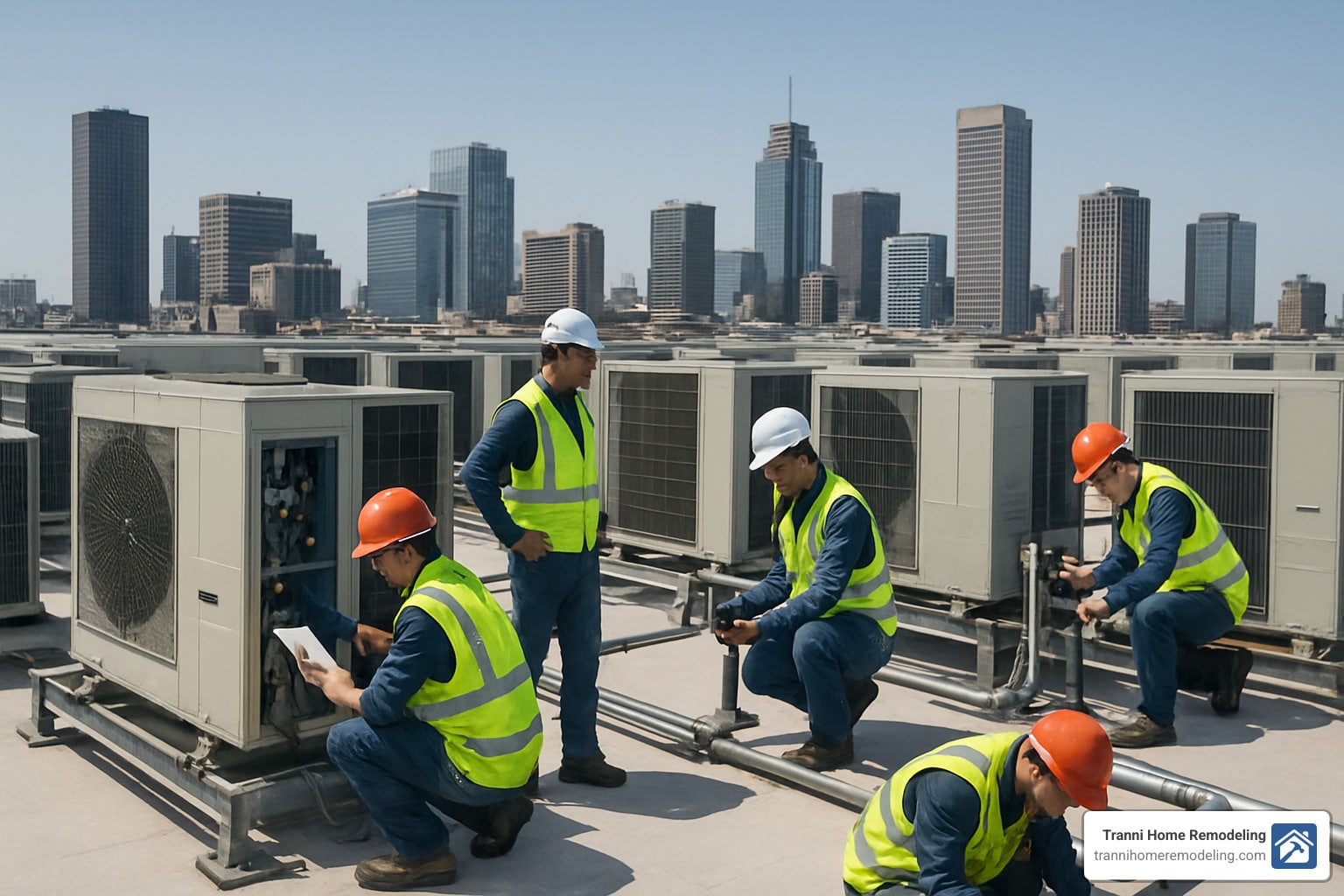





AC Installation: Top 10 Powerful Tips for Success in 2025
Why Commercial AC Installation Is Crucial for Business Success
AC installation for commercial spaces is fundamentally different from residential systems, requiring specialized knowledge and equipment to ensure optimal performance.
For quick reference:
Commercial AC Installation Basics What You Need to Know Average Cost Range $8,000-$60,000 (based on internet data) Installation Timeline 1-7 days depending on system size Professional vs DIY Professional installation required for warranty and code compliance Key Benefits Energy efficiency, improved air quality, business continuity Common System Types Rooftop packaged units, split systems, VRF/VRV, ductless mini-splits
When temperatures rise, the last thing your business needs is an uncomfortable environment that drives away customers and reduces employee productivity. A properly designed and installed commercial cooling system does more than just control temperatureit maintains appropriate humidity levels, filters airborne contaminants, and ensures consistent airflow throughout your commercial space.
Commercial AC systems face unique challenges that residential units don’t encounter:
- Higher cooling demands
- Longer daily operating hours
- Greater occupancy fluctuations
- More complex zoning requirements
- Stricter building codes and regulations
My name is Tyler Tranni, owner of Tranni Home Remodeling, and I’ve overseen numerous commercial AC installation projects that have helped businesses maintain optimal indoor environments while maximizing energy efficiency. My experience has taught me that proper system selection and professional installation are the foundation of reliable commercial cooling that supports your business operations.
AC installation terms to learn:
Understanding Commercial AC Installation Basics
Commercial cooling systems are major investments that directly affect how your business runs, how productive your employees are, and how comfortable your customers feel. Before jumping into an AC installation project, let’s cover the essential concepts that will help guide your decisions.
What Is Commercial AC Installation and Why It Matters
Commercial AC installation is much more than just setting up a cooling unit. It’s the complete process of carefully selecting, properly sizing, and professionally installing air conditioning equipment designed specifically for business environments. Unlike home systems, commercial AC units need to cool larger spaces, handle varying numbers of people, and run reliably for many more hours each day.
Why does proper installation matter so much? The impacts are far-reaching:
A correctly installed system keeps your business running smoothly with minimal interruptions. When your cooling system works reliably, your operations continue without climate-related disruptions.
Your energy bills will thank you too. When installed correctly, your system can operate at peak efficiency, potentially cutting your utility costs by up to 20% compared to poorly installed units. Since air conditioning can make up half of your summer electricity bill, these savings add up quickly!
The health of everyone in your building improves with professional installation. Proper ventilation design brings in fresh air and filters out contaminants, leading to fewer sick days and better overall productivity among your team.
Your equipment will also last longer – typically 15-20 years for professionally installed systems versus just 10-12 years for improperly installed units. That’s a significant difference in lifespan that directly affects your bottom line.
And finally, professional installers ensure all work meets local building codes and regulations, saving you from potential headaches down the road.
Common AC Installation Mistakes to Avoid in Commercial Spaces
In our years of experience helping businesses with their cooling needs, we’ve seen several recurring issues that can plague commercial AC installation projects:
Improper System Sizing is perhaps the most common mistake. Think of it like buying shoes – too small and they’ll hurt; too large and you’ll trip. An oversized AC unit will constantly turn on and off, wasting energy and wearing out parts faster. An undersized system will run non-stop, struggling to cool your space while running up your electric bill.
Inadequate Ventilation Design can turn your business into either a stuffy cave or a humid jungle. Commercial spaces need carefully calculated fresh air intake – too little creates an unhealthy environment that feels stale, while too much can increase humidity and energy costs.
Poor Ductwork Design might be hidden from view, but its effects are very visible on your energy bills. Leaky or improperly sized ducts can reduce your system’s efficiency by up to 30%! Professional installation includes proper duct sealing, insulation, and sizing to ensure air flows exactly where it should.
Incorrect Refrigerant Charge is not just inefficient – it’s actually regulated by the EPA. Only certified technicians can legally handle refrigerants, as outlined in the EPA’s guidelines on refrigerant management. Improper charging leads to poor cooling, increased wear on components, and potential system failure.
Neglecting Local Code Requirements can lead to expensive fines and forced corrections. Commercial AC installation must comply with building, electrical, and mechanical codes specific to your location.
Inadequate Condensate Drainage might seem minor until you’re dealing with water damage and mold. Professional installation includes proper drainage strategies to protect your building and equipment.
At Tranni Home Remodeling, we’ve seen how these mistakes can impact businesses, which is why we take such care with every commercial AC installation project. Proper installation isn’t just about comfort – it’s about creating a reliable, efficient system that supports your business goals for years to come.
Choosing the Right Commercial AC System
Selecting the appropriate cooling system for your commercial space requires careful consideration of your specific needs, building characteristics, and budget constraints. At Tranni Home Remodeling, we help businesses throughout Middlesex County steer these choices to find the perfect cooling solution.
Types of Commercial AC Systems
When it comes to commercial cooling, one size definitely doesn’t fit all. Let’s explore your options:
Rooftop Packaged Units are perfect for single-story commercial buildings like retail spaces and restaurants. These space-savers tuck away on your roof with all components housed in one unit, making maintenance access straightforward. Just remember, your roof needs adequate structural support, and these systems typically serve you for 10-15 years before replacement.
Split Systems work wonderfully for small to medium offices, shops, and clinics. They’re friendlier on your initial budget and create a quieter indoor environment for your employees and customers. The trade-off? You’ll need both indoor and outdoor space, plus refrigerant lines connecting the two units.
VRF/VRV Systems (Variable Refrigerant Flow/Volume) shine in multi-zone buildings like hotels and large offices. These sophisticated systems offer remarkable efficiency and precise zone control, even allowing simultaneous heating and cooling in different areas. They do require a higher upfront investment and specialized installation expertise, but the operational savings can be substantial.
Ductless Mini-Split Systems are the heroes for buildings without existing ductwork, additions, or historic properties where preserving architectural integrity matters. With no ductwork needed and individual zone control, these highly efficient systems (reaching up to 28.5 SEER2) offer flexibility. The main consideration is their limited capacity per unit, so larger spaces might need multiple units.
Want to learn more about ductless options? Visit our Ductless HVAC System page for in-depth information.
System Comparison
System Type Efficiency (SEER2) Installation Complexity Best Applications Typical Cost Range* Rooftop Packaged 14-18 Moderate Retail, restaurants $15,000-$45,000 Split System 14-20 Moderate Small-medium offices $8,000-$30,000 VRF/VRV 18-28 High Large offices, hotels $20,000-$60,000 Ductless Mini-Split 17-28.5 Low-Moderate Historic buildings, additions $10,000-$40,000 *Cost ranges based on internet data, not specific to Tranni Home Remodeling pricing
Load Calculations & Equipment Sizing
Getting the size right is perhaps the most critical aspect of commercial AC installation. Unlike your home, where we’d use Manual J calculations, commercial buildings require more complex Manual N calculations that consider many factors.
We look at your building’s square footage and volume, but that’s just the beginning. How many people typically occupy the space? What heat-generating equipment and lighting do you use? How many windows do you have, which direction do they face, and how efficient are they? What about insulation levels and how tightly sealed is your building envelope? Even local climate conditions play a crucial role.
I’ve seen businesses save up to 20% on energy costs simply by having properly sized systems. An oversized system will short cycle (turning on and off frequently), creating humidity control issues and wasting energy. An undersized one will run constantly, struggling to keep up while wearing itself out prematurely. Professional load calculation isn’t just an extra step—it’s an investment that pays dividends throughout your system’s life.
Energy Efficiency Ratings & Green Certifications
Understanding efficiency ratings helps you make smarter decisions for your business:
SEER2 (Seasonal Energy Efficiency Ratio 2) replaced the older SEER metric in 2023. Think of it as your system’s MPG rating—higher numbers mean greater efficiency. Modern commercial systems typically range from 14 to 28 SEER2, with higher ratings delivering greater long-term savings.
EER (Energy Efficiency Ratio) measures efficiency at peak conditions, making it particularly important if your business operates in hot climates where AC runs at maximum capacity for extended periods.
ENERGY STAR Certification identifies equipment that meets strict efficiency guidelines set by the EPA. These certified systems typically use 10-15% less energy than standard models, as confirmed by scientific research on high-efficiency systems.
The beauty of investing in high-efficiency equipment is that it often qualifies for utility rebates and tax incentives, significantly offsetting higher upfront costs. Plus, green certifications like LEED can provide marketing advantages if environmental consciousness matters to your customers.
Professional Commercial AC Installation Process
A successful commercial AC installation isn’t just about putting equipment in place—it’s a carefully orchestrated process that ensures your business gets maximum performance, complete code compliance, and years of reliable operation. At Tranni Home Remodeling, we’ve refined our installation approach through countless projects serving businesses throughout Middlesex County.
Pre-Installation Planning & Permitting
The groundwork for a successful installation begins well before any tools come out. We start with a comprehensive site survey where we walk through your commercial space, evaluating existing HVAC infrastructure, checking structural considerations, and assessing electrical capacity. This thorough assessment helps us identify the perfect equipment placement and spot potential challenges before they become problems.
Once we understand your space, we develop a detailed system design custom to your specific needs. This includes everything from equipment specifications to ductwork layout, electrical requirements, and how everything will integrate with your building’s control systems. We pay special attention to your ventilation strategy, ensuring your space maintains excellent air quality while maximizing efficiency.
Navigating Massachusetts’ permitting requirements can be tricky, but we handle all the paperwork for you. Building permits, electrical permits, mechanical permits—we take care of scheduling inspections and ensuring compliance with Massachusetts energy codes. This typically takes 1-2 weeks, which we build into our timeline so your project stays on schedule. Having proper permits isn’t just about following rules—it protects your business insurance coverage too.
Step-by-Step Day-Of AC Installation
When installation day arrives, we begin with careful site preparation. We protect your floors, furniture, and sensitive equipment, establish clear work zones, and implement safety protocols to ensure the installation goes smoothly without disrupting your business operations.
For replacement projects, we carefully remove your old system, ensuring safe disconnection of electrical components and EPA-compliant refrigerant recovery. We take pride in properly disposing or recycling all old components—no mess left behind.
The heart of the installation comes next. For rooftop units, we use crane lifting for precise positioning, install vibration isolation mounts to reduce noise, and ensure weatherproof curb adapters protect your building. Every unit is carefully leveled and secured.
Your ductwork gets equal attention, with custom fabrication as needed and proper sealing of all connections. We add appropriate insulation and sound attenuation measures so your system runs quietly and efficiently.
When installing refrigerant lines, our technicians use nitrogen purging during brazing—a professional technique that prevents oxidation inside the lines. We follow this with thorough pressure testing and vacuum evacuation to ensure your system is leak-free and free from moisture.
Electrical connections require particular care, so we install dedicated circuits if needed, connect all power and control wiring, and implement safety controls to protect your equipment and building.
Finally, we integrate your control system, whether that’s a simple thermostat or sophisticated building automation system (BAS). We program your setpoints, schedules, and set up remote monitoring capabilities if desired.
Most commercial AC installations take between 1-7 days depending on complexity, with typical mid-sized projects completed in 2-3 days. Throughout the process, we work around your schedule to minimize business disruptions.
Post-Installation Commissioning & Training
The final phase is where many installers cut corners, but we know it’s essential for system performance. We conduct thorough system commissioning, including precise refrigerant charging, airflow balancing across all zones, and verification of proper temperature differentials. We test all safety and control functions and measure actual performance against design specifications.
Our quality assurance inspection verifies the entire system operation, documents all installed components, confirms code compliance, and includes final cleanup of your space.
Before we consider the job complete, we provide comprehensive owner training. We’ll walk you through system operation, teach you how to use your thermostat or control system, and explain maintenance requirements. You’ll receive all documentation including manuals and warranties.
This commissioning process isn’t just a formality—it’s a crucial investment. Industry data shows properly commissioned systems can operate up to 30% more efficiently than those that skip this step. That translates to significant energy savings over your system’s lifetime.
From initial planning through final commissioning, our professional approach ensures your commercial AC installation delivers comfort, efficiency, and reliability for years to come.
Investing in Commercial AC: Costs, Financing & Maintenance
Let’s talk money – because when it comes to commercial AC installation, understanding the financial side helps you make smarter decisions for your business. I’ve helped countless business owners in Middlesex County steer these waters, and I’m happy to share what I’ve learned.
Budgeting & Financing Options
The price tag for commercial cooling systems varies tremendously. Based on internet data (not specific to Tranni Home Remodeling pricing), you’re typically looking at anywhere from $8,000 for basic systems to $60,000+ for large, sophisticated installations.
What drives these costs? Several key factors:
System type and capacity makes a huge difference – a simple split system for a small office costs far less than a multi-zone VRF system for a large commercial building. Your building’s layout and accessibility also play major roles – installing units in tight spaces or requiring roof reinforcement adds to the bottom line.
Energy efficiency is another consideration. Higher SEER2 ratings mean bigger upfront costs but lower monthly bills. In my experience, most business owners find the premium for high-efficiency systems pays for itself within 3-5 years.
Don’t let sticker shock scare you away from quality cooling. Several financing paths can make these investments more manageable:
Equipment leasing preserves your working capital and often offers tax advantages. Traditional commercial loans typically offer 3-7 year terms with competitive rates. For energy-efficient upgrades, look into PACE financing (Property Assessed Clean Energy), which ties repayment to your property tax assessments.
Many Massachusetts utilities offer on-bill financing too – you simply repay the system cost through your monthly utility bills, often offset by the energy savings you’re achieving.
The real secret to making commercial cooling affordable? Incentives and rebates. Many of my clients are pleasantly surprised by the financial help available:
Massachusetts utilities offer substantial rebates for energy-efficient equipment – sometimes covering 15-30% of project costs. Federal tax incentives for commercial buildings can further reduce your effective cost. And Mass Save programs provide additional state-specific incentives that can dramatically improve your return on investment.
Preventive Maintenance for Longevity & Warranty Protection
Think of your commercial AC system like a vehicle – regular maintenance isn’t just recommended, it’s essential. A well-maintained system typically lasts 15-20 years, while neglected equipment often fails in half that time.
Your maintenance schedule should include monthly to quarterly filter replacements to maintain airflow and efficiency. Bi-annual coil cleaning prevents the gradual efficiency decline that happens as dirt accumulates. Annual refrigerant checks catch small leaks before they become major problems.
Don’t forget about electrical connection inspections – loose connections are a leading cause of component failure. And regular control calibration ensures your system maintains accurate temperatures without wasting energy.
One maintenance aspect business owners often overlook is warranty protection. Most commercial systems come with 1-5 year parts warranties, but these typically require:
Professional installation by licensed contractors (no DIY shortcuts)
Registration within a specific timeframe (usually 90 days)
Documented regular maintenance by qualified technicians
Use of manufacturer-approved replacement parts
Skipping proper maintenance doesn’t just risk unexpected breakdowns – it can actually void your warranty coverage. That $200 maintenance visit suddenly looks like a bargain compared to a $5,000 compressor replacement that warranty would have covered.
For more details about our maintenance services, check out our HVAC Installer Near Me page.
Frequently Asked Questions about Commercial AC Installation
How long does a commercial AC installation take?
This is one of the first questions business owners ask me, and for good reason – you need to plan around disruptions. The honest answer is: it depends on your system.
For small ductless or split systems, we can typically complete installation in 1-2 days. Medium-sized packaged units generally take 2-4 days from start to finish. Large VRF/VRV systems with multiple zones usually require 5-7 days for proper installation and commissioning.
If we’re doing a complete system replacement with ductwork modifications, plan for 1-2 weeks. The good news? With proper planning, we can often schedule the most disruptive work during off-hours to minimize impact on your operations.
What permits are required for AC installation in Massachusetts?
Massachusetts takes commercial AC installation seriously, and for good reason – proper permitting ensures safety and compliance. You’ll typically need:
A building permit for structural modifications or roof-mounted equipment. An electrical permit for power supply and control wiring. A mechanical permit for the HVAC equipment itself. Some buildings also require a fire safety permit.
Massachusetts also has specific energy code requirements, including minimum efficiency standards (currently SEER2 14 for most commercial equipment), economizer requirements for larger systems, and specific control system specifications.
Don’t worry about navigating this regulatory maze – our team handles all permitting requirements throughout Middlesex County, ensuring your installation meets all local and state regulations.
When should a business replace instead of repair its AC?
This question comes up often, especially when facing an expensive repair. While each situation is unique, I recommend considering replacement when:
Your system is over 10-15 years old – efficiency improvements in newer models often justify the upgrade. When repair costs approach 50% of replacement cost, the math starts favoring replacement. If you’re experiencing frequent breakdowns, the cumulative cost and disruption often outweigh replacement costs.
Also consider replacement if your energy bills have increased significantly without explanation, your system uses R-22 refrigerant (which is phased out and increasingly expensive), or if your business needs have changed through expansion or different usage patterns.
On the flip side, repairs make more sense when your system is relatively new (under 10 years), the issue is isolated and repair costs reasonable, and the equipment has been well-maintained.
Industry data shows that replacing an older system with a higher SEER2 model can reduce energy costs by up to 20% – often making replacement the smarter long-term investment.
Conclusion
Commercial AC installation isn’t just another expense—it’s a strategic investment in your business’s future. When you partner with professionals who understand the intricacies of commercial cooling, you’re setting your business up for years of comfort, efficiency, and reliability.
Throughout this guide, we’ve explored what makes commercial cooling unique and why professional installation matters. Let me highlight what I hope you’ll take away from our conversation:
- Professional installation isn’t optional—it’s essential. The difference between a properly and improperly installed system can mean thousands in energy costs and years of system life. As someone who’s seen the consequences of cutting corners, I can tell you that doing it right the first time always pays off.
- Your business deserves a custom solution. No two commercial spaces are identical, which is why we take the time to understand your specific needs before recommending equipment. The system that works beautifully for the restaurant down the street might be completely wrong for your office building.
- Energy efficiency is an investment that keeps giving back. Those higher SEER2 ratings translate directly to lower monthly bills. Many of our clients are surprised to find their energy-efficient systems pay for themselves faster than expected through operational savings.
- Maintenance isn’t an afterthought—it’s protection. Think of regular service as insurance for your investment. The small cost of preventive maintenance helps avoid the big expense of premature replacement.
- Smart financing makes high-performance systems accessible. Between utility rebates, tax incentives, and flexible financing options, premium systems often cost less than you might think when you consider the total picture.
At Tranni Home Remodeling, we’ve guided businesses throughout Middlesex County through the AC installation process for over a decade. We understand that your cooling system isn’t just about comfort—it’s about creating an environment where your business can thrive. Our team approaches each project with the care and attention it deserves, ensuring your new system meets today’s needs while providing the reliability you’ll depend on tomorrow.
For businesses looking at targeted cooling solutions for specific areas, our Mini Split AC Heat Pump options offer remarkable flexibility and efficiency. These systems have transformed how many of our commercial clients approach zone-specific comfort.
Whether you’re replacing an aging system that’s costing you more in repairs than it’s worth, expanding your commercial space, or building from the ground up, we’re here to make the process smooth and stress-free. I personally believe that the best commercial relationships are built on trust and clear communication—values we bring to every project we undertake.
Ready to discuss how we can keep your business comfortable and your energy bills manageable? We’d love to hear about your commercial cooling needs and show you how our expertise can benefit your bottom line. The coffee’s always on, and our team is ready to help whenever you’re ready to take that next step.