




Ductless mini split air conditioner: Ultimate Guide 2025
What is a Ductless Mini-Split System?
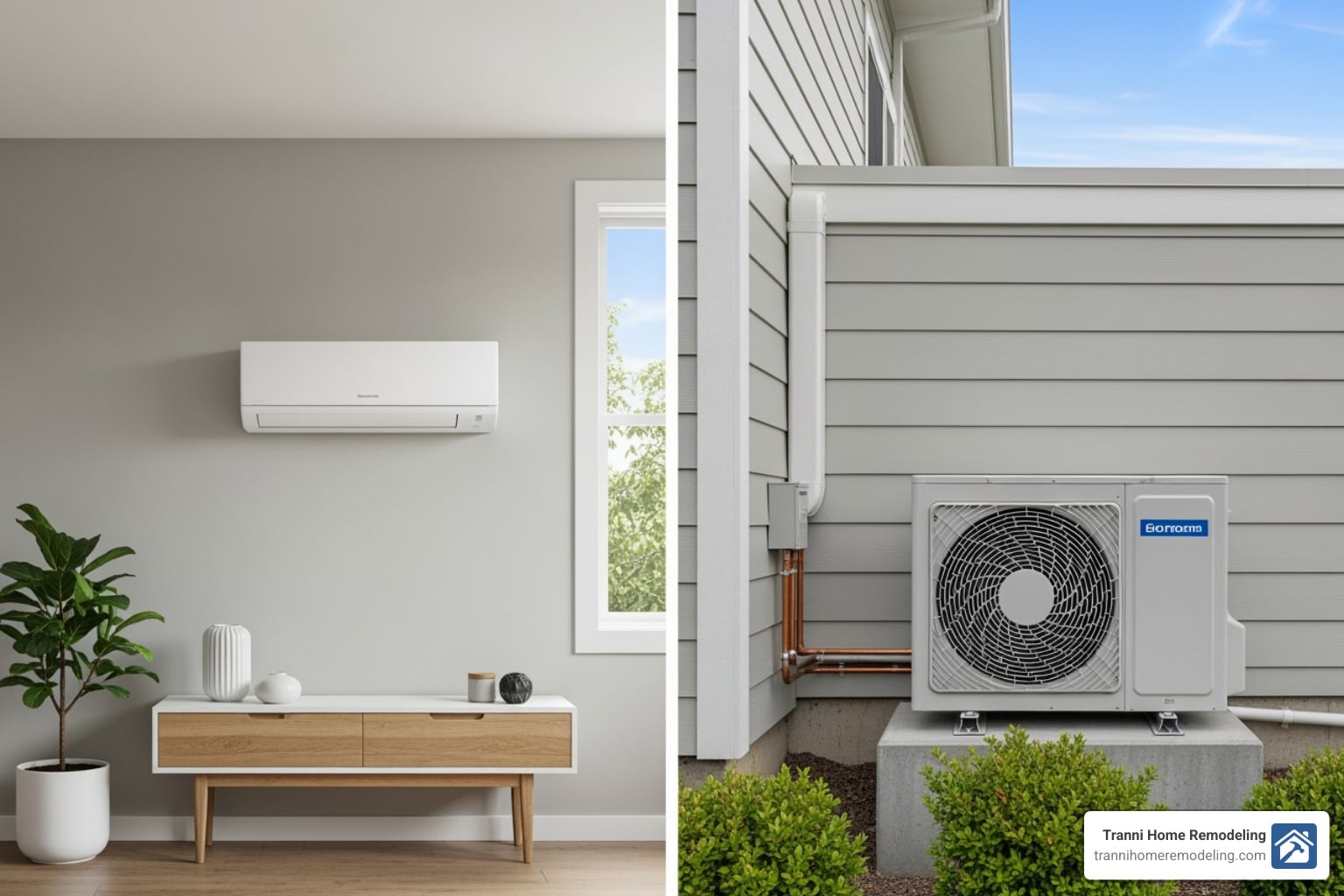
A ductless mini split air conditioner is a heating and cooling system that delivers conditioned air to specific rooms without traditional ductwork. It uses an outdoor compressor/condenser unit connected to one or more indoor air-handling units via a small conduit containing refrigerant lines, a power cable, and a condensate drain.
Key Components:
- Outdoor unit: Houses the compressor and condenser.
- Indoor unit: Mounted on a wall, ceiling, or floor to distribute air.
- Refrigerant lines: Connect the indoor and outdoor units.
- Remote control: Allows for precise temperature control in each zone.
In cooling mode, the indoor unit absorbs heat from the room, which is transferred via refrigerant to the outdoor unit and released. In heating mode, the process reverses. This duct-free design prevents the energy loss common in central air systems, which can exceed 30%.
Ductless systems offer room-by-room temperature control and are available in single-zone (one indoor unit) and multi-zone (up to five indoor units) configurations. As Tyler Tranni, owner of Tranni Home Remodeling, notes, “These systems are game-changers for targeted heating and cooling, especially in older New England homes where ductwork isn’t feasible.”
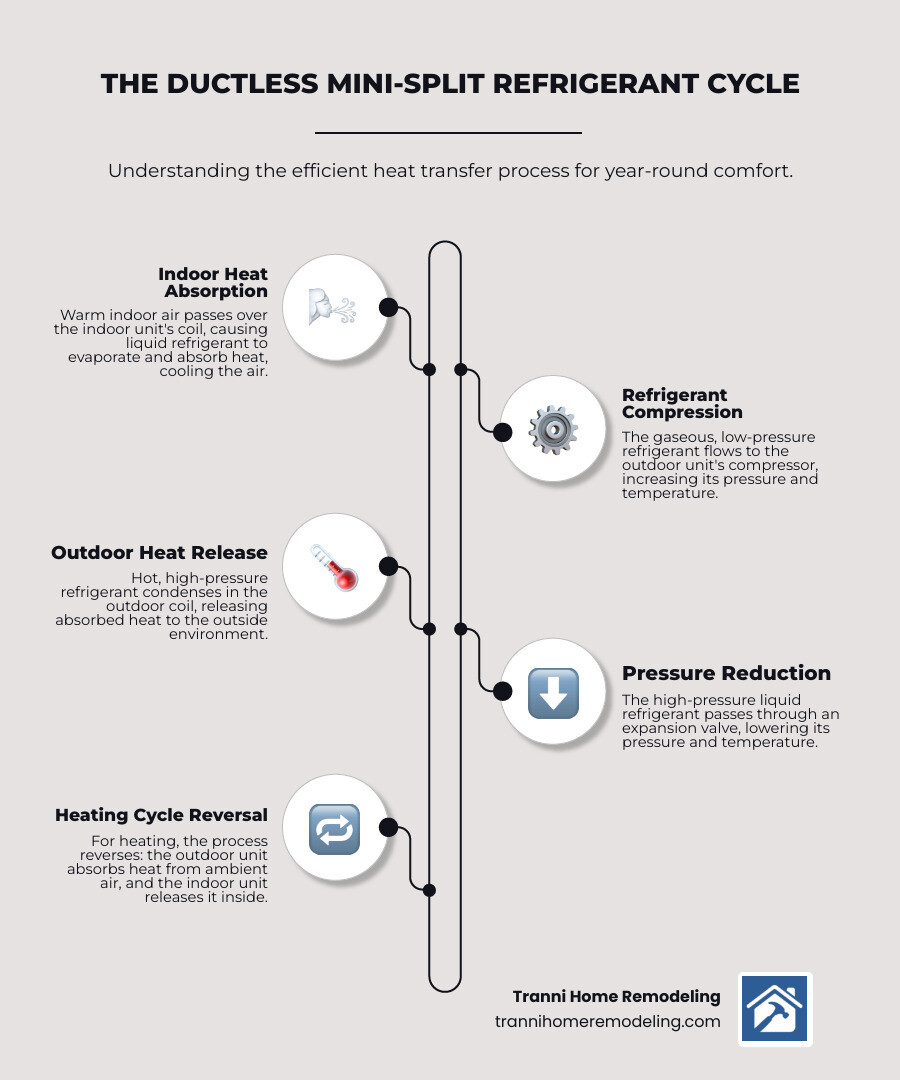
Ductless mini split air conditioner terms to remember:
Mini-Split Air Conditioner vs. Mini-Split Heat Pump
While the terms are often used interchangeably, there is a key difference:
A mini-split air conditioner (or Ductless Air Conditioner) is designed only for cooling. It’s a great choice if you already have a reliable heating system.
A mini-split heat pump provides both heating and cooling, making it a versatile, year-round solution. In heating mode, it reverses the refrigeration cycle to bring heat indoors. Modern heat pumps are highly effective even in cold climates like Massachusetts, making them an excellent choice for comprehensive Heating and Cooling needs.
Why Go Ductless? The Pros and Cons
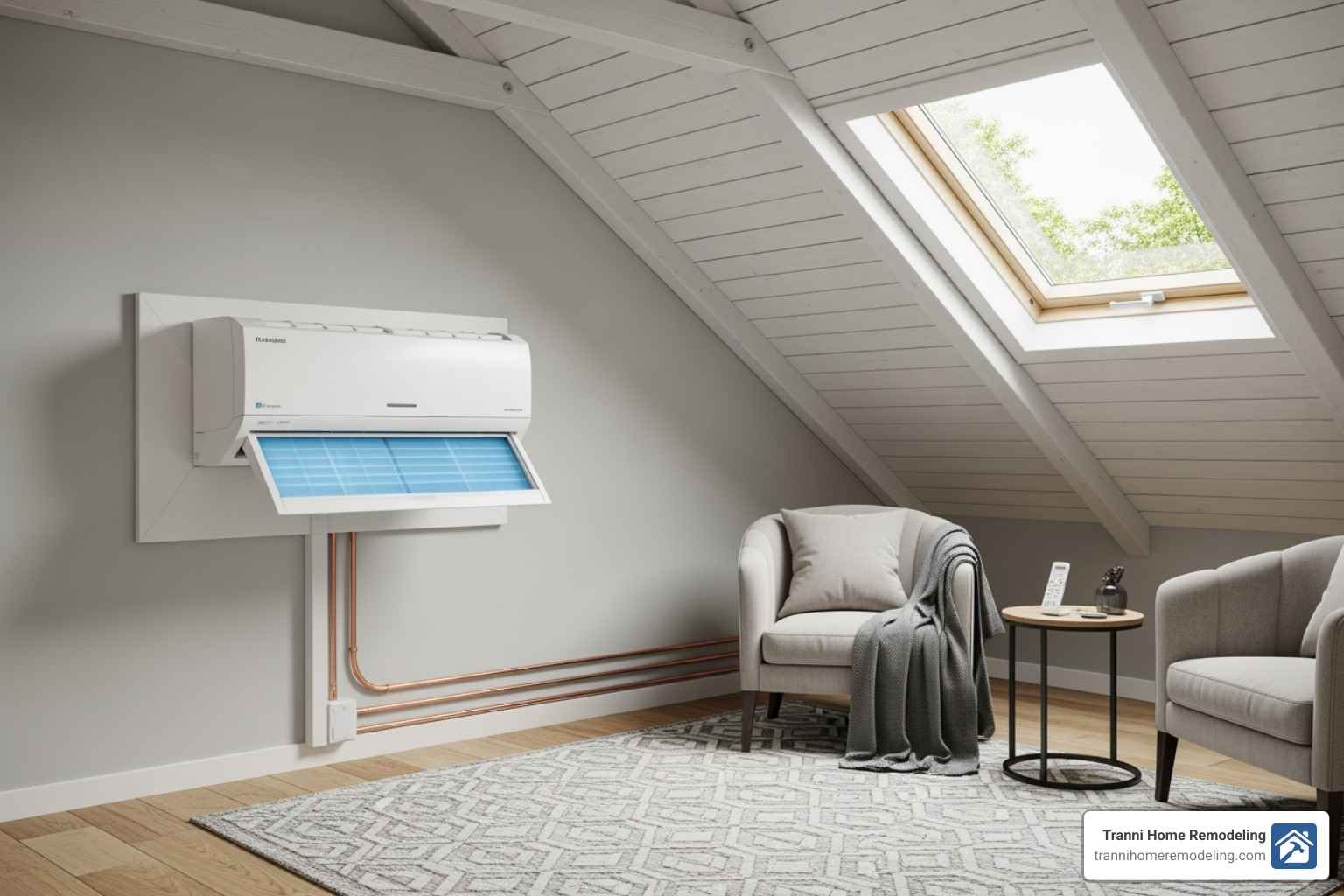
Deciding if a ductless mini split air conditioner is right for your home involves weighing its significant advantages against a few key considerations. These systems can transform home comfort and energy bills, but they aren’t a perfect fit for every situation.
The Advantages of a Ductless System
- Energy Efficiency: By delivering conditioned air directly into a room, mini-splits eliminate the energy loss associated with leaky ductwork, which can waste over 30% of energy in traditional systems.
- Zoned Temperature Control: Each indoor unit operates independently, allowing you to set different temperatures in different rooms. This means you only pay to heat or cool the spaces you’re using, ending thermostat battles and lowering energy bills.
- Installation Flexibility: Mini-splits are ideal for older homes in Massachusetts without existing ductwork, as well as for home additions, finished basements, and problem rooms that are always too hot or cold.
- Quiet Operation: The indoor units are whisper-quiet, while the louder compressor is located outside, up to 50 feet away.
- Improved Indoor Air Quality: Each unit has its own multi-stage filter that captures dust, pollen, and other allergens, preventing them from circulating throughout the house.
Potential Drawbacks and Considerations
- Higher Initial Cost: The upfront investment for a ductless system can be higher than for traditional central air, though the gap narrows when new ductwork installation is required. Long-term energy savings help offset this cost.
- Unit Aesthetics: The indoor units are visible on your wall or ceiling. While modern designs are sleek, some homeowners prefer the invisible nature of traditional vents. Discreet options like ceiling cassettes and floor-mounted units are available.
- Regular Maintenance: To maintain efficiency and air quality, the filters in each indoor unit must be cleaned monthly. While simple, it is a recurring task.
- Professional Sizing is Crucial: An improperly sized unit can lead to problems. An undersized unit will struggle to maintain temperature, while an oversized unit will short-cycle, wasting energy and failing to dehumidify properly. A professional assessment is essential for any Heating and Cooling project to ensure the system is sized correctly for your home’s specific needs.
Finding Your Perfect Match: Types of Ductless Mini Split Air Conditioner Systems
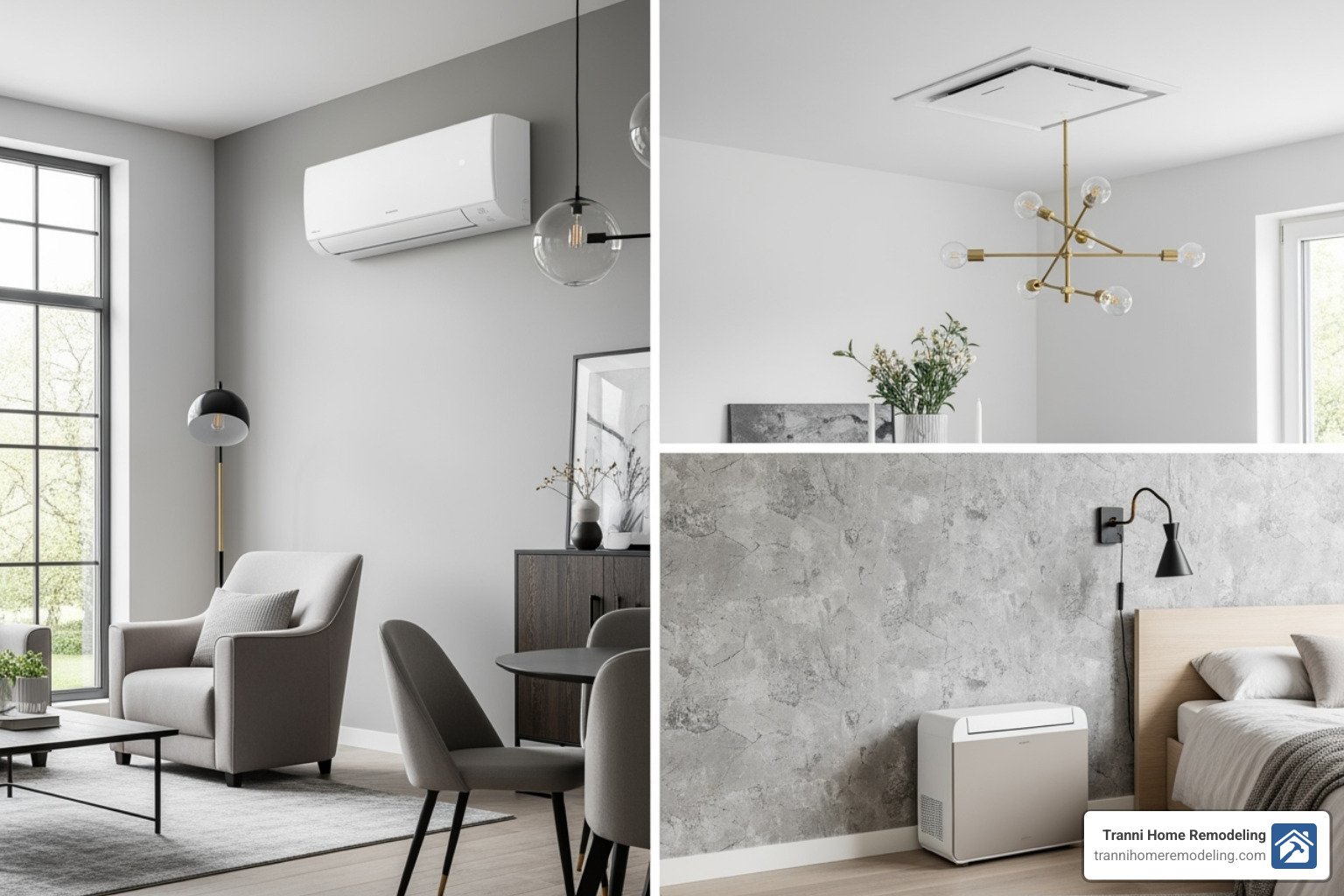
Choosing the right ductless mini split air conditioner means matching the system to your home’s specific needs. With a variety of configurations, unit styles, and features available, you can create a solution that fits your space and budget.
Single-Zone vs. Multi-Zone Systems
Your first decision is whether to condition a single room or multiple areas.
- A single-zone system pairs one outdoor unit with one indoor unit. It’s the perfect targeted solution for a hot home office in Chelmsford, a finished basement, or a new home addition. These systems are generally more affordable and simpler to install.
- A multi-zone system allows one outdoor condenser to power up to five indoor units, each with its own thermostat. This provides personalized comfort throughout the home, making it a great Mini Split Heating and Cooling System for families. They are ideal for older homes in towns like Lexington or Concord where adding ductwork is impractical.
Choosing Your Indoor Unit Style
The style of the indoor unit affects both aesthetics and air distribution.
- Wall-mounted units: The most popular choice, they are installed high on a wall for excellent air distribution and offer a balance of performance and cost.
- Ceiling cassettes: Installed flush with the ceiling, these units are discreet and provide multi-directional airflow, perfect for living rooms or spaces where aesthetics are a priority.
- Floor-mounted consoles: Resembling traditional radiators, these units sit low on the wall and are ideal for rooms with limited upper wall space or sloped ceilings.
- Slim-duct units: This is the most concealed option, hidden in a ceiling or wall and distributing air through small vents. They offer a seamless look but require more complex installation.
Must-Have Features in a Modern Ductless Mini Split Air Conditioner
Today’s systems are packed with technology to improve comfort and efficiency.
- Inverter Technology: Allows the compressor to adjust its speed continuously, providing stable temperatures, quiet operation, and significant energy savings.
- Wi-Fi and Smart Home Integration: Control your system remotely via a smartphone app or integrate it with your smart home ecosystem for automated comfort.
- Programmable Timers: Set schedules to automatically adjust temperatures when you’re asleep or away, which can reduce energy use.
- Dehumidification Mode: An invaluable feature for humid New England summers, it removes excess moisture from the air, making your home feel more comfortable at higher temperatures.
Decoding the Specs: Sizing and Efficiency Explained
When choosing a ductless mini split air conditioner, understanding technical specifications like BTUs and efficiency ratings is key to finding a system that provides comfort without excessive energy costs.
What Size (BTU) Mini-Split Do I Need?
BTU (British Thermal Unit) capacity measures how much heat a system can move in one hour. Correct sizing is critical: an undersized unit runs constantly without reaching the target temperature, while an oversized unit cycles on and off too quickly, wasting energy and failing to dehumidify the air.
While room square footage is a starting point (e.g., a 400-600 sq. ft. living area often needs 12,000 BTU), a professional load calculation is essential. Other factors include:
- Climate Zone: Massachusetts has both hot summers and cold winters.
- Insulation: The quality of your home’s insulation impacts heating and cooling loads.
- Windows: South-facing windows add heat in the summer.
- Ceiling Height: Higher ceilings mean more air volume to condition.
- Occupancy and Appliances: People and heat-generating appliances add to the cooling load.
Relying on professional calculations over online calculators ensures your system is perfectly matched to your unique home.
Understanding Energy Efficiency Ratings: SEER, EER, and HSPF
These ratings tell you how efficiently a system operates. Higher numbers mean greater energy savings.
- SEER (Seasonal Energy Efficiency Ratio): Measures cooling efficiency over an entire season. Modern mini-splits can have SEER ratings of 30 or more, far exceeding older central air systems.
- EER (Energy Efficiency Ratio): Measures cooling efficiency at peak outdoor temperatures (95°F), showing how the system performs on the hottest days.
- HSPF (Heating Seasonal Performance Factor): Measures a heat pump’s heating efficiency over a season. A high HSPF is crucial for saving money during Massachusetts winters.
Look for the ENERGY STAR® label, which certifies that a product meets strict efficiency guidelines. The ENERGY STAR website is a great resource for comparing models. Investing in a high-efficiency ductless HVAC system may have a higher upfront cost but often pays for itself through long-term energy savings.
Installation, Costs, and Care for Your Mini-Split
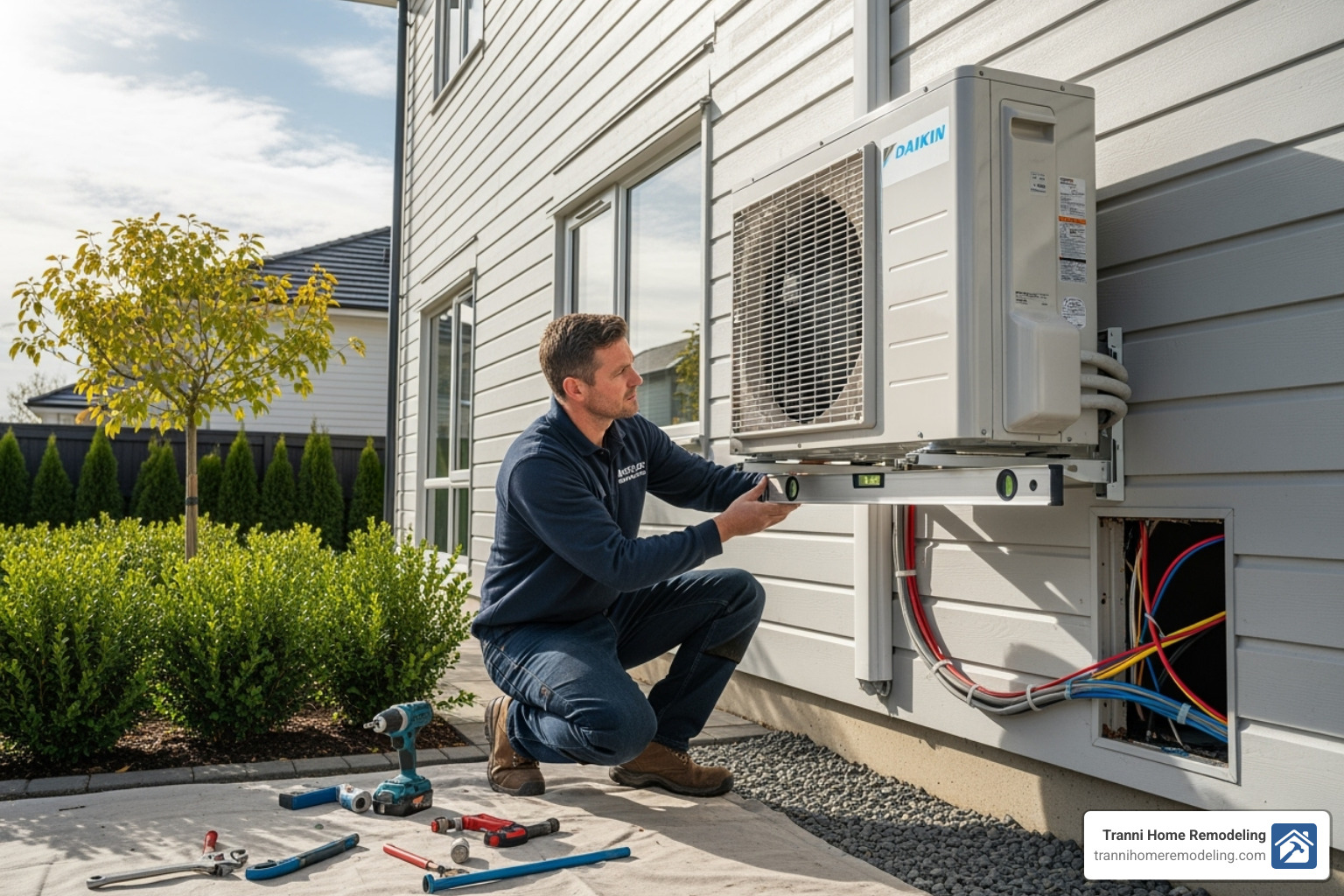
Understanding the installation process, costs, and maintenance requirements is the final step before upgrading to a ductless mini split air conditioner.
What to Expect During a Ductless Mini Split Air Conditioner Installation
Compared to traditional central air, ductless installation is minimally invasive. The process typically involves drilling a single three-inch hole in an exterior wall to run a line set (containing refrigerant lines, wiring, and a drain) between the indoor and outdoor units. The outdoor unit can be placed up to 50 feet away, offering flexibility in placement. A certified technician handles all electrical connections to ensure safety and code compliance. The entire process for a single-zone system can often be completed in one day. Professional installation is essential to protect your warranty and ensure optimal performance, especially for HVAC Installation for Older Homes with unique structural challenges.
Cost Considerations: Upfront vs. Long-Term
The investment for a ductless mini split air conditioner varies based on system size, type, and features. A single-zone system might range from $2,000 to $6,000, while a multi-zone system for a whole home could cost $5,000 to $15,000 or more. These are average costs based on internet data and not actual costs for Tranni Home Remodeling, so your local pricing may differ.
While the upfront cost can be significant, the long-term savings are substantial. By eliminating the energy waste from ductwork and providing zoned control, a ductless system can dramatically reduce monthly heating and cooling bills. The return on investment also includes improved home value and comfort, and utility rebates may be available to help offset the initial cost.
Lifespan and Maintenance
A well-maintained ductless mini split air conditioner can last 10 to 15 years. Proper care is simple but crucial for longevity and efficiency. The most important task is monthly filter cleaning, which you can do yourself by rinsing or vacuuming the filter in each indoor unit. Additionally, annual professional service is recommended. During a tune-up, a technician will clean the coils, check refrigerant levels, inspect electrical connections, and ensure the system is running at peak performance. Regular maintenance from local providers of Air Conditioning Services Near Me helps prevent costly repairs and preserves your energy savings.
Frequently Asked Questions about Ductless AC
Homeowners considering a ductless mini split air conditioner often have a few key questions about how these systems work in practice.
Do ductless systems improve indoor air quality?
Yes. Each indoor unit has a multi-stage filtration system that captures dust, pollen, pet dander, and other airborne allergens. Unlike central systems that can circulate contaminants throughout the house via ductwork, a mini-split filters the air within each individual zone, leading to cleaner air and fewer cross-contamination issues.
How disruptive is the installation process?
Installation is minimally invasive. It requires only a small, three-inch hole through an exterior wall to connect the indoor and outdoor units. There is no major demolition or construction dust, and most single-zone installations can be completed in a single day. This makes it an especially convenient option for older homes in areas like Lexington, Winchester, or Dracut.
Can a mini-split heat my whole house in a cold climate like Massachusetts?
A single mini-split unit is designed for zoned heating. For whole-home comfort in a cold climate, a multi-zone system with cold-climate heat pump technology is the solution. These advanced systems are engineered to operate efficiently even at temperatures as low as -22°F. Proper sizing and strategic placement of the indoor units by a professional are critical to ensure the system can handle your entire home’s heating and cooling load, from a ranch in Chelmsford to a colonial in Carlisle.
Conclusion: Upgrade Your Home Comfort in the Billerica Area
It’s clear why so many homeowners are switching to a ductless mini split air conditioner. These systems offer flexible, efficient, and personalized climate control that adapts to your lifestyle. By eliminating energy-wasting ductwork, providing whisper-quiet operation, and improving air quality, a ductless system is a smart investment that delivers room-by-room comfort.
Here in the Billerica area, we at Tranni Home Remodeling have seen how these systems transform homes. With over a decade of experience, we understand the unique challenges of New England properties, from historic houses in Concord to modern additions in Chelmsford. Our expertise in home remodeling allows us to integrate these systems seamlessly into your living space, ensuring optimal performance and aesthetics.
For professional guidance on a modern heating and air conditioning solution, consider a professional consultation. We’re ready to help you find the perfect ductless mini split air conditioner for your home and budget.
Ready to experience the difference personalized comfort can make? Contact us for HVAC installation services today!