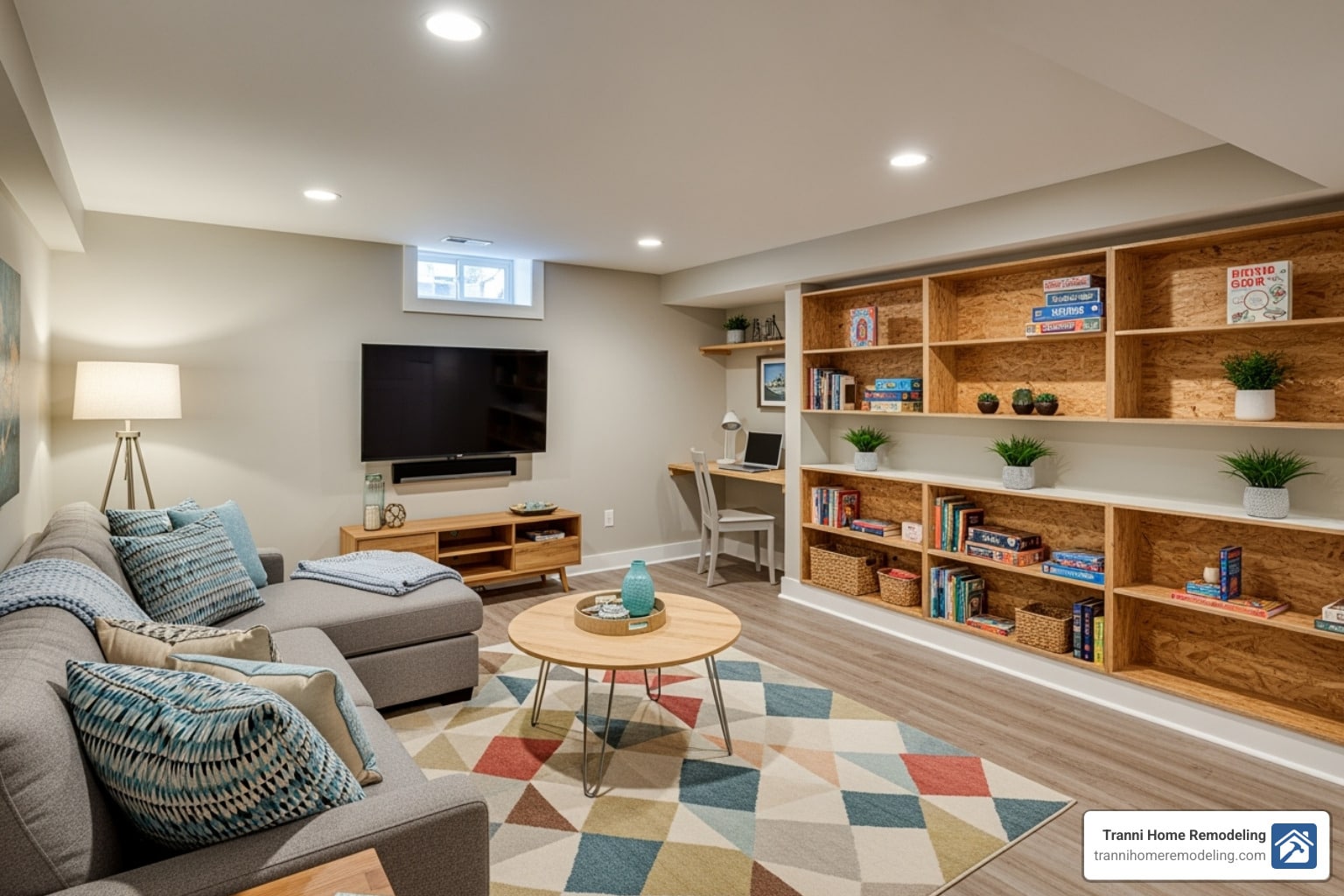





Finishing a Basement on a Budget: 5 Smart Tips
Open up Your Basement’s Potential Without Draining Your Wallet
Finishing a basement on a budget is possible with smart planning, cost-effective materials, and strategic work. A finished basement adds valuable living space—like a family room, home office, or gym—and typically recoups 70-80% of its cost in home value. While the national average for a 1,000-square-foot basement remodel is around $25,000, a beautiful, functional space can be achieved for much less.
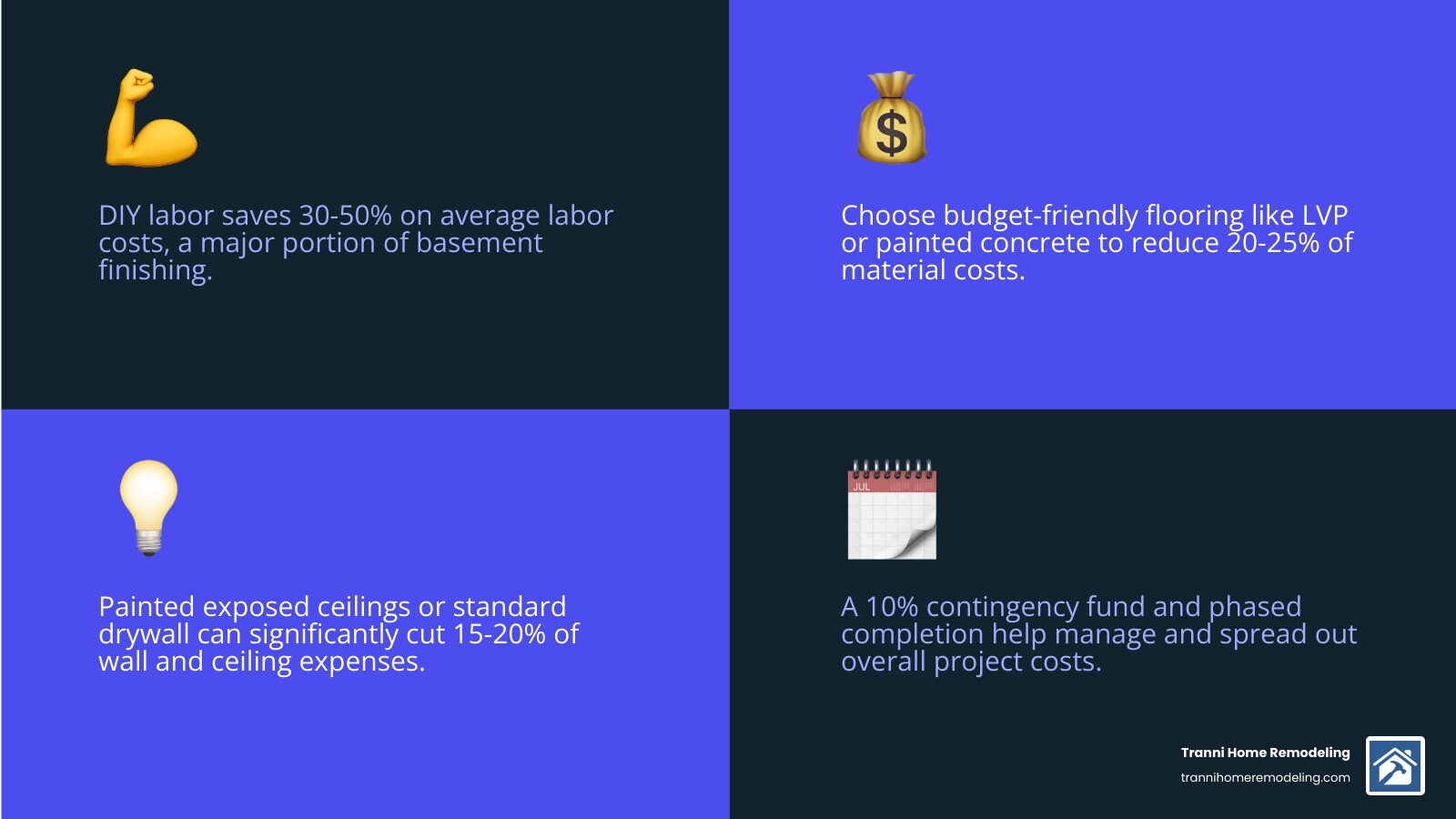
Budget-friendly projects can range widely. Simple DIY cosmetic updates may cost as little as $3,000-$8,000. Modest renovations involving professional help often fall between $15,000 and $45,000, though costs can exceed $75,000 for larger or more complex projects (prices based on internet data, not actual Tranni Home Remodeling costs). Key savings come from handling some labor yourself, choosing affordable materials like LVP flooring, and phasing the project to spread out costs.
Your basement holds hundreds of square feet of untapped potential. The secret to open uping it is planning ahead, addressing moisture issues first, and knowing where to save versus where to invest. Prioritize durability in dampness-prone areas while saving on cosmetic finishes you can upgrade later.
I’m Tyler Tranni, owner of Tranni Home Remodeling, and I’ve helped countless homeowners in the Billerica area transform their basements. My experience with finishing a basement on a budget has taught me that strategic planning matters more than unlimited funds when creating a space your family will love.
Key terms for finishing a basement on a budget:
- average cost to refinish basement
- basement remodeling cost per square foot
- refinish concrete basement floor
The Foundation of a Budget-Friendly Finish: Planning and Preparation
When finishing a basement on a budget, the foundational work is the most critical. Before considering paint colors or furniture, you must focus on planning and preparation. Skipping these steps can lead to costly repairs that far exceed the initial prevention costs. A solid plan and proper moisture control are essential to protect your investment and ensure your new living space remains safe and healthy.
Step 1: Create a Realistic Budget and Plan
Successful budget remodels begin with honest planning. First, set priorities by defining the primary function of the space. Will it be a family room, home office, or play area? Focusing on function ensures you spend money on what truly matters.
Next, create an itemized cost list covering materials, tools, and professional labor. This helps identify potential budget overruns early. When comparing DIY versus professional labor, be realistic about your skills and time. DIY can save 30-50% on labor, but tasks like painting or installing floating floors are more approachable than electrical or plumbing work. Professional labor rates average $50 to $100 per hour (based on internet data, not actual Tranni Home Remodeling costs), an investment that guarantees quality and safety for complex jobs.
When estimating material costs, look for sales and clearance items. A typical DIY project’s materials can range from $5,000 to $15,000+, depending on size and quality. Always include a contingency fund of 10-20% for unexpected issues. Finally, a phased approach, completing one section at a time, can make the project more manageable financially.
Step 2: Address Moisture and Insulation Affordably
Finishing a basement without addressing moisture and insulation is a recipe for disaster. These non-negotiable steps prevent costly problems like mold growth and structural damage, protecting your investment from the start.
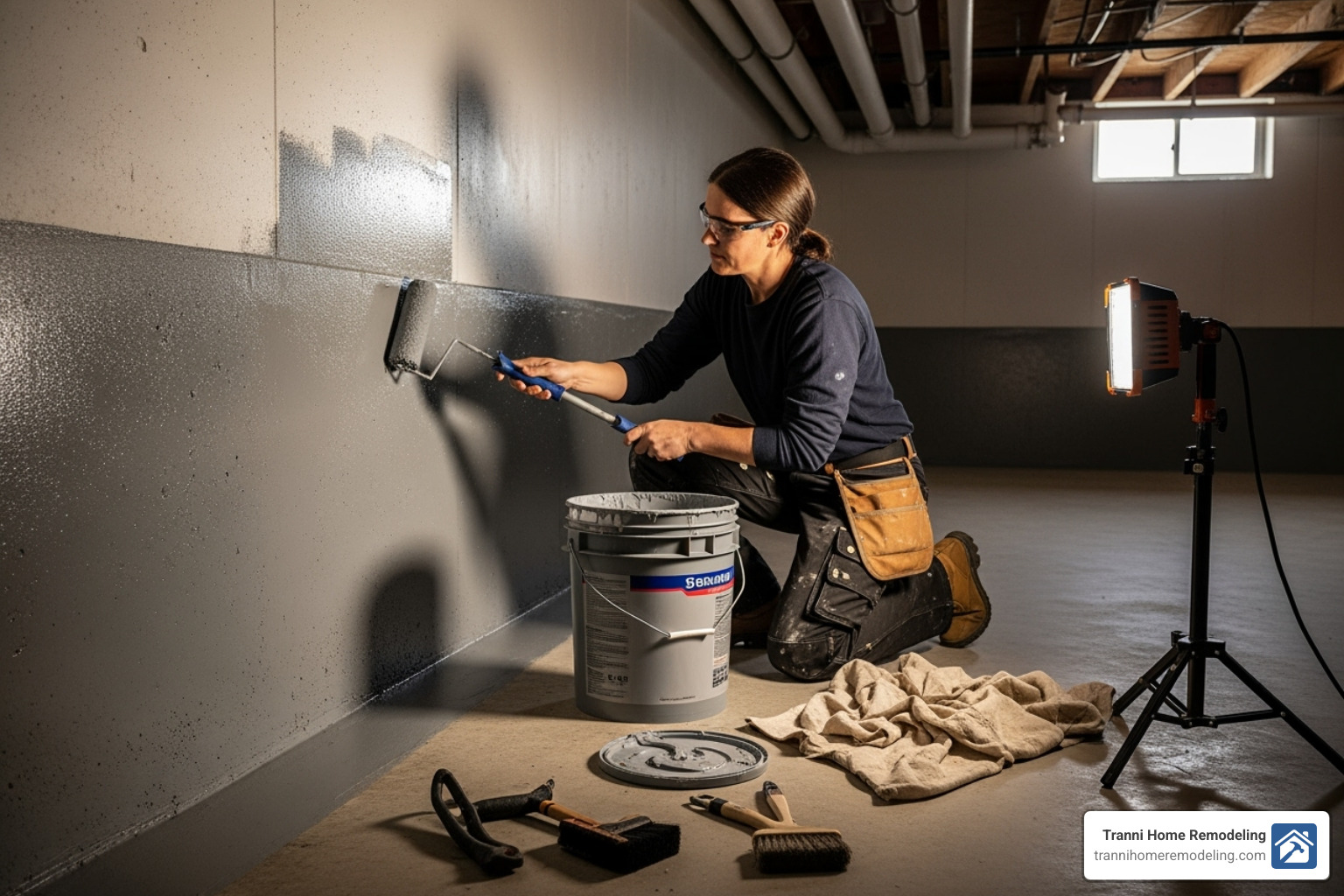
Begin with moisture testing to identify any underlying issues. For minor dampness, a DIY application of waterproofing paint on concrete walls can create an effective moisture barrier. Inspect and seal any cracks in the foundation with hydraulic cement. For significant water intrusion or structural cracks, it’s crucial to consult a professional. More info about basement waterproofing solutions.
For insulation, rigid foam board is a budget-friendly and effective choice for basements. It provides excellent thermal resistance and acts as a vapor barrier, preventing moisture buildup. Ensure a continuous vapor barrier is in place to stop moisture from migrating into your finished space.
A good dehumidifier is a small investment that makes a huge difference in controlling humidity, preventing musty odors, and reducing mold risk. Lastly, consider your residential HVAC and ventilation. While a full HVAC extension can be costly, proper air circulation is vital. An exhaust fan or simple vents can improve air quality and prevent moisture from settling. More info on basement ventilation solutions.
Smart Material Choices for Finishing a Basement on a Budget
The secret to finishing a basement on a budget is choosing materials that offer the best value without sacrificing quality. Smart, durable choices that can handle a below-ground environment are key to creating an inviting space that lasts.
Cost-Effective Basement Walls and Ceilings
Walls and ceilings have the biggest visual impact. Fortunately, several budget-friendly options look fantastic.
- Painting Concrete: If walls are in good shape, painting them with a concrete-specific paint is the most affordable route. Ensure moisture issues are resolved first.
- Drywall: Standard drywall is inexpensive. In damp areas, use mold-resistant drywall for added protection. While installation can be a DIY project, hiring a pro for taping and mudding ensures a smooth finish. More info about basement drywall installation cost.
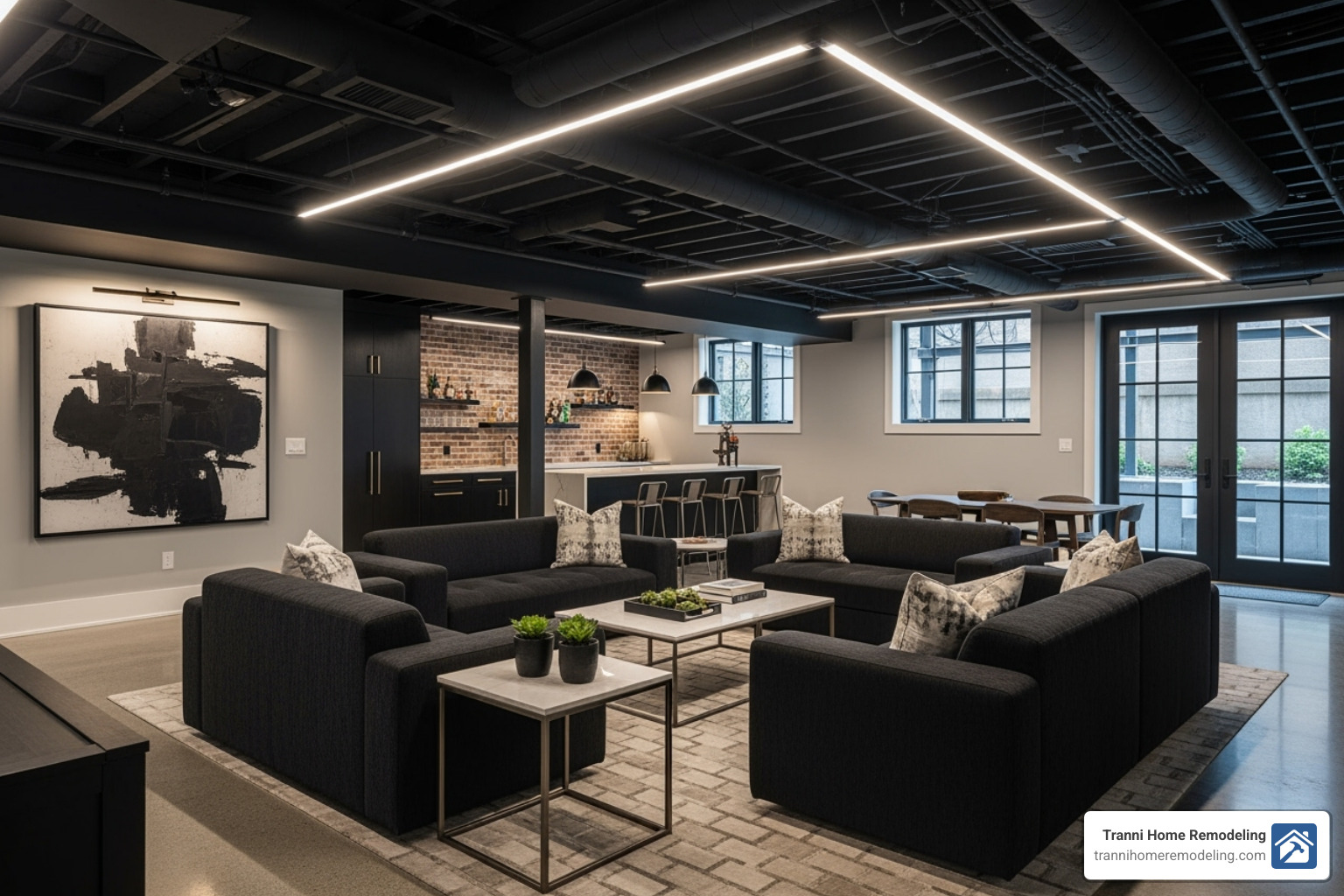
- Painted Exposed Ceiling: Painting joists, pipes, and ductwork a uniform color (white for brightness, black for a modern, cozy feel) is a stylish, low-cost alternative to a finished ceiling. It also keeps utilities accessible and maximizes height. More info on basement ceiling drywall installation.
- Drop Ceiling: For a traditional look with easy utility access, a drop ceiling is a practical choice. Modern tiles are more aesthetically pleasing than older styles and typically cost between $5 and $15 per square foot installed (based on internet data).
Budget-Friendly Basement Flooring That Lasts
Basement flooring must be moisture-resistant, durable, and comfortable. Several affordable options meet these criteria.
- Sealed or Painted Concrete: This is the most budget-friendly option. After cleaning and repairs, apply a concrete sealer, paint, or an acid-wash stain for a durable, water-resistant, industrial look. Area rugs can add warmth. Learn how to refinish a concrete basement floor.
- Epoxy Floor Coating: At $3 to $10 per square foot (internet data), epoxy creates a highly durable, glossy, and water-resistant surface ideal for gyms or modern living spaces.
- Luxury Vinyl Plank (LVP): A top choice for basements, LVP is affordable ($2 to $7 per square foot, per internet data), water-resistant, and comfortable. Its click-lock design is perfect for DIY installation over concrete.
- Interlocking Carpet Tiles: Ranging from $2 to $6 per square foot (internet data), these are soft, easy to install, and allow for simple replacement of single tiles if damaged.
Bright Ideas: Affordable Basement Lighting
Good lighting is essential for changing a dark basement into a welcoming space.
Start by maximizing natural light through clean, unobstructed windows. If the budget allows, upgrading to larger egress windows can be a game-changer. More info on basement window replacement.
For artificial lighting, recessed can lights and LED track lighting offer excellent, low-profile illumination. For a simpler approach, plug-in wall sconces and strategically placed floor and table lamps add layers of warmth without hardwiring. Inexpensive string lights can add personality to play areas or lounges. For safety on stairs and in storage areas, consider battery-operated motion-sensor lights. More info about basement lighting solutions.
The DIY vs. Pro Dilemma: Where to Save and When to Spend
Deciding what to DIY versus hire out is a key part of finishing a basement on a budget. This choice can affect 30-50% of your total project cost. However, the decision should balance savings with safety, quality, and the long-term value of your investment.
Maximize Savings with Smart DIY Projects
Many basement finishing tasks are suitable for homeowners with basic skills and a willingness to learn.
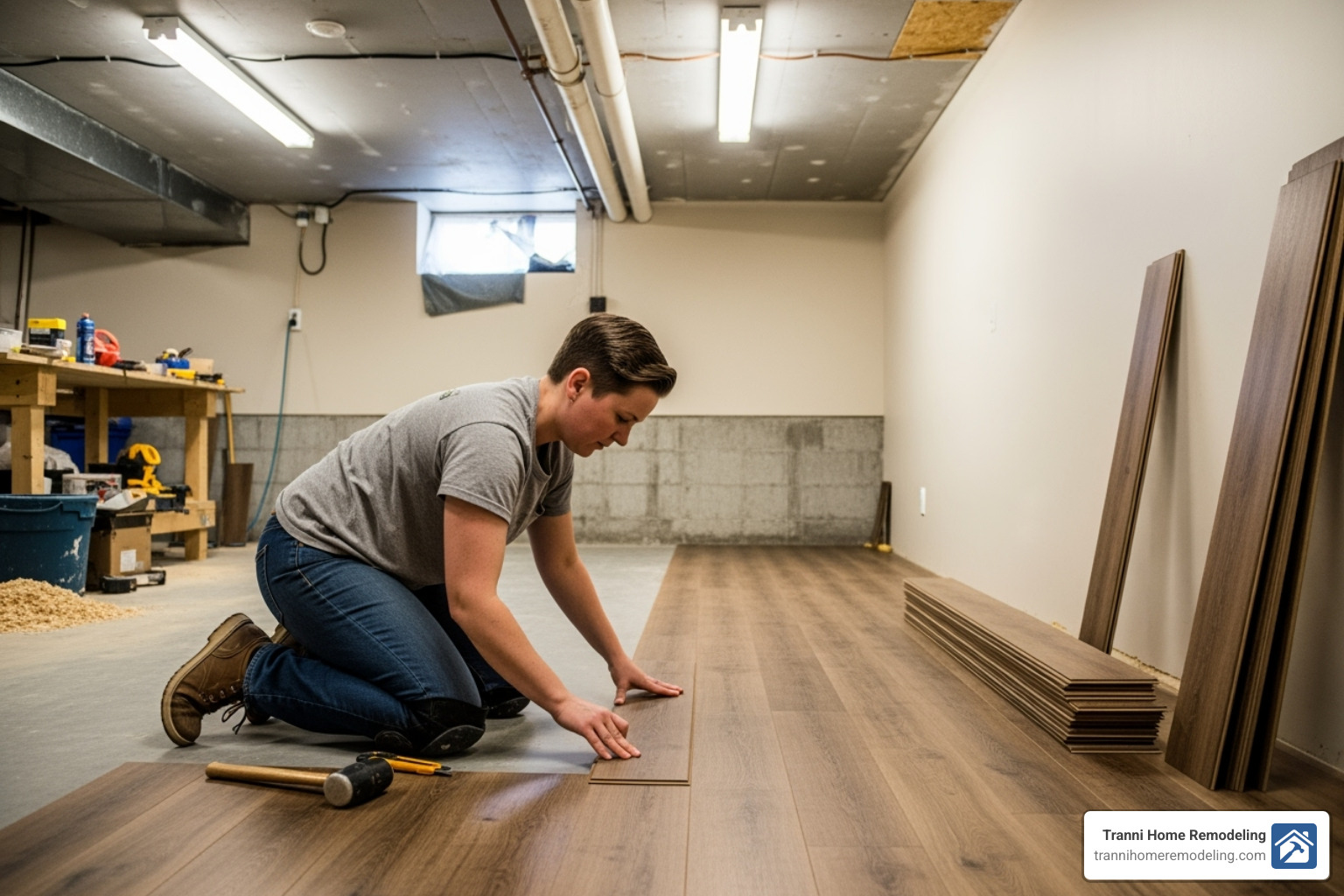
- Painting: A few gallons of paint and a weekend of effort can completely transform the space at a minimal cost.
- Installing Floating Floors: Modern Luxury Vinyl Plank (LVP) and laminate flooring are designed for DIY installation with click-and-lock systems.
- Basic Trim Work: Installing baseboards and door casings is a manageable project with a miter saw and nail gun, saving hundreds in labor.
- Finishing Touches: Assembling furniture, hanging decor, and installing simple shelving are easy wins for any homeowner.
When to Call the Pros for Your Basement Finish
Some jobs are best left to licensed professionals to avoid costly mistakes, safety hazards, and code violations.
- Electrical and Plumbing: Any work involving new circuits, hardwired fixtures, or new water lines requires a licensed electrician or plumber. The risk of fire, electrocution, or water damage is too high for a DIY attempt.
- Egress Window Installation: This involves cutting through your home’s foundation and requires specialized equipment, permits, and structural knowledge.
- Structural Changes: Never remove walls or alter your foundation without consulting a structural engineer and an experienced contractor.
- Residential HVAC Modifications: Extending ductwork to properly heat and cool your basement requires an HVAC professional to ensure proper airflow and system efficiency.
- Complex Drywall Finishing: While hanging drywall is feasible, achieving a perfectly smooth, seamless finish is an art. Hiring a pro for taping and mudding is often worth the investment for a polished look.
Working with professionals also ensures all necessary permits and inspections are handled correctly. Professional basement finishing companies like Tranni Home Remodeling are familiar with the specific requirements in Billerica, Andover, Chelmsford, Tewksbury, and other Massachusetts communities, ensuring your project is safe and up to code. Find contractors to finish a basement when you need expertise to complement your DIY efforts.
Adding Function and Personality on a Dime
Once the foundational work is complete, it’s time to infuse your basement with personality and function. This stage is about making smart, creative choices that deliver a big impact without a big budget. A stylish, cozy basement is achievable through strategic decorating and organization. See amazing basement renovations for inspiration.
Creative and Affordable Style
Making a basement feel inviting is about layering warmth and personal touches. When finishing a basement on a budget, these details provide the most visual impact for the least cost.
- Furnish Smartly: Hunt for treasures at thrift stores and online marketplaces. A fresh coat of paint can transform a dated piece. Using reclaimed or salvaged materials adds character and reduces costs.
- Add Warmth with Textiles: Large area rugs define zones, add warmth, and soften acoustics. Look for sales or consider durable outdoor rugs. Inexpensive throw pillows, blankets, and curtains make any space feel more finished.
- Create an Accent Wall: Painting a single wall a bold or deep color creates a sophisticated focal point without the cost of painting the entire room.
Budget-Friendly Storage and Functional Zones
With thoughtful planning, you can create organized storage and distinct functional areas that make your basement feel purposeful.
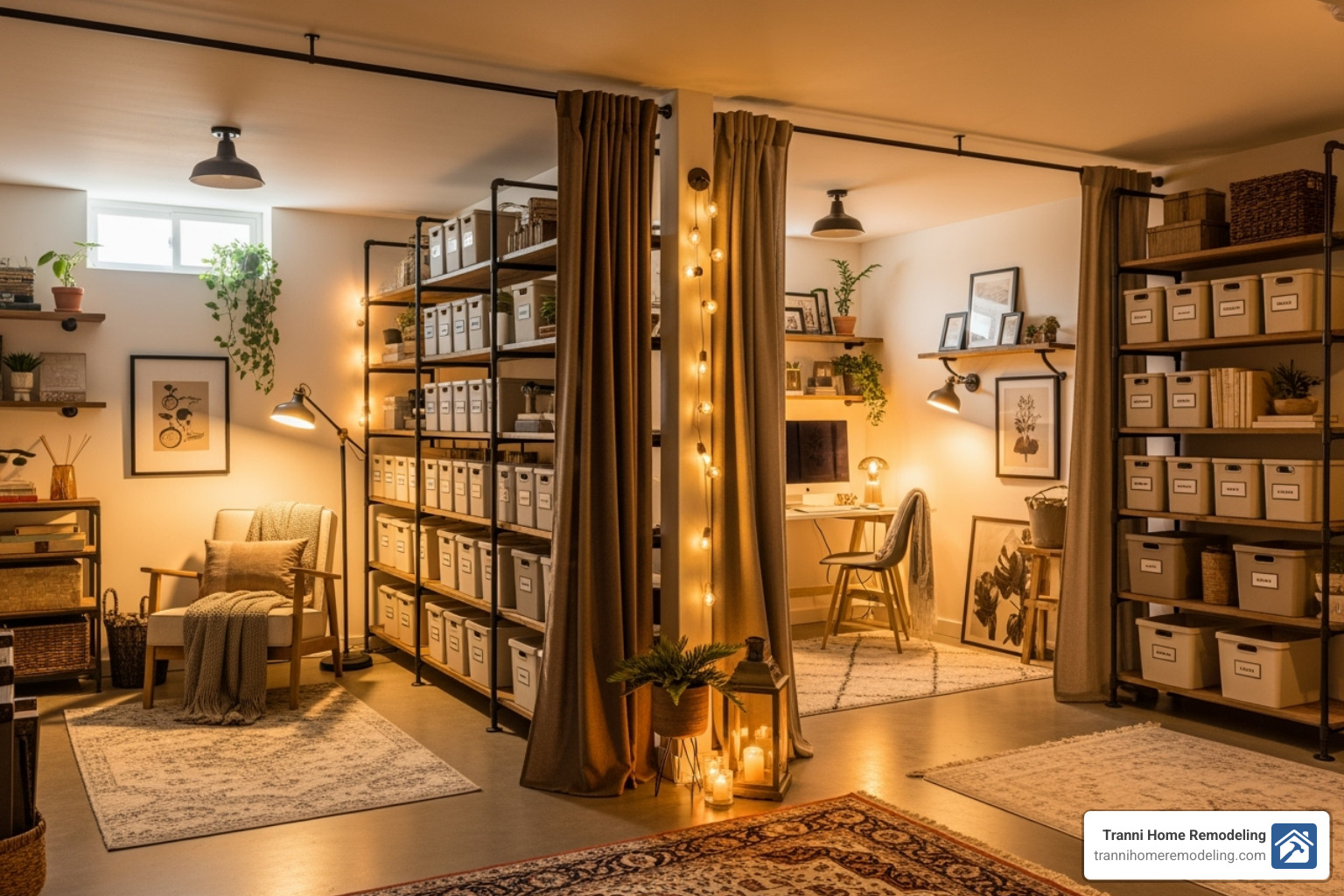
- Use Open Shelving: Industrial-style wire or wood shelving is inexpensive and provides ample storage. Repurpose old bookcases or dressers to organize toys, crafts, or media.
- Use Under-Stair Space: This often-wasted area is perfect for built-in shelves or a small closet for seasonal items.
- Divide with Curtains: Use ceiling-mounted curtains to flexibly section off a guest area, laundry zone, or office nook without building permanent walls.
- Define Zones with Furniture: Even in an open-plan basement, you can create distinct zones for a home gym, office, or play area using furniture placement and area rugs. This defines the space’s purpose without costly construction. More info about basement storage solutions.
Frequently Asked Questions About Budget Basement Finishing
After years of helping homeowners in Billerica, Andover, and Chelmsford transform their basements, I’ve heard nearly every question about finishing a basement on a budget. Here are answers to the most common ones.
How much does it really cost to finish a basement on a budget?
The cost varies dramatically based on size, materials, and the amount of DIY labor. All prices mentioned here are based on internet data and not actual costs for Tranni Home Remodeling.
- DIY Cosmetic Updates: For simple projects like painting concrete floors, adding carpet tiles, and decorating, you might spend an average of $3,000 to $8,000.
- Hybrid DIY/Pro Renovation: A more comprehensive finish, where you handle painting but hire pros for electrical and plumbing, could average $15,000 to $45,000 or more.
- High-End Finishes: Costs can easily exceed $75,000 to $100,000+ for large basements with luxury materials, full bathrooms, or complex layouts.
Key factors driving the price are the square footage, the quality of materials, the complexity of the design (a bathroom addition is a major cost), and the amount of professional labor required.
Do I need a permit to finish my basement in Massachusetts?
Almost certainly, yes. Any work beyond simple cosmetic updates like painting typically requires a permit in Massachusetts.
Permits are required for structural changes, new electrical circuits, plumbing installations, and modifications to your residential HVAC system. This includes framing walls, adding outlets, installing a bathroom, or cutting an egress window. These permits ensure the work is safe and up to code. Costs can range from $500 to $2,000 depending on the project’s scope.
Always check with your local building department before starting. Whether you’re in Billerica, Andover, Chelmsford, Reading, Woburn, or another town we serve, each has its own requirements. Skipping permits can lead to fines, stop-work orders, and major issues when you sell your home. Massachusetts law about home improvement provides more detail on these regulations.
What’s the best way to deal with low basement ceilings?
Low ceilings are a common challenge, but several strategies can make the space feel taller.
- Use Light Colors: Paint the ceiling white or another light color to reflect light and create an illusion of height. If you have an exposed ceiling, painting the joists and ductwork a uniform white or a dark matte black can make the ceiling recede visually.
- Choose Low-Profile Lighting: Opt for recessed can lights, slim flush-mount fixtures, or track lighting instead of hanging pendants. Wall sconces and floor lamps add light without taking up vertical space.
- Select Sleek Furniture: Low-profile sofas, tables, and chairs with clean lines help preserve a sense of openness. Avoid bulky, tall furniture that can make the room feel cramped.
- Draw the Eye Upward: Use vertical elements like tall, narrow bookcases or hang artwork slightly higher than usual to create visual height.
Conclusion: Your Beautiful, Budget-Friendly Basement Awaits
Finishing your basement is about changing unused square footage into a space that genuinely improves your family’s life. The journey from a concrete storage area to an inviting living space doesn’t require an unlimited budget. It requires thoughtful planning, smart material choices, and a strategic balance of DIY work and professional expertise.
By addressing moisture first, choosing durable yet affordable materials, and tackling appropriate DIY tasks, you can create a finished basement that looks amazing. A phased approach is a great way to build your dream space over time as your budget allows.
The real return on investment comes from daily use—a dedicated play space for the kids, a quiet home office, or a cozy family entertainment area. These are the priceless benefits of a well-executed basement remodel.
At Tranni Home Remodeling, we’ve guided countless homeowners throughout Massachusetts—in towns like Billerica, Andover, Chelmsford, Reading, Woburn, and Burlington—in changing their basements. With over a decade of experience, we know where professional expertise is critical, from complex electrical and plumbing to ensuring your project meets all local building codes.
Your basement represents hundreds of untapped square feet waiting to serve your family better. Don’t let budget concerns hold you back from exploring the possibilities.
Ready to start your project? Contact us for professional basement finishing services.