




Why the Disadvantages of Mini Split Systems Catch Homeowners Off Guard
The disadvantages of mini split systems are real — and they surprise a lot of homeowners who only heard the good stuff before buying.
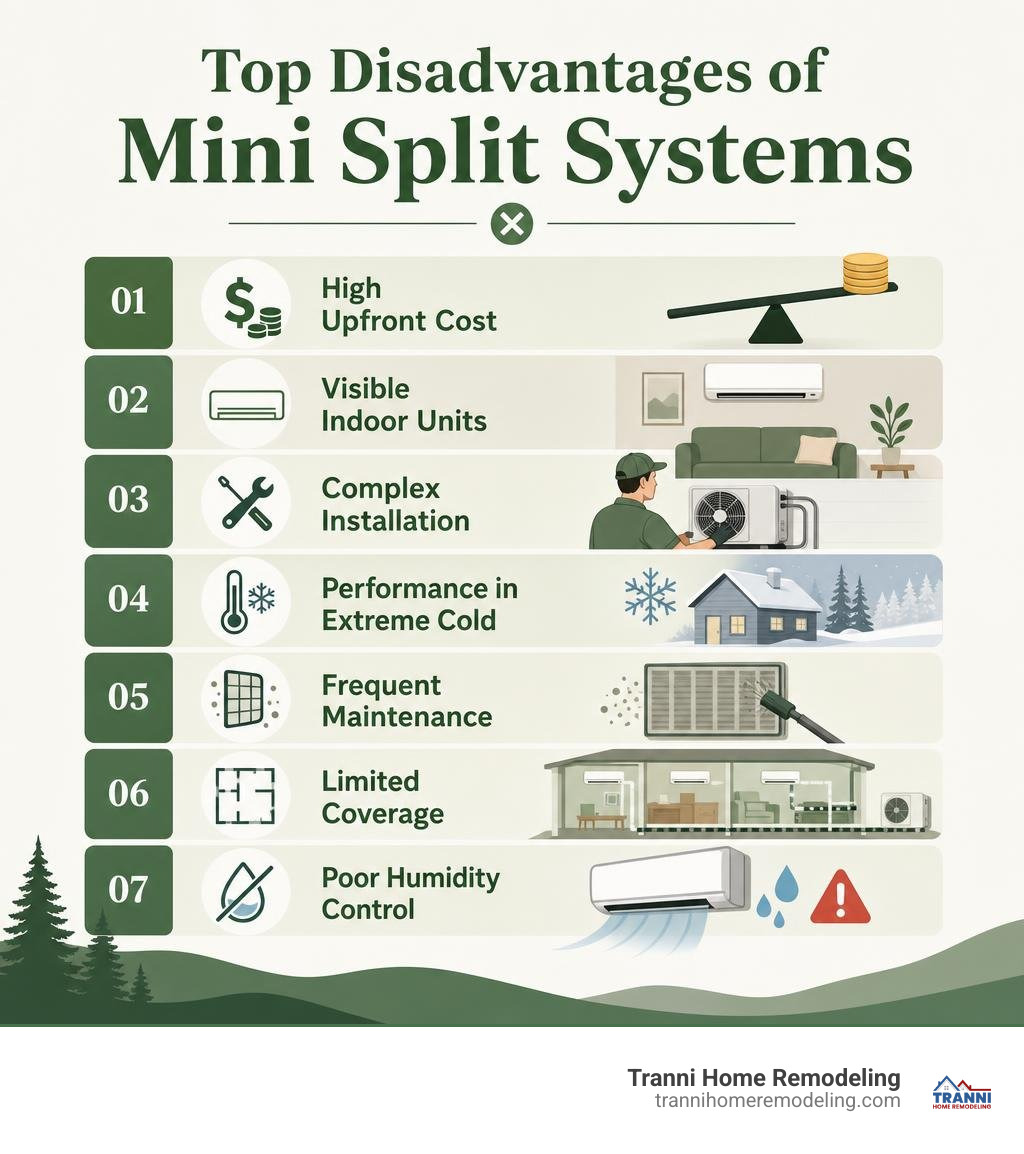
Here’s a quick summary of the main drawbacks:
| Disadvantage | What It Means for You |
|---|---|
| High upfront cost | 30% more than forced-air systems on average; $2,000–$18,000+ depending on zones |
| Visible indoor units | Wall-mounted heads are hard to hide and may clash with your décor |
| Complex installation | Requires EPA-certified technicians; DIY can void your warranty |
| Performance in extreme cold | Efficiency drops below freezing; may need backup heat |
| Frequent maintenance | Each indoor unit needs monthly filter cleaning |
| Limited coverage | One unit covers 400–500 sq ft; large homes need multiple units |
| Poor humidity control | Oversized units short-cycle and fail to remove moisture properly |
Mini splits are genuinely efficient and flexible — but they’re not a perfect fit for every home. Many homeowners in Billerica, MA, and across New England discover the downsides after installation, when costs have already piled up or comfort falls short on a bitter January morning.
Before you commit, it’s worth knowing exactly what you’re getting into.
I’m Tyler Tranni, owner of Tranni Home Remodeling in Billerica, MA — and through years of hands-on home renovation work, I’ve seen how the disadvantages of mini split systems can blindside homeowners who weren’t given the full picture upfront. In this guide, I’ll walk you through everything you need to know so you can make a confident, informed decision.
Important disadvantages of mini split systems terms:
The Primary Disadvantages of Mini Split Systems Compared to Central HVAC
When comparing ductless setups to a traditional central forced-air system, the structural differences become obvious very quickly. Traditional systems rely on a network of hidden ducts to push air through floor or ceiling registers. A ductless mini split delivers comfort directly to a single room via an individual air handler mounted on your wall or ceiling.
While eliminating ducts removes a major source of energy waste — ductwork in central forced-air systems can account for more than 30% of energy consumption for air conditioning — it introduces other compromises.
| Feature | Central HVAC | Ductless Mini Split System |
|---|---|---|
| Upfront Cost | Moderate to High | High (Roughly 30% premium over forced-air) |
| Aesthetics | Completely hidden (registers only) | Visible indoor units (“wall-warts”) |
| Zoning | Single thermostat (unless heavily modified) | Built-in independent room-by-room zoning |
| Maintenance | Low (change one central filter quarterly) | High (clean filters monthly on every single unit) |
| Air Filtration | High-MERV whole-home filtration | Basic mesh screens (low MERV equivalent) |
| Air Distribution | Uniform throughout the house | Concentrated near the indoor unit |
If you are remodeling a home in Billerica, MA, deciding between these two options requires weighing the ultimate simplicity of a hidden central system against the targeted zoning flexibility of a Ductless HVAC System.
Upfront Costs: The Financial Disadvantages of Mini Split Systems
Let’s address the elephant in the room: the price tag. Ductless systems are premium equipment, and their upfront costs reflect that.
On average, installing a ductless system costs roughly 30% more than a traditional forced-air system of comparable capacity. If you are starting completely from scratch without existing ductwork, central systems can close that gap, but on a unit-for-unit basis, mini splits require a significant financial commitment.
Based on national internet data, average residential HVAC costs for ductless systems range wildly depending on the size of your home and how many “zones” (indoor heads) you require:
- Single-Zone System: $2,000 to $6,000 (often used for room additions, converted garages, or sunrooms).
- Multi-Zone System: $5,000 to $18,000+ (for whole-home coverage spanning three to five distinct zones).
Please note: These are average costs based on broad internet data and do not reflect actual project pricing for Tranni Home Remodeling.
Why is it so expensive? You aren’t just buying one central furnace or air conditioner; you are purchasing multiple high-tech computer-controlled air handlers, an advanced outdoor inverter compressor, and paying for complex, labor-intensive installation. Additionally, older homes in historic areas in and around Billerica often require electrical panel upgrades ($500 to $1,500) to handle the new 240V circuits required by the outdoor condenser. For more details on budgeting, check out our Mini Split Installation Cost Guide.
Aesthetic and Space Disadvantages of Mini Split Systems
For many homeowners, the visual design of their living space is where the love affair with mini splits ends. Traditional ducted systems are practically invisible, but ductless systems require a plastic box (often referred to as a “wall-wart”) to be mounted permanently on your wall.
These units typically measure about 3 feet wide and a foot tall, sticking out several inches into the room. If you’ve spent years curating a clean, minimalist aesthetic or preserving the historic charm of your home, these white plastic boxes can feel like an eye-sore.
While manufacturers offer alternative styles—such as ceiling cassettes that mount flush with the drywall, or floor-mounted units—these alternatives come with their own drawbacks. Ceiling cassettes require cutting into your ceiling joists and running complex drain lines, adding significantly to the labor cost.
Furthermore, you have to consider the exterior of your home. The refrigerant lines, electrical cables, and condensate drains are bundled inside a plastic conduit called a “line-set.” Unless meticulously routed and covered with paintable line-hide kits, these conduits can look like messy commercial plumbing running down the side of your beautiful siding.
Installation Realities and Professional Requirements
One of the most dangerous myths circulating online is that mini splits are easy DIY projects. While retail stores sell “quick-connect” DIY kits, installing a mini split is a highly technical task that requires specialized tools and professional expertise.
First and foremost, handling and charging refrigerant lines legally requires EPA certification. If a connection is slightly loose, the system will slowly leak refrigerant. Refrigerant leaks occur in approximately 10% to 15% of systems over their lifetime, often due to poor initial installation. Not only does this harm the environment, but it also causes the system’s efficiency to nosedive and can destroy the compressor.
Furthermore, almost all major manufacturers (like Mitsubishi) will immediately void your equipment warranty if the system is not installed by a licensed, certified HVAC professional.
An experienced installer must perform precision vacuum testing, pressure testing with nitrogen, and ensure the line-sets do not exceed strict manufacturer limits (usually capped at 30 to 50 feet between the indoor and outdoor units). Skipping these steps to save a few dollars upfront frequently leads to costly system failures down the road.
Performance Limitations in Extreme Weather and Large Spaces
While mini splits are celebrated for delivering comfort at elite efficiency levels—with some premium models achieving up to 35 SEER2 cooling and 30 HSPF2 heating—they are still bound by the laws of physics. Their performance is highly dependent on the outdoor environment.
Cold Climate Defrost Cycles and Efficiency Drops
If you live in Billerica, MA, you know our winters are no joke. Traditional gas or oil furnaces generate heat by burning fuel, which means they can pump out hot air regardless of how cold it is outside. Mini splits, however, are heat pumps. They don’t create heat; they extract ambient heat from the outdoor air and move it indoors.
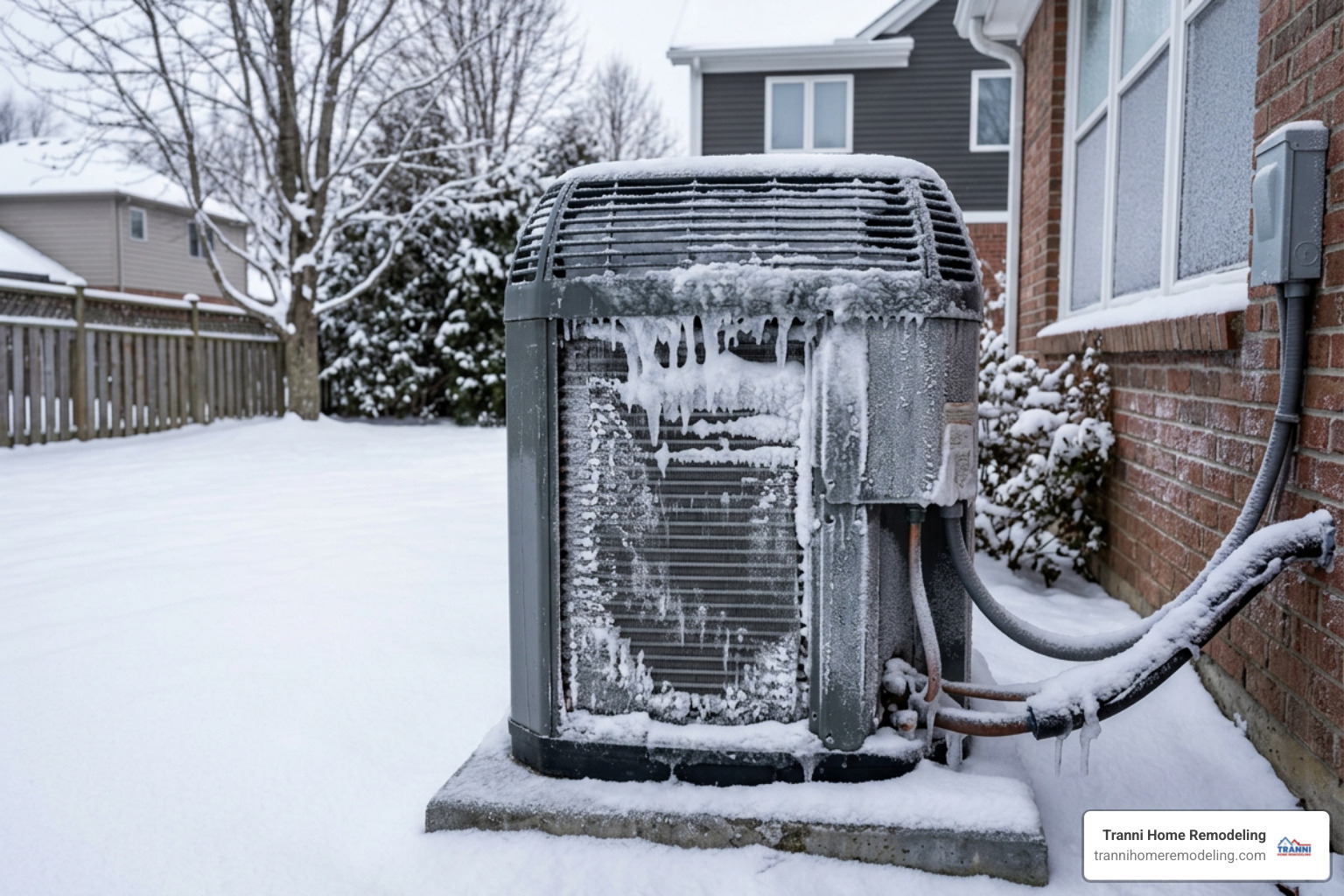
As temperatures drop below freezing, there is less heat available in the air to extract. While modern cold-climate mini splits are incredibly advanced, they still lose efficiency as the thermometer dips. When temperatures fall into the single digits or below zero, a standard heat pump’s heating capacity can drop significantly, sometimes delivering only 60% of its rated output.
During these freezing stretches, the outdoor unit’s coils will inevitably accumulate frost. To prevent ice buildup from choking the system, the unit must periodically enter a “defrost cycle.” During defrost mode, the system temporarily reverses its operation to send heat back to the outdoor coils to melt the ice.
The hidden quirk your installer might not mention is that during this 5-to-15-minute cycle, the indoor unit will stop heating, and some systems may even blow cool drafts of air into your living room. For many families in cold New England towns like Billerica, relying solely on a mini split without a backup combustion furnace or baseboard heater can lead to chilly, frustrating winter mornings. Learn more about these cold-weather challenges in Are Mini Split Systems Good for Heating?.
For a raw look at what installers often leave out of their sales pitches, check out The hidden downsides of mini-split heat pumps that your HVAC installer will never tell you about.
Airflow and Sizing Challenges in Open Layouts
Mini splits excel at “zoned comfort”—heating or cooling the specific room they are installed in. However, this direct-delivery design makes them notoriously poor at handling large, open-concept floor plans or multi-story homes.
Because there is no ductwork to distribute air evenly across multiple rooms, the conditioned air tends to pool near the indoor unit. If you install a single powerful unit in a large open kitchen and living area, you will likely experience annoying hot and cold spots. The area directly in front of the unit will be perfectly comfortable, but the far corners of the room or adjacent hallways will remain unconditioned.
Proper sizing is incredibly delicate. If an installer oversizes the unit to try and reach those far corners, the system will “short-cycle.” This means it will turn on, rapidly cool the immediate area, and shut off before it has run long enough to properly dehumidify the air. This leaves you with a room that feels cold, clammy, and damp—a perfect recipe for mold growth and discomfort.
Maintenance Commitments and Indoor Air Quality Drawbacks
Another major surprise for new mini split owners is the sheer amount of hands-on maintenance required to keep these systems running safely and efficiently. If you are used to a central furnace where you simply swap out one paper filter in the basement every three months, you are in for a wake-up call. To get a complete overview of what these systems require, you can read our Ductless Mini Split Complete Guide.
Frequent Filter Cleaning Requirements
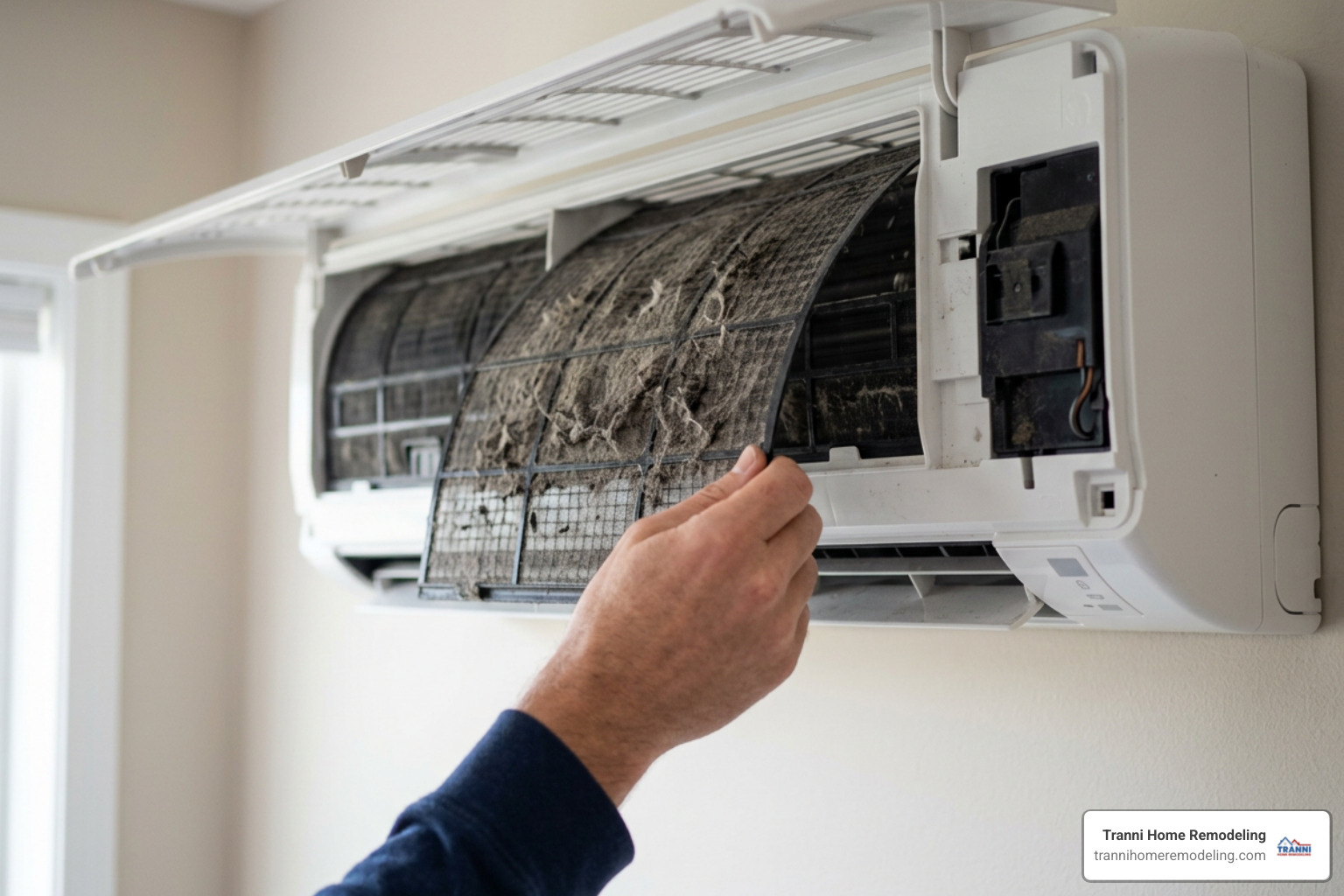
Every single indoor mini split head contains its own set of reusable mesh filters. Because these units pull air directly from the room and have very small internal blowers, these filters clog with dust, pet dander, and hair much faster than central systems.
To maintain airflow and efficiency, you must pop open the plastic cover and wash these filters with soap and water at least once a month. If you have a four-zone system in your home, that means you are performing 48 individual filter cleanings every year!
Neglecting this chore doesn’t just reduce efficiency; it can cause the cooling coils to freeze up, leading to water dripping down your drywall. Over time, the dark, damp environment inside a neglected air handler becomes a breeding ground for mold, mildew, and a thick, slimy substance known as biofilm. Once biofilm takes hold, your unit will begin emitting a musty, sour odor every time it turns on, requiring a costly professional deep cleaning ($200 to $500 per head) to resolve.
Limited Air Filtration and IAQ Capabilities
If you suffer from severe allergies, asthma, or live in an area with high pollen counts like Billerica, indoor air quality (IAQ) is likely a top priority. This is an area where mini splits lag far behind central HVAC systems.
Central systems can accommodate thick, high-efficiency media filters (such as MERV 11 to MERV 16 filters) or whole-home electronic air purifiers that capture microscopic allergens, smoke, and viruses.
Because mini split air handlers rely on small, low-pressure fan motors, they cannot push air through thick, pleated paper filters. Doing so would choke the system and burn out the motor. Instead, they must rely on flat, washable plastic mesh screens that only capture large dust particles and hair.
While some premium models offer tiny, supplemental enzyme or carbon strips to help reduce odors, their overall air purification capacity is minimal. If you want true high-efficiency air filtration, you will likely need to purchase separate, standalone air purifiers for your rooms.
Frequently Asked Questions about Ductless Systems
Can a mini split system fully replace a central HVAC system?
In mild climates, yes, a multi-zone mini split system can serve as a complete whole-home comfort solution. However, in colder regions like Billerica, MA, relying entirely on mini splits can be risky during extreme winter cold snaps.
Without a backup heating source—such as existing hot water baseboards or a traditional furnace—you may experience cold drafts when outdoor temperatures drop below zero. For older, poorly insulated homes, a hybrid approach (using mini splits for zoned cooling and supplemental heating, while keeping your main heating system for the dead of winter) is usually the safest bet.
Why is mini split installation so expensive compared to window units?
While a window air conditioner simply plugs into a standard wall outlet, a professional residential mini split installation is a complex construction project.
It requires running copper refrigerant lines through your walls, mounting heavy outdoor condensers on concrete pads or wall brackets, installing dedicated 240V electrical lines, and ensuring proper condensate drainage. Furthermore, it requires specialized tools (like vacuum pumps and micron gauges) and EPA-certified labor to ensure the system doesn’t leak or fail prematurely.
Do mini splits make a lot of noise during operation?
The indoor units are incredibly quiet, often operating between 20 and 32 decibels—which is quieter than a whisper or a library reading room. However, they are not completely silent.
You will occasionally hear the plastic casing creak as it expands and contracts with temperature changes, a gentle hum from the fan, or a subtle ticking sound if your unit requires an internal condensate pump to push drain water uphill. The outdoor compressor is louder (typically 50 to 60 decibels) and should be mounted away from bedroom windows to avoid high-frequency vibrations transferring through your home’s framing.
Conclusion
At the end of the day, ductless mini splits are an incredibly efficient, highly flexible technology—but they are not a magic bullet. The high upfront costs, aesthetic compromises, strict maintenance needs, and performance limits in extreme New England winters mean they must be carefully planned and professionally installed to be worth the investment.
If you are planning a home addition, a major bathroom or kitchen remodel, or a basement finishing project in Billerica, MA, or the surrounding areas, we can help you weigh all of your options. At Tranni Home Remodeling, we combine over a decade of high-quality craftsmanship with honest, straightforward advice to ensure your home renovation is comfortable, beautiful, and built to last.
Schedule a professional residential HVAC installation consultation with our team today, and let’s design a comfort solution that fits your lifestyle, your budget, and your home perfectly.