




Second Floor Addition Contractors: Smart 2025 Choice
Why Finding the Right Second Floor Addition Contractors Matters
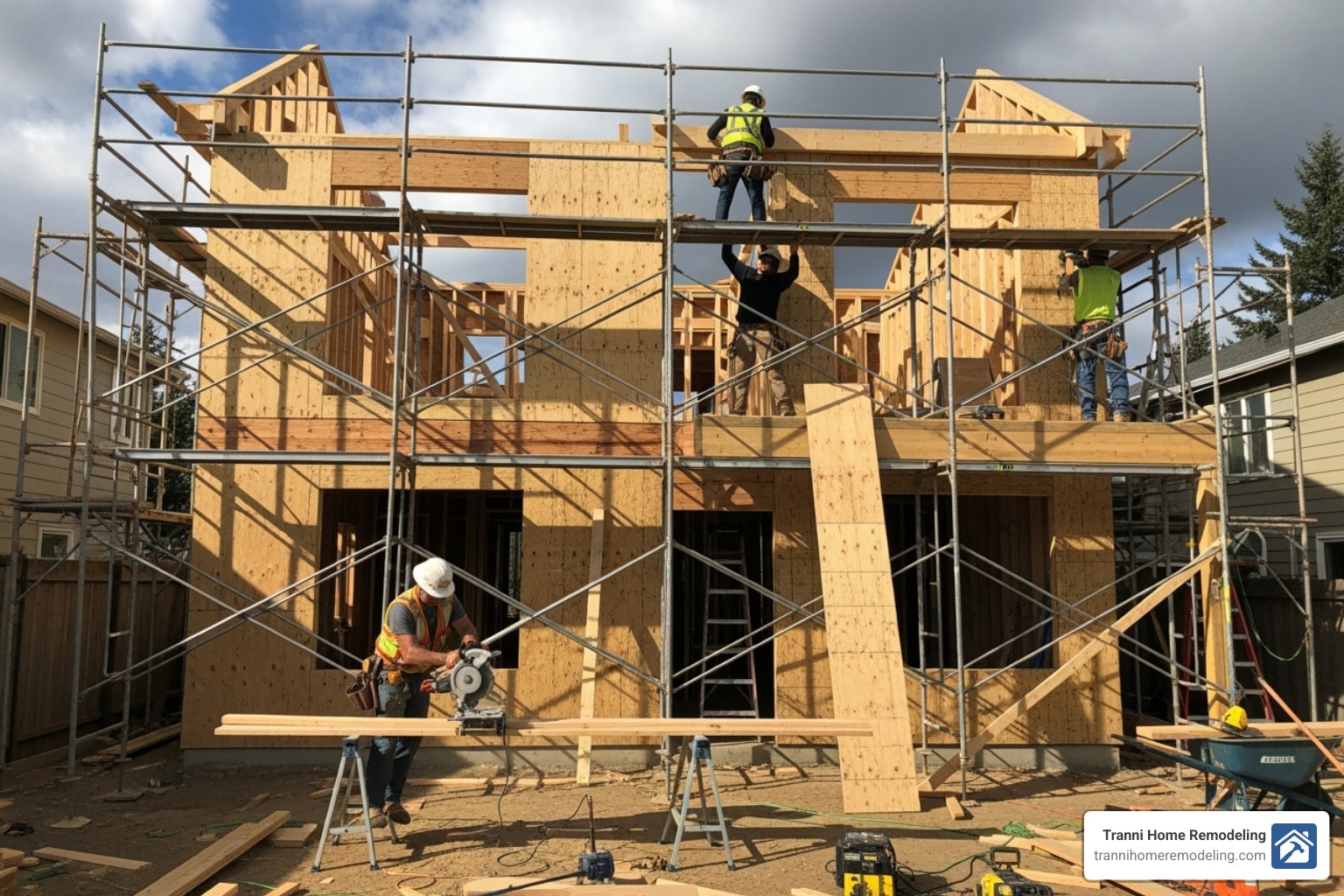
Second floor addition contractors specialize in expanding your home vertically, turning single-story houses into multi-level living spaces. When your family has outgrown your home but you love your neighborhood, adding a second story is the perfect solution. A qualified contractor handles everything from design and structural engineering to permits, zoning, and coordinating all trades like plumbing and electrical to ensure a seamless addition.
Average Project Costs: $100,000 – $400,000+ (costs vary widely based on size and complexity)
Typical Timeline: 6-12 months from design to completion
Return on Investment: Approximately 65% according to industry data
Many homeowners choose to build up rather than move. As one shared, “I am interested in talking to someone about adding a bedroom and possibly a bathroom and would like to add up instead of out.” This captures the core reason for vertical expansion: gaining needed space while staying in a beloved community.
I’m Tyler Tranni, owner of Tranni Home Remodeling. With years of experience helping homeowners in Billerica, MA, and surrounding areas, I’ve seen how the right contractor can transform both a living space and quality of life. Choosing an expert for this complex project is the most important decision you’ll make.
Why Build Up? The Benefits and Value of a Second Story
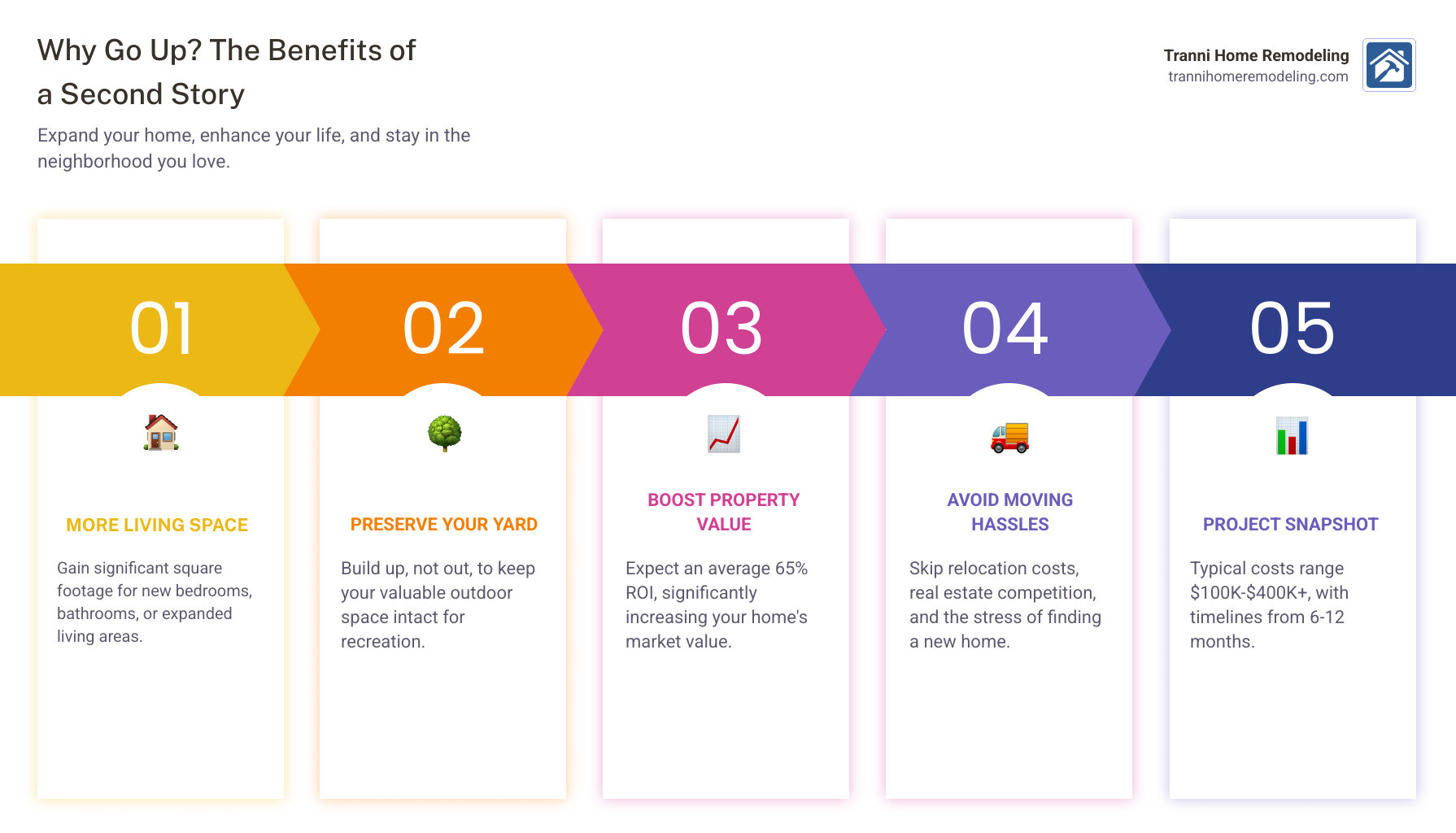
Many homeowners choose to build up instead of out to gain space without sacrificing their location. Adding a second story is about enhancing your living experience while keeping your roots planted in a community you love.
The primary benefit is more living space, whether it’s a needed home office, extra bedrooms for a growing family, or a new master suite. Building vertically also means preserving your yard space, a precious commodity in towns like Billerica, Chelmsford, and Tewksbury. You keep your garden and outdoor entertaining areas intact. Plus, the improved views from a second story can be a surprising bonus, offering a better perspective of your neighborhood.
Financially, a second-story addition is a sound investment. Homeowners often see around a 65% return on investment, and you avoid the significant costs of moving, such as realtor fees and closing costs. When you factor in the increased property value and improved quality of life, building up makes excellent financial sense. Our experience with Home Additions shows that homeowners who choose this path are consistently satisfied with their decision.
Types of Second-Story Additions
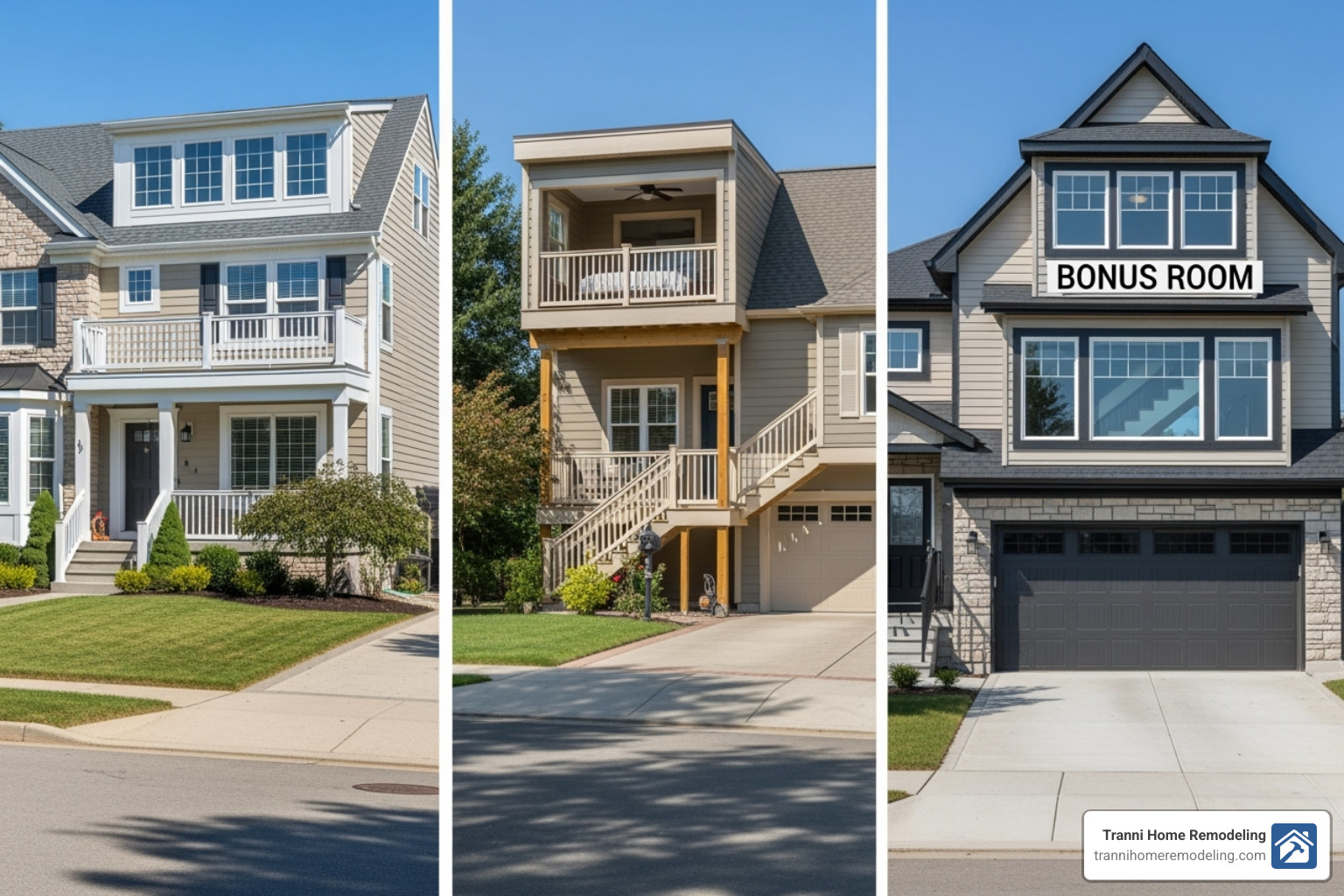
Understanding your options helps you choose the best fit for your home and budget:
- Full-Story Addition: This involves removing the roof to build a complete second floor, effectively doubling your living space. It’s ideal for adding multiple rooms and completely reimagining your home’s layout.
- Partial Addition: A more targeted approach, this adds a second story over just one section of your home, such as the kitchen or living room, to create a new family room or master suite.
- Master Suite Addition: A popular choice for creating a private retreat, complete with a spacious bedroom, walk-in closet, and spa-like bathroom.
- Bonus Room Over the Garage: Often the most cost-effective option, this uses the garage’s existing foundation to add a versatile space for a home office, guest suite, or playroom. If you need to expand your garage first, consider how to Add a Garage to a House.
Is It More Cost-Effective to Build Up or Build Out?
Deciding whether to build up or out involves weighing different costs and priorities. Building up typically costs more per square foot due to complex structural work, but it preserves your yard and avoids the high cost of excavation and new foundation work required for building out.
| Feature | Building Up (Second Story Addition) | Building Out (Ground Level Addition) |
|---|---|---|
| Pros | – Preserves precious yard space – Often provides better views – Uses existing home footprint – Includes a complete new roof |
– Can be structurally simpler – Easier construction access – May blend better with single-story homes – Potentially lower cost per square foot |
| Cons | – Complex structural requirements – Often requires temporary relocation – Higher disruption during construction – More expensive per square footage |
– Consumes valuable outdoor space – Requires extensive excavation – New foundation work needed – Can impact existing landscaping |
| Major Costs | – Structural reinforcement and engineering – Complete roof replacement – New staircase installation – Utility extensions (plumbing, electrical, HVAC) |
– Excavation and site preparation – New foundation pouring – Partial roof work for addition – Potential utility line relocation |
Building out requires excavation (averaging $1,600 to $6,700) and a new foundation (from $4,000 to $14,800 or more, based on internet averages). Building up avoids these specific costs but requires significant structural reinforcement. In Middlesex County communities from Winchester to Wilmington, where lots are often smaller, preserving outdoor space makes building up the preferred choice for many families.
Understanding the Costs and Timelines for Your Project
When planning a second-story addition, the primary questions are always about cost and timeline. These are significant projects, and it’s important to have clear expectations from the start.
The cost can range from $100 to $500+ per square foot, reflecting differences in location, complexity, materials, and structural needs. Nationally, most homeowners invest between $100,000 to $400,000+, though high-end projects can exceed this. For example, a basic 800-square-foot addition might range from $100,000 to $300,000, while a more luxurious 1,000-square-foot project could be $200,000 to $600,000 or more.
These are average costs based on internet data from various sources, and not actual costs for Tranni Home Remodeling projects, as every project is unique and custom-custom to our clients’ needs.
As for the timeline, expect the entire process to take 6 to 12 months, sometimes longer. This includes the design and planning phase (several months), the permitting phase (weeks to months), and the construction phase (typically 3-6 months). Meticulous planning helps keep disruptions to a minimum. Our experience as General Contractors Remodeling ensures we manage the project efficiently from start to finish.
Key Factors That Influence the Cost
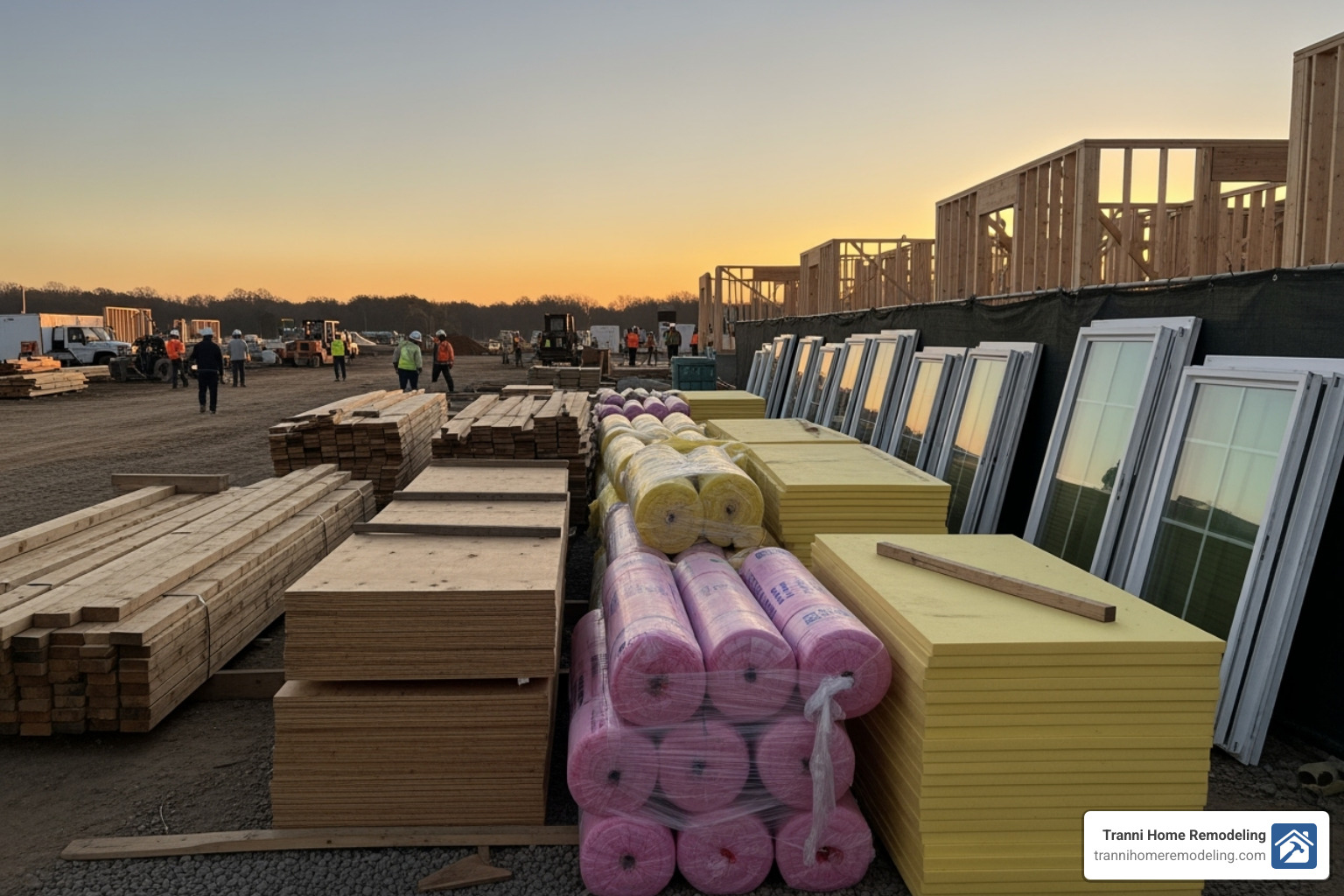
Several key factors determine the final price of your addition:
- Size and Complexity: A larger, more intricate design with multiple rooms and custom features will cost more than a simple, smaller addition.
- Material Choices: The difference between standard and premium materials is substantial. For example, the Window Installation Cost can vary dramatically based on the type of windows you select.
- Structural Modifications: Your home’s foundation and framing will likely need significant reinforcement to support a new floor. This essential work is a major part of the budget.
- Utility Extensions: Extending your home’s plumbing, electrical, and HVAC systems to the new floor requires skilled professionals and adds to the cost. We provide expert Electrical Services and HVAC Installation Services to ensure seamless integration.
- Finishes: Your choice of flooring, cabinetry, fixtures, and paint can significantly impact the budget. High-end finishes will increase the total cost.
- Contingency Fund: We recommend budgeting an additional 10-20% for unexpected issues that can arise, especially in older homes.
How to Finance Your Second-Story Addition
Most homeowners need financing for a project of this scale. Here are the most common options:
- Home Equity Loan: A lump-sum loan against your home’s equity, with a fixed interest rate and predictable payments.
- Home Equity Line of Credit (HELOC): A revolving line of credit that lets you draw funds as needed, paying interest only on what you use.
- Cash-Out Refinance: Refinancing your mortgage for more than you owe and using the difference for the renovation. This is ideal if you can also secure a lower interest rate.
- Renovation Loans: Specialized loans like the FHA 203(k) are designed for home improvements.
- Partner Lenders: We work with lenders who specialize in renovation financing, often allowing you to borrow against the home’s after-renovation value. You can explore financing options with a partner lender to find the right fit.
Navigating the Construction Process: From Blueprint to Build
Adding a second story is one of the most complex home renovation projects. It involves unique challenges, from temporarily exposing your home to the elements to managing supply chains. For most full second-story additions, we strongly recommend temporary relocation for your family’s safety and comfort due to construction dust, noise, and utility interruptions.
Potential supply chain and weather delays are also a reality in construction. Experienced contractors anticipate these issues and build contingency plans into the schedule. This is where the design-build advantage becomes clear. As a design-build firm, we manage every aspect of the project with a single, unified team. This streamlined approach reduces miscommunication, minimizes delays, and often lowers costs, making the experience less stressful for you. Our comprehensive Home Renovation Services ensure your addition is thoughtfully integrated into your home.
Structural Considerations and Potential Issues
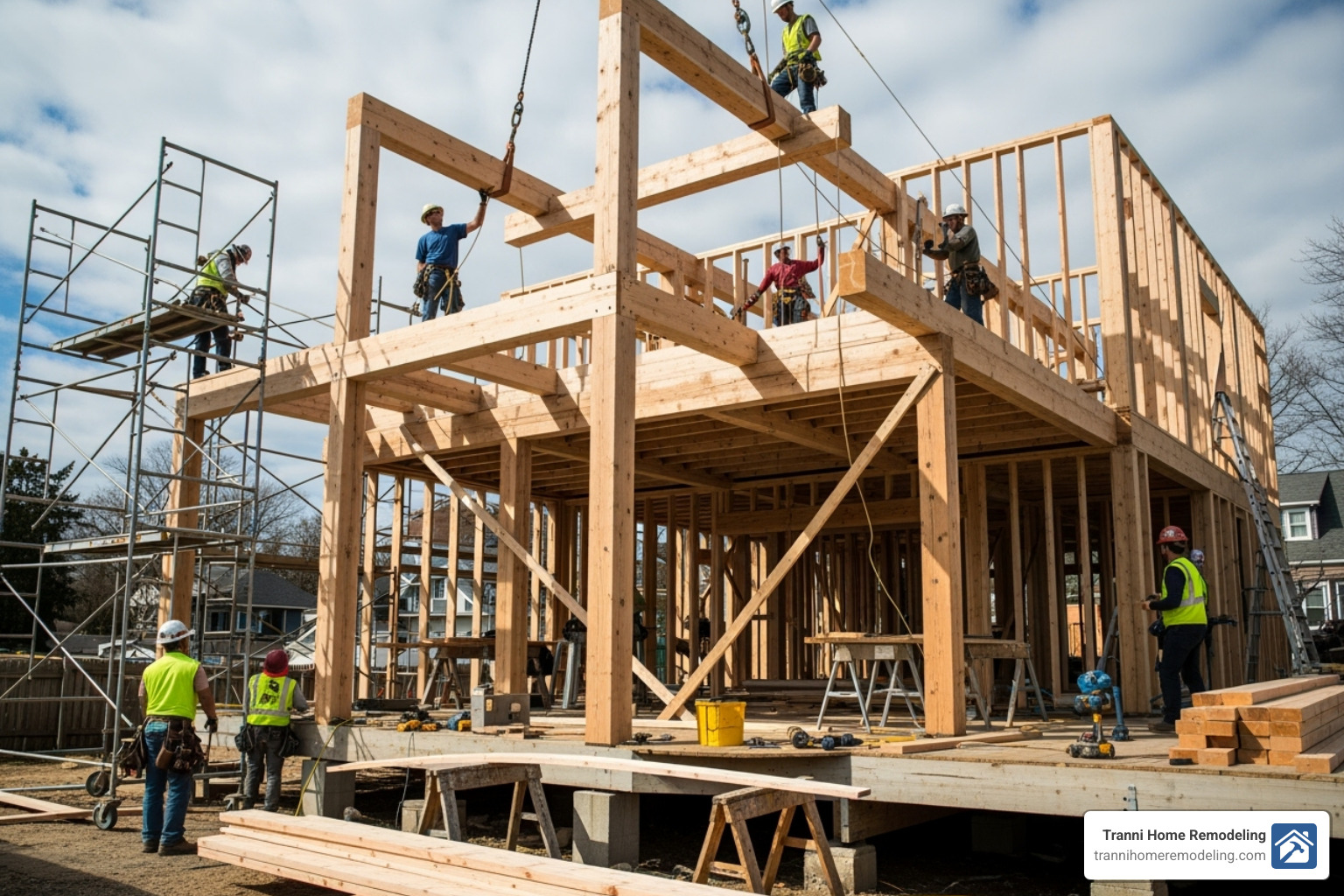
Adding a second story is a significant structural undertaking. The most critical question is whether your existing home can support the immense weight of a new floor. This is why hiring a structural engineer is not just recommended—it’s essential.
An engineer will conduct a thorough foundation assessment and determine what modifications are needed. In nearly all cases, reinforcing the first floor is required. This can involve adding new footings, strengthening load-bearing walls with new joists or steel beams, and ensuring the entire structure is safe and sound. Older homes, in particular, often require extensive upgrades to meet modern building codes.
Adding a staircase also presents structural challenges, as it requires cutting an opening in the first-floor ceiling and reinforcing the surrounding framing to handle the load. This is not a DIY project; it requires precise engineering to ensure the safety and longevity of your home. It’s always wise to have an engineer inspect the existing house before any major work begins.
Building Codes, Permits, and Regulations
Before construction starts, your project must steer a web of local zoning laws, building permits, and regulations. Every municipality in our service area, from Billerica to Winchester, has specific requirements.
- Building Permits: These are non-negotiable and confirm your plans meet local safety and construction standards.
- Zoning Laws: These regulations dictate height restrictions, setbacks (the distance from your home to property lines), and Floor-Area Ratios (FAR), which can limit the size of your addition.
- HOA Requirements: If applicable, your homeowners’ association may have additional design guidelines to follow.
- Lead Safety: For homes built before 1978, we must follow strict EPA protocols for lead-safe work practices during demolition and construction.
The permit process can take weeks or months. As experienced Construction and Remodeling Companies Near Me, we handle all the paperwork and coordination with local officials to ensure your project complies with every rule and moves forward smoothly.
How to Find and Choose Reputable Second Floor Addition Contractors
Choosing the right second floor addition contractors is the most critical decision you’ll make. You need a partner with proven experience, a stellar reputation, and a track record of success with complex projects like these.
Start your search by asking for recommendations from friends, family, and neighbors in your area. Once you have a few names, do your own research:
- Read Online Reviews: Check platforms like Google to see what past clients are saying. Look for consistent praise regarding communication, timeliness, and quality.
- Verify Credentials: Ensure any contractor you consider is licensed in Massachusetts and carries full liability and workers’ compensation insurance. This protects you from liability.
- Review Portfolios: Ask to see examples of their past second-story additions. This type of project requires specialized knowledge that goes beyond general remodeling.
- Check References: Speak with recent clients who had similar projects done. Ask if the project was on time and on budget, and if they would hire the contractor again.
Choosing a contractor is a major commitment. For more tips, explore our guide on Finding a Contractor for Remodeling.
Essential Questions to Ask Potential Second Floor Addition Contractors
During your consultations, be prepared with questions to help you gauge each contractor’s suitability for your project. Key areas to cover include:
- Experience: How many second-story additions have you completed? Can I see your portfolio or visit a completed project?
- Process: Do you offer in-house design services, or do I need a separate architect? Who will be my main point of contact?
- Team: Do you use your own crew or subcontractors? How long have you worked with them?
- Logistics: What is the projected timeline? How do you handle change orders if the scope of work changes?
- Warranty: What kind of warranty do you offer on your workmanship? (We proudly offer a 5-year workmanship warranty).
- References: Can you provide at least three references from recent, similar projects?
A contractor who confidently answers these questions is more likely to be one of the Best Home Improvement Contractors Near Me.
Evaluating Bids from Second Floor Addition Contractors
When bids arrive, don’t just look at the bottom-line price. A thorough evaluation is key to avoiding costly mistakes.
- Demand Detailed Estimates: Insist on an itemized proposal that breaks down labor costs and specifies all materials, including brands and grades.
- Clarify Inclusions: Make sure the bid clearly states what is and isn’t included, such as permit fees, engineering consultations, and debris removal.
- Beware of Low Bids: An unusually low bid can be a red flag for substandard materials, missed scope, or a plan to make up costs with future change orders.
- Review the Payment Schedule: Reputable contractors structure payments around project milestones. Avoid anyone demanding large upfront payments.
- Trust Your Gut: Choose a contractor you feel comfortable with. Clear communication and a professional demeanor are crucial for a months-long project.
A transparent, detailed proposal is the hallmark of the Best Renovation Company for your needs.
Frequently Asked Questions about Second Story Additions
Homeowners considering a second-story addition often have similar questions. Here are answers to some of the most common ones we hear from families in Billerica and throughout Middlesex County.
Does adding a second story always increase home value?
Yes, adding a second story almost always increases your home’s value. You are adding significant square footage, bedrooms, and bathrooms, which are highly desirable to buyers. Nationally, homeowners can expect about a 65% return on investment for a two-story addition. However, the exact ROI can vary based on your local housing market and neighborhood character. Consulting a local real estate expert can help align your project with market demand. As your Home Addition Company, we aim to ensure your investment serves you well both now and in the future.
Do I have to move out during a second-story addition?
For most full second-story additions, we strongly recommend temporary relocation. The process involves removing your entire roof, making your home an active and exposed construction zone. Key reasons for moving out include:
- Safety: To protect your family from heavy machinery and construction debris.
- Utility Interruptions: There will be periods without electricity, plumbing, or HVAC.
- Noise and Dust: Construction is inherently loud and messy, making daily life difficult.
While moving out adds to the budget, it ensures your family’s safety and comfort. For smaller projects, like a bonus room over a garage, you may be able to stay. We will work with you to plan for this phase of your Home Remodeling project.
Is adding a second story better than buying a new, larger home?
This depends on your priorities. A second-story addition is a major investment, but it is often more cost-effective than buying a new home once you factor in realtor fees, closing costs, and moving expenses.
Consider these benefits of adding on:
- Stay in Your Neighborhood: You don’t have to leave the community, schools, and neighbors you love.
- Keep Your Home: You can preserve the emotional attachment and memories tied to your current house.
- Full Customization: You get to design the new space exactly to your family’s needs and style.
- Avoid the Market: You bypass the stress and competition of house hunting.
If you love where you live but just need more space, an addition can be the perfect solution. As your local Home Addition Builders Near Me, we can help you explore the possibilities.
Conclusion: Lift Your Home with the Right Partner
Adding a second story is a transformative project that creates the space your family needs while allowing you to stay in the neighborhood you love. The success of this complex undertaking hinges on choosing the right second floor addition contractors—a partner with the technical expertise and experience to bring your vision to life.
You need a team that understands how to seamlessly blend new construction with your home’s existing character, manage complex structural work, and deliver high-quality craftsmanship that lasts. This is more than just adding square footage; it’s about enhancing your home for the future.
At Tranni Home Remodeling, we have helped families in Billerica, MA and throughout Middlesex County transform their homes for over a decade. We are familiar with the unique building requirements in towns like Andover, Bedford, Burlington, Carlisle, Chelmsford, Concord, Dracut, Lexington, Lincoln, Lynnfield, Methuen, North Andover, North Reading, Reading, Stoneham, Tewksbury, Wilmington, Winchester, and Woburn.
Our philosophy is that your home should grow with your life. We pride ourselves on outstanding service and craftsmanship that exceeds expectations. When you choose us, you’re partnering with neighbors who care about your investment as much as you do.
Ready to take your home to new heights? Contact Us today for a consultation on your Home Additions project.